


Global Neurothrombectomy Devices Market
Market Size in USD Million
CAGR :
% 
 USD
788.16 Million
USD
1,284.93 Million
2025
2033
USD
788.16 Million
USD
1,284.93 Million
2025
2033
 Forecast Period Forecast Period |
2026 –2033 |
 Market Size (Base Year) Market Size (Base Year) |
USD 788.16 Million |
 Market Size (Forecast Year) Market Size (Forecast Year) |
USD 1,284.93 Million |
 CAGR CAGR |
% |
| Major Markets Players |
|
Neurothrombectomy Devices Market Size
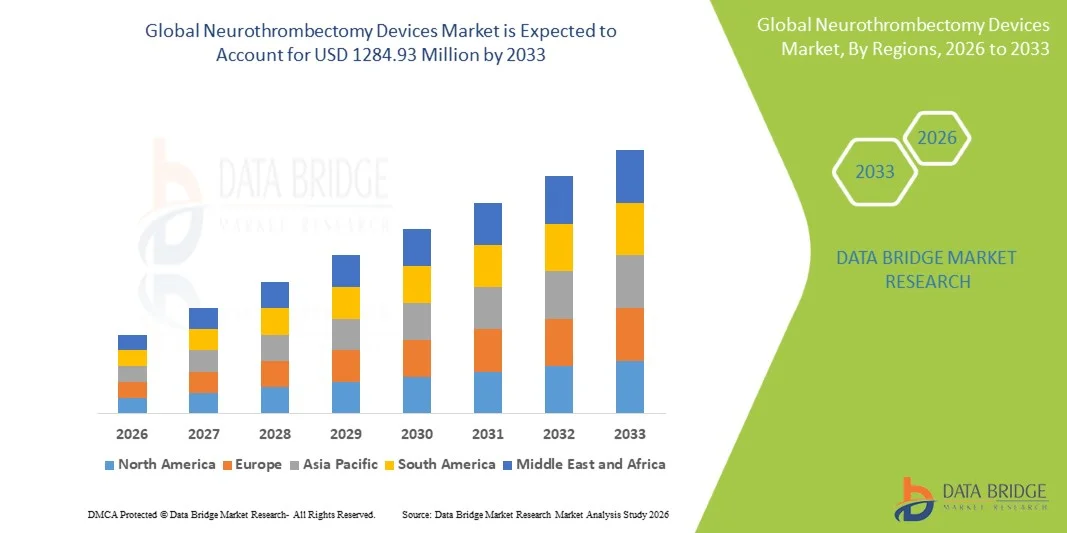
- The global neurothrombectomy devices market size was valued at USD 788.16 Million in 2025 and is expected to reach USD 1284.93 Million by 2033, at a CAGR of 6.30% during the forecast period
- The market growth is largely fueled by the increasing prevalence of acute ischemic stroke and rising demand for minimally invasive treatment procedures, along with advancements in medical device technologies, leading to greater adoption of neurothrombectomy devices in healthcare settings
- Furthermore, growing awareness about early stroke intervention, expanding availability of specialized stroke care centers, and increasing preference for effective clot removal techniques are establishing neurothrombectomy devices as a critical solution in stroke management. These converging factors are accelerating the uptake of Neurothrombectomy Devices, thereby significantly boosting the market growth
Neurothrombectomy Devices Market Analysis
- Neurothrombectomy devices, used for the mechanical removal of blood clots in patients suffering from acute ischemic stroke, are becoming increasingly vital in modern stroke care due to their effectiveness in restoring blood flow and improving patient outcomes
- The escalating demand for neurothrombectomy devices is primarily fueled by the rising incidence of stroke, increasing geriatric population, and growing adoption of minimally invasive procedures, along with advancements in catheter-based technologies and imaging systems
- North America dominated the neurothrombectomy devices market with the largest revenue share of approximately 43.9% in 2025, characterized by advanced healthcare infrastructure, high adoption of innovative medical devices, and strong presence of leading market players, with the U.S. leading in stroke treatment procedures and clinical advancements
- Asia-Pacific is expected to be the fastest growing region in the neurothrombectomy devices market during the forecast period due to improving healthcare infrastructure, increasing awareness of stroke management, and rising investments in advanced medical technologies
- The retriever segment held the largest market revenue share of 61.4% in 2025, driven by its widespread use in mechanical thrombectomy procedures
Report Scope and Neurothrombectomy Devices Market Segmentation
|
Attributes |
Neurothrombectomy Devices Key Market Insights |
|
Segments Covered |
|
|
Countries Covered |
North America
Europe
Asia-Pacific
Middle East and Africa
South America
|
|
Key Market Players |
|
|
Market Opportunities |
|
|
Value Added Data Infosets |
In addition to the insights on market scenarios such as market value, growth rate, segmentation, geographical coverage, and major players, the market reports curated by the Data Bridge Market Research also include in-depth expert analysis, patient epidemiology, pipeline analysis, pricing analysis, and regulatory framework. |
Neurothrombectomy Devices Market Trends
“Advancements in Minimally Invasive Stroke Treatment Technologies”
- A significant and accelerating trend in the global neurothrombectomy devices market is the increasing adoption of minimally invasive technologies for the treatment of acute ischemic stroke. These innovations are improving procedural outcomes and reducing recovery times for patients
- For instance, modern neurothrombectomy devices such as stent retrievers and aspiration catheters are designed to effectively remove blood clots from cerebral arteries, restoring blood flow with high precision
- Continuous advancements in device design, including improved flexibility, trackability, and clot retrieval efficiency, are enhancing procedural success rates
- Furthermore, increasing integration of advanced imaging techniques, such as real-time angiography, is supporting accurate diagnosis and guiding intervention procedures
- The expansion of comprehensive stroke centers and specialized neurovascular facilities is also facilitating the adoption of these advanced devices
- This trend toward rapid, effective, and minimally invasive stroke intervention is significantly shaping the global Neurothrombectomy Devices market
Neurothrombectomy Devices Market Dynamics
Driver
“Rising Incidence of Stroke and Increasing Demand for Rapid Intervention”
- The increasing global incidence of stroke, particularly acute ischemic stroke, is a major driver for the growth of the Neurothrombectomy Devices market
- For instance, conditions such as hypertension, diabetes, obesity, and sedentary lifestyles are contributing to a higher risk of stroke across both developed and developing regions
- Growing awareness regarding the importance of early intervention and timely treatment is encouraging the adoption of neurothrombectomy procedures
- In addition, advancements in healthcare infrastructure and the establishment of dedicated stroke care units are improving patient access to specialized treatments
- Favorable clinical outcomes associated with mechanical thrombectomy procedures, including reduced disability and improved survival rates, are further driving adoption
- Increasing government initiatives and healthcare investments aimed at improving stroke management and emergency response systems are supporting market growth globally
Restraint/Challenge
“High Procedure Costs and Limited Access to Specialized Care”
- The high cost associated with neurothrombectomy procedures and devices remains a significant challenge, particularly in low- and middle-income countries
- Limited access to specialized stroke centers and trained neurointerventionalists further restricts the widespread adoption of these advanced procedures
- For instance, in many developing regions, patients suffering from acute stroke may not reach adequately equipped hospitals within the critical treatment window, reducing the chances of receiving neurothrombectomy treatment
- In addition, the need for advanced imaging infrastructure and emergency care systems increases the overall cost and complexity of treatment
- Variability in reimbursement policies and healthcare coverage across regions can also limit patient access to these procedures
- Lack of awareness regarding stroke symptoms and delayed hospital arrival times can further impact treatment outcomes
- Addressing these challenges through improved healthcare infrastructure, training programs, and awareness initiatives will be essential for sustaining growth in the Neurothrombectomy Devices market
Neurothrombectomy Devices Market Scope
The market is segmented on the basis of product type, type, and end use.
• By Product Type
On the basis of product type, the Neurothrombectomy Devices market is segmented into clot retrieval devices, aspiration devices, and snares. The clot retrieval devices segment dominated the largest market revenue share of 52.8% in 2025, driven by their high efficacy in mechanically removing blood clots in acute ischemic stroke procedures. These devices, particularly stent retrievers, are widely used due to their ability to restore blood flow quickly and improve patient outcomes. Increasing prevalence of stroke cases globally is significantly boosting demand. Technological advancements in device design, including improved flexibility and precision, further enhance performance. Hospitals and neurointerventional centers prefer clot retrieval devices for their proven clinical success rates. Growing awareness about early stroke intervention and availability of advanced treatment options also contribute to segment dominance. In addition, favorable reimbursement policies in developed regions support adoption. The increasing number of stroke centers equipped with advanced neurovascular technologies further strengthens demand.
The aspiration devices segment is expected to witness the fastest CAGR of 13.5% from 2026 to 2033, driven by their minimally invasive nature and growing preference for direct aspiration techniques. These devices allow efficient clot removal with reduced procedure time and lower risk of complications. Advancements in catheter technology and improved suction capabilities are enhancing effectiveness. Increasing adoption of combination therapies using aspiration and retrieval devices further supports growth. In addition, rising demand for faster and safer stroke treatments is driving innovation. As healthcare providers focus on improving procedural outcomes, this segment is expected to expand rapidly.
• By Type
On the basis of type, the Neurothrombectomy Devices market is segmented into retriever and integrated system. The retriever segment held the largest market revenue share of 61.4% in 2025, driven by its widespread use in mechanical thrombectomy procedures. Retriever devices are highly effective in capturing and removing clots, making them the standard of care in many stroke treatment protocols. Their reliability and ease of use contribute to high adoption among neurointerventionalists. Increasing number of trained specialists and growing availability of advanced healthcare infrastructure further support segment growth. Clinical guidelines recommending mechanical thrombectomy also boost demand. In addition, continuous product innovations are improving device efficiency and patient outcomes.
The integrated system segment is expected to witness the fastest CAGR of 12.7% from 2026 to 2033, driven by the growing demand for comprehensive and streamlined treatment solutions. Integrated systems combine multiple functionalities, enabling efficient and faster procedures. These systems reduce the need for multiple devices, minimizing procedural complexity. Technological advancements and increasing focus on workflow optimization in hospitals further support growth. In addition, healthcare providers are adopting integrated solutions to enhance treatment efficiency and reduce operational costs. As demand for advanced and user-friendly devices increases, this segment is expected to grow significantly.
• By End Use
On the basis of end use, the Neurothrombectomy Devices market is segmented into hospitals, clinics, public health labs, private or commercial labs, physician labs, research institutes, and others. The hospitals segment dominated the largest market revenue share of 56.9% in 2025, driven by the availability of advanced neurointerventional facilities and skilled healthcare professionals. Hospitals are the primary centers for performing thrombectomy procedures, especially in emergency stroke cases. Increasing patient admissions and growing prevalence of neurological disorders further support segment growth. The presence of specialized stroke units and advanced imaging technologies enhances treatment outcomes. Government investments in healthcare infrastructure also contribute to dominance. In addition, hospitals benefit from favorable reimbursement policies for stroke treatment procedures.
The clinics segment is expected to witness the fastest CAGR of 11.8% from 2026 to 2033, driven by the increasing shift toward outpatient and minimally invasive procedures. Clinics offer faster access to treatment and cost-effective care options, attracting a growing patient base. Advancements in medical technologies are enabling clinics to perform complex procedures efficiently. Increasing number of specialized neuro clinics further supports growth. In addition, patient preference for convenient and accessible healthcare services is driving demand. As healthcare delivery models evolve, this segment is expected to expand steadily.
Neurothrombectomy Devices Market Regional Analysis
- North America dominated the neurothrombectomy devices market with the largest revenue share of approximately 43.9% in 2025, characterized by advanced healthcare infrastructure, high adoption of innovative medical devices, and a strong presence of leading market players
- The region benefits from well-established stroke care networks, rapid emergency response systems, and widespread availability of advanced neurointerventional procedures
- Increasing prevalence of ischemic stroke and growing awareness of timely intervention are driving demand. In addition, continuous technological advancements in thrombectomy devices and favorable reimbursement policies are further supporting market growth across North America
U.S. Neurothrombectomy Devices Market Insight
The U.S. neurothrombectomy devices market captured the largest revenue share within North America in 2025, driven by high volumes of stroke treatment procedures and significant clinical advancements. The country leads in the adoption of minimally invasive neurovascular interventions and has a strong network of specialized stroke centers. Increasing investment in healthcare infrastructure and the presence of leading medical device companies are accelerating innovation and improving patient outcomes.
Europe Neurothrombectomy Devices Market Insight
The Europe neurothrombectomy devices market is projected to expand at a substantial CAGR during the forecast period, supported by increasing awareness of stroke management and advancements in neurovascular treatment technologies. Government initiatives to improve stroke care and expanding access to specialized treatment centers are driving market growth. In addition, rising adoption of minimally invasive procedures is contributing to regional expansion.
U.K. Neurothrombectomy Devices Market Insight
The U.K. neurothrombectomy devices market is anticipated to grow at a noteworthy CAGR, driven by improvements in stroke care infrastructure and increasing adoption of advanced treatment techniques. National health programs are focusing on enhancing rapid diagnosis and intervention capabilities. Moreover, growing awareness among healthcare providers and patients is supporting market growth.
Germany Neurothrombectomy Devices Market Insight
The Germany neurothrombectomy devices market is expected to expand at a considerable CAGR, fueled by strong healthcare infrastructure and a focus on medical innovation. Germany’s advanced hospital systems and emphasis on high-quality care are promoting the use of cutting-edge neurointerventional devices. Increasing investments in healthcare technology are further supporting market growth.
Asia-Pacific Neurothrombectomy Devices Market Insight
The Asia-Pacific neurothrombectomy devices market is poised to grow at the fastest CAGR during the forecast period, driven by improving healthcare infrastructure, increasing awareness of stroke management, and rising investments in advanced medical technologies. The growing burden of stroke and expanding access to specialized care are creating significant opportunities for market expansion. Government initiatives aimed at strengthening emergency care systems are further accelerating growth.
Japan Neurothrombectomy Devices Market Insight
The Japan neurothrombectomy devices market is gaining momentum due to the country’s advanced healthcare system and aging population, which is more susceptible to stroke. Increasing adoption of minimally invasive procedures and advanced diagnostic tools is improving treatment outcomes. In addition, Japan’s focus on healthcare innovation is supporting the adoption of neurothrombectomy devices.
China Neurothrombectomy Devices Market Insight
The China neurothrombectomy devices market accounted for the largest revenue share in Asia-Pacific in 2025, attributed to rapid healthcare infrastructure development and increasing prevalence of stroke. Expanding access to advanced medical technologies and growing awareness of timely stroke treatment are driving demand. Furthermore, government support and rising investments in healthcare modernization are key factors propelling market growth in China.
Neurothrombectomy Devices Market Share
The Neurothrombectomy Devices industry is primarily led by well-established companies, including:
- Medtronic plc (Ireland)
- Stryker Corporation (U.S.)
- Penumbra, Inc. (U.S.)
- Johnson & Johnson (U.S.)
- Boston Scientific Corporation (U.S.)
- Terumo Corporation (Japan)
- Siemens Healthineers AG (Germany)
- Koninklijke Philips N.V. (Netherlands)
- MicroVention, Inc. (U.S.)
- Acandis GmbH (Germany)
- Phenox GmbH (Germany)
- Balt Extrusion SAS (France)
- Kaneka Corporation (Japan)
- Asahi Intecc Co., Ltd. (Japan)
- Imperative Care, Inc. (U.S.)
- Rapid Medical Ltd. (Israel)
- CERENOVUS (U.S.)
- Medikit Co., Ltd. (Japan)
- Merit Medical Systems, Inc. (U.S.)
- PenMed USA, Inc. (U.S.)
Latest Developments in Global Neurothrombectomy Devices Market
- In January 2021, Stryker Corporation announced continued expansion of its neurovascular portfolio with advancements in its Trevo NXT stent retriever system, designed to improve clot retrieval efficiency in acute ischemic stroke patients. The development enhanced physician control and optimized revascularization outcomes, strengthening Stryker’s position in neurothrombectomy solutions
- In June 2021, Penumbra, Inc. received U.S. FDA clearance for its RED reperfusion catheter, a next-generation aspiration-based thrombectomy device designed to improve clot removal efficiency and reduce procedure time. This innovation supported the growing adoption of aspiration techniques in stroke intervention
- In March 2022, Medtronic expanded clinical evidence supporting its Solitaire X revascularization device through new study data demonstrating improved first-pass recanalization rates in stroke patients. This reinforced the effectiveness of stent retriever-based neurothrombectomy procedures
- In September 2022, Penumbra, Inc. launched its Lightning Flash mechanical thrombectomy system, incorporating computer-aided aspiration technology to enable rapid clot removal with reduced blood loss. This marked a major advancement in intelligent aspiration-based thrombectomy systems
- In May 2023, MicroVention, Inc. received regulatory approvals for its ERAZOR 71 aspiration catheter, designed for large vessel occlusion treatment. The device improved trackability and aspiration power, enhancing procedural success in neurointerventional stroke care
- In October 2023, Rapid Medical announced expanded adoption of its TIGERTRIEVER device, a manually adjustable stent retriever that allows physicians to control clot engagement in real time. This innovation introduced greater procedural customization and precision in thrombectomy procedures
- In April 2024, Penumbra, Inc. launched enhancements to its thrombectomy platform integrating advanced aspiration control and improved catheter designs, further optimizing stroke treatment workflows and supporting faster recanalization outcomes
- In July 2024, Stryker Corporation expanded its neurovascular product line with next-generation aspiration catheters and clot retrievers, focusing on improved deliverability and compatibility with minimally invasive stroke intervention procedures
- In March 2025, Medtronic reported continued innovation in neurovascular intervention technologies, including AI-assisted imaging integration to support faster diagnosis and treatment planning for thrombectomy procedures, improving clinical decision-making in acute stroke care
- In August 2025, industry-wide developments highlighted the increasing adoption of combined (stent retriever + aspiration) thrombectomy techniques, driven by clinical evidence showing higher success rates in clot removal and improved patient outcomes. This shift reflects a growing trend toward hybrid device strategies in neurothrombectomy procedures
SKU-
Get online access to the report on the World's First Market Intelligence Cloud

- Interactive Data Analysis Dashboard
- Company Analysis Dashboard for high growth potential opportunities
- Research Analyst Access for customization & queries
- Competitor Analysis with Interactive dashboard
- Latest News, Updates & Trend analysis
- Harness the Power of Benchmark Analysis for Comprehensive Competitor Tracking
Research Methodology
Data collection and base year analysis are done using data collection modules with large sample sizes. The stage includes obtaining market information or related data through various sources and strategies. It includes examining and planning all the data acquired from the past in advance. It likewise envelops the examination of information inconsistencies seen across different information sources. The market data is analysed and estimated using market statistical and coherent models. Also, market share analysis and key trend analysis are the major success factors in the market report. To know more, please request an analyst call or drop down your inquiry.
The key research methodology used by DBMR research team is data triangulation which involves data mining, analysis of the impact of data variables on the market and primary (industry expert) validation. Data models include Vendor Positioning Grid, Market Time Line Analysis, Market Overview and Guide, Company Positioning Grid, Patent Analysis, Pricing Analysis, Company Market Share Analysis, Standards of Measurement, Global versus Regional and Vendor Share Analysis. To know more about the research methodology, drop in an inquiry to speak to our industry experts.
Customization Available
Data Bridge Market Research is a leader in advanced formative research. We take pride in servicing our existing and new customers with data and analysis that match and suits their goal. The report can be customized to include price trend analysis of target brands understanding the market for additional countries (ask for the list of countries), clinical trial results data, literature review, refurbished market and product base analysis. Market analysis of target competitors can be analyzed from technology-based analysis to market portfolio strategies. We can add as many competitors that you require data about in the format and data style you are looking for. Our team of analysts can also provide you data in crude raw excel files pivot tables (Fact book) or can assist you in creating presentations from the data sets available in the report.












