


What is the Next-Generation Chronic Rhinitis Device Market Size and Growth Rate?
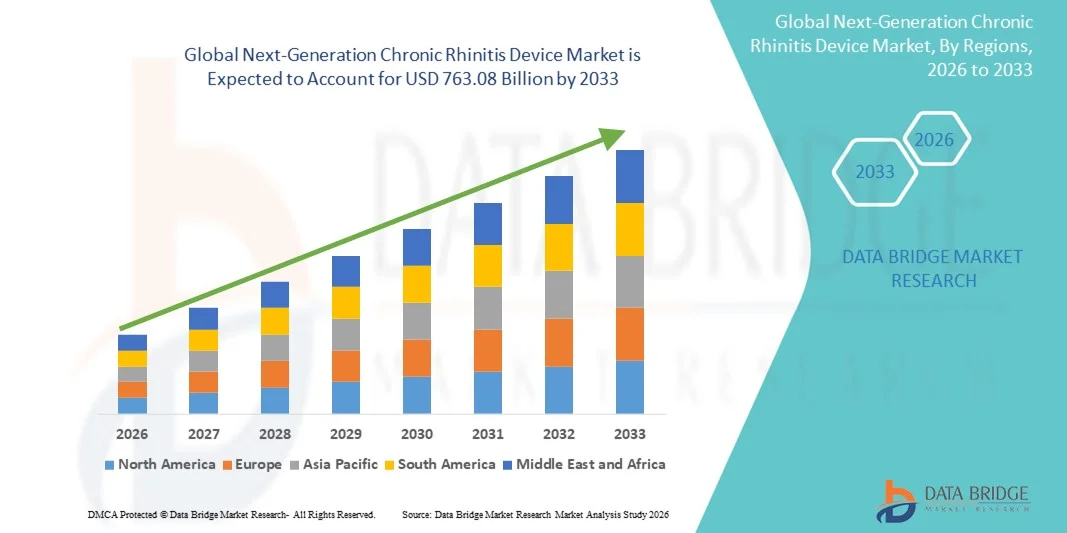
- As per Data Bridge Market Research analysis, the global next-generation chronic rhinitis device market size was valued at USD 303.83 billion in 2025 and is expected to reach USD 763.08 billion by 2033, at a CAGR of12.20% during the forecast period
- The market growth is largely fueled by increasing prevalence of chronic rhinitis, rising awareness about advanced treatment options, and growing adoption of minimally invasive procedures across healthcare settings
- Furthermore, technological advancements in next-generation chronic rhinitis devices, coupled with demand for more effective and patient-friendly solutions, are accelerating the uptake of these devices, thereby significantly boosting the industry's growth
Market Size & Forecast
- Market Value (2025): USD 303.83 Billion
- Expected Market Value (2033): USD 763.08 Billion
- Forecast CAGR: 12.20%
Next-Generation Chronic Rhinitis Device Market Analysis
- Next-generation chronic rhinitis devices, offering minimally invasive solutions for nasal obstruction and allergy-related conditions, are increasingly vital components of modern ENT treatment due to their enhanced efficacy, patient comfort, and integration with advanced surgical and outpatient procedures
- The escalating demand for next-generation chronic rhinitis devices is primarily fueled by the rising prevalence of chronic rhinitis, growing patient awareness of advanced treatment options, and a preference for minimally invasive procedures over traditional surgical interventions
- North America dominated the next-generation chronic rhinitis device market with the largest revenue share of 41.5% in 2025, characterized by high healthcare expenditure, early adoption of advanced medical devices, and the presence of major industry players, with the U.S. experiencing substantial growth in device installations driven by both established manufacturers and innovative startups
- Asia-Pacific is expected to be the fastest growing region in the next-generation chronic rhinitis Device market during the forecast period, registering a CAGR of 10.2% from 2026 to 2033, due to increasing urbanization, rising disposable incomes, and expanding ENT healthcare infrastructure in countries such as China and India
- The Balloon Sinuplasty Devices segment dominated the largest market revenue share of 57.4% in 2025, driven by its minimally invasive approach, faster recovery times, and reduced patient discomfort compared to traditional sinus surgery
Report Scope and Next-Generation Chronic Rhinitis Device Market Segmentation
|
Attributes |
Next-Generation Chronic Rhinitis Device Key Market Insights |
|
Segments Covered |
|
|
Countries Covered |
North America
Europe
Asia-Pacific
Middle East and Africa
South America
|
|
Key Market Players |
• Medtronic (U.S.) |
|
Market Opportunities |
|
|
Value Added Data Infosets |
In addition to the insights on market scenarios such as market value, growth rate, segmentation, geographical coverage, and major players, the market reports curated by the Data Bridge Market Research also include in-depth expert analysis, patient epidemiology, pipeline analysis, pricing analysis, and regulatory framework. |
What is the Key Trend in the Next-Generation Chronic Rhinitis Device Market?
Rising Adoption of Advanced Chronic Rhinitis Management Devices
- • A significant and accelerating trend in the global Next-Generation Chronic Rhinitis Device market is the increasing use of innovative devices for the effective management of chronic rhinitis and related nasal conditions. Newer devices offer minimally invasive solutions, improved patient comfort, and enhanced treatment efficacy, supporting higher adoption across clinical and outpatient settings
- For instance, in February 2025, Medtronic introduced its advanced balloon sinuplasty device specifically designed for chronic rhinitis treatment, enabling precise sinus dilation with reduced procedural discomfort. Such innovations are reinforcing the trend toward patient-friendly, clinically effective rhinitis management solutions
- Technological improvements, including soft-material catheters, drug-eluting nasal implants, and precision-guided delivery systems, are improving therapeutic outcomes and reducing complications such as post-procedure inflammation or tissue damage
- Growing awareness among ENT specialists and patients regarding non-pharmacological management of chronic rhinitis is encouraging device-based treatments over prolonged medication usage, especially for patients unresponsive to traditional therapies
- The integration of devices in outpatient clinics and ambulatory surgical centers facilitates faster recovery, fewer follow-ups, and higher procedural efficiency, boosting adoption rates.
- Patient-centric design improvements, such as disposable and low-maintenance devices, further enhance convenience, minimize infection risks, and strengthen market growth prospects
Next-Generation Chronic Rhinitis Device Market Dynamics
Driver
Increasing Prevalence of Chronic Rhinitis and Sinus Disorders
- The rising incidence of chronic rhinitis, sinusitis, and related nasal airway disorders globally is a primary driver for the Next-Generation Chronic Rhinitis Device market. Chronic nasal inflammation significantly affects quality of life, productivity, and overall healthcare utilization, increasing demand for effective device-based interventions
- For instance, according to the American Academy of Otolaryngology – Head and Neck Surgery (AAO-HNS) 2024 report, over 30 million adults in the U.S. experience chronic rhinitis symptoms annually, resulting in higher adoption of innovative device-based treatments. This high patient burden supports market expansion and ongoing innovation
- Pediatric and geriatric populations also contribute to rising demand, as both groups are particularly susceptible to chronic rhinitis and require specialized, safe, and minimally invasive devices
- In addition, rising healthcare access in emerging economies and improved ENT procedural infrastructure are enabling greater adoption of next-generation devices
- Increasing insurance coverage and reimbursement policies for procedural interventions further encourage hospitals and clinics to adopt advanced chronic rhinitis management devices
- Continuous product development by major players focusing on safety, effectiveness, and ease of use is strengthening overall market growth
Restraint/Challenge
High Device Costs and Procedural Complexity
- Despite strong demand, the Next-Generation Chronic Rhinitis Device market faces challenges related to relatively high costs of advanced devices, which can limit adoption, especially in price-sensitive regions
- For instance, in 2024, clinical reviews highlighted that balloon sinuplasty devices and drug-eluting nasal implants often cost 2–3 times more than traditional medical therapy options, potentially restricting access for smaller clinics or outpatient centers
- Procedural complexity and the need for trained ENT specialists may also act as a barrier, as some healthcare facilities lack experienced personnel for device-based interventions
- The requirement for specialized equipment and follow-up care increases overall treatment expenses, potentially limiting adoption in developing regions
- Patient apprehension regarding invasive procedures, even if minimally invasive, can also reduce demand, particularly among populations accustomed to pharmacological management
- Overcoming these challenges through cost optimization, improved device training programs, and awareness campaigns on clinical benefits will be essential for sustained market growth
How is the Next-Generation Chronic Rhinitis Device Market Segmented?
The Global Next-Generation Chronic Rhinitis Device market is segmented on the basis of device type and end users.
- By Device Type
On the basis of device type, the market is segmented into Balloon Sinuplasty Devices and Radiofrequency Ablation Devices. The Balloon Sinuplasty Devices segment dominated the largest market revenue share of 57.4% in 2025, driven by its minimally invasive approach, faster recovery times, and reduced patient discomfort compared to traditional sinus surgery. Balloon sinuplasty devices are widely adopted in hospitals and ENT specialty centers for treating chronic rhinitis and sinusitis. The segment benefits from strong clinical acceptance due to its proven safety profile and predictable outcomes. Hospitals and ENT specialists prefer balloon-based systems for their ability to dilate sinus openings without tissue removal. Rising prevalence of chronic rhinosinusitis globally and increased patient awareness of minimally invasive procedures further support adoption. Technological improvements, including balloon material enhancements and navigation-assisted delivery systems, enhance precision and effectiveness. Cost-effectiveness relative to surgical alternatives also contributes to widespread use. Regulatory approvals in multiple regions and growing insurance coverage reinforce leadership in market share.
The Radiofrequency Ablation Devices segment is expected to witness the fastest CAGR of 9.1% from 2026 to 2033, driven by increasing demand for targeted, tissue-sparing treatments that reduce post-operative complications. RF ablation devices allow precise treatment of nasal tissue responsible for rhinitis symptoms while preserving surrounding structures. Rising interest in outpatient ENT procedures and minimally invasive interventions is fueling growth. Technological advancements, including smaller handpieces and improved energy control, are making RF ablation devices safer and more effective. Awareness campaigns by ENT societies highlighting the benefits of RF therapy are expanding adoption in emerging markets. While initial costs are higher, the clinical advantages encourage hospital and specialty center uptake. These factors are expected to position RF ablation devices as the fastest-growing device type segment globally.
- By End Users
On the basis of end users, the market is segmented into Hospitals & Clinics and ENT Specialty Centers. The Hospitals & Clinics segment accounted for the largest market revenue share of 61.2% in 2025, driven by the high volume of chronic rhinitis procedures performed in hospital settings. Hospitals offer comprehensive infrastructure, including anesthesia support, surgical suites, and post-operative care, making them the preferred choice for complex and pediatric cases. The presence of experienced ENT surgeons, advanced imaging, and monitoring facilities further enhances hospital adoption. Favorable reimbursement policies in developed countries encourage hospital-based procedures. Additionally, hospitals tend to adopt both balloon sinuplasty and RF ablation devices due to patient preference for minimally invasive solutions. Rising prevalence of chronic sinus conditions, growing healthcare infrastructure, and increasing elective ENT procedures contribute to sustained demand. The segment benefits from long-term institutional contracts and equipment standardization, reinforcing its leading position.
The ENT Specialty Centers segment is projected to witness the fastest CAGR of 8.7% from 2026 to 2033, driven by the global shift toward outpatient care and minimally invasive interventions. ENT centers offer targeted treatment with shorter recovery times, lower costs, and faster patient throughput. Increasing patient preference for specialized clinics for chronic rhinitis management fuels growth. These centers often adopt technologically advanced balloon sinuplasty and RF devices to provide high-quality, efficient care. Expansion of ENT-focused centers in emerging economies and rising disposable income are supporting rapid adoption. The flexibility to offer same-day procedures and customized care plans further enhances appeal. Technological support and training programs by device manufacturers encourage ENT center adoption, making this segment the fastest-growing globally.
Which Region Holds the Largest Share of the Next-Generation Chronic Rhinitis Device Market?
- North America dominated the next-generation chronic rhinitis device market with the largest revenue share of 41.5% in 2025
- Driven by high healthcare expenditure, early adoption of advanced medical devices, and the presence of major industry players
- The market leads the regional market due to strong device installations supported by both established manufacturers and innovative startups, growing ENT clinics, and increasing awareness of non-invasive rhinitis therapies. Advanced hospital infrastructure and favorable reimbursement policies further contribute to market expansion
U.S. Next-Generation Chronic Rhinitis Device Market Insight
The U.S. next-generation chronic rhinitis device market captured the largest revenue share within North America in 2025. Growth is fueled by the adoption of minimally invasive procedures, increasing prevalence of chronic rhinitis, and rising patient preference for office-based interventions. Both established medical device companies and emerging startups are actively expanding their portfolios with next-generation technologies, including balloon and cryotherapy-based rhinitis treatment systems, driving robust market growth.
Europe Next-Generation Chronic Rhinitis Device Market Insight
The Europe next-generation chronic rhinitis device market is projected to expand at a substantial CAGR during the forecast period, primarily driven by increasing awareness of chronic rhinitis treatments, stringent healthcare standards, and growing ENT specialist clinics. Germany, France, and the U.K. lead the adoption of innovative rhinitis devices in both hospital and outpatient settings. Integration of technologically advanced devices with telemedicine and remote patient monitoring systems is further enhancing growth in the region.
U.K. Next-Generation Chronic Rhinitis Device Market Insight
The U.K. next-generation chronic rhinitis device market is anticipated to grow at a noteworthy CAGR due to rising patient awareness, increasing ENT outpatient services, and strong adoption of minimally invasive device-based therapies. The country’s well-established healthcare system, robust private clinic network, and growing patient preference for quick, office-based procedures support market expansion.
Germany Next-Generation Chronic Rhinitis Device Market Insight
Germany’s next-generation chronic rhinitis device market is expected to expand significantly, driven by well-developed healthcare and hospital infrastructure, emphasis on technological adoption, and rising focus on non-invasive ENT treatments. The growing prevalence of chronic rhinitis and increasing government support for advanced ENT solutions contribute to consistent market growth.
Asia-Pacific Next-Generation Chronic Rhinitis Device Market Insight
The Asia-Pacific next-generation chronic rhinitis device market is poised to grow at the fastest CAGR of 10.2% from 2026 to 2033, driven by increasing urbanization, rising disposable incomes, expanding ENT healthcare infrastructure, and growing patient awareness in countries such as China and India. Emerging healthcare facilities and increasing investments in advanced ENT device adoption are also key factors fueling growth in the region.
Japan Next-Generation Chronic Rhinitis Device Market Insight
Japan’s next-generation chronic rhinitis device market is gaining momentum due to its technologically advanced healthcare infrastructure, high patient awareness, and increasing adoption of minimally invasive rhinitis therapies. Growing ENT clinics and outpatient care facilities, combined with rising aging population, drive demand for office-based device interventions.
China Next-Generation Chronic Rhinitis Device Market Insight
China next-generation chronic rhinitis device market accounted for the largest revenue share in Asia-Pacific in 2025, attributed to rapid urbanization, government initiatives to improve healthcare access, and rising adoption of innovative ENT devices. Increasing disposable incomes, expanding private healthcare facilities, and strong domestic manufacturing capabilities contribute to accelerated market growth.
Which are the Top Companies in Next-Generation Chronic Rhinitis Device Market?
The Next-Generation Chronic Rhinitis Device industry is primarily led by well-established companies, including:
• Medtronic (U.S.)
• Stryker (U.S.)
• Olympus Corporation (Japan)
• Medline Industries (U.S.)
• Karl Storz (Germany)
• Smith & Nephew (U.K.)
• Aerin Medical (U.S.)
• Restech Medical (U.S.)
• Spirox (U.S.)
• Interscope Medical (U.S.)
• Teleflex (U.S.)
• Gyrus ACMI (U.S.)
• Richard Wolf (Germany)
.• Endoscopic Technologies (U.S.)
• XprESS ENT (U.S.)
• Vivasure Medical (U.K.)
Latest Developments in Global Next-Generation Chronic Rhinitis Device Market
- In February 2023, Neurent Medical announced the limited market release of its NEUROMARK Rhinitis Neurolysis Therapy (RNT) system to treat chronic rhinitis in select U.S. markets, supported by a new Category I CPT code for posterior nasal nerve ablation procedures effective January 2024, which expands clinical adoption and reimbursement potential for the technology
- In September 2023, Aerin Medical announced that the Centers for Medicare & Medicaid Services (CMS) assigned a new Category I CPT® code for chronic rhinitis treatment using the RhinAer system, which improved access and payment for targeted posterior nasal nerve radiofrequency ablation procedures beginning January 1, 2024 — a key milestone in reimbursement for next‑generation rhinitis devices
- In October 2025, Aerin Medical launched the next‑generation RhinAer+ Stylus device for chronic rhinitis relief, featuring enhancements such as an atraumatic tip, reinforced shaft, and ergonomic handle to improve procedural access, control, and patient comfort, alongside expanded Medicare Advantage coverage for the procedure
- In October 2025, coverage changes by UnitedHealthcare’s Medicare Advantage plan included reimbursement for RhinAer chronic rhinitis treatments, enabling broader patient access to minimally invasive posterior nasal nerve radiofrequency therapy
- In September 2025, Aerin Medical published the three‑year multicenter clinical study results confirming that treatment with the RhinAer® device provided sustained improvements in chronic rhinitis symptoms and quality of life, reinforcing long‑term efficacy and supporting further clinical adoption of next‑generation nonsurgical rhinitis treatment devices
- In October 2025, Neurent Medical reported two‑year clinical benefits for its NEUROMARK® RF ablation system in patients with both allergic and nonallergic chronic rhinitis, with data showing durable symptom reduction and quality‑of‑life improvements in the PARAGON study published in a peer‑reviewed journal

- Interactive Data Analysis Dashboard
- Company Analysis Dashboard for high growth potential opportunities
- Research Analyst Access for customization & queries
- Competitor Analysis with Interactive dashboard
- Latest News, Updates & Trend analysis
- Harness the Power of Benchmark Analysis for Comprehensive Competitor Tracking
Data collection and base year analysis are done using data collection modules with large sample sizes. The stage includes obtaining market information or related data through various sources and strategies. It includes examining and planning all the data acquired from the past in advance. It likewise envelops the examination of information inconsistencies seen across different information sources. The market data is analysed and estimated using market statistical and coherent models. Also, market share analysis and key trend analysis are the major success factors in the market report. To know more, please request an analyst call or drop down your inquiry.
The key research methodology used by DBMR research team is data triangulation which involves data mining, analysis of the impact of data variables on the market and primary (industry expert) validation. Data models include Vendor Positioning Grid, Market Time Line Analysis, Market Overview and Guide, Company Positioning Grid, Patent Analysis, Pricing Analysis, Company Market Share Analysis, Standards of Measurement, Global versus Regional and Vendor Share Analysis. To know more about the research methodology, drop in an inquiry to speak to our industry experts.
Data Bridge Market Research is a leader in advanced formative research. We take pride in servicing our existing and new customers with data and analysis that match and suits their goal. The report can be customized to include price trend analysis of target brands understanding the market for additional countries (ask for the list of countries), clinical trial results data, literature review, refurbished market and product base analysis. Market analysis of target competitors can be analyzed from technology-based analysis to market portfolio strategies. We can add as many competitors that you require data about in the format and data style you are looking for. Our team of analysts can also provide you data in crude raw excel files pivot tables (Fact book) or can assist you in creating presentations from the data sets available in the report.













