


Nocardiosis Treatment Market Size
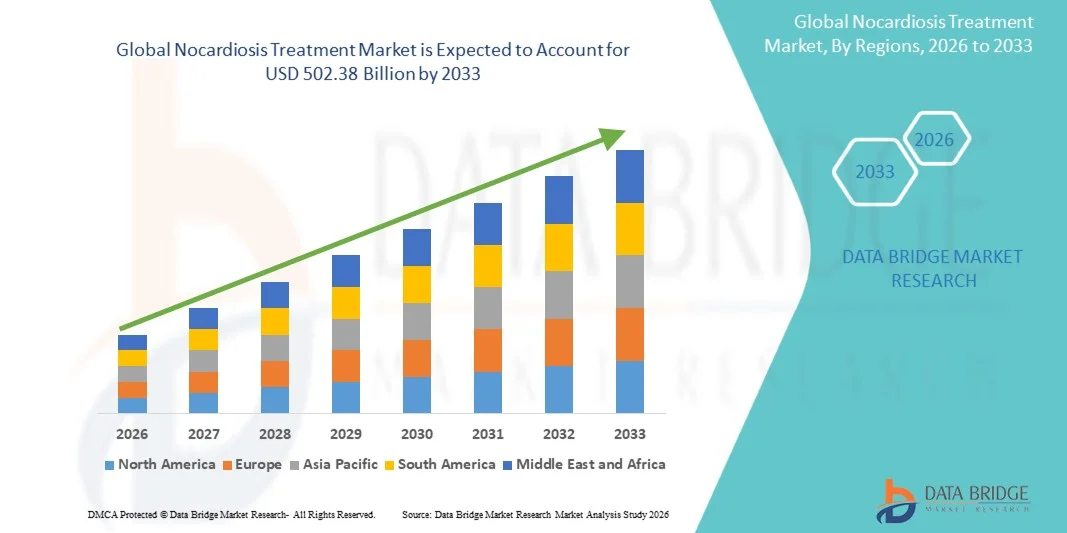
- The global Nocardiosis Treatment market size was valued at USD 320.00 Million in 2025 and is expected to reach USD 502.38 Million by 2033, at a CAGR of 5.80% during the forecast period
- The market growth is largely fueled by increasing awareness of rare infectious diseases, continuous advancements in antimicrobial therapies, and growing digitalization across healthcare systems, hospitals, and diagnostic laboratories
- Furthermore, rising demand for effective, patient-friendly, and integrated treatment approaches for bacterial infections is establishing Nocardiosis Treatment solutions as an important component of modern infectious disease management. These converging factors are accelerating the uptake of Nocardiosis Treatment solutions, thereby significantly boosting the industry's growth
Nocardiosis Treatment Market Analysis
- Nocardiosis Treatment solutions, including antibiotic therapies, combination antimicrobial regimens, diagnostic monitoring, and supportive inpatient care, are increasingly vital components of modern infectious disease management systems due to their role in treating severe pulmonary, cutaneous, and disseminated nocardial infections
- The escalating demand for Nocardiosis Treatment is primarily fueled by rising prevalence of immunocompromised patient populations, increasing awareness of rare bacterial infections, improvements in laboratory diagnosis, and growing demand for targeted antimicrobial therapies
- North America dominated the Nocardiosis Treatment market with the largest revenue share of 38.4% in 2025, characterized by advanced healthcare infrastructure, strong infectious disease surveillance systems, high diagnosis rates, and broad access to specialized antimicrobial therapies, with the U.S. experiencing substantial growth in treatment adoption across hospitals and specialty centers
- Asia-Pacific is expected to be the fastest-growing region in the Nocardiosis Treatment market during the forecast period, projected to register a CAGR of 8.7%, due to rising healthcare investments, increasing awareness of opportunistic infections, growing immunocompromised patient populations, and improving access to advanced diagnostics and treatment options
- The oral segment held the largest market revenue share of 48.7% in 2025, driven by prolonged treatment durations commonly required for nocardiosis management
Report Scope and Nocardiosis Treatment Market Segmentation
|
Attributes |
Nocardiosis Treatment Key Market Insights |
|
Segments Covered |
|
|
Countries Covered |
North America
Europe
Asia-Pacific
Middle East and Africa
South America
|
|
Key Market Players |
|
|
Market Opportunities |
|
|
Value Added Data Infosets |
In addition to the insights on market scenarios such as market value, growth rate, segmentation, geographical coverage, and major players, the market reports curated by the Data Bridge Market Research also include in-depth expert analysis, patient epidemiology, pipeline analysis, pricing analysis, and regulatory framework. |
Nocardiosis Treatment Market Trends
“Increasing Focus on Rapid Diagnosis and Advanced Antimicrobial Treatment Approaches”
- A significant and accelerating trend in the global Nocardiosis Treatment market is the growing focus on rapid diagnosis, species-level pathogen identification, and advanced antimicrobial treatment strategies. These developments are helping clinicians improve treatment precision, reduce disease complications, and enhance outcomes for patients with pulmonary, cutaneous, or disseminated nocardiosis infections
- For instance, hospitals and reference laboratories are increasingly adopting molecular diagnostic methods such as PCR testing, MALDI-TOF mass spectrometry, and advanced culture techniques to identify Nocardia species more quickly than conventional methods. Faster diagnosis supports timely initiation of targeted antibiotic therapy
- Advanced treatment approaches enable physicians to tailor therapy based on antimicrobial susceptibility patterns and disease severity. For example, trimethoprim-sulfamethoxazole remains a common first-line therapy, while severe or resistant infections may require combination regimens including imipenem, amikacin, linezolid, or ceftriaxone
- The integration of infectious disease specialists, pulmonologists, neurologists, and transplant care teams is improving management of complex nocardiosis cases, particularly in immunocompromised patients. Through multidisciplinary care pathways, treatment monitoring and complication management are becoming more effective
- This trend toward faster detection and personalized antimicrobial care is reshaping expectations for rare bacterial infection management. Consequently, healthcare institutions and pharmaceutical companies are supporting research into improved diagnostics and novel anti-infective therapies
- Demand for effective nocardiosis treatment solutions is rising globally due to increasing immunosuppressed patient populations, higher transplant rates, and broader awareness of opportunistic infections
Nocardiosis Treatment Market Dynamics
Driver
“Growing Need Due to Rising Immunocompromised Population and Increasing Opportunistic Infections”
- The increasing number of immunocompromised individuals, including organ transplant recipients, cancer patients undergoing chemotherapy, HIV patients, and long-term corticosteroid users, is a major driver for the nocardiosis treatment market. These patient groups are at higher risk of developing serious Nocardia infections
- For instance, in April 2025, several tertiary hospitals expanded infectious disease surveillance programs to strengthen detection of opportunistic bacterial infections among transplant and oncology patients. Such initiatives are expected to support market growth during the forecast period
- As awareness among healthcare professionals improves, more suspected nocardiosis cases are being tested and diagnosed earlier, increasing demand for targeted antimicrobial therapies
- Furthermore, rising chronic respiratory diseases and hospital-acquired infection concerns are contributing to demand for improved pulmonary infection management, including rare pathogens such as Nocardia
- Expansion of healthcare infrastructure, access to specialty laboratories, and better antimicrobial stewardship programs are also supporting broader market development
Restraint/Challenge
“Delayed Diagnosis, Long Treatment Duration, and Antibiotic Resistance Concerns”
- Delayed or missed diagnosis remains a major challenge in the nocardiosis treatment market because symptoms often resemble tuberculosis, fungal infections, pneumonia, or malignancy. This can postpone appropriate treatment and worsen outcomes
- For instance, pulmonary nocardiosis may initially be mistaken for chronic bacterial pneumonia, leading to ineffective first-line therapy before laboratory confirmation is obtained
- In addition to diagnostic complexity, nocardiosis often requires prolonged antibiotic treatment lasting several months, especially in disseminated or central nervous system infections. Long therapy duration may affect patient adherence and increase treatment costs
- Emerging antimicrobial resistance among certain Nocardia species can further complicate treatment selection and require combination therapy with close monitoring
- Limited awareness in low-resource regions and restricted access to advanced microbiology laboratories can also constrain timely diagnosis and management
- Overcoming these challenges through rapid diagnostics, physician education, improved susceptibility testing, and development of newer antimicrobial agents will be vital for sustained market growth
Nocardiosis Treatment Market Scope
The market is segmented on the basis of drug classification, route of administration, end-users, and distribution channel.
• By Drug Classification
On the basis of drug classification, the Nocardiosis Treatment market is segmented into sulfonamide drugs, trimethoprim-sulfamethoxazole, cilastatin (Primaxin), meropenem (Merrem IV), cefotaxime (Claforan), ceftriaxone (Rocephin), ampicillin, minocycline, amikacin, and others. The trimethoprim-sulfamethoxazole segment dominated the largest market revenue share of 36.4% in 2025, driven by its long-standing position as the first-line therapy for nocardiosis treatment. It is widely prescribed because of strong antimicrobial efficacy against multiple Nocardia species. Physicians prefer this therapy for pulmonary, cutaneous, and disseminated nocardiosis cases. Broad clinical familiarity and guideline support strengthen prescribing trends. Availability in both oral and injectable forms increases treatment flexibility. Cost-effectiveness compared with newer antibiotics supports adoption in developing markets. Hospitals maintain steady inventory due to frequent use in immunocompromised patients. Rising incidence of opportunistic infections boosts segment demand. Combination therapy protocols often include trimethoprim-sulfamethoxazole for severe infections. Generic availability further improves access and affordability. These factors continue to sustain segment dominance globally.
The meropenem (Merrem IV) segment is expected to witness the fastest CAGR of 9.8% from 2026 to 2033, fueled by increasing use in severe, resistant, and disseminated nocardiosis infections. Meropenem offers broad-spectrum coverage and is often used in hospitalized high-risk patients. Rising antimicrobial resistance concerns are driving clinicians toward advanced carbapenem therapies. Growth in transplant and oncology patient populations supports demand. Improved intensive care management increases utilization of intravenous broad-spectrum antibiotics. Hospitals increasingly prefer meropenem in combination regimens for CNS nocardiosis. Expanding diagnostic capabilities enable earlier identification of severe cases requiring aggressive therapy. Higher healthcare spending in emerging economies supports premium antibiotic adoption. Strong efficacy and rapid bactericidal activity improve physician confidence. Ongoing antimicrobial stewardship programs still preserve appropriate use. These factors are projected to accelerate CAGR growth during the forecast period.
• By Route of Administration
On the basis of route of administration, the Nocardiosis Treatment market is segmented into injectable, oral, and parenteral. The oral segment held the largest market revenue share of 48.7% in 2025, driven by prolonged treatment durations commonly required for nocardiosis management. Oral formulations are preferred for maintenance therapy after hospital discharge. Patients benefit from convenient self-administration and reduced hospitalization costs. Trimethoprim-sulfamethoxazole and minocycline are widely available in oral forms. Long-term adherence is easier with tablet and capsule therapies. Physicians often transition stabilized patients from injectable to oral regimens. Retail pharmacy availability further supports segment growth. Increasing outpatient infectious disease management strengthens demand. Oral drugs reduce burden on infusion centers and inpatient resources. Growing awareness of early treatment completion improves compliance rates. These advantages maintain oral route dominance in the market.
The injectable segment is anticipated to witness the fastest CAGR of 10.3% from 2026 to 2033, owing to increasing hospitalization of severe nocardiosis cases among immunocompromised patients. Injectable antibiotics are essential for rapid management of disseminated and CNS infections. Hospitals rely on intravenous meropenem, amikacin, and ceftriaxone in critical care settings. Rising ICU admissions and transplant procedures support demand. Improved access to advanced hospital infrastructure in emerging countries boosts utilization. Injectable therapy provides better bioavailability in acute cases. Physicians increasingly adopt combination injectable regimens for resistant infections. Growth in sepsis management protocols also contributes to segment expansion. Stronger monitoring capabilities enhance treatment safety. Higher diagnosis of invasive nocardiosis will further accelerate adoption. These factors are expected to support the fastest CAGR.
• By End-Users
On the basis of end-users, the Nocardiosis Treatment market is segmented into hospitals, homecare, specialty clinics, ambulatory surgical centers, and others. The hospitals segment accounted for the largest market revenue share of 54.1% in 2025, driven by the need for specialized diagnosis and aggressive treatment of serious nocardiosis infections. Most patients initially present in hospitals due to respiratory distress, fever, or systemic complications. Hospitals provide microbiology labs, imaging, and infectious disease specialists. Severe pulmonary and CNS cases require inpatient intravenous therapy. Growing numbers of immunocompromised patients increase hospital treatment volumes. Hospitals also manage transplant recipients highly susceptible to opportunistic infections. Availability of multidisciplinary care supports better outcomes. Reimbursement systems in institutional settings strengthen revenues. Tertiary hospitals maintain strong procurement of high-value antibiotics. Rising awareness among clinicians improves early admission rates. These factors sustain hospital segment leadership.
The homecare segment is projected to witness the fastest CAGR of 8.7% from 2026 to 2033, fueled by increasing transition of stabilized patients to outpatient recovery programs. Long treatment durations make home-based care more practical and cost-efficient. Patients receiving oral antibiotics can continue therapy under physician supervision remotely. Expansion of telemedicine supports follow-up consultations and monitoring. Home infusion services for select parenteral therapies are gaining popularity. Rising healthcare costs encourage shorter hospital stays. Elderly and chronic disease patients prefer recovery in familiar environments. Caregiver support models improve adherence to long regimens. Pharmacy home delivery services enhance convenience. Developed healthcare systems are increasingly promoting homecare pathways. These trends are expected to drive strong CAGR growth.
• By Distribution Channel
On the basis of distribution channel, the Nocardiosis Treatment market is segmented into hospital pharmacy, retail pharmacy, and online pharmacy. The hospital pharmacy segment accounted for the largest market revenue share of 46.8% in 2025, driven by the high proportion of severe cases treated in inpatient settings. Hospital pharmacies dispense critical injectable antibiotics and monitor supply continuity. Physicians prefer institutional dispensing for complex combination therapies. Immediate drug access is essential in acute nocardiosis management. Hospitals procure large volumes through centralized purchasing contracts. Availability of specialty antimicrobials supports segment demand. Pharmacist oversight improves dosing accuracy and drug interaction management. Rising hospitalization rates among vulnerable patients strengthen revenues. Advanced care centers remain the primary source of initial treatment medications. Strong reimbursement support further benefits hospital channels. These factors maintain segment dominance.
The online pharmacy segment is expected to witness the fastest CAGR of 11.2% from 2026 to 2033, driven by growing digital healthcare adoption and demand for convenient refill access. Long-duration oral antibiotic therapies create recurring purchase opportunities through online platforms. Patients increasingly value doorstep delivery and competitive pricing. Expansion of e-prescription systems supports digital fulfillment. Remote patients benefit from wider medicine availability online. Subscription refill models improve adherence for extended treatments. Growing smartphone penetration in emerging economies boosts adoption. Secure payment systems and verified pharmacy networks enhance trust. Online platforms also offer medication reminders and support tools. Regulatory improvements for e-pharmacy operations further aid growth. These advantages are projected to generate the fastest CAGR through 2033.
Nocardiosis Treatment Market Regional Analysis
- North America dominated the Nocardiosis Treatment market with the largest revenue share of 38.4% in 2025, characterized by advanced healthcare infrastructure, strong infectious disease surveillance systems, high diagnosis rates, and broad access to specialized antimicrobial therapies, with the U.S. experiencing substantial growth in treatment adoption across hospitals and specialty centers
- Healthcare providers in the region highly value early pathogen identification, targeted antimicrobial regimens, and multidisciplinary management approaches for immunocompromised and high-risk patient populations
- This widespread adoption is further supported by strong healthcare expenditure, technologically advanced laboratory systems, increasing awareness of rare bacterial infections, and growing availability of specialty care services, establishing North America as a leading regional market
U.S. Nocardiosis Treatment Market Insight
The U.S. Nocardiosis Treatment market captured the largest revenue share in North America in 2025, fueled by advanced hospital networks, strong infectious disease management programs, and increasing diagnosis of opportunistic infections among immunocompromised patients. Healthcare providers are increasingly prioritizing rapid diagnostics, combination antimicrobial therapies, and personalized treatment pathways. Moreover, rising healthcare investments and robust specialty center availability are significantly contributing to market growth.
Europe Nocardiosis Treatment Market Insight
The Europe Nocardiosis Treatment market is projected to expand at a substantial CAGR throughout the forecast period, primarily driven by rising awareness of rare infectious diseases, improving microbiology diagnostics, and growing healthcare expenditure. Increasing emphasis on antimicrobial stewardship, hospital infection control programs, and timely disease diagnosis is supporting treatment demand across the region.
U.K. Nocardiosis Treatment Market Insight
The U.K. Nocardiosis Treatment market is anticipated to grow at a noteworthy CAGR during the forecast period, driven by expanding infectious disease care services, increasing awareness of opportunistic bacterial infections, and strong access to advanced healthcare systems. Continued investments in diagnostic laboratories and specialist treatment pathways are expected to stimulate market growth.
Germany Nocardiosis Treatment Market Insight
The Germany Nocardiosis Treatment market is expected to expand at a considerable CAGR during the forecast period, fueled by strong healthcare infrastructure, rising demand for precision diagnostics, and growing awareness regarding pulmonary and systemic bacterial infections. Germany’s focus on medical innovation and specialty infectious disease care is accelerating adoption of advanced treatment solutions.
Asia-Pacific Nocardiosis Treatment Market Insight
The Asia-Pacific Nocardiosis Treatment market is poised to grow at the fastest CAGR of 8.7% during the forecast period, driven by rising healthcare investments, increasing awareness of opportunistic infections, growing immunocompromised patient populations, and improving access to advanced diagnostics and treatment options. Expanding hospital infrastructure and stronger disease surveillance programs are further supporting regional growth.
Japan Nocardiosis Treatment Market Insight
The Japan Nocardiosis Treatment market is gaining momentum due to advanced healthcare systems, growing elderly and immunocompromised populations, and increasing focus on infectious disease management. Enhanced diagnostic capabilities and wider access to specialty antimicrobial therapies are contributing to market expansion.
China Nocardiosis Treatment Market Insight
The China Nocardiosis Treatment market accounted for the largest market revenue share in Asia Pacific in 2025, attributed to expanding healthcare infrastructure, increasing awareness of rare infections, and growing patient populations requiring immunosuppressive therapies. Rising investments in tertiary hospitals, microbiology laboratories, and specialty care centers are key factors propelling market growth in China.
Nocardiosis Treatment Market Share
The Nocardiosis Treatment industry is primarily led by well-established companies, including:
- Pfizer Inc. (U.S.)
- Merck & Co., Inc. (U.S.)
- Johnson & Johnson (U.S.)
- GlaxoSmithKline plc (U.K.)
- Sanofi S.A. (France)
- Novartis AG (Switzerland)
- Roche Holding AG (Switzerland)
- Bayer AG (Germany)
- Teva Pharmaceutical Industries Ltd. (Israel)
- Sun Pharmaceutical Industries Ltd. (India)
- Dr. Reddy’s Laboratories Ltd. (India)
- Cipla Limited (India)
- Lupin Limited (India)
- Viatris Inc. (U.S.)
- Hikma Pharmaceuticals plc (U.K.)
- Aurobindo Pharma Limited (India)
- AbbVie Inc. (U.S.)
- Bristol-Myers Squibb Company (U.S.)
- Takeda Pharmaceutical Company Limited (Japan)
- Otsuka Holdings Co., Ltd. (Japan)
Latest Developments in Global Nocardiosis Treatment Market
- In April 2021, researchers published “How do I manage nocardiosis?” in Clinical Microbiology and Infection, providing updated global clinical guidance for diagnosis and treatment of nocardiosis. The publication emphasized the use of trimethoprim-sulfamethoxazole (TMP-SMX), combination antibiotic therapy for severe disease, and species-specific susceptibility testing
- In June 2022, healthcare providers reported increasing use of linezolid-based combination regimens for severe pulmonary and disseminated nocardiosis, particularly in immunocompromised patients who were intolerant to sulfonamide therapy. This reflected growing diversification of treatment approaches in resistant infections
- In December 2023, hospitals and transplant centers expanded use of rapid molecular diagnostics and MALDI-TOF identification systems for Nocardia species detection, helping shorten time to diagnosis and enabling faster targeted antimicrobial therapy
- In April 2024, a peer-reviewed case report in the Journal of Infection and Chemotherapy documented successful maintenance treatment of disseminated nocardiosis with cerebral abscess using moxifloxacin and high-dose minocycline in a patient allergic to TMP-SMX. The report highlighted emerging alternative regimens for difficult-to-treat cases
- In October 2024, a multi-center retrospective cohort study published in Infection evaluated shorter-duration antibiotic therapy for nocardiosis, challenging the traditional 6–12 month treatment model. The study suggested that selected patients may be successfully treated with reduced therapy duration under specialist supervision
- In January 2025, the U.S. CDC updated its Clinical Overview of Nocardiosis, noting that approximately 500–1,000 new cases occur annually in the United States and emphasizing that multidrug-resistant strains are increasingly common. The CDC reaffirmed the importance of antimicrobial susceptibility testing for every clinically significant isolate

- Interactive Data Analysis Dashboard
- Company Analysis Dashboard for high growth potential opportunities
- Research Analyst Access for customization & queries
- Competitor Analysis with Interactive dashboard
- Latest News, Updates & Trend analysis
- Harness the Power of Benchmark Analysis for Comprehensive Competitor Tracking
Data collection and base year analysis are done using data collection modules with large sample sizes. The stage includes obtaining market information or related data through various sources and strategies. It includes examining and planning all the data acquired from the past in advance. It likewise envelops the examination of information inconsistencies seen across different information sources. The market data is analysed and estimated using market statistical and coherent models. Also, market share analysis and key trend analysis are the major success factors in the market report. To know more, please request an analyst call or drop down your inquiry.
The key research methodology used by DBMR research team is data triangulation which involves data mining, analysis of the impact of data variables on the market and primary (industry expert) validation. Data models include Vendor Positioning Grid, Market Time Line Analysis, Market Overview and Guide, Company Positioning Grid, Patent Analysis, Pricing Analysis, Company Market Share Analysis, Standards of Measurement, Global versus Regional and Vendor Share Analysis. To know more about the research methodology, drop in an inquiry to speak to our industry experts.
Data Bridge Market Research is a leader in advanced formative research. We take pride in servicing our existing and new customers with data and analysis that match and suits their goal. The report can be customized to include price trend analysis of target brands understanding the market for additional countries (ask for the list of countries), clinical trial results data, literature review, refurbished market and product base analysis. Market analysis of target competitors can be analyzed from technology-based analysis to market portfolio strategies. We can add as many competitors that you require data about in the format and data style you are looking for. Our team of analysts can also provide you data in crude raw excel files pivot tables (Fact book) or can assist you in creating presentations from the data sets available in the report.












