


Nocturnal Leg Cramps Treatment Market Size
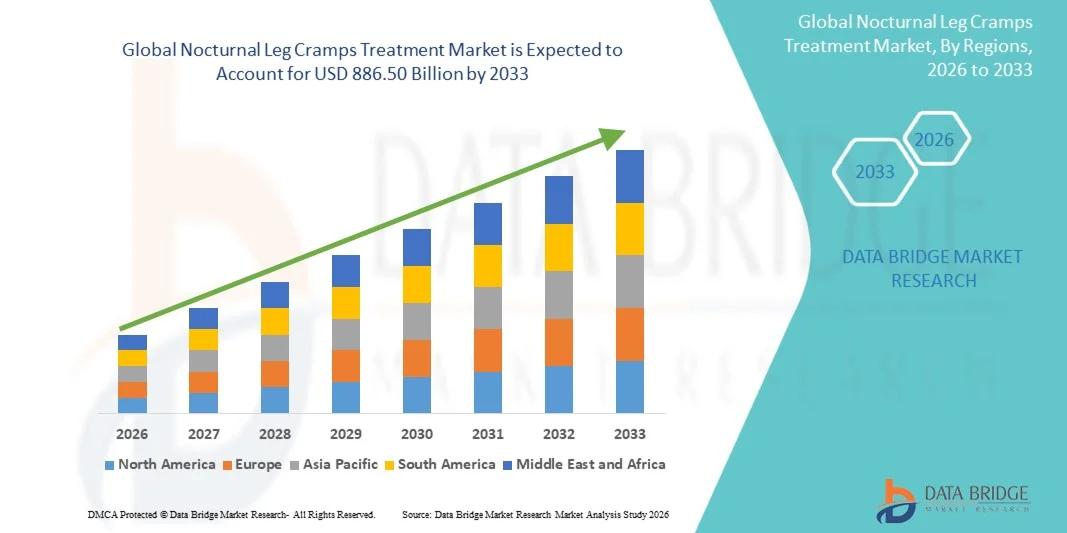
- The global nocturnal leg cramps treatment market size was valued at USD 489.73 billion in 2025 and is expected to reach USD 886.50 billion by 2033, at a CAGR of 7.70% during the forecast period
- The market growth is largely fueled by the rising prevalence of nocturnal leg cramps, particularly among the aging population and individuals with underlying conditions such as diabetes, peripheral vascular diseases, and neurological disorders, leading to increased demand for effective therapeutic solutions
- Furthermore, growing awareness regarding sleep disorders and muscle-related conditions, along with advancements in pharmacological and non-pharmacological treatment options, is driving patient preference toward safer, more targeted, and convenient treatment approaches. These converging factors are accelerating the adoption of nocturnal leg cramps therapies, thereby significantly boosting the industry's growth
Nocturnal Leg Cramps Treatment Market Analysis
- Nocturnal leg cramps treatments, encompassing pharmacological therapies, nutritional supplements, and lifestyle-based interventions, are increasingly essential in managing sudden, involuntary muscle contractions during sleep, particularly in aging populations and individuals with underlying comorbidities, due to their ability to reduce pain episodes and improve sleep quality
- The escalating demand for nocturnal leg cramps treatments is primarily fueled by the rising geriatric population, increasing prevalence of chronic conditions such as diabetes, kidney disorders, and neurological diseases, along with growing awareness of sleep-related disorders and their impact on overall health and quality of life
- North America dominated the nocturnal leg cramps treatment market with the largest revenue share of 38.5% in 2025, supported by high diagnosis rates, advanced healthcare infrastructure, strong access to prescription medications and supplements, and increasing clinical awareness, with the U.S. witnessing significant utilization of calcium channel blockers and NSAIDs, driven by established treatment protocols and ongoing clinical adoption
- Asia-Pacific is expected to be the fastest growing region in the nocturnal leg cramps treatment market during the forecast period due to increasing urbanization, rising disposable incomes, improving healthcare access, and growing awareness of musculoskeletal and sleep-related conditions, leading to higher diagnosis and treatment adoption rates
- The oral segment dominated the nocturnal leg cramps treatment market with a share of 55.7% in 2025, driven by the widespread use of oral medications such as tablets for calcium channel blockers and NSAIDs
Report Scope and Nocturnal Leg Cramps Treatment Market Segmentation
|
Attributes |
Nocturnal Leg Cramps Treatment Key Market Insights |
|
Segments Covered |
|
|
Countries Covered |
North America
Europe
Asia-Pacific
Middle East and Africa
South America
|
|
Key Market Players |
|
|
Market Opportunities |
|
|
Value Added Data Infosets |
In addition to the insights on market scenarios such as market value, growth rate, segmentation, geographical coverage, and major players, the market reports curated by the Data Bridge Market Research also include in-depth expert analysis, patient epidemiology, pipeline analysis, pricing analysis, and regulatory framework |
Nocturnal Leg Cramps Treatment Market Trends
“Rising Adoption of Personalized and Multi-Modal Treatment Approaches”
- A significant and accelerating trend in the global nocturnal leg cramps treatment market is the increasing adoption of personalized and multi-modal treatment approaches combining drug therapy, electrolyte management, and lifestyle modifications to improve patient outcomes and reduce recurrence of cramps
- For instance, calcium channel blockers such as diltiazem are being prescribed alongside magnesium supplementation and hydration strategies to address both symptomatic relief and underlying electrolyte imbalance in patients experiencing recurrent nocturnal leg cramps
- Advancements in treatment are enabling better targeting of underlying causes, with NSAIDs used for inflammation-related discomfort while supportive therapies such as stretching exercises and sleep hygiene improvements enhance overall treatment effectiveness and patient comfort
- The integration of clinical diagnosis methods such as blood tests and physical examinations with tailored therapy plans allows healthcare providers to identify deficiencies or comorbidities and recommend a more comprehensive and individualized treatment regimen
- This trend toward combination therapies and personalized care is reshaping clinical expectations, as pharmaceutical and supportive care providers increasingly collaborate to offer holistic management solutions for nocturnal leg cramps
- The demand for treatments that combine drug class interventions such as calcium channel blockers with non-drug approaches is growing rapidly across healthcare settings, as patients and physicians prioritize long-term relief, safety, and improved sleep quality
Nocturnal Leg Cramps Treatment Market Dynamics
Driver
“Growing Prevalence of Sleep Disorders and Age-Related Muscle Conditions”
- The increasing prevalence of sleep disorders and age-related muscle conditions among the global population, coupled with rising awareness of nocturnal leg cramps, is a significant driver for the heightened demand for effective treatment options
- For instance, the growing incidence of conditions such as diabetes, peripheral neuropathy, and chronic kidney disease has been associated with a higher frequency of nocturnal leg cramps, prompting greater use of calcium channel blockers and NSAIDs in clinical practice
- As patients and healthcare providers become more aware of the impact of nocturnal leg cramps on sleep quality and overall well-being, there is a growing preference for timely diagnosis through physical examination and blood tests followed by appropriate therapeutic intervention
- Furthermore, the expansion of healthcare infrastructure and improved access to diagnostic and treatment facilities are making it easier for patients to seek medical attention and receive prescribed medications such as oral tablets for long-term management
- The convenience of oral dosage forms and the availability of over-the-counter supplements, along with physician-prescribed therapies, are key factors propelling the adoption of nocturnal leg cramps treatments in both developed and emerging markets
- In addition, increasing focus on preventive healthcare and early intervention strategies is encouraging patients to adopt proactive management approaches, further supporting market expansion through regular monitoring and ongoing symptom control
Restraint/Challenge
“Limited Awareness and Treatment Standardization Alongside Safety Concern”
- Concerns surrounding limited awareness of nocturnal leg cramps as a diagnosable and treatable condition, along with the lack of standardized treatment protocols, pose a significant challenge to broader market penetration
- For instance, many patients tend to self-manage symptoms using home remedies without seeking clinical diagnosis through blood tests or physical examinations, leading to underdiagnosis and inconsistent treatment outcomes
- Addressing variability in treatment approaches through clinical guidelines and physician education is crucial for improving diagnosis rates and ensuring appropriate use of drug classes such as calcium channel blockers and NSAIDs. In addition, safety concerns related to long-term medication use, including potential side effects of NSAIDs or off-label therapies, may limit patient adherence and physician preference
- While oral and topical dosage forms provide convenience, concerns over efficacy consistency and delayed symptom relief in some cases may hinder widespread adoption, particularly among patients seeking immediate and reliable results
- Overcoming these challenges through increased awareness campaigns, improved diagnostic practices, and the development of safer and more standardized treatment protocols will be vital for sustained market growth
- Moreover, the lack of region-specific clinical guidelines and variability in reimbursement policies across healthcare systems can further restrict access to advanced treatments, particularly in developing and price-sensitive markets
Nocturnal Leg Cramps Treatment Market Scope
The market is segmented on the basis of drug class, route of administration, dosage form, diagnosis, end-users, and distribution channel.
- By Drug Class
On the basis of drug class, the nocturnal leg cramps treatment market is segmented into calcium channel blockers, nonsteroidal anti-inflammatory (NSAIDs), and others. The calcium channel blockers segment dominated the market with the largest market revenue share of 41.6% in 2025, driven by their effectiveness in reducing muscle excitability and frequency of cramps, particularly in patients with underlying comorbidities such as hypertension and vascular disorders. These drugs are widely prescribed due to their established clinical usage, predictable outcomes, and inclusion in treatment regimens for recurrent nocturnal leg cramps. In addition, their compatibility with long-term management strategies and physician familiarity further supports their dominance across hospital and outpatient settings.
The NSAIDs segment is anticipated to witness the fastest growth rate of 19.8% from 2026 to 2033, fueled by increasing use in managing pain and inflammation associated with muscle cramps. NSAIDs are often preferred for short-term symptom relief and are widely available in both prescription and over-the-counter forms, making them accessible to a broad patient base. Rising awareness of symptom management, coupled with growing preference for quick-acting medications, is contributing to the increased adoption of NSAIDs. Their role in combination therapies and supportive care regimens further strengthens their growth trajectory in both developed and emerging markets.
- By Route of Administration
On the basis of route of administration, the market is segmented into oral, topical, and others. The oral segment dominated the market with the largest revenue share of 55.7% in 2025, driven by the widespread use of tablets and capsules for drugs such as calcium channel blockers and NSAIDs. Oral administration is preferred due to its convenience, ease of use, and high patient compliance, particularly for chronic and recurrent conditions. The availability of oral formulations across prescription and over-the-counter channels further supports its dominance in both clinical and homecare settings.
The topical segment is expected to witness the fastest growth rate of 18.5% from 2026 to 2033, driven by increasing demand for localized, non-invasive treatment options with minimal systemic side effects. Topical formulations such as ointments and gels provide targeted relief and are gaining popularity among patients seeking alternatives to oral medications. Rising awareness of self-care treatments and the growing preference for OTC topical products are contributing to the segment’s expansion, especially in homecare and retail pharmacy channels.
- By Dosage Form
On the basis of dosage form, the market is segmented into tablets, ointments, gels, and others. The tablets segment dominated the market with the largest revenue share of 48.3% in 2025, driven by their extensive use in administering calcium channel blockers and NSAIDs. Tablets are the most commonly prescribed dosage form due to their ease of storage, accurate dosing, and widespread availability. Their dominance is further supported by physician preference and patient familiarity with oral solid medications for long-term management of nocturnal leg cramps.
The gels segment is anticipated to witness the fastest growth rate of 17.9% from 2026 to 2033, fueled by increasing demand for fast-absorbing and easy-to-apply formulations that provide localized relief. Gels are gaining traction due to their non-greasy texture, quick onset of action, and suitability for self-administration. Growing consumer inclination toward topical therapies and the expansion of OTC product offerings are key factors supporting the segment’s rapid growth across retail and online pharmacy channels.
- By Diagnosis
On the basis of diagnosis, the market is segmented into physical examination, blood tests, and others. The physical examination segment dominated the market with the largest revenue share of 46.2% in 2025, driven by its role as the primary diagnostic approach for identifying nocturnal leg cramps based on patient symptoms and clinical history. It is widely used due to its simplicity, low cost, and immediate availability in both primary and specialty care settings. Physicians rely on physical examination to rule out underlying conditions and guide initial treatment decisions.
The blood tests segment is expected to witness the fastest growth rate of 20.3% from 2026 to 2033, driven by increasing use in identifying underlying metabolic or electrolyte imbalances such as deficiencies in magnesium, calcium, or potassium. Blood tests provide deeper clinical insights that help in tailoring treatment plans and improving therapeutic outcomes. Rising emphasis on accurate diagnosis, along with improved access to laboratory services and preventive healthcare awareness, is contributing to the segment’s rapid expansion.
- By End-Users
On the basis of end-users, the market is segmented into hospitals, specialty clinics, homecare, and others. The hospitals segment dominated the market with the largest revenue share of 37.8% in 2025, driven by the availability of advanced diagnostic facilities, access to a wide range of treatment options, and the presence of trained healthcare professionals. Hospitals are the primary point of care for patients with severe or recurrent symptoms requiring comprehensive evaluation and prescription-based therapies.
The homecare segment is anticipated to witness the fastest growth rate of 21.1% from 2026 to 2033, fueled by the increasing preference for at-home management of chronic conditions and the growing availability of OTC medications and topical treatments. Patients are increasingly opting for home-based care due to convenience, cost-effectiveness, and the ability to manage mild to moderate symptoms without frequent hospital visits. Advancements in telemedicine and remote consultation services are further supporting the expansion of homecare-based treatment approaches.
- By Distribution Channel
On the basis of distribution channel, the market is segmented into hospital pharmacy, retail pharmacy, online pharmacy, and others. The hospital pharmacy segment dominated the market with the largest revenue share of 40.5% in 2025, driven by direct dispensing of prescription medications following diagnosis in clinical settings. Hospital pharmacies play a critical role in ensuring timely access to prescribed therapies, particularly for patients receiving inpatient or outpatient care in hospitals.
The online pharmacy segment is expected to witness the fastest growth rate of 22.4% from 2026 to 2033, driven by increasing digitalization of healthcare services and growing consumer preference for convenient medication procurement. Online platforms offer easy access to both prescription and OTC products, home delivery services, and competitive pricing. The rise of e-commerce penetration, coupled with improved logistics and telehealth integration, is significantly contributing to the rapid growth of online pharmacy channels in the nocturnal leg cramps treatment market.
Nocturnal Leg Cramps Treatment Market Regional Analysis
- North America dominated the nocturnal leg cramps treatment market with the largest revenue share of 38.5% in 2025, supported by high diagnosis rates, advanced healthcare infrastructure, strong access to prescription medications and supplements, and increasing clinical awareness
- Patients and healthcare providers in the region highly value the availability of advanced diagnostic methods such as blood tests and physical examinations, along with access to a wide range of treatment options including calcium channel blockers, NSAIDs, and supportive therapies
- This widespread adoption is further supported by high healthcare expenditure, favorable reimbursement frameworks, and a strong presence of pharmaceutical companies and research activities, establishing nocturnal leg cramps treatments as a well-integrated part of both hospital and outpatient care ecosystems
U.S. Nocturnal Leg Cramps Treatment Market Insight
The U.S. nocturnal leg cramps treatment market captured the largest revenue share within North America in 2025, driven by a high prevalence of sleep-related disorders and strong awareness regarding muscle health and preventive care. Patients in the country increasingly prioritize effective management of nocturnal symptoms through clinically guided therapies, including calcium channel blockers, NSAIDs, and supportive interventions. The presence of advanced healthcare infrastructure, widespread access to diagnostic methods such as blood tests and physical examinations, and strong physician adoption of evidence-based treatments further support market growth. In addition, favorable reimbursement policies and extensive availability of both prescription and over-the-counter medications contribute significantly to the expansion of the treatment market in the U.S.
Europe Nocturnal Leg Cramps Treatment Market Insight
The Europe nocturnal leg cramps treatment market is projected to expand at a substantial CAGR throughout the forecast period, primarily driven by an aging population and increasing prevalence of chronic conditions such as diabetes and vascular diseases. Growing awareness of sleep quality and muscle-related disorders is encouraging patients to seek timely diagnosis and treatment through physical examinations and laboratory testing. The region benefits from well-established healthcare systems and standardized clinical practices, promoting the use of drug classes such as calcium channel blockers and NSAIDs. Moreover, rising emphasis on preventive healthcare and expanding access to both hospital-based and outpatient treatment services are supporting the steady adoption of nocturnal leg cramps therapies across residential and clinical settings.
U.K. Nocturnal Leg Cramps Treatment Market Insight
The U.K. nocturnal leg cramps treatment market is anticipated to grow at a noteworthy CAGR during the forecast period, driven by increasing awareness of sleep disturbances and the need for effective symptom management among the aging population. Concerns related to discomfort during sleep and reduced quality of life are encouraging individuals to seek medical consultation and adopt prescribed treatments. The country’s strong healthcare infrastructure, coupled with accessibility to diagnostic services such as blood tests and physical examinations, supports early detection and treatment. In addition, the availability of oral dosage forms such as tablets and the growing use of retail and online pharmacies are enhancing patient access to calcium channel blockers and NSAIDs, thereby stimulating market growth.
Germany Nocturnal Leg Cramps Treatment Market Insight
The Germany nocturnal leg cramps treatment market is expected to expand at a considerable CAGR during the forecast period, fueled by increasing awareness of musculoskeletal health and a strong focus on preventive and precision medicine. The country’s well-developed healthcare infrastructure and emphasis on accurate diagnosis through clinical evaluation and blood testing promote effective treatment selection. Patients and healthcare providers in Germany prefer structured treatment approaches, often involving calcium channel blockers and NSAIDs for managing recurrent symptoms. Furthermore, the integration of advanced healthcare systems with digital health services and growing demand for homecare solutions are contributing to improved access and adherence to nocturnal leg cramps treatments across both hospital and specialty clinic settings.
Asia-Pacific Nocturnal Leg Cramps Treatment Market Insight
The Asia-Pacific nocturnal leg cramps treatment market is poised to grow at the fastest CAGR during the forecast period, driven by increasing urbanization, rising disposable incomes, and growing awareness of sleep-related disorders. The region’s expanding elderly population and increasing incidence of chronic diseases are contributing to a higher prevalence of nocturnal leg cramps, boosting demand for effective treatment options. Improved healthcare infrastructure, along with greater availability of diagnostic services such as physical examinations and blood tests, is facilitating early diagnosis and treatment adoption. In addition, the expansion of retail and online pharmacy channels and increasing availability of affordable oral and topical dosage forms are enhancing accessibility, supporting rapid market growth across developing economies.
Japan Nocturnal Leg Cramps Treatment Market Insight
The Japan nocturnal leg cramps treatment market is gaining momentum due to the country’s rapidly aging population and high awareness of health and wellness. The demand for effective management of muscle-related disorders is increasing, particularly among elderly individuals experiencing recurrent nocturnal symptoms. Japan’s advanced healthcare system supports accurate diagnosis through clinical evaluations and laboratory testing, enabling the use of targeted therapies such as calcium channel blockers and NSAIDs. In addition, the integration of modern healthcare technologies and a strong preference for convenient oral treatments are driving adoption. The presence of well-established pharmaceutical distribution channels further ensures consistent access to treatment options across both hospital and homecare settings.
India Nocturnal Leg Cramps Treatment Market Insight
The India nocturnal leg cramps treatment market accounted for a significant market revenue share in Asia Pacific in 2025, attributed to the country’s large population base, rising middle class, and increasing awareness of healthcare conditions. Growing urbanization and lifestyle changes are contributing to a higher incidence of sleep disturbances and muscle-related issues, leading to increased demand for treatment options. Improved access to healthcare facilities, along with expanding diagnostic capabilities such as blood tests and physical examinations, is supporting early detection. In addition, the availability of affordable medications, including calcium channel blockers and NSAIDs, through hospital, retail, and online pharmacies is driving market penetration across both urban and semi-urban regions.
Nocturnal Leg Cramps Treatment Market Share
The Nocturnal Leg Cramps Treatment industry is primarily led by well-established companies, including:
- Astellas Pharma Inc. (Japan)
- Apotex Inc. (Canada)
- Sun Pharmaceutical Industries Ltd. (India)
- Boiron USA (U.S.)
- Swanson Health Products Inc. (U.S.)
- Blackmores Limited (Australia)
- Solgar Inc. (U.S.)
- Genexa Inc. (U.S.)
- Zydus Lifesciences Limited (India)
- Teva Pharmaceutical Industries Ltd (Israel)
- Viatris Inc. (U.S.)
- Daiichi Sankyo Company, Limited (Japan)
- Hyland’s Inc. (U.S.)
- Naveh Pharma Ltd (Israel)
- Hydratis (France)
- Crampeze (Australia)
- Nature Made (U.S.)
- Doctor’s Best, Inc. (U.S.)
- NOW Health Group, Inc. (U.S.)
- Thorne HealthTech, Inc. (U.S.)
What are the Recent Developments in Global Nocturnal Leg Cramps Treatment Market?
- In August 2025, results from a randomized clinical trial demonstrated that daily use of compression stockings significantly reduced the frequency and pain intensity of nocturnal leg cramps and the number of nocturnal awakenings caused by them in older adults, highlighting a non-pharmacological intervention with measurable benefits
- In May 2025, a multicenter randomized clinical trial reported that vitamin K₂ significantly improved nocturnal leg cramps outcomes, reducing episodes and pain without reported side effects, suggesting a promising alternative therapy in older populations
- In January 2025, clinical findings published in multiple medical outlets reported that vitamin K₂ supplementation significantly reduced the frequency, intensity, and duration of nocturnal leg cramps in older adults compared with placebo, indicating potential new therapeutic use beyond traditional treatments
- In October 2024, a landmark randomized, double-blind, placebo-controlled clinical trial was published demonstrating that daily vitamin K₂ supplementation alleviates nocturnal leg cramps by significantly reducing frequency and severity among older adults, marking a notable clinical development
- In May 2024, a prospective randomized study reported that baclofen and gabapentin both significantly reduced nocturnal calf cramp frequency, intensity, and related sleep disturbance in individuals with lumbar spinal stenosis, indicating potential expanded use of muscle relaxants in nocturnal leg cramps management

- Interactive Data Analysis Dashboard
- Company Analysis Dashboard for high growth potential opportunities
- Research Analyst Access for customization & queries
- Competitor Analysis with Interactive dashboard
- Latest News, Updates & Trend analysis
- Harness the Power of Benchmark Analysis for Comprehensive Competitor Tracking
Data collection and base year analysis are done using data collection modules with large sample sizes. The stage includes obtaining market information or related data through various sources and strategies. It includes examining and planning all the data acquired from the past in advance. It likewise envelops the examination of information inconsistencies seen across different information sources. The market data is analysed and estimated using market statistical and coherent models. Also, market share analysis and key trend analysis are the major success factors in the market report. To know more, please request an analyst call or drop down your inquiry.
The key research methodology used by DBMR research team is data triangulation which involves data mining, analysis of the impact of data variables on the market and primary (industry expert) validation. Data models include Vendor Positioning Grid, Market Time Line Analysis, Market Overview and Guide, Company Positioning Grid, Patent Analysis, Pricing Analysis, Company Market Share Analysis, Standards of Measurement, Global versus Regional and Vendor Share Analysis. To know more about the research methodology, drop in an inquiry to speak to our industry experts.
Data Bridge Market Research is a leader in advanced formative research. We take pride in servicing our existing and new customers with data and analysis that match and suits their goal. The report can be customized to include price trend analysis of target brands understanding the market for additional countries (ask for the list of countries), clinical trial results data, literature review, refurbished market and product base analysis. Market analysis of target competitors can be analyzed from technology-based analysis to market portfolio strategies. We can add as many competitors that you require data about in the format and data style you are looking for. Our team of analysts can also provide you data in crude raw excel files pivot tables (Fact book) or can assist you in creating presentations from the data sets available in the report.












