


Occipital Neuralgia Treatment Market Size
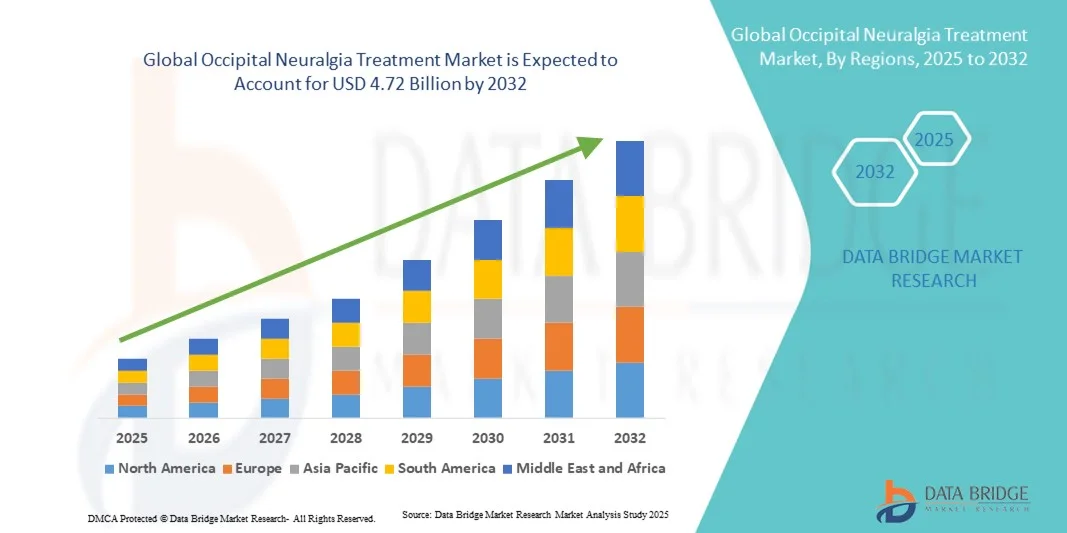
- The global occipital neuralgia treatment market size was valued at USD 2.90 billion in 2024 and is expected to reach USD 4.72 billion by 2032, at a CAGR of6.30% during the forecast period
- The market growth is largely fueled by the increasing prevalence of neurological disorders and growing awareness about effective management of occipital neuralgia, leading to higher adoption of targeted therapies, nerve blocks, and minimally invasive treatment options across healthcare settings
- Furthermore, rising demand for personalized pain management solutions, advancements in pharmacological and interventional therapies, and expanding access to specialized neurology clinics are accelerating the uptake of occipital neuralgia treatment solutions, thereby significantly boosting the industry’s growth
Occipital Neuralgia Treatment Market Analysis
- The Occipital Neuralgia Treatment market is witnessing steady growth, driven by the increasing prevalence of chronic headache disorders and the rising awareness of effective management strategies, including nerve blocks, pharmacological therapies, and minimally invasive procedures
- The escalating demand for occipital neuralgia treatment is primarily fueled by advancements in targeted therapies, personalized pain management solutions, and the expansion of specialized neurology clinics, improving patient access and outcomes
- North America dominated the occipital neuralgia treatment market with the largest revenue share of 42.33% in 2024, attributed to advanced healthcare infrastructure, high patient awareness, and the presence of key industry players actively developing innovative treatment options. The U.S. remains the primary contributor to regional growth due to strong adoption of interventional and pharmacological therapies
- Asia-Pacific is expected to be the fastest-growing region in the occipital neuralgia treatment market during the forecast period, with a projected CAGR of 8.0%, supported by improving healthcare access, increasing urbanization, and rising disposable incomes in countries such as China and India
- Anticonvulsant Medicines dominated the largest market revenue share of 42.8% in 2024, due to their efficacy in managing nerve pain and favorable safety profile
Report Scope and Occipital Neuralgia Treatment Market Segmentation
|
Attributes |
Occipital Neuralgia Treatment Key Market Insights |
|
Segments Covered |
|
|
Countries Covered |
North America
Europe
Asia-Pacific
Middle East and Africa
South America
|
|
Key Market Players |
|
|
Market Opportunities |
|
|
Value Added Data Infosets |
In addition to the insights on market scenarios such as market value, growth rate, segmentation, geographical coverage, and major players, the market reports curated by the Data Bridge Market Research also include in-depth expert analysis, patient epidemiology, pipeline analysis, pricing analysis, and regulatory framework. |
Occipital Neuralgia Treatment Market Trends
Improved Patient Outcomes Through Advanced Treatment Approaches
- A significant and accelerating trend in the global occipital neuralgia treatment market is the development of novel therapeutics and treatment protocols that enhance patient convenience and improve clinical outcomes. This includes advancements in pharmacological approaches, interventional therapies, and combination treatment regimens that are increasingly adopted in hospitals and specialty clinics
- For instance, recent formulations of anticonvulsants, tricyclic antidepressants, and biologic therapies allow more precise dosing and targeted management, reducing the frequency of hospital visits and improving patient adherence. Similarly, minimally invasive surgical interventions are providing quicker recovery times and improved symptom control for chronic cases
- Advances in treatment delivery methods, including oral and parenteral administration options, support patient-centric care and allow flexible integration into existing therapeutic regimens. Clinicians are now able to tailor treatment plans based on disease severity, comorbidities, and patient lifestyle, thereby enhancing the overall therapeutic experience
- The trend toward combination therapies, improved drug safety profiles, and the integration of multidisciplinary care approaches is facilitating more effective management of occipital neuralgia. Hospitals and specialty clinics are increasingly adopting evidence-based treatment algorithms, ensuring consistent and optimized patient outcomes
- Healthcare providers and pharmaceutical companies are focusing on expanding access to innovative treatment options, such as biologics and biosimilars, alongside first- and second-line drug therapies. This approach is helping to standardize treatment across regions and ensure timely interventions for patients experiencing recurrent or chronic symptoms
- The growing demand for comprehensive and patient-friendly occipital neuralgia management solutions is driving research and development, enabling the market to deliver therapies that are both effective and convenient for patients
Occipital Neuralgia Treatment Market Dynamics
Driver
Rising Prevalence and Increasing Awareness of Effective Treatment Options
- The increasing prevalence of occipital neuralgia, coupled with heightened awareness among healthcare providers and patients, is a significant driver of market growth. Improved diagnostic capabilities and screening protocols allow earlier detection and timely intervention
- For instance, in April 2024, leading pharmaceutical companies announced the development of combination therapies and enhanced treatment protocols, aimed at improving symptom control and quality of life for patients. Such initiatives are expected to drive market expansion during the forecast period
- As patients and clinicians recognize the benefits of advanced therapeutic approaches—including anticonvulsants, tricyclic antidepressants, and surgical interventions—the demand for these treatments continues to rise across hospitals, specialty clinics, and ambulatory care centers
- Furthermore, the trend toward patient-centric care, involving personalized treatment plans and improved dosing regimens, is fostering widespread adoption of modern occipital neuralgia therapies. Healthcare providers are increasingly integrating these treatments into standardized care pathways, ensuring broader access and enhanced outcomes
- The convenience of combination therapies, flexible administration routes, and improved safety profiles are key factors propelling the adoption of occipital neuralgia treatments across diverse patient populations. The market is also benefiting from increasing awareness campaigns, educational programs, and the availability of innovative drugs that address previously unmet medical needs
Restraint/Challenge
Concerns Regarding Treatment Cost and Access to Advanced Therapeutics
- The high cost of novel occipital neuralgia therapies and combination treatment regimens poses a challenge to market penetration, particularly in developing regions and among price-sensitive patient populations. Advanced pharmacological agents, including biologics and specialized drug therapies, can be expensive relative to traditional medications, limiting accessibility
- For instance, limited reimbursement policies and inconsistent insurance coverage in some regions have made it difficult for patients to access cutting-edge treatments, slowing adoption
- Addressing these barriers through affordable pricing strategies, expanded insurance coverage, and patient assistance programs is crucial to ensuring broader market growth. Companies are increasingly focusing on producing cost-effective biosimilars, first- and second-line drug therapies, and patient support initiatives to mitigate these challenges
- While awareness and access are gradually improving, perceived complexity of treatment regimens and limited availability of specialized care in rural or underserved areas can hinder widespread adoption. Educational programs for healthcare providers and patients are essential to improving understanding and ensuring proper treatment adherence
- Overcoming these challenges through improved treatment accessibility, cost management, and expanded patient support will be vital for sustained growth in the occipital neuralgia treatment market
Occipital Neuralgia Treatment Market Scope
The market is segmented on the basis of treatment, end user, and distribution channel.
- By Treatment
On the basis of treatment, the Occipital Neuralgia Treatment market is segmented into Anticonvulsant Medicines, Tricyclic Antidepressants, Surgery, and Others. Anticonvulsant Medicines dominated the largest market revenue share of 42.8% in 2024, due to their efficacy in managing nerve pain and favorable safety profile. These medicines are widely prescribed across hospitals and specialty clinics and are supported by established clinical guidelines. Adoption is strong in North America and Europe due to high healthcare access, insurance coverage, and physician familiarity. Chronic and recurrent cases of occipital neuralgia drive long-term use, further increasing market revenue. Combination therapy with other drugs enhances effectiveness. Growing awareness among patients and early diagnosis contribute to consistent demand. Generic availability ensures affordability and higher penetration in developed and emerging markets. Clinical training programs and guideline updates support widespread use. Patient adherence to therapy and ongoing monitoring strengthen market dominance. Hospital and specialty clinic adoption ensures ready availability and prescription compliance.
Surgery is expected to witness the fastest CAGR of 7.4% from 2025 to 2032, driven by advanced minimally invasive techniques and increasing preference for permanent pain relief in refractory cases. The development of image-guided procedures and nerve decompression surgeries boosts adoption in specialty clinics and hospitals. Emerging regions are witnessing growing surgical interventions due to better infrastructure and increased physician training. Rising awareness of surgical benefits, clinical success rates, and patient demand for long-term relief accelerate growth. Insurance coverage for surgical procedures further supports uptake. Hospitals and ambulatory surgical centers expand capacities for such interventions. Technological advancements, including robotic assistance, improve precision and outcomes. Publications and conferences highlighting positive clinical results raise awareness. Patient willingness to opt for surgery after unsuccessful pharmacotherapy contributes to rising adoption. Ongoing R&D in surgical techniques strengthens segment growth, while collaborative care pathways with neurologists enhance patient selection and outcomes.
- By End User
On the basis of end user, the Occipital Neuralgia Treatment market is segmented into Hospital, Specialty Clinics, Ambulatory Surgical Centers, and Others. Hospitals dominated the largest market revenue share of 53.6% in 2024, due to comprehensive care facilities, availability of neurologists and pain specialists, and infrastructure for both pharmacologic and surgical management. High patient volumes, integration of diagnostic imaging, and multi-disciplinary care strengthen hospital adoption. Regional dominance is notable in North America and Europe due to advanced healthcare systems. Insurance coverage, guideline-based treatment protocols, and hospital formularies ensure consistent use of treatments. Long-term patient follow-ups and combination therapy options increase treatment adherence. Hospitals provide both outpatient and inpatient care, enabling higher treatment volumes. Strong research presence and clinical trials at hospitals contribute to continued innovation. Educational programs for healthcare providers reinforce treatment standards. Coordination with specialty clinics ensures patient retention and continued care.
Specialty Clinics are expected to witness the fastest CAGR of 8.9% from 2025 to 2032, driven by focused pain management services, personalized treatment plans, and increasing investments in neurology care infrastructure. Clinics in Europe, North America, and Asia-Pacific are expanding services due to rising patient demand. Adoption of new pharmacologic therapies, minimally invasive surgical options, and outpatient procedures accelerates growth. High patient satisfaction rates and referral networks strengthen specialty clinic uptake. Awareness campaigns targeting patients and physicians increase adoption. Clinics provide flexible scheduling, focused monitoring, and personalized follow-ups. Collaborations with hospitals enhance patient access to advanced treatments. Emerging economies are witnessing the establishment of new specialty centers. Growing physician expertise and continuing medical education drive adoption. Patient preference for specialized, less congested settings supports faster growth. Telemedicine and home-based follow-ups further increase specialty clinic treatment reach.
- By Distribution Channel
On the basis of distribution channel, the Occipital Neuralgia Treatment market is segmented into Hospital Pharmacy, Retail Pharmacy, and Online Pharmacy. Hospital Pharmacy dominated the largest market revenue share of 49.2% in 2024, due to direct availability of prescription medications for patients under hospital care. High patient trust, insurance coverage, and integrated care pathways support hospital pharmacy dominance. Coordination with neurologists and pain specialists ensures medication adherence. Hospital pharmacies also stock high-cost and specialized drugs, increasing revenue share. Multi-drug prescriptions and combination therapies strengthen market presence. Hospitals’ diagnostic and treatment capabilities complement pharmacy availability. Regional contribution is significant in North America and Europe due to strong healthcare networks. Clinical protocols and guideline adherence ensure standardized use. Patient education programs enhance compliance. Hospital-based distribution provides reliability, convenience, and timely access for chronic patients. Collaboration with specialty clinics and diagnostic centers ensures consistent treatment supply.
Online Pharmacy is expected to witness the fastest CAGR of 9.5% from 2025 to 2032, driven by increasing patient preference for home delivery, convenience, and digital ordering platforms. Telemedicine adoption, e-prescriptions, and insurance-supported online sales boost growth. Patients in both urban and remote areas gain access to medications quickly. Emerging markets are increasingly adopting online channels due to convenience and cost-effectiveness. Integration with mobile apps, subscription models, and reminder systems enhances patient adherence. Online pharmacies also expand access to newer therapies and biologics. Awareness campaigns and digital marketing increase visibility and patient trust. Growing partnerships with hospitals and specialty clinics ensure reliable sourcing. Regulatory improvements and secure payment systems support rapid adoption. Patient preference for discreet, fast delivery strengthens CAGR. Convenience, availability of dosage forms, and competitive pricing accelerate online pharmacy uptake.
Occipital Neuralgia Treatment Market Regional Analysis
- North America dominated the occipital neuralgia treatment market with the largest revenue share of 42.33% in 2024, attributed to advanced healthcare infrastructure, high patient awareness, and the presence of key industry players actively developing innovative treatment options
- The market remains the primary contributor to regional growth due to strong adoption of interventional and pharmacological therapies, increasing hospital capacity, and robust clinical research initiatives
- In addition, the rising prevalence of occipital neuralgia and growing access to specialized neurological care further support market expansion across the region
U.S. Occipital Neuralgia Treatment Market Insight
The U.S. occipital neuralgia treatment market captured the largest revenue share within North America in 2024, fueled by increasing awareness of disease management, availability of advanced therapeutics, and rising adoption of standardized treatment guidelines in hospitals and specialty clinics. Strong investment in research, introduction of new pharmacological options, and growing patient demand for minimally invasive therapies are also driving growth in the U.S. market.
Europe Occipital Neuralgia Treatment Market Insight
The Europe occipital neuralgia treatment market is projected to expand at a substantial CAGR throughout the forecast period, primarily driven by growing prevalence of neurological disorders, advanced healthcare systems, and increasing access to specialist clinics. The region also benefits from government initiatives promoting neurological health awareness and reimbursement policies supporting advanced treatment adoption.
U.K. Occipital Neuralgia Treatment Market Insight
The U.K. occipital neuralgia treatment market is anticipated to grow at a noteworthy CAGR during the forecast period, driven by rising patient awareness, increasing availability of innovative therapies, and expanding healthcare facilities. The adoption of interventional procedures and targeted pharmacological treatments in both public and private hospitals supports sustained market growth.
Germany Occipital Neuralgia Treatment Market Insight
The Germany occipital neuralgia treatment market is expected to expand at a considerable CAGR during the forecast period, fueled by well-established healthcare infrastructure, increasing patient awareness, and growing adoption of combination therapies. Germany’s emphasis on advanced neurological care and clinical research contributes to the adoption of both surgical and pharmacological treatment approaches.
Asia-Pacific Occipital Neuralgia Treatment Market Insight
The Asia-Pacific occipital neuralgia treatment market is poised to grow at the fastest CAGR of 8.0% during the forecast period of 2025 to 2032, driven by improving healthcare access, increasing urbanization, and rising disposable incomes in countries such as China, India, and Japan. Expanding hospital networks, rising number of specialty clinics, and growing public awareness regarding effective treatment options are key factors contributing to market growth in the region.
Japan Occipital Neuralgia Treatment Market Insight
The Japan Occipital Neuralgia Treatment market is gaining momentum due to the country’s advanced healthcare system, high patient awareness, and demand for timely intervention in occipital neuralgia cases. Hospitals and specialty clinics focusing on early diagnosis and treatment further support market growth. In addition, increasing adoption of pharmacological therapies and minimally invasive procedures is enhancing patient outcomes and driving market expansion.
China Occipital Neuralgia Treatment Market Insight
The China occipital neuralgia treatment market accounted for the largest revenue share in Asia-Pacific in 2024, attributed to expanding healthcare infrastructure, increasing number of hospitals and specialty clinics, rising prevalence of occipital neuralgia, and growing public awareness regarding effective treatment options. Enhanced access to specialized care, growing middle-class population, and increasing investments in neurological research are further contributing to the market’s rapid growth.
Occipital Neuralgia Treatment Market Share
The Occipital Neuralgia Treatment industry is primarily led by well-established companies, including:
• Novartis AG (Switzerland)
• Teva Pharmaceutical Industries Ltd. (Israel)
• Pfizer Inc. (U.S.)
• AbbVie Inc. (U.S.)
• Bristol-Myers Squibb Company (U.S.)
• Johnson & Johnson and its affiliates (U.S.)
• Lilly (U.S.)
• Roche Holding AG (Switzerland)
• GSK plc (U.K.)
• Bayer AG (Germany)
• Amgen Inc. (U.S.)
• AstraZeneca plc (U.K.)
• Sanofi (France)
• Novome Biotherapeutics (U.S.)
• Lundbeck A/S (Denmark)
Latest Developments in Global Occipital Neuralgia Treatment Market
- In August 2025, the UnitedHealthcare Provider Network published updated guidelines for occipital nerve injections and ablation procedures, including greater occipital nerve blocks (GONB) and radiofrequency ablation. These updates reflect growing clinical evidence supporting their use in treating occipital neuralgia and chronic headache syndromes. The guidelines aim to standardize treatment protocols and improve patient outcomes
- In May 2025, a multicenter, prospective, single-arm study demonstrated that 60-day peripheral nerve stimulation (PNS) targeting the occipital nerves resulted in significant reductions in pain and pain interference for patients with occipital neuralgia. The study's findings suggest that PNS offers an effective approach for the treatment of occipital neuralgia
- In April 2025, a study published in Frontiers in Neurology reported successful treatment of atypical occipital neuralgia using a unilateral dual-lead occipital nerve stimulator. The study highlights the potential of advanced neurostimulation techniques in managing complex cases of occipital neuralgia
- In October 2023, the American Academy of Neurology released updated practice guidelines recommending occipital nerve decompression surgery for patients with refractory occipital neuralgia who do not respond to conservative treatments. The guidelines emphasize the importance of patient selection and surgical technique in achieving favorable outcomes
- In March 2023, a systematic review and meta-analysis published in the Journal of Pain Research concluded that occipital nerve blocks, including greater occipital nerve blocks, are effective in reducing headache severity and frequency in patients with occipital neuralgia. The review supports the use of nerve blocks as a first-line treatment option

- Interactive Data Analysis Dashboard
- Company Analysis Dashboard for high growth potential opportunities
- Research Analyst Access for customization & queries
- Competitor Analysis with Interactive dashboard
- Latest News, Updates & Trend analysis
- Harness the Power of Benchmark Analysis for Comprehensive Competitor Tracking
Data collection and base year analysis are done using data collection modules with large sample sizes. The stage includes obtaining market information or related data through various sources and strategies. It includes examining and planning all the data acquired from the past in advance. It likewise envelops the examination of information inconsistencies seen across different information sources. The market data is analysed and estimated using market statistical and coherent models. Also, market share analysis and key trend analysis are the major success factors in the market report. To know more, please request an analyst call or drop down your inquiry.
The key research methodology used by DBMR research team is data triangulation which involves data mining, analysis of the impact of data variables on the market and primary (industry expert) validation. Data models include Vendor Positioning Grid, Market Time Line Analysis, Market Overview and Guide, Company Positioning Grid, Patent Analysis, Pricing Analysis, Company Market Share Analysis, Standards of Measurement, Global versus Regional and Vendor Share Analysis. To know more about the research methodology, drop in an inquiry to speak to our industry experts.
Data Bridge Market Research is a leader in advanced formative research. We take pride in servicing our existing and new customers with data and analysis that match and suits their goal. The report can be customized to include price trend analysis of target brands understanding the market for additional countries (ask for the list of countries), clinical trial results data, literature review, refurbished market and product base analysis. Market analysis of target competitors can be analyzed from technology-based analysis to market portfolio strategies. We can add as many competitors that you require data about in the format and data style you are looking for. Our team of analysts can also provide you data in crude raw excel files pivot tables (Fact book) or can assist you in creating presentations from the data sets available in the report.












