


Ocular Carotid Artery Dissection Market Size
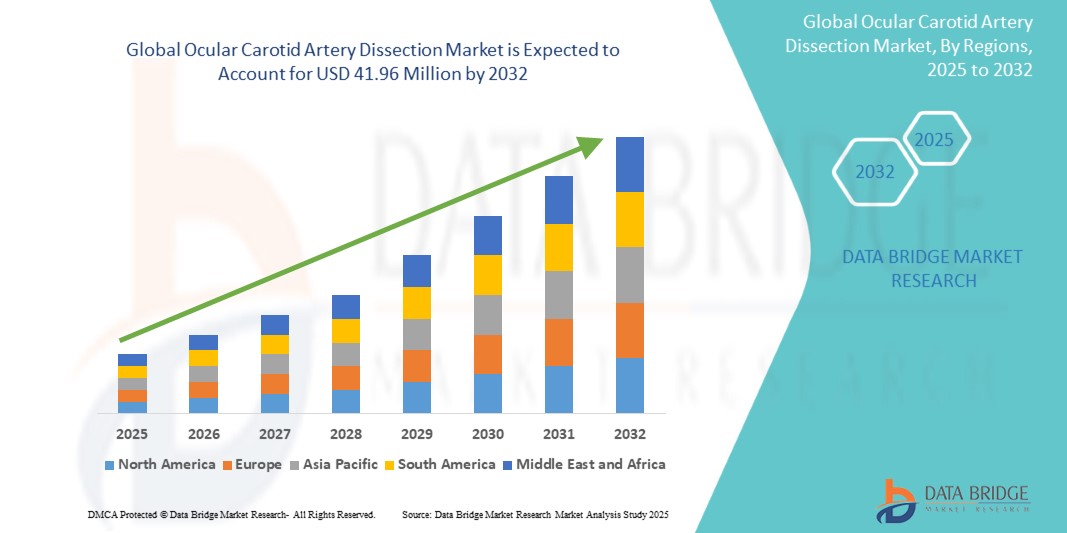
- The global ocular carotid artery dissection market size was valued at USD 24.55 million in 2024 and is expected to reach USD 41.96 million by 2032, at a CAGR of 6.93% during the forecast period
- The market growth is primarily driven by the increasing prevalence of carotid artery dissections and their strong association with stroke and vision-related complications, which require advanced diagnostic imaging and timely interventions
- In addition, the rising adoption of non-invasive imaging techniques, endovascular therapies, and multidisciplinary care approaches is expanding treatment capabilities, while heightened awareness among clinicians about ocular manifestations is improving early diagnosis rates, thereby fueling market expansion
Ocular Carotid Artery Dissection Market Analysis
- Ocular carotid artery dissection, often presenting with vision loss, diplopia, or Horner’s syndrome, is a critical subset of carotid artery disease and stroke management, where early diagnosis through advanced imaging and timely treatment with medication, stenting, or surgery is essential to prevent severe neurological and ocular complications
- The increasing incidence of carotid artery dissections, coupled with a growing focus on stroke prevention and ophthalmic manifestations, is driving demand for diagnostic imaging technologies, multidisciplinary care, and advanced interventional procedures
- North America dominated the ocular carotid artery dissection market with the largest revenue share of 40% in 2024, supported by high awareness of stroke-related disorders, robust healthcare infrastructure, and significant adoption of advanced imaging and endovascular treatment solutions, with the U.S. leading in clinical research and adoption of innovative therapies
- Asia-Pacific is expected to be the fastest growing region in the ocular carotid artery dissection market during the forecast period, driven by increasing patient awareness, expanding access to advanced diagnostic technologies, and rising stroke prevalence associated with lifestyle changes and aging populations
- The endovascular therapy segment dominated the ocular carotid artery dissection market with a share of 42.6% in 2024, owing to its minimally invasive nature, effectiveness in restoring blood flow, and growing preference over open surgical procedures, supported by continued innovation in carotid stent design and deployment techniques
Report Scope and Ocular Carotid Artery Dissection Market Segmentation
|
Attributes |
Ocular Carotid Artery Dissection Key Market Insights |
|
Segments Covered |
|
|
Countries Covered |
North America
Europe
Asia-Pacific
Middle East and Africa
South America
|
|
Key Market Players |
|
|
Market Opportunities |
|
|
Value Added Data Infosets |
In addition to the insights on market scenarios such as market value, growth rate, segmentation, geographical coverage, and major players, the market reports curated by the Data Bridge Market Research also include in-depth expert analysis, pricing analysis, brand share analysis, consumer survey, demography analysis, supply chain analysis, value chain analysis, raw material/consumables overview, vendor selection criteria, PESTLE Analysis, Porter Analysis, and regulatory framework. |
Ocular Carotid Artery Dissection Market Trends
Advancements in Non-Invasive Imaging and Endovascular Therapies
- A significant and accelerating trend in the ocular carotid artery dissection market is the adoption of non-invasive imaging techniques such as high-resolution MRI, CT angiography (CTA), and duplex ultrasound, which enable earlier and more accurate diagnosis of dissections that often present with ocular symptoms. This has strengthened the ability of clinicians to detect dissections before they lead to severe complications such as ischemic stroke or permanent vision loss
- For instance, the increasing use of 3T MRI scanners has allowed physicians to visualize vessel wall abnormalities with greater clarity, while CTA provides rapid and cost-effective screening for suspected dissections in emergency settings. Similarly, duplex ultrasound continues to be a frontline diagnostic tool, particularly for recurrent monitoring
- On the treatment front, endovascular stenting is gaining prominence over open surgical approaches due to its minimally invasive nature and improved patient recovery outcomes. Newer carotid stents with bioabsorbable coatings and drug-eluting properties are entering the market, offering safer and more durable interventions for dissection cases
- Multidisciplinary collaboration between neurology, ophthalmology, and vascular surgery departments is also reshaping treatment pathways, with shared expertise improving patient management where ocular manifestations are the first presenting signs
- The integration of AI-assisted imaging analysis and digital health tools for stroke risk prediction represents an emerging frontier, allowing earlier detection and tailored treatment strategies for patients at high risk
- This trend toward more accurate diagnostics, minimally invasive therapies, and technology-enabled care delivery is reshaping the market, with healthcare providers and device manufacturers increasingly investing in innovation to improve patient outcomes in carotid dissections presenting with ocular symptoms
Ocular Carotid Artery Dissection Market Dynamics
Driver
Growing Stroke Burden and Rising Awareness of Ocular Presentations
- The increasing global burden of stroke and cerebrovascular disease, in which carotid artery dissections are a significant contributor, is a major driver for the market. Ocular symptoms such as sudden vision loss or Horner’s syndrome often serve as critical early indicators, creating demand for rapid imaging and intervention
- For instance, the American Heart Association reported in 2024 that nearly 10–25% of ischemic strokes in young and middle-aged adults are linked to arterial dissections, highlighting the need for effective diagnosis and management. Such statistics are encouraging hospitals to adopt advanced imaging modalities and expand vascular neurology services
- Rising awareness among ophthalmologists about ocular warning signs has also increased referrals for vascular imaging, leading to earlier diagnoses. This collaborative care model is expected to accelerate demand for both diagnostic and interventional solutions
- The preference for endovascular therapies is also propelling growth, as minimally invasive approaches allow for faster recovery and reduced complication risks, driving adoption across developed healthcare markets
Restraint/Challenge
High Cost of Advanced Imaging and Limited Access in Developing Regions
- Despite progress, the market faces challenges due to the high cost of diagnostic imaging and endovascular procedures, which can limit accessibility in low- and middle-income countries. Advanced tools such as 3T MRI and CTA scanners remain concentrated in urban tertiary care hospitals, leaving rural populations underserved
- For instance, reports of delayed or missed diagnoses in regions with limited imaging infrastructure highlight disparities in access, restricting early intervention opportunities. This gap continues to hinder global market penetration, particularly in Asia-Pacific and Africa
- Furthermore, endovascular stenting, while effective, carries risks such as in-stent restenosis or procedural complications, which can make physicians hesitant in borderline cases. The high procedural cost also discourages adoption where reimbursement frameworks are weak
- To overcome these challenges, the development of cost-effective imaging technologies, portable diagnostic tools, and broader reimbursement support will be critical. Investments in telemedicine and AI-based diagnostic platforms may also help extend access and ensure timely diagnosis in resource-constrained settings
Ocular Carotid Artery Dissection Market Scope
The market is segmented on the basis of disease type, diagnosis, treatment, and end user.
- By Disease Type
On the basis of disease type, the ocular carotid artery dissection market is segmented into spontaneous carotid artery dissection and traumatic carotid artery dissection. Spontaneous carotid artery dissection dominated the market with the largest share in 2024. This dominance is due to its higher prevalence compared to traumatic cases, particularly in young and middle-aged adults where it is a leading cause of ischemic stroke. Clinicians are increasingly recognizing ocular symptoms such as Horner’s syndrome and transient vision loss as early warning signs, leading to quicker imaging referrals. The growing availability of advanced MRI and CTA for spontaneous dissections also supports this segment’s strength. In addition, spontaneous dissections are more widely studied and documented, driving investments in both diagnosis and treatment.
Traumatic carotid artery dissection is anticipated to witness the fastest growth during the forecast period. This growth is fueled by rising cases linked to motor vehicle accidents, sports injuries, and cervical trauma. Improved emergency response systems and greater use of CT angiography in trauma centers are helping increase detection rates. Younger demographics, who are more prone to traumatic events, also contribute to expanding the patient pool. Furthermore, advancements in minimally invasive repair techniques such as stenting are making management of traumatic dissections more effective, thereby supporting market expansion.
- By Diagnosis
On the basis of diagnosis, the ocular carotid artery dissection market is segmented into duplex ultrasound, computed tomography angiography (CTA), magnetic resonance imaging (MRI/MRA), and digital subtraction angiography (DSA). Computed tomography angiography (CTA) dominated the market with the largest share in 2024. CTA is widely used in emergency settings due to its speed, cost-effectiveness, and ability to provide detailed vascular imaging, making it particularly useful when ocular symptoms present acutely. The technology is highly accessible across both developed and emerging markets, which drives adoption. Furthermore, continuous improvements in CT scanner resolution and the integration of AI-based image analysis tools are boosting its diagnostic reliability. Hospitals also prefer CTA for its ability to simultaneously detect other trauma-related conditions, reinforcing its dominant position.
Magnetic resonance imaging (MRI/MRA) is expected to be the fastest-growing diagnostic segment during the forecast period. Its growth is fueled by the rising demand for non-invasive, radiation-free imaging with superior soft tissue and vessel wall visualization. MRI is particularly effective in detecting subtle dissections and intramural hematomas, which can be missed on CTA. Adoption is further supported by the global expansion of advanced 3T MRI systems in tertiary care hospitals. With AI-enhanced MRI interpretation tools becoming available, diagnostic accuracy is improving significantly, which will further accelerate this segment’s growth.
- By Treatment
On the basis of treatment, the ocular carotid artery dissection market is segmented into medication, endovascular therapy, and surgical procedures. Endovascular therapy dominated the market with the largest revenue share of 42.6% in 2024. The preference for stenting procedures stems from their minimally invasive nature, shorter recovery times, and reduced complication risks compared to open surgery. Ongoing innovation in carotid stent designs, including drug-eluting and bioabsorbable coatings, has further strengthened this segment. Hospitals are increasingly adopting endovascular techniques as the first-line intervention in both spontaneous and traumatic dissections. Clinical studies showing high success rates and better long-term outcomes have also boosted physician confidence, making this the dominant treatment choice.
Medication is anticipated to witness the fastest growth during the forecast period. The growing clinical acceptance of anticoagulants and antiplatelet therapy as frontline management options for less severe dissections is expanding this segment. New-generation oral anticoagulants (NOACs) are offering safer and more convenient alternatives to traditional drugs such as warfarin, boosting patient adherence. In addition, the emphasis on early medical management to prevent stroke before invasive procedures are considered supports broader adoption. Cost-effectiveness and accessibility in both developed and emerging markets further position medication as the fastest-growing treatment segment.
- By End User
On the basis of end user, the ocular carotid artery dissection market is segmented into hospitals, specialty clinics, and ambulatory surgical centers (ASCs). Hospitals dominated the market with the largest revenue share in 2024. Their dominance is attributed to the concentration of advanced diagnostic imaging equipment, vascular surgery departments, and multidisciplinary teams capable of managing complex carotid dissections. Hospitals also serve as referral centers for patients initially seen in ophthalmology or neurology clinics, further consolidating their patient volume. The availability of reimbursement frameworks for high-cost procedures such as MRI and stenting also favors hospital dominance. Moreover, hospitals play a central role in research and clinical trials, ensuring they remain the primary hub for patient management.
Specialty clinics are projected to grow at the fastest rate during the forecast period. This growth is driven by the rising establishment of neurology and ophthalmology-focused clinics, which are increasingly equipped with advanced imaging tools for early detection. Specialty clinics offer faster consultation, reduced waiting times, and more patient-centric care compared to larger hospitals. The rise of outpatient care models and targeted stroke prevention programs is also benefiting these clinics. As telemedicine platforms expand, specialty clinics are expected to play a growing role in extending diagnostic and follow-up services to underserved regions, driving their rapid growth.
Ocular Carotid Artery Dissection Market Regional Analysis
- North America dominated the ocular carotid artery dissection market with the largest revenue share of 40% in 2024, supported by high awareness of stroke-related disorders, robust healthcare infrastructure, and significant adoption of advanced imaging and endovascular treatment solutions, with the U.S. leading in clinical research and adoption of innovative therapies
- The region benefits from substantial investment in research and clinical studies focused on stroke and vascular disorders, which directly increases the detection and treatment rates of carotid artery dissections with ocular involvement
- Moreover, supportive reimbursement structures, widespread availability of neurologists and interventional radiologists, and the presence of leading pharmaceutical and medical device companies contribute to maintaining the region’s leadership in the market
U.S. Ocular Carotid Artery Dissection Market Insight
The U.S. ocular carotid artery dissection market captured the largest revenue share of 78% in 2024 within North America, fueled by the early adoption of advanced diagnostic imaging and strong awareness among clinicians regarding stroke-related ocular complications. The growing incidence of spontaneous and traumatic dissections, along with an aging population at higher risk for vascular disorders, is driving demand for timely diagnosis and intervention. In addition, robust investment in clinical research, well-established reimbursement policies, and the availability of multidisciplinary treatment approaches are accelerating market expansion. The integration of AI-driven imaging platforms and telemedicine consultations is further strengthening the U.S. market’s leadership.
Europe Ocular Carotid Artery Dissection Market Insight
The Europe ocular carotid artery dissection market is projected to expand at a substantial CAGR throughout the forecast period, primarily driven by the high prevalence of vascular diseases and government-backed initiatives for early detection of stroke and related conditions. The rising adoption of advanced imaging tools, such as CTA and MRI, is contributing to faster and more accurate diagnoses. Europe’s focus on preventive healthcare, combined with increasing research collaborations across universities and hospitals, is boosting market demand. Hospitals and specialty clinics are at the forefront of adoption, ensuring that patients receive timely and integrated care.
U.K. Ocular Carotid Artery Dissection Market Insight
The U.K. ocular carotid artery dissection market is anticipated to grow at a noteworthy CAGR during the forecast period, driven by increasing awareness of stroke-related vision complications and the rising burden of vascular diseases. The government’s strong emphasis on early intervention through public health programs is encouraging the adoption of advanced diagnostic modalities. In addition, the presence of specialized stroke centers and a growing preference for non-invasive imaging are strengthening the country’s role in market expansion. Technological adoption, paired with a focus on patient-centric treatment approaches, is fueling ongoing growth.
Germany Ocular Carotid Artery Dissection Market Insight
The Germany ocular carotid artery dissection market is expected to expand at a considerable CAGR during the forecast period, fueled by the country’s strong healthcare infrastructure and emphasis on precision diagnostics. Germany’s robust research ecosystem and partnerships between medical universities and device manufacturers are fostering the adoption of cutting-edge imaging solutions. The increasing use of endovascular therapies in complex vascular cases is further accelerating demand. Moreover, the market benefits from patient awareness campaigns and the integration of advanced clinical guidelines into practice, ensuring standardized and efficient treatment pathways.
Asia-Pacific Ocular Carotid Artery Dissection Market Insight
The Asia-Pacific ocular carotid artery dissection market is poised to grow at the fastest CAGR of 23.5% during the forecast period of 2025 to 2032, driven by rapid improvements in healthcare infrastructure, rising cases of vascular and ocular disorders, and technological advancements in diagnostic imaging. Countries such as China, Japan, and India are witnessing increasing investment in stroke prevention programs, which directly supports market expansion. Growing disposable incomes and government initiatives promoting digital healthcare solutions are also enabling broader access to advanced therapies. The region is becoming a critical hub for both treatment innovation and patient care.
Japan Ocular Carotid Artery Dissection Market Insight
The Japan ocular carotid artery dissection market is gaining momentum due to its high-tech medical ecosystem, focus on early disease detection, and rising geriatric population vulnerable to vascular complications. The adoption of MRI and CTA in hospitals and specialty clinics is ensuring faster, more accurate diagnoses, while minimally invasive treatment methods are increasingly preferred. Japan’s commitment to technological advancement, coupled with its aging society, is driving demand for efficient, patient-friendly solutions. Integration with AI-based diagnostic support tools is expected to further fuel growth during the forecast period.
India Ocular Carotid Artery Dissection Market Insight
The India ocular carotid artery dissection market accounted for the largest market revenue share in Asia Pacific in 2024, attributed to the country’s rapid improvements in healthcare access, urbanization, and growing awareness about stroke and ocular health. India is witnessing a rising number of vascular complications due to lifestyle-related risk factors, creating significant demand for timely diagnosis and treatment. Government initiatives such as smart city and digital health programs are encouraging the integration of advanced diagnostic and treatment solutions. Domestic manufacturers and increasing affordability are further expanding access to care across urban and semi-urban regions.
Ocular Carotid Artery Dissection Market Share
The ocular carotid artery dissection industry is primarily led by well-established companies, including:
- Contego Medical, Inc. (U.S.)
- InspireMD, Inc. (U.S.)
- Silk Road Medical, Inc. (U.S.)
- Boston Scientific Corporation (U.S.)
- Medtronic (U.S.)
- Abbott (U.S.)
- Cordis (U.S.)
- LeMaitre Vascular, Inc. (U.S.)
- Terumo Corporation (Japan)
- MicroPort Scientific Corporation (China)
- OrbusNeich Medical Group Holdings Limited (Hong Kong)
- Vascutek Ltd. (U.K.)
- MicroVention, Inc. (U.S.)
- W. L. Gore & Associates, Inc. (U.S.)
- Penumbra, Inc. (U.S.)
- Stryker (U.S.)
- Siemens Healthineers AG (Germany)
- Koninklijke Philips N.V. (Netherlands)
- GE Healthcare (U.S.)
- Cook (U.S.)
What are the Recent Developments in Global Ocular Carotid Artery Dissection Market?
- In July 2025, InspireMD, Inc. officially launched the CGuard Prime carotid stent system in the U.S. following its FDA premarket approval. The device is engineered with a dual-layer MicroNet mesh design to trap thrombus and plaque against the vessel wall, reducing embolic risk while preserving artery patency. The launch is notable for advancing stroke prevention options and strengthening commercial availability of innovative carotid intervention tools
- In June 2025, InspireMD announced that its CGuard Prime carotid stent system received U.S. FDA premarket approval (PMA) and CE-mark under MDR a regulatory milestone that expands the approved toolset for carotid interventions used to prevent stroke following carotid pathology (including dissections requiring stenting), and is such asly to affect treatment choices and reimbursement discussions in tertiary centers
- In April 2025, Terumo Neuro received U.S. FDA premarket approval for its dual-layer micromesh carotid stent system, marking it as the first such stent approved in the U.S. This silicates a new option for treating carotid artery stenosis in high-risk patients especially relevant to those with dissection complications and underscores innovation in embolic protection and stent architecture for vascular therapies
- In November 2023, vascular-intervention reports from the VIVA/vascular meetings highlighted new carotid stent systems associated with very low periprocedural stroke/complication rates, renewing clinician confidence in carotid artery stenting as an effective option for selected patients findings that have direct implications for interventional management of carotid dissections presenting with ocular or neurovascular symptoms
- In July 2023, the U.S. Centers for Medicare & Medicaid Services (CMS) issued a decision memo proposing expanded coverage for percutaneous transluminal angioplasty of the carotid artery concurrent with stenting (CAS) for certain Medicare beneficiaries a policy shift that, if finalized, would broaden payer support and could materially increase access to endovascular treatments used in selected carotid dissection cases

- Interactive Data Analysis Dashboard
- Company Analysis Dashboard for high growth potential opportunities
- Research Analyst Access for customization & queries
- Competitor Analysis with Interactive dashboard
- Latest News, Updates & Trend analysis
- Harness the Power of Benchmark Analysis for Comprehensive Competitor Tracking
Data collection and base year analysis are done using data collection modules with large sample sizes. The stage includes obtaining market information or related data through various sources and strategies. It includes examining and planning all the data acquired from the past in advance. It likewise envelops the examination of information inconsistencies seen across different information sources. The market data is analysed and estimated using market statistical and coherent models. Also, market share analysis and key trend analysis are the major success factors in the market report. To know more, please request an analyst call or drop down your inquiry.
The key research methodology used by DBMR research team is data triangulation which involves data mining, analysis of the impact of data variables on the market and primary (industry expert) validation. Data models include Vendor Positioning Grid, Market Time Line Analysis, Market Overview and Guide, Company Positioning Grid, Patent Analysis, Pricing Analysis, Company Market Share Analysis, Standards of Measurement, Global versus Regional and Vendor Share Analysis. To know more about the research methodology, drop in an inquiry to speak to our industry experts.
Data Bridge Market Research is a leader in advanced formative research. We take pride in servicing our existing and new customers with data and analysis that match and suits their goal. The report can be customized to include price trend analysis of target brands understanding the market for additional countries (ask for the list of countries), clinical trial results data, literature review, refurbished market and product base analysis. Market analysis of target competitors can be analyzed from technology-based analysis to market portfolio strategies. We can add as many competitors that you require data about in the format and data style you are looking for. Our team of analysts can also provide you data in crude raw excel files pivot tables (Fact book) or can assist you in creating presentations from the data sets available in the report.












