


Ocular Cavernous Sinus and Superior Fissure Processes Market Size
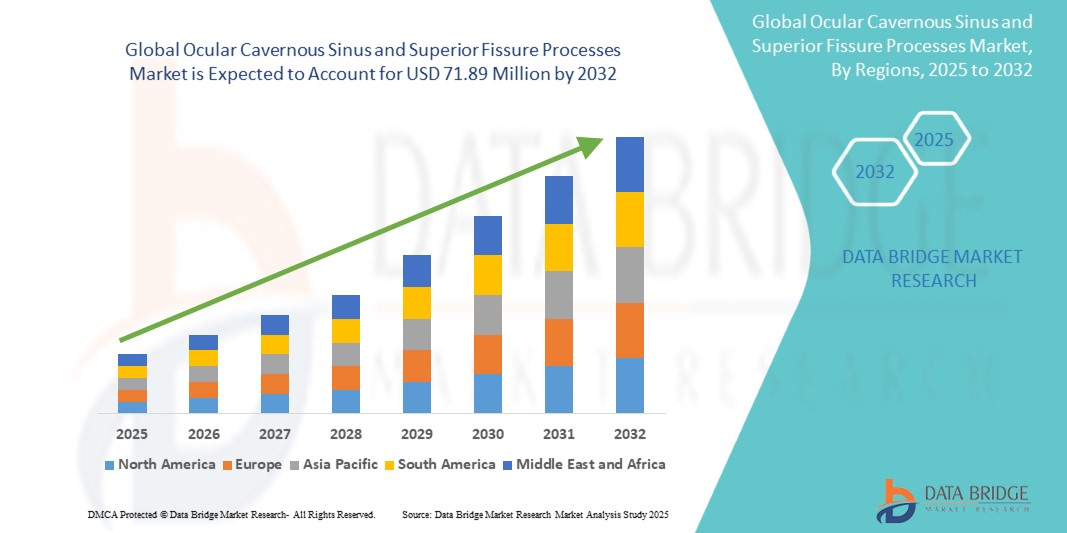
- The global ocular cavernous sinus and superior fissure processes market size was valued at USD 41.69 million in 2024 and is expected to reach USD 71.89 million by 2032, at a CAGR of 7.05% during the forecast period
- The market growth is largely fueled by increasing prevalence of ocular disorders and the rising need for advanced diagnostic and surgical interventions in ophthalmology. Enhanced awareness among healthcare providers and patients about eye health, combined with technological innovations in imaging, navigation, and minimally invasive procedures, is driving the adoption of solutions for ocular cavernous sinus and superior fissure processes
- Furthermore, the growing investments in specialized eye care centers, coupled with increasing patient preference for precision-driven, safe, and effective surgical solutions, are significantly accelerating the uptake of ocular cavernous sinus and superior fissure processes treatments. The integration of advanced imaging modalities and navigation systems in surgical procedures is enabling better clinical outcomes, boosting the overall growth of the market globally
Ocular Cavernous Sinus and Superior Fissure Processes Market Analysis
- Ocular cavernous sinus and superior fissure processes are critical anatomical regions used in ophthalmic and neurosurgical procedures, essential for precise diagnosis, surgical planning, and treatment interventions
- The growing demand for advanced surgical and diagnostic procedures in these regions is primarily driven by increasing incidence of ocular and cranial nerve disorders, rising awareness among healthcare providers, and technological advancements in imaging and AI-assisted surgery
- North America dominated the ocular cavernous sinus and superior fissure processes market with the largest revenue share of 41.2% in 2024, characterized by early adoption of advanced medical technologies, high healthcare expenditure, and a strong presence of leading medical device companies, with the U.S. experiencing substantial growth in installations of related procedures, particularly in urban hospitals and specialized clinics
- Asia-Pacific is expected to be the fastest-growing region in the ocular cavernous sinus and superior fissure processes market during the forecast period due to increasing healthcare infrastructure investments, urbanization, and rising disposable incomes
- The Hospitals segment dominated the ocular cavernous sinus and superior fissure processes market with the largest market revenue share of 46.3% in 2024, largely due to the concentration of advanced surgical infrastructure, high patient volumes, and multidisciplinary care teams
Report Scope and Ocular Cavernous Sinus and Superior Fissure Processes Market Segmentation
|
Attributes |
Ocular Cavernous Sinus and Superior Fissure Processes Key Market Insights |
|
Segments Covered |
|
|
Countries Covered |
North America
Europe
Asia-Pacific
Middle East and Africa
South America
|
|
Key Market Players |
|
|
Market Opportunities |
|
|
Value Added Data Infosets |
In addition to the insights on market scenarios such as market value, growth rate, segmentation, geographical coverage, and major players, the market reports curated by the Data Bridge Market Research also include in-depth expert analysis, pricing analysis, brand share analysis, consumer survey, demography analysis, supply chain analysis, value chain analysis, raw material/consumables overview, vendor selection criteria, PESTLE Analysis, Porter Analysis, and regulatory framework. |
Ocular Cavernous Sinus and Superior Fissure Processes Market Trends
Advancements in Surgical Precision and Imaging Technologies
- A significant and accelerating trend in the global ocular cavernous sinus and superior fissure processes market is the integration of advanced imaging and surgical navigation technologies. These innovations are enhancing procedural precision, reducing operative risks, and improving patient outcomes in complex ophthalmic and neurosurgical interventions
- For instance, high-resolution MRI and CT imaging, combined with 3D reconstruction software, allow surgeons to map the intricate anatomy of the cavernous sinus and superior orbital fissure preoperatively. This enables accurate planning of minimally invasive approaches while minimizing damage to surrounding critical structures such as cranial nerves and blood vessels
- Intraoperative navigation systems are being increasingly adopted, providing real-time guidance during procedures. These systems help in accurately locating lesions, tumors, or vascular abnormalities within the cavernous sinus region, thereby reducing operative time and improving surgical safety
- Endoscopic and microsurgical techniques are also seeing rapid advancements, offering improved visualization and access to deep-seated anatomical regions. These technologies facilitate precise excision or repair while reducing patient recovery time and post-operative complications
- The trend toward integrating multimodal imaging with surgical tools is reshaping clinical expectations for complex ocular and orbital surgeries. Healthcare providers are investing in state-of-the-art equipment to enhance procedural efficiency, accuracy, and patient safety
- Growing awareness among ophthalmologists and neurosurgeons about these innovations, along with the increasing prevalence of conditions affecting the cavernous sinus and superior fissure, is driving the adoption of advanced surgical solutions globally
Ocular Cavernous Sinus and Superior Fissure Processes Market Dynamics
Driver
Growing Need Due to Rising Clinical Demand and Technological Advancements
- The increasing prevalence of complex ocular and cranial conditions, coupled with rising awareness of early diagnosis and intervention, is a significant driver for the heightened demand for advanced Ocular Cavernous Sinus and Superior Fissure Processes solutions
- For instance, in April 2024, leading hospitals and specialty centers began integrating high-resolution imaging and minimally invasive surgical technologies to enhance patient outcomes in treating cavernous sinus tumors and superior orbital fissure disorders. Such initiatives by key healthcare providers are expected to drive the Ocular Cavernous Sinus and Superior Fissure Processes market growth in the forecast period
- As clinicians and neurosurgeons become more aware of potential complications arising from delayed or imprecise interventions, advanced imaging, surgical planning, and navigation systems offer precise localization, improved procedural safety, and better post-operative outcomes
- Furthermore, the growing availability of specialized treatment modalities, including endoscopic, microsurgical, and robotic-assisted procedures, is enabling hospitals and specialty clinics to provide targeted therapies while reducing patient recovery time and surgical risks
- The need for accurate diagnostics, improved procedural success, and the reduction of post-operative complications are key factors propelling the adoption of these solutions in both hospital and specialty clinic settings
Restraint/Challenge
High Complexity of Procedures and Limited Access to Advanced Infrastructure
- The high complexity of surgical interventions in the cavernous sinus and superior orbital fissure region poses a significant challenge to broader market penetration. Procedures often require specialized training, advanced imaging tools, and multidisciplinary teams, limiting adoption in smaller hospitals or less developed regions
- For instance, many tertiary care centers report that the lack of advanced equipment and skilled neurosurgeons delays or restricts treatment options for patients with rare or complicated cranial disorders
- Addressing these challenges through investments in training, telemedicine-enabled surgical support, and the expansion of advanced surgical facilities is crucial for increasing accessibility. In addition, the high cost of cutting-edge surgical instruments, navigation systems, and imaging technologies can be a barrier to adoption, particularly in emerging markets or smaller clinics
- While technology costs are gradually decreasing and modular solutions are being introduced, the perceived complexity and resource requirements can still hinder widespread adoption
- Overcoming these challenges through enhanced infrastructure, targeted clinician training programs, and development of cost-effective treatment solutions will be vital for sustained growth in the Ocular Cavernous Sinus and Superior Fissure Processes market
Ocular Cavernous Sinus and Superior Fissure Processes Market Scope
The market is segmented on the basis of type, guidance method, surgical approach, and application.
• By Type
On the basis of type, the ocular cavernous sinus and superior fissure processes market is segmented into benign lesions, malignant lesions, vascular malformations, traumatic injuries, and others. The benign lesions segment dominated the largest market revenue share of 41.5% in 2024, driven by their higher prevalence compared to other lesion types and the increased focus on early diagnosis and treatment to prevent complications. Benign lesions are frequently identified during routine ophthalmologic or neurological examinations, prompting timely surgical or minimally invasive interventions. The availability of advanced imaging techniques, such as high-resolution MRI and CT scans, enables precise localization, improving treatment outcomes. Hospitals and specialty clinics are investing in dedicated cranial and orbital surgical units to manage these lesions effectively. Growing awareness among patients and caregivers regarding early intervention benefits, coupled with clinical guidelines advocating proactive management, further supports segment growth.
The malignant lesions segment is expected to witness the fastest CAGR of 19.2% from 2025 to 2032, driven by the rising incidence of aggressive cranial and orbital tumors requiring precise and timely intervention. Malignant lesions necessitate complex diagnostic and therapeutic approaches, including image-guided and robotic-assisted procedures, which are becoming increasingly accessible in leading medical centers. Advancements in surgical instruments, intraoperative imaging systems, and minimally invasive oncology techniques are enhancing procedural safety and effectiveness. In addition, increasing investments in specialized oncology and neurosurgery centers, along with heightened awareness among healthcare professionals about early detection, are propelling rapid adoption globally. The combination of technological innovation and an expanding patient pool seeking advanced care is supporting the robust growth of this segment.
• By Guidance Method
On the basis of guidance method, the ocular cavernous sinus and superior fissure processes market is segmented into MRI-Guided, CT-Guided, Endoscopic, Fluoroscopy-Guided, and Others. The MRI-Guided segment dominated the largest market revenue share of 42.5% in 2024, owing to its exceptional ability to provide high-resolution images of soft tissues without exposing patients to ionizing radiation. MRI guidance enables real-time visualization of delicate and complex anatomical structures in the cavernous sinus and superior orbital fissure regions, allowing surgeons to plan and execute procedures with enhanced accuracy. Its precision reduces the risk of complications, improves surgical outcomes, and supports the management of both benign and malignant lesions, as well as vascular malformations. Hospitals and specialty centers increasingly prefer MRI-guided procedures due to their ability to combine diagnostic imaging with intraoperative navigation, offering safer and more predictable results. The rising availability of advanced MRI-compatible surgical instruments and integration with image-guided systems further strengthens this segment's dominance.
The endoscopic segment is expected to witness the fastest CAGR of 16.8% from 2025 to 2032, driven by the growing adoption of minimally invasive endoscopic techniques that provide superior visualization and access to challenging anatomical regions. High-definition endoscopes, flexible optics, and integrated navigation systems enable surgeons to perform precise interventions with minimal disruption to surrounding tissues. This approach allows for reduced patient trauma, shorter recovery times, and improved post-operative outcomes. Specialty clinics and tertiary care hospitals are increasingly implementing endoscopic guidance for cavernous sinus and superior fissure procedures due to its ability to enhance surgical accuracy and safety. Continuous technological advancements, training programs for endoscopic techniques, and the demand for less invasive solutions are further fueling the rapid expansion of this segment globally.
• By Surgical Approach
On the basis of surgical approach, the ocular cavernous sinus and superior fissure processes market is segmented into Minimally Invasive Surgery, Open Surgery, Image-Guided Surgery, Robotic-Assisted Surgery, and Others. The Minimally Invasive Surgery segment dominated the largest market revenue share of 44.7% in 2024, owing to its substantial clinical advantages over traditional open procedures. This approach minimizes patient trauma, reduces post-operative pain, shortens hospital stays, and accelerates recovery periods. Hospitals and specialty centers increasingly rely on minimally invasive techniques for managing complex cranial and orbital conditions, as they offer precise access to delicate anatomical structures while preserving surrounding tissues. The integration of advanced imaging technologies, surgical navigation systems, and real-time intraoperative monitoring further enhances the accuracy and safety of these procedures. In addition, patient preference for less invasive treatment options and growing clinical evidence supporting superior outcomes are reinforcing the dominance of this segment.
The robotic-assisted surgery segment is expected to witness the fastest CAGR of 17.2% from 2025 to 2032, driven by its ability to offer unparalleled precision, dexterity, and repeatability during highly intricate procedures in the cavernous sinus and superior fissure regions. Robotic platforms provide surgeons with enhanced control over surgical instruments, enabling complex maneuvers in confined anatomical spaces while minimizing tissue damage. These systems also help reduce complication risks, improve post-operative outcomes, and allow for better visualization of critical structures. Rising adoption of robotic-assisted interventions in specialty clinics and tertiary care hospitals, along with continuous technological advancements and training programs for surgeons, is accelerating the uptake of this segment globally.
• By Application
On the basis of application, the ocular cavernous sinus and superior fissure processes market is segmented into hospitals, specialty clinics, ambulatory surgical centers, research institutes, and others. The hospitals segment accounted for the largest market revenue share of 46.3% in 2024, largely due to the concentration of advanced surgical infrastructure, high patient volumes, and multidisciplinary care teams. Hospitals provide comprehensive services including pre-operative assessment, surgical intervention, and post-operative monitoring, making them the primary care point for complex ocular and cranial procedures. The availability of sophisticated imaging modalities, specialized surgical instruments, and experienced neurosurgical and ophthalmologic teams contributes to the sustained dominance of this segment.
The specialty clinics segment is expected to witness the fastest CAGR of 18.1% from 2025 to 2032, driven by the expansion of dedicated neurosurgical and ophthalmology centers focusing exclusively on cavernous sinus and superior fissure procedures. These clinics attract patients seeking highly specialized care, often offering access to minimally invasive, image-guided, and robotic-assisted techniques. The shorter wait times, personalized treatment plans, and focused expertise in rare or challenging conditions make specialty clinics increasingly appealing. Furthermore, the proliferation of these clinics across emerging regions, supported by investments in state-of-the-art equipment and skilled personnel, is fueling rapid growth and adoption of this segment globally.
Ocular Cavernous Sinus and Superior Fissure Processes Market Regional Analysis
- North America dominated the ocular cavernous sinus and superior fissure processes market with the largest revenue share of 41.2% in 2024, characterized by early adoption of advanced medical technologies, high healthcare expenditure, and a strong presence of leading medical device companies, with the U.S. experiencing substantial growth in installations of related procedures, particularly in urban hospitals and specialized clinics
- Consumers and healthcare providers in the region are increasingly prioritizing the adoption of advanced diagnostic and surgical procedures, leveraging innovations in imaging, AI-assisted interventions, and minimally invasive techniques to improve patient outcomes
- The widespread adoption is further supported by a technologically inclined population, increasing awareness of ocular and neurological disorders, and the growing trend of hospitals and specialty clinics investing in state-of-the-art surgical solutions, establishing advanced ocular and cranial procedures as a standard of care
U.S. Ocular Cavernous Sinus and Superior Fissure Processes Market Insight
The U.S. ocular cavernous sinus and superior fissure processes market captured the largest revenue share of 82% in 2024 within North America, fueled by rapid adoption of advanced medical technologies and a growing emphasis on early and precise intervention for cranial nerve and ocular conditions. Healthcare providers are increasingly integrating AI-assisted imaging, robotic-assisted surgery, and minimally invasive procedures to enhance treatment accuracy. The expanding trend of specialty clinics and urban hospital investments, along with rising patient awareness of treatment options, further drives market growth.
Europe Ocular Cavernous Sinus and Superior Fissure Processes Market Insight
The Europe ocular cavernous sinus and superior fissure processes market is projected to expand at a substantial CAGR throughout the forecast period, driven by rising incidence of ocular and cranial disorders, stringent healthcare regulations, and increasing investments in hospital infrastructure. Urbanization and the expansion of advanced healthcare facilities are fostering the adoption of cutting-edge diagnostic and surgical solutions. The region is witnessing growth across both public and private hospitals, with advanced imaging and procedural technologies being increasingly incorporated into routine care.
U.K. Ocular Cavernous Sinus and Superior Fissure Processes Market Insight
The U.K. ocular cavernous sinus and superior fissure processes market is anticipated to grow at a noteworthy CAGR during the forecast period, driven by increasing patient awareness, emphasis on early diagnosis, and growing investments in hospital infrastructure. Hospitals and specialty clinics are adopting advanced imaging and surgical procedures to enhance treatment outcomes, while urban healthcare centers continue to expand their capabilities in neurosurgical and ophthalmic interventions.
Germany Ocular Cavernous Sinus and Superior Fissure Processes Market Insight
The Germany ocular cavernous sinus and superior fissure processes market is expected to expand at a considerable CAGR during the forecast period, fueled by increasing awareness of neurological and ocular disorders and the demand for advanced medical technologies. Germany’s strong healthcare infrastructure, emphasis on innovation, and investments in minimally invasive procedures promote the adoption of specialized surgical techniques, particularly in leading hospitals and urban medical centers.
Asia-Pacific Ocular Cavernous Sinus and Superior Fissure Processes Market Insight
The Asia-Pacific ocular cavernous sinus and superior fissure processes market is poised to grow at the fastest CAGR during the forecast period due to increasing healthcare infrastructure investments, urbanization, rising disposable incomes, and technological advancements in countries such as China, Japan, and India. The expansion of specialty hospitals, medical research centers, and advanced imaging facilities is driving the adoption of high-precision diagnostic and surgical procedures in the region.
Japan Ocular Cavernous Sinus and Superior Fissure Processes Market Insight
The Japan ocular cavernous sinus and superior fissure processes market is gaining momentum due to the country’s advanced healthcare system, growing demand for precision medicine, and rapid urbanization. Hospitals are increasingly adopting minimally invasive procedures, AI-assisted imaging, and robotic-assisted surgical solutions. Moreover, Japan’s aging population is likely to further drive demand for precise, safe, and efficient ocular and cranial interventions in both hospitals and specialized clinics.
China Ocular Cavernous Sinus and Superior Fissure Processes Market Insight
The China ocular cavernous sinus and superior fissure processes market accounted for the largest revenue share in Asia-Pacific in 2024, attributed to rapid urbanization, increasing healthcare infrastructure investments, and rising technological adoption in hospitals and clinics. China’s expansion of specialty medical centers, growing patient awareness, and availability of high-precision diagnostic and surgical solutions are key factors propelling the market. The country continues to lead in advanced procedure adoption and investment in cutting-edge medical technologies.
Ocular Cavernous Sinus and Superior Fissure Processes Market Share
The ocular cavernous sinus and superior fissure processes industry is primarily led by well-established companies, including:
- Medtronic (Ireland)
- Stryker (U.S.)
- Siemens Healthineers AG (Germany)
- Johnson & Johnson and its affiliates (U.S.)
- GE Healthcare (U.S.)
- Olympus Corporation (Japan)
- Carl Zeiss AG (Germany)
- Brainlab (Germany)
- Koninklijke Philips (Netherlands)
- Integra LifeSciences Corporation (U.S.)
- Zimmer Biomet (U.S.)
- Varian Medical Systems (U.S.)

- Interactive Data Analysis Dashboard
- Company Analysis Dashboard for high growth potential opportunities
- Research Analyst Access for customization & queries
- Competitor Analysis with Interactive dashboard
- Latest News, Updates & Trend analysis
- Harness the Power of Benchmark Analysis for Comprehensive Competitor Tracking
Data collection and base year analysis are done using data collection modules with large sample sizes. The stage includes obtaining market information or related data through various sources and strategies. It includes examining and planning all the data acquired from the past in advance. It likewise envelops the examination of information inconsistencies seen across different information sources. The market data is analysed and estimated using market statistical and coherent models. Also, market share analysis and key trend analysis are the major success factors in the market report. To know more, please request an analyst call or drop down your inquiry.
The key research methodology used by DBMR research team is data triangulation which involves data mining, analysis of the impact of data variables on the market and primary (industry expert) validation. Data models include Vendor Positioning Grid, Market Time Line Analysis, Market Overview and Guide, Company Positioning Grid, Patent Analysis, Pricing Analysis, Company Market Share Analysis, Standards of Measurement, Global versus Regional and Vendor Share Analysis. To know more about the research methodology, drop in an inquiry to speak to our industry experts.
Data Bridge Market Research is a leader in advanced formative research. We take pride in servicing our existing and new customers with data and analysis that match and suits their goal. The report can be customized to include price trend analysis of target brands understanding the market for additional countries (ask for the list of countries), clinical trial results data, literature review, refurbished market and product base analysis. Market analysis of target competitors can be analyzed from technology-based analysis to market portfolio strategies. We can add as many competitors that you require data about in the format and data style you are looking for. Our team of analysts can also provide you data in crude raw excel files pivot tables (Fact book) or can assist you in creating presentations from the data sets available in the report.












