


Ocular Nonsteroidal Anti-Inflammatory (NSAID) Market Size
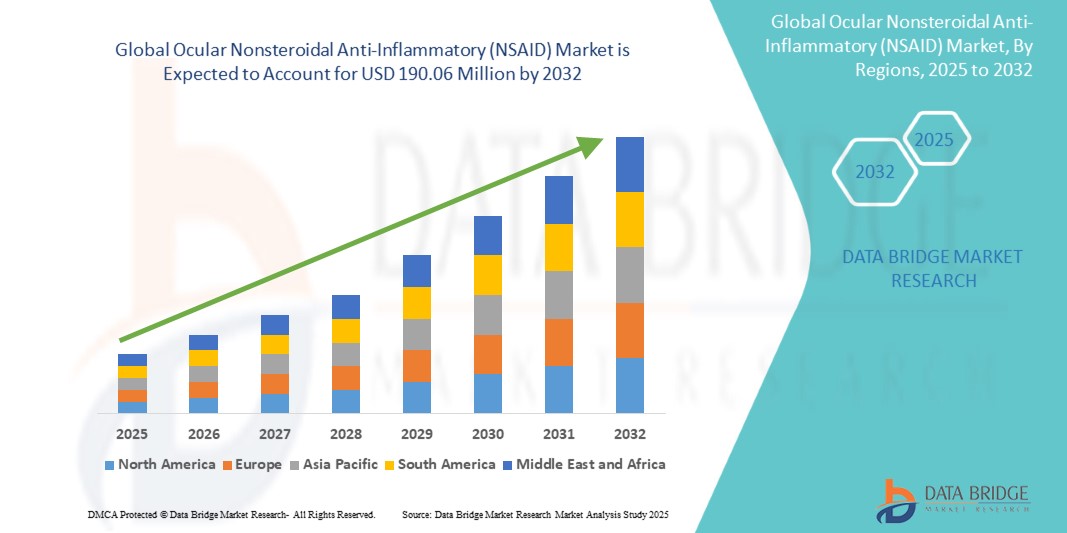
- The global ocular nonsteroidal anti-inflammatory (NSAID) market size was valued at USD 118.35 Million in 2024 and is expected to reach USD 190.06 Million by 2032, at a CAGR of 6.10% during the forecast period
- The market growth is largely fueled by the increasing prevalence of ocular disorders, rising geriatric population, and growing awareness regarding eye health, driving the demand for effective therapeutic solutions
- Furthermore, advancements in pharmaceutical formulations, increasing research in ophthalmic drug delivery systems, and the rising incidence of post-surgical ocular inflammation are accelerating the uptake of ocular nonsteroidal anti-inflammatory (NSAID) solutions, thereby significantly boosting the industry's growth
Ocular Nonsteroidal Anti-Inflammatory (NSAID) Market Analysis
- Ocular Nonsteroidal Anti-Inflammatory Drugs (NSAIDs) are increasingly essential in the treatment and management of eye disorders such as postoperative inflammation, cataract surgery complications, and chronic ocular pain. These drugs help reduce inflammation, pain, and prevent macular edema, making them vital in both surgical and routine ophthalmic care
- The growing prevalence of eye disorders, coupled with rising awareness among patients and ophthalmologists about the benefits of early intervention, is driving demand. Innovations in formulation, such as improved ocular bioavailability, extended-release drops, and combination therapies, are further boosting adoption
- North America dominated the ocular nonsteroidal anti-inflammatory (NSAID) market with a revenue share of 41.05% in 2024, driven by the high rate of ophthalmic surgeries, advanced healthcare infrastructure, and significant investment in research and development by leading pharmaceutical companies. The U.S. leads growth in the region due to the large aging population, rising prevalence of ocular diseases, and access to modern surgical procedures
- Asia-Pacific is expected to be the fastest-growing region in the ocular nonsteroidal anti-inflammatory (NSAID) market during the forecast period due to increasing urbanization, expanding healthcare access, rising disposable incomes, and growing awareness of eye health. Countries such as China and India are witnessing a surge in cataract and glaucoma surgeries, creating strong demand for Ocular NSAIDs
- Cataract Surgery dominated the ocular nonsteroidal anti-inflammatory (NSAID) market with a revenue share of 43% in 2024, as ocular NSAIDs are extensively used to control post-operative inflammation, alleviate pain, and prevent complications such as cystoid macular edema
Report Scope and Ocular Nonsteroidal Anti-Inflammatory (NSAID) Market Segmentation
|
Attributes |
Ocular Nonsteroidal Anti-Inflammatory (NSAID) Key Market Insights |
|
Segments Covered |
|
|
Countries Covered |
North America
Europe
Asia-Pacific
Middle East and Africa
South America
|
|
Key Market Players |
|
|
Market Opportunities |
|
|
Value Added Data Infosets |
In addition to the insights on market scenarios such as market value, growth rate, segmentation, geographical coverage, and major players, the market reports curated by the Data Bridge Market Research also include in-depth expert analysis, pricing analysis, brand share analysis, consumer survey, demography analysis, supply chain analysis, value chain analysis, raw material/consumables overview, vendor selection criteria, PESTLE Analysis, Porter Analysis, and regulatory framework. |
Ocular Nonsteroidal Anti-Inflammatory (NSAID) Market Trends
Rising Focus on Advanced Therapeutics and Precision Treatment
- A significant and accelerating trend in the global ocular nonsteroidal anti-inflammatory (NSAID) market is the increasing emphasis on developing advanced formulations and targeted delivery mechanisms that enhance treatment efficacy and patient compliance
- For instance, in 2024, several leading pharmaceutical companies introduced next-generation NSAID eye drops and injectable formulations designed for post-surgical inflammation and chronic ocular conditions, offering improved bioavailability and reduced side effects
- Advancements in formulation technologies, such as sustained-release gels and combination therapies, are allowing more precise dosing and extended therapeutic effects, minimizing the frequency of administration for patients
- The adoption of novel delivery systems, including ocular inserts and microemulsions, is facilitating better penetration of active ingredients into ocular tissues, supporting more effective management of conditions such as cataract surgery inflammation, diabetic retinopathy, and macular edema
- This trend towards safer, more effective, and patient-friendly NSAID treatments is reshaping healthcare provider preferences and patient expectations, driving investments in research, clinical trials, and product launches
- Market demand for Ocular NSAIDs continues to grow across hospitals, eye care centers, and surgical facilities, fueled by increasing prevalence of ocular diseases, rising awareness of post-surgical care, and the need for precise, targeted anti-inflammatory therapies
Ocular Nonsteroidal Anti-Inflammatory (NSAID) Market Dynamics
Driver
Growing Need Due to Rising Prevalence of Ocular Disorders and Advancements in Treatment
- The increasing prevalence of ocular disorders, including post-surgical inflammation, age-related macular degeneration, and diabetic retinopathy, is a significant driver for the heightened demand for advanced Ocular Nonsteroidal Anti-Inflammatory (NSAID) treatments
- For instance, in April 2024, several leading pharmaceutical companies announced the launch of next-generation ocular NSAID formulations with enhanced bioavailability and sustained-release mechanisms. Such developments are expected to drive the market growth during the forecast period
- Healthcare providers are increasingly focusing on patient-friendly treatments that improve adherence, reduce side effects, and provide rapid relief from inflammation. Innovations in delivery methods, such as ocular inserts, microemulsions, and combination therapies, are offering significant advantages over traditional eye drops
- Furthermore, the rising awareness among patients about post-surgical care, early disease detection, and effective management of chronic eye conditions is contributing to the growing adoption of NSAID therapies
- The convenience of improved dosing regimens, extended drug release, and targeted treatment options are key factors propelling the use of ocular NSAIDs across hospitals, ophthalmology clinics, and specialized eye care centers. The trend toward personalized and precision medicine, along with increasing R&D investments, further supports market growth
Restraint/Challenge
Challenges Regarding Treatment Costs and Regulatory Compliance
- The high cost of advanced ocular NSAID formulations, especially those incorporating novel drug delivery technologies, combination therapies, or sustained-release mechanisms, can restrict patient access, particularly in price-sensitive regions or among uninsured populations. This cost factor often leads healthcare providers to favor conventional treatments, slowing the adoption of newer, more effective therapies
- In addition, strict regulatory frameworks across different regions require extensive clinical trials, safety evaluations, and post-market surveillance, creating a time-consuming and expensive pathway for market entry
- Companies must carefully navigate these compliance requirements to ensure product approval and maintain adherence to international and local healthcare regulations
- Further challenges arise from the need to educate healthcare professionals about the benefits of new NSAID treatments, as physicians and surgeons may be cautious in prescribing recently launched therapies without substantial clinical evidence supporting their safety, efficacy, and patient outcomes
- Although some generic or traditional NSAID options are more affordable, their limited effectiveness compared to advanced formulations can impede their usage, while the perceived premium of innovative products may deter broader adoption
- Addressing these obstacles through strategic pricing, patient assistance programs, strong clinical validation, and awareness campaigns will be essential for promoting sustained growth and wider market penetration
Ocular Nonsteroidal Anti-Inflammatory (NSAID) Market Scope
The market is segmented on the basis of type, formulation, route of administration, application and end user
• By Type
On the basis of type, the ocular nonsteroidal anti-inflammatory (NSAID) market is segmented into topical drops, ointments, oral formulations, injectables, and others. The topical drops segment dominated the market with a revenue share of 42% in 2024, as eye drops provide targeted delivery, rapid onset of action, and high patient compliance. They are widely used pre- and post-operatively, particularly for cataract and refractive surgeries, to control inflammation, pain, and prevent macular edema. Topical drops are preferred due to their ease of administration, minimal systemic side effects, and suitability for long-term management of chronic ocular conditions.
The Injectables segment is expected to witness the fastest CAGR of 19% from 2025 to 2032, fueled by the growing demand for targeted and sustained drug delivery directly into ocular tissues, especially among patients suffering from conditions such as diabetic retinopathy or macular edema. The increasing reliance on hospital-based treatments, coupled with advancements in formulation technologies and minimally invasive delivery techniques, is further accelerating adoption. In addition, the rising number of ophthalmic surgical procedures globally, along with the preference for precise, localized therapy that reduces systemic exposure, is significantly contributing to the robust growth of injectable NSAIDs in the market.
• By Formulation
On the basis of formulation, the ocular nonsteroidal anti-inflammatory (NSAID) market is segmented into solution, suspension, gel, emulsion, and others. The solution segment held the largest revenue share of 40% in 2024, due to its simplicity, rapid absorption, and widespread clinical acceptance. Solutions are particularly suitable for pre- and post-surgical care and are easy to manufacture, store, and administer, which drives their high adoption rate.
The Gel segment is expected to witness the fastest CAGR of 18.5% from 2025 to 2032, driven by its ability to provide prolonged ocular contact time, enhanced drug bioavailability, and reduced dosing frequency. Gels are increasingly favored for delivering sustained relief from ocular inflammation, alleviating pain, and supporting post-operative recovery. Their formulation allows for more consistent therapeutic effects, improved patient compliance, and better overall management of eye conditions, making them a preferred choice among ophthalmologists and patients alike.
• By Route of Administration
On the basis of route of administration, the ocular nonsteroidal anti-inflammatory (NSAID) market is segmented into topical, oral, intravitreal, subconjunctival, and others. The topical route dominated with a revenue share of 41% in 2024, owing to its ease of use, patient preference, and targeted delivery to the site of ocular inflammation. Topical administration reduces systemic absorption, minimizes side effects, and allows flexible dosing for outpatient care, making it highly suitable for routine post-operative management.
Intravitreal injections are expected to witness the fastest CAGR of 20% from 2025 to 2032, fueled by their capability to deliver high concentrations of therapeutic agents directly to the posterior segment of the eye, which is essential for managing conditions such as diabetic retinopathy and macular edema. This targeted delivery approach ensures rapid onset of action, maximizes drug efficacy, minimizes systemic exposure, and allows for precise treatment of retinal and vitreous disorders. The growing prevalence of retinal diseases, increasing adoption in hospital-based and specialized ophthalmic treatments, and advancements in formulation techniques are further supporting the expansion of the intravitreal injections segment.
• By Application
On the basis of application, the ocular nonsteroidal anti-inflammatory (NSAID) market is segmented into cataract surgery, refractive surgery, glaucoma, diabetic retinopathy, macular edema, and others. Cataract Surgery dominated with a revenue share of 43% in 2024, as ocular NSAIDs are extensively used to control post-operative inflammation, alleviate pain, and prevent complications such as cystoid macular edema. Increasing cataract surgery volumes globally, the growing aging population, and the adoption of advanced surgical technologies contribute to the dominance of this segment.
Diabetic Retinopathy is expected to witness the fastest CAGR of 21% from 2025 to 2032, propelled by the increasing prevalence of diabetes worldwide, the expansion of systematic screening programs, and the growing demand for targeted anti-inflammatory therapies to prevent progressive retinal damage. NSAIDs are playing an increasingly important role in this segment, not only by controlling ocular inflammation associated with diabetic retinopathy but also by supporting post-refractive surgery recovery, managing intraocular pressure in glaucoma patients, and treating macular edema. The rising awareness among patients and clinicians, coupled with the integration of advanced ophthalmic care protocols, is further driving the adoption of NSAID-based interventions for diabetic retinal conditions.
• By End-User
On the basis of end-user, the ocular nonsteroidal anti-inflammatory (NSAID) market is segmented into hospitals & clinics, ambulatory surgical centers, eye care centers, and others. Hospitals & Clinics dominated with a revenue share of 44% in 2024, due to their ability to handle complex ophthalmic surgeries, high patient volumes, and advanced medical infrastructure. They offer integrated care pathways combining surgery, post-operative monitoring, and follow-up, ensuring optimal use of ocular NSAIDs.
Ambulatory Surgical Centers are expected to witness the fastest CAGR of 19% from 2025 to 2032, driven by the increasing shift toward outpatient surgical procedures, which offer cost-effective and efficient treatment options. The growing patient preference for convenient, specialized eye care services, coupled with advancements in minimally invasive ophthalmic procedures, is further accelerating the adoption of these centers. In addition, the ability of ambulatory surgical centers to provide focused, high-quality care with reduced hospital stay and quicker recovery times makes them an attractive choice for both patients and healthcare providers, reinforcing their rapid growth in the market
Ocular Nonsteroidal Anti-Inflammatory (NSAID) Market Regional Analysis
- North America dominated the ocular nonsteroidal anti-inflammatory (NSAID) market with a revenue share of 41.05% in 2024, driven by a high rate of ophthalmic surgeries, advanced healthcare infrastructure, and significant investment in research and development by leading pharmaceutical companies
- Due to the large aging population, rising prevalence of ocular diseases such as cataract and glaucoma, and access to modern surgical procedures. High patient awareness, robust healthcare coverage, and the availability of innovative post-operative anti-inflammatory therapies further fuel market expansion
- The strong presence of major pharmaceutical players, coupled with continuous investment in novel NSAID formulations, and increasing focus on improving patient compliance and surgical outcomes, also supports the growth of the market across the region
U.S. Ocular Nonsteroidal Anti-Inflammatory (NSAID) Market Insight
The U.S. ocular nonsteroidal anti-inflammatory (NSAID) market captured the largest revenue share in North America in 2024, driven by the prevalence of cataract, glaucoma, and other ocular disorders that require both surgical intervention and post-operative anti-inflammatory care. Advanced healthcare infrastructure, rising disposable incomes, and widespread access to state-of-the-art ophthalmic procedures, including laser-assisted surgeries, contribute significantly to market growth. Furthermore, ongoing research and development in innovative NSAID formulations, such as sustained-release eye drops and combination therapies, are expected to further bolster the market.
Europe Ocular Nonsteroidal Anti-Inflammatory (NSAID) Market Insight
The European ocular nonsteroidal anti-inflammatory (NSAID) market is projected to expand at a substantial CAGR during the forecast period, fueled by increasing prevalence of ocular disorders, a growing elderly population, and rising adoption of ophthalmic surgical procedures. Strong healthcare policies, reimbursement support, and an increased focus on patient-centric treatment strategies are further driving the uptake of ocular NSAIDs across hospitals and clinics in the region.
U.K. Ocular Nonsteroidal Anti-Inflammatory (NSAID) Market Insight
The U.K. ocular nonsteroidal anti-inflammatory (NSAID) market is expected to grow steadily, driven by rising incidence of eye disorders, awareness campaigns promoting eye health, and increasing demand for NSAID therapies in hospital and outpatient settings. The growth in cataract and glaucoma surgeries, along with advancements in ophthalmic care facilities, is encouraging higher adoption of effective post-operative anti-inflammatory treatments.
Germany Ocular Nonsteroidal Anti-Inflammatory (NSAID) Market Insight
The Germany ocular nonsteroidal anti-inflammatory (NSAID) market is anticipated to witness significant growth due to the country’s high rate of ophthalmic procedures, advanced healthcare infrastructure, and emphasis on innovative therapeutics. The introduction of novel NSAID formulations for enhanced efficacy, reduced side effects, and improved patient compliance is further supporting market expansion. Growing government initiatives promoting eye health and preventive care also contribute to market growth.
Asia-Pacific Ocular Nonsteroidal Anti-Inflammatory (NSAID) Market Insight
The Asia-Pacific ocular nonsteroidal anti-inflammatory (NSAID) market is poised to grow at the fastest CAGR during the forecast period, driven by increasing urbanization, rising disposable incomes, expanding healthcare access, and growing awareness of eye health. Countries such as China and India are experiencing a surge in cataract, glaucoma, and other ocular surgeries, creating strong demand for effective ocular NSAID therapies. Government programs supporting eye care and increasing investments in healthcare infrastructure are further accelerating market growth in the region.
China Ocular Nonsteroidal Anti-Inflammatory (NSAID) Market Insight
The China ocular nonsteroidal anti-inflammatory (NSAID) market accounted for the largest revenue share in the Asia-Pacific region in 2024, supported by rising ophthalmic surgeries, expanding healthcare infrastructure, and growing awareness of eye health. The expanding middle class, government initiatives to improve access to healthcare services, and increased adoption of advanced ocular NSAID therapies for post-operative care and chronic ocular conditions are key growth drivers in the country.
India Ocular Nonsteroidal Anti-Inflammatory (NSAID) Market Insight
The India ocular nonsteroidal anti-inflammatory (NSAID) market is expected to witness the highest CAGR in the region due to increasing awareness of eye health, rising disposable incomes, and the growing number of cataract and glaucoma surgeries. Expansion of healthcare access in urban and semi-urban areas, government programs promoting ophthalmic care, and the rising adoption of innovative ocular NSAID therapies further support rapid market growth.
Ocular Nonsteroidal Anti-Inflammatory (NSAID) Market Share
The ocular nonsteroidal anti-inflammatory (NSAID) industry is primarily led by well-established companies, including:
- Alcon Inc. (Switzerland)
- Novartis AG (Switzerland)
- AbbVie Inc. (U.S.)
- Bausch + Lomb (U.S.)
- Santen Pharmaceutical Co., Ltd. (Japan)
- F. Hoffmann-La Roche AG (Switzerland)
- Sun Pharmaceutical Industries Ltd. (India)
- Otsuka Pharmaceutical Co., Ltd. (Japan)
- NeurOptics, Inc. (U.S.)
- Dompé Farmaceutici S.p.A. (Italy)
- Inspire Pharmaceuticals, Inc. (U.S.)
- GSK plc (U.K.)
- Merck KGaA (Germany)
- Hanmi Pharmaceutical Co., Ltd. (South Korea)
- Akorn, Inc. (U.S.)
- EyePoint Pharmaceuticals, Inc. (U.S.)
- Laboratoires Théa (France)
- Novartis AG (Switzerland)
- Bausch Health Companies Inc. (Canada)
Latest Developments in Global Ocular Nonsteroidal Anti-Inflammatory (NSAID) Market
- In May 2025, the U.S. Food and Drug Administration (FDA) approved prednisolone acetate ophthalmic suspension for treating steroid-responsive ocular inflammation. This approval, referencing Allergan’s Pred Forte, underscores the growing demand for effective anti-inflammatory treatments in ophthalmology. The commercial launch is planned for Q3 2025
- In June 2023, Novaliq GmbH announced the FDA approval of VEVYE (cyclosporine ophthalmic solution) 0.1% for the treatment of dry eye disease. VEVYE is the first and only cyclosporine solution indicated for the treatment of signs and symptoms of dry eye disease, demonstrating efficacy after just four weeks of treatment
- In August 2023, Novaliq received a positive opinion from the European Medicines Agency’s Committee for Medicinal Products for Human Use (CHMP) recommending the granting of a marketing authorization for VEVYE in the European Union. This marks a significant step in expanding the availability of advanced ocular NSAID treatments in Europe
- In July 2024, Novaliq announced that the China National Medical Products Administration (NMPA) approved Heng Qin (perfluorohexyloctane eye drops) for the treatment of dry eye disease associated with Meibomian gland dysfunction. This approval facilitates the introduction of innovative ocular NSAID therapies in the Chinese market
- In May 2025, the FDA granted Investigational New Drug (IND) clearance for immunoglobulin eye drops to treat dry eye patients in a Phase 2 clinical study. This biologic anti-inflammatory and immunomodulatory treatment, derived from pooled human plasma, represents a novel approach in managing ocular inflammation

- Interactive Data Analysis Dashboard
- Company Analysis Dashboard for high growth potential opportunities
- Research Analyst Access for customization & queries
- Competitor Analysis with Interactive dashboard
- Latest News, Updates & Trend analysis
- Harness the Power of Benchmark Analysis for Comprehensive Competitor Tracking
Data collection and base year analysis are done using data collection modules with large sample sizes. The stage includes obtaining market information or related data through various sources and strategies. It includes examining and planning all the data acquired from the past in advance. It likewise envelops the examination of information inconsistencies seen across different information sources. The market data is analysed and estimated using market statistical and coherent models. Also, market share analysis and key trend analysis are the major success factors in the market report. To know more, please request an analyst call or drop down your inquiry.
The key research methodology used by DBMR research team is data triangulation which involves data mining, analysis of the impact of data variables on the market and primary (industry expert) validation. Data models include Vendor Positioning Grid, Market Time Line Analysis, Market Overview and Guide, Company Positioning Grid, Patent Analysis, Pricing Analysis, Company Market Share Analysis, Standards of Measurement, Global versus Regional and Vendor Share Analysis. To know more about the research methodology, drop in an inquiry to speak to our industry experts.
Data Bridge Market Research is a leader in advanced formative research. We take pride in servicing our existing and new customers with data and analysis that match and suits their goal. The report can be customized to include price trend analysis of target brands understanding the market for additional countries (ask for the list of countries), clinical trial results data, literature review, refurbished market and product base analysis. Market analysis of target competitors can be analyzed from technology-based analysis to market portfolio strategies. We can add as many competitors that you require data about in the format and data style you are looking for. Our team of analysts can also provide you data in crude raw excel files pivot tables (Fact book) or can assist you in creating presentations from the data sets available in the report.












