


Ocular Prednisolone Market Size
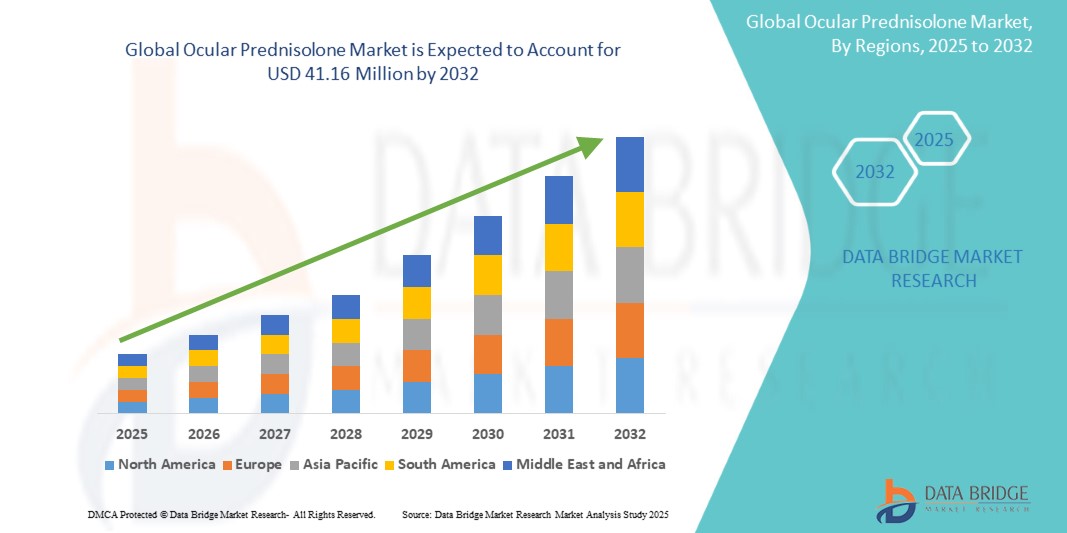
- The global ocular prednisolone market size was valued at USD 25.83 million in 2024 and is expected to reach USD 41.16 million by 2032, at a CAGR of 6.00% during the forecast period
- The market growth is largely fueled by the increasing prevalence of ocular inflammatory and allergic disorders and advancements in ophthalmic drug formulations, driving higher adoption of prednisolone-based treatments in both hospital and outpatient settings
- Furthermore, rising awareness among patients and healthcare providers regarding early intervention and effective eye care, coupled with the demand for fast-acting and targeted anti-inflammatory therapies, is positioning ocular prednisolone as a preferred treatment option. These factors are accelerating the uptake of prednisolone ophthalmic products, thereby significantly boosting the industry's growth
Ocular Prednisolone Market Analysis
- Ocular prednisolone, available as eye drops, ointments, suspensions, and injectables, is increasingly a vital component in the treatment of inflammatory and allergic eye disorders in both hospital and outpatient settings due to its fast-acting anti-inflammatory properties, targeted delivery, and efficacy in preventing postoperative complications
- The escalating demand for ocular prednisolone is primarily fueled by the rising prevalence of eye diseases, growing awareness among patients and healthcare providers about early intervention, and a preference for safe, effective, and convenient steroid-based ophthalmic therapies
- North America dominated the ocular prednisolone market with the largest revenue share of 39.7% in 2024, characterized by advanced healthcare infrastructure, high adoption of ophthalmic treatments, and a strong presence of key pharmaceutical players, with the U.S. experiencing substantial growth in prescriptions for postoperative inflammation, uveitis, and keratitis, driven by innovations in drug formulations and delivery methods
- Asia-Pacific is expected to be the fastest-growing region in the ocular prednisolone market during the forecast period due to increasing healthcare access, rising awareness of eye health, and growing patient population with inflammatory and allergic eye conditions
- The eye drops segment dominated the ocular prednisolone market with a market share of over 45.5% in 2024, driven by its ease of use, affordability, and strong physician preference as the first-line treatment for managing steroid-responsive ocular conditions
Report Scope and Ocular Prednisolone Market Segmentation
|
Attributes |
Ocular Prednisolone Key Market Insights |
|
Segments Covered |
|
|
Countries Covered |
North America
Europe
Asia-Pacific
Middle East and Africa
South America
|
|
Key Market Players |
|
|
Market Opportunities |
|
|
Value Added Data Infosets |
In addition to the insights on market scenarios such as market value, growth rate, segmentation, geographical coverage, and major players, the market reports curated by the Data Bridge Market Research also include in-depth expert analysis, pricing analysis, brand share analysis, consumer survey, demography analysis, supply chain analysis, value chain analysis, raw material/consumables overview, vendor selection criteria, PESTLE Analysis, Porter Analysis, and regulatory framework. |
Ocular Prednisolone Market Trends
Shift Towards Advanced and Sustained-Release Ophthalmic Formulations
- A significant and growing trend in the global ocular prednisolone market is the development of innovative drug delivery systems, such as sustained-release implants, nanoparticles, and microneedle-based therapies, designed to overcome the limitations of conventional eye drops with poor bioavailability and patient adherence
- For instance, companies are actively investing in long-acting ocular steroid delivery platforms that reduce the need for frequent dosing, thereby improving compliance in chronic eye conditions such as uveitis and post-operative inflammation
- Advanced formulations are being tailored to enhance penetration into ocular tissues, minimize systemic absorption, and reduce side effects such as intraocular pressure elevation, which is a common concern with steroid therapies
- Furthermore, the integration of biodegradable implants and smart drug-eluting lenses is providing ophthalmologists with new treatment options that offer controlled release of prednisolone over extended periods
- This trend towards next-generation ophthalmic steroids is reshaping clinician prescribing patterns, especially in developed markets where patient demand for effective, convenient, and safe therapies is high
- As a result, leading pharmaceutical companies are prioritizing research partnerships, clinical trials, and regulatory approvals for innovative ocular prednisolone solutions, thereby accelerating the shift towards advanced treatment modalities in ocular care
Ocular Prednisolone Market Dynamics
Driver
Rising Prevalence of Ocular Inflammatory Disorders and Post-Surgical Applications
- The increasing global burden of ocular inflammatory diseases such as uveitis, keratitis, and allergic conjunctivitis, combined with the widespread use of prednisolone in post-cataract and refractive surgeries, is a major driver of market demand
- For instance, the growing number of cataract surgeries worldwide estimated at over 30 million annually is directly fueling the use of ocular corticosteroids to manage post-operative inflammation and prevent complications
- Prednisolone’s role as a first-line corticosteroid therapy makes it indispensable in ophthalmology, where its anti-inflammatory efficacy is crucial in reducing pain, swelling, and tissue damage
- Rising awareness about early eye disease management, supported by government eye health initiatives, is also contributing to increasing adoption rates
- The availability of generic prednisolone formulations is further expanding access in emerging markets, making it a widely prescribed and cost-effective treatment option
Restraint/Challenge
Side Effects and Stringent Regulatory Approvals
- The long-term use of ocular prednisolone is associated with significant side effects, including increased intraocular pressure, risk of glaucoma, delayed wound healing, and cataract formation, which limits its widespread use
- For instance, patients with steroid-induced ocular hypertension require close monitoring, adding to the burden on healthcare systems and reducing treatment compliance
- Regulatory agencies such as the FDA and EMA maintain stringent requirements for safety and efficacy in ophthalmic corticosteroid formulations, leading to delayed product approvals and high development costs for new delivery systems
- In addition, growing concerns over antimicrobial resistance due to combined steroid-antibiotic eye drops pose another barrier to adoption in some regions
- The market also faces competition from alternative anti-inflammatory treatments, such as non-steroidal anti-inflammatory drugs (NSAIDs) and emerging biologics, which may limit the growth potential of ocular prednisolone in the long run
Ocular Prednisolone Market Scope
The market is segmented on the basis of formulation type, mode of administration, indication, and distribution channel.
- By Formulation Type
On the basis of formulation type, the ocular prednisolone market is segmented into eye drops, ointments, suspensions, injectables, and implants/novel ocular drug delivery systems. Eye Drops dominated the market with the largest revenue share o 45.5% in 2024, primarily due to their widespread usage as the first-line treatment for ocular inflammation and post-surgical care. They are convenient for patients, provide quick relief, and are the most commonly prescribed formulation by ophthalmologists worldwide. Eye drops benefit from high market penetration across both developed and developing regions, driven by affordable pricing and wide availability through hospital and retail pharmacies. The extensive adoption in routine cases such as conjunctivitis, keratitis, and postoperative inflammation reinforces their strong market hold. Moreover, the segment continues to gain demand due to the introduction of preservative-free and multi-dose packaging solutions that enhance patient safety and compliance.
Implants/Novel Ocular Drug Delivery Systems are expected to record the fastest growth from 2025 to 2032, driven by their ability to address the limitations of traditional topical eye drops. Sustained-release implants offer controlled delivery of prednisolone, ensuring therapeutic effectiveness over long periods while reducing the need for frequent administration. This innovation is particularly beneficial for chronic conditions such as uveitis and diabetic macular edema, where patient adherence to treatment is critical. With ongoing advancements in biodegradable and micro-reservoir technologies, coupled with growing regulatory approvals, the adoption of novel ocular delivery systems is expected to expand rapidly. Increased R&D investments by pharmaceutical companies in next-generation ocular implants further underline their potential to reshape the treatment landscape.
- By Mode of Administration
On the basis of mode of administration, the ocular prednisolone market is segmented into topical, injectable, and oral. Topical administration held the largest share in 2024, accounting for the majority of prescriptions due to its effectiveness in treating anterior eye inflammation. Eye drops and ointments administered topically are easy to use, non-invasive, and associated with fewer systemic side effects compared to oral corticosteroids. Their strong adoption in both acute and routine eye conditions, combined with established physician trust, has reinforced their dominant position. Moreover, topical administration is favored due to its cost-effectiveness and wide patient acceptance across different age groups. The segment’s continued strength is supported by the availability of both branded and generic options, ensuring accessibility to a large global patient base.
Injectable administration is projected to be the fastest-growing segment during the forecast period. This growth is supported by the rising prevalence of severe and chronic ocular conditions, such as posterior uveitis and diabetic macular edema, that require direct drug delivery into ocular tissues. Intravitreal injections ensure higher bioavailability and targeted action, making them a preferred choice in complex cases. Advances in injection technology, including sustained-release formulations and improved safety profiles, are increasing adoption rates among ophthalmologists. Furthermore, the expansion of specialized eye care centers and rising awareness of effective injectable therapies in emerging markets are fueling this segment’s rapid expansion.
- By Indication
On the basis of indication, the ocular prednisolone market is segmented into postoperative inflammation, allergic conjunctivitis, uveitis, dry eye syndrome, keratitis, and diabetic macular edema. Postoperative Inflammation accounted for the largest market share in 2024, supported by the high volume of cataract and refractive surgeries performed globally. Prednisolone is widely regarded as the gold standard therapy for reducing inflammation and discomfort following ocular surgeries. Hospitals and specialty clinics consistently prescribe prednisolone to ensure better recovery outcomes and minimize the risk of complications, cementing its dominance in this category. The rising geriatric population and increasing prevalence of cataracts are expected to further sustain the segment’s strength. In addition, the frequent use of topical formulations post-surgery contributes significantly to market revenues.
Uveitis is expected to register the fastest CAGR from 2025 to 2032, fueled by the growing incidence of autoimmune and inflammatory eye diseases. Uveitis remains a leading cause of vision loss globally, making early and effective management critical. Prednisolone-based therapies, particularly injectables and implants, are gaining traction for their efficacy in long-term inflammation control. The segment is further driven by ongoing clinical research into sustained-release drug delivery systems, which aim to reduce dosing frequency and improve patient adherence. Rising awareness among ophthalmologists about advanced treatment protocols is also accelerating adoption.
- By Distribution Channel
On the basis of distribution channel, the ocular prednisolone market is segmented into hospital pharmacies, retail pharmacies, online pharmacies, and clinics/research institutes. Hospital Pharmacies dominated the market in 2024, reflecting their critical role in post-surgical patient care and treatment of acute ophthalmic emergencies. Hospitals are the primary point of care for patients undergoing eye surgeries, and their in-house pharmacies ensure reliable access to prednisolone therapies. The preference for hospital pharmacies is reinforced by the assurance of drug authenticity, proper guidance from healthcare providers, and immediate availability of both branded and generic medications. In addition, the centralization of ophthalmic care in hospitals has led to higher prescription volumes through this channel. This dominance is also supported by collaborations between hospitals and pharmaceutical suppliers that ensure continuous availability of corticosteroid products.
Online Pharmacies are projected to grow at the fastest rate during the forecast period, benefiting from the increasing digitalization of healthcare and patient preference for home delivery services. E-pharmacies offer competitive pricing, convenience, and accessibility, particularly in urban and semi-urban regions where patients seek quick access to refills. The segment has seen significant acceleration post-COVID-19, as patients became more accustomed to online healthcare services. Furthermore, supportive government regulations in emerging economies are creating favorable conditions for e-pharmacy expansion. With the growing integration of telemedicine platforms, online pharmacies are expected to capture a larger share of ocular prednisolone distribution.
Ocular Prednisolone Market Regional Analysis
- North America dominated the ocular prednisolone market with the largest revenue share of 39.7% in 2024, characterized by advanced healthcare infrastructure, high adoption of ophthalmic treatments, and a strong presence of key pharmaceutical players
- Patients and physicians in the region value the availability of diverse formulations including drops, ointments, and injectables, as well as the assurance of safety and efficacy provided by branded and generic options
- This dominance is further supported by strong R&D investments, favorable reimbursement policies, and the rising number of cataract and refractive surgeries, positioning ocular prednisolone as a preferred anti-inflammatory treatment in both hospital and outpatient care settings
U.S. Ocular Prednisolone Market Insight
The U.S. ocular prednisolone market captured the largest revenue share of 79% in 2024 within North America, fueled by the rising incidence of cataract surgeries, LASIK procedures, and ocular inflammatory conditions such as uveitis and keratitis. Patients and healthcare providers are increasingly prioritizing corticosteroid-based therapies for their rapid and effective anti-inflammatory benefits. The presence of strong distribution networks, coupled with high availability of branded and generic eye drop formulations, further strengthens adoption. Moreover, supportive reimbursement structures and advanced ophthalmology care centers contribute to the U.S. dominance in the regional market.
Europe Ocular Prednisolone Market Insight
The Europe ocular prednisolone market is projected to expand at a steady CAGR throughout the forecast period, primarily driven by a high burden of age-related eye diseases and growing awareness about postoperative inflammation management. The region’s strong emphasis on patient safety and regulatory oversight ensures consistent demand for clinically tested steroid eye therapies. Consumers across Europe are also benefitting from increasing accessibility to online pharmacies and hospital-based distribution channels. The growing use of ocular corticosteroids in cataract and refractive surgery recovery has positioned prednisolone as a standard treatment in both outpatient and inpatient care across the continent.
U.K. Ocular Prednisolone Market Insight
The U.K. ocular prednisolone market is anticipated to grow at a noteworthy CAGR during the forecast period, driven by rising incidences of allergic conjunctivitis and post-surgical complications. Heightened awareness of eye health and preventive ophthalmic care is encouraging greater usage of prescription-based steroid eye drops. Furthermore, the U.K.’s well-established National Health Service (NHS) supports widespread availability of cost-effective generic formulations, making treatment more accessible to patients. This trend, along with the country’s rapidly aging population, is expected to sustain robust growth in ocular prednisolone adoption.
Germany Ocular Prednisolone Market Insight
The Germany ocular prednisolone market is expected to expand at a considerable CAGR during the forecast period, supported by a strong healthcare infrastructure and increasing prevalence of chronic ocular disorders such as diabetic macular edema and dry eye syndrome. The German market places a high emphasis on safety and efficacy, fueling demand for novel ocular drug delivery systems such as implants and advanced suspensions. In addition, the country’s leading position in clinical research and pharmaceutical innovation promotes the adoption of new formulations, strengthening its role as one of the key markets for ocular prednisolone in Europe.
Asia-Pacific Ocular Prednisolone Market Insight
The Asia-Pacific ocular prednisolone market is poised to grow at the fastest CAGR of 23% during the forecast period of 2025 to 2032, driven by rapid urbanization, increasing cataract cases, and expanding access to ophthalmic care in countries such as China, India, and Japan. Rising disposable incomes and government-led healthcare digitalization initiatives are improving patient access to prescription treatments. In addition, local manufacturing of cost-effective generic steroid eye drops is boosting affordability and market penetration. The growing prevalence of diabetes-related eye disorders is also a key driver, positioning APAC as the most dynamic growth hub for ocular prednisolone.
Japan Ocular Prednisolone Market Insight
The Japan ocular prednisolone market is gaining momentum due to the country’s aging population and a high prevalence of eye diseases such as keratitis and dry eye syndrome. Japanese patients prioritize advanced and reliable treatment solutions, encouraging strong adoption of corticosteroid formulations. The integration of ocular prednisolone with novel drug delivery technologies, such as sustained-release implants, is enhancing treatment efficiency. Furthermore, the country’s advanced hospital networks and widespread use of teleophthalmology platforms are driving accessibility and patient adherence to prescribed therapies.
India Ocular Prednisolone Market Insight
The India ocular prednisolone market accounted for the largest market revenue share in Asia-Pacific in 2024, attributed to the country’s growing middle-class population, rising diabetes prevalence, and high rates of cataract surgeries. India stands out as a major consumer of cost-effective generic eye drops, supported by a strong domestic pharmaceutical industry. Increasing government initiatives such as national eye health programs and the expansion of affordable hospital and retail pharmacies are further fueling market growth. The country’s young, tech-savvy population is also turning to online pharmacies, boosting accessibility and adoption of ocular prednisolone therapies.
Ocular Prednisolone Market Share
The Ocular Prednisolone industry is primarily led by well-established companies, including:
- AbbVie Inc. (U.S.)
- Lupin (India)
- Amneal Pharmaceuticals LLC. (U.S.)
- Sandoz Group AG (Switzerland)
- Teva Pharmaceutical Industries Ltd. (Israel)
- Apotex Inc. (Canada)
- Sun Pharmaceutical Industries Ltd. (India)
- Cipla Limited (India)
- Dr. Reddy’s Laboratories Ltd. (India)
- Alembic Pharmaceuticals Limited (India)
- Aurobindo Pharma Ltd. (India)
- Ajanta Pharma Limited (India)
- Indoco Remedies Ltd. (India)
- Zydus Lifesciences Limited (India)
- Micro Labs Limited (India)
- Alkem Laboratories Ltd. (India)
- Sentiss Pharma Pvt. Ltd. (India)
- Entod Pharmaceuticals Ltd. (India)
- FDC Limited (India)
- Harrow, Inc. (U.S.)
What are the Recent Developments in Global Ocular Prednisolone Market?
- In July 2025, Bausch + Lomb disclosed that its Retisert (fluocinolone acetonide implant) will be discontinued in April 2026, citing manufacturing challenges. This marks a significant shift in the ocular corticosteroid implant landscape, prompting clinicians and patients to explore alternatives such as Yutiq or Ozurdex
- In June 2025, Amneal Pharmaceuticals announced that the U.S. Food and Drug Administration (FDA) approved a prednisolone acetate ophthalmic suspension (USP 1%), a generic referencing Allergan’s Pred Forte, for the treatment of steroid-responsive ocular inflammation. The company plans a commercial launch in Q3 2025
- In August 2024, Lupin Limited announced that it had received approval from the U.S. FDA for its ANDA on Prednisolone Acetate Ophthalmic Suspension USP, 1%, a generic equivalent of Pred Forte. The U.S. FDA granted Lupin a Competitive Generic Therapy (CGT) designation, making it eligible for 180 days of market exclusivity as the first approved generic applicant
- In April 2024, Bausch + Lomb released new scientific data and analyses on its products and pipeline programs at the Association for Research in Vision and Ophthalmology (ARVO) meeting. One of the posters presented featured findings from the company's pharmacovigilance database regarding steroid-associated adverse events related to LOTEMAX® SM (loteprednol etabonate ophthalmic gel) 0.38% and other LOTEMAX® formulations
- In April 2024, Oculis announced positive Phase 3 clinical trial results for OCS-01, a once-daily corticosteroid eye drop intended to treat pain and inflammation following ocular surgery. According to the press release, 57.2% of patients receiving OCS-01 were inflammation-free at day 15, compared to just 24% in the vehicle group. Moreover, 75.5% of treated participants were free from pain by day 4, versus 52% for the control group

- Interactive Data Analysis Dashboard
- Company Analysis Dashboard for high growth potential opportunities
- Research Analyst Access for customization & queries
- Competitor Analysis with Interactive dashboard
- Latest News, Updates & Trend analysis
- Harness the Power of Benchmark Analysis for Comprehensive Competitor Tracking
Data collection and base year analysis are done using data collection modules with large sample sizes. The stage includes obtaining market information or related data through various sources and strategies. It includes examining and planning all the data acquired from the past in advance. It likewise envelops the examination of information inconsistencies seen across different information sources. The market data is analysed and estimated using market statistical and coherent models. Also, market share analysis and key trend analysis are the major success factors in the market report. To know more, please request an analyst call or drop down your inquiry.
The key research methodology used by DBMR research team is data triangulation which involves data mining, analysis of the impact of data variables on the market and primary (industry expert) validation. Data models include Vendor Positioning Grid, Market Time Line Analysis, Market Overview and Guide, Company Positioning Grid, Patent Analysis, Pricing Analysis, Company Market Share Analysis, Standards of Measurement, Global versus Regional and Vendor Share Analysis. To know more about the research methodology, drop in an inquiry to speak to our industry experts.
Data Bridge Market Research is a leader in advanced formative research. We take pride in servicing our existing and new customers with data and analysis that match and suits their goal. The report can be customized to include price trend analysis of target brands understanding the market for additional countries (ask for the list of countries), clinical trial results data, literature review, refurbished market and product base analysis. Market analysis of target competitors can be analyzed from technology-based analysis to market portfolio strategies. We can add as many competitors that you require data about in the format and data style you are looking for. Our team of analysts can also provide you data in crude raw excel files pivot tables (Fact book) or can assist you in creating presentations from the data sets available in the report.












