


Omega Fatty Acid Fortified Food Market Size
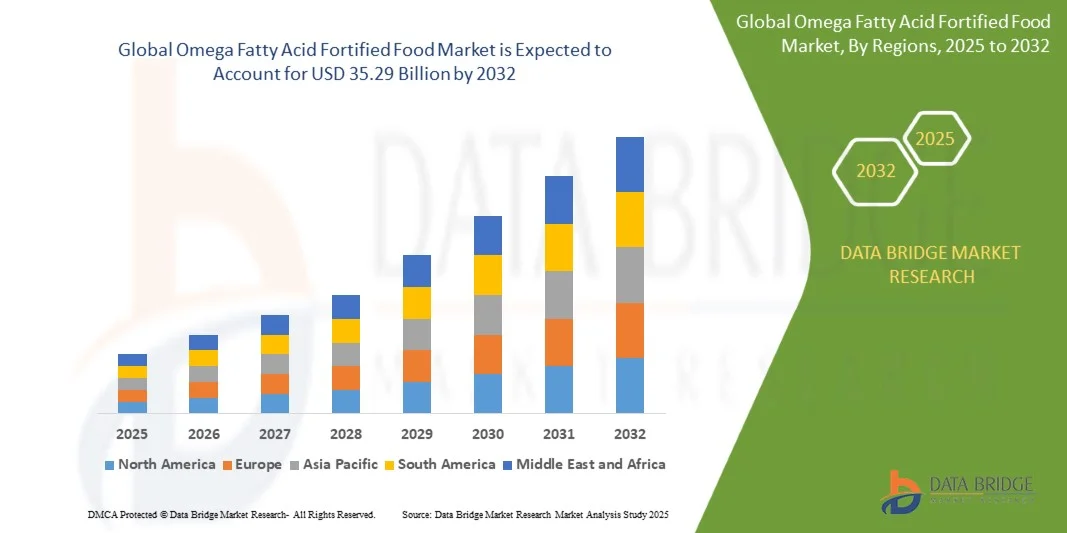
- The global omega fatty acid fortified food market size was valued at USD 19.50 billion in 2024 and is expected to reach USD 35.29 billion by 2032, at a CAGR of 7.70% during the forecast period
- The market growth is largely fueled by rising health awareness and increasing consumer preference for functional and fortified foods enriched with omega-3 fatty acids, which support heart, brain, and cognitive health
- Furthermore, growing demand for sustainable, plant-based, and high-quality nutritional products is establishing omega fatty acid fortified foods as a preferred choice among health-conscious and environmentally aware consumers. These converging factors are accelerating the adoption of fortified foods and supplements, thereby significantly boosting the industry's growth
Omega Fatty Acid Fortified Food Market Analysis
- Omega fatty acid fortified foods include products enriched with DHA, EPA, and ALA sourced from fish oil, algal oil, plant oils, and seeds. These products are incorporated into dietary supplements, infant formulas, functional foods, and beverages to enhance nutritional value and promote wellness
- The escalating demand for omega fatty acid fortified foods is primarily driven by increasing awareness of their health benefits, rising disposable incomes, urbanization, and the growing preference for convenient dietary sources of essential nutrients in both developed and emerging markets
- North America dominated the omega fatty acid fortified food market with a share of 40.76% in 2024, due to rising health awareness and increasing consumption of functional and fortified foods
- Asia-Pacific is expected to be the fastest growing region in the omega fatty acid fortified food market during the forecast period due to increasing urbanization, rising disposable incomes, and growing health awareness in countries such as China, Japan, and India
- Fish oil and krill oil segment dominated the market with a market share of 48.8% in 2024, due to their high concentrations of EPA and DHA and established reputation for cardiovascular and cognitive health benefits. These marine-based oils are widely used in dietary supplements and functional foods, and their global availability ensures consistent consumer demand. In addition, advancements in purification and encapsulation technologies have enhanced the stability and taste profile of fish and krill oil, further supporting market dominance
Report Scope and Omega Fatty Acid Fortified Food Market Segmentation
|
Attributes |
Omega Fatty Acid Fortified Food Key Market Insights |
|
Segments Covered |
|
|
Countries Covered |
North America
Europe
Asia-Pacific
Middle East and Africa
South America
|
|
Key Market Players |
|
|
Market Opportunities |
|
|
Value Added Data Infosets |
In addition to the insights on market scenarios such as market value, growth rate, segmentation, geographical coverage, and major players, the market reports curated by the Data Bridge Market Research also include in-depth expert analysis, pricing analysis, brand share analysis, consumer survey, demography analysis, supply chain analysis, value chain analysis, raw material/consumables overview, vendor selection criteria, PESTLE Analysis, Porter Analysis, and regulatory framework. |
Omega Fatty Acid Fortified Food Market Trends
“Rising Demand for Plant-Based Omega-3 Sources”
- The omega fatty acid fortified food market is experiencing rapid growth driven by the rising demand for plant-based omega-3 sources as consumers increasingly seek sustainable, vegan, and allergen-free alternatives to traditional fish oil. Plant-derived sources such as algae, flaxseed, chia seeds, and canola oil are gaining traction due to their environmental benefits and dietary inclusivity
- For instance, companies such as DSM and Corbion are investing in algal omega-3 production, offering fortified solutions that cater to vegan and vegetarian populations while reducing dependency on marine resources. Their innovation reflects the shift toward more sustainable nutrition solutions in fortified food development
- Consumer preference for clean-label, naturally sourced ingredients is reinforcing adoption of plant-based omega-3 fortified foods. These products appeal to vegans and also to environmentally conscious consumers concerned about overfishing and contaminants such as mercury in marine sources
- The expanding popularity of functional foods and beverages fortified with plant-based omegas—such as dairy alternatives, baked goods, smoothies, and nutritional bars—illustrates how the industry is diversifying formulations to meet the demand for convenient, health-enhancing options
- Advancements in encapsulation and stabilization technologies are helping manufacturers improve the taste, odor, and stability of plant-based omega ingredients, addressing earlier challenges of oxidation and shelf life. This has further boosted consumer acceptance of fortified foods across demographics
- The rising demand for plant-based omega-3 solutions underscores a broader trend of sustainable functional nutrition, ensuring that omega fatty acid fortified foods align with long-term wellness and environmental goals
Omega Fatty Acid Fortified Food Market Dynamics
Driver
“Growing Health Awareness and Fortified Food Adoption”
- Increasing consumer awareness of the role omega fatty acids play in cardiovascular health, cognitive function, and overall wellbeing is a key driver of this market. Fortified foods enriched with omega-3, omega-6, and omega-9 fatty acids offer consumers accessible options to improve daily nutrition without requiring supplements
- For instance, Nestlé and Unilever have launched fortified food and beverage products that incorporate omega fatty acids into everyday diets, targeting mainstream consumers who prioritize preventive health care. Their product development strategies illustrate the growing potential for fortification in mass-market categories
- The rising prevalence of cardiovascular disease, lifestyle-related disorders, and nutritional deficiencies has strengthened consumer demand for fortified products as part of a proactive wellness approach. Omega-enhanced foods provide functional health benefits suitable for a wide range of age groups, from children to the elderly
- The fortified food market is also directly supported by increased urbanization and evolving consumer habits, where busy lifestyles fuel demand for convenient, ready-to-eat functional items. Omega-fortified snacks, ready meals, and beverages are well-positioned within this consumption trend
- As health-conscious consumers increasingly associate fortified foods with better quality of life and disease prevention, the demand for omega fatty acid fortified products will continue growing as a core driver within the broader functional food industry
Restraint/Challenge
“High Cost and Stability Issues of Omega-3 Ingredients”
- A critical challenge in the omega fatty acid fortified food market is the high cost and stability issues of omega-3 ingredients, particularly those sourced from algae and plant-based alternatives. These ingredients often require advanced processing and encapsulation technologies, which raise overall production costs
- For instance, algal omega-3 oils supplied by companies such as DSM and Corbion are significantly more expensive compared to traditional fish oil sources, making it difficult to achieve price parity for mass-market fortified foods. This cost factor limits wider adoption in price-sensitive regions
- In addition, omega-3 fatty acids are prone to oxidation, resulting in off-flavors, nutritional degradation, and reduced shelf life for fortified foods. This challenge makes food formulation and storage more complex and expensive, requiring specialized technologies for stabilization and encapsulation
- These cost and stability barriers also reduce product accessibility for middle- and lower-income consumers, slowing the potential mass-market penetration of omega fortified food products despite strong awareness and demand
- To overcome these challenges, manufacturers are investing in research to develop low-cost, stable ingredient formats and scalable technologies. Collaborative innovation across food science and nutrition sectors will be crucial for ensuring long-term affordability, quality, and consumer trust in omega fatty acid fortified foods
Omega Fatty Acid Fortified Food Market Scope
The market is segmented on the basis of type, source, and application.
• By Type
On the basis of type, the Omega Fatty Acid Fortified Food market is segmented into Alpha-Linolenic Acid (ALA), Eicosapentaenoic Acid (EPA), and Docosahexaenoic Acid (DHA). The DHA segment dominated the largest market revenue share in 2024, driven by its recognized benefits in brain development, cognitive function, and cardiovascular health. DHA-fortified foods and supplements are highly preferred by health-conscious consumers and parents seeking enhanced nutritional value for children. The market also sees strong demand for DHA due to its inclusion in infant formulas, dairy products, and functional foods, along with widespread awareness campaigns highlighting its health benefits. In addition, DHA’s stability in fortified food formulations and compatibility with various delivery formats further support its market dominance.
The ALA segment is anticipated to witness the fastest growth rate from 2025 to 2032, fueled by increasing vegetarian and vegan consumer adoption. ALA, derived from plant-based sources such as walnuts, flaxseed, and soybean, appeals to health-conscious individuals looking for sustainable and non-animal-derived omega-3 options. Rising awareness of plant-based diets, along with growing availability of ALA-fortified snacks, beverages, and dietary supplements, is contributing to its accelerated adoption.
• By Source
On the basis of source, the market is segmented into Fish Oil and Krill Oil, Algal Oil, Walnut, Pumpkin Seeds, Soybean Oil, Canola Oil, Bean Curd, and Others. Fish Oil and Krill Oil held the largest market revenue share of 48.8% in 2024, owing to their high concentrations of EPA and DHA and established reputation for cardiovascular and cognitive health benefits. These marine-based oils are widely used in dietary supplements and functional foods, and their global availability ensures consistent consumer demand. In addition, advancements in purification and encapsulation technologies have enhanced the stability and taste profile of fish and krill oil, further supporting market dominance.
Algal Oil is expected to witness the fastest CAGR from 2025 to 2032, driven by rising vegan and sustainable product trends. Algal oil provides a plant-based source of DHA, appealing to environmentally conscious and health-oriented consumers. Its growing use in infant formulas, fortified foods, and supplements, combined with increasing research on bioavailability and efficacy, contributes to the rapid adoption of algal oil in the market.
• By Application
On the basis of application, the Omega Fatty Acid Fortified Food market is segmented into Dietary Supplement, Pharmaceutical, Infant Formula, Food & Beverage, Pet Food, and Fish Feed. The Dietary Supplement segment dominated the largest market revenue share in 2024, driven by widespread consumer preference for convenient, concentrated sources of omega-3 fatty acids. Supplements, including capsules, soft gels, and powders, provide targeted nutrition and are highly popular among adults seeking heart, brain, and joint health benefits. The market also benefits from the continuous launch of innovative supplement formats and the growing influence of wellness-focused lifestyles.
The Infant Formula segment is anticipated to witness the fastest growth rate from 2025 to 2032, fueled by increasing awareness among parents about the critical role of DHA and EPA in early childhood brain and eye development. Rising urbanization, higher disposable incomes, and the preference for fortified nutritional products for infants are contributing to rapid growth. Moreover, the expansion of organized retail channels and e-commerce platforms makes fortified infant formula increasingly accessible across emerging markets.
Omega Fatty Acid Fortified Food Market Regional Analysis
- North America dominated the omega fatty acid fortified food market with the largest revenue share of 40.76% in 2024, driven by rising health awareness and increasing consumption of functional and fortified foods
- Consumers in the region are prioritizing omega-3 enriched diets to support heart, brain, and cognitive health
- The widespread adoption is further supported by high disposable incomes, a strong preference for dietary supplements, and growing demand for preventive healthcare solutions, establishing omega fatty acid fortified foods as a key component in everyday nutrition
U.S. Omega Fatty Acid Fortified Food Market Insight
The U.S. market captured the largest revenue share in 2024 within North America, fueled by strong consumer awareness of omega-3 benefits and the popularity of fortified dietary supplements. Consumers are increasingly choosing DHA- and EPA-enriched products in infant formula, beverages, and functional foods. The rise of wellness-focused lifestyles, combined with a well-developed retail and e-commerce network, further drives market growth. Moreover, government initiatives promoting nutritional health and ongoing research on omega fatty acids are significantly supporting market expansion.
Europe Omega Fatty Acid Fortified Food Market Insight
The Europe market is projected to expand at a substantial CAGR throughout the forecast period, primarily driven by increasing demand for heart-healthy and cognitive-supporting foods. Rising urbanization, coupled with consumer interest in preventive healthcare, is fostering the adoption of omega fatty acid fortified products. European consumers are also drawn to plant-based and sustainable sources of omega-3, such as algal oil, boosting market growth. The region is witnessing increasing incorporation of fortified foods across dietary supplements, infant nutrition, and functional foods.
U.K. Omega Fatty Acid Fortified Food Market Insight
The U.K. market is anticipated to grow at a noteworthy CAGR during the forecast period, driven by rising consumer awareness of omega-3 benefits for overall health and wellness. Increasing health-consciousness and preference for functional foods are encouraging the adoption of DHA- and ALA-enriched products. The U.K.’s robust retail and e-commerce infrastructure, along with a strong focus on nutritional labeling and quality standards, is expected to continue to stimulate market growth.
Germany Omega Fatty Acid Fortified Food Market Insight
The Germany market is expected to expand at a considerable CAGR during the forecast period, fueled by growing awareness of preventive nutrition and cardiovascular health. Consumers show a strong preference for high-quality fortified foods and dietary supplements containing fish oil, algal oil, and other omega sources. Germany’s emphasis on sustainable and innovative food solutions promotes the adoption of plant-based omega-3 products, while integration of fortified ingredients into mainstream food and beverage categories supports steady growth.
Asia-Pacific Omega Fatty Acid Fortified Food Market Insight
The Asia-Pacific market is poised to grow at the fastest CAGR during the forecast period of 2025 to 2032, driven by increasing urbanization, rising disposable incomes, and growing health awareness in countries such as China, Japan, and India. The region’s rising demand for fortified infant formula, dietary supplements, and functional foods is accelerating adoption. Furthermore, as APAC emerges as a major production hub for omega-3 ingredients, affordability and accessibility of fortified products are expanding to a wider consumer base.
Japan Omega Fatty Acid Fortified Food Market Insight
The Japan market is gaining momentum due to high consumer awareness of brain health, aging population concerns, and increasing preference for functional foods. DHA- and EPA-fortified products, especially in infant nutrition and supplements, are in high demand. The integration of omega fatty acids into beverages, dairy, and convenience foods, coupled with technological advancements in food processing, is further driving growth.
China Omega Fatty Acid Fortified Food Market Insight
The China market accounted for the largest market revenue share in Asia-Pacific in 2024, attributed to rapid urbanization, rising middle-class health consciousness, and increasing infant nutrition awareness. The country represents one of the largest consumers of fortified foods, with strong demand for DHA-enriched infant formula and dietary supplements. Government focus on nutrition, coupled with the availability of locally produced omega-3 ingredients, is significantly propelling market growth.
Omega Fatty Acid Fortified Food Market Share
The omega fatty acid fortified food industry is primarily led by well-established companies, including:
- Aker BioMarine (Norway)
- Axellus (Norway)
- BASF SE (Germany)
- BioProcess Algae (U.S.)
- Croda (U.K.)
- EPAX (Norway)
- Martek Biosciences (U.S.)
- Lonza (Switzerland)
- Pronova (U.S.)
- GC Rieber Oils (Norway)
- Cargill, Incorporated (U.S.)
- FMC Corporation (U.S.)
- Croda International Plc (U.K.)
- Royal DSM (Netherlands)
- OLVEA Fish Oils (France)
- Omega Protein Corporation (U.S.)
- Luhua Biomarine (Shandong) Co., Ltd. (China)
- Pharma Marine AS (Norway)
- Polaris (U.S.)
- Nordic Naturals (U.S.)
- Algaecytes (U.K.)
- Simris Alg (Sweden)
Latest Developments in Omega Fatty Acid Fortified Food Market
- In May 2024, MegaFood launched a plant-based Omega 3-6-9 supplement, enhancing market accessibility and sustainability. MegaFood’s new supplement combines algae oil and Ahiflower, providing a vegan alternative to traditional fish oil products. This launch addresses the growing demand for plant-based and environmentally sustainable nutrition, appealing to consumers seeking both health and eco-conscious solutions. By offering a high-quality, easily adoptable omega-3 product, MegaFood strengthens its market position and broadens the appeal of fortified foods to vegetarian, vegan, and health-focused consumer segments, further expanding the overall omega fatty acid fortified food market
- In 2024, GC Rieber VivoMega secured a partnership with a U.S. dietary supplement brand, significantly expanding its market presence. The partnership focuses on supplying high-concentration EPA/DHA omega-3 oils for upcoming supplement launches, enabling broader distribution and increased product availability. This collaboration helps meet the surging consumer demand for functional foods targeting heart, brain, and cognitive health. By strengthening supply capabilities and aligning with a prominent U.S. partner, GC Rieber VivoMega enhances its market share and visibility, driving growth in the competitive dietary supplement segment of the omega fatty acid fortified food market
- In November 2024, Aker BioMarine announced key partnerships at the China International Import Expo, reinforcing its market position in Asia. The strategic collaborations are aimed at distributing krill oil and other omega-3 products across a rapidly growing consumer base in China, where awareness of omega-3 health benefits is increasing. These partnerships support the company in scaling production, improving supply chain efficiency, and meeting rising demand in functional foods, infant formula, and supplements. This initiative strengthens Aker BioMarine’s presence in a high-growth market and also accelerates adoption of omega-3 fortified products in the broader Asia-Pacific region
- In October 2023, DSM-Firmenich launched life’s®OMEGA O3020, setting a new benchmark for algal omega-3 ingredients. This single-source algal ingredient replicates the EPA and DHA ratio of fish oil, offering a sustainable, plant-based alternative for fortified foods and dietary supplements. The product responds to increasing consumer demand for vegan-friendly and environmentally responsible nutrition solutions. By enabling manufacturers to incorporate high-quality plant-based omega-3s into infant formulas, beverages, and functional foods, DSM-Firmenich drives market expansion and supports the growing trend of plant-based fortified products globally
- In May 2024, OmegaQuant introduced omega-3 fortified eggs, diversifying functional food offerings and enhancing market penetration. These eggs are enriched through the hens’ diet, providing a convenient, natural source of omega-3 fatty acids for consumers seeking alternatives to supplements. The product appeals to health-conscious individuals and families aiming to increase dietary omega-3 intake in everyday meals. By expanding the range of functional foods with omega-3 benefits, OmegaQuant attracts a wider consumer base and also strengthens the integration of omega fatty acids into mainstream diets, supporting sustained market growth

- Interactive Data Analysis Dashboard
- Company Analysis Dashboard for high growth potential opportunities
- Research Analyst Access for customization & queries
- Competitor Analysis with Interactive dashboard
- Latest News, Updates & Trend analysis
- Harness the Power of Benchmark Analysis for Comprehensive Competitor Tracking
Global Omega Fatty Acid Fortified Food Market, Supply Chain Analysis and Ecosystem Framework
To support market growth and help clients navigate the impact of geopolitical shifts, DBMR has integrated in-depth supply chain analysis into its Global Omega Fatty Acid Fortified Food Market research reports. This addition empowers clients to respond effectively to global changes affecting their industries. The supply chain analysis section includes detailed insights such as Global Omega Fatty Acid Fortified Food Market consumption and production by country, price trend analysis, the impact of tariffs and geopolitical developments, and import and export trends by country and HSN code. It also highlights major suppliers with data on production capacity and company profiles, as well as key importers and exporters. In addition to research, DBMR offers specialized supply chain consulting services backed by over a decade of experience, providing solutions like supplier discovery, supplier risk assessment, price trend analysis, impact evaluation of inflation and trade route changes, and comprehensive market trend analysis.
Data collection and base year analysis are done using data collection modules with large sample sizes. The stage includes obtaining market information or related data through various sources and strategies. It includes examining and planning all the data acquired from the past in advance. It likewise envelops the examination of information inconsistencies seen across different information sources. The market data is analysed and estimated using market statistical and coherent models. Also, market share analysis and key trend analysis are the major success factors in the market report. To know more, please request an analyst call or drop down your inquiry.
The key research methodology used by DBMR research team is data triangulation which involves data mining, analysis of the impact of data variables on the market and primary (industry expert) validation. Data models include Vendor Positioning Grid, Market Time Line Analysis, Market Overview and Guide, Company Positioning Grid, Patent Analysis, Pricing Analysis, Company Market Share Analysis, Standards of Measurement, Global versus Regional and Vendor Share Analysis. To know more about the research methodology, drop in an inquiry to speak to our industry experts.
Data Bridge Market Research is a leader in advanced formative research. We take pride in servicing our existing and new customers with data and analysis that match and suits their goal. The report can be customized to include price trend analysis of target brands understanding the market for additional countries (ask for the list of countries), clinical trial results data, literature review, refurbished market and product base analysis. Market analysis of target competitors can be analyzed from technology-based analysis to market portfolio strategies. We can add as many competitors that you require data about in the format and data style you are looking for. Our team of analysts can also provide you data in crude raw excel files pivot tables (Fact book) or can assist you in creating presentations from the data sets available in the report.













