


What is the Open-Source Services Market Size and Growth Rate?
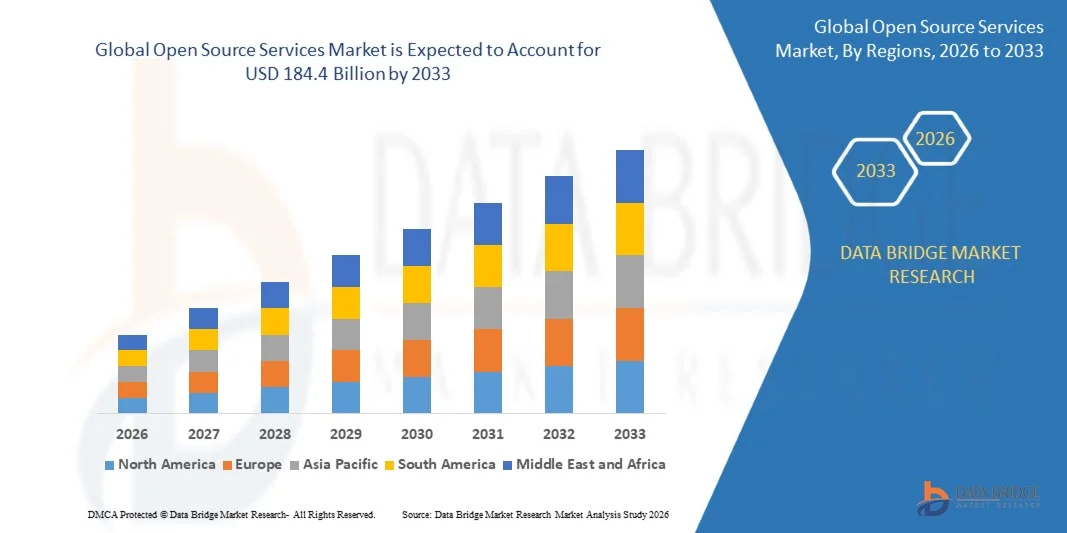
- As per market analysis, the Global open-source services was valued at approximately USD 37.9 billion in 2025 and is projected to reach USD 184.4 billion by 2033, growing at a CAGR of 10.30% from 2026 to 2033.
- The market is witnessing strong growth driven by the increasing adoption of open-source software across enterprises, rising demand for cost-effective IT solutions, growing digital transformation initiatives, and the need for flexible and scalable technology infrastructure. The ability of open-source services to reduce software licensing costs, support customization, improve interoperability, and provide access to a broad developer ecosystem is further supporting market expansion.
- Increasing demand for cloud computing, artificial intelligence, machine learning, containerization, cybersecurity, data analytics, and enterprise application development is encouraging organizations to adopt open-source services across industries such as banking, financial services, healthcare, retail, telecommunications, manufacturing, and information technology. Advances in cloud-native technologies, automation, DevOps, Kubernetes, open-source databases, and managed service platforms are further creating opportunities for market growth.
Market Size & Forecast
- Market Value (2025): USD 37.9 billion
- Expected Market Value (2033): USD 1249.8 Million
- Forecast CAGR (2026–2033): 10.30%
- Leading Region in 2025: North America
- Fastest Growing Region: Asia-Pacific
What are the Major Takeaways of the Open-Source Services Market?
- North America dominated the open-source services market, accounting for 25.0% revenue share in 2025, supported by the rapid adoption of cloud computing, artificial intelligence-driven analytics, automation tools, and digital transformation initiatives across enterprises. The region's mature technology ecosystem, strong presence of open-source technology providers, and high demand for flexible and scalable IT infrastructure further supported its leading market position.
- Asia-Pacific is expected to witness the fastest growth in the open-source services market during the forecast period, supported by rapid digital transformation, increasing cloud adoption, expanding IT infrastructure, and growing investments in open-source technologies across China, India, Japan, and South Korea. Rising demand for cost-effective technology solutions, cloud-native applications, and enterprise modernization is further supporting regional market expansion.
- Integration and Deployment dominated the market by services, accounting for 30.0% revenue share in 2025, supported by the increasing adoption of open-source software and the growing need to integrate these solutions with existing enterprise IT infrastructure. The complexity associated with deployment, customization, system integration, and configuration is encouraging organizations to engage specialized service providers for seamless implementation.
- Large Enterprises dominated the market by enterprise size, accounting for 70.0% revenue share in 2025, supported by their greater IT budgets, extensive digital infrastructure, and ability to establish dedicated teams for managing open-source technologies. The need for scalable, customizable, and cost-effective solutions across geographically distributed operations is further increasing the adoption of open-source services among large enterprises.
- IT & ITeS dominated the market by application, accounting for a around 25.0% revenue share in 2025, driven by extensive adoption of open-source platforms for software development, cloud infrastructure, data management, DevOps, artificial intelligence, and application modernization. Increasing reliance on open-source technologies for flexible development environments, interoperability, and reduced vendor dependency is further supporting demand for open-source services across the IT and ITeS sector.
Report Scope and Open Source Services Market Segmentation
|
Attributes |
Open Source Services Key Market Insights |
|
Segments Covered |
|
|
Countries Covered |
North America
Europe
Asia-Pacific
Middle East and Africa
South America
|
|
Key Market Players |
|
|
Market Opportunities |
|
|
Value Added Data Infosets |
In addition to the market insights such as market value, growth rate, market segments, geographical coverage, market players, and market scenario, the market report curated by the Data Bridge Market Research team includes in-depth expert analysis, import/export analysis, pricing analysis, production consumption analysis, and pestle analysis. |
What is the Key Trend in the Open Source Services Market?
- Open source service providers are increasingly focusing on AI-enabled open-source platforms, integrating generative AI, large language models, machine learning, automated model management, AI inference, and intelligent development tools to help enterprises build, deploy, and manage AI applications across hybrid and multicloud environments. The growing integration of AI capabilities with open-source infrastructure is enabling organizations to improve scalability, flexibility, and control while reducing dependence on proprietary technology ecosystems.
- The development of cloud-native, Kubernetes-based, and hybrid cloud open-source services is gaining traction, as enterprises seek flexible infrastructure for application modernization, AI workloads, containerized applications, and distributed computing. Service providers are increasingly expanding capabilities around Kubernetes, OpenShift, distributed inference, automation, and cloud-native application management to support complex enterprise workloads across on-premises, cloud, and edge environments.
- For instance, in May 2025, Red Hat launched the llm-d open-source community, in collaboration with CoreWeave, Google Cloud, IBM Research, NVIDIA, AMD, Cisco, Hugging Face, Intel, Lambda, and Mistral AI. The initiative focuses on distributed generative AI inference at scale using a Kubernetes-native architecture, vLLM-based distributed inference, and AI-aware network routing, demonstrating the increasing integration of open-source technologies with enterprise AI infrastructure.
- Open source service providers are also expanding beyond conventional software implementation and support toward managed AI, cybersecurity, modernization, and enterprise infrastructure services, with increasing adoption across financial services, healthcare, telecommunications, manufacturing, retail, and other sectors.
What are the Key Drivers of the Open Source Services Market?
- Open source service providers are increasingly focusing on cloud-native and AI-enabled open-source technologies, integrating artificial intelligence, machine learning, automation, containerization, Kubernetes, and open-source databases to help enterprises build scalable, flexible, and cost-effective technology environments. The growing use of open-source frameworks for AI development, data analytics, application modernization, and cloud infrastructure is encouraging organizations to engage specialized service providers.
- The development of more flexible, scalable, and enterprise-ready open-source solutions is gaining traction, as organizations seek to reduce software licensing costs, minimize vendor dependency, and accelerate digital transformation. Open-source services are increasingly being deployed across application development, cloud migration, DevOps, cybersecurity, data management, enterprise integration, and infrastructure modernization, supporting broader adoption across industries.
- For instance, in 2025, Red Hat expanded its enterprise open-source portfolio with continued development of Red Hat Enterprise Linux, OpenShift, and AI-related capabilities, supporting organizations in deploying hybrid cloud, containerized applications, and AI workloads across physical, virtual, private, and public cloud environments. These developments are strengthening demand for implementation, integration, consulting, migration, and managed services around open-source platforms.
- Service providers are also expanding open-source applications beyond conventional software development, with increasing adoption across artificial intelligence, machine learning, cloud computing, cybersecurity, edge computing, data analytics, and enterprise automation. At the same time, the growing use of DevOps, Kubernetes, cloud-native architectures, open-source AI frameworks, and managed open-source platforms is encouraging the transition of open-source technologies from developer-focused tools toward strategic enterprise technology solutions.
Which Factors are Challenging the Growth of the Open Source Services Market?
- Open-source services providers are increasingly focusing on addressing cybersecurity, vulnerability management, and compliance challenges, as the widespread use of open-source components can expose enterprises to security vulnerabilities, outdated dependencies, malicious code, and software supply-chain risks. Organizations are therefore requiring stronger security monitoring, governance frameworks, automated vulnerability scanning, and compliance management, which can increase the complexity and cost of open-source service implementation.
- The complexity of integrating open-source technologies with existing proprietary and legacy enterprise systems is creating challenges for service providers, particularly as organizations operate hybrid and multi-cloud environments. Compatibility issues, system customization, data migration requirements, interoperability limitations, and the need for specialized technical expertise can increase implementation time and operational costs.
- For instance, in September 2024, the Open-Source Initiative (OSI) approved the first stable version of the Open Source AI Definition, highlighting the growing need to establish clearer standards around what qualifies as open-source artificial intelligence. Such developments demonstrate the increasing importance of licensing clarity, transparency, governance, and compliance as organizations adopt open-source technologies across AI and enterprise applications.
- Open-source services providers also face challenges related to the shortage of skilled professionals with expertise across multiple open-source platforms and technologies, including cloud-native infrastructure, Kubernetes, Linux, databases, DevOps, cybersecurity, and artificial intelligence. At the same time, rapid changes in open-source projects, frequent software updates, dependency management, licensing requirements, and fragmented technology ecosystems increase the need for continuous technical support and specialized expertise, potentially limiting adoption among organizations with constrained IT resources.
How is the Open Source Services Market Segmented?
The market is segmented on the basis of Service Type, End User, Deployment Model, and Industry.
- By Service Type
On the basis of service type, the open-source services market is segmented into Consulting Services, Support Services, Training Services, and Development Services. The Development Services segment held the largest market revenue share of 34.87% in 2025, supported by increasing demand for customized open-source applications, software development, application modernization, and integration with existing enterprise IT infrastructure. The segment is further supported by the growing adoption of cloud-native platforms, DevOps, artificial intelligence, and open-source development frameworks.
The Consulting Services segment is expected to witness the fastest growth during the forecast period, registering a CAGR of 12.84% from 2026 to 2033, driven by increasing enterprise requirements for open-source technology selection, migration planning, architecture design, implementation strategies, and technology optimization.
- By End User
On the basis of end user, the open-source services market is segmented into Small and Medium Enterprises, Large Enterprises, Government Organizations, and Academic Institutions. The Large Enterprises segment held the largest market revenue share of 52.64% in 2025, supported by higher IT spending, extensive digital infrastructure, increasing adoption of cloud technologies, and growing demand for scalable and customizable software solutions. Large enterprises are also increasingly adopting open-source technologies to reduce licensing costs, improve interoperability, and minimize dependency on proprietary technology providers.
The Small and Medium Enterprises segment is expected to witness the fastest growth during the forecast period, registering a CAGR of 13.26% from 2026 to 2033, supported by increasing demand for cost-effective software solutions, cloud-based applications, flexible IT infrastructure, and affordable digital transformation technologies.
- By Deployment Model
On the basis of deployment model, the open-source services market is segmented into On-Premises, Cloud-Based, and Hybrid. The Cloud-Based segment held the largest market revenue share of 46.38% in 2025, driven by increasing cloud migration, demand for scalable IT infrastructure, growing adoption of cloud-native open-source technologies, and the increasing use of managed cloud services. The flexibility to scale resources based on business requirements is further supporting the adoption of cloud-based open-source services.
The Hybrid segment is expected to witness the fastest growth during the forecast period, registering a CAGR of 13.91% from 2026 to 2033, supported by the increasing need to integrate on-premises infrastructure with public and private cloud environments. Growing requirements for data control, security, regulatory compliance, and flexible workload management are further encouraging enterprises to adopt hybrid deployment models.
- By Industry
On the basis of industry, the open-source services market is segmented into Information Technology, Healthcare, Education, and Finance. The Information Technology segment held the largest market revenue share of 38.72% in 2025, supported by extensive use of open-source operating systems, databases, development frameworks, cloud platforms, cybersecurity tools, and DevOps technologies. Increasing software development activities and digital transformation initiatives across IT organizations are further strengthening segment growth.
The Healthcare segment is expected to witness the fastest growth during the forecast period, registering a CAGR of 14.18% from 2026 to 2033, driven by increasing digitalization of healthcare systems, adoption of electronic health records, healthcare data analytics, interoperability requirements, and growing demand for flexible and cost-effective healthcare IT infrastructure.
Which Region Holds the Largest Share of the Open-Source Services Market?
- North America dominated the open-source services market with the largest revenue share of 37.35% in 2025, supported by strong adoption of cloud computing, enterprise software, artificial intelligence, DevOps, cybersecurity, and digital transformation technologies. The region is further supported by the presence of leading open-source technology providers, mature IT infrastructure, high enterprise technology spending, and increasing demand for flexible, scalable, and cost-effective software solutions across the U.S. and Canada.
- Asia-Pacific is expected to witness the fastest growth at a CAGR of 16.92% from 2026 to 2031, supported by rapid digital transformation, expanding cloud infrastructure, increasing adoption of open-source software, growing IT services expenditure, and rising investments in artificial intelligence and cloud-native technologies. China, India, Japan, South Korea, and other emerging Asian economies are contributing to regional growth through increasing enterprise modernization, software development activities, and adoption of cost-effective open-source solutions.
U.S. Open Source Services Insight
The U.S. open-source services market is witnessing strong growth, supported by widespread adoption of cloud computing, artificial intelligence, DevOps, cybersecurity, and digital transformation technologies across enterprises. The presence of leading technology companies and a mature IT infrastructure is encouraging organizations to adopt open-source solutions for software development, application modernization, data management, and cloud-native deployments. Increasing demand for scalable and cost-effective technology solutions, along with growing investments in automation and hybrid cloud environments, is further supporting market expansion. Rising enterprise focus on reducing vendor dependency and improving software flexibility is also creating opportunities for open-source service providers.
Europe Open-Source Services Insight
Europe open-source services market is witnessing steady growth, supported by increasing enterprise adoption of cloud computing, digital transformation, artificial intelligence, cybersecurity, and DevOps technologies. Organizations across the region are increasingly adopting open-source solutions to improve flexibility, reduce software licensing costs, and support scalable IT infrastructure. Growing emphasis on data sovereignty, cybersecurity, regulatory compliance, and interoperability is further encouraging enterprises to seek specialized consulting, integration, and support services. Countries such as Germany, the United Kingdom, France, and the Netherlands are contributing to regional growth through expanding cloud adoption and enterprise modernization initiatives.
U.K. Open-Source Services Insight
The U.K. open-source services market is supported by strong digital transformation initiatives, widespread cloud adoption, and increasing enterprise demand for flexible and cost-effective IT solutions. Organizations across financial services, healthcare, retail, manufacturing, and technology are increasingly adopting open-source platforms for software development, data management, cybersecurity, cloud infrastructure, and application modernization. Growing investment in artificial intelligence, DevOps, containerization, and cloud-native technologies is further creating demand for consulting, integration, development, and support services. The presence of a mature technology ecosystem and skilled IT workforce is also supporting the adoption of open-source services across the country.
Germany Open Source Services Insight
Germany’s open-source services market is supported by strong enterprise digitalization, increasing cloud adoption, and growing demand for flexible and cost-effective IT infrastructure. German organizations are increasingly adopting open-source solutions across manufacturing, automotive, healthcare, finance, and industrial applications to improve interoperability, customization, and technology independence. The country’s Industry 4.0 ecosystem and emphasis on automation, data management, cybersecurity, and cloud-native technologies are further supporting demand for open-source services. Growing investments in artificial intelligence, enterprise modernization, and digital infrastructure are expected to create additional opportunities for consulting, development, integration, and managed open-source services.
Asia-Pacific Open Source Services Insight
Asia-Pacific is expected to witness significant growth in the open-source services market, driven by rapid digital transformation, expanding cloud infrastructure, and increasing adoption of open-source technologies across enterprises. Growing investments in artificial intelligence, cloud computing, DevOps, cybersecurity, and application modernization are encouraging organizations to adopt flexible and cost-effective software solutions. Countries such as China, India, Japan, and South Korea are contributing to regional expansion through increasing IT spending, software development activities, and enterprise technology modernization. Rising demand for scalable infrastructure and reduced dependence on proprietary software is further supporting market growth across the region.
Japan Open Source Services Insight
Japan’s open-source services market is supported by accelerating digital transformation, increasing adoption of cloud computing, and growing enterprise demand for flexible and cost-effective technology solutions. Japanese organizations are increasingly adopting open-source platforms across software development, data management, cybersecurity, artificial intelligence, and cloud-native applications to improve scalability and reduce dependence on proprietary technologies. Strong investments in automation, advanced manufacturing, and smart infrastructure are further creating demand for open-source integration and consulting services. In addition, the growing need for system modernization and interoperability across established enterprise infrastructure is supporting the adoption of open-source services across Japan.
China Open Source Services Insight
China's open-source services market is expanding as enterprises accelerate digital transformation, cloud adoption, artificial intelligence deployment, and software modernization across manufacturing, financial services, healthcare, retail, and technology sectors. Growing investment in cloud-native infrastructure, open-source databases, operating systems, and development frameworks is supporting demand for consulting, implementation, integration, and managed services. Government-backed digitalization initiatives and the expansion of domestic technology ecosystems are further encouraging open-source adoption. Increasing demand for flexible, scalable, and cost-effective IT infrastructure is expected to strengthen the country's position in the Asia-Pacific open-source services landscape.
Which are the Top Companies in Open Source Services Market?
The Open Source Services industry is primarily led by well-established companies, including:
- Red Hat, Inc. (U.S.)
- IBM Corporation (U.S.)
- Oracle Corporation (U.S.)
- Accenture plc (Ireland)
- Cisco Systems, Inc. (U.S.)
- Hewlett Packard Enterprise (U.S.)
- SUSE (Luxembourg)
- Infosys Limited (India)
- Wipro Limited (India)
- Tata Consultancy Services (TCS) (India)
- HCL Technologies Limited (India)
- Tech Mahindra Limited (India)
- Capgemini SE (France)
- Cognizant Technology Solutions Corporation (U.S.)
- Fujitsu Limited (Japan)
What are Latest Developments in Open Source Services Market?
- In July 2026, IBM and Red Hat expanded their Lightwell initiative with new commercial offerings for open-source software security, building on IBM's USD 5 billion commitment announced in May 2026. The initiative combines AI-driven vulnerability remediation with the expertise of more than 20,000 engineers to help enterprises identify, fix, and manage security risks across open-source software supply chains.
- In May 2026, IBM announced a USD 5 billion commitment to strengthen open-source software security through Project Lightwell, developed with Red Hat. The initiative was piloted with organizations including Bank of America, JPMorgan Chase, and Visa and is designed to provide centralized vulnerability identification, tested fixes, and security validation across open-source components and AI frameworks.
- In May 2026, IBM's acquisition of Confluent strengthened its position in open-source and data-streaming technologies. IBM announced an USD 11 billion acquisition of Confluent, an open-source data-streaming platform, to strengthen its AI strategy and improve real-time data movement across applications and systems. The transaction was expected to close in mid-2026, subject to regulatory and shareholder approval.
- In June 2026, Red Hat expanded its focus on open-source technologies for enterprise AI and digital sovereignty, responding to increasing demand from enterprises seeking greater control over AI infrastructure, data governance, and technology dependencies. The company has highlighted open technologies as a means of supporting flexible and portable AI and cloud environments.
- In September 2026, LTM collaborated with IBM and Red Hat on Lightwell to advance AI-driven open-source software remediation, further expanding the initiative's ecosystem around automated vulnerability identification and remediation. This development highlights the growing role of AI-powered security services in managing open-source software risks.

- Interactive Data Analysis Dashboard
- Company Analysis Dashboard for high growth potential opportunities
- Research Analyst Access for customization & queries
- Competitor Analysis with Interactive dashboard
- Latest News, Updates & Trend analysis
- Harness the Power of Benchmark Analysis for Comprehensive Competitor Tracking
Data collection and base year analysis are done using data collection modules with large sample sizes. The stage includes obtaining market information or related data through various sources and strategies. It includes examining and planning all the data acquired from the past in advance. It likewise envelops the examination of information inconsistencies seen across different information sources. The market data is analysed and estimated using market statistical and coherent models. Also, market share analysis and key trend analysis are the major success factors in the market report. To know more, please request an analyst call or drop down your inquiry.
The key research methodology used by DBMR research team is data triangulation which involves data mining, analysis of the impact of data variables on the market and primary (industry expert) validation. Data models include Vendor Positioning Grid, Market Time Line Analysis, Market Overview and Guide, Company Positioning Grid, Patent Analysis, Pricing Analysis, Company Market Share Analysis, Standards of Measurement, Global versus Regional and Vendor Share Analysis. To know more about the research methodology, drop in an inquiry to speak to our industry experts.
Data Bridge Market Research is a leader in advanced formative research. We take pride in servicing our existing and new customers with data and analysis that match and suits their goal. The report can be customized to include price trend analysis of target brands understanding the market for additional countries (ask for the list of countries), clinical trial results data, literature review, refurbished market and product base analysis. Market analysis of target competitors can be analyzed from technology-based analysis to market portfolio strategies. We can add as many competitors that you require data about in the format and data style you are looking for. Our team of analysts can also provide you data in crude raw excel files pivot tables (Fact book) or can assist you in creating presentations from the data sets available in the report.













