


What is the Opioid Receptor Agonist Market Size and Growth Rate?
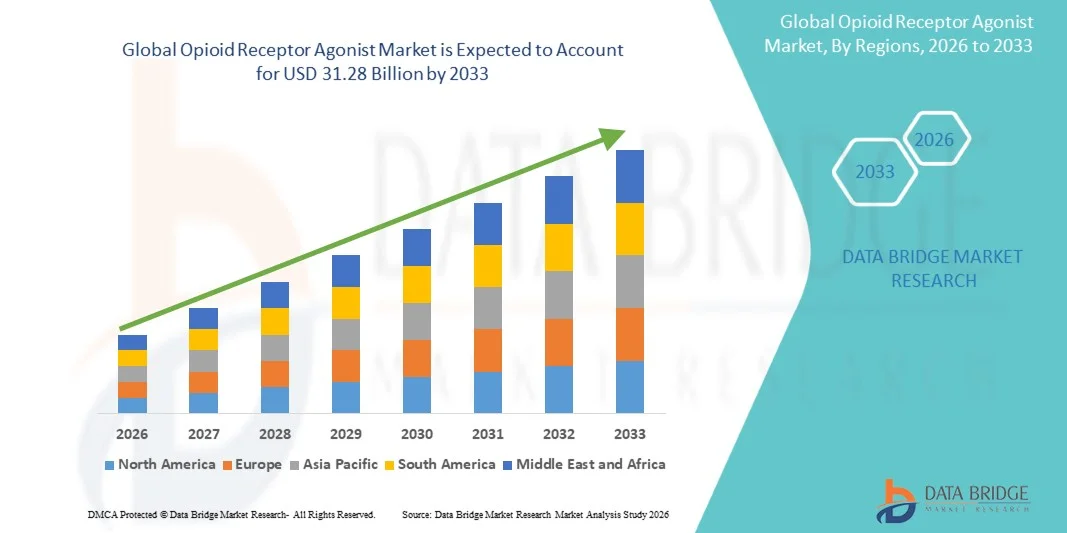
- As per Data Bridge Market Research Analysis the global opioid receptor agonist market size was valued at USD 22.00 billion in 2025 and is expected to reach USD 31.28 billion by 2033, at a CAGR of 4.50% during the forecast period
- The market growth is largely fueled by ongoing research & development of novel opioid receptor agonist therapies, increasing prevalence of chronic pain conditions, and improved formulation technologies that enhance efficacy and safety profiles. Investment activity focused on innovative analgesics and precision pain‑management solutions is accelerating product adoption worldwide
- Furthermore, rising demand for effective pain relief in oncology, postoperative care, and chronic pain management coupled with expansion of healthcare infrastructure in emerging markets is increasing the uptake of opioid receptor agonist drugs. These converging factors are driving broader clinical application and market expansion, thereby significantly boosting industry growth.
Market Size & Forecast
- Global Market Value (2025): USD 22.00 Billion
- Expected Market Value (2033): USD 31.28 Billion
- Forecast CAGR (2026–2033): 4.50%
What are the Major Takeaways of Opioid Receptor Agonist Market?
- Opioid receptor agonists, which act on specific opioid receptors to provide pain relief, are increasingly critical components of modern pain management strategies across oncology, postoperative care, and chronic pain therapy due to their efficacy, targeted action, and availability in multiple formulations
- The escalating demand for opioid receptor agonists is primarily fueled by the rising prevalence of chronic pain conditions, growing awareness of advanced analgesic therapies among healthcare providers, and ongoing R&D focused on safer and more effective formulations
- North America dominated the opioid receptor agonist market with the largest revenue share of 41.5% in 2025, driven by high healthcare spending, widespread access to advanced pain management treatments, and a strong presence of key pharmaceutical companies actively developing novel opioid therapies. The U.S. experienced substantial growth in opioid receptor agonist prescriptions, particularly in hospitals and specialty clinics, supported by innovations in extended-release formulations and combination therapies
- Asia-Pacific is expected to be the fastest-growing region in the opioid receptor agonist market during the forecast period, due to improving healthcare infrastructure, rising patient awareness, and expanding access to prescription pain management therapies
- Full agonist opioids dominated the market segment with a market share of 52.3% in 2025, driven by their established efficacy in severe pain management and widespread clinical adoption across multiple therapeutic areas
Report Scope and Opioid Receptor Agonist Market Segmentation
|
Attributes |
Opioid Receptor Agonist Key Market Insights |
|
Segments Covered |
|
|
Countries Covered |
North America
Europe
Asia-Pacific
Middle East and Africa
South America
|
|
Key Market Players |
|
|
Market Opportunities |
|
|
Value Added Data Infosets |
In addition to the insights on market scenarios such as market value, growth rate, segmentation, geographical coverage, and major players, the market reports curated by the Data Bridge Market Research also include in-depth expert analysis, patient epidemiology, pipeline analysis, pricing analysis, and regulatory framework |
What is the Key Trend in the Opioid Receptor Agonist Market?
“Shift Towards Abuse-Deterrent and Non-Injectable Formulations”
- A significant and accelerating trend in the global opioid receptor agonist market is the growing development and adoption of abuse-deterrent formulations (ADFs) and non-injectable oral or transdermal delivery systems, aimed at enhancing patient safety and compliance
- For instance, reformulated OxyContin tablets with abuse-deterrent properties allow patients to take their medication as prescribed while reducing the potential for misuse or tampering
- These innovative formulations provide physicians with safer treatment options, reducing the risk of dependency, overdose, and diversion, while maintaining effective pain relief for patients
- The availability of non-injectable options such as oral films, sublingual tablets, and transdermal patches facilitates outpatient and home-based pain management, improving patient convenience and adherence
- Integration of digital health tools, such as smart pill dispensers and remote adherence monitoring, is enhancing patient compliance and enabling personalized pain management programs
- Pharmaceutical companies are increasingly investing in combination therapies that pair opioid receptor agonists with non-opioid analgesics, reducing opioid doses while maintaining therapeutic efficacy
- This trend toward safer, more patient-friendly opioid therapies is reshaping treatment protocols and physician prescribing patterns, encouraging pharmaceutical companies to invest in R&D for advanced formulations
- The demand for abuse-deterrent and non-injectable opioid receptor agonists is growing rapidly across both developed and emerging markets, as healthcare systems increasingly prioritize patient safety and regulatory compliance
Opioid Receptor Agonist Market Dynamics
Driver
“Rising Prevalence of Chronic Pain and Oncology Cases”
- The increasing prevalence of chronic pain conditions and cancer-related pain is a significant driver for the heightened demand for opioid receptor agonists worldwide
- For instance, in 2024, Purdue Pharma expanded access programs for its opioid pain therapies to oncology centers, targeting underserved patient populations with severe pain management needs
- As patients increasingly require effective and rapid pain relief, opioid receptor agonists offer established efficacy in moderate-to-severe pain, making them the preferred choice for physicians in hospitals and clinics
- Furthermore, growing awareness among healthcare providers about advanced analgesic protocols and patient-centric pain management is boosting prescription rates of these drugs
- The adoption of multidisciplinary pain management approaches, combining opioids with non-opioid therapies, further reinforces the role of opioid receptor agonists as a core component of treatment plans
- Increasing geriatric populations in regions such as North America, Europe, and Asia-Pacific, who often experience chronic musculoskeletal and neuropathic pain, are expanding the patient pool for opioid receptor agonists
- Government and private healthcare initiatives to improve access to effective pain therapies in developing countries are further driving market growth
- Technological advancements in extended-release and transdermal delivery systems are encouraging broader clinical adoption and improving patient adherence
Restraint/Challenge
“Regulatory Scrutiny and Risk of Dependency”
- Strict regulatory controls and the risk of abuse and dependency pose a significant challenge to broader market growth for opioid receptor agonists
- For instance, heightened FDA oversight on opioid prescribing guidelines and REMS (Risk Evaluation and Mitigation Strategies) programs has limited unrestricted market expansion in some regions
- Pharmaceutical companies must navigate complex regulatory requirements while ensuring adequate access to patients who genuinely need these therapies, which can slow product launches
- The high potential for misuse, addiction, and overdose has created hesitancy among physicians and patients, impacting prescription volumes despite the clinical efficacy of these drugs
- While educational campaigns and abuse-deterrent technologies help mitigate risks, regulatory pressure and societal concerns about opioid misuse remain persistent barriers
- Price sensitivity and limited reimbursement coverage in some regions restrict patient access, particularly in emerging markets where affordability remains a key issue
- Negative media coverage and public perception of opioid risks can affect physician prescribing behavior and reduce market acceptance
- Addressing these challenges through compliance, patient education, and safer formulations will be crucial for sustained growth in the opioid receptor agonist market
How is the Opioid Receptor Agonist Market Segmented?
The market is segmented on the basis of drugs, receptor binding, indication, route of administration, end-users, and distribution channels.
- By Drugs
On the basis of drugs, the market is segmented into fentanyl, codeine, morphine, buprenorphine, and others. Morphine segment dominated the market in 2025 with the largest revenue share of 28%, driven by its longstanding clinical use for moderate-to-severe pain management in hospitals and palliative care. Morphine is widely preferred due to its established efficacy, multiple administration routes, and extensive physician familiarity. Its availability in injectable, oral, and extended-release formulations ensures versatility across inpatient and outpatient care. Hospitals and specialty clinics stock morphine as a first-line opioid analgesic. It remains essential in oncology, postoperative care, and chronic pain therapy. Consistent global demand and accessibility in emerging markets further strengthen its market position.
Buprenorphine segment is expected to witness the fastest growth from 2026 to 2033 at a CAGR of 9.1%, fueled by its use in both pain management and opioid dependence therapy. Its partial agonist profile reduces risks of respiratory depression and overdose, making it safer for homecare and outpatient use. Regulatory approvals for sublingual and transdermal formulations support adoption. Increasing physician awareness and patient preference for safer opioids boost its uptake. Expansion in emerging markets further accelerates growth. Combination therapies pairing buprenorphine with non-opioid analgesics enhance efficacy and safety, driving market penetration.
- By Receptor Binding
On the basis of receptor binding, the market is segmented into full agonist and partial agonist. Full agonist segment dominated the market with a 52.3% share in 2025, primarily due to their superior efficacy in severe pain conditions. Full agonists such as morphine and fentanyl are preferred in hospitals and palliative care settings for rapid analgesia. Their wide formulation options including injectables and transdermal patches allow flexible dosing. Physician familiarity and clinical guidelines reinforce trust and continued use. Distribution through hospital pharmacies ensures timely availability. Full agonists remain the standard in acute postoperative pain management.
Partial agonist segment is expected to register the fastest growth from 2026 to 2033 at a CAGR of 8.7%, driven by safety and lower abuse potential. Buprenorphine and similar drugs are preferred in outpatient and homecare settings. They reduce the risk of dependency and respiratory complications. Increased adoption in addiction management programs supports growth. Regulatory backing for safer opioid options further boosts acceptance. Expanding use in chronic pain therapy enhances market share.
- By Indication
On the basis of indication, the market is segmented into pain management, cough suppression, diarrhea suppression, and others. Pain management segment dominated the market with 70% share in 2025, due to high prevalence of chronic pain, cancer pain, and postoperative pain. Hospitals, specialty clinics, and homecare settings consistently prescribe opioid receptor agonists as a cornerstone of therapy. Extended-release, oral, and transdermal formulations strengthen adoption. Geriatric and surgical populations drive consistent demand. Pain management is heavily reimbursed in most regions, providing revenue stability. Clinical trust and established protocols reinforce dominance.
Cough suppression segment is expected to witness the fastest growth from 2026 to 2033 at a CAGR of 7.5%, fueled by increasing respiratory illness prevalence in emerging markets. Codeine-based formulations dominate outpatient and OTC usage in some countries. Syrups, tablets, and combination products improve patient compliance. Physician preference for effective and safe cough therapy drives adoption. Regulatory approvals in various regions enhance accessibility. Rising awareness of cough management in homecare and pediatric care supports rapid growth.
- By Route of Administration
On the basis of route of administration, the market is segmented into intravenous, subcutaneous, oral, and others. Intravenous (IV) segment dominated the market with 38% share in 2025, due to rapid onset of action, high efficacy, and widespread hospital use. IV opioids are preferred for precise dosing in acute pain and surgical care. Hospitals stock injectable opioids for controlled administration. Physician familiarity and established protocols reinforce dominance. The segment benefits from strong hospital pharmacy distribution networks. IV opioids are critical in palliative care and emergency settings.
Oral segment is expected to witness the fastest growth from 2026 to 2033 at a CAGR of 8.2%, driven by homecare and outpatient applications. Non-injectable oral forms, including tablets, films, and sublingual products, provide convenience and adherence. Geriatric patients and chronic pain sufferers prefer oral therapy. Telehealth and digital monitoring support compliance. Abuse-deterrent oral formulations enhance safety. Expanding e-pharmacy and retail availability accelerates growth.
- By End-Users
On the basis of end-users, the market is segmented into hospitals, homecare, specialty clinics, and others. Hospitals segment dominated the market with 45% share in 2025, due to high patient inflow, acute pain cases, and surgical procedures requiring controlled opioid administration. Hospital pharmacies ensure proper dosing and compliance. Injectable formulations and full agonists are primarily used in inpatient care. Physician trust and monitoring capabilities reinforce preference. Hospitals have established supply chains for opioids. Acute and chronic pain management drive consistent demand.
Homecare segment is expected to witness the fastest growth from 2026 to 2033 at a CAGR of 9.3%, fueled by outpatient pain management and palliative care. Oral, sublingual, and transdermal opioids enhance convenience. Patient adherence is supported by telehealth monitoring. Aging populations and chronic pain patients prefer home therapy. Increasing awareness of safe opioid use drives growth. Regulatory support for homecare delivery accelerates adoption
- By Distribution Channel
On the basis of distribution channel, the market is segmented into hospital pharmacy, online pharmacy, retail pharmacy. Hospital pharmacy segment dominated the market with 50% share in 2025, due to centralized procurement for acute and chronic pain management. Hospital pharmacies ensure regulatory compliance and correct dosing. Injectable formulations and full agonists are dispensed through hospitals. Physician trust reinforces continued use. Supply chains are well-established for timely delivery. Hospitals also provide patient education and monitoring.
Online pharmacy segment is expected to witness the fastest growth from 2026 to 2033 at a CAGR of 12%, driven by e-prescription adoption and convenience. Patients can access oral, transdermal, and abuse-deterrent opioids at home. Telehealth integration supports monitoring and adherence. Digital platforms expand reach in urban and semi-urban regions. Regulatory approvals for online distribution enable rapid growth. Consumer preference for home delivery and convenience accelerates adoption
Which Region Holds the Largest Share of the Opioid Receptor Agonist Market?
- North America dominated the opioid receptor agonist market with the largest revenue share of 41.5% in 2025, driven by high healthcare spending, widespread access to advanced pain management treatments, and a strong presence of key pharmaceutical companies actively developing novel opioid therapies
- Patients and healthcare providers in the region highly value the clinical efficacy, rapid onset, and multiple formulation options of opioid receptor agonists, including intravenous, oral, and transdermal delivery systems
- This widespread adoption is further supported by strong healthcare spending, regulatory frameworks facilitating safe opioid use, and the presence of key pharmaceutical companies investing in advanced formulations, abuse-deterrent technologies, and patient monitoring programs, establishing opioid receptor agonists as the preferred choice for both hospital and outpatient care
U.S. Opioid Receptor Agonist Market Insight
The U.S. opioid receptor agonist market captured the largest revenue share of 43% in North America in 2025, driven by a high prevalence of chronic pain, cancer-related pain, and postoperative care requirements. Patients and healthcare providers increasingly prioritize effective and rapid pain relief, supported by a wide range of injectable, oral, and transdermal opioid formulations. The adoption of advanced abuse-deterrent and extended-release technologies further propels market growth. Robust hospital networks, widespread specialty clinics, and comprehensive homecare programs enhance accessibility. Moreover, telehealth and digital adherence monitoring are increasingly facilitating outpatient opioid therapy. Continuous R&D investment by leading pharmaceutical companies ensures the availability of innovative opioid therapies, strengthening the U.S. market’s leadership.
Europe Opioid Receptor Agonist Market Insight
The Europe opioid receptor agonist market is projected to expand at a substantial CAGR throughout the forecast period, driven by increasing awareness of pain management therapies and stringent regulatory oversight ensuring safe opioid use. Rising geriatric populations and high prevalence of chronic illnesses contribute to consistent demand in hospitals, specialty clinics, and homecare. Increasing urbanization and disposable income encourage adoption of safer and patient-friendly opioid formulations. Government initiatives for palliative care and chronic pain programs further support market growth. The integration of abuse-deterrent technologies and oral/transdermal options enhances patient adherence. European healthcare infrastructure facilitates efficient distribution across hospital and retail pharmacies, ensuring steady revenue generation.
U.K. Opioid Receptor Agonist Market Insight
The U.K. opioid receptor agonist market is anticipated to grow at a noteworthy CAGR during the forecast period, driven by rising demand for effective pain management in oncology, chronic, and postoperative care. Concerns regarding patient safety and regulatory compliance encourage the adoption of abuse-deterrent and non-injectable formulations. Hospitals, homecare, and specialty clinics are increasingly leveraging oral, sublingual, and transdermal options for outpatient management. Robust healthcare infrastructure and growing awareness of advanced pain management protocols stimulate market growth. Telemedicine integration and patient monitoring tools support adherence and safety. Additionally, increasing geriatric and chronic pain populations continue to propel adoption of opioid receptor agonist therapies.
Germany Opioid Receptor Agonist Market Insight
The Germany opioid receptor agonist market is expected to expand at a considerable CAGR during the forecast period, fueled by rising awareness of chronic pain management and technological advancement in drug formulations. Germany’s strong healthcare infrastructure and emphasis on patient safety encourage adoption of abuse-deterrent and non-injectable opioids. Hospitals and specialty clinics remain the primary end-users, while homecare adoption is increasing for chronic patients. The integration of extended-release, oral, and transdermal delivery systems facilitates outpatient therapy. Pharmaceutical innovation and local production capabilities ensure consistent drug availability. German patients also value safer formulations that reduce dependency and adverse effects, supporting market growth.
Asia-Pacific Opioid Receptor Agonist Market Insight
The Asia-Pacific opioid receptor agonist market is poised to grow at the fastest CAGR of 9% during 2026–2033, driven by expanding healthcare infrastructure, rising disposable incomes, and increasing awareness of pain management therapies in countries such as China, India, and Japan. The region’s growing patient pool, including oncology, chronic pain, and postoperative populations, is accelerating adoption. Government initiatives promoting palliative care and improved access to prescription drugs further support market expansion. Increasing availability of oral, transdermal, and abuse-deterrent formulations enhances patient compliance and safety. Telemedicine and e-pharmacy penetration contribute to wider access, particularly in urban and semi-urban areas. Local manufacturing of opioid formulations is also improving affordability and availability across the region.
Japan Opioid Receptor Agonist Market Insight
The Japan opioid receptor agonist market is gaining momentum due to the country’s aging population, rising prevalence of chronic pain, and growing demand for convenient outpatient therapy. Oral, sublingual, and transdermal opioid formulations are increasingly adopted for homecare and chronic pain management. Hospitals and specialty clinics continue to drive usage for acute and postoperative pain. Integration of digital adherence monitoring and telehealth support enhances patient safety and compliance. Increasing awareness of safer opioid therapies and regulatory support for abuse-deterrent formulations is boosting growth. Japan’s technologically advanced healthcare ecosystem supports efficient distribution and optimized therapy outcomes.
India Opioid Receptor Agonist Market Insight
The India opioid receptor agonist market accounted for the largest revenue share in Asia-Pacific in 2025, driven by rapid urbanization, expanding healthcare infrastructure, and increasing prevalence of chronic and cancer-related pain. Growing middle-class population and higher awareness of pain management therapies are propelling adoption. Oral, transdermal, and abuse-deterrent opioid formulations are gaining popularity in homecare, hospitals, and specialty clinics. Telemedicine and e-pharmacy platforms improve access to medications in urban and semi-urban areas. Domestic pharmaceutical manufacturing supports affordability and availability. Government initiatives and palliative care programs further accelerate the uptake of opioid receptor agonist therapies.
Which are the Top Companies in Opioid Receptor Agonist Market?
The Opioid Receptor Agonist industry is primarily led by well-established companies, including:
- Pfizer Inc. (U.S.)
- Janssen Pharmaceuticals, Inc. (U.S.)
- Orexo AB (Sweden)
- Indivior Plc (U.S.)
- Teva Pharmaceutical Industries Ltd. (Israel)
- Endo International plc (Ireland)
- Mallinckrodt Pharmaceuticals plc (U.S.)
- Sun Pharmaceutical Industries Ltd. (India)
- Hikma Pharmaceuticals plc (U.K.)
- Allergan plc (U.S.)
- Boehringer Ingelheim GmbH (Germany)
- Sanofi (France)
- Novartis International AG (Switzerland)
- Eli Lilly and Company (U.S.)
- AstraZeneca (U.K.)
- AbbVie Inc. (U.S.)
- GSK plc (U.K.)
- Daiichi Sankyo Company, Limited (Japan)
- Collegium Pharmaceutical, Inc. (U.S.)
What are Latest Developments in Opioid Receptor Agonist Market?
- In December 2025, Indivior reported results from a clinical study showing that extended‑release buprenorphine monthly maintenance doses (100 mg and 300 mg) delivered rapid, clinically meaningful reductions in opioid use and improved abstinence in high‑risk opioid use populations, highlighting its effectiveness even among individuals with frequent fentanyl use
- In February 2025, the FDA approved an expanded use of SUBLOCADE (extended‑release buprenorphine injection) for opioid use disorder, allowing additional injection sites and reducing induction time, which is expected to improve patient adherence and expand treatment flexibility
- In December 2024, the FDA issued recommended labeling changes for transmucosal buprenorphine products used in OUD treatment, clarifying that previously perceived dosing limits should not be interpreted as maximum dosages, thereby aiming to improve clinical flexibility and correct prescriber misconceptions
- In November 2023, DMK Pharmaceuticals announced the presentation of preclinical results for DPI‑125, a novel triple (mu, delta, and kappa) opioid receptor agonist for opioid use disorder, which showed promising effects on withdrawal behaviors compared to standard therapies at the Society for Neuroscience Annual Meeting
- In May 2023, the U.S. Food and Drug Administration (FDA) approved Brixadi, an extended‑release subcutaneous buprenorphine injection for the treatment of moderate to severe opioid use disorder (OUD), available in weekly and monthly dosing options aimed at improving long‑term recovery outcomes for patient

- Interactive Data Analysis Dashboard
- Company Analysis Dashboard for high growth potential opportunities
- Research Analyst Access for customization & queries
- Competitor Analysis with Interactive dashboard
- Latest News, Updates & Trend analysis
- Harness the Power of Benchmark Analysis for Comprehensive Competitor Tracking
Data collection and base year analysis are done using data collection modules with large sample sizes. The stage includes obtaining market information or related data through various sources and strategies. It includes examining and planning all the data acquired from the past in advance. It likewise envelops the examination of information inconsistencies seen across different information sources. The market data is analysed and estimated using market statistical and coherent models. Also, market share analysis and key trend analysis are the major success factors in the market report. To know more, please request an analyst call or drop down your inquiry.
The key research methodology used by DBMR research team is data triangulation which involves data mining, analysis of the impact of data variables on the market and primary (industry expert) validation. Data models include Vendor Positioning Grid, Market Time Line Analysis, Market Overview and Guide, Company Positioning Grid, Patent Analysis, Pricing Analysis, Company Market Share Analysis, Standards of Measurement, Global versus Regional and Vendor Share Analysis. To know more about the research methodology, drop in an inquiry to speak to our industry experts.
Data Bridge Market Research is a leader in advanced formative research. We take pride in servicing our existing and new customers with data and analysis that match and suits their goal. The report can be customized to include price trend analysis of target brands understanding the market for additional countries (ask for the list of countries), clinical trial results data, literature review, refurbished market and product base analysis. Market analysis of target competitors can be analyzed from technology-based analysis to market portfolio strategies. We can add as many competitors that you require data about in the format and data style you are looking for. Our team of analysts can also provide you data in crude raw excel files pivot tables (Fact book) or can assist you in creating presentations from the data sets available in the report.












