


Organic Beverages Market Size
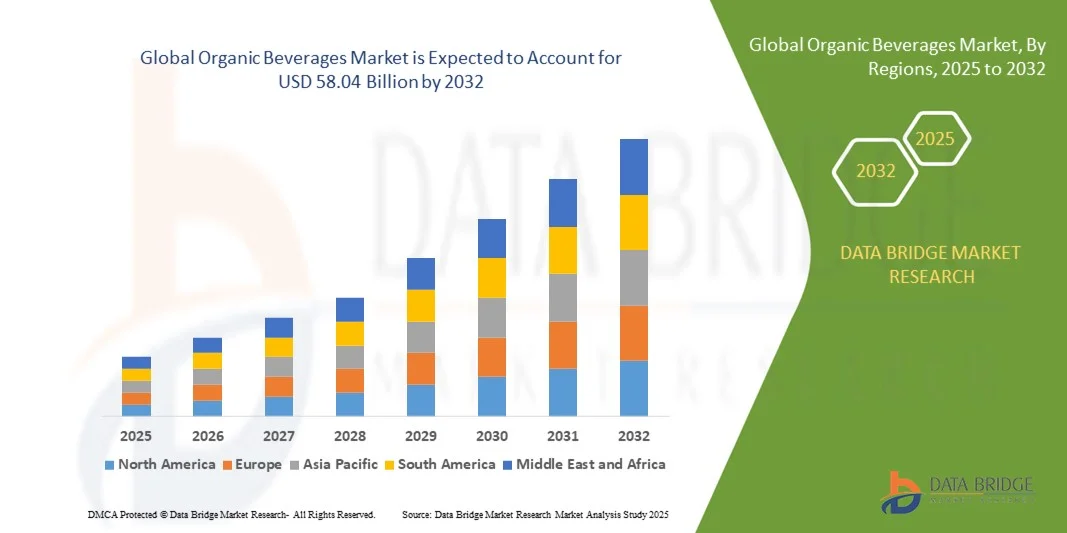
- The global organic beverages market size was valued at USD 27.04 billion in 2024 and is expected to reach USD 58.04 billion by 2032, at a CAGR of 10.02% during the forecast period
- The market growth is largely fuelled by increasing consumer preference for healthy and natural beverages, rising awareness about the adverse effects of synthetic additives, and the growing trend of wellness-focused lifestyles
- Rising demand for plant-based drinks, juices, and functional beverages in urban areas is accelerating market expansion, supported by innovative product launches and convenient packaging formats
Organic Beverages Market Analysis
- The market is witnessing rapid innovation in flavor, formulation, and functional ingredients, enabling manufacturers to cater to evolving consumer preferences and dietary requirements
- Increasing investment by key players in sustainable sourcing, organic certification, and eco-friendly packaging is strengthening brand trust and supporting long-term market growth
- North America dominated the organic beverages market with the largest revenue share in 2024, driven by rising health awareness, increasing demand for natural and clean-label drinks, and high disposable incomes across the region
- Asia-Pacific region is expected to witness the highest growth rate in the global organic beverages market, driven by rapid urbanization, growing awareness about nutrition and wellness, and government initiatives promoting organic farming and sustainable food production
- The non-alcoholic segment held the largest market revenue share in 2024, driven by growing health awareness, rising consumption of functional drinks, and increasing demand for sugar-free and plant-based options. Non-alcoholic beverages such as juices, smoothies, and herbal drinks are particularly popular for their convenience, nutritional benefits, and suitability for all age groups, making them a preferred choice across global markets
Report Scope and Organic Beverages Market Segmentation
|
Attributes |
Organic Beverages Key Market Insights |
|
Segments Covered |
|
|
Countries Covered |
North America
Europe
Asia-Pacific
Middle East and Africa
South America
|
|
Key Market Players |
|
|
Market Opportunities |
|
|
Value Added Data Infosets |
In addition to the insights on market scenarios such as market value, growth rate, segmentation, geographical coverage, and major players, the market reports curated by the Data Bridge Market Research also include in-depth expert analysis, pricing analysis, brand share analysis, consumer survey, demography analysis, supply chain analysis, value chain analysis, raw material/consumables overview, vendor selection criteria, PESTLE Analysis, Porter Analysis, and regulatory framework. |
Organic Beverages Market Trends
Increasing Consumer Shift Towards Health-Conscious and Sustainable Drinks
- The rising preference for organic beverages is transforming the global beverage industry by promoting healthier, chemical-free, and sustainably sourced products. Consumers are increasingly seeking drinks with natural ingredients, reduced sugar content, and functional benefits, driving product innovation and adoption. This shift is further reinforced by social media influence and wellness-focused marketing campaigns, which are educating consumers about the advantages of organic consumption. In addition, brands leveraging clean-label certifications are gaining competitive advantage, attracting both premium and mainstream buyers
- High demand for convenient and ready-to-drink organic options is accelerating the launch of bottled juices, smoothies, and plant-based beverages. These products cater to busy lifestyles while maintaining nutritional quality, enhancing market penetration in both retail and foodservice channels. The trend is supported by urbanization and changing work patterns, which encourage on-the-go consumption. Moreover, collaborations with cafes, gyms, and food delivery platforms are expanding the reach and visibility of organic beverage offerings
- The growing focus on eco-friendly packaging and ethical sourcing is making organic beverages more attractive to environmentally conscious consumers. Brands emphasizing sustainability and transparency are building stronger loyalty and boosting repeat purchases. Biodegradable, recyclable, and reusable packaging innovations are becoming a key differentiator, influencing purchasing decisions and promoting long-term brand engagement. Consumer willingness to pay a premium for eco-conscious products is also helping companies invest in sustainable supply chains
- For instance, in 2023, several North American and European beverage companies introduced fortified organic juices and plant-based smoothies, resulting in higher consumer engagement, expanded distribution, and increased sales. These launches also included functional benefits such as immunity support, energy boosting, and digestive health, which appealed to a broader consumer base. Strategic partnerships with online retailers further enabled quicker market penetration and improved accessibility across regions
- While organic beverages are gaining traction across regions, sustained growth depends on ingredient quality, cost-effective production, and regulatory compliance. Manufacturers must continue innovating flavors and formulations to meet evolving consumer expectations. Investment in R&D for natural preservation, shelf-life enhancement, and product diversification will be essential to maintain competitive advantage and cater to health-conscious global consumers
Organic Beverages Market Dynamics
Driver
Rising Health Awareness and Demand for Clean Label Products
- Increasing awareness about health, wellness, and lifestyle diseases is driving consumers towards organic and natural beverages. Products with functional ingredients, such as antioxidants, probiotics, and vitamins, are particularly popular, promoting regular consumption. Rising incidences of obesity, diabetes, and cardiovascular issues are encouraging consumers to seek healthier alternatives, further expanding market potential. This trend is complemented by government and NGO campaigns promoting nutrition and wellness awareness
- The growing penetration of retail and e-commerce channels allows easier access to organic beverages, ensuring wide availability and convenience. This trend supports consistent demand and steady market growth. Online subscription models, home delivery services, and mobile app integrations are enhancing customer experience and retention. In addition, retail chains are dedicating shelf space specifically for organic and premium beverage products, driving visibility and adoption
- Manufacturers are actively expanding product portfolios to include flavored, fortified, and low-calorie options, catering to diverse consumer preferences. This product innovation enhances brand value and drives market expansion. Development of region-specific flavors, functional formulations targeting immunity, energy, and digestive health are helping brands differentiate in competitive markets. Co-branding and collaborations with fitness and wellness influencers are further boosting consumer engagement
- For instance, in 2023, a major U.S. organic beverage brand reported increased sales after launching a line of vitamin-fortified organic fruit juices across supermarkets and online platforms. The launch was accompanied by digital marketing campaigns highlighting health benefits, leading to greater brand visibility and adoption. The success encouraged competitors to expand functional beverage offerings, accelerating overall market growth
- While health awareness and product variety are propelling the market, ensuring affordability, supply chain efficiency, and regulatory compliance remain critical for long-term adoption. Companies must also manage ingredient sourcing, seasonal availability, and quality consistency to maintain consumer trust and loyalty
Restraint/Challenge
High Cost Of Organic Ingredients And Supply Chain Limitations
- Organic beverages often involve higher costs due to premium raw materials, sourcing constraints, and certification requirements, limiting adoption in price-sensitive markets. Smaller producers face difficulty in scaling operations without impacting margins. In addition, fluctuating global commodity prices for fruits, nuts, and plant extracts can affect production costs and retail pricing, influencing demand in economically sensitive regions
- Limited availability of certified organic fruits, plant extracts, and natural additives can disrupt production schedules and reduce product consistency. Seasonal variability further exacerbates supply challenges. This often forces manufacturers to maintain larger inventories or import ingredients at higher costs, impacting profitability and operational efficiency. Challenges in logistics, storage, and cold chain maintenance add further complexity for perishable organic inputs
- Manufacturing complexity, including maintaining shelf life, flavor stability, and safety standards, adds operational hurdles for producers. Packaging and storage requirements for perishable organic ingredients increase costs. Companies must invest in innovative processing techniques and preservative-free stabilization methods to ensure product quality, which requires capital-intensive solutions and technological expertise
- For instance, in 2023, several European organic beverage manufacturers faced delays in product launches due to inconsistent supply of certified organic fruits, affecting revenue and distribution timelines. These disruptions also led to higher retail prices, limiting access in certain regions and challenging consumer retention. Strategic supplier partnerships and regional sourcing initiatives became critical to mitigate these impacts
- While product innovation continues, addressing cost, supply chain reliability, and consistent ingredient quality is crucial to sustain growth and expand the global organic beverages market. Investments in technology, procurement strategies, and scalable production methods will be essential for manufacturers to capitalize on the growing health-conscious consumer base
Organic Beverages Market Scope
The market is segmented on the basis of product type and distribution channel.
- By Product Type
On the basis of product type, the organic beverages market is segmented into alcoholic and non-alcoholic. The non-alcoholic segment held the largest market revenue share in 2024, driven by growing health awareness, rising consumption of functional drinks, and increasing demand for sugar-free and plant-based options. Non-alcoholic beverages such as juices, smoothies, and herbal drinks are particularly popular for their convenience, nutritional benefits, and suitability for all age groups, making them a preferred choice across global markets.
The alcoholic segment is expected to witness the fastest growth rate from 2025 to 2032, driven by the rising trend of organic wines, beers, and spirits among health-conscious and premium consumers. Organic alcoholic beverages are gaining traction due to their natural ingredients, sustainable production practices, and appeal to environmentally conscious buyers. This segment also benefits from increasing premiumization and innovation in flavors, formulations, and packaging.
- By Distribution Channel
On the basis of distribution channel, the market is segmented into supermarket/hypermarket, convenience stores, specialist retailers, internet retailing, and others. The supermarket/hypermarket segment held the largest revenue share in 2024 due to the wide availability, promotional activities, and bulk purchase options offered to consumers. Large retail chains also provide product visibility and accessibility, supporting consistent adoption of organic beverages.
The internet retailing segment is expected to witness the fastest growth rate from 2025 to 2032, driven by the increasing penetration of e-commerce platforms, online subscription models, and home delivery services. Online channels offer convenience, broader product variety, and access to international brands, making them an attractive option for tech-savvy and urban consumers. The trend is further supported by digital marketing campaigns, influencer promotions, and subscription-based packages targeting health-conscious buyers.
Organic Beverages Market Regional Analysis
- North America dominated the organic beverages market with the largest revenue share in 2024, driven by rising health awareness, increasing demand for natural and clean-label drinks, and high disposable incomes across the region
- Consumers in the region highly value convenient, ready-to-drink organic beverages and are increasingly seeking functional, fortified, and plant-based options, promoting repeat purchases and brand loyalty
- The market growth is further supported by advanced retail infrastructure, widespread e-commerce penetration, and growing emphasis on sustainable and eco-friendly packaging, establishing organic beverages as a preferred choice across age groups
U.S. Organic Beverages Market Insight
The U.S. organic beverages market captured the largest revenue share in 2024 within North America, fueled by increasing consumer awareness of health, wellness, and lifestyle diseases. Rising demand for natural, low-sugar, and fortified drinks has accelerated product innovation and adoption. The growing preference for convenient ready-to-drink beverages, coupled with strong distribution networks in retail and online channels, further drives market expansion. Moreover, sustainability initiatives and eco-friendly packaging practices are significantly contributing to market growth.
Europe Organic Beverages Market Insight
The Europe organic beverages market is expected to witness the fastest growth rate from 2025 to 2032, primarily driven by strict food safety regulations, rising consumer focus on health and nutrition, and the demand for functional drinks. Increased urbanization, higher disposable incomes, and a preference for organic and natural products are fostering market adoption. The region is experiencing significant growth across supermarkets, convenience stores, and online retail, with new product launches supporting expansion. Consumers are also attracted to eco-conscious packaging and ethical sourcing practices, further fueling demand.
U.K. Organic Beverages Market Insight
The U.K. organic beverages market is expected to witness strong growth from 2025 to 2032, driven by rising health awareness, increasing demand for natural and functional drinks, and growing popularity of ready-to-drink options. Consumer concerns regarding sugar intake, wellness, and lifestyle diseases are encouraging regular consumption of organic beverages. The U.K.’s well-developed retail and e-commerce infrastructure, along with trends toward plant-based and sustainable products, are expected to continue supporting market growth.
Germany Organic Beverages Market Insight
The Germany organic beverages market is expected to witness a strong growth rate from 2025 to 2032, fueled by rising consumer preference for clean-label and naturally sourced drinks, high health awareness, and stringent food regulations. German consumers increasingly prioritize functional beverages with vitamins, antioxidants, and probiotics. Well-established retail chains, specialty stores, and online platforms are expanding the availability of organic beverages. The focus on sustainability, environmental friendliness, and innovative product launches further enhances market penetration and consumer adoption.
Asia-Pacific Organic Beverages Market Insight
The Asia-Pacific organic beverages market is expected to witness the fastest growth rate from 2025 to 2032, driven by rising health consciousness, urbanization, increasing disposable incomes, and a growing young population in countries such as China, India, and Japan. Expanding distribution networks, retail modernization, and e-commerce penetration are supporting wider product accessibility. Consumers are increasingly attracted to functional, fortified, and plant-based beverages. Government initiatives promoting healthy diets and sustainable production practices are further accelerating market adoption.
Japan Organic Beverages Market Insight
The Japan organic beverages market is expected to witness strong growth from 2025 to 2032, due to high health awareness, growing demand for functional drinks, and a preference for ready-to-drink, plant-based, and natural beverages. Japanese consumers value nutritional benefits, quality, and convenience, which encourages frequent consumption. The presence of well-established retail networks and online platforms enhances accessibility. In addition, sustainability trends and eco-friendly packaging practices are driving adoption in both urban and suburban areas.
China Organic Beverages Market Insight
The China organic beverages market accounted for the largest revenue share in Asia-Pacific in 2024, attributed to increasing consumer awareness of health and wellness, rapid urbanization, and the rising middle-class population. The market is witnessing strong demand for natural, functional, and fortified beverages. Expanding retail chains, online marketplaces, and foodservice channels are increasing product accessibility. Government initiatives promoting healthy diets and sustainable practices, combined with the introduction of innovative organic beverage products, are key factors driving market growth in China.
Organic Beverages Market Share
The Organic Beverages industry is primarily led by well-established companies, including:
• THE COCA-COLA COMPANY (U.S.)
• Starbucks Coffee Company (U.S.)
• Hain Celestial (U.S.)
• HassiaGruppe (Germany)
• SUJA LIFE, LLC (U.S.)
• Kroger (U.S.)
• Britvic PLC (U.K.)
• Oregon Chai (U.S.)
• Ecotone (France)
• Danone North America Public Benefit Corporation (U.S.)
• JACOBS DOUWE EGBERTS (Netherlands)
• Odwalla, Inc. (U.S.)
• Tescoplc (U.K.)
• Organic Valley (U.S.)
• Harmless Harvest (U.S.)
• Höllinger (Austria)
• Naked Juice Company (U.S.)
• United Natural Foods, Inc. (U.S.)
• SunOpta (Canada)
Latest Developments in Global Organic Beverages Market
- In January 2024, Suja Organic, product launch, introduced its new line of Suja Organic Protein Shakes, entering the ready-to-drink protein market. Each shake contains 16 grams of plant-based protein sourced from rice, pea, and hemp, with flavors including chocolate, coffee bean, and vanilla cinnamon. Fortified with almond milk, coconut cream, Acacia fiber, and essential vitamins, the 200-calorie beverages provide convenient nutrition for on-the-go consumers. This launch strengthened Suja’s position in the functional beverage segment and catered to the rising demand for plant-based protein drinks
- In May 2023, Topo Chico, product launch, rolled out a line of fruit-flavored sparkling waters infused with herbal extracts. Available in lime with mint, blueberry with hibiscus, and tangerine with ginger, these beverages target health-conscious consumers seeking flavorful, low-calorie alternatives. The launch expanded Topo Chico’s product portfolio and supported growth in the sparkling water segment, enhancing market visibility and consumer engagement
- In March 2022, Uncle Matt’s Organic, product launch, introduced Matt50 Orange Juice Beverage, offering half the sugar and calories of regular orange juice. Enriched with 100% DV vitamin C, prebiotics, and probiotics, the beverage promotes gut health and supports immunity. This innovation addressed consumer demand for healthier juice options while reinforcing Uncle Matt’s presence in the organic beverage market
- In March 2022, Uncle Matt’s Organic, product launch, released two kid-focused beverages: No Sugar Added Lemonade Juice Box and No Sugar Added Strawberry Lemonade Juice Box. Sweetened with organic Reb M Stevia, these shelf-stable juices contain zero calories and eliminate concerns related to artificial sweeteners. The launch expanded the brand’s appeal among parents seeking healthier options for children and strengthened its footprint in the functional organic beverage segment

- Interactive Data Analysis Dashboard
- Company Analysis Dashboard for high growth potential opportunities
- Research Analyst Access for customization & queries
- Competitor Analysis with Interactive dashboard
- Latest News, Updates & Trend analysis
- Harness the Power of Benchmark Analysis for Comprehensive Competitor Tracking
Global Organic Beverages Market, Supply Chain Analysis and Ecosystem Framework
To support market growth and help clients navigate the impact of geopolitical shifts, DBMR has integrated in-depth supply chain analysis into its Global Organic Beverages Market research reports. This addition empowers clients to respond effectively to global changes affecting their industries. The supply chain analysis section includes detailed insights such as Global Organic Beverages Market consumption and production by country, price trend analysis, the impact of tariffs and geopolitical developments, and import and export trends by country and HSN code. It also highlights major suppliers with data on production capacity and company profiles, as well as key importers and exporters. In addition to research, DBMR offers specialized supply chain consulting services backed by over a decade of experience, providing solutions like supplier discovery, supplier risk assessment, price trend analysis, impact evaluation of inflation and trade route changes, and comprehensive market trend analysis.
Data collection and base year analysis are done using data collection modules with large sample sizes. The stage includes obtaining market information or related data through various sources and strategies. It includes examining and planning all the data acquired from the past in advance. It likewise envelops the examination of information inconsistencies seen across different information sources. The market data is analysed and estimated using market statistical and coherent models. Also, market share analysis and key trend analysis are the major success factors in the market report. To know more, please request an analyst call or drop down your inquiry.
The key research methodology used by DBMR research team is data triangulation which involves data mining, analysis of the impact of data variables on the market and primary (industry expert) validation. Data models include Vendor Positioning Grid, Market Time Line Analysis, Market Overview and Guide, Company Positioning Grid, Patent Analysis, Pricing Analysis, Company Market Share Analysis, Standards of Measurement, Global versus Regional and Vendor Share Analysis. To know more about the research methodology, drop in an inquiry to speak to our industry experts.
Data Bridge Market Research is a leader in advanced formative research. We take pride in servicing our existing and new customers with data and analysis that match and suits their goal. The report can be customized to include price trend analysis of target brands understanding the market for additional countries (ask for the list of countries), clinical trial results data, literature review, refurbished market and product base analysis. Market analysis of target competitors can be analyzed from technology-based analysis to market portfolio strategies. We can add as many competitors that you require data about in the format and data style you are looking for. Our team of analysts can also provide you data in crude raw excel files pivot tables (Fact book) or can assist you in creating presentations from the data sets available in the report.













