


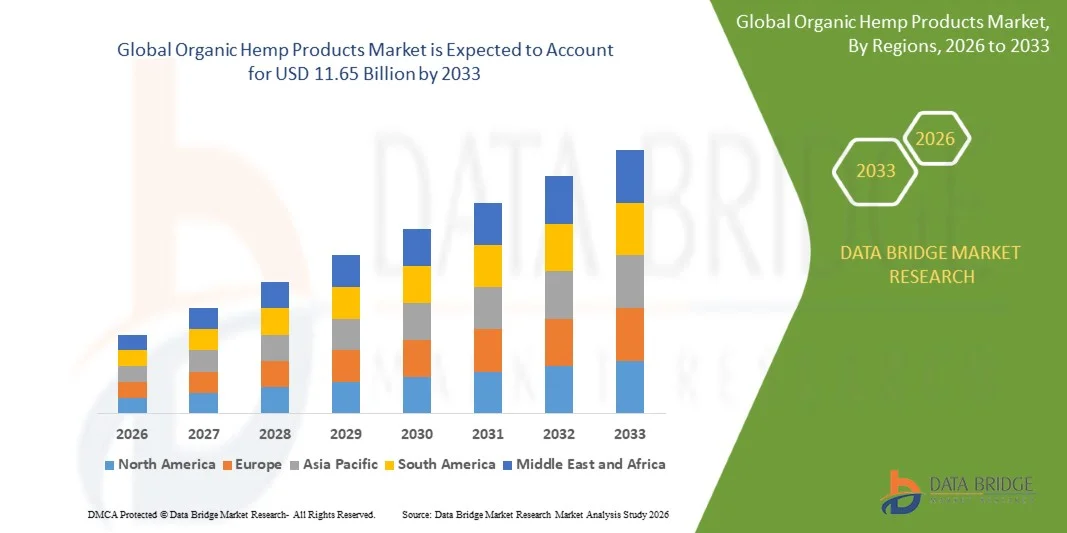
Organic Hemp Products Market Size
- The global organic hemp products market size was valued at USD 6.48 billion in 2025 and is expected to reach USD 11.65 billion by 2033, at a CAGR of 7.60% during the forecast period
- The market growth is largely driven by rising consumer awareness of plant-based nutrition, clean-label food products, and organic wellness solutions, supported by increasing acceptance of hemp-derived ingredients across food, supplements, and personal care categories
- Furthermore, expanding legalization frameworks, improving cultivation practices, and growing preference for sustainable and naturally sourced products are accelerating the adoption of organic hemp offerings, collectively strengthening market expansion and long-term growth prospects
Organic Hemp Products Market Analysis
- Organic hemp products, including seed-based foods, oils, proteins, and wellness ingredients, are becoming essential components of modern health, nutrition, and personal care routines due to their nutritional value, versatility, and alignment with sustainable consumption trends
- The increasing demand for organic hemp products is primarily fueled by the shift toward preventive healthcare, rising popularity of vegan and plant-based diets, and heightened consumer focus on environmentally responsible and organically certified products
- North America dominated the organic hemp products market with a share of around 40% in 2025, due to high consumer awareness regarding plant-based nutrition, strong demand for organic food products, and supportive regulatory frameworks for hemp cultivation and processing
- Asia-Pacific is expected to be the fastest growing region in the organic hemp products market during the forecast period due to rising health awareness, expanding middle-class populations, and increasing acceptance of plant-based nutrition
- Organic hemp seed hearts segment dominated the market with a market share of 42.3% in 2025, due to their high nutritional value, natural protein content, and widespread use as a functional food ingredient. Consumers increasingly incorporate hemp seed hearts into daily diets due to their rich omega fatty acids, fiber, and plant-based protein profile supporting overall wellness. Their versatility across smoothies, cereals, bakery items, and snacks further strengthens demand among health-conscious consumers. The clean-label positioning and minimal processing associated with organic hemp seed hearts also align with rising preferences for natural and sustainably sourced food products
Report Scope and Organic Hemp Products Market Segmentation
|
Attributes |
Organic Hemp Products Key Market Insights |
|
Segments Covered |
|
|
Countries Covered |
North America
Europe
Asia-Pacific
Middle East and Africa
South America
|
|
Key Market Players |
|
|
Market Opportunities |
|
|
Value Added Data Infosets |
In addition to the insights on market scenarios such as market value, growth rate, segmentation, geographical coverage, and major players, the market reports curated by the Data Bridge Market Research also include in-depth expert analysis, pricing analysis, brand share analysis, consumer survey, demography analysis, supply chain analysis, value chain analysis, raw material/consumables overview, vendor selection criteria, PESTLE Analysis, Porter Analysis, and regulatory framework. |
Organic Hemp Products Market Trends
“Rising Consumer Preference for Plant-Based and Organic Nutrition”
- A major trend in the organic hemp products market is the growing consumer shift toward plant-based and organic nutrition, driven by increasing awareness of health, sustainability, and clean eating practices. Organic hemp products are gaining traction as they offer high nutritional value, including plant-based protein, omega fatty acids, and fiber, aligning with modern dietary preferences focused on wellness and preventive health
- For instance, companies such as Manitoba Harvest have expanded their portfolio of organic hemp seed hearts and protein powders to cater to rising demand from health-conscious and vegan consumers. These products are widely adopted in smoothies, cereals, and functional food formulations, reinforcing hemp’s role as a staple ingredient in plant-based diets
- The trend is further supported by increasing integration of organic hemp ingredients into packaged foods and beverages, where manufacturers emphasize transparency, organic certification, and non-GMO positioning. This is strengthening consumer trust and encouraging repeat consumption across global markets
- Personal care and cosmetic brands are also incorporating organic hemp seed oil into formulations due to its moisturizing and skin-soothing properties. This crossover between nutrition and beauty is broadening the application scope of organic hemp products and enhancing their market visibility
- Rising interest in sustainable agriculture and environmentally responsible sourcing is reinforcing this trend, as hemp cultivation is often associated with lower environmental impact compared to conventional crops. Consumers increasingly associate organic hemp with both personal health and ecological benefits
- Overall, the preference for plant-based and organic nutrition is positioning organic hemp products as versatile, health-focused solutions, supporting sustained market growth and deeper penetration across food, wellness, and personal care industries
Organic Hemp Products Market Dynamics
Driver
“Growing Demand for Clean-Label and Sustainable Food Products”
- The organic hemp products market is strongly driven by increasing demand for clean-label and sustainably produced food items, as consumers seek products with minimal processing, transparent ingredient lists, and certified organic sourcing. Organic hemp products fit well within this demand due to their natural composition and traceable production practices
- For instance, brands such as Nutiva emphasize organic certification and sustainable farming in their hemp-based food offerings, appealing to consumers who prioritize ethical consumption. These products are positioned as free from artificial additives, reinforcing their clean-label appeal in competitive retail environments
- Food manufacturers are increasingly using organic hemp seeds and proteins to reformulate products that meet organic and plant-based labeling standards. This shift supports broader adoption of hemp ingredients in mainstream food categories rather than niche health segments
- The driver is also reinforced by regulatory support for organic agriculture in regions such as North America and Europe, where organic certification frameworks enhance consumer confidence. This institutional backing encourages manufacturers to invest in organic hemp sourcing and processing
- As clean-label expectations continue to shape purchasing decisions, organic hemp products are benefiting from strong alignment with sustainability-focused food and nutrition trends, driving consistent market expansion
Restraint/Challenge
“Regulatory Uncertainty and Standardization Issues Across Regions”
- The organic hemp products market faces notable challenges related to regulatory uncertainty and inconsistent standards governing hemp cultivation, processing, and commercialization across different regions. Variations in permissible hemp content and certification requirements complicate market entry and cross-border trade
- For instance, regulatory bodies such as the U.S. Food and Drug Administration continue to maintain strict oversight on hemp-derived ingredients used in food and supplements, particularly cannabidiol-related products. This creates compliance complexity for manufacturers seeking to expand product portfolios
- Differences in organic certification standards between regions further add to operational challenges, as companies must navigate multiple regulatory frameworks to ensure market access. This increases administrative burden and raises costs for global hemp product suppliers
- Smaller producers often face difficulties in meeting documentation and testing requirements, limiting their ability to scale operations or enter regulated markets. These constraints can slow innovation and reduce competitive diversity within the industry
- Collectively, regulatory and standardization challenges continue to restrain the market by increasing complexity and cost, requiring coordinated policy clarity and harmonization to support sustained growth of organic hemp products globally
Organic Hemp Products Market Scope
The market is segmented on the basis of type, application, and distribution channel.
• By Type
On the basis of type, the organic hemp products market is segmented into organic hemp seed hearts, organic hemp seed oil capsules, and organic hemp seed protein powder. The organic hemp seed hearts segment dominated the market with the largest revenue share of 42.3% in 2025, driven by their high nutritional value, natural protein content, and widespread use as a functional food ingredient. Consumers increasingly incorporate hemp seed hearts into daily diets due to their rich omega fatty acids, fiber, and plant-based protein profile supporting overall wellness. Their versatility across smoothies, cereals, bakery items, and snacks further strengthens demand among health-conscious consumers. The clean-label positioning and minimal processing associated with organic hemp seed hearts also align with rising preferences for natural and sustainably sourced food products.
The organic hemp seed protein powder segment is anticipated to witness the fastest growth from 2026 to 2033, supported by the rapid expansion of plant-based nutrition and sports supplementation trends. Rising adoption among vegan, vegetarian, and fitness-focused consumers is boosting demand for hemp protein as an alternative to soy and whey. Its digestibility, amino acid profile, and allergen-free nature make it attractive for functional foods and nutritional formulations. Growing use in meal replacements and fortified beverages is further accelerating segment growth.
• By Application
On the basis of application, the organic hemp products market is segmented into food & beverages, nutritional supplements, cosmetics, pharmaceuticals, textiles, personal care products, and others. The food & beverages segment dominated the market in 2025, driven by increasing incorporation of organic hemp ingredients in packaged foods, beverages, and health-focused diets. Rising awareness of hemp’s nutritional benefits and expanding availability of organic-certified products are supporting its use in mainstream food applications. Manufacturers are leveraging hemp for its protein, fiber, and omega content to meet clean-label and functional food demand.
The nutritional supplements segment is expected to grow at the fastest rate from 2026 to 2033, fueled by increasing preventive healthcare awareness and demand for natural supplements. Organic hemp is widely used in capsules, powders, and oils targeting immunity, digestion, and muscle recovery. The shift toward plant-based and non-GMO supplements is reinforcing adoption across global wellness markets. Expanding online availability and product innovation are further supporting accelerated growth.
• By Distribution Channel
On the basis of distribution channel, the organic hemp products market is segmented into specialty stores, pharmacies, e-commerce, and others. Specialty stores accounted for the largest market revenue share in 2025, driven by strong consumer trust in health food retailers and availability of premium organic hemp products. These stores offer product transparency, informed staff guidance, and curated organic assortments, supporting higher consumer confidence. Specialty retailers also play a key role in educating consumers about hemp-based nutrition and wellness benefits.
The e-commerce segment is projected to register the fastest growth from 2026 to 2033, supported by expanding digital retail infrastructure and changing consumer purchasing behavior. Online platforms provide wider product access, competitive pricing, and convenience, particularly for repeat purchases of supplements and protein products. Increasing use of direct-to-consumer models by organic hemp brands is further enhancing online sales momentum.
Organic Hemp Products Market Regional Analysis
- North America dominated the organic hemp products market with the largest revenue share of around 40% in 2025, driven by high consumer awareness regarding plant-based nutrition, strong demand for organic food products, and supportive regulatory frameworks for hemp cultivation and processing
- Consumers in the region increasingly prefer organic hemp products due to their nutritional benefits, clean-label positioning, and alignment with wellness-focused lifestyles, particularly across food, supplements, and personal care categories
- This strong adoption is further supported by high disposable incomes, well-established distribution channels, and the presence of leading organic and hemp-based product manufacturers, positioning North America as the most mature and influential regional market
U.S. Organic Hemp Products Market Insight
The U.S. organic hemp products market accounted for the largest revenue share within North America in 2025, supported by widespread acceptance of hemp-derived food and wellness products. Consumers are actively incorporating organic hemp seed hearts, oils, and protein powders into daily diets due to rising interest in functional foods and plant-based proteins. The presence of large-scale organic brands, advanced processing infrastructure, and strong e-commerce penetration continues to accelerate market growth. In addition, favorable federal and state-level regulations following hemp legalization have strengthened domestic production and innovation.
Europe Organic Hemp Products Market Insight
The Europe organic hemp products market is expected to expand at a steady CAGR during the forecast period, driven by growing demand for organic, sustainable, and plant-based products. Increasing awareness of nutritional benefits, along with strict quality and organic certification standards, is supporting consumer trust and adoption. Hemp-based cosmetics and personal care products are gaining traction across the region, while food and supplement applications continue to expand through health-focused retail channels.
U.K. Organic Hemp Products Market Insight
The U.K. organic hemp products market is anticipated to grow at a notable CAGR, supported by rising consumer focus on vegan diets, functional nutrition, and clean-label ingredients. Strong demand for hemp protein powders and seed-based foods is evident among fitness-oriented and health-conscious consumers. The country’s well-developed online retail ecosystem and specialty health stores are playing a key role in improving product accessibility and market penetration.
Germany Organic Hemp Products Market Insight
The Germany organic hemp products market is projected to witness considerable growth during the forecast period, driven by strong demand for organic foods and natural personal care products. German consumers show a high preference for sustainably sourced and certified organic products, supporting the uptake of hemp seed hearts, oils, and cosmetic ingredients. The country’s emphasis on environmental responsibility and quality assurance further reinforces market expansion across food, wellness, and cosmetic applications.
Asia-Pacific Organic Hemp Products Market Insight
The Asia-Pacific organic hemp products market is expected to grow at the fastest CAGR from 2026 to 2033, driven by rising health awareness, expanding middle-class populations, and increasing acceptance of plant-based nutrition. Growing investments in organic farming and food processing, particularly in emerging economies, are supporting market development. The expanding use of hemp ingredients in functional foods, supplements, and personal care products is accelerating regional growth.
Japan Organic Hemp Products Market Insight
The Japan organic hemp products market is gaining traction due to increasing demand for functional foods and natural health products. Consumers place strong emphasis on nutritional quality, safety, and clean ingredients, supporting the adoption of organic hemp seed-based foods and supplements. The integration of hemp ingredients into traditional and modern food formulations is contributing to steady market growth.
China Organic Hemp Products Market Insight
The China organic hemp products market held the largest revenue share in Asia Pacific in 2025, supported by a growing health-conscious population and expanding organic food sector. Rapid urbanization, rising disposable incomes, and increasing acceptance of plant-based proteins are driving demand for hemp-based foods and supplements. Strong domestic production capabilities and government support for agricultural modernization are further strengthening China’s position in the regional market.
Organic Hemp Products Market Share
The organic hemp products industry is primarily led by well-established companies, including:
- Hempco (Canada)
- CBD Biotechnology Co., Ltd. (China)
- Ecofibre (Australia)
- Hemp Inc. (U.S.)
- HempFlax Group B.V. (Netherlands)
- Konoplex (Russia)
- Hemp Oil Canada (Canada)
- HemPoland (Poland)
- Dun Agro Hemp Group (Hungary)
- Colorado Hemp Works, Inc. (U.S.)
- Canah (Czech Republic)
- South Hemp (U.S.)
- Plains Industrial Hemp Processing Ltd. (Canada)
- MH medical hemp (Germany)
- Parkland Industrial Hemp Growers Co-op Ltd. (Canada)
- Botanical Genetics, LLC (U.S.)
- HempMeds Brasil (Brazil)
Latest Developments in Global Organic Hemp Products Market
- In December 2022, Kemin Industries introduced Luxiva hemp cannabidiol (CBD) distillates, significantly strengthening the organic hemp products market by providing USDA-certified organic CBD ingredients produced and sourced within the U.S. This launch supports growing demand from food, beverage, and nutraceutical manufacturers for consistent, traceable, and regulation-compliant hemp inputs. It also reflects increasing commercialization of organic hemp derivatives beyond raw seeds, reinforcing market maturity and supplier credibility
- In April 2021, Pocono Organics launched one of North America’s first regenerative organic full-spectrum hemp product lines, marking a major advancement in sustainable hemp cultivation and processing. Carrying the globally recognized Rodale Institute logo, this development elevated consumer trust and positioned regenerative agriculture as a premium differentiator within the organic hemp wellness segment. The move further accelerated demand for environmentally responsible hemp products aligned with soil health and climate-positive farming practices
- In March 2021, Greenlane Holdings, Inc. launched the VIBES™ Organic Hemp Rolling Papers and Cones Collection, expanding the organic hemp market into premium lifestyle and smoking accessory categories. The collaboration with Berner and the international sourcing model enhanced brand visibility and global reach, reinforcing hemp’s versatility beyond nutrition and wellness. This launch highlighted the growing commercialization of organic hemp materials in value-added consumer products
- In December 2020, India Hemp Organics entered the market, reflecting the direct impact of hemp legalization in India and rising domestic demand for wellness-oriented, plant-based products. The brand’s launch contributed to the emergence of a structured hemp startup ecosystem, supporting rural agriculture, sustainable sourcing, and value-added processing. This development highlighted India’s growing role in the global organic hemp economy and the formation of a new green growth pathway
- In July 2020, L’Oréal rolled out Garnier Organic Hemp products featuring innovative cardboard-based packaging, signaling increased adoption of hemp ingredients within the mainstream cosmetics and personal care industry. The launch aligned organic hemp with sustainability-driven beauty trends, strengthening consumer acceptance of hemp-based formulations. It also demonstrated how major multinational brands are integrating hemp into scalable, environmentally conscious product lines

- Interactive Data Analysis Dashboard
- Company Analysis Dashboard for high growth potential opportunities
- Research Analyst Access for customization & queries
- Competitor Analysis with Interactive dashboard
- Latest News, Updates & Trend analysis
- Harness the Power of Benchmark Analysis for Comprehensive Competitor Tracking
Global Organic Hemp Products Market, Supply Chain Analysis and Ecosystem Framework
To support market growth and help clients navigate the impact of geopolitical shifts, DBMR has integrated in-depth supply chain analysis into its Global Organic Hemp Products Market research reports. This addition empowers clients to respond effectively to global changes affecting their industries. The supply chain analysis section includes detailed insights such as Global Organic Hemp Products Market consumption and production by country, price trend analysis, the impact of tariffs and geopolitical developments, and import and export trends by country and HSN code. It also highlights major suppliers with data on production capacity and company profiles, as well as key importers and exporters. In addition to research, DBMR offers specialized supply chain consulting services backed by over a decade of experience, providing solutions like supplier discovery, supplier risk assessment, price trend analysis, impact evaluation of inflation and trade route changes, and comprehensive market trend analysis.
Data collection and base year analysis are done using data collection modules with large sample sizes. The stage includes obtaining market information or related data through various sources and strategies. It includes examining and planning all the data acquired from the past in advance. It likewise envelops the examination of information inconsistencies seen across different information sources. The market data is analysed and estimated using market statistical and coherent models. Also, market share analysis and key trend analysis are the major success factors in the market report. To know more, please request an analyst call or drop down your inquiry.
The key research methodology used by DBMR research team is data triangulation which involves data mining, analysis of the impact of data variables on the market and primary (industry expert) validation. Data models include Vendor Positioning Grid, Market Time Line Analysis, Market Overview and Guide, Company Positioning Grid, Patent Analysis, Pricing Analysis, Company Market Share Analysis, Standards of Measurement, Global versus Regional and Vendor Share Analysis. To know more about the research methodology, drop in an inquiry to speak to our industry experts.
Data Bridge Market Research is a leader in advanced formative research. We take pride in servicing our existing and new customers with data and analysis that match and suits their goal. The report can be customized to include price trend analysis of target brands understanding the market for additional countries (ask for the list of countries), clinical trial results data, literature review, refurbished market and product base analysis. Market analysis of target competitors can be analyzed from technology-based analysis to market portfolio strategies. We can add as many competitors that you require data about in the format and data style you are looking for. Our team of analysts can also provide you data in crude raw excel files pivot tables (Fact book) or can assist you in creating presentations from the data sets available in the report.













