


Organic Infant Formula Market Size
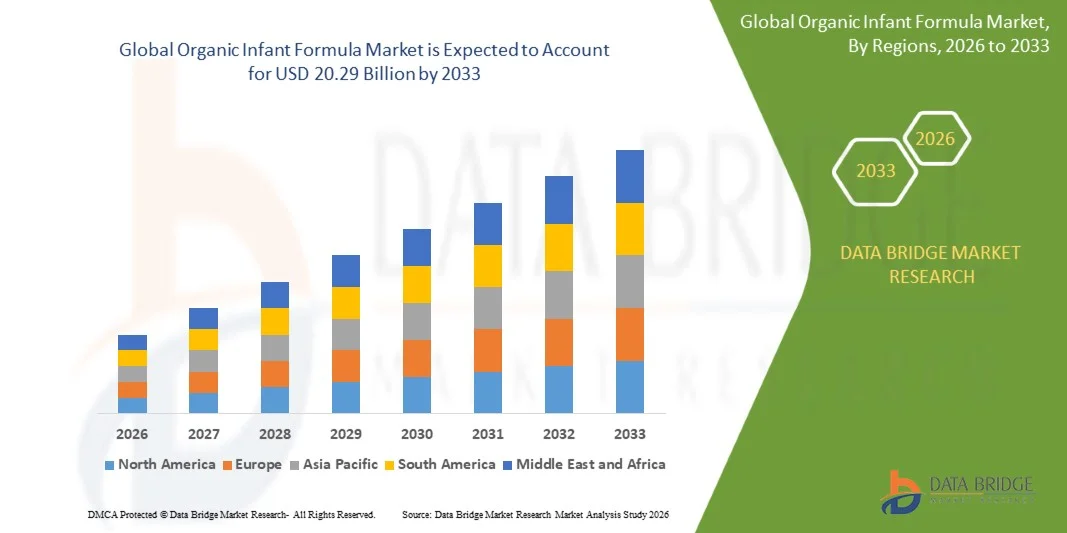
- The global organic infant formula market size was valued at USD 10.98 billion in 2025 and is expected to reach USD 20.29 billion by 2033, at a CAGR of 7.98% during the forecast period
- The market growth is largely fueled by rising parental awareness of infant health, nutrition quality, and the benefits of chemical-free and organic food products, leading to increased preference for certified organic infant formula across both developed and emerging economies
- Furthermore, increasing disposable income, rapid urbanization, and a growing shift toward premium and clean-label baby nutrition products are strengthening demand for high-quality organic infant formula solutions, thereby significantly boosting industry growth
Organic Infant Formula Market Analysis
- Organic infant formula refers to specially formulated infant nutrition products made from organically sourced ingredients, free from synthetic pesticides, hormones, and genetically modified organisms, designed to support healthy infant growth and development while closely mimicking breast milk composition
- The escalating demand for organic infant formula is primarily fueled by increasing health consciousness among parents, growing concerns regarding food safety and additives in conventional formulas, and rising preference for sustainably sourced and transparently labeled infant nutrition products
- Asia-Pacific dominated the organic infant formula market with a share of 46.9% in 2025, due to rising birth rates, increasing awareness of infant nutrition, and strong demand for premium organic baby food products
- North America is expected to be the fastest growing region in the organic infant formula market during the forecast period due to rising demand for organic and non-GMO infant nutrition products, strong consumer awareness, and increasing health-conscious parenting trends
- Starting-milk formula segment dominated the market with a market share of 45.1% in 2025, due to its essential role as the primary nutrition source for newborns during early developmental stages. Parents prefer organic starting-milk products as they closely mimic breast milk composition while ensuring reduced exposure to synthetic additives
Report Scope and Organic Infant Formula Market Segmentation
|
Attributes |
Organic Infant Formula Key Market Insights |
|
Segments Covered |
|
|
Countries Covered |
North America
Europe
Asia-Pacific
Middle East and Africa
South America
|
|
Key Market Players |
|
|
Market Opportunities |
|
|
Value Added Data Infosets |
In addition to the insights on market scenarios such as market value, growth rate, segmentation, geographical coverage, and major players, the market reports curated by the Data Bridge Market Research also include in-depth expert analysis, pricing analysis, brand share analysis, consumer survey, demography analysis, supply chain analysis, value chain analysis, raw material/consumables overview, vendor selection criteria, PESTLE Analysis, Porter Analysis, and regulatory framework. |
Organic Infant Formula Market Trends
“Rising Demand for Clean Label and Organic Certified Infant Nutrition”
- A key trend in the organic infant formula market is the rising consumer preference for clean label, organic certified, and minimally processed infant nutrition products driven by heightened concerns about synthetic additives, pesticides, and artificial ingredients in early childhood diets. This shift is strengthening demand for certified organic formulations that ensure traceability, safety, and nutritional transparency across developed and emerging economies
- For instance, HiPP GmbH & Co. Vertrieb KG and Holle baby food AG offer certified organic infant formula products that comply with stringent European Union organic standards and are widely trusted by parents seeking clean label nutrition solutions. These companies reinforce consumer confidence through strict ingredient sourcing policies and sustainable production practices that align with organic certification requirements
- The growing inclination toward premium infant nutrition is encouraging manufacturers to expand organic product portfolios with enhanced formulations that include probiotics, prebiotics, and essential fatty acids to support infant immunity and cognitive development. This trend is reshaping product development strategies focused on nutritional completeness and ingredient purity
- The expansion of regulatory frameworks governing organic certification and labeling standards is further strengthening market credibility and encouraging broader adoption of certified products. Regulatory bodies such as the European Commission and U.S. Department of Agriculture are playing a crucial role in standardizing organic infant nutrition requirements
- Digital retail platforms are amplifying awareness of organic infant formula products by enabling direct access to product information, ingredient transparency, and consumer reviews. This is supporting informed purchasing decisions and accelerating the shift toward premium organic nutrition categories
- The overall market is witnessing sustained momentum as parents increasingly prioritize health-focused, environmentally responsible, and scientifically validated infant nutrition options, reinforcing long-term demand for clean label organic infant formula products across global markets
Organic Infant Formula Market Dynamics
Driver
“Growing Parental Awareness of Early Childhood Health and Nutrition”
- A major driver of the organic infant formula market is the increasing awareness among parents regarding early childhood nutrition and its long-term impact on physical growth, cognitive development, and immune system strength. This awareness is prompting a shift toward scientifically formulated infant nutrition products that closely replicate natural breast milk composition while ensuring safety and nutritional adequacy
- For instance, Nestlé S.A. through its NAN Organic and Gerber Organic product lines focuses on infant nutrition solutions developed with research-backed formulations designed to meet specific developmental needs of infants and toddlers. These offerings highlight the growing emphasis on clinically supported nutritional benefits in infant feeding practices
- The rising prevalence of lifestyle-related health concerns and food sensitivities in infants is encouraging parents to choose organic infant formula products that reduce exposure to artificial additives and allergens. This is increasing demand for hypoallergenic and specialized nutrition solutions tailored to infant digestive health
- Healthcare professionals and pediatric associations are actively promoting awareness regarding balanced early nutrition, further influencing parental decision-making toward organic and fortified formula products. This advisory role is strengthening trust in scientifically developed infant nutrition solutions
- The continued focus on infant well-being and preventive healthcare is driving sustained demand for transparent, safe, and nutritionally optimized infant formula products, positioning awareness as a key growth catalyst for the organic infant formula market
Restraint/Challenge
“High Production Costs and Strict Regulatory Compliance Requirements”
- A significant challenge in the organic infant formula market is the high production cost associated with sourcing certified organic ingredients, maintaining controlled manufacturing environments, and complying with stringent global regulatory standards for infant nutrition products. These factors collectively increase operational complexity and limit pricing flexibility for manufacturers
- For instance, Danone S.A. through its Aptamil Organic range operates under strict European organic certification and infant nutrition safety regulations, requiring continuous investment in quality assurance systems and traceable supply chains. These compliance requirements contribute to elevated production costs and longer product development cycles
- The dependency on certified organic raw materials such as milk and plant-based ingredients creates supply chain constraints that can impact production scalability and cost stability. Seasonal variations and limited availability of certified organic inputs further intensify cost pressures
- Regulatory frameworks enforced by authorities such as the U.S. Food and Drug Administration and European Food Safety Authority impose rigorous testing, labeling, and formulation standards for infant formula products. Meeting these requirements demands significant investment in research, testing, and documentation processes
- The combined impact of high raw material costs, regulatory complexity, and production intensity continues to constrain profitability and operational efficiency, making cost management and compliance optimization critical challenges in the organic infant formula market
Organic Infant Formula Market Scope
The market is segmented on the basis of product, distribution channel, and formulation.
• By Product:
On the basis of product, the organic infant formula market is segmented into Starting-Milk Formula, Follow-On Milk Formula, Special Milk Formula, and Others. The Starting-Milk Formula segment held the largest market revenue share of 45.1% in 2025 due to its essential role as the primary nutrition source for newborns during early developmental stages. Parents prefer organic starting-milk products as they closely mimic breast milk composition while ensuring reduced exposure to synthetic additives. Strong availability across retail channels and high trust in established organic brands further strengthen its dominance. Continuous product innovation focusing on improved digestibility and immunity support also reinforces demand in this segment.
The Special Milk Formula segment is anticipated to witness the fastest growth rate from 2026 to 2033, driven by rising cases of lactose intolerance, allergies, and specific nutritional needs among infants. Increasing parental preference for tailored organic nutrition solutions enhances adoption of specialized formulations. Manufacturers are expanding offerings with hypoallergenic and fortified organic variants to address medical and dietary requirements. Growth is further supported by pediatric recommendations for condition-specific infant feeding solutions. Expanding awareness regarding digestive health and nutrient sensitivity continues to accelerate this segment’s expansion.
• By Distribution Channel:
On the basis of distribution channel, the organic infant formula market is segmented into Supermarkets & Hypermarkets, Convenience Stores, Specialty Stores, and Others. The Supermarkets & Hypermarkets segment accounted for the largest market revenue share in 2025 due to wide product availability and strong consumer preference for one-stop shopping experiences. These retail formats offer multiple organic brands under one roof, enabling easy comparison of pricing and certifications. High shelf visibility and promotional activities contribute significantly to consumer purchase decisions. Established trust in organized retail infrastructure further strengthens this segment’s leadership.
The Specialty Stores segment is expected to witness the fastest growth rate from 2026 to 2033, driven by increasing demand for premium and certified organic infant nutrition products. These stores provide expert guidance and curated product selections, which appeals strongly to health-conscious parents. Focus on authenticity verification and organic certification assurance enhances consumer confidence. Expansion of dedicated baby nutrition outlets in urban regions further supports growth. Rising willingness to pay for premium advisory-driven purchasing experiences continues to boost this channel’s momentum.
• By Formulation
On the basis of formulation, the organic infant formula market is segmented into Powdered Formula, Concentrated Milk Formula, and Ready to Feed Formula. The Powdered Formula segment held the largest market revenue share in 2025 due to its cost-effectiveness, longer shelf life, and ease of storage. Parents widely prefer powdered organic formulas as they offer flexibility in preparation and dosage control. Strong global distribution and high product availability across retail channels further reinforce segment dominance. Manufacturers also focus on improving solubility and nutrient retention in powdered organic formulations, strengthening consumer acceptance.
The Ready to Feed Formula segment is projected to witness the fastest growth rate from 2026 to 2033, driven by increasing demand for convenience-based infant nutrition solutions. Busy lifestyles and rising dual-income households are accelerating preference for pre-prepared feeding options. These formulations eliminate preparation time and reduce contamination risks, enhancing safety and usability. Growing acceptance among urban parents seeking on-the-go feeding solutions further supports expansion. Continuous product improvements in packaging hygiene and portability continue to drive strong adoption of this segment.
Organic Infant Formula Market Regional Analysis
- Asia-Pacific dominated the organic infant formula market with the largest revenue share of 46.9% in 2025, driven by rising birth rates, increasing awareness of infant nutrition, and strong demand for premium organic baby food products
- The region’s expanding middle-class population, rapid urbanization, and growing preference for chemical-free and certified organic nutrition products are accelerating market expansion
- Strong retail penetration, increasing availability of international organic formula brands, and supportive government initiatives promoting child health nutrition are further contributing to market growth
China Organic Infant Formula Market Insight
China held the largest share in the Asia-Pacific organic infant formula market in 2025, supported by high demand for premium infant nutrition products, strong e-commerce penetration, and increasing concerns regarding food safety. The country’s large infant population base and rising preference for imported and certified organic formulas are key growth drivers. In addition, stringent quality standards and growing investments by global dairy companies are strengthening market expansion.
India Organic Infant Formula Market Insight
India is witnessing the fastest growth in the Asia-Pacific region, fueled by rising awareness of infant health, increasing disposable income, and gradual adoption of premium organic nutrition products. Expanding urban retail networks and growing penetration of specialty baby nutrition brands are supporting demand. In addition, increasing maternal workforce participation and improving access to packaged infant nutrition solutions are driving rapid market expansion.
Europe Organic Infant Formula Market Insight
The Europe organic infant formula market is expanding steadily, supported by strong regulatory standards for organic certification, high consumer trust in clean-label products, and well-established infant nutrition awareness. The region shows strong preference for premium, traceable, and sustainably sourced baby nutrition products. Rising demand for plant-based and allergen-free organic formulas is further strengthening market growth across European countries.
Germany Organic Infant Formula Market Insight
Germany’s organic infant formula market is driven by strong consumer inclination toward certified organic food products, high purchasing power, and well-developed retail infrastructure. The country has a mature organic food ecosystem that supports strong adoption of premium infant nutrition solutions. In addition, strict quality regulations and strong domestic demand for sustainable and natural baby food products are reinforcing market growth.
U.K. Organic Infant Formula Market Insight
The U.K. market is supported by increasing awareness of infant dietary health, strong demand for organic and clean-label baby products, and expanding availability across supermarkets and specialty stores. Growing preference for premium imported organic formulas and rising focus on infant gut health are key demand drivers. In addition, expanding online retail channels are improving product accessibility across the country.
North America Organic Infant Formula Market Insight
North America is projected to grow at the fastest CAGR from 2026 to 2033, driven by rising demand for organic and non-GMO infant nutrition products, strong consumer awareness, and increasing health-conscious parenting trends. The region benefits from high spending capacity and rapid adoption of premium baby nutrition brands. In addition, innovation in organic formulations and strong retail distribution networks are supporting market expansion.
U.S. Organic Infant Formula Market Insight
The U.S. accounted for the largest share in the North America market in 2025, underpinned by high demand for organic-certified infant formula, strong presence of leading baby nutrition companies, and advanced retail infrastructure. Growing concerns over food safety and preference for clean-label products are driving adoption. In addition, strong e-commerce penetration and continuous product innovation are further strengthening the country’s leading position.
Organic Infant Formula Market Share
The organic infant formula industry is primarily led by well-established companies, including:
- Bellamy’s Organic (Australia)
- Abbott Inc (U.S.)
- HiPP GmbH & Co (Germany)
- Arla Foods amba (Denmark)
- Nestle S.A. (Switzerland)
- Yili Group (China)
- Hain Celestial Group Inc (U.S.)
- Friso (Netherlands)
- Danone S.A. (France)
- Mead Johnson Nutrition (U.S.)
- Royal FrieslandCampina (Netherlands)
- Kendamil (U.K.)
- Nature’s One (U.S.)
- Ausnutria Dairy Corporation Ltd (China)
- Beingmate Baby & Child Food Co. Ltd (China)
- Holle Baby Food GmbH (Germany)
Latest Developments in Global Organic Infant Formula Market
- In September 2025, FrieslandCampina introduced an upgraded organic infant formula portfolio with enhanced probiotic and immunity-support formulations aimed at improving digestive health outcomes in infants. This development strengthens the company’s positioning in the premium organic segment by aligning with rising parental demand for functional nutrition benefits beyond basic feeding. The innovation is expected to improve brand competitiveness across European and Asian markets, where demand for gut-health-focused infant nutrition is increasing rapidly
- In September 2025, Nestle S.A. revealed a partnership with a leading organic farming cooperative to source ingredients for its infant formula range. This collaboration emphasizes Nestle’s focus on sustainability, traceability, and ethically sourced ingredients in response to rising consumer concerns. The initiative is expected to strengthen supply chain reliability while enhancing the company’s reputation and market share in the organic infant nutrition sector
- In August 2025, Abbott Laboratories expanded its organic infant formula production capacity in North America to support growing demand for clean-label and certified organic baby nutrition products. This expansion enhances supply chain efficiency and ensures better availability across key retail and e-commerce channels. The move is expected to reinforce Abbott’s market penetration in the organic segment while addressing rising consumer preference for high-quality, sustainably produced infant nutrition solutions
- In August 2025, Abbott Laboratories announced the launch of a new line of organic infant formulas designed to meet the growing demand for clean-label products. This strategic move reinforces Abbott’s commitment to innovation and strengthens its position in the organic segment by catering to health-conscious parents seeking high-quality infant nutrition. The introduction is expected to enhance competitive advantage and improve brand visibility in a rapidly expanding premium nutrition market
- In July 2025, Danone S.A. expanded its distribution channels by entering into a strategic alliance with a prominent e-commerce platform. This initiative reflects Danone’s commitment to digital transformation and strengthens its direct-to-consumer reach in the organic infant formula market. The move is expected to boost online sales, improve customer engagement, and enhance brand loyalty in an increasingly digital retail environment

- Interactive Data Analysis Dashboard
- Company Analysis Dashboard for high growth potential opportunities
- Research Analyst Access for customization & queries
- Competitor Analysis with Interactive dashboard
- Latest News, Updates & Trend analysis
- Harness the Power of Benchmark Analysis for Comprehensive Competitor Tracking
Global Organic Infant Formula Market, Supply Chain Analysis and Ecosystem Framework
To support market growth and help clients navigate the impact of geopolitical shifts, DBMR has integrated in-depth supply chain analysis into its Global Organic Infant Formula Market research reports. This addition empowers clients to respond effectively to global changes affecting their industries. The supply chain analysis section includes detailed insights such as Global Organic Infant Formula Market consumption and production by country, price trend analysis, the impact of tariffs and geopolitical developments, and import and export trends by country and HSN code. It also highlights major suppliers with data on production capacity and company profiles, as well as key importers and exporters. In addition to research, DBMR offers specialized supply chain consulting services backed by over a decade of experience, providing solutions like supplier discovery, supplier risk assessment, price trend analysis, impact evaluation of inflation and trade route changes, and comprehensive market trend analysis.
Data collection and base year analysis are done using data collection modules with large sample sizes. The stage includes obtaining market information or related data through various sources and strategies. It includes examining and planning all the data acquired from the past in advance. It likewise envelops the examination of information inconsistencies seen across different information sources. The market data is analysed and estimated using market statistical and coherent models. Also, market share analysis and key trend analysis are the major success factors in the market report. To know more, please request an analyst call or drop down your inquiry.
The key research methodology used by DBMR research team is data triangulation which involves data mining, analysis of the impact of data variables on the market and primary (industry expert) validation. Data models include Vendor Positioning Grid, Market Time Line Analysis, Market Overview and Guide, Company Positioning Grid, Patent Analysis, Pricing Analysis, Company Market Share Analysis, Standards of Measurement, Global versus Regional and Vendor Share Analysis. To know more about the research methodology, drop in an inquiry to speak to our industry experts.
Data Bridge Market Research is a leader in advanced formative research. We take pride in servicing our existing and new customers with data and analysis that match and suits their goal. The report can be customized to include price trend analysis of target brands understanding the market for additional countries (ask for the list of countries), clinical trial results data, literature review, refurbished market and product base analysis. Market analysis of target competitors can be analyzed from technology-based analysis to market portfolio strategies. We can add as many competitors that you require data about in the format and data style you are looking for. Our team of analysts can also provide you data in crude raw excel files pivot tables (Fact book) or can assist you in creating presentations from the data sets available in the report.













