


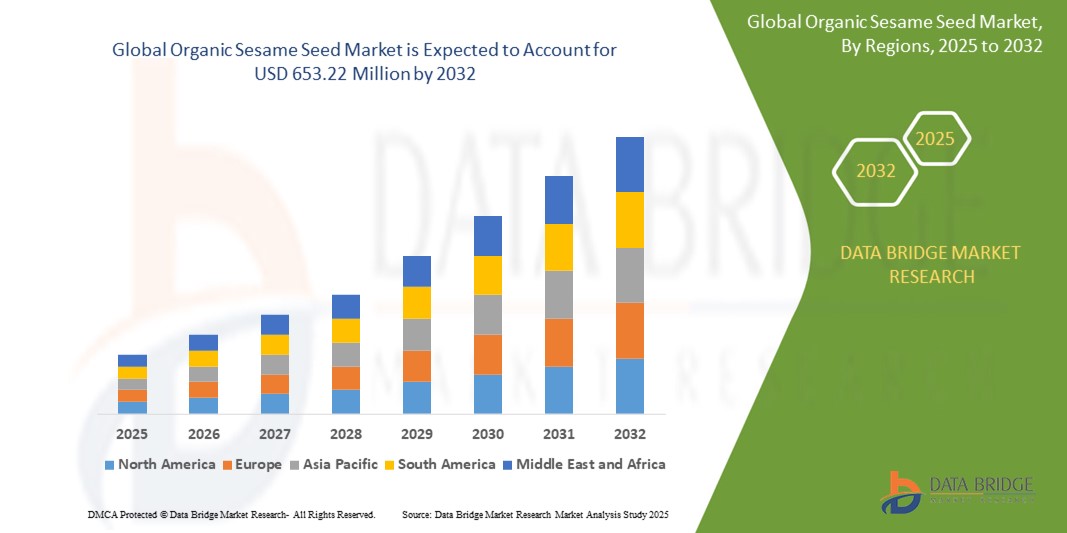
Organic Sesame Seed Market Size
- The global organic sesame seed market size was valued at USD 450.64 million in 2024 and is expected to reach USD 653.22 million by 2032, at a CAGR of 4.75% during the forecast period
- The market growth is largely fueled by rising global demand for organic, clean-label, and non-GMO food ingredients, as consumers increasingly prioritize health, sustainability, and transparency in their dietary choices
- Furthermore, the expanding use of organic sesame seeds across diverse applications such as bakery, snacks, ready-to-eat meals, personal care, and nutraceuticals is strengthening their commercial value and export potential, thereby significantly boosting the industry's growth
Organic Sesame Seed Market Analysis
- Organic sesame seeds, known for their rich nutritional profile, clean-label appeal, and versatility, are increasingly vital ingredients in health-conscious food products, functional snacks, and plant-based diets across both developed and emerging markets
- The escalating demand for organic sesame seeds is primarily fueled by growing consumer preference for natural, non-GMO ingredients, expanding applications in food, personal care, and nutraceuticals, and rising global awareness of sustainable and ethical sourcing practices
- Asia-Pacific dominated the organic sesame seed market with a share of 29.4% in 2024, due to abundant sesame cultivation in countries such as India and Myanmar, rising demand for organic food products, and increasing exports to North America and Europe
- North America is expected to be the fastest growing region in the organic sesame seed market during the forecast period due to rising consumer preference for clean-label, organic, and allergen-free products
- Raw/Whole segment dominated the market with a market share of 61.9% in 2024, due to its widespread use in cooking, oil extraction, and as a topping in bakery and savory items. Consumers and food manufacturers prefer whole organic sesame seeds for their nutritional integrity, natural flavor, and clean-label appeal
Report Scope and Organic Sesame Seed Market Segmentation
|
Attributes |
Organic Sesame Seed Key Market Insights |
|
Segments Covered |
|
|
Countries Covered |
North America
Europe
Asia-Pacific
Middle East and Africa
South America
|
|
Key Market Players |
|
|
Market Opportunities |
|
|
Value Added Data Infosets |
In addition to the insights on market scenarios such as market value, growth rate, segmentation, geographical coverage, and major players, the market reports curated by the Data Bridge Market Research also include in-depth expert analysis, pricing analysis, brand share analysis, consumer survey, demography analysis, supply chain analysis, value chain analysis, raw material/consumables overview, vendor selection criteria, PESTLE Analysis, Porter Analysis, and regulatory framework. |
Organic Sesame Seed Market Trends
“Increasing Consumer Demand for Healthy and Sustainable Products”
- A significant and accelerating trend in the global organic sesame seed market is the increasing consumer demand for healthy and sustainable products, driven by rising awareness around clean-label diets, ethical sourcing, and the health benefits of natural ingredients
- For instance, organic sesame seeds are gaining traction in gluten-free and plant-based diets due to their high nutritional value, including calcium, fiber, and healthy fats, making them ideal for fortified foods, snacks, and dietary supplements
- Brands are highlighting organic certification, non-GMO claims, and fair-trade sourcing on packaging to appeal to eco-conscious consumers seeking transparency and sustainability in their food choices. This has led to growing incorporation of organic sesame seeds in vegan spreads, functional foods, and cosmetic formulations
- The trend is further fueled by the global rise in veganism, clean eating, and minimal processing, with consumers and manufacturers alike shifting toward naturally derived, responsibly farmed ingredients that align with health and environmental values
- As a result, companies are investing in organic sesame cultivation, sustainable processing, and supply chain traceability to meet the surging demand from health-driven and environmentally aware markets across North America, Europe, and Asia-Pacific
Organic Sesame Seed Market Dynamics
Driver
“Rising Demand for Organic Products”
- The rising demand for organic products, driven by increasing health consciousness, environmental awareness, and the desire for chemical-free food, is a significant driver for the growing adoption of organic sesame seeds across global markets
- For instance, in January 2024, Dipasa Group expanded its line of USDA-certified organic sesame products in response to surging consumer demand from North America and Europe, reflecting a broader industry shift toward sustainable, organic ingredient sourcing
- As consumers increasingly seek natural, minimally processed, and non-GMO food options, organic sesame seeds are being integrated into a wide range of applications including bakery products, snacks, plant-based spreads, and health supplements
- Furthermore, the global push for sustainable agriculture and ethical sourcing is encouraging food manufacturers and retailers to include organic sesame seeds in their product lines, catering to eco-conscious consumers who value transparency and traceability
- The growing popularity of plant-based diets, combined with rising demand for nutrient-dense superfoods, is further boosting the appeal of organic sesame seeds as a clean-label, functional ingredient across food, personal care, and nutraceutical sectors
Restraint/Challenge
“High Production Costs”
- High production costs pose a significant challenge to the growth of the organic sesame seed market, primarily due to the resource-intensive nature of organic farming practices and certification requirements. Organic sesame cultivation demands strict adherence to non-chemical inputs, crop rotation, and manual weeding, which significantly increase labor and operational expenses
- For instance, organic sesame farmers in regions such as India and Ethiopia often face higher input costs and lower yields compared to conventional farming, leading to elevated farm-gate prices that impact overall competitiveness in global markets
- Addressing this cost barrier requires investment in sustainable agricultural technologies, improved seed varieties, and financial support for smallholder farmers. Organizations and cooperatives involved in organic sesame production are beginning to adopt cost-sharing models and community-based processing units to reduce expenses and enhance value
- Furthermore, the costs associated with organic certification, compliance audits, and export documentation can be prohibitive for producers in developing regions, limiting their participation in international trade
- While consumer willingness to pay a premium for organic products is rising, maintaining affordability without compromising quality and sustainability remains a major hurdle. Enhancing supply chain efficiency, scaling organic production, and promoting fair trade partnerships will be essential to mitigate cost-related constraints and ensure broader market access
Organic Sesame Seed Market Scope
The market is segmented on the basis of type, form, application, end use, and distribution channel.
• By Type
On the basis of type, the organic sesame seed market is segmented into white, black, hulled, roasted, and brown. The white sesame seed segment held the largest market revenue share in 2024, supported by its extensive use in bakery products, confectionery, and traditional dishes across Asia-Pacific and Middle Eastern countries. Its mild flavor, high oil content, and versatility in food applications contribute to strong consumer and industrial demand, especially in organic and health-conscious food categories.
The black sesame seed segment is expected to witness the fastest CAGR from 2025 to 2032, attributed to its growing popularity in health food formulations and traditional medicine. Known for its stronger flavor and higher antioxidant content, black sesame is increasingly used in premium food products, functional snacks, and wellness-oriented formulations across North America and East Asia.
• By Form
On the basis of form, the market is categorized into raw/whole and processed. The raw/whole segment dominated the market share of 61.9% in 2024 due to its widespread use in cooking, oil extraction, and as a topping in bakery and savory items. Consumers and food manufacturers prefer whole organic sesame seeds for their nutritional integrity, natural flavor, and clean-label appeal.
The processed segment is projected to record the fastest growth from 2025 to 2032, driven by rising demand for convenience foods and ready-to-use ingredients in the health food and snack industries. Processed sesame forms, such as roasted or ground, offer ease of use, longer shelf life, and enhanced flavor profiles, expanding their application in sauces, dressings, and spreads.
• By Application
On the basis of application, the organic sesame seed market is segmented into food products, pet food, ready-to-eat food products, baked snacks, bakery products, medicine, confectionery, and cosmetics. The bakery products segment led the market in terms of revenue share in 2024, supported by increasing global consumption of bread, crackers, and biscuits that incorporate sesame seeds for flavor, crunch, and visual appeal.
The ready-to-eat food products segment is expected to witness the fastest CAGR from 2025 to 2032, fueled by shifting consumer preferences toward nutritious and organic on-the-go meals. Organic sesame seeds are increasingly featured in salads, protein bars, and snack boxes, appealing to health-conscious consumers seeking natural protein and healthy fats.
• By End Use
On the basis of end use, the market is segmented into food and beverages, oil extraction, animal feed, and pharmaceutical. The food and beverages segment dominated the market revenue in 2024 due to its wide incorporation of sesame seeds in culinary dishes, packaged foods, and traditional recipes globally. Increasing awareness of sesame’s nutritional benefits such as plant-based protein and healthy fats drives its demand in organic food portfolios.
The pharmaceutical segment is expected to grow at the highest CAGR from 2025 to 2032, supported by the growing use of sesame in herbal medicine and dietary supplements. Its anti-inflammatory, antioxidant, and cholesterol-lowering properties are gaining interest among nutraceutical companies focusing on organic formulations.
• By Distribution Channel
On the basis of distribution channel, the market is divided into store-based retailing, non-store based retailing, and others. The store-based retailing segment held the largest revenue share in 2024, as consumers often prefer to purchase organic food ingredients through supermarkets, health food stores, and specialty outlets where quality can be visually inspected.
The non-store based retailing segment is projected to experience the fastest growth rate from 2025 to 2032, propelled by the rise of e-commerce, direct-to-consumer organic food brands, and increased digital access in emerging markets. Online platforms offer convenience, product variety, and access to premium organic sesame brands, especially among urban and millennial consumers.
Organic Sesame Seed Market Regional Analysis
- Asia-Pacific dominated the organic sesame seed market with the largest revenue share of 29.4% in 2024, driven by abundant sesame cultivation in countries such as India and Myanmar, rising demand for organic food products, and increasing exports to North America and Europe
- The region benefits from strong agricultural infrastructure, favorable climatic conditions, and a growing focus on organic certification and traceability
- In addition, rising consumer awareness around clean-label and plant-based diets, coupled with expanding use of sesame in traditional and functional food applications, is accelerating regional market growth
India Organic Sesame Seed Market Insight
India leads the Asia-Pacific market, backed by its position as the world’s largest producer and exporter of sesame seeds. Growing domestic and international demand for certified organic products, government support for organic farming, and increasing adoption of sesame in health foods are driving growth. Indian exporters are investing in quality control, certification, and value-added forms to meet rising global standards and capture premium markets.
China Organic Sesame Seed Market Insight
China is emerging as a key growth market, supported by rising health consciousness, increasing consumption of traditional sesame-based snacks, and growing demand for natural ingredients in food, cosmetics, and pharmaceuticals. Local producers are expanding organic farming acreage and improving seed quality, while urban consumers increasingly seek organic oils and baked goods with sesame ingredients.
Europe Organic Sesame Seed Market Insight
Europe is projected to grow at a notable CAGR over the forecast period, driven by growing demand for plant-based protein, natural fats, and ethically sourced ingredients in bakery, snack, and health food segments. Strong consumer awareness, stringent food safety regulations, and a well-established organic retail market are supporting growth across Western Europe. Demand for certified fair trade and organic sesame is particularly high among environmentally and socially conscious consumers.
Germany Organic Sesame Seed Market Insight
Germany holds a prominent position in the European market due to its mature organic food sector and growing demand for functional ingredients in bread, cereals, and snack products. German food manufacturers are prioritizing transparency and traceability, sourcing organic sesame seeds that meet EU regulations and consumer expectations around sustainability. Continued product innovation and preference for exotic seeds support market expansion.
North America Organic Sesame Seed Market Insight
North America is expected to witness the fastest CAGR from 2025 to 2032, fueled by rising consumer preference for clean-label, organic, and allergen-free products. Sesame is increasingly used in vegan, keto, and high-protein food categories, including snack bars, tahini spreads, and baked goods. Growing adoption of sesame in pet food, cosmetics, and nutritional supplements is also contributing to market growth, supported by robust retail distribution and awareness campaigns.
U.S. Organic Sesame Seed Market Insight
The U.S. held the largest revenue share in North America in 2024, driven by rising demand for non-GMO, organic, and ethically sourced ingredients in food processing. The USDA’s organic certification framework and recent allergen labeling requirements have elevated the visibility of sesame in food products. Increasing application in gourmet and health-focused offerings, along with a well-established online and specialty retail segment, is supporting sustained growth.
Organic Sesame Seed Market Share
The organic sesame seed industry is primarily led by well-established companies, including:
- NOW Foods (U.S.)
- Raab Vitalfood GmbH (Germany)
- SHYAM INDUSTRIES (India)
- TRADIN ORGANIC AGRICULTURE B.V. (U.S.)
- Dipasa (Mexico)
- ETICO. (Germany)
- Accura-Group (India)
- FDL Ltd. (Kenya)
- Dhaval Agri Exports (India)
- SunOpta (Canada)
- Ethics ORGANIC (India)
- 24 Mantra Organic (India)
- HL Agro Products Pvt. Ltd. (India)
- Just Organik (India)
- McCormick & Company, Inc. (U.S.)
Latest Developments in Global Organic Sesame Seed Market
- In January 2022, Frontier Co-op expanded its certified organic spice blends portfolio by launching new products featuring organic Everything bagel sesame seeds. This move strengthened the availability and variety of organic sesame-based offerings in the retail spice market, contributing to increased consumer awareness and demand for organic sesame seeds as a versatile culinary ingredient
- In June 2021, McCormick introduced gourmet organic spice blends under the Schwartz brand in the U.K., incorporating organic sesame seeds to tap into the surging demand for organic ingredients. This initiative by one of the world’s leading spice manufacturers significantly boosted the market presence of organic sesame seeds in Europe, reinforcing their integration into mainstream consumer products
- In May 2021, Equinom and Dipasa entered a partnership to produce high-protein sesame seeds, focusing on creating a high-protein sesame concentrate. Equinox leverages AI technology to develop new seed varieties, while Dipasa concentrates on processing these seeds. This collaboration aims to innovate and enhance the nutritional value of sesame products, meeting the growing demand for protein-rich foods
- In May 2020, KTC Edibles launched an organic toasted sesame oil made from certified organic sesame seeds. The product’s positioning as non-GMO, vegan, and gluten-free broadened its appeal to health-conscious consumers, thereby supporting market growth by expanding application potential across health-focused and clean-label product segments
- In May 2020, Sabra announced a new sesame seed variety to be cultivated in the U.S., in partnership with Israel-based Equinom. This collaboration aims to produce a new sesame variant tailored for the U.S. market. Equinom's expertise in seed development, combined with Sabra's market presence, is set to introduce a superior sesame product, enhancing the quality and sustainability of sesame cultivation in the U.S.

- Interactive Data Analysis Dashboard
- Company Analysis Dashboard for high growth potential opportunities
- Research Analyst Access for customization & queries
- Competitor Analysis with Interactive dashboard
- Latest News, Updates & Trend analysis
- Harness the Power of Benchmark Analysis for Comprehensive Competitor Tracking
Global Organic Sesame Seed Market, Supply Chain Analysis and Ecosystem Framework
To support market growth and help clients navigate the impact of geopolitical shifts, DBMR has integrated in-depth supply chain analysis into its Global Organic Sesame Seed Market research reports. This addition empowers clients to respond effectively to global changes affecting their industries. The supply chain analysis section includes detailed insights such as Global Organic Sesame Seed Market consumption and production by country, price trend analysis, the impact of tariffs and geopolitical developments, and import and export trends by country and HSN code. It also highlights major suppliers with data on production capacity and company profiles, as well as key importers and exporters. In addition to research, DBMR offers specialized supply chain consulting services backed by over a decade of experience, providing solutions like supplier discovery, supplier risk assessment, price trend analysis, impact evaluation of inflation and trade route changes, and comprehensive market trend analysis.
Data collection and base year analysis are done using data collection modules with large sample sizes. The stage includes obtaining market information or related data through various sources and strategies. It includes examining and planning all the data acquired from the past in advance. It likewise envelops the examination of information inconsistencies seen across different information sources. The market data is analysed and estimated using market statistical and coherent models. Also, market share analysis and key trend analysis are the major success factors in the market report. To know more, please request an analyst call or drop down your inquiry.
The key research methodology used by DBMR research team is data triangulation which involves data mining, analysis of the impact of data variables on the market and primary (industry expert) validation. Data models include Vendor Positioning Grid, Market Time Line Analysis, Market Overview and Guide, Company Positioning Grid, Patent Analysis, Pricing Analysis, Company Market Share Analysis, Standards of Measurement, Global versus Regional and Vendor Share Analysis. To know more about the research methodology, drop in an inquiry to speak to our industry experts.
Data Bridge Market Research is a leader in advanced formative research. We take pride in servicing our existing and new customers with data and analysis that match and suits their goal. The report can be customized to include price trend analysis of target brands understanding the market for additional countries (ask for the list of countries), clinical trial results data, literature review, refurbished market and product base analysis. Market analysis of target competitors can be analyzed from technology-based analysis to market portfolio strategies. We can add as many competitors that you require data about in the format and data style you are looking for. Our team of analysts can also provide you data in crude raw excel files pivot tables (Fact book) or can assist you in creating presentations from the data sets available in the report.













