What is the Organic Vegetable & Fruit Snacks Market Size and Growth Rate?
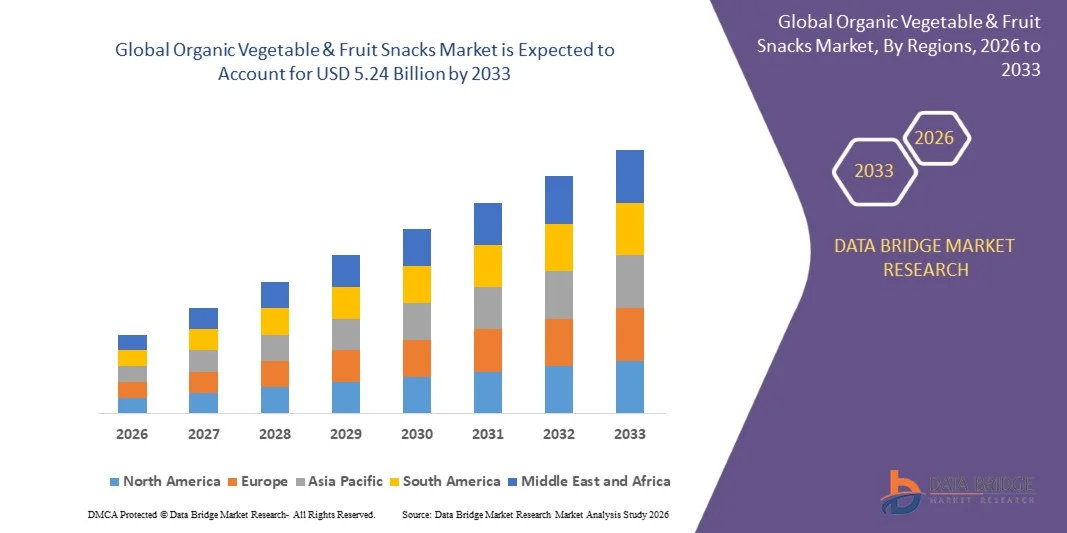
- As per Data Bridge Market Research analysis the organic vegetable & fruit snacks market was valued at USD 2.26 billion in 2025 and is projected to reach USD 5.24 billion by 2033, growing at a CAGR of 11.10% from 2026 to 2033.
- The market is experiencing strong growth driven by rising consumer demand for healthy and convenient snacking options, increasing preference for organic and clean-label foods, and growing awareness of the nutritional benefits of fruits and vegetables.
- The increasing focus on healthier lifestyles, coupled with the expansion of organic food distribution channels and growing demand for convenient on-the-go snacks, is encouraging manufacturers to introduce innovative organic fruit and vegetable snack products.
Market Size & Forecast
- Market Value (2025): USD 2.26 Billion
- Expected Market Value (2033): USD 5.24 Billion
- Forecast CAGR (2026–2033): 11.10%
- Leading Region in 2025: North America
- Fastest Growing Region: Asia-Pacific
What are the Major Takeaways of the Organic Vegetable & Fruit Snacks Market?
- North America dominated the organic vegetable and fruit snacks market with the largest revenue share in 2025, supported by strong consumer demand for organic foods, clean-label products, and convenient healthier snacks.
- Asia-Pacific organic vegetable and fruit snacks market is expected to witness the fastest growth rate from 2026 to 2033, supported by rising disposable incomes, urbanization, increasing health awareness, and growing adoption of Western-style convenient snacking habits.
- The dried fruits segment held the largest market revenue share in 2025, driven by their high nutritional value, longer shelf life, and growing consumer preference for convenient and naturally sweet snack options. Dried fruits are widely consumed as on-the-go snacks and are increasingly available in organic and clean-label formulations.
- The freeze-dried fruits segment is projected to register the fastest growth from 2026 to 2033, driven by increasing demand for minimally processed snacks that retain the natural flavor, color, and nutritional characteristics of fresh fruits. Growing adoption of freeze-drying technology and rising consumer interest in nutrient-rich shelf-stable snacks are accelerating segment expansion.
- The dried segment held the largest market revenue share in 2025, supported by its established production methods, extended shelf life, and widespread availability across retail channels. Dried organic fruit and vegetable snacks are increasingly preferred for their portability and convenience.
- The freeze-dried segment is projected to register the fastest growth from 2026 to 2033, driven by growing consumer preference for lightweight, crunchy, and minimally processed snacks. The ability of freeze-drying to preserve the taste, texture, and nutritional characteristics of fruits and vegetables is supporting its increasing use in premium organic snack products.
Report Scope and Organic Vegetable & Fruit Snacks Market Segmentation
|
Attributes |
Organic Vegetable & Fruit Snacks Key Market Insights |
|
Segments Covered |
|
|
Countries Covered |
North America
Europe
Asia-Pacific
Middle East and Africa
South America
|
|
Key Market Players |
|
|
Market Opportunities |
|
|
Value Added Data Infosets |
In addition to the insights on market scenarios such as market value, growth rate, segmentation, geographical coverage, and major players, the market reports curated by the Data Bridge Market Research also include in-depth expert analysis, pricing analysis, brand share analysis, consumer survey, demography analysis, supply chain analysis, value chain analysis, raw material/consumables overview, vendor selection criteria, PESTLE Analysis, Porter Analysis, and regulatory framework. |
What is the Key Trend in the Organic Vegetable & Fruit Snacks Market?
- Clean-label, minimally processed, and functional formulations are increasingly shaping the organic vegetable and fruit snacks market as consumers seek snacks made with recognizable ingredients while also looking for nutritional benefits such as fiber, plant-based protein, and lower sugar.
- For instance, in June 2025, Nature’s Path’s Love Child Organics launched Oaty Bites, an organic oat-based toddler snack made with whole-grain oats, real fruit, sunflowerbutter, quinoa, and chia, containing only 5g of sugar per serving.
- Consumer preference for fruit-based snacking is also strengthening the category, with the 2024 IFIC Spotlight Survey reporting that 58% of American snackers seek fruit in their typical snacks, while one-third seek vegetables.
- Manufacturers are increasingly developing baked, freeze-dried, and minimally processed formats to preserve the natural characteristics of fruits and vegetables while offering convenient shelf-stable alternatives to fresh produce.
- For instance, PepsiCo’s bare snacks portfolio offers certified organic apple chips and banana chips, while the brand describes its products as being made from real fruits and baked without artificial colors, flavors, or preservatives.
- As consumers continue to prioritize clean ingredients, convenience, and nutrition in everyday snacking, the shift toward organic, fruit- and vegetable-based, minimally processed products is expected to accelerate innovation and broaden the market’s consumer base.
What are the Key Drivers of the Organic Vegetable & Fruit Snacks Market?
- Rising consumer demand for organic foods and healthier snacking alternatives is significantly driving the organic vegetable and fruit snacks market, supported by increasing awareness of clean-label ingredients, nutrition, and wellness-oriented food choices.
- For instance, the Organic Trade Association reported that U.S. organic food sales reached USD 65.4 billion in 2024, increasing 5.1% from the previous year, while organic produce remained the leading entry point for consumers purchasing organic products.
- The growing preference for convenient snacks that incorporate fruits and vegetables is further encouraging manufacturers to expand organic snack portfolios across dried fruit, fruit chips, vegetable chips, puffs, and other portable formats.
- For instance, the International Food Information Council found that convenience was a reason for choosing snacks for 35% of American consumers, while 58% said they seek fruit in their typical snacks, demonstrating strong consumer alignment with convenient fruit-based snack formats.
- Retail expansion is also supporting market growth, with USDA reporting that traditional grocery stores, club stores, and supercenters accounted for 56% of organic food sales to consumers in 2020, while the share sold through the internet increased to 6.7% in 2024.
- With organic food demand expanding alongside consumer interest in convenient, clean-label, and fruit- and vegetable-based foods, manufacturers are expected to continue investing in innovative organic snack formats and expanding their presence across supermarkets, specialty retailers, and online channels.
Which Factors are Challenging the Growth of the Organic Vegetable & Fruit Snacks Market?
- High price premiums for organic ingredients and finished products remain a major challenge for the organic vegetable and fruit snacks market, as higher production, certification, sourcing, and processing costs can make organic snacks more expensive than conventional alternatives.
- USDA Economic Research Service reported that organic products continue to command higher prices than conventional counterparts, while price premiums for products such as organic apples, strawberries, and spinach have remained significant despite narrowing in recent years.
- These higher retail prices can limit adoption among price-sensitive consumers and encourage shoppers to switch to conventional fruit and vegetable snacks, particularly during periods of food-price inflation.
- For instance, USDA reported that food-price inflation reached its highest level since 1979 in 2022, with the price premium associated with organic products contributing to lower quantities demanded even though underlying organic demand remained strong.
- Organic ingredient availability and supply-chain requirements can also create challenges for manufacturers, particularly when seasonal fruits and vegetables experience supply fluctuations or when certified organic raw materials are insufficient to meet growing demand.
- The combination of higher organic price premiums, supply constraints, and consumer price sensitivity continues to restrict wider adoption of organic vegetable and fruit snacks, particularly in emerging and price-sensitive markets, despite increasing demand for healthier and clean-label snacking options.
How is the Organic Vegetable & Fruit Snacks Market Segmented?
The market is segmented on the basis of product type, form, distribution channel, packaging type, and end use.
- By Product Type
On the basis of product type, the organic vegetable and fruit snacks market is segmented into dried fruits, fruit chips, fruit leather, freeze-dried fruits, vegetable chips, vegetable crisps, vegetable puffs, and mixed fruit and vegetable snacks. The dried fruits segment held the largest market revenue share in 2025, driven by their high nutritional value, longer shelf life, and growing consumer preference for convenient and naturally sweet snack options. Dried fruits are widely consumed as on-the-go snacks and are increasingly available in organic and clean-label formulations.
The freeze-dried fruits segment is projected to register the fastest growth from 2026 to 2033, driven by increasing demand for minimally processed snacks that retain the natural flavor, color, and nutritional characteristics of fresh fruits. Growing adoption of freeze-drying technology and rising consumer interest in nutrient-rich shelf-stable snacks are accelerating segment expansion.
- By Form
On the basis of form, the market is segmented into dried, freeze-dried, baked, air-dried, and fried. The dried segment held the largest market revenue share in 2025, supported by its established production methods, extended shelf life, and widespread availability across retail channels. Dried organic fruit and vegetable snacks are increasingly preferred for their portability and convenience.
The freeze-dried segment is projected to register the fastest growth from 2026 to 2033, driven by growing consumer preference for lightweight, crunchy, and minimally processed snacks. The ability of freeze-drying to preserve the taste, texture, and nutritional characteristics of fruits and vegetables is supporting its increasing use in premium organic snack products.
- By Distribution Channel
On the basis of distribution channel, the market is segmented into supermarkets and hypermarkets, convenience stores, specialty stores, online retailers, and others. The supermarkets and hypermarkets segment held the largest market revenue share in 2025, driven by their extensive product assortment, established consumer base, and increasing availability of organic and natural food products. These retail formats provide consumers with convenient access to a wide range of organic fruit and vegetable snacks.
The online retailers segment is projected to register the fastest growth from 2026 to 2033, driven by increasing e-commerce penetration, convenient home delivery, and growing consumer access to specialized organic snack brands. Digital platforms also enable manufacturers to reach health-conscious consumers through direct-to-consumer and subscription-based models.
- By Packaging Type
On the basis of packaging type, the market is segmented into pouches, bags, boxes, jars, and others. The pouches segment held the largest market revenue share in 2025, driven by their lightweight structure, portability, resealable features, and suitability for portion-controlled snacking. Pouches are widely used for dried fruits, fruit chips, vegetable crisps, and other shelf-stable organic snacks.
The bags segment is projected to register significant growth from 2026 to 2033, supported by their cost-effectiveness, convenient handling, and suitability for family-size and single-serving snack products. Growing demand for recyclable and sustainable packaging is also encouraging manufacturers to introduce environmentally responsible bag formats.
- By End Use
On the basis of end use, the market is segmented into children’s snacks, on-the-go snacking, lunchbox snacks, health-conscious snacking, and household consumption. The health-conscious snacking segment held the largest market revenue share in 2025, driven by rising awareness of nutrition, clean-label ingredients, and the health benefits associated with fruit- and vegetable-based foods. Consumers are increasingly replacing conventional snacks with organic alternatives containing recognizable and minimally processed ingredients.
The on-the-go snacking segment is projected to register the fastest growth from 2026 to 2033, driven by busy lifestyles, increasing demand for convenient portion-sized foods, and growing preference for portable organic snacks. Expanding product availability across convenience stores, supermarkets, and online platforms is further supporting segment expansion.
Which Region Holds the Largest Share of the Organic Vegetable & Fruit Snacks Market?
- North America dominated the organic vegetable and fruit snacks market with the largest revenue share in 2025, supported by strong consumer demand for organic foods, clean-label products, and convenient healthier snacks.
- The region benefits from high awareness of organic certification, established retail infrastructure, and widespread availability of organic produce and packaged foods. In the U.S., organic sales reached USD 76.6 billion in 2025, growing 6.8% year over year, while organic produce remained the leading category at USD 22.7 billion. Dried fruits, vegetables, and fruits also recorded healthy growth as consumers increasingly sought shelf-stable, plant-based, and convenient food options.
U.S. Organic Vegetable & Fruit Snacks Market Insight
The U.S. organic vegetable and fruit snacks market captured the largest revenue share in North America in 2025, fueled by strong consumer awareness of organic certification and increasing demand for healthier and convenient snacking options. More than half of U.S. consumers surveyed by the Organic Trade Association reported purchasing an organic fruit or vegetable during the previous year, highlighting the strong consumer base for organic produce and fruit- and vegetable-based products. In addition, organic grocery sales reached USD 15.7 billion in 2025, with dried fruits and vegetables growing 13.6%, supported by demand for shelf-stable foods, clean eating, and plant-based nutrition.
Europe Organic Vegetable & Fruit Snacks Market Insight
Europe organic vegetable and fruit snacks market is expected to witness strong growth from 2026 to 2033, primarily driven by increasing consumer preference for organic, sustainable, and minimally processed foods. The region's established organic food industry, stringent food quality standards, and growing focus on environmental sustainability are supporting demand for organic snacks. Rising consumption of dried fruits, fruit-based products, and healthier alternatives to conventional snacks is further encouraging manufacturers to expand organic product portfolios across supermarkets, specialty stores, and online retail channels.
U.K. Organic Vegetable & Fruit Snacks Market Insight
U.K. organic vegetable and fruit snacks market is expected to witness significant growth from 2026 to 2033, driven by increasing consumer interest in healthier eating, clean-label products, and sustainably produced foods. Growing demand for convenient snacks containing natural and recognizable ingredients is encouraging the expansion of organic dried fruits, fruit snacks, and vegetable-based products. The country's established supermarket and online retail infrastructure, combined with growing consumer awareness of organic certification, is expected to continue supporting market development.
Germany Organic Vegetable & Fruit Snacks Market Insight
Germany organic vegetable and fruit snacks market is expected to witness strong growth from 2026 to 2033, supported by the country's well-established organic food culture and consumer preference for sustainable and environmentally responsible products. Demand for organic and minimally processed foods is encouraging manufacturers to expand fruit and vegetable snack offerings, particularly through supermarkets, organic food retailers, and online channels. Growing interest in plant-based nutrition, clean-label formulations, and convenient snack formats is also contributing to market expansion.
Asia-Pacific Organic Vegetable & Fruit Snacks Market Insight
The Asia-Pacific organic vegetable and fruit snacks market is expected to witness the fastest growth rate from 2026 to 2033, supported by rising disposable incomes, urbanization, increasing health awareness, and growing adoption of Western-style convenient snacking habits. Expanding modern retail and e-commerce infrastructure is improving consumer access to imported and locally produced organic products. Increasing awareness of food quality, natural ingredients, and healthier lifestyles across China, Japan, India, and other developing Asian markets is further creating opportunities for organic fruit and vegetable snack manufacturers.
Japan Organic Vegetable & Fruit Snacks Market Insight
Japan organic vegetable and fruit snacks market is expected to witness strong growth from 2026 to 2033, driven by increasing consumer focus on health, food quality, convenience, and nutritional value. Consumers' preference for compact and portable snack formats supports demand for dried and freeze-dried fruits and vegetables. The country's advanced retail infrastructure and high adoption of premium food products are also encouraging manufacturers to introduce innovative organic snacks with natural ingredients and clean-label positioning.
China Organic Vegetable & Fruit Snacks Market Insight
China organic vegetable and fruit snacks market is expected to witness rapid growth from 2026 to 2033, supported by rising disposable incomes, urbanization, expanding e-commerce, and increasing consumer awareness of healthier food choices. Growing demand for premium and organic foods among urban consumers is encouraging the development of fruit-based and vegetable-based snack products. The expansion of modern supermarkets, specialty retailers, and online platforms is further improving access to organic snacks, while China's large consumer base provides significant opportunities for domestic and international manufacturers.
Which are the Top Companies in Organic Vegetable & Fruit Snacks Market?
The organic vegetable & fruit snacks industry is primarily led by well-established companies, including:
- Mars, Incorporated (U.S.)
- General Mills, Inc. (U.S.)
- The Hain Celestial Group, Inc. (U.S.)
- Nature’s Path Foods, Inc. (Canada)
- Riverside Natural Foods Inc. (Canada)
- Made In Nature (U.S.)
- Navitas Organics (U.S.)
- The Hershey Company (U.S.)
- Campbell Soup Company (U.S.)
- Lundberg Family Farms (U.S.)
- Rhythm Superfoods, LLC (U.S.)
- Mary’s Gone Crackers (U.S.)
- Barnana (U.S.)
- Sun & Swell Foods, Inc. (U.S.)
- Peeled Snacks (U.S.)

- Interactive Data Analysis Dashboard
- Company Analysis Dashboard for high growth potential opportunities
- Research Analyst Access for customization & queries
- Competitor Analysis with Interactive dashboard
- Latest News, Updates & Trend analysis
- Harness the Power of Benchmark Analysis for Comprehensive Competitor Tracking
Data collection and base year analysis are done using data collection modules with large sample sizes. The stage includes obtaining market information or related data through various sources and strategies. It includes examining and planning all the data acquired from the past in advance. It likewise envelops the examination of information inconsistencies seen across different information sources. The market data is analysed and estimated using market statistical and coherent models. Also, market share analysis and key trend analysis are the major success factors in the market report. To know more, please request an analyst call or drop down your inquiry.
The key research methodology used by DBMR research team is data triangulation which involves data mining, analysis of the impact of data variables on the market and primary (industry expert) validation. Data models include Vendor Positioning Grid, Market Time Line Analysis, Market Overview and Guide, Company Positioning Grid, Patent Analysis, Pricing Analysis, Company Market Share Analysis, Standards of Measurement, Global versus Regional and Vendor Share Analysis. To know more about the research methodology, drop in an inquiry to speak to our industry experts.
Data Bridge Market Research is a leader in advanced formative research. We take pride in servicing our existing and new customers with data and analysis that match and suits their goal. The report can be customized to include price trend analysis of target brands understanding the market for additional countries (ask for the list of countries), clinical trial results data, literature review, refurbished market and product base analysis. Market analysis of target competitors can be analyzed from technology-based analysis to market portfolio strategies. We can add as many competitors that you require data about in the format and data style you are looking for. Our team of analysts can also provide you data in crude raw excel files pivot tables (Fact book) or can assist you in creating presentations from the data sets available in the report.