


What is the Ovarian Cyst Management Size and Growth Rate?
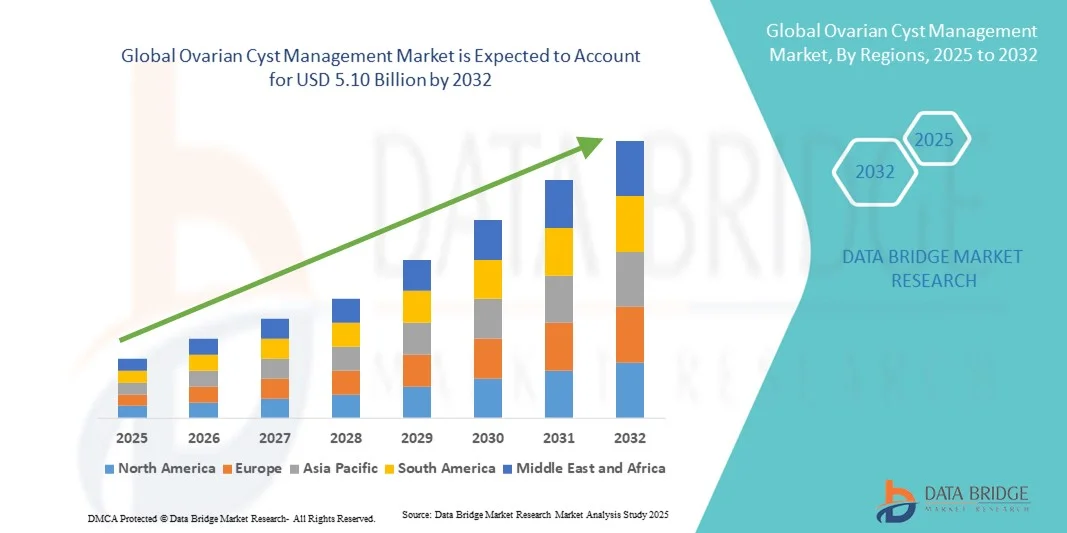
- As per Data Bridge Market Research Analysis the global ovarian cyst management market size was valued at USD 3.06 billion in 2024 and is expected to reach USD 5.10 billion by 2032, at a CAGR of 6.60% during the forecast period
- The market growth is largely fueled by the increasing prevalence of ovarian cysts globally, rising awareness about women’s health, and the growing adoption of advanced diagnostic and treatment technologies in gynecology. Hospitals and specialized clinics are increasingly investing in innovative solutions for early detection and minimally invasive management, which is driving market expansion
- Furthermore, rising demand for effective, patient-friendly, and low-risk treatment options such as laparoscopic surgery, hormonal therapy, and image-guided interventions is establishing ovarian cyst management solutions as essential components of women’s healthcare. These converging factors are accelerating the adoption of advanced treatment and diagnostic solutions, thereby significantly boosting the industry's growth
Market Size & Forecast
- Global Market Value (2024): USD 3.06 billion
- Expected Market Value (2032): USD 5.10 billion
- Forecast CAGR (2024–2032): 6.60%
What are the Major Takeaways of Ovarian Cyst Management?
- Ovarian Cyst Management solutions, including diagnostic imaging, minimally invasive treatments, and therapeutic interventions, are increasingly critical in both hospital and outpatient settings due to rising awareness of women’s reproductive health, increasing prevalence of ovarian disorders, and technological advancements in imaging and treatment procedures
- The escalating demand for effective ovarian cyst management is primarily fueled by growing awareness among patients and healthcare providers, rising adoption of minimally invasive surgical techniques, and the increasing focus on early detection and personalized treatment plans
- North America dominated the ovarian cyst management market with the largest revenue share of 39.8% in 2024. This leadership is attributed to well-established healthcare infrastructure, high awareness of women’s health issues, and the availability of advanced diagnostic and treatment options. The U.S., in particular, contributed the majority of this share due to widespread adoption of minimally invasive surgical procedures, growing healthcare spending, and the presence of leading medical device and pharmaceutical companies
- Asia-Pacific is expected to be the fastest-growing region in the ovarian cyst management market during the forecast period, supported by increasing urbanization, rising disposable incomes, improved healthcare accessibility, and heightened awareness of women’s health. Countries such as China and India are witnessing growing adoption of advanced treatment options, particularly laparoscopic and non-invasive therapies, driving market expansion
- The oral segment dominated the ovarian cyst management market with a share of 51.0% in 2024, driven by its widespread acceptance for hormonal therapy, pain-relief medications, and long-term management of ovarian cysts
Report Scope and Ovarian Cyst Management Market Segmentation
|
Attributes |
Ovarian Cyst Management Key Market Insights |
|
Segments Covered |
|
|
Countries Covered |
North America
Europe
Asia-Pacific
Middle East and Africa
South America
|
|
Key Market Players |
|
|
Market Opportunities |
|
|
Value Added Data Infosets |
|
What is the Key Trend in the Ovarian Cyst Management?
Enhanced Patient Care Through Advanced Diagnostic and Treatment Integration
- A significant and accelerating trend in the global ovarian cyst management market is the increasing integration of advanced diagnostic tools with minimally invasive treatment solutions. This convergence is improving patient outcomes, reducing recovery times, and enhancing overall treatment precision in both hospitals and specialized clinics
- For instance, modern ultrasound systems combined with real-time imaging and laparoscopic interventions allow gynecologists to detect and manage ovarian cysts more accurately. Similarly, blood-based biomarker tests, when paired with imaging, can provide comprehensive diagnostic information, enabling clinicians to make informed decisions regarding surgical or pharmaceutical interventions
- Integration of diagnostic data with patient management platforms allows healthcare providers to track treatment progress, monitor recurrence risk, and optimize therapy plans. For example, some hospitals now use digital platforms to consolidate ultrasound results, lab tests, and surgical notes, helping physicians tailor personalized treatment strategies for each patient
- The seamless coordination between diagnostics and treatment modalities facilitates a holistic care pathway, where patients can benefit from early detection, minimally invasive procedures, and precise post-treatment monitoring. This integrated approach also reduces hospital stays, lowers complication risks, and enhances patient satisfaction
- This trend toward more connected, precise, and patient-centered ovarian cyst management is fundamentally reshaping expectations for women’s health care. Consequently, companies and healthcare providers are investing in innovative imaging technologies, targeted pharmaceuticals, and streamlined clinical workflows
- The demand for comprehensive ovarian cyst management solutions is growing rapidly across both outpatient clinics and hospital settings, as patients increasingly prioritize safe, effective, and minimally invasive treatment options combined with accurate diagnosis and monitoring
Ovarian Cyst Management Market Dynamics
Driver
Growing Need Due to Rising Prevalence of Ovarian Disorders and Advancements in Minimally Invasive Treatments
- The increasing prevalence of ovarian disorders among women, coupled with rising awareness of reproductive health and the adoption of minimally invasive treatment options, is a significant driver for the heightened demand for ovarian cyst management solutions
- For instance, in April 2024, leading medical device companies announced advancements in laparoscopic and imaging technologies designed to improve precision in ovarian cyst detection and treatment. Such strategies by key players are expected to drive the ovarian cyst management industry growth in the forecast period
- As patients and healthcare providers become more aware of the benefits of early diagnosis and minimally invasive procedures, ovarian cyst management solutions offer enhanced outcomes, reduced recovery times, and lower complication risks compared to traditional surgical interventions
- Furthermore, the growing availability of advanced imaging systems and integration with digital health platforms enables more accurate diagnosis and personalized treatment planning, making ovarian cyst management solutions increasingly essential in both hospital and outpatient settings
- The convenience of outpatient procedures, reduced hospitalization, and the ability to monitor patient progress through digital platforms are key factors propelling the adoption of ovarian cyst management solutions. The trend toward minimally invasive procedures and the increasing availability of user-friendly diagnostic and therapeutic options further contribute to market growth
Restraint/Challenge
Concerns Regarding High Costs and Limited Access in Developing Regions
- Concerns surrounding the high cost of advanced imaging equipment, laparoscopic instruments, and specialized surgical procedures pose a significant challenge to broader market penetration. As ovarian cyst management solutions often require sophisticated devices and trained personnel, accessibility in developing regions remains limited, restricting adoption
- For instance, the lack of advanced healthcare infrastructure in rural and semi-urban areas has made some patients hesitant to seek early diagnosis or treatment, potentially delaying care and affecting outcomes
- Addressing these challenges through improved affordability, training programs for healthcare professionals, and wider distribution of minimally invasive equipment is crucial for expanding market reach. Companies focusing on cost-effective solutions, portable diagnostic devices, and telemedicine-enabled follow-ups are helping to bridge these gaps
- While prices are gradually decreasing with technological advancements and increased competition, the perceived high cost of procedures and equipment can still hinder widespread adoption, especially for price-sensitive patients or smaller healthcare facilities
- Overcoming these challenges through patient education, government initiatives promoting women’s health, and the development of more affordable and accessible ovarian cyst management solutions will be vital for sustained market growth
How is the Ovarian Cyst Management Segmented?
The market is segmented on the basis of type, treatment, diagnosis, symptoms, dosage, route of administration, end-users, and distribution channel.
- By Type
On the basis of type, the ovarian cyst management market is segmented into functional cysts, non-functional cysts, and others. The functional cysts segment dominated the largest market revenue share of 42.5% in 2024, driven by their high prevalence among women of reproductive age and the widespread use of routine ultrasound screening for detection. Functional cysts often resolve naturally, but their management through pharmaceutical interventions or monitoring contributes significantly to market demand. Healthcare providers prioritize effective monitoring and non-invasive treatment approaches, further strengthening this segment. Clinics and hospitals increasingly recommend imaging and follow-up protocols for functional cysts, ensuring early detection and prevention of complications. The market sees strong adoption in both urban and semi-urban healthcare settings. Treatment awareness campaigns and gynecologist preference for standardized protocols also support segment dominance.
The non-functional cysts segment is expected to witness the fastest CAGR of 8.1% from 2025 to 2032, fueled by the growing incidence of complex ovarian cysts, including endometriomas and dermoid cysts. Non-functional cysts often require advanced surgical interventions or hormonal therapy, driving the demand for minimally invasive procedures. Rising patient awareness about complications such as pain, infertility, or malignancy further accelerates adoption. Hospitals are increasingly adopting laparoscopic surgery and targeted drug therapies to address non-functional cysts. Technological advancements in imaging and monitoring improve diagnosis, aiding faster growth. The need for specialist consultations and follow-up care also contributes to market expansion.
- By Treatment
On the basis of treatment, the ovarian cyst management market is segmented into PCOS drugs, pain relievers, surgery, and others. The PCOS drugs segment held the largest revenue share of 45.3% in 2024, as hormonal regulation is the primary treatment for a significant proportion of ovarian cyst cases associated with polycystic ovary syndrome. Widespread physician preference for evidence-based pharmacological management and patient acceptance of oral medications drive demand. Market growth is supported by new formulations with improved tolerability and efficacy. Hospitals and clinics routinely recommend PCOS drugs for long-term management, contributing to consistent revenue generation. Awareness campaigns and increasing diagnosis rates also reinforce segment dominance. The integration of PCOS drugs into combination therapies for metabolic and reproductive health further boosts adoption.
The surgery segment is expected to witness the fastest CAGR of 8.7% from 2025 to 2032, driven by the growing need for minimally invasive laparoscopic procedures for cyst removal. Rising patient preference for quicker recovery, reduced complications, and precision interventions fuels growth. Hospitals and specialized clinics are increasingly equipped with advanced surgical tools. Increasing incidence of complex cysts, endometriomas, and ovarian torsion cases also supports demand. Postoperative care and monitoring services complement surgical procedures, enhancing revenue streams. Expansion of gynecological surgical centers in emerging markets contributes further to growth.
- By Diagnosis
On the basis of diagnosis, the ovarian cyst management market is segmented into blood tests, pelvic exam, ultrasound, laparoscopy, pregnancy test, and others. The ultrasound segment dominated the largest revenue share of 48.1% in 2024, as it remains the primary imaging modality for detection and monitoring of ovarian cysts. Non-invasive, cost-effective, and widely available, ultrasound is preferred by gynecologists for both routine and complex cases. High adoption in hospitals, clinics, and diagnostic centers supports segment leadership. Integration with Doppler imaging and 3D ultrasound technologies enhances diagnostic accuracy, driving further adoption. Frequent monitoring requirements for functional cysts also contribute to steady revenue generation. Awareness among women about preventive imaging tests boosts utilization. Technological advancements and portable ultrasound devices enable wider access in semi-urban regions.
The laparoscopy segment is expected to witness the fastest CAGR of 9.0% from 2025 to 2032, driven by the increasing preference for minimally invasive diagnostic and therapeutic procedures. Laparoscopy allows simultaneous diagnosis and treatment, reducing recovery time and surgical risk. Growth is supported by rising investment in surgical infrastructure, training, and advanced laparoscopic equipment in hospitals. The segment benefits from higher patient awareness about precise, low-risk interventions. Surgeons increasingly rely on laparoscopy for complex cysts and recurrent cases. Integration with imaging and enhanced visualization tools accelerates adoption. Expanding insurance coverage for surgical procedures in several regions further fuels growth.
- By Symptoms
On the basis of symptoms, the ovarian cyst management market is segmented into painful bowel movements, fever, pelvic pain, breast tenderness, painful intercourse, nausea, vomiting, dizziness, abdominal bloating, rapid breathing, and others. The pelvic pain segment dominated the largest revenue share of 44.6% in 2024, as pelvic pain is the most common symptom that prompts patients to seek clinical evaluation and treatment. This symptom is closely associated with both functional and non-functional ovarian cysts, making it a critical factor in diagnosis. Hospitals and clinics prioritize targeted interventions for pelvic pain through medications, minimally invasive procedures, and hormonal therapies. Patient awareness campaigns and educational programs emphasize the importance of early treatment for symptom relief and prevention of complications. Symptom tracking tools, digital health platforms, and follow-up consultations further strengthen adherence to treatment protocols. The segment benefits from high detection rates through routine ultrasound and lab tests, reinforcing its market dominance. Patient trust in healthcare providers’ management strategies for pelvic pain also contributes significantly to the revenue share.
The abdominal bloating segment is expected to witness the fastest CAGR of 7.8% from 2025 to 2032, driven by increasing awareness of polycystic ovarian syndrome (PCOS) and hormonal imbalances that contribute to bloating. Rising patient demand for early diagnosis and intervention has led clinics and hospitals to implement advanced imaging and laboratory tests to detect underlying cysts. Minimally invasive monitoring and treatment options make this symptom easier to manage, supporting rapid adoption. Healthcare providers are increasingly recommending personalized care plans that address bloating and related discomfort. Growth is further fueled by patient preference for non-surgical approaches when possible. Educational campaigns on lifestyle modifications and dietary management also promote early treatment engagement. Increasing prevalence of associated conditions such as irregular menstruation encourages proactive monitoring.
- By Dosage
On the basis of dosage, the ovarian cyst management market is segmented into tablet, injection, and others. The tablet segment dominated the largest revenue share of 50.2% in 2024, as oral medications are the preferred choice for long-term management of hormonal imbalances, pain relief, and prevention of cyst recurrence. Tablets provide convenience, ease of adherence, and affordability for patients, making them highly accessible. Hospitals and clinics often prescribe tablets for functional cyst management and PCOS-related symptoms. Pharmaceutical companies continue to launch extended-release and combination formulations to improve efficacy and patient compliance. Routine prescription practices, coupled with patient trust in oral therapies, contribute to sustained demand. Distribution through hospital and retail pharmacies ensures consistent availability. Tablets are also widely recommended in outpatient settings for preventive care.
The injection segment is expected to witness the fastest CAGR of 8.5% from 2025 to 2032, driven by targeted hormonal therapies, biologics, and other advanced treatments for complex ovarian cysts. Injections administered in hospital or clinic settings provide rapid therapeutic effects and are preferred in cases where oral medications are insufficient. Specialized gynecologists increasingly rely on injectable therapies for precise dosing and effective management of severe or recurrent cysts. Rising adoption of advanced biologics, hormone modulators, and fertility-preserving therapies fuels segment growth. Clinics offering personalized treatment protocols contribute to market expansion. Patient awareness of efficacy and safety of injections further accelerates adoption. Technological advancements in drug delivery systems support faster administration and improved outcomes. Insurance coverage and reimbursement policies for clinical injections also drive growth.
- By Route of Administration
On the basis of route of administration, the ovarian cyst management market is segmented into oral, intravenous, and others. The oral segment dominated the largest revenue share of 51.0% in 2024, driven by its widespread acceptance for hormonal therapy, pain-relief medications, and long-term management of ovarian cysts. Oral administration is preferred due to ease of use, patient compliance, and minimal disruption to daily routines. Physicians often recommend tablets for both preventive and therapeutic purposes. Convenience, affordability, and established treatment protocols contribute to its dominance. Hospitals and clinics regularly prescribe oral medications for mild to moderate cysts. Pharmaceutical companies continue to innovate extended-release and combination formulations, further reinforcing the segment. Oral treatments are accessible in hospital pharmacies, retail pharmacies, and increasingly through online channels, enhancing market penetration.
The intravenous segment is expected to witness the fastest CAGR of 8.2% from 2025 to 2032, driven by advanced therapies, biologics, and targeted hormonal treatments administered in clinical settings for severe or complex ovarian cyst cases. Hospitals and specialized clinics increasingly adopt intravenous delivery for rapid efficacy, especially for patients unresponsive to oral medications. The segment benefits from technological advancements in infusion systems and biologics formulation. Rising patient awareness about effective clinical interventions supports adoption. Insurance coverage and reimbursement policies for intravenous therapies further fuel growth. The need for precise dosing and direct delivery in hospital settings makes this route preferred for certain high-risk cases. Emerging research in injectable therapies is likely to accelerate adoption across developed and emerging markets.
- By End-Users
On the basis of end-users, the ovarian cyst management market is segmented into clinic, hospital, and others. The hospital segment dominated the largest revenue share of 46.7% in 2024, driven by the availability of specialized gynecologists, advanced diagnostic tools, and surgical infrastructure. Hospitals manage a large patient volume and offer a comprehensive care continuum, including diagnosis, treatment, surgery, and post-operative follow-up. The presence of multidisciplinary teams ensures precise management of ovarian cysts. Hospitals benefit from partnerships with pharmaceutical companies for medication supply and advanced treatment protocols. Increasing awareness and routine screenings in hospitals further strengthen their revenue share. Patient trust and preference for hospital-based treatment for moderate to severe cases reinforce segment dominance. Expansion of tertiary care facilities in both urban and semi-urban regions supports sustained growth.
The clinic segment is expected to witness the fastest CAGR of 7.9% from 2025 to 2032, driven by the rising number of outpatient and specialized women’s health clinics offering minimally invasive treatment, diagnostics, and medication management. Clinics provide convenient access for routine monitoring, follow-up visits, and non-surgical interventions. Increasing awareness of early detection and treatment benefits among patients fuels demand for clinic services. Clinics are increasingly equipped with ultrasound, lab testing, and hormonal therapy facilities. Adoption of personalized care programs and affordable treatment options supports growth. Collaboration with telemedicine platforms further enhances patient reach. The trend toward preventive care and patient-centric services makes clinics a fast-growing end-user segment in the market.
- By Distribution Channel
On the basis of distribution channel, the ovarian cyst management market is segmented into hospital pharmacy, retail pharmacy, and online pharmacy. The hospital pharmacy segment dominated the largest revenue share of 45.5% in 2024, as hospitals directly supply prescribed medications during treatment, ensuring immediate availability and adherence to prescribed regimens. Hospital pharmacies benefit from integrated patient care, inventory management, and access to specialized medications for severe ovarian cyst cases. Strong collaboration with pharmaceutical companies and bulk procurement contribute to segment leadership. Patients often prefer hospital pharmacies for convenience and reliability. Established regulatory compliance and quality assurance in hospitals also reinforce trust.
The online pharmacy segment is expected to witness the fastest CAGR of 9.3% from 2025 to 2032, driven by increasing e-commerce adoption, convenience of home delivery, and rising patient preference for ordering prescription medications online. The segment is bolstered by growing internet penetration, mobile app usage, and telemedicine integration. Online pharmacies offer discreet access to medications, subscription services, and automated refills. Expansion in urban and semi-urban regions supports rapid adoption. Patients benefit from price comparison, doorstep delivery, and timely refills. Digital health initiatives and partnerships with clinics/hospitals accelerate growth. Rising comfort with online healthcare purchases is expected to sustain segment growth over the forecast period.
Which Region Holds the Largest Share of the How is Ovarian Cyst Management Segmented?
- North America dominated the ovarian cyst management market with the largest revenue share of 39.8% in 2024
- Driven by a combination of well-established healthcare infrastructure, high awareness of women’s health issues, and widespread availability of advanced diagnostic and therapeutic options
- In addition, early detection programs, advanced imaging technologies, and strong patient education initiatives are further strengthening the market position in this region
U.S. Ovarian Cyst Management Market Insight
The U.S. ovarian cyst management market captured the largest revenue share within North America in 2024, primarily fueled by the rising preference for laparoscopic and non-invasive treatment options. The market growth is supported by a large patient population, high awareness regarding ovarian health, and the availability of skilled healthcare professionals. Government-led initiatives for women’s health, early diagnosis, and improved access to outpatient care are further driving adoption across urban and semi-urban areas.
Europe Ovarian Cyst Management Market Insight
The Europe ovarian cyst management market is projected to expand at a substantial CAGR throughout the forecast period, owing to increased awareness of ovarian disorders, rising healthcare expenditure, and adoption of advanced diagnostic and treatment technologies. Countries such as Germany, France, and Italy are witnessing growing use of minimally invasive procedures and outpatient therapies, enhancing patient comfort, reducing hospital stays, and boosting treatment efficiency, which in turn supports consistent market growth.
U.K. Ovarian Cyst Management Market Insight
The U.K. ovarian cyst management market is anticipated to grow at a noteworthy CAGR during the forecast period, driven by rising patient awareness about ovarian health and increasing adoption of minimally invasive procedures. Investments in healthcare infrastructure, coupled with government-backed screening and early diagnosis programs, are enhancing timely treatment. The availability of specialized gynecological centers and outpatient facilities is also contributing to a growing preference for advanced ovarian cyst management therapies.
Germany Ovarian Cyst Management Market Insight
The Germany ovarian cyst management market is expected to expand at a considerable CAGR during the forecast period, supported by high patient awareness, strong healthcare infrastructure, and wide adoption of advanced laparoscopic and non-invasive treatments. Focus on preventive healthcare, early detection programs, and the presence of leading medical device manufacturers ensures efficient treatment and continuous market growth across hospitals and specialty clinics.
Asia-Pacific Ovarian Cyst Management Market Insight
The Asia-Pacific ovarian cyst management market is poised to grow at the fastest CAGR during the forecast period, driven by increasing urbanization, rising disposable incomes, and improved access to healthcare services. Growing awareness of women’s health, along with government initiatives promoting reproductive health and early diagnosis, is encouraging the adoption of advanced therapies. Countries such as China and India are witnessing strong uptake of minimally invasive and laparoscopic treatment options, which are contributing significantly to market expansion.
Japan Ovarian Cyst Management Market Insight
The Japan ovarian cyst management market is gaining momentum due to advanced healthcare infrastructure, high patient awareness, and a preference for minimally invasive procedures. Government initiatives for early detection, coupled with increasing availability of specialized gynecological centers and outpatient facilities, are driving growth. In addition, Japan’s aging female population is expected to increase demand for safe, efficient, and patient-friendly treatment options.
China Ovarian Cyst Management Market Insight
The China ovarian cyst management market accounted for the largest revenue share in the Asia-Pacific region in 2024, supported by rapid urbanization, an expanding middle class, and growing awareness of women’s health treatment options. Rising healthcare expenditure, increased adoption of minimally invasive procedures, and the presence of major medical device manufacturers are driving market growth. Government policies promoting reproductive health and accessibility to advanced treatment options in urban areas are further contributing to the rapid expansion of the market.
Which are the Top Companies in Ovarian Cyst Management?
The ovarian cyst management industry is primarily led by well-established companies, including:
- Pfizer Inc. (U.S.)
- Merck & Co., Inc. (U.S.)
- AbbVie Inc. (U.S.)
- AstraZeneca (U.K.)
- Bayer AG (Germany)
- Novartis AG (Switzerland)
- Teva Pharmaceutical Industries Ltd. (Israel)
- GSK plc. (U.K.)
- Sanofi (France)
- Johnson & Johnson and its affiliates (U.S.)
- F. Hoffmann-La Roche Ltd. (Switzerland)
- Abbott (U.S.)
- Takeda Pharmaceutical Company Limited (Japan)
- Lilly USA, LLC. (U.S.)
- Boehringer Ingelheim International GmbH (Germany)
- Boston Scientific Corporation or its affiliates (U.S.)
What are Latest Developments in Ovarian Cyst Management?
- In August 2025, Cartherics secured a Chinese patent for its gene-edited immune cell therapy targeting solid tumors. The patent covers induced pluripotent stem cells (iPSCs) with a specific gene knockout of the adenosine A2A receptor, enhancing the function of natural killer (NK) cells in the tumor microenvironment. This advancement strengthens Cartherics' intellectual property portfolio and supports its mission to deliver off-the-shelf immunotherapies for ovarian cancer and other solid tumors
- In October 2024, Cartherics raised over A$15 million in an oversubscribed private financing round to advance its CAR-NK cell therapy, CTH-401, for ovarian cancer treatment. The funding will support the initiation of a Phase I/II clinical trial, building upon promising preclinical results demonstrating the therapy's effectiveness in eradicating ovarian cancer cells in tissue culture and animal models
- In May 2025, Cartherics announced plans to present at the 2025 BIO International Convention. The company aims to showcase its innovative approach to cell therapy development, including the transformative potential of CAR-NK cell therapies in treating solid tumors and endometriosis. This presentation underscores Cartherics' commitment to advancing immunotherapy treatment

- Interactive Data Analysis Dashboard
- Company Analysis Dashboard for high growth potential opportunities
- Research Analyst Access for customization & queries
- Competitor Analysis with Interactive dashboard
- Latest News, Updates & Trend analysis
- Harness the Power of Benchmark Analysis for Comprehensive Competitor Tracking
Data collection and base year analysis are done using data collection modules with large sample sizes. The stage includes obtaining market information or related data through various sources and strategies. It includes examining and planning all the data acquired from the past in advance. It likewise envelops the examination of information inconsistencies seen across different information sources. The market data is analysed and estimated using market statistical and coherent models. Also, market share analysis and key trend analysis are the major success factors in the market report. To know more, please request an analyst call or drop down your inquiry.
The key research methodology used by DBMR research team is data triangulation which involves data mining, analysis of the impact of data variables on the market and primary (industry expert) validation. Data models include Vendor Positioning Grid, Market Time Line Analysis, Market Overview and Guide, Company Positioning Grid, Patent Analysis, Pricing Analysis, Company Market Share Analysis, Standards of Measurement, Global versus Regional and Vendor Share Analysis. To know more about the research methodology, drop in an inquiry to speak to our industry experts.
Data Bridge Market Research is a leader in advanced formative research. We take pride in servicing our existing and new customers with data and analysis that match and suits their goal. The report can be customized to include price trend analysis of target brands understanding the market for additional countries (ask for the list of countries), clinical trial results data, literature review, refurbished market and product base analysis. Market analysis of target competitors can be analyzed from technology-based analysis to market portfolio strategies. We can add as many competitors that you require data about in the format and data style you are looking for. Our team of analysts can also provide you data in crude raw excel files pivot tables (Fact book) or can assist you in creating presentations from the data sets available in the report.












