


Pacman Dysplasia Treatment Market Size
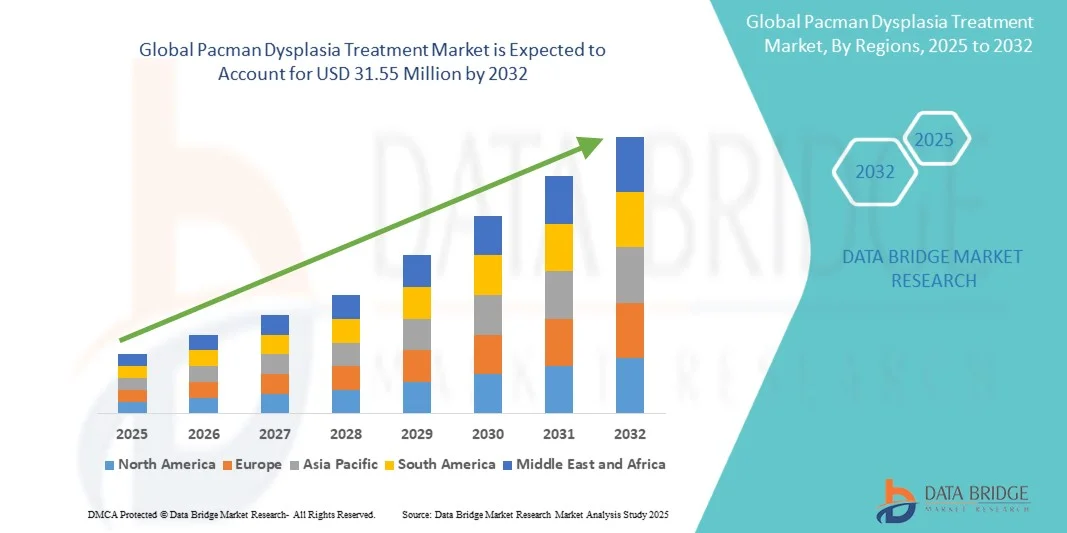
- The global pacman dysplasia treatment market size was valued at USD 22.47 million in 2024 and is expected to reach USD 31.55 million by 2032, at a CAGR of 4.33% during the forecast period
- The market growth is largely fueled by the growing adoption and technological progress within connected healthcare solutions and advanced treatment modalities, leading to increased awareness and accessibility of pacman dysplasia therapies in clinical settings
- Furthermore, rising patient demand for effective, safe, and targeted treatment options is establishing pacman dysplasia therapies as the preferred standard of care. These converging factors are accelerating the uptake of pacman dysplasia treatment solutions, thereby significantly boosting the industry's growth
Pacman Dysplasia Treatment Market Analysis
- Pacman Dysplasia Treatment, encompassing medical interventions and therapies, is increasingly critical in improving patient outcomes and quality of life, due to advancements in diagnostics, personalized care, and treatment protocols
- The escalating demand for pacman dysplasia treatment is primarily fueled by increasing awareness of the disease, rising prevalence of genetic disorders, and growing access to advanced healthcare facilities globally
- North America dominated the pacman dysplasia treatment market with the largest revenue share of 42% in 2024, supported by advanced healthcare infrastructure, early adoption of novel therapies, high healthcare expenditure, and strong presence of key pharmaceutical and medical device players. The U.S. experienced substantial growth in hospital and outpatient treatment centers, driven by innovations in therapy protocols and patient care solutions
- Asia-Pacific is expected to be the fastest-growing region in the Pacman Dysplasia Treatment market during the forecast period, with a CAGR fueled by rising healthcare access, increasing disposable incomes, and expansion of specialized treatment centers in countries such as India, China, and Japan
- The injectable segment held the largest market revenue share of 46.5% in 2024, driven by its ability to deliver precise dosing and rapid therapeutic effects. Hospitals and specialty clinics prefer injectable therapies for their reliability in severe cases and controlled administration under medical supervision
Report Scope and Pacman Dysplasia Treatment Market Segmentation
|
Attributes |
Pacman Dysplasia Treatment Key Market Insights |
|
Segments Covered |
|
|
Countries Covered |
North America
Europe
Asia-Pacific
Middle East and Africa
South America
|
|
Key Market Players |
|
|
Market Opportunities |
|
|
Value Added Data Infosets |
In addition to the insights on market scenarios such as market value, growth rate, segmentation, geographical coverage, and major players, the market reports curated by the Data Bridge Market Research also include in-depth expert analysis, pricing analysis, brand share analysis, consumer survey, demography analysis, supply chain analysis, value chain analysis, raw material/consumables overview, vendor selection criteria, PESTLE Analysis, Porter Analysis, and regulatory framework. |
Pacman Dysplasia Treatment Market Trends
“Enhanced Convenience and Accessibility in Pacman Dysplasia Treatment”
- A significant and accelerating trend in the global pacman dysplasia treatment market is the growing availability of patient-centric, easy-to-administer therapies that improve treatment adherence and overall quality of care. This trend is enhancing convenience for both patients and healthcare providers in clinical and homecare settings
- For instance, novel oral or injectable therapies allow patients to receive treatment with minimal hospital visits, while specialized care programs provide clear guidance and support for families managing this rare genetic disorder
- Treatment innovations are also enabling personalized dosing and monitoring protocols, helping clinicians optimize therapy effectiveness and reduce potential side effects. Patient support platforms further facilitate timely reminders, adherence tracking, and virtual consultations, improving treatment outcomes
- The integration of therapies with broader healthcare support systems enables centralized management of patient care, allowing doctors and caregivers to monitor multiple aspects of the patient’s condition—such as growth, mobility, and bone health—through a single coordinated approach
- This trend towards more accessible, patient-friendly, and coordinated treatment solutions is fundamentally reshaping expectations in rare disease care. Consequently, companies such as QED Therapeutics, PAQ Therapeutics, and EIT Health are developing treatments and patient support programs that streamline therapy administration and improve overall disease management
- The demand for convenient, effective, and well-supported Pacman Dysplasia treatment solutions is growing rapidly across both hospital and homecare settings, as patients and caregivers increasingly prioritize therapies that combine efficacy with ease of use
Pacman Dysplasia Treatment Market Dynamics
Driver
“Growing Need Due to Rising Awareness and Treatment Adoption”
- The increasing prevalence of Pacman Dysplasia cases, combined with rising awareness among healthcare providers and patients, is a significant driver for the heightened demand for advanced treatment options
- For instance, in April 2024, a leading pharmaceutical company announced the development of a new therapeutic protocol aimed at improving patient outcomes for rare skeletal dysplasias, highlighting innovation in treatment strategies for Pacman Dysplasia. Such initiatives by key players are expected to drive the market growth over the forecast period
- As physicians and caregivers become more aware of the benefits of early intervention, treatment options such as targeted medication, surgical interventions, and specialized therapies are gaining prominence, providing better management of symptoms and long-term quality of life
- Furthermore, the growing availability of clinical guidelines and specialized treatment centers is enabling more effective disease management, improving patient compliance and outcomes
- The combination of increased awareness, improved diagnostic capabilities, and a focus on personalized treatment plans is propelling the adoption of Pacman Dysplasia therapies across both pediatric and adult populations. Expansion of healthcare infrastructure in developing regions further contributes to the market’s growth
Restraint/Challenge
“Challenges Due to High Treatment Costs and Limited Access”
- The high cost of advanced treatment options for pacman dysplasia poses a significant challenge to broader market adoption. specialized therapies, surgical interventions, and long-term care often require substantial financial investment, limiting accessibility for some patients
- In addition, the rarity of the disease results in limited availability of expert care centers and specialized healthcare providers in certain regions, particularly in low- and middle-income countries
- Addressing these challenges through initiatives such as government support programs, insurance coverage expansion, and patient assistance initiatives is crucial for improving access. Pharmaceutical and healthcare companies are increasingly collaborating with hospitals and clinics to establish dedicated treatment centers and educational programs for caregivers
- The development of cost-effective therapeutic solutions and the introduction of innovative delivery methods can further enhance accessibility, especially in underserved regions
- Overcoming these challenges through increased healthcare investment, patient education, and expansion of specialized treatment networks will be vital for sustained market growth in the Pacman Dysplasia Treatment market
Pacman Dysplasia Treatment Market Scope
The market is segmented on the basis of drug classification, route of administration, and end users.
• By Drug Classification
On the basis of drug classification, the Pacman Dysplasia Treatment market is segmented into anticoagulants, calcium channel blockers, antibiotics, and others. The anticoagulants segment dominated the largest market revenue share of 42.8% in 2024, driven by their critical role in managing complications associated with Pacman Dysplasia. These therapies are widely prescribed due to their proven efficacy in reducing abnormal bone resorption and minimizing skeletal deformities. Physicians and healthcare providers prefer anticoagulants for their established safety profile and ability to integrate into standard treatment protocols. The segment benefits from strong research support, clinical guidelines, and consistent patient demand, particularly in hospital and specialty clinic settings. In addition, patient adherence programs and monitoring tools have reinforced the use of anticoagulants, further strengthening market leadership. The availability of multiple formulations and dosing options also caters to diverse patient needs, enhancing convenience and treatment compliance. Overall, the anticoagulants segment remains the backbone of the Pacman Dysplasia therapeutic landscape.
The calcium channel blockers segment is anticipated to witness the fastest growth rate of 22.3% CAGR from 2025 to 2032, driven by emerging clinical evidence supporting their role in regulating abnormal calcium metabolism in Pacman Dysplasia patients. These therapies are gaining attention due to their potential to complement standard anticoagulant therapy, improving overall treatment outcomes. The segment benefits from ongoing clinical trials and new formulations that enhance patient compliance, such as oral and pediatric-friendly options. Increasing awareness among healthcare providers about combination therapy strategies is boosting adoption in hospitals and specialty clinics. Moreover, calcium channel blockers offer a targeted mechanism of action, making them attractive for personalized treatment plans. Educational initiatives and patient support programs further facilitate their uptake. The growing demand in emerging markets and enhanced availability in homecare settings contribute to accelerated growth, positioning calcium channel blockers as a key emerging segment in the Pacman Dysplasia Treatment market.
• By Route of Administration
On the basis of route of administration, the market is segmented into injectable, oral, and parenteral. The injectable segment held the largest market revenue share of 46.5% in 2024, driven by its ability to deliver precise dosing and rapid therapeutic effects. Hospitals and specialty clinics prefer injectable therapies for their reliability in severe cases and controlled administration under medical supervision. This segment also benefits from robust clinical data supporting efficacy, leading to strong physician confidence. In addition, patient monitoring programs and hospital protocols facilitate safe and effective administration of injectables. The injectable format is particularly valued in pediatric care due to its predictable pharmacokinetics and the ability to tailor doses for individual patients. Furthermore, the widespread availability of trained medical personnel and infrastructure in key markets supports the segment’s dominance. The injectable route remains the most trusted and widely adopted method for Pacman Dysplasia treatment globally.
The oral segment is expected to witness the fastest CAGR of 23.1% from 2025 to 2032, driven by patient preference for convenient, non-invasive therapies that can be self-administered at home. Oral formulations improve adherence, reduce hospital visits, and offer flexibility for long-term management. Pharmaceutical companies are focusing on developing palatable and pediatric-friendly oral options, which further enhances uptake. The segment also benefits from growing awareness campaigns and patient support programs that emphasize the ease of oral therapies. Increased accessibility through pharmacies and homecare services contributes to faster adoption. Moreover, oral therapies are being integrated into combination regimens, providing holistic treatment solutions. The convenience, reduced cost, and patient-centric nature of oral administration make this segment the fastest-growing route in the Pacman Dysplasia Treatment market.
• By End Users
On the basis of end users, the market is segmented into hospitals, homecare, specialty clinics, ambulatory surgical centers, and others. The hospitals segment accounted for the largest market revenue share of 48.6% in 2024, driven by the concentration of specialized pediatric care, clinical expertise, and treatment infrastructure. Hospitals provide centralized patient monitoring, access to trained medical professionals, and adherence to standardized treatment protocols, making them the preferred choice for Pacman Dysplasia management. High patient volumes, ongoing clinical trials, and established care pathways contribute to the segment’s dominance. Hospitals also offer integrated support services such as physiotherapy, genetic counseling, and follow-up programs, ensuring comprehensive patient care. Furthermore, reimbursement frameworks and insurance coverage for hospital-administered therapies enhance adoption. The segment benefits from consistent demand, robust physician networks, and ongoing medical education initiatives targeting rare disease management. Overall, hospitals remain the primary end-user segment in the Pacman Dysplasia Treatment market.
The homecare segment is expected to witness the fastest CAGR of 21.9% from 2025 to 2032, fueled by the growing emphasis on patient-centric care and convenience. Homecare services allow patients to receive therapies, including oral and injectable treatments, in the comfort of their homes under professional supervision. Telemedicine integration and remote monitoring tools enhance safety and adherence, making homecare increasingly attractive. Rising awareness among caregivers and patients about home-administered therapies supports rapid adoption. Companies are also providing homecare kits, instructional support, and virtual consultation services, improving treatment accessibility. Cost-effectiveness, reduced hospital dependency, and personalized care plans contribute to the accelerating growth of this segment. In addition, homecare enables broader geographical reach, particularly in emerging markets, strengthening its position as the fastest-growing end-user category in the Pacman Dysplasia Treatment market.
Pacman Dysplasia Treatment Market Regional Analysis
- North America dominated the pacman dysplasia treatment market with the largest revenue share of 42% in 2024, supported by advanced healthcare infrastructure, early adoption of novel therapies, high healthcare expenditure, and a strong presence of key pharmaceutical and medical device players
- The market experienced substantial growth in hospital and outpatient treatment centers, driven by innovations in therapy protocols, specialized care programs, and patient management solutions. Growing awareness of rare skeletal dysplasia conditions and improved diagnostic capabilities also contributed to the strong market performance in the region
- In addition, robust government initiatives and funding for rare disease research further strengthened North America’s position as the leading market
U.S. Pacman Dysplasia Treatment Market Insight
The U.S. pacman dysplasia treatment market captured the largest revenue share within North America in 2024, driven by increasing adoption of advanced therapies and treatment protocols across hospitals and specialty clinics. Healthcare providers are emphasizing early diagnosis and personalized treatment plans to improve patient outcomes. Moreover, the expansion of specialized treatment centers, combined with the availability of innovative surgical and pharmacological interventions, is propelling the market’s growth. Increasing patient awareness and collaboration between healthcare institutions and pharmaceutical companies are also significant contributors to the U.S. market expansion.
Europe Pacman Dysplasia Treatment Market Insight
The Europe pacman dysplasia treatment market is projected to expand at a substantial CAGR throughout the forecast period, primarily driven by growing awareness about rare skeletal dysplasia disorders and increasing investment in healthcare infrastructure. Countries such as Germany, France, and the U.K. are witnessing enhanced adoption of advanced diagnostic methods and treatment protocols. Rising urbanization, increased access to specialized clinics, and supportive healthcare policies promoting rare disease management are further driving the region’s growth. Europe continues to see significant opportunities across both hospital and outpatient settings, particularly in countries with well-established healthcare systems.
U.K. Pacman Dysplasia Treatment Market Insight
The U.K. pacman dysplasia treatment market is anticipated to grow at a noteworthy CAGR during the forecast period, fueled by rising awareness of rare skeletal dysplasias and increased adoption of advanced therapeutic interventions. Expansion of specialty clinics and better access to novel therapies are improving treatment outcomes. Moreover, government support programs and healthcare initiatives focusing on rare disorders are encouraging wider adoption of treatment solutions across both pediatric and adult populations in the country.
Germany Pacman Dysplasia Treatment Market Insight
The Germany pacman dysplasia treatment market is expected to expand at a considerable CAGR during the forecast period, supported by increasing awareness of rare skeletal disorders and the demand for technologically advanced treatment solutions. Germany’s well-developed healthcare infrastructure and emphasis on innovation and patient-centered care are promoting the adoption of novel therapies in both hospital and outpatient settings. Integration of advanced diagnostic protocols and personalized treatment plans is also becoming increasingly prevalent, with a strong focus on improving patient outcomes and quality of life.
Asia-Pacific Pacman Dysplasia Treatment Market Insight
The Asia-Pacific pacman dysplasia treatment market is expected to grow at the fastest CAGR during the forecast period, driven by rising healthcare access, increasing disposable incomes, and the expansion of specialized treatment centers in countries such as India, China, and Japan. Governments in the region are investing in rare disease awareness and healthcare infrastructure, supporting early diagnosis and treatment adoption. The growing number of hospitals and specialty clinics, combined with the introduction of innovative therapeutic solutions, is further accelerating market growth.
Japan Pacman Dysplasia Treatment Market Insight
The Japan pacman dysplasia treatment market is gaining momentum due to rapid urbanization, a high standard of healthcare infrastructure, and a focus on advanced treatment options. The market is supported by increasing awareness of rare skeletal dysplasias and the availability of specialized treatment centers offering both surgical and pharmacological interventions. Collaboration between healthcare providers and pharmaceutical companies for improved therapy protocols is further driving growth, particularly in hospital and outpatient settings.
China Pacman Dysplasia Treatment Market Insight
The China pacman dysplasia treatment market accounted for a significant share of the Asia-Pacific region in 2024, attributed to rising healthcare access, a growing middle class, and increased awareness of rare skeletal disorders. Expansion of specialized treatment centers, adoption of advanced diagnostic and therapeutic techniques, and government support initiatives for rare diseases are key factors driving market growth. Rising healthcare expenditure and urbanization are also contributing to the increasing accessibility and adoption of innovative treatments for Pacman Dysplasia in China.
Pacman Dysplasia Treatment Market Share
The Pacman Dysplasia Treatment industry is primarily led by well-established companies, including:
- QED Therapeutics (U.S.)
- PAQ Therapeutics (U.S.)
- EIT Health (Germany)
Latest Developments in Pacman Dysplasia Treatment Market
- In July 2021, PAQ Therapeutics, a U.S.-based biotech startup, secured USD30 million in financing to advance its research on "Pac-Man" drugs designed to target and degrade disease-causing cellular components. While the initial focus was on neurodegenerative disorders, the company's innovative approach has potential applications in treating rare skeletal dysplasias, including Pacman Dysplasia
- In August 2023, Tyra Biosciences announced that its experimental compound, TYRA-300, demonstrated positive preclinical results in treating achondroplasia and hypochondroplasia, conditions related to skeletal dysplasias. The company plans to initiate clinical trials to further evaluate the safety and efficacy of TYRA-300 in these patient populations
- In September 2023, Tyra Biosciences presented oral presentations on TYRA-300 for achondroplasia at the ASBMR and ASHG 2023 Annual Meetings. These presentations highlighted the potential of TYRA-300 as an oral FGFR3 selective inhibitor for treating skeletal dysplasias
- In October 2023, the FDA approved the supplemental New Drug Application (sNDA) for vosoritide (VOXZOGO) to increase linear growth in pediatric patients under 5 years of age with achondroplasia. This approval expands the use of VOXZOGO to a younger patient population, offering a new treatment option for early intervention in skeletal dysplasias
- In May 2025, PAQ Therapeutics secured USD39 million in Series B financing and initiated a Phase 1 trial for its novel approach addressing KRAS-driven cancers. While not directly related to Pacman Dysplasia, the company's advancements in targeted therapies may have implications for the treatment of rare diseases, including skeletal dysplasias

- Interactive Data Analysis Dashboard
- Company Analysis Dashboard for high growth potential opportunities
- Research Analyst Access for customization & queries
- Competitor Analysis with Interactive dashboard
- Latest News, Updates & Trend analysis
- Harness the Power of Benchmark Analysis for Comprehensive Competitor Tracking
Data collection and base year analysis are done using data collection modules with large sample sizes. The stage includes obtaining market information or related data through various sources and strategies. It includes examining and planning all the data acquired from the past in advance. It likewise envelops the examination of information inconsistencies seen across different information sources. The market data is analysed and estimated using market statistical and coherent models. Also, market share analysis and key trend analysis are the major success factors in the market report. To know more, please request an analyst call or drop down your inquiry.
The key research methodology used by DBMR research team is data triangulation which involves data mining, analysis of the impact of data variables on the market and primary (industry expert) validation. Data models include Vendor Positioning Grid, Market Time Line Analysis, Market Overview and Guide, Company Positioning Grid, Patent Analysis, Pricing Analysis, Company Market Share Analysis, Standards of Measurement, Global versus Regional and Vendor Share Analysis. To know more about the research methodology, drop in an inquiry to speak to our industry experts.
Data Bridge Market Research is a leader in advanced formative research. We take pride in servicing our existing and new customers with data and analysis that match and suits their goal. The report can be customized to include price trend analysis of target brands understanding the market for additional countries (ask for the list of countries), clinical trial results data, literature review, refurbished market and product base analysis. Market analysis of target competitors can be analyzed from technology-based analysis to market portfolio strategies. We can add as many competitors that you require data about in the format and data style you are looking for. Our team of analysts can also provide you data in crude raw excel files pivot tables (Fact book) or can assist you in creating presentations from the data sets available in the report.












