


Panhypopituitarism X-linked Market Overview
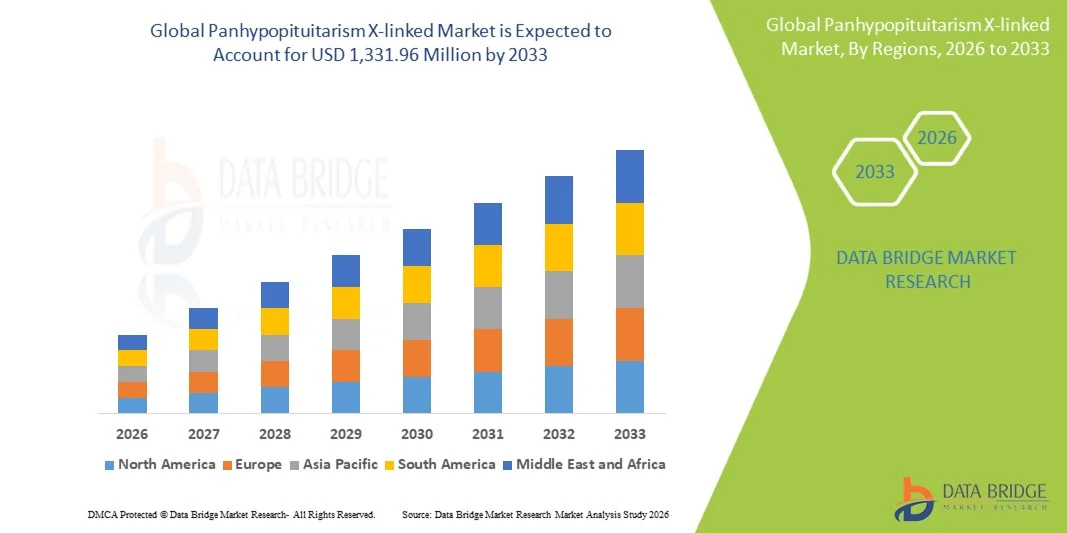
The Panhypopituitarism X-linked Market was valued at USD 871.2 million in 2025 and is projected to reach USD 1,331.96 million by 2033, growing at a CAGR of 5.45% from 2026 to 2033. Market growth is supported by rising awareness of rare endocrine genetic disorders, advances in genetic testing technologies, expanding neonatal and pediatric screening programs, and increasing adoption of precision medicine approaches.
The growing availability of next-generation sequencing (NGS) and array-based technologies is enabling earlier and more accurate diagnosis of X-linked panhypopituitarism, facilitating timely hormone replacement therapy and improving patient outcomes. Ongoing clinical research into gene therapy and novel hormone formulations, alongside standardization of diagnostic protocols across endocrinology, genetics, and pediatric specialty centers, is creating new opportunities for stakeholders. In addition, digital health platforms and telemedicine models are improving access to specialist consultations and adherence monitoring, further driving market expansion over the forecast period.
Key Market Trends & Insights
- North America dominated the Panhypopituitarism X-linked Market with the largest revenue share of 41.2% in 2025, supported by advanced genetic testing infrastructure, high rare disease awareness, and integrated endocrinology-genetics care pathways.
- Asia-Pacific is expected to be the fastest-growing region at a CAGR of 7.8% from 2026 to 2033, driven by expanding access to genetic diagnostics, growing awareness of congenital hypopituitarism, and increased utilization of pediatric endocrine services.
- The Endocrine & Metabolism Diseases segment led the market with a 38.5% market share in 2025, reflecting the core diagnostic and therapeutic focus on pituitary hormone deficiencies and related metabolic sequelae.
- The Next-Generation Sequencing (NGS) segment is anticipated to be the fastest-growing technology category, driven by increased adoption of comprehensive genetic panels and whole-exome sequencing for rare pituitary disorders.
- The Hospital Pharmacy segment dominated the distribution channel category with a 52.3% market share in 2025, supported by centralized specialty drug dispensing, multidisciplinary care coordination, and management of complex hormone replacement regimens.
- The Molecular Genetic Tests segment accounted for the largest share of the specialty category with a market share of 58.7% in 2025, reflecting the central role of DNA-based diagnostics in confirming X-linked mutations and guiding personalized treatment.
Market Size & Forecast
- Global Market Value (2025): USD 871.2 Million
- Expected Market Value (2033): USD 1331.96 Million
- Forecast CAGR (2026–2033): 5.45%
- Leading Region in 2025: North America
- Fastest Growing Region: Asia-Pacific
Report Scope and Panhypopituitarism X-linked Market Segmentation
|
Attributes |
Panhypopituitarism X-linked Key Market Insights |
|
Segments Covered |
|
|
Countries Covered |
North America · U.S. · Canada · Mexico Europe · Germany · France · U.K. · Netherlands · Switzerland · Belgium · Russia · Italy · Spain · Turkey · Rest of Europe Asia-Pacific · China · Japan · India · South Korea · Singapore · Malaysia · Australia · Thailand · Indonesia · Philippines · Rest of Asia-Pacific Middle East and Africa · Saudi Arabia · U.A.E. · South Africa · Egypt · Israel · Rest of Middle East and Africa South America · Brazil · Argentina · Rest of South America |
|
Key Market Players |
· Pfizer Inc. (U.S.) · Novo Nordisk A/S (Denmark) · Eli Lilly and Company (U.S.) · Merck KGaA (Germany) · Ipsen Pharma (France) · Ascendis Pharma A/S (Denmark) · OPKO Health, Inc. (U.S.) · Ferring Pharmaceuticals (Switzerland) · Teva Pharmaceutical Industries Ltd. (Israel) · Sandoz International GmbH (Switzerland) · Illumina, Inc. (U.S.) · Thermo Fisher Scientific Inc. (U.S.) · Agilent Technologies, Inc. (U.S.) · QIAGEN N.V. (Germany) · PerkinElmer, Inc. (U.S.) |
|
Market Opportunities |
· Standardization of genetic testing algorithms and newborn screening protocols for X-linked pituitary disorders across pediatric endocrinology and genetics · Growth in NGS-based comprehensive panels and long-acting hormone replacement therapies supported by precision medicine frameworks |
|
Value Added Data Infosets |
In addition to the insights on market scenarios such as market value, growth rate, segmentation, geographical coverage, and major players, the market reports curated by the Data Bridge Market Research also include depth expert analysis, patient epidemiology, pipeline analysis, pricing analysis, and regulatory framework. |
Panhypopituitarism X-linked Market Trends
Trend: Adoption of Comprehensive Genetic Diagnostics and Precision Medicine
Clinical pathways increasingly prioritize early genetic testing via NGS-based panels and whole-exome sequencing to confirm X-linked panhypopituitarism mutations (e.g., SOX3, IGSF1, and others), enabling timely initiation of hormone replacement and personalized management. Pediatric endocrinology and genetics departments are aligning protocols to differentiate X-linked forms from other causes of combined pituitary hormone deficiency, reducing diagnostic delays and optimizing therapeutic outcomes. Educational initiatives in endocrinology and medical genetics emphasize genotype-phenotype correlation to guide treatment intensity and family counseling.
For instance,
Recent clinical genetics resources and academic consortia have strengthened recognition of X-linked panhypopituitarism phenotypes through expanded neonatal screening and standardized molecular diagnostic workflows, supporting faster diagnosis and appropriate hormone replacement.
In addition, specialty literature underscores the clinical utility of NGS panels for identifying causative mutations, improving outcomes with early growth hormone and thyroid hormone supplementation, and informing genetic counseling for affected families.
Panhypopituitarism X-linked Market Dynamics
Key Market Driver: Rising Awareness and Advances in Genetic Testing Technologies
Increasing recognition of rare congenital pituitary disorders, combined with the expanding availability of NGS and array-based diagnostic platforms, is elevating case identification and enabling earlier, more accurate diagnosis. Wider adoption of newborn screening programs and comprehensive genetic panels in tertiary care centers is accelerating treatment initiation and improving long-term patient outcomes.
For instance,
Genetic testing consortia and pediatric endocrine networks have documented rising utilization of NGS-based panels for combined pituitary hormone deficiency, supporting timely hormone replacement and reducing diagnostic odysseys in affected families. In conclusion, advancements in genetic diagnostics and screening programs are improving early detection, enabling timely intervention, and enhancing patient outcomes.
Key Restraint/Challenge: Underdiagnosis and Variable Access to Genetic Testing
X-linked panhypopituitarism remains underdiagnosed due to phenotypic overlap with other causes of hypopituitarism, limited awareness among non-specialist clinicians, and variable access to advanced genetic testing. Inconsistent insurance coverage for genetic diagnostics and hormone replacement therapies in some regions can delay diagnosis and treatment.
For instance,
Reports emphasize that many patients with congenital hypopituitarism experience prolonged diagnostic delays, particularly in regions lacking access to NGS or specialized endocrine-genetics centers, contributing to suboptimal outcomes. In conclusion, limited diagnostic access and awareness continue to hinder timely detection, emphasizing the need for broader genetic testing availability.
Key Market Opportunity: Expansion of Neonatal Screening and Long-Acting Hormone Therapies
Growth in newborn screening programs incorporating pituitary hormone panels and the development of long-acting growth hormone and thyroid hormone formulations are expanding the treatable patient population and improving adherence. Integration of digital health platforms for remote monitoring and telemedicine consultations is further enhancing care access.
For instance,
Clinical development pipelines document the advancement of weekly or monthly growth hormone formulations and novel thyroid hormone delivery systems, supporting improved quality of life and reducing treatment burden for patients with X-linked panhypopituitarism. In conclusion, advancements in screening, long-acting therapies, and digital health solutions are improving treatment adherence, accessibility, and patient outcomes.
Panhypopituitarism X-linked Market Scope
The Panhypopituitarism X-linked market is segmented on the basis of disease type, technology, specialty, and distribution channel.
By Disease Type
On the basis of disease type, the Panhypopituitarism X-linked Market is segmented into neurological disorders, immunological disorders, hematology diseases, endocrine & metabolism diseases, cancer, musculoskeletal disorders, cardiovascular disorders (CVDs), dermatology disease, and others. The Endocrine & Metabolism Diseases segment dominated the market with a 38.5% market share in 2025, reflecting the core diagnostic and therapeutic focus on pituitary hormone deficiencies and related metabolic sequelae in X-linked panhypopituitarism. Strong physician awareness, established hormone replacement protocols, and robust clinical guideline support have contributed to its extensive use across pediatric endocrinology, genetics, and tertiary care settings.
The Neurological Disorders segment is expected to witness strong growth from 2026 to 2033, driven by increasing recognition of neurodevelopmental comorbidities in X-linked panhypopituitarism, rising utilization of neuroimaging, and improved integration of neurology and endocrinology care pathways.
By Technology
On the basis of technology, the Panhypopituitarism X-linked Market is segmented into Next-Generation Sequencing (NGS), Array Technology, PCR-based Testing, FISH, Sanger Sequencing, and Karyotyping. The Next-Generation Sequencing (NGS) segment dominated the market with a 42.6% market share in 2025, reflecting its central role in comprehensive genetic diagnosis of X-linked panhypopituitarism and related rare pituitary disorders. High diagnostic yield, declining sequencing costs, and increasing availability of targeted gene panels and whole-exome sequencing have supported strong adoption across academic medical centers and reference laboratories.
The Array Technology segment is expected to witness robust growth from 2026 to 2033, driven by expanding use of chromosomal microarray analysis for copy number variant detection, integration with NGS workflows, and rising demand for complementary diagnostic modalities in complex cases.
By Specialty
On the basis of specialty, the Panhypopituitarism X-linked Market is segmented into Molecular Genetic Tests, Chromosomal Genetic Tests, and Biochemical Genetic Tests. The molecular genetic tests segment dominated the market with a 58.7% market share in 2025, driven by the central role of DNA-based diagnostics in confirming X-linked mutations and guiding personalized hormone replacement therapy. High clinical utility, rapid turnaround times, and integration with electronic health records have supported strong adoption across genetics and endocrinology specialty centers.
The Chromosomal Genetic Tests segment is expected to witness steady growth during 2026–2033, supported by increasing use of karyotyping and FISH for detecting structural chromosomal abnormalities and complementing molecular findings in atypical presentations.
By Distribution Channel
On the basis of distribution channel, the market is segmented into Hospital Pharmacy, Retail Pharmacy, Online Pharmacies, and Others. The Hospital Pharmacy segment dominated the market with a 52.3% market share in 2025, primarily due to the concentration of specialty drug dispensing within hospital-based treatment pathways. Hospitals serve as key centers for diagnosis, genetic testing, specialist consultations, and initiation of hormone replacement therapy, resulting in higher dispensing volumes of growth hormone, thyroid hormone, and other pituitary hormone therapies. The segment also benefits from integrated patient management and immediate access to medications following diagnosis.
The Online Pharmacies segment is expected to record the fastest growth during 2026–2033, driven by increasing digital healthcare adoption, expanding e-pharmacy platforms, greater convenience in prescription refills, competitive pricing, home delivery services, and growing patient preference for remote medication access and chronic disease management solutions.
Panhypopituitarism X-linked Market Regional Analysis
North America dominated the Panhypopituitarism X-linked market with a revenue share of 41.2% in 2025, supported by advanced genetic testing infrastructure, high rare disease awareness, integrated endocrinology-genetics care networks, and favorable reimbursement for specialty diagnostics and hormone replacement therapies. Strong clinical research activity and established newborn screening programs further support market leadership.
U.S. Panhypopituitarism X-linked Market Insight
The U.S. panhypopituitarism X-linked market benefits from widespread NGS capacity in academic medical centers and reference laboratories, facilitating timely diagnosis and personalized hormone replacement. Large health systems and pediatric endocrine centers are expanding genetic testing panels and telemedicine consultations, enabling rapid identification and management of affected patients.
Europe Panhypopituitarism X-linked Market Insight
The Europe panhypopituitarism X-linked market remains a major contributor, with strong hospital-based genetic testing access and growing adoption of NGS-based diagnostics in public and private pediatric endocrine and genetics clinics. Cross-disciplinary guidelines and continuous medical education in endocrinology and genetics are improving diagnostic accuracy and reducing time-to-treatment.
U.K. Panhypopituitarism X-linked Market Insight
The U.K. panhypopituitarism X-linked market's integration of genetic testing within NHS rare disease pathways supports early diagnosis of X-linked pituitary disorders, while pathway-based escalation to hormone replacement improves outcomes and resource utilization.
Germany Panhypopituitarism X-linked Market Insight
The Germany panhypopituitarism X-linked market's robust genetics and endocrinology networks facilitate comprehensive diagnostic workup and outpatient hormone therapy services, with growing emphasis on standardized protocols for congenital hypopituitarism that shorten time-to-treatment and reduce hospital stays.
Asia-Pacific Panhypopituitarism X-linked Market Insight
The Asia-Pacific panhypopituitarism X-linked market is poised for rapid growth with a CAGR of 7.8% during the forecast period, driven by expanding genetic testing capacity, rising rare disease awareness, and broader adoption of pediatric endocrine services. Private specialty centers in countries such as China and India are increasing access to NGS-based diagnostics and structured follow-up care.
Japan Panhypopituitarism X-linked Market Insight
The Japan panhypopituitarism X-linked market's advanced genetic testing infrastructure and pediatric endocrinology ecosystem support early identification and comprehensive hormone replacement, with strong patient adherence to stepwise therapy and monitoring protocols.
China Panhypopituitarism X-linked Market Insight
The China panhypopituitarism X-linked market is experiencing rapid growth in genetic diagnostics and specialty endocrine services, enabling wider use of NGS panels for rare pituitary disorders and improving referral pathways between primary care, genetics, and pediatric endocrinology.
Panhypopituitarism X-linked Market Share
The panhypopituitarism X-linked industry is primarily led by well-established companies, including:
- Pfizer Inc. (U.S.)
- Novo Nordisk A/S (Denmark)
- Eli Lilly and Company (U.S.)
- Merck KGaA (Germany)
- Ipsen Pharma (France)
- Ascendis Pharma A/S (Denmark)
- OPKO Health, Inc. (U.S.)
- Ferring Pharmaceuticals (Switzerland)
- Teva Pharmaceutical Industries Ltd. (Israel)
- Sandoz International GmbH (Switzerland)
- Illumina, Inc. (U.S.)
- Thermo Fisher Scientific Inc. (U.S.)
- Agilent Technologies, Inc. (U.S.)
- QIAGEN N.V. (Germany)
- PerkinElmer, Inc. (U.S.)
Latest Developments in Panhypopituitarism X-linked Market
- In January 2024, Ascendis Pharma A/S received expanded FDA approval for TransCon hGH (lonapegsomatropin) for pediatric growth hormone deficiency, supporting broader use in congenital hypopituitarism including X-linked forms.
- In March 2024, Novo Nordisk A/S announced Phase III data for once-weekly somapacitan (Sogroya) in pediatric patients with growth hormone deficiency, demonstrating non-inferiority to daily growth hormone and improved adherence.
- In June 2023, Pfizer Inc. expanded global supply agreements for Genotropin (somatropin), increasing access to daily growth hormone replacement in rare pituitary disorders.
- In September 2023, Illumina, Inc launched updated comprehensive rare disease NGS panel including expanded coverage of pituitary transcription factor genes (SOX3, PROP1, HESX1, others) for congenital hypopituitarism.
- In November 2023, Thermo Fisher Scientific Inc. introduced Ion Torrent Genexus Dx System enhancements for rapid genetic testing in rare endocrine disorders, reducing turnaround time for molecular diagnosis.

- Interactive Data Analysis Dashboard
- Company Analysis Dashboard for high growth potential opportunities
- Research Analyst Access for customization & queries
- Competitor Analysis with Interactive dashboard
- Latest News, Updates & Trend analysis
- Harness the Power of Benchmark Analysis for Comprehensive Competitor Tracking
Data collection and base year analysis are done using data collection modules with large sample sizes. The stage includes obtaining market information or related data through various sources and strategies. It includes examining and planning all the data acquired from the past in advance. It likewise envelops the examination of information inconsistencies seen across different information sources. The market data is analysed and estimated using market statistical and coherent models. Also, market share analysis and key trend analysis are the major success factors in the market report. To know more, please request an analyst call or drop down your inquiry.
The key research methodology used by DBMR research team is data triangulation which involves data mining, analysis of the impact of data variables on the market and primary (industry expert) validation. Data models include Vendor Positioning Grid, Market Time Line Analysis, Market Overview and Guide, Company Positioning Grid, Patent Analysis, Pricing Analysis, Company Market Share Analysis, Standards of Measurement, Global versus Regional and Vendor Share Analysis. To know more about the research methodology, drop in an inquiry to speak to our industry experts.
Data Bridge Market Research is a leader in advanced formative research. We take pride in servicing our existing and new customers with data and analysis that match and suits their goal. The report can be customized to include price trend analysis of target brands understanding the market for additional countries (ask for the list of countries), clinical trial results data, literature review, refurbished market and product base analysis. Market analysis of target competitors can be analyzed from technology-based analysis to market portfolio strategies. We can add as many competitors that you require data about in the format and data style you are looking for. Our team of analysts can also provide you data in crude raw excel files pivot tables (Fact book) or can assist you in creating presentations from the data sets available in the report.












