


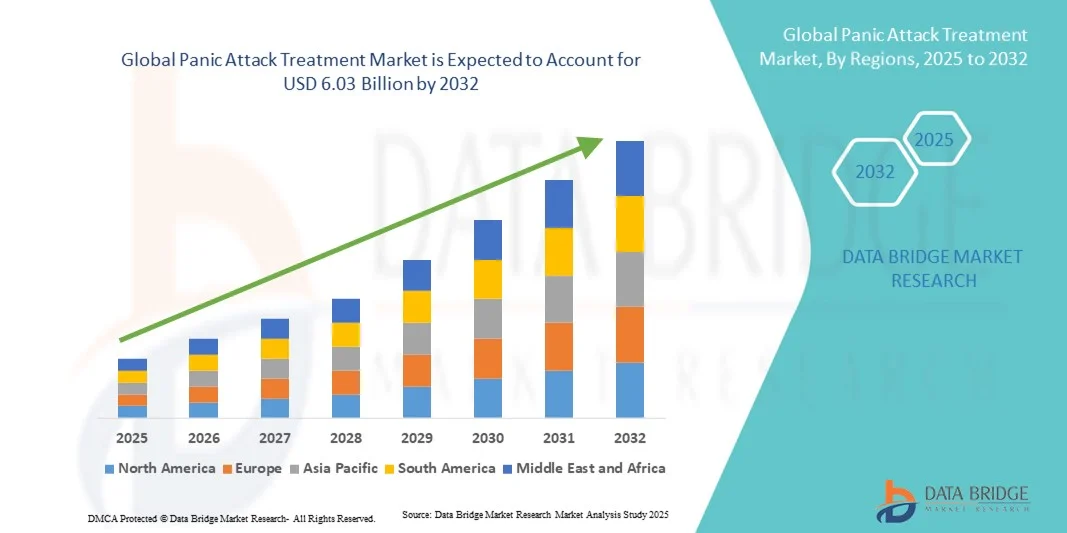
Panic Attack Treatment Market Size
- The global panic attack treatment market size was valued at USD 3.54 billion in 2024 and is expected to reach USD 6.03 billion by 2032, at a CAGR of 6.90 % during the forecast period
- The market growth is largely fueled by the rising prevalence of anxiety disorders, stress-related conditions, and mental health awareness, driving demand for effective Panic Attack treatment solutions
- Furthermore, advancements in pharmacological therapies, cognitive behavioral therapy (CBT), and digital mental health interventions, along with growing awareness among patients and healthcare providers, are accelerating the uptake of panic attack treatment solutions, thereby significantly boosting the industry's growth
Panic Attack Treatment Market Analysis
- The Panic Attack Treatment market is witnessing steady growth globally, driven by increasing awareness of mental health disorders, rising prevalence of anxiety-related conditions, and the growing adoption of evidence-based therapeutic interventions
- Improved access to healthcare services, telemedicine platforms, and patient support programs further support market expansion
- North America dominated the panic attack treatment market with the largest revenue share of 46.5% in 2024, fueled by advanced healthcare infrastructure, early adoption of mental health services, and robust investments in research and therapy development. The U.S. shows substantial growth in panic attack diagnosis and treatment, supported by initiatives promoting mental well-being, digital therapy platforms, and insurance coverage for counseling services
- Asia-Pacific is expected to be the fastest growing region in the panic attack treatment market during the forecast period, with a CAGR, driven by rising urbanization, increasing disposable incomes, greater mental health awareness, and expanding access to both pharmacological and non-pharmacological interventions. Countries such as India, China, and Japan are witnessing enhanced adoption of therapy services, telemedicine consultations, and mobile mental health applications
- The Oral segment dominated the largest market revenue share of 45.7% in 2024, driven by convenience, patient compliance, and widespread availability of oral medications such as SSRIs and benzodiazepines
Report Scope and Panic Attack Treatment Market Segmentation
|
Attributes |
Panic Attack Treatment Key Market Insights |
|
Segments Covered |
|
|
Countries Covered |
North America
Europe
Asia-Pacific
Middle East and Africa
South America
|
|
Key Market Players |
|
|
Market Opportunities |
|
|
Value Added Data Infosets |
In addition to the insights on market scenarios such as market value, growth rate, segmentation, geographical coverage, and major players, the market reports curated by the Data Bridge Market Research also include in-depth expert analysis, pricing analysis, brand share analysis, consumer survey, demography analysis, supply chain analysis, value chain analysis, raw material/consumables overview, vendor selection criteria, PESTLE Analysis, Porter Analysis, and regulatory framework. |
Panic Attack Treatment Market Trends
Enhanced Convenience Through Technological Integration
- A significant and accelerating trend in the global panic attack treatment market is the increasing adoption of digital health platforms, mobile monitoring apps, and connected therapeutic devices. This integration of technologies is significantly enhancing patient convenience, self-management, and real-time monitoring of symptoms
- For instance, certain mobile-based panic attack treatment applications now provide guided breathing exercises, cognitive behavioral therapy modules, and progress tracking, enabling patients to manage episodes effectively in real time. Similarly, wearable devices can monitor physiological markers such as heart rate and stress levels, offering discreet support and early alerts to prevent escalation of panic episodes
- Integration with cloud-based platforms allows healthcare providers to access patient data securely, enabling personalized treatment adjustments and continuous care. For instance, some platforms enable therapists to send tailored exercises and coping strategies based on real-time patient metrics, increasing engagement and treatment efficacy
- The seamless integration of these digital tools with broader healthcare systems facilitates centralized management of patient data, adherence tracking, and outcome analysis. Through a single interface, clinicians can monitor multiple patients, identify trends, and optimize therapeutic interventions, creating a more structured and responsive care environment
- This trend towards more intelligent, interconnected, and patient-centric treatment solutions is fundamentally reshaping expectations for mental health management. Consequently, companies such as Mindstrong and Happify Health are developing digital platforms with features such as personalized therapy modules, automated progress tracking, and interactive exercises
- The demand for connected, digitally enabled panic attack treatment solutions is growing rapidly across both clinical and homecare settings, as patients increasingly prioritize convenience, accessibility, and evidence-based self-management tools
Panic Attack Treatment Market Dynamics
Driver
Growing Need Due to Rising Mental Health Awareness and Technological Adoption
- The increasing prevalence of anxiety disorders and heightened awareness of mental health issues among the general population is a significant driver for the growing adoption of digital Panic Attack Treatment solutions
- For instance, in April 2024, Pear Therapeutics launched an updated version of its digital therapy platform for anxiety disorders, integrating biofeedback and interactive cognitive exercises. Such strategies by key companies are expected to drive the Panic Attack Treatment market growth during the forecast period
- As patients and caregivers seek effective, convenient, and non-invasive treatment options, digital platforms offer remote monitoring, personalized therapy, and structured intervention plans, providing a compelling alternative to traditional clinical-only care
- Furthermore, the growing popularity of mobile health technologies and telemedicine platforms is making connected treatment solutions an integral part of mental healthcare, offering seamless integration with existing therapy programs
- The convenience of on-demand therapy sessions, real-time symptom tracking, and access to professional guidance are key factors propelling the adoption of these solutions in both clinical and homecare settings. The trend toward patient self-management and increasing availability of user-friendly platforms further contributes to market growth
Restraint/Challenge
Concerns Regarding Data Privacy, Security, and Accessibility Costs
- Concerns surrounding data privacy and security of digital health platforms pose a significant challenge to broader market penetration. As these solutions rely on cloud-based storage and software, they are susceptible to unauthorized access and data breaches, raising anxieties among patients and caregivers regarding the confidentiality of sensitive health information
- For instance, high-profile incidents of breaches in digital health apps have made some patients hesitant to adopt connected therapy solutions
- Addressing these privacy concerns through robust encryption, secure authentication protocols, and regulatory compliance is crucial for building patient and clinician trust
- Companies such as SilverCloud Health emphasize their stringent data protection measures and security certifications to reassure users. In addition, the relatively high initial cost of certain advanced digital therapy platforms compared to conventional treatments can be a barrier for price-sensitive patients, particularly in developing regions or for low-income populations. While basic mobile apps have become more accessible, platforms offering integrated biofeedback, AI-guided interventions, or clinician oversight often come with a higher price tag
- While costs are gradually decreasing, the perceived premium for technologically advanced solutions can still hinder widespread adoption, especially for patients who do not perceive immediate benefits from enhanced features
- Overcoming these challenges through strengthened cybersecurity measures, patient education on privacy and treatment benefits, and the development of more affordable digital Panic Attack Treatment solutions will be vital for sustained market growth
Panic Attack Treatment Market Scope
The market is segmented on the basis of type, treatment, route of administration, end-users, and distribution channel.
- By Type
On the basis of type, the Panic Attack Treatment market is segmented into Spontaneous or Uncured Panic Attacks, Situationally Bound or Cured Panic Attacks, and Situationally Predisposed Panic Attacks. The Spontaneous or Uncured Panic Attacks segment dominated the largest market revenue share of 39.8% in 2024, driven by its high prevalence globally and the need for continuous therapeutic management. Patients with spontaneous attacks require regular monitoring, early diagnosis, and personalized treatment plans, making this segment the primary revenue contributor. The segment benefits from the increasing adoption of cognitive-behavioral therapies, digital monitoring apps, and clinical interventions. Growing awareness campaigns and healthcare initiatives for anxiety disorders further bolster demand. The segment is well-supported by clinical guidelines and insurance coverage in developed regions. Healthcare providers emphasize early intervention to prevent chronic progression. Telemedicine platforms are increasingly facilitating follow-ups and therapy sessions. Pharmaceutical companies focus on developing treatments tailored to spontaneous panic attack patterns. Patient preference for structured therapy sessions and evidence-based interventions also drives market growth.
The Situationally Bound or Cured Panic Attacks segment is anticipated to witness the fastest CAGR of 10.5% from 2025 to 2032, fueled by rising awareness, lifestyle changes, and the growing use of mobile-based therapy and counseling services. This segment sees high adoption due to school, workplace, and social stress triggers that can be mitigated with guided therapy and medication. Increasing mental health programs in corporate wellness and educational settings support growth. Expansion of teletherapy platforms ensures accessibility for individuals in semi-urban and remote areas. The segment also benefits from innovations in anxiety management apps that provide real-time feedback and behavioral tracking. Government initiatives promoting mental wellness contribute to higher adoption. Rising acceptance of combination therapy approaches, including short-term medication with therapy, further accelerates growth.
- By Treatment
On the basis of treatment, the Panic Attack Treatment market is segmented into Therapy and Medications. The Therapy segment dominated the largest market revenue share of 42.1% in 2024, driven by the proven effectiveness of Cognitive Behavioral Therapy (CBT), exposure therapy, and mindfulness-based interventions. Therapies provide long-term symptom control, improve coping mechanisms, and reduce relapse rates, making them a preferred option among clinicians. The growth is also supported by increasing online and app-based therapy platforms, corporate mental health initiatives, and integration into telehealth services. Evidence-based guidelines and patient preference for non-pharmacological approaches enhance adoption. Healthcare professionals encourage therapy as a first-line treatment in mild to moderate cases. Continuous training and certification programs for therapists ensure quality care. Insurance reimbursement policies support therapy sessions. Awareness campaigns highlighting therapy benefits increase patient willingness. Integration with wearable devices and mood tracking apps enhances patient engagement. Multilingual and culturally sensitive therapy programs boost regional adoption.
The Medications segment is expected to witness the fastest CAGR of 11.3% from 2025 to 2032, driven by rising demand for anxiolytic drugs, SSRIs, and combination therapies. Advancements in drug formulations with improved safety and tolerability encourage adoption. The segment benefits from expanded access through online and retail pharmacies, telemedicine prescriptions, and generic drug availability. Awareness of pharmacological options for acute attacks is increasing globally. Insurance coverage and government mental health schemes promote wider adoption. Pharmaceutical R&D focuses on developing targeted therapies for panic disorder. Emerging markets are witnessing rapid growth due to increased healthcare access. Patient preference for home-based treatment solutions supports growth. Collaboration between digital health platforms and pharmacies improves adherence.
- By Route of Administration
On the basis of route of administration, the Panic Attack Treatment market is segmented into Oral, Parenteral, and Others. The Oral segment dominated the largest market revenue share of 45.7% in 2024, driven by convenience, patient compliance, and widespread availability of oral medications such as SSRIs and benzodiazepines. Oral drugs are preferred for home-based treatment and long-term management, offering flexibility in dosing and monitoring. Telemedicine platforms allow digital prescriptions and home delivery. Clinical guidelines favor oral administration as first-line therapy. The segment is supported by growing awareness about anxiety disorders and treatment adherence. Patient preference for non-invasive treatment methods enhances adoption. Hospitals, clinics, and pharmacies stock oral formulations extensively. Ongoing research improves oral drug safety and tolerability. Marketing campaigns highlight the ease of oral therapy for panic disorder.
The Parenteral segment is expected to witness the fastest CAGR of 9.8% from 2025 to 2032, supported by hospital-based treatments, acute attack management, and specialized clinical interventions. Parenteral drugs are utilized in emergency care and severe cases requiring rapid symptom control. The segment benefits from hospital infrastructure development and growing demand for intravenous anxiolytics. Integration with clinical monitoring systems ensures safe administration. Rising awareness among healthcare providers regarding timely intervention for severe panic attacks further drives adoption. In addition, ongoing research and development in faster-acting formulations enhance the clinical effectiveness of parenteral treatments.
- By End-Users
On the basis of end-users, the Panic Attack Treatment market is segmented into Hospitals, Homecare, Specialty Clinics, and Others. The Hospitals segment dominated the largest market revenue share of 44.2% in 2024, due to the availability of comprehensive treatment programs, expert clinicians, and integration of therapy with medication management. Hospitals provide acute and chronic care for panic disorder, ensuring adherence to treatment protocols. The presence of trained psychiatrists, psychologists, and allied health professionals enhances patient outcomes. Telepsychiatry and hospital-linked homecare services support ongoing monitoring. Hospitals maintain structured treatment programs for early intervention and relapse prevention. Partnerships with digital health platforms enable remote follow-ups. Awareness campaigns conducted by hospitals improve patient trust. Hospital pharmacies ensure consistent availability of medications. Clinical trials and research conducted in hospitals strengthen evidence-based practices.
The Homecare segment is expected to witness the fastest CAGR of 10.7% from 2025 to 2032, driven by telemedicine adoption, remote therapy sessions, and convenience for patients unable to visit hospitals. Homecare solutions include online counseling, digital monitoring, and medication delivery. Growth is supported by increasing awareness, government health programs, and rising adoption of mobile mental health apps. Expanding partnerships between healthcare providers and digital platforms improve accessibility and continuity of care. Moreover, the convenience of at-home interventions encourages patient adherence, contributing to market growth.
- By Distribution Channel
On the basis of distribution channel, the Panic Attack Treatment market is segmented into Hospital Pharmacy, Online Pharmacy, and Retail Pharmacy. The Hospital Pharmacy segment dominated the largest market revenue share of 46.5% in 2024, owing to direct procurement for inpatient care, structured drug management protocols, and high-volume dispensing. Hospitals provide oversight, patient education, and adherence monitoring. Clinical teams integrate therapy and pharmacological treatments for comprehensive care. Robust supply chain networks in hospitals also ensure consistent availability of critical medications. In addition, hospitals facilitate regular follow-ups and monitoring, enhancing overall treatment outcomes.
The Online Pharmacy segment is anticipated to witness the fastest CAGR of 12.5% from 2025 to 2032, driven by increasing telemedicine adoption, e-commerce integration, and home delivery convenience. Digital prescription verification, subscription-based models, and integration with mental health apps enhance patient adherence. Remote regions benefit from faster access, and awareness campaigns on online platforms drive usage. In addition, partnerships with healthcare providers and insurance companies facilitate seamless access to medications. The growing trust in digital healthcare services and secure payment options further boost the adoption of online pharmacies.
Panic Attack Treatment Market Regional Analysis
- North America dominated the panic attack treatment market with the largest revenue share of 46.5% in 2024
- Fueled by advanced healthcare infrastructure, early adoption of mental health services, and robust investments in research and therapy development
- The market shows substantial growth in panic attack diagnosis and treatment, supported by initiatives promoting mental well-being, digital therapy platforms, and insurance coverage for counseling services
U.S. Panic Attack Treatment Market Insight
The U.S. panic attack treatment market captured the largest revenue share within North America in 2024, driven by early adoption of innovative therapy methods, widespread availability of counseling services, and growing integration of digital and telehealth platforms. Efforts to raise mental health awareness, combined with initiatives for early intervention, patient education, and structured therapy programs, further propel the growth of the Panic Attack Treatment industry.
Europe Panic Attack Treatment Market Insight
The Europe panic attack treatment market is projected to expand at a substantial CAGR throughout the forecast period, primarily driven by increasing mental health awareness, expanding healthcare infrastructure, and rising investments in clinical and therapeutic services. Growth in urbanization, coupled with government initiatives to enhance accessibility to mental health care, is fostering increased adoption of treatment options across residential, workplace, and clinical settings.
U.K. Panic Attack Treatment Market Insight
The U.K. panic attack treatment market is anticipated to grow at a noteworthy CAGR during the forecast period, driven by increasing awareness of anxiety disorders, rising demand for structured therapy programs, and support from government and private healthcare initiatives. The country’s strong healthcare network and focus on preventive mental health interventions are expected to continue stimulating market growth.
Germany Panic Attack Treatment Market Insight
The Germany panic attack treatment market is expected to expand at a considerable CAGR during the forecast period, fueled by increasing awareness about panic disorders and the demand for advanced, patient-centric treatment solutions. Germany’s well-developed healthcare system, coupled with an emphasis on early diagnosis and evidence-based therapy, supports market expansion in both clinical and outpatient care settings.
Asia-Pacific Panic Attack Treatment Market Insight
The Asia-Pacific panic attack treatment market is poised to grow at the fastest CAGR during the forecast period, driven by rising urbanization, increasing disposable incomes, greater awareness of mental health issues, and expanding access to both pharmacological and non-pharmacological interventions. Countries such as China, Japan, and India are witnessing accelerated adoption of therapy services, telemedicine consultations, and mobile mental health applications.
Japan Panic Attack Treatment Market Insight
The Japan panic attack treatment market is gaining momentum due to the country’s high level of health consciousness, rapid urbanization, and increasing demand for convenient and accessible mental health services. The aging population and a focus on preventive care are expected to drive growth in structured therapy programs and telehealth adoption.
China Panic Attack Treatment Market Insight
The China panic attack treatment market accounted for the largest market revenue share in Asia-Pacific in 2024, attributed to the country’s expanding middle-class population, growing healthcare infrastructure, and increasing government focus on mental health awareness and access to psychological services. The rising adoption of digital therapy platforms and structured counseling programs is also contributing to market expansion.
Panic Attack Treatment Market Share
The Panic Attack Treatment industry is primarily led by well-established companies, including:
- Pfizer Inc. (U.S.)
- Johnson & Johnson and its affiliates (U.S.)
- Novartis AG (Switzerland)
- GSK plc (U.K.)
- Lilly (U.S.)
- Merck & Co., Inc. (U.S.)
- Bayer AG (Germany)
- AstraZeneca (U.K.)
- Teva Pharmaceutical Industries Ltd. (Israel)
- Dr. Reddy’s Laboratories Ltd. (India)
- Cipla Limited (India)
- Sanofi (France)
- AbbVie Inc. (U.S.)
- Takeda Pharmaceutical Company Limited (Japan)
- Amgen Inc. (U.S.)
Latest Developments in Global Panic Attack Treatment Market
- In May 2025, the Bergen 4-Day Treatment (B4DT), developed by the Norwegian University of Science and Technology, demonstrated lasting relief for individuals with panic disorder. This intensive four-day intervention has shown promise in significantly reducing panic symptoms and enhancing overall well-being
- In October 2025, researchers at the University of California, San Francisco, reported that a novel drug, MM120, significantly alleviated symptoms of generalized anxiety disorder (GAD) in a phase 2 trial. Participants experienced a reduction of five to six points on the anxiety scale, indicating substantial improvement
- In January 2025, the U.S. Food and Drug Administration (FDA) approved Suzetrigine, a novel medication for the treatment of moderate to severe acute pain. While primarily indicated for pain management, its approval marks a significant advancement in pharmacological treatments
- In May 2025, a systematic review published in Psychology Today confirmed that Cognitive Behavioral Therapy (CBT) remains the most effective first-line treatment for panic disorder. The review included 39 studies and found that CBT had a large effect size compared to control conditions
- In July 2025, a systematic review published in ArXiv examined the effectiveness of self-guided Virtual Reality (VR) therapy for anxiety disorders. The findings revealed that self-guided VR interventions can effectively treat conditions like social anxiety disorder and specific phobias, with positive user experiences and low attrition rates

- Interactive Data Analysis Dashboard
- Company Analysis Dashboard for high growth potential opportunities
- Research Analyst Access for customization & queries
- Competitor Analysis with Interactive dashboard
- Latest News, Updates & Trend analysis
- Harness the Power of Benchmark Analysis for Comprehensive Competitor Tracking
Data collection and base year analysis are done using data collection modules with large sample sizes. The stage includes obtaining market information or related data through various sources and strategies. It includes examining and planning all the data acquired from the past in advance. It likewise envelops the examination of information inconsistencies seen across different information sources. The market data is analysed and estimated using market statistical and coherent models. Also, market share analysis and key trend analysis are the major success factors in the market report. To know more, please request an analyst call or drop down your inquiry.
The key research methodology used by DBMR research team is data triangulation which involves data mining, analysis of the impact of data variables on the market and primary (industry expert) validation. Data models include Vendor Positioning Grid, Market Time Line Analysis, Market Overview and Guide, Company Positioning Grid, Patent Analysis, Pricing Analysis, Company Market Share Analysis, Standards of Measurement, Global versus Regional and Vendor Share Analysis. To know more about the research methodology, drop in an inquiry to speak to our industry experts.
Data Bridge Market Research is a leader in advanced formative research. We take pride in servicing our existing and new customers with data and analysis that match and suits their goal. The report can be customized to include price trend analysis of target brands understanding the market for additional countries (ask for the list of countries), clinical trial results data, literature review, refurbished market and product base analysis. Market analysis of target competitors can be analyzed from technology-based analysis to market portfolio strategies. We can add as many competitors that you require data about in the format and data style you are looking for. Our team of analysts can also provide you data in crude raw excel files pivot tables (Fact book) or can assist you in creating presentations from the data sets available in the report.












