


Paroxysmal Choreoathetosis Market Size
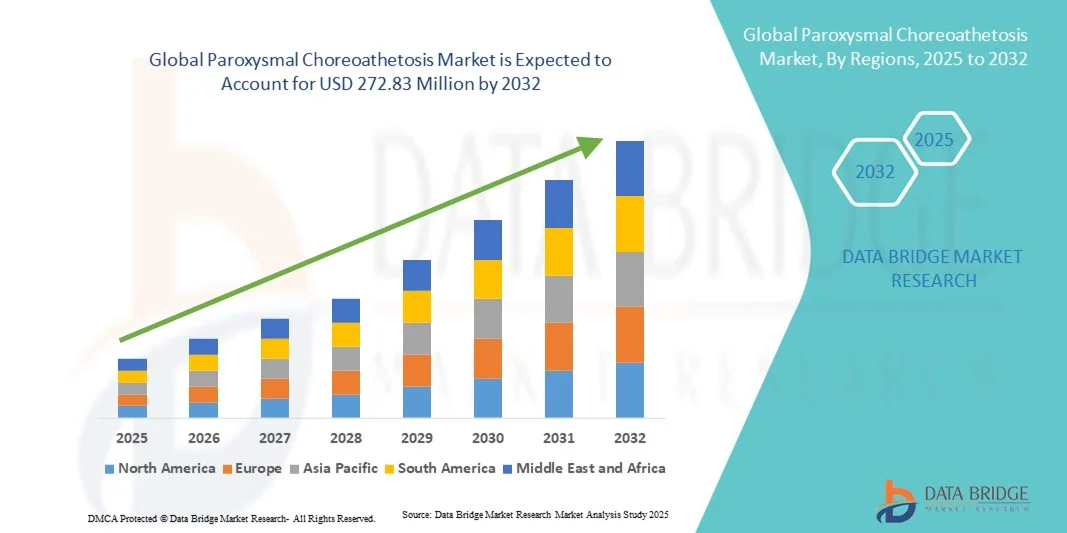
- The global paroxysmal choreoathetosis market size was valued at USD 180.5 million in 2024 and is expected to reach USD 272.83 million by 2032, at a CAGR of 5.30% during the forecast period
- The market growth is largely fueled by increasing awareness and diagnosis of neurological movement disorders, coupled with advancements in therapeutic interventions and drug development
- Furthermore, rising demand for effective, targeted, and personalized treatment options for Paroxysmal Choreoathetosis is driving market expansion. Improved clinical guidelines, enhanced patient monitoring, and growing investments in research and development are further accelerating the uptake of therapies, thereby significantly boosting the industry's growth
Paroxysmal Choreoathetosis Market Analysis
- The Paroxysmal Choreoathetosis market is witnessing significant attention due to increasing awareness of neurological disorders, advancements in pharmacological therapies, and improved diagnostic capabilities in hospitals and clinics worldwide
- Growing prevalence of movement disorders, particularly among pediatric and adult populations, is driving the adoption of targeted treatment protocols and specialized care centers, fueling market expansion
- North America dominated the paroxysmal choreoathetosis market with the largest revenue share of 41.2% in 2024, characterized by advanced healthcare infrastructure, high awareness among clinicians, and the presence of leading pharmaceutical and medical device companies
- Asia-Pacific is expected to be the fastest-growing region in the paroxysmal choreoathetosis market during the forecast period, projected to register a CAGR of 23.6% from 2025 to 2032. Growth is driven by rising incidence of movement disorders, improving healthcare infrastructure, expanding hospital networks, and increasing investments in pediatric and adult neurology services
- The clinical testing segment dominated the paroxysmal choreoathetosis market with a revenue share of 46.1% in 2024, supported by accessibility, cost-effectiveness, and wide adoption in hospitals and neurology centers. Standardized clinical assessment protocols reinforce its leading position
Report Scope and Paroxysmal Choreoathetosis Market Segmentation
|
Attributes |
Paroxysmal Choreoathetosis Key Market Insights |
|
Segments Covered |
|
|
Countries Covered |
North America
Europe
Asia-Pacific
Middle East and Africa
South America
|
|
Key Market Players |
|
|
Market Opportunities |
|
|
Value Added Data Infosets |
In addition to the insights on market scenarios such as market value, growth rate, segmentation, geographical coverage, and major players, the market reports curated by the Data Bridge Market Research also include in-depth expert analysis, pricing analysis, brand share analysis, consumer survey, demography analysis, supply chain analysis, value chain analysis, raw material/consumables overview, vendor selection criteria, PESTLE Analysis, Porter Analysis, and regulatory framework. |
Paroxysmal Choreoathetosis Market Trends
Growing Focus on Early Diagnosis, Symptom Management, and Integrated Care
- A major trend in the global paroxysmal choreoathetosis market is the increasing emphasis on early diagnosis and structured symptom management
- For instance, specialized neurological assessment programs in North America allow clinicians to identify subtle movement abnormalities in early-stage patients. Similarly, in Europe, hospitals are introducing standardized symptom tracking protocols to monitor disease progression
- Integrated care models involving neurologists, physiotherapists, and occupational therapists are becoming more common. For instance, certain clinics in Japan provide comprehensive care units where patients receive therapy, monitoring, and counseling in a single program
- Patient awareness initiatives are on the rise, educating caregivers and patients about early signs, lifestyle modifications, and treatment adherence
- For instance, awareness campaigns in India and Southeast Asia have led to more timely clinical visits and better disease outcomes
- Research-driven innovation and clinical trials are influencing treatment protocols. For instance, clinical studies in Germany are investigating optimized therapy schedules, while U.S. hospitals are testing new symptom monitoring techniques to improve patient compliance
- Structured follow-up and monitoring protocols are being implemented in healthcare facilities globally. For example, hospitals in Canada and the U.K. use patient diaries and periodic evaluations to track episodes and adjust therapies
- This trend reflects a broader market shift toward patient-centered and evidence-based care, improving overall management and quality of life
Paroxysmal Choreoathetosis Market Dynamics
Driver
Rising Need Due to Increasing Disease Awareness and Access to Specialized Care
- The increasing prevalence of paroxysmal choreoathetosis worldwide, along with growing awareness among patients, caregivers, and healthcare providers, is driving demand for advanced monitoring and therapeutic solutions
- For instance, in April 2024, a major hospital network in North America launched a specialized Paroxysmal Choreoathetosis clinic offering comprehensive symptom tracking, personalized therapy programs, and patient support services. Such initiatives by leading healthcare providers are expected to drive market growth in the forecast period
- As patients and caregivers become more aware of the importance of early diagnosis and consistent management, specialized programs offer improved symptom tracking, therapy adherence, and guidance for lifestyle modifications
- Furthermore, the increasing availability of structured care pathways and rehabilitation programs is making comprehensive disease management more accessible and effective, enabling better patient outcomes
- Convenience in accessing treatment centers, support from trained professionals, and the availability of patient education programs are key factors propelling adoption in both developed and emerging regions. The trend toward structured follow-up and integrated care further supports market growth
Restraint/Challenge
High Treatment Costs, Limited Awareness, and Accessibility Barriers
- The relatively high cost of specialized therapies and clinical programs for Paroxysmal Choreoathetosis can limit adoption, particularly in developing regions or among price-sensitive populations
- For instance, studies from Southeast Asia have shown that the limited number of neurologists and specialized clinics often forces patients to seek care in distant urban centers, which increases out-of-pocket expenses and delays treatment
- Limited disease awareness and diagnostic challenges in certain regions can delay intervention, impacting overall management and patient outcomes. Addressing this requires awareness campaigns, education for healthcare professionals, and early screening programs
- Accessibility to trained healthcare professionals and specialized treatment centers remains uneven, particularly in rural or underserved areas, which may hinder consistent care
- While efforts to reduce costs and improve access are underway, the perceived high expense of advanced therapeutic options continues to be a barrier for some patients and caregivers
- Overcoming these challenges through patient education, expansion of specialized clinics, and the development of more affordable treatment options will be vital for sustained market growth
Paroxysmal Choreoathetosis Market Scope
The Paroxysmal Choreoathetosis market is segmented on the basis of movement characterization, symptoms, treatment, diagnosis, end-users, and distribution channel.
- By Movement Characterization
On the basis of movement characterization, the paroxysmal choreoathetosis market is segmented into dystonia, choreic, ballistic, and combination. The dystonia segment dominated the largest market revenue share of 38.7% in 2024, driven by its higher prevalence in pediatric and adult populations. Hospitals and neurology centers widely adopt dystonia-focused treatment protocols due to its consistent clinical presentation and response to standard-of-care therapies. The segment benefits from the increasing number of specialized movement disorder clinics and rising awareness among clinicians about early intervention strategies. Growing investment in research for novel pharmacological treatments further contributes to dominance. Improved patient support programs, standardized treatment guidelines, and educational initiatives enhance early diagnosis and management. The segment’s stability in terms of clinical outcomes attracts both public and private healthcare providers. In addition, integration of multidisciplinary approaches in care, including physiotherapy and occupational therapy, reinforces the segment's leadership. Increased funding for hospital programs targeting movement disorders and rising referrals from primary care to neurology specialists support steady revenue growth. Awareness campaigns emphasizing the importance of early dystonia management encourage higher adoption rates of therapeutic interventions. Overall, dystonia maintains its position as the most significant segment in revenue share within the movement characterization category, driven by clinical predictability, healthcare infrastructure, and rising prevalence rates.
The choreic segment is expected to witness the fastest CAGR of 11.9% from 2025 to 2032, fueled by growing recognition of choreic presentations in combination with other movement disorders. Advancements in diagnostic capabilities, such as improved neuroimaging and genetic screening, support early identification and targeted management. Investment in clinical trials and development of novel therapies for choreic manifestations are boosting adoption rates. Rising patient awareness about choreic episodes and improved access to specialized neurology centers contribute to rapid uptake. Expansion of outpatient therapy programs and home healthcare support further drive market growth. Increased training for clinicians in recognizing choreic movements ensures timely and effective interventions. Collaborations between hospitals and research institutions help in refining treatment protocols. Insurance coverage and reimbursement for novel therapies make treatment more accessible. Technological advancements in monitoring devices enhance real-time management of symptoms. Growth is also propelled by rising prevalence of rare movement disorders involving choreic symptoms. Market expansion in emerging economies, supported by improving healthcare infrastructure, is accelerating the segment’s growth trajectory. Overall, the choreic segment is emerging as the fastest-growing category within movement characterization due to awareness, diagnostics, therapies, and healthcare accessibility improvements.
- By Symptoms
On the basis of symptoms, the paroxysmal choreoathetosis market is segmented into paroxysmal kinesigenic dyskinesia, paroxysmal non-kinesigenic dyskinesia, paroxysmal exertion-induced dyskinesia, and paroxysmal hypogenic dyskinesia. The paroxysmal kinesigenic dyskinesia segment dominated the market with a revenue share of 40.2% in 2024, driven by its higher clinical incidence and well-established treatment protocols. Hospitals and neurology centers prioritize this segment because of predictable symptom management and effective therapeutic outcomes. Early diagnosis and adoption of evidence-based drug regimens contribute to its dominance. The segment is supported by strong clinician awareness programs, patient advocacy initiatives, and clinical guidelines. Multidisciplinary care approaches including physiotherapy and occupational therapy improve long-term outcomes, reinforcing the segment’s leadership. Increasing prevalence of pediatric and adult cases worldwide ensures continuous demand. Improved healthcare infrastructure, especially in developed regions, facilitates the widespread adoption of standard therapies. Availability of both pharmacological and non-pharmacological interventions supports comprehensive management. Training and educational programs for caregivers further enhance patient compliance. Hospital-based monitoring ensures adherence to treatment protocols. Insurance coverage and reimbursement policies make interventions affordable, solidifying the segment’s top position in revenue generation.
The paroxysmal non-kinesigenic dyskinesia segment is expected to register the fastest CAGR of 12.5% from 2025 to 2032, driven by enhanced recognition of episodic patterns and advancements in clinical testing. Rising investments in specialized treatment therapies boost adoption. Patient awareness campaigns and home healthcare services support early intervention. Expansion of telemedicine platforms allows remote symptom monitoring. Healthcare providers increasingly integrate innovative therapies to manage non-kinesigenic episodes. Improved diagnostic accuracy with genetic and clinical testing encourages timely treatment. Outpatient therapy centers are seeing higher patient footfall for targeted interventions. Collaboration between neurologists and primary care physicians ensures early referrals. Insurance coverage for advanced therapies supports growth. Public health programs targeting rare movement disorders enhance awareness. Emerging markets are witnessing infrastructure upgrades to accommodate specialized care. Overall, this segment is gaining momentum due to diagnostic, therapeutic, and healthcare delivery improvements.
- By Treatment
On the basis of treatment, the paroxysmal choreoathetosis market is segmented into drugs and therapies. The drugs segment dominated the largest market revenue share of 42.8% in 2024, driven by widespread adoption of pharmacological interventions such as antichoreic agents, muscle relaxants, and anti-dystonia medications. Hospitals and neurology centers rely on drugs for consistent symptom management. Clinical research and continuous introduction of new drug formulations ensure effectiveness and patient adherence. Insurance coverage for approved medications increases accessibility. Standardized treatment protocols in hospitals reinforce the dominance of drugs. Ongoing clinical trials validate safety and efficacy, enhancing confidence among clinicians. Patient support programs help with adherence and monitoring of therapy. Multidisciplinary care involving drug-based management enhances treatment outcomes. High prevalence of movement disorders requiring drug therapy maintains demand. Public awareness campaigns on movement disorders encourage timely treatment initiation. Global healthcare infrastructure supports the distribution of approved medications. Strong supply chains and pharmaceutical networks ensure widespread availability.
The therapies segment is expected to witness the fastest CAGR of 10.7% from 2025 to 2032, fueled by innovations in physiotherapy, occupational therapy, and neuromodulation approaches. Rising adoption in home healthcare and rehabilitation centers, combined with improved patient adherence and outcomes, is accelerating growth. Development of targeted rehabilitation programs enhances recovery. Tele-rehabilitation platforms allow patients to receive therapy remotely. Increasing preference for non-pharmacological management among caregivers drives demand. Expansion of therapy centers in urban and semi-urban regions supports growth. Integration of personalized treatment plans improves effectiveness. Research on novel neuromodulation techniques promotes adoption. Government initiatives to support therapy-based interventions boost market penetration. Outpatient and ambulatory services are increasingly utilized for therapy sessions. Collaboration between hospitals and specialized therapy centers ensures high-quality care.
- By Diagnosis
On the basis of diagnosis, the paroxysmal choreoathetosis market is segmented into genetic testing and clinical testing. The clinical testing segment dominated with a revenue share of 46.1% in 2024, supported by accessibility, cost-effectiveness, and wide adoption in hospitals and neurology centers. Standardized clinical assessment protocols reinforce its leading position. Routine symptom evaluations and hospital infrastructure availability ensure steady adoption. Strong clinical training programs enhance diagnostic accuracy. Hospitals incorporate clinical testing in early-stage diagnosis and treatment planning. Patient monitoring and follow-up systems further support dominance. Continuous physician education improves diagnostic efficiency. Integration with electronic medical records ensures comprehensive patient management. Established networks of clinical labs strengthen accessibility. Insurance coverage supports affordability.
The genetic testing segment is expected to witness the fastest CAGR of 13.2% from 2025 to 2032, driven by advancements in molecular diagnostics and increasing awareness of hereditary movement disorders. Early adoption in specialized centers enhances market growth. Improved accessibility in emerging markets supports expansion. Rising clinician preference for precision medicine encourages use. Insurance coverage and reimbursement policies facilitate patient uptake. Public health initiatives raise awareness on genetic predisposition. Integration with hospital and home healthcare services ensures timely interventions.
- By End-Users
On the basis of end-users, the paroxysmal choreoathetosis market is segmented into hospitals, home healthcare, ambulatory surgical centers, neurology centers, and others. The hospitals segment dominated with a revenue share of 44.5% in 2024, owing to the concentration of specialized care, advanced diagnostic facilities, and established treatment protocols. Hospitals have the highest patient throughput for movement disorder management. Access to multidisciplinary teams reinforces consistent treatment outcomes. Insurance coverage and government funding support widespread adoption. Hospitals implement both pharmacological and therapy-based interventions. Continuous professional development for clinicians improves patient care. Established referral networks ensure early diagnosis and treatment. Patient monitoring systems enhance compliance. Clinical trials for new drugs are predominantly conducted in hospitals. Collaboration with neurology centers strengthens specialized care. Availability of comprehensive diagnostic tools ensures accurate assessments. Public awareness programs encourage hospital visits for specialized care.
The home healthcare segment is anticipated to witness the fastest CAGR of 12.8% from 2025 to 2032, fueled by the growing need for outpatient care, patient-centric monitoring, and rising adoption of remote therapy and telemedicine solutions. Expansion of home care providers supports growth. Personalized treatment plans are increasingly implemented. Integration with digital health platforms facilitates continuous monitoring. Caregiver training programs enhance therapy adherence. Rising demand for elderly patient care drives adoption. Tele-rehabilitation and remote consultations reduce hospital visits. Increasing investment in home healthcare infrastructure supports service delivery. Insurance coverage encourages utilization. Emerging markets present opportunities for expansion. Rising awareness about chronic movement disorder management encourages home care. Patient convenience and improved outcomes reinforce adoption.
- By Distribution Channel
On the basis of distribution channel, the paroxysmal choreoathetosis market is segmented into direct tender, hospital pharmacy, retail pharmacy, online pharmacy, and others. The hospital pharmacy segment dominated with a revenue share of 41.7% in 2024, attributed to direct availability of drugs and therapies to patients within healthcare facilities. Hospitals rely on pharmacy-based distribution for standardized treatment protocols. Accessibility and immediate dispensing support clinical workflows. Established pharmaceutical supply chains ensure consistent drug availability. Hospital pharmacies provide professional guidance for dosage and administration. Insurance coverage facilitates patient access. Integration with hospital systems ensures proper record-keeping. Pharmacist expertise supports patient counseling.
The online pharmacy segment is expected to witness the fastest CAGR of 14.1% from 2025 to 2032, driven by the rapid digital transformation in healthcare and increasing consumer preference for convenient medicine procurement. The growing integration of e-commerce platforms with telemedicine services allows patients to receive prescriptions, consultations, and medicines seamlessly at home, significantly improving accessibility. Rising internet penetration, smartphone adoption, and awareness about online health services in both urban and semi-urban regions further accelerate market growth. In addition, the convenience of doorstep delivery, coupled with time-saving and reduced hospital visits, makes online pharmacies an attractive option for patients managing chronic conditions like Paroxysmal Choreoathetosis. Expansion of secure payment systems and reliable logistics networks enhances consumer trust and adoption rates
Paroxysmal Choreoathetosis Market Regional Analysis
- North America dominated the paroxysmal choreoathetosis market with the largest revenue share of 41.2% in 2024, characterized by advanced healthcare infrastructure, high awareness among clinicians, and the presence of leading pharmaceutical and medical device companies.
- The region’s growth is supported by established hospital protocols for movement disorder management, increasing clinical awareness campaigns, and the adoption of innovative pharmacological and therapeutic interventions
- High availability of specialized neurology centers and advanced diagnostic facilities further strengthen market penetration in North America
U.S. Paroxysmal Choreoathetosis Market Insight
The U.S. paroxysmal choreoathetosis market captured the largest revenue share of 78% within North America in 2024. Market expansion is fueled by early diagnosis and treatment of movement disorders, widespread clinician awareness, and a strong network of specialized neurology centers. The implementation of evidence-based therapeutic protocols, clinical trials, and access to novel pharmacological treatments contributes significantly to market growth. Additionally, increasing investments in pediatric and adult neurology services and integration of personalized treatment approaches enhance the adoption of effective management strategies.
Europe Paroxysmal Choreoathetosis Market Insight
The Europe paroxysmal choreoathetosis market is projected to expand at a substantial CAGR during the forecast period, driven by growing awareness of movement disorders, the availability of advanced neurology services, and increasing adoption of therapeutic interventions. The U.K. is expected to lead Europe with the largest market share due to strong healthcare infrastructure, high clinician awareness, and increasing patient adoption of specialized treatments. Germany is anticipated to be the fastest-growing country in the region, supported by investments in clinical research, availability of advanced diagnostic tools, and early intervention programs in hospitals and rehabilitation centers.
Asia-Pacific Paroxysmal Choreoathetosis Market Insight
The Asia-Pacific paroxysmal choreoathetosis market is expected to register the fastest CAGR of 23.6% from 2025 to 2032, driven by rising incidence of movement disorders, improving healthcare infrastructure, expanding hospital networks, and increasing investments in pediatric and adult neurology services. China accounted for a significant revenue share in 2024, attributed to rapid urbanization, increasing awareness of neurological disorders, and the establishment of specialized neurology centers. Japan is witnessing steady growth due to its technologically advanced healthcare environment, emphasis on early diagnosis, and rising demand for comprehensive treatment solutions integrating pharmacological and therapeutic interventions.
Japan Paroxysmal Choreoathetosis Market Insight
The Japanese paroxysmal choreoathetosis market is gaining momentum due to high clinical awareness, increasing prevalence of movement disorders, and rapid urbanization. Growth is further supported by investments in neurology research, advanced hospital facilities, and comprehensive patient care programs. Early intervention and availability of specialized treatments for both pediatric and adult patients continue to drive market expansion.
China Paroxysmal Choreoathetosis Market Insight
The China paroxysmal choreoathetosis market accounted for the largest revenue share in Asia-Pacific in 2024. The country’s rapid urbanization, increasing awareness of neurological disorders, and expansion of specialized neurology centers are key growth drivers. Investments in hospital infrastructure, advanced diagnostic facilities, and therapeutic innovations support wide adoption of treatment protocols, making China one of the fastest-growing and most promising markets in the region.
Paroxysmal Choreoathetosis Market Share
The Paroxysmal Choreoathetosis industry is primarily led by well-established companies, including:
- Teva Pharmaceutical Industries Ltd. (U.S.)
- Novartis AG (Switzerland)
- UCB S.A. (Belgium)
- Lundbeck A/S (Denmark)
- Eisai Co., Ltd. (Japan)
- Boehringer Ingelheim International GmbH (Germany)
- H. Lundbeck A/S (Denmark)
- Teva Pharmaceutical Industries Ltd. (Israel)
- Merz Pharma (Germany)
- Orion Corporation (Finland)
- Ipsen Pharma (France)
- Merz Pharma (Germany)
Latest Developments in Global Paroxysmal Choreoathetosis Market
- In September 2024, a comprehensive study published in Movement Disorders highlighted new genetic insights into Paroxysmal Movement Disorders, emphasizing the clinical and genetic heterogeneity and the importance of advanced genetic testing for accurate diagnosis and treatment strategies
- In August 2024, Frontiers in Neurology published a review on pediatric chorea, focusing on the genetic landscape and diagnostic challenges of early-onset Paroxysmal Choreoathetosis. The study underlined the significance of personalized treatment approaches for improved patient outcomes
- In January 2025, the journal Annals of Movement Disorders released an update on Paroxysmal Kinesigenic Dyskinesia and related disorders, discussing recent progress in understanding genetic causes, clinical heterogeneity, and personalized therapy strategies to optimize management of these conditions

- Interactive Data Analysis Dashboard
- Company Analysis Dashboard for high growth potential opportunities
- Research Analyst Access for customization & queries
- Competitor Analysis with Interactive dashboard
- Latest News, Updates & Trend analysis
- Harness the Power of Benchmark Analysis for Comprehensive Competitor Tracking
Data collection and base year analysis are done using data collection modules with large sample sizes. The stage includes obtaining market information or related data through various sources and strategies. It includes examining and planning all the data acquired from the past in advance. It likewise envelops the examination of information inconsistencies seen across different information sources. The market data is analysed and estimated using market statistical and coherent models. Also, market share analysis and key trend analysis are the major success factors in the market report. To know more, please request an analyst call or drop down your inquiry.
The key research methodology used by DBMR research team is data triangulation which involves data mining, analysis of the impact of data variables on the market and primary (industry expert) validation. Data models include Vendor Positioning Grid, Market Time Line Analysis, Market Overview and Guide, Company Positioning Grid, Patent Analysis, Pricing Analysis, Company Market Share Analysis, Standards of Measurement, Global versus Regional and Vendor Share Analysis. To know more about the research methodology, drop in an inquiry to speak to our industry experts.
Data Bridge Market Research is a leader in advanced formative research. We take pride in servicing our existing and new customers with data and analysis that match and suits their goal. The report can be customized to include price trend analysis of target brands understanding the market for additional countries (ask for the list of countries), clinical trial results data, literature review, refurbished market and product base analysis. Market analysis of target competitors can be analyzed from technology-based analysis to market portfolio strategies. We can add as many competitors that you require data about in the format and data style you are looking for. Our team of analysts can also provide you data in crude raw excel files pivot tables (Fact book) or can assist you in creating presentations from the data sets available in the report.












