


Patient Portal Market Size
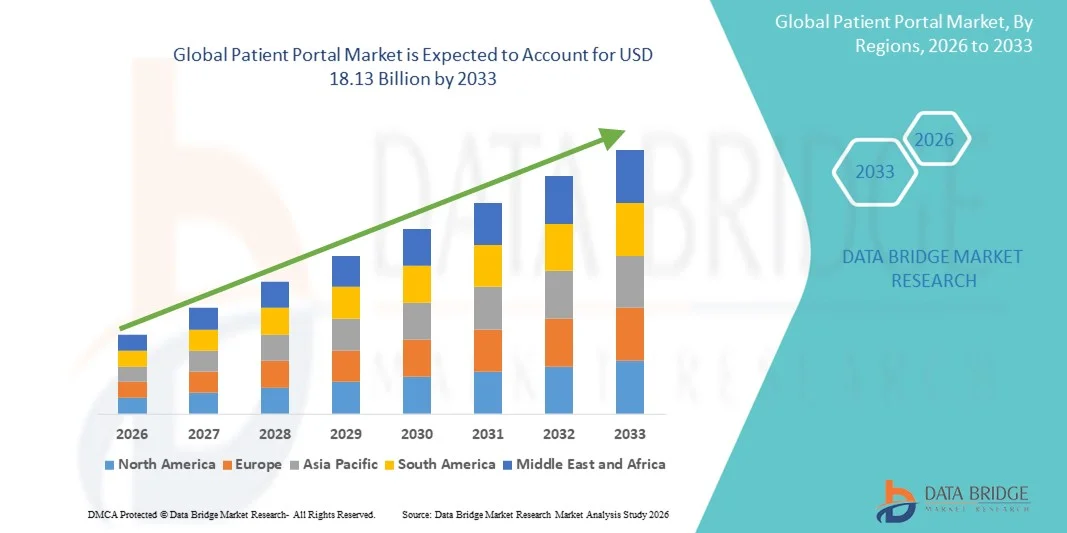
- As per Data Bridge Market Research Analysis the global patient portal market size was valued at USD 6.43 billion in 2025 and is expected to reach USD 18.13 billion by 2033, at a CAGR of 13.84% during the forecast period
- The market growth is largely fueled by the growing adoption and technological progress within digital healthcare solutions and electronic health records (EHRs), leading to increased digitalization in both hospitals and outpatient care settings
- Furthermore, rising consumer demand for secure, user-friendly, and integrated platforms for managing personal health information is establishing patient portals as essential tools for healthcare providers and patients alike. These converging factors are accelerating the uptake of Patient Portal solutions, thereby significantly boosting the industry's growth
Market Size & Forecast
- Global Market Value (2025): USD 6.43 billion in 2025
- Expected Market Value (2033): USD 18.13 billion by 2033
- Forecast CAGR (2026–2033): 13.84%
Patient Portal Market Analysis
- Patient portals, offering secure digital access to medical records, appointment scheduling, test results, and direct communication with healthcare providers, are increasingly vital tools in modern healthcare systems due to their ability to enhance patient engagement, streamline workflows, and improve care coordination
- The escalating demand for patient portals is primarily fueled by the widespread adoption of digital healthcare solutions, regulatory emphasis on patient data accessibility, and the growing preference for convenient, real-time access to health information
- North America dominated the patient portal market with the largest revenue share of 42.5% in 2025, supported by advanced healthcare infrastructure, high adoption of electronic health records (EHRs), strong government initiatives promoting digital health, and the presence of key industry players. The U.S. accounted for the majority of regional demand due to increasing focus on patient engagement, telehealth integration, and interoperability with hospital and clinic systems
- Asia-Pacific is expected to be the fastest-growing region in the patient portal market during the forecast period, registering a high CAGR driven by rising healthcare digitization, growing patient awareness, expanding hospital networks, and supportive government policies in countries such as China, India, and Japan
- The Web-Based Delivery segment held the largest market revenue share of 61.7% in 2025, driven by widespread internet accessibility and the ease of implementation across diverse healthcare facilities
Report Scope and Patient Portal Market Segmentation
|
Attributes |
Patient Portal Key Market Insights |
|
Segments Covered |
|
|
Countries Covered |
North America
Europe
Asia-Pacific
Middle East and Africa
South America
|
|
Key Market Players |
• Epic Systems Corporation (U.S.) |
|
Market Opportunities |
|
|
Value Added Data Infosets |
In addition to the insights on market scenarios such as market value, growth rate, segmentation, geographical coverage, and major players, the market reports curated by the Data Bridge Market Research also include in-depth expert analysis, patient epidemiology, pipeline analysis, pricing analysis, and regulatory framework. |
Patient Portal Market Trends
Shift Towards Interoperable and Mobile-Friendly Platforms
- The Patient Portal market is witnessing a shift towards interoperable systems that can integrate seamlessly with multiple healthcare IT solutions
- Providers are investing in portals that allow cross-platform access, enabling patients to view lab results, imaging reports, and visit summaries from different providers
- Mobile-friendly portals are becoming a standard requirement, enhancing convenience and engagement among patients who prefer smartphone access
- Cloud-based portals are increasingly adopted to ensure scalability, data security, and remote accessibility
- Portals now offer advanced features like secure messaging, appointment reminders, and personalized health education resources
- For instance, In 2023, Epic Systems enhanced its MyChart portal to enable improved mobile navigation and cross-device synchronization
- Integration with wearable health devices and remote monitoring tools is allowing patients to share real-time health data with providers
- Healthcare organizations are focusing on portals that support multi-language interfaces to cater to diverse patient populations
- Data analytics within portals is helping providers identify trends, predict patient needs, and enhance care planning
- Adoption of interoperable platforms is accelerating in both public and private healthcare systems globally
- This trend is reshaping patient expectations for access, transparency, and engagement in healthcare delivery
- Portals are increasingly becoming central to digital health strategies, supporting coordinated care and improved patient satisfaction
Patient Portal Market Dynamics
Driver
Growing Demand for Digital Health Access and Patient Engagement
- The increasing focus on digital health solutions and the growing adoption of electronic health records (EHRs) is a significant driver for the Patient Portal market
- Patients and healthcare providers are seeking secure, centralized platforms to access medical information, schedule appointments, and communicate efficiently
- For instance, In April 2025, Cerner Corporation announced enhancements to its Patient Portal solutions, allowing seamless integration with EHR systems and improved patient engagement tools. These initiatives are expected to boost market adoption
- Healthcare providers are recognizing the value of patient portals in improving clinical outcomes by enabling timely communication, lab result sharing, and remote monitoring
- Rising patient awareness about healthcare data accessibility and self-management is further fueling demand
- Moreover, government initiatives promoting digital health records and patient-centric care models are compelling hospitals and clinics to adopt portal systems
- The convenience of 24/7 access to personal health records, appointment scheduling, prescription refills, and secure messaging is driving higher usage
- Integration with telehealth services and mobile applications is enhancing patient engagement, particularly in chronic disease management and preventive care
- Providers are leveraging patient portals to reduce administrative burdens, improve workflow efficiency, and maintain regulatory compliance
- The trend toward personalized healthcare, combined with the increasing demand for transparency in treatment and billing, supports market growth
- Patient portals are being increasingly adopted across hospitals, clinics, and specialized healthcare centers worldwide
- These factors collectively contribute to the expanding footprint of patient portals in both developed and emerging markets
Restraint/Challenge
Data Security Concerns and Implementation Costs
- Concerns over data privacy and potential breaches remain a critical restraint for the Patient Portal market
- Patients and providers are cautious about sensitive health information being compromised due to cyberattacks or insufficient IT safeguards
- For instance, in March 2022, a data breach at the University of California Health System exposed the records of over 500,000 patients, highlighting the vulnerabilities and potential risks associated with electronic patient portals.
- High initial costs for portal implementation, integration with existing EHR systems, and ongoing maintenance can limit adoption, particularly for small clinics or healthcare facilities in emerging markets
- Ensuring compliance with HIPAA, GDPR, and other data protection regulations adds complexity and cost
- Healthcare providers need to train staff and patients for effective portal usage, which can be resource-intensive
- Interoperability challenges with legacy systems may delay deployment and affect user experience
- Concerns over system downtime and reliability can deter adoption in critical care environments
- Limited digital literacy among certain patient populations may reduce portal engagement
- Healthcare organizations must invest in robust encryption, multi-factor authentication, and continuous monitoring to build trust
- Ongoing technical support and software updates are necessary to ensure long-term functionality and security
- Addressing these challenges while balancing cost and user experience remains vital for sustained growth of patient portals
- Overcoming privacy, cost, and operational barriers will be essential for wider adoption and market expansion
Patient Portal Market Scope
The market is segmented on the basis of type, delivery mode, and end user.
-
By Type
On the basis of type, the Patient Portal market is segmented into Integrated Patient Portals and Standalone Patient Portals. The Integrated Patient Portals segment dominated the largest market revenue share of 58.4% in 2025, driven by its seamless integration with electronic health record (EHR) systems and hospital information systems, enabling providers to manage patient information efficiently. Integrated portals offer features such as appointment scheduling, lab results, prescription management, and secure messaging, making them highly valued in large healthcare facilities. The segment also benefits from high adoption in multi-specialty hospitals, academic medical centers, and large healthcare networks, where interoperability and centralized patient management are crucial. Growing emphasis on patient engagement, regulatory compliance, and value-based care initiatives further supports this segment’s dominance. Additionally, integrated portals improve workflow efficiency for healthcare providers and offer patients a unified platform to access their health records. Strong IT infrastructure, government incentives for digital health, and increasing patient demand for comprehensive health management platforms also contribute to its market leadership. The reliability, scalability, and advanced analytics capabilities of integrated portals make them a preferred choice among healthcare organizations globally.
The Standalone Patient Portals segment is expected to witness the fastest CAGR of 22.1% from 2026 to 2033, fueled by adoption in small-to-medium healthcare facilities and outpatient clinics seeking cost-effective digital solutions. Standalone portals provide essential features without full integration with EHRs, making them easier and quicker to deploy. The segment benefits from the rising need for patient engagement in smaller clinics, telehealth services, and private practices. Flexibility, affordability, and ease of use make standalone portals attractive to providers with limited IT budgets. Growing awareness about patient-centered care, regulatory encouragement, and digital transformation initiatives in regional and community healthcare centers also support this growth. Additionally, standalone portals are increasingly being offered with cloud-based deployment options, facilitating remote access and reducing infrastructure costs. Patients value standalone portals for direct access to appointment scheduling, lab results, and health information without complex login procedures, contributing to strong adoption trends.
-
By Delivery Mode
On the basis of delivery mode, the Patient Portal market is segmented into Web-Based Delivery and Cloud-Based Delivery. The Web-Based Delivery segment held the largest market revenue share of 61.7% in 2025, driven by widespread internet accessibility and the ease of implementation across diverse healthcare facilities. Web-based portals allow users to access patient records, appointment scheduling, and lab results through standard web browsers, eliminating the need for complex software installations. The segment is preferred by hospitals and clinics with established IT infrastructure, as it ensures compatibility with legacy systems. Security features, such as SSL encryption and role-based access controls, enhance the adoption of web-based solutions. The segment also benefits from familiarity among healthcare providers and patients, reducing training requirements and facilitating smoother transitions from paper-based processes. Government initiatives promoting digital healthcare services, as well as patient demand for accessible online health management tools, further reinforce its dominance.
The Cloud-Based Delivery segment is anticipated to register the fastest CAGR of 24.3% from 2026 to 2033, driven by scalability, cost efficiency, and remote accessibility. Cloud-based portals enable seamless updates, data backups, and multi-device access for both providers and patients. The segment is particularly attractive to small clinics, telemedicine providers, and healthcare networks seeking to minimize IT infrastructure costs. Adoption is further accelerated by the growing preference for subscription-based models and the need for secure, off-premise data storage in compliance with HIPAA and GDPR regulations. Cloud-based portals support integration with mobile applications, patient engagement tools, and AI-driven analytics, enhancing user experience and operational efficiency. Rapid expansion of digital health initiatives, increasing patient demand for flexible healthcare access, and the rising use of cloud infrastructure in healthcare globally contribute to the segment’s rapid growth trajectory.
-
By End User
On the basis of end user, the Patient Portal market is segmented into Providers, Payers, Pharmacies, and Others. The Providers segment dominated the largest market revenue share of 65.1% in 2025, driven by hospitals, clinics, and physician practices seeking to streamline patient care and improve engagement. Providers use patient portals to manage appointments, lab results, prescriptions, and secure communication, ensuring compliance with regulatory standards and improving operational efficiency. Increasing focus on value-based care and patient-centric healthcare services further supports this segment. Providers also benefit from enhanced data analytics, which informs clinical decisions, patient outreach, and care coordination. The integration of portals with EHRs, telemedicine platforms, and mobile health applications strengthens the segment’s market leadership. Government initiatives, such as the Meaningful Use program in the U.S., and digital health policies globally, encourage the adoption of patient portals among healthcare providers.
The Payers segment is expected to witness the fastest CAGR of 20.8% from 2026 to 2033, driven by insurance companies and managed care organizations implementing portals to provide members with access to claims, coverage details, and preventive care information. Portals help payers reduce administrative costs, improve member engagement, and ensure timely communication about benefits and claims status. Cloud-based adoption and mobile integration further facilitate quick deployment and enhanced user experience. Rising demand for digital solutions in health insurance management, coupled with regulatory support and competitive pressure to offer value-added services, is driving this segment’s rapid growth. Pharmacies and other end users are also gradually increasing portal adoption, supporting the overall market expansion.
Patient Portal Market Regional Analysis
- North America dominated the patient portal market with the largest revenue share of 42.5% in 2025
- Supported by advanced healthcare infrastructure, high adoption of electronic health records (EHRs), strong government initiatives promoting digital health, and the presence of key industry players
- The region continues to experience rising demand for patient engagement tools, secure access to medical data, and integration of patient portals with telehealth platforms, mobile applications, and hospital information systems
U.S. Patient Portal Market Insight
The U.S. patient portal market captured the largest revenue share in 2025 within North America, fueled by the widespread adoption of EHR systems, mandatory regulations for digital health documentation, and strong emphasis on improving patient engagement. Increased use of telemedicine, mobile health apps, and interoperability standards such as FHIR further supports the rapid expansion of patient portals. Hospitals and clinics across the U.S. are increasingly integrating portals with appointment scheduling, e-prescriptions, billing tools, and remote monitoring features.
Europe Patient Portal Market Insight
The Europe patient portal market is projected to expand at a substantial CAGR throughout the forecast period, primarily driven by stringent data protection regulations such as GDPR, increasing adoption of digital healthcare solutions, and rising demand for secure patient data access. The region is experiencing accelerated implementation of patient portals across hospitals, clinics, and national digital health programs, supporting improved patient experience, clinical efficiency, and healthcare transparency.
U.K. Patient Portal Market Insight
The U.K. patient portal market is anticipated to grow at a noteworthy CAGR during the forecast period, driven by the expansion of the NHS digital transformation programs, rising patient awareness regarding online access to health records, and increasing demand for remote care solutions. The U.K.’s strong digital health infrastructure, combined with national initiatives such as NHS App integration, continues to boost patient portal adoption across both primary and secondary care settings.
Germany Patient Portal Market Insight
The patient portal market is expected to expand at a considerable CAGR during the forecast period, fueled by the country’s growing emphasis on healthcare digitalization, strong regulatory push under the Digital Healthcare Act (DVG), and rising adoption of interoperable electronic patient records. Germany’s patient portal growth is supported by its advanced healthcare system, demand for secure communication between patients and providers, and increasing use of digital health services across hospitals and outpatient facilities.
Asia-Pacific Patient Portal Market Insight
The Asia-Pacific patient portal market is poised to grow at the fastest CAGR during 2026–2033, driven by rapid healthcare digitization, expanding hospital networks, rising patient awareness, and strong government initiatives promoting digital health platforms. Countries such as China, India, and Japan are investing heavily in healthcare IT infrastructure, increasing the adoption of patient portals integrated with telemedicine, e-pharmacy services, and mobile health applications.
Japan Patient Portal Market Insight
The Japan patient portal market is gaining momentum due to the nation’s advanced digital ecosystem, rapidly aging population, and strong demand for convenient access to health information. The increasing adoption of EHRs, government-driven digital health reforms, and growing use of connected healthcare platforms are major factors supporting market growth. Integration of patient portals with telehealth, chronic disease management tools, and hospital information systems is further accelerating adoption.
China Patient Portal Market Insight
The China patient portal market accounted for the largest revenue share in the Asia-Pacific region in 2025, driven by rapid healthcare system modernization, expanding urban populations, and rising investment in digital health by both government and private players. China’s strong digital ecosystem, growing hospital digitalization, and widespread use of mobile health platforms support the increasing adoption of patient portals. The development of smart hospitals and national-level health information networks continues to propel the market forward.
Patient Portal Market Share
The Patient Portal industry is primarily led by well-established companies, including:
• Epic Systems Corporation (U.S.)
• Oracle (U.S.)
• Meditech (U.S.)
• athenahealth (U.S.)
• NextGen Healthcare (U.S.)
• McKesson Corporation (U.S.)
• Siemens Healthineers (Germany)
• Philips Healthcare (Netherlands)
• GE Healthcare (U.S.)
• VMware (U.S.)
• Mirth Connect (U.S.)
• RelayHealth (U.S.)
• Nextech (U.S.)
• ObsEva (Switzerland)
• AllMeds (U.S.)
• Medfusion (U.S.)
• MyChart (U.S.)
• PatientSafe Solutions (U.S.)
• NextGen Patient Portal (U.S.)
Latest Developments in Global Patient Portal Market
- In March 2021, TrueCare launched its MyChart patient portal, a digital platform designed to help patients quickly access and manage their personal health information, including records, appointments, and communications with providers. This launch marked a step forward in empowering patients to take greater control of their healthcare data and streamline interactions with healthcare systems
- In June 2021, Epic Corporation collaborated with Orlando Health St. Cloud Hospital to integrate Epic’s widely adopted MyChart patient portal with the hospital’s EHR system, enabling seamless sharing of health data and care coordination across departments, and enhancing patient-provider communication
- In June 2023, Allscripts acquired HealthGrid, a cloud‑based patient engagement platform, to enhance its patient portal offerings. This acquisition enabled improved data exchange capabilities and expanded functionality for secure messaging and engagement between patients and providers
- In August 2023, athenahealth released a new patient portal API, allowing third‑party developers to integrate additional functionality into its platform. This expanded customization potential improved the adaptability of patient portals to meet diverse healthcare provider needs.
- In September 2023, Epic announced a partnership with Apple, integrating Apple Watch health data with its patient portal, enabling patients to monitor health metrics and receive notifications about appointments and medication refills directly via wearable devices
- In November 2023, McKesson expanded its digital health services by acquiring RelayHealth, a patient engagement platform, to strengthen its patient portal footprint and expand reach in the market through enhanced connectivity and communication tools
- In December 2023, Cerner Corporation partnered with IBM to integrate Watson AI with its patient portal, enabling personalized patient engagement and tailored health recommendations based on data insights. This development showcased advanced use of AI for patient interaction and support within portal environments
- In April 2024, a major EHR vendor introduced advanced cybersecurity enhancements in its patient portal system, incorporating multi‑factor authentication and encryption protocols to strengthen data protection and ensure compliance with HIPAA and other privacy regulations
- In June 2024, a telehealth company announced integration of wearable health devices with its patient portal, enabling real‑time syncing of biometric data such as heart rate and activity levels, giving both patients and providers deeper insights into health trends directly within the portal interface
- In July 2024, a new AI‑driven predictive analytics tool was rolled out as part of a prominent patient portal update, allowing healthcare providers to forecast patient admission rates, optimize scheduling, and improve resource management

- Interactive Data Analysis Dashboard
- Company Analysis Dashboard for high growth potential opportunities
- Research Analyst Access for customization & queries
- Competitor Analysis with Interactive dashboard
- Latest News, Updates & Trend analysis
- Harness the Power of Benchmark Analysis for Comprehensive Competitor Tracking
Data collection and base year analysis are done using data collection modules with large sample sizes. The stage includes obtaining market information or related data through various sources and strategies. It includes examining and planning all the data acquired from the past in advance. It likewise envelops the examination of information inconsistencies seen across different information sources. The market data is analysed and estimated using market statistical and coherent models. Also, market share analysis and key trend analysis are the major success factors in the market report. To know more, please request an analyst call or drop down your inquiry.
The key research methodology used by DBMR research team is data triangulation which involves data mining, analysis of the impact of data variables on the market and primary (industry expert) validation. Data models include Vendor Positioning Grid, Market Time Line Analysis, Market Overview and Guide, Company Positioning Grid, Patent Analysis, Pricing Analysis, Company Market Share Analysis, Standards of Measurement, Global versus Regional and Vendor Share Analysis. To know more about the research methodology, drop in an inquiry to speak to our industry experts.
Data Bridge Market Research is a leader in advanced formative research. We take pride in servicing our existing and new customers with data and analysis that match and suits their goal. The report can be customized to include price trend analysis of target brands understanding the market for additional countries (ask for the list of countries), clinical trial results data, literature review, refurbished market and product base analysis. Market analysis of target competitors can be analyzed from technology-based analysis to market portfolio strategies. We can add as many competitors that you require data about in the format and data style you are looking for. Our team of analysts can also provide you data in crude raw excel files pivot tables (Fact book) or can assist you in creating presentations from the data sets available in the report.













