


Pea Fiber Market Analysis
The pea fiber market is witnessing steady growth due to rising health awareness. Consumers prefer natural and plant-based ingredients in food and beverage products. Food manufacturers are incorporating pea fiber to enhance texture and nutritional value. Its functional benefits drive adoption in bakery, snacks, and meat alternatives. Sustainability trends further support demand for plant-derived dietary fibers. Innovations in processing techniques improve quality and application versatility. Regulatory support for clean-label ingredients boosts market penetration across regions. Leading players focus on strategic partnerships and product advancements. Expanding consumer preference for fiber-rich diets fuels continuous industry evolution. Competitive dynamics emphasize innovation, branding, and supply chain optimization.
Pea Fiber Market Size
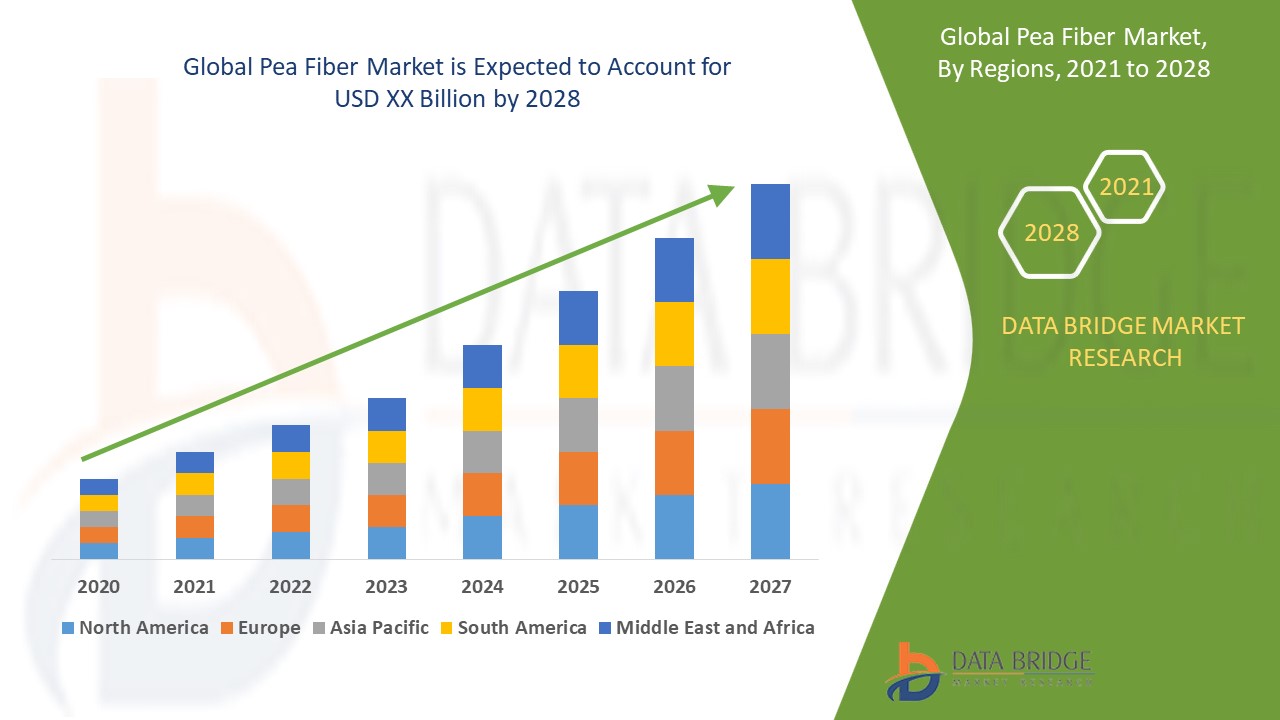
The global pea fiber market size was valued at USD 23.88 billion in 2024 and is projected to reach USD 43.93 billion by 2032, with a CAGR of 7.92% during the forecast period of 2025 to 2032. In addition to the insights on market scenarios such as market value, growth rate, segmentation, geographical coverage, and major players, the market reports curated by the Data Bridge Market Research also include in-depth expert analysis, pricing analysis, brand share analysis, consumer survey, demography analysis, supply chain analysis, value chain analysis, raw material/consumables overview, vendor selection criteria, PESTLE Analysis, Porter Analysis, and regulatory framework.
Pea Fiber Market Trends
“Rising Health Benefits of Pea Fibers”
Rising health benefits of pea fiber drive its increasing adoption in various industries. Consumers seek dietary fibers to improve digestion, weight management, and gut health. Pea fiber supports blood sugar regulation, making it suitable for diabetic-friendly products. Its cholesterol-lowering properties enhance heart health, attracting demand in functional foods. High protein and fiber content promote satiety, benefiting weight-conscious consumers. Food brands use pea fiber in snacks to enhance fiber intake conveniently. For instance, leading companies launch high-fiber protein bars targeting health-conscious demographics. Pea fiber’s prebiotic properties support gut microbiota, improving overall digestive wellness. Functional food and supplement manufacturers integrate it into their product formulations. Regulatory support for fiber-enriched diets strengthens its presence in nutrition-focused segments.
Report Scope and Pea Fiber Market Segmentation
|
Attributes |
Pea Fiber Key Market Insights |
|
Segments Covered |
|
|
Countries Covered |
U.S., Canada and Mexico in North America, Germany, France, U.K., Netherlands, Switzerland, Belgium, Russia, Italy, Spain, Turkey, Rest of Europe in Europe, China, Japan, India, South Korea, Singapore, Malaysia, Australia, Thailand, Indonesia, Philippines, Rest of Asia-Pacific (APAC) in the Asia-Pacific (APAC), Saudi Arabia, U.A.E, South Africa, Egypt, Israel, Rest of Middle East and Africa (MEA) as a part of Middle East and Africa (MEA), Brazil, Argentina and Rest of South America as part of South America |
|
Key Market Players |
Vestkorn Milling AS (Norway), A&B Ingredients, Inc. (U.S.), Roquette Frères (France), AGT Food and Ingredients Inc. (Canada), P&H Milling, Inc. (Canada), Shandong Jianyuan group (China), Yantai Oriental Protein Tech Co.,Ltd (China), Ingredion (U.S.), SunOpta (Canada), Limagrain (France), Hodmedod's British Wholefoods (U.K.), Avena Foods Limited (Canada), Diefenbaker Spice & Pulse (Canada), Mirfak Pty Ltd (Australia), Novo Farina (England), J. RETTENMAIER & SÖHNE GmbH + Co KG (Germany) |
|
Market Opportunities |
|
|
Value Added Data Infosets |
In addition to the insights on market scenarios such as market value, growth rate, segmentation, geographical coverage, and major players, the market reports curated by the Data Bridge Market Research also include in-depth expert analysis, pricing analysis, brand share analysis, consumer survey, demography analysis, supply chain analysis, value chain analysis, raw material/consumables overview, vendor selection criteria, PESTLE Analysis, Porter Analysis, and regulatory framework. |
Pea Fiber Market Definition
Pea fiber is a widely used plant-based dietary fiber derived from pea pods and seeds. It is incorporated into various food products to enhance fiber content and nutrition. Food manufacturers utilize pea fiber in bread, pasta, snacks, biscuits, and supplements. Growing consumer demand for high-fiber diets drives its adoption across multiple food categories. Health-conscious consumers prefer pea fiber for its digestive benefits and weight management support. Functional food brands leverage its properties to develop clean-label and high-fiber formulations. Rising trends in plant-based nutrition further strengthen its presence in the global market. Pea fiber’s gluten-free and allergen-free nature makes it ideal for specialized dietary needs. Regulatory encouragement for fiber fortification promotes its inclusion in mainstream food products. Market players focus on innovation to improve pea fiber’s functionality and application.
Pea Fiber Market Dynamics
Drivers
- Increasing Preference of Organic Labels
The increasing preference for organic labels is driving demand in the pea fiber market. Consumers seek organic-certified products to avoid synthetic additives and pesticides in their diet. Organic pea fiber aligns with clean-label trends, boosting its adoption in health-conscious segments. Food brands leverage organic certifications to enhance product appeal and consumer trust. Rising awareness of sustainability and natural ingredients strengthens the market for organic pea fiber. For instance, leading snack manufacturers introduce organic fiber-rich crackers to meet consumer demand. Regulatory bodies support organic farming practices, further encouraging market expansion in certified products. Organic pea fiber’s chemical-free processing attracts consumers prioritizing purity and environmental impact. Functional food and supplement brands emphasize organic claims to gain a competitive edge. Expanding retail availability of organic-labeled products accelerates the growth of the organic pea fiber segment.
- Rising Presence of Multiple Manufacturers and Suppliers at Local Level
The rising presence of multiple manufacturers and suppliers strengthens the local pea fiber market. Local players enhance supply chain efficiency, reducing costs and improving market accessibility. Increased competition drives innovation, leading to improved product quality and diverse applications. Small and mid-sized enterprises introduce cost-effective pea fiber solutions for regional food manufacturers. For instance, local suppliers provide customized fiber blends for bakeries and snack producers. Expanding production capacities at the local level ensures steady supply and market stability. Domestic manufacturers cater to niche demands, supporting specialized dietary and functional food needs. Government incentives for local agribusiness encourage new entrants in the pea fiber sector. Strong distribution networks established by regional suppliers enhance product availability in key markets. The growing presence of local manufacturers fosters price competitiveness and broader consumer reach.
Opportunities
- Increasing Modernization in the New Products
Increasing modernization in new products presents significant opportunities for the pea fiber market. Advanced processing technologies enhance pea fiber’s functionality, texture, and nutritional value. Innovative formulations improve solubility, making pea fiber suitable for diverse food applications. Food manufacturers develop modernized products incorporating pea fiber for better health benefits. For instance, plant-based meat producers use pea fiber to enhance texture and moisture retention. Functional beverage brands integrate pea fiber into shakes for improved fiber intake. Clean-label innovations focus on optimizing pea fiber for natural and organic product lines. R&D investments drive the development of high-performance pea fiber ingredients for various industries. Smart packaging solutions promote modernized pea fiber-based products with extended shelf life. Collaboration between food-tech firms and manufacturers accelerates innovation in pea fiber applications. The modernization trend strengthens market expansion by catering to evolving consumer preferences.
- Rising Research and Development Activities
Rising research and development activities create growth opportunities in the pea fiber market. Continuous innovation enhances pea fiber’s functionality, texture, and nutritional benefits for diverse applications. Advanced processing techniques improve solubility, making it suitable for beverages and functional foods. Researchers explore new extraction methods to enhance purity and fiber concentration. For instance, companies develop high-fiber pea blends for gluten-free and protein-rich formulations. R&D investments focus on optimizing pea fiber for improved gut health and digestion. Scientific studies support its role in weight management, boosting demand in health-focused segments. Collaboration between food-tech firms and research institutions accelerates product innovation and market expansion. Enhanced applications in bakery, snacks, and plant-based alternatives strengthen its market potential. Technological advancements drive the creation of customized pea fiber solutions for specialized dietary needs. Expanding R&D activities position pea fiber as a key ingredient in future food innovations.
Restraints/Challenges
- Rising Fluctuation in the Prices of Raw Materials
Rising fluctuation in raw material prices affects stability in the pea fiber market. Unstable pea crop yields influence supply, leading to cost variations for manufacturers. Climatic changes and unpredictable weather conditions impact pea production and market dynamics. Increased demand for plant-based ingredients creates supply constraints, affecting raw material costs. For instance, drought conditions reduce pea harvests, causing price fluctuations in global markets. Transportation and logistics disruptions further contribute to inconsistencies in raw material pricing. Fluctuating costs require manufacturers to adjust pricing strategies for pea fiber-based products. Procurement variations lead companies to reformulate products or explore alternative sourcing methods. Seasonal production cycles add uncertainty to raw material availability and affordability.
- High Production Costs for Premium-Quality Pea Fiber
High production costs for premium-quality pea fiber impact profitability in the market. Advanced processing techniques increase expenses, making high-quality pea fiber more costly to produce. Strict quality control measures add to operational costs, affecting overall pricing strategies. Specialized equipment and technology investments drive up manufacturing expenses for premium-grade fiber. For instance, ultra-refined pea fiber used in medical nutrition requires costly purification processes. Organic and non-GMO certifications further increase production costs due to compliance requirements. Limited economies of scale in some regions restrict cost efficiency for manufacturers. Sourcing high-quality raw materials demands premium pricing, affecting affordability for end consumers. Energy-intensive drying and extraction methods contribute to higher operational expenditures. Supply chain disruptions and transportation costs further escalate production expenses for premium pea fiber. Manufacturers must balance cost management with maintaining product quality and market competitiveness.
This market report provides details of new recent developments, trade regulations, import-export analysis, production analysis, value chain optimization, market share, impact of domestic and localized market players, analyses opportunities in terms of emerging revenue pockets, changes in market regulations, strategic market growth analysis, market size, category market growths, application niches and dominance, product approvals, product launches, geographic expansions, technological innovations in the market. To gain more info on the market contact Data Bridge Market Research for an Analyst Brief, our team will help you take an informed market decision to achieve market growth.
Impact and Current Market Scenario of Raw Material Shortage and Shipping Delays
Data Bridge Market Research offers a high-level analysis of the market and delivers information by keeping in account the impact and current market environment of raw material shortage and shipping delays. This translates into assessing strategic possibilities, creating effective action plans, and assisting businesses in making important decisions.
Apart from the standard report, we also offer in-depth analysis of the procurement level from forecasted shipping delays, distributor mapping by region, commodity analysis, production analysis, price mapping trends, sourcing, category performance analysis, supply chain risk management solutions, advanced benchmarking, and other services for procurement and strategic support.
Expected Impact of Economic Slowdown on the Pricing and Availability of Products
When economic activity slows, industries begin to suffer. The forecasted effects of the economic downturn on the pricing and accessibility of the products are taken into account in the market insight reports and intelligence services provided by DBMR. With this, our clients can typically keep one step ahead of their competitors, project their sales and revenue, and estimate their profit and loss expenditures.
Pea Fiber Market Scope
The market is segmented on the basis of nature, end-user industry, application, component, and food products. The growth amongst these segments will help you analyze meagre growth segments in the industries and provide the users with a valuable market overview and market insights to help them make strategic decisions for identifying core market applications.
Nature
- Natural
- Organic
- Conventional
End-User Industry
- Food Industry
- Dietary Supplements
- Pharmaceutical Industry
- Pet Food & Animal Feed
Application
- Normal Food Industry
- Baby Food Industry
- Children Food Industry
- Pet Food Industry
Component
- Pea Inner Fibre
- Pea Hull Fibre
Food Products
- Bakery Products
- Noodles/Pasta
- Savory
- Cheese
- Meat Products
- Snacks and Cereals
- Others
Pea Fiber Market Regional Analysis
The market is analysed and market size insights and trends are provided by country, nature, end-user industry, application, component, and food products as referenced above.
The countries covered in the market report are U.S., Canada, Mexico in North America, Germany, Sweden, Poland, Denmark, Italy, U.K., France, Spain, Netherland, Belgium, Switzerland, Turkey, Russia, Rest of Europe in Europe, Japan, China, India, South Korea, New Zealand, Vietnam, Australia, Singapore, Malaysia, Thailand, Indonesia, Philippines, Rest of Asia-Pacific (APAC) in Asia-Pacific (APAC), Brazil, Argentina, Rest of South America as a part of South America, U.A.E, Saudi Arabia, Oman, Qatar, Kuwait, South Africa, Rest of Middle East and Africa (MEA) as a part of Middle East and Africa (MEA).
Asia-Pacific is expected to dominate the pea fiber market during the forecast year of 2025-2032 due to rising health-conscious consumer trends and supportive government policies promoting dietary fiber intake. Increasing investments in plant-based nutrition and functional foods further drive market expansion. The region benefits from abundant raw material availability, ensuring large-scale pea fiber production.
North America is projected to observe significant amount of growth in the pea fibre market during the forecast year of 2025-2032 due to the increasing consumer willingness to invest in plant-based products. The expanding vegan and vegetarian population, along with increasing demand for gluten-free and allergen-friendly alternatives, is further boosting the adoption of pea fiber in various food and beverage applications.
The country section of the report also provides individual market impacting factors and changes in regulation in the market domestically that impacts the current and future trends of the market. Data points such as down-stream and upstream value chain analysis, technical trends and porter's five forces analysis, case studies are some of the pointers used to forecast the market scenario for individual countries. Also, the presence and availability of global brands and their challenges faced due to large or scarce competition from local and domestic brands, impact of domestic tariffs and trade routes are considered while providing forecast analysis of the country data.
Pea Fiber Market Share
The market competitive landscape provides details by competitor. Details included are company overview, company financials, revenue generated, market potential, investment in research and development, new market initiatives, global presence, production sites and facilities, production capacities, company strengths and weaknesses, product launch, product width and breadth, application dominance. The above data points provided are only related to the companies' focus related to market.
Pea Fiber Market Leaders Operating in the Market Are:
- Vestkorn Milling AS (Norway)
- A&B Ingredients, Inc. (U.S.)
- Roquette Frères (France)
- AGT Food and Ingredients Inc. (Canada)
- P&H Milling, Inc. (Canada)
- Shandong Jianyuan group (China)
- Yantai Oriental Protein Tech Co.,Ltd (China)
- Ingredion (U.S.)
- SunOpta (Canada)
- Limagrain (France)
- Hodmedod's British Wholefoods (U.K.)
- Avena Foods Limited (Canada)
- Diefenbaker Spice & Pulse (Canada)
- Mirfak Pty Ltd (Australia)
- Novo Farina (England)
- J. RETTENMAIER & SÖHNE GmbH + Co KG (Germany)
Latest Developments in Pea Fiber Market
- In May 2024, BioNeutra Global Corporation, a Canadian company, partnered with Protein Industries Canada, contributing to advancements in the pea fiber market. This collaboration focuses on improving processing technologies, enhancing product innovation, and expanding commercial applications. Increased investment in plant-based ingredients is expected to boost pea fiber adoption across multiple sectors
- In February 2022, Nestlé S.A. expanded its expertise in agricultural science through a cooperative agreement with research institutes. This collaboration promotes knowledge exchange, research innovation, and access to advanced agricultural technologies. By leveraging these resources, Nestlé aims to enhance sustainability and improve quality across its agricultural supply chain

- Interactive Data Analysis Dashboard
- Company Analysis Dashboard for high growth potential opportunities
- Research Analyst Access for customization & queries
- Competitor Analysis with Interactive dashboard
- Latest News, Updates & Trend analysis
- Harness the Power of Benchmark Analysis for Comprehensive Competitor Tracking
Global Pea Fiber Market, Supply Chain Analysis and Ecosystem Framework
To support market growth and help clients navigate the impact of geopolitical shifts, DBMR has integrated in-depth supply chain analysis into its Global Pea Fiber Market research reports. This addition empowers clients to respond effectively to global changes affecting their industries. The supply chain analysis section includes detailed insights such as Global Pea Fiber Market consumption and production by country, price trend analysis, the impact of tariffs and geopolitical developments, and import and export trends by country and HSN code. It also highlights major suppliers with data on production capacity and company profiles, as well as key importers and exporters. In addition to research, DBMR offers specialized supply chain consulting services backed by over a decade of experience, providing solutions like supplier discovery, supplier risk assessment, price trend analysis, impact evaluation of inflation and trade route changes, and comprehensive market trend analysis.
Data collection and base year analysis are done using data collection modules with large sample sizes. The stage includes obtaining market information or related data through various sources and strategies. It includes examining and planning all the data acquired from the past in advance. It likewise envelops the examination of information inconsistencies seen across different information sources. The market data is analysed and estimated using market statistical and coherent models. Also, market share analysis and key trend analysis are the major success factors in the market report. To know more, please request an analyst call or drop down your inquiry.
The key research methodology used by DBMR research team is data triangulation which involves data mining, analysis of the impact of data variables on the market and primary (industry expert) validation. Data models include Vendor Positioning Grid, Market Time Line Analysis, Market Overview and Guide, Company Positioning Grid, Patent Analysis, Pricing Analysis, Company Market Share Analysis, Standards of Measurement, Global versus Regional and Vendor Share Analysis. To know more about the research methodology, drop in an inquiry to speak to our industry experts.
Data Bridge Market Research is a leader in advanced formative research. We take pride in servicing our existing and new customers with data and analysis that match and suits their goal. The report can be customized to include price trend analysis of target brands understanding the market for additional countries (ask for the list of countries), clinical trial results data, literature review, refurbished market and product base analysis. Market analysis of target competitors can be analyzed from technology-based analysis to market portfolio strategies. We can add as many competitors that you require data about in the format and data style you are looking for. Our team of analysts can also provide you data in crude raw excel files pivot tables (Fact book) or can assist you in creating presentations from the data sets available in the report.













