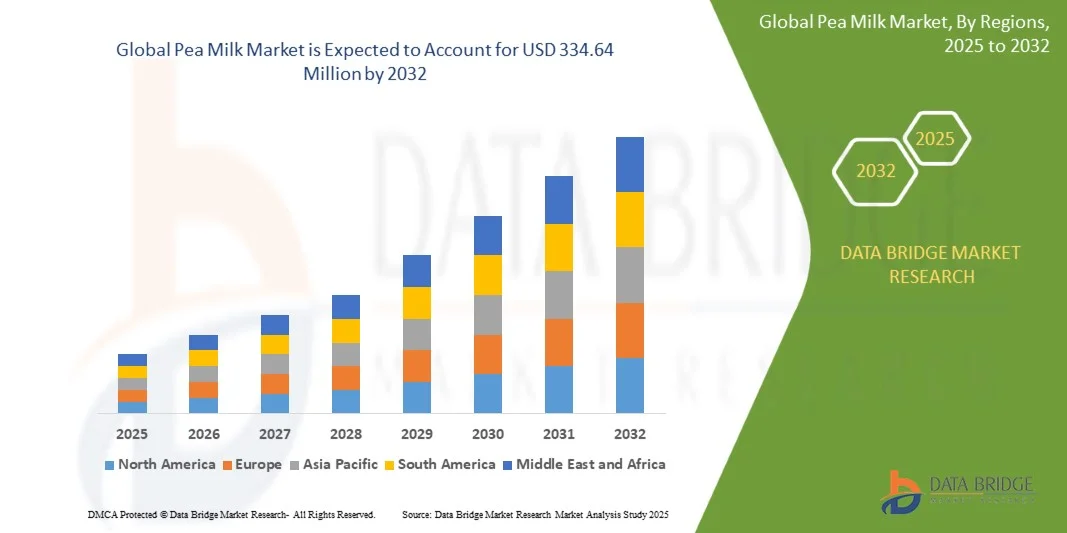
Pea Milk Market Size
- The Pea Milk Market size was valued at USD 106.40 million in 2024 and is expected to reach USD 334.64 million by 2032, growing at a CAGR of 15.40% during the forecast period.
- The market growth is primarily driven by increasing consumer preference for plant-based and dairy-free milk alternatives, coupled with growing awareness about health and sustainability benefits.
- Additionally, advancements in production technology and expanding distribution channels are enhancing product availability and variety, further propelling demand for pea milk worldwide.
Pea Milk Market Analysis
- Pea milk, a plant-based milk alternative derived from yellow peas, is gaining significant traction as a nutritious, sustainable, and allergen-friendly option in both residential and commercial markets due to its high protein content, environmental benefits, and versatility in various applications.
- The rising demand for pea milk is primarily driven by increasing consumer awareness of health and environmental issues, growing lactose intolerance cases, and the expanding vegan and flexitarian population seeking dairy-free alternatives.
- North America dominated the pea milk market with the largest revenue share of 38.5% in 2024, supported by early adoption of plant-based diets, high consumer spending power, and strong presence of key market players innovating with new flavors and fortified options. The U.S. witnessed substantial growth in retail and foodservice channels, driven by rising product availability and promotional efforts.
- Asia-Pacific is anticipated to be the fastest-growing region in the pea milk market during the forecast period due to increasing health consciousness, urbanization, and expanding distribution networks in countries like China and India.
- The Original segment dominated the market with the largest revenue share of approximately 40.8% in 2024, driven by consumers seeking the pure, natural taste of pea milk without additional flavoring.
Report Scope and Pea Milk Market Segmentation
|
Attributes |
Pea Milk Key Market Insights |
|
Segments Covered |
|
|
Countries Covered |
North America
Europe
Asia-Pacific
Middle East and Africa
South America
|
|
Key Market Players |
|
|
Market Opportunities |
|
|
Value Added Data Infosets |
In addition to the insights on market scenarios such as market value, growth rate, segmentation, geographical coverage, and major players, the market reports curated by the Data Bridge Market Research also include in-depth expert analysis, pricing analysis, brand share analysis, consumer survey, demography analysis, supply chain analysis, value chain analysis, raw material/consumables overview, vendor selection criteria, PESTLE Analysis, Porter Analysis, and regulatory framework. |
Pea Milk Market Trends
“Enhanced Nutritional Profile Through Fortification and Functional Ingredients”
- A significant and accelerating trend in the Pea Milk Market is the increasing incorporation of fortified vitamins, minerals, and functional ingredients such as probiotics, omega-3 fatty acids, and plant-based proteins. This advancement is driven by growing consumer demand for nutrient-rich, health-supportive beverages that go beyond basic milk alternatives.
- For Instance, brands like Ripple Foods and Califia Farms offer pea milk varieties enriched with calcium, vitamin D, and B12, appealing to health-conscious consumers seeking dairy-free options with added nutritional benefits. Similarly, some products include added fiber and antioxidants to support digestion and overall wellness.
- Fortification enhances the market appeal of pea milk by aligning with trends toward personalized nutrition and functional foods, positioning pea milk not only as an environmentally sustainable alternative but also as a source of essential nutrients.
- The seamless blend of nutrition and taste, combined with clean-label claims, is helping pea milk products stand out on retail shelves and in foodservice offerings, boosting consumer acceptance and repeat purchase rates.
- This trend towards more fortified, functional, and health-oriented pea milk products is reshaping consumer expectations and driving innovation across the industry. Consequently, companies such as Ripple Foods and Snappea Foods are expanding their portfolios with enhanced formulations that cater to diverse dietary needs and preferences.
- The demand for nutritionally enhanced pea milk is rapidly growing across both retail and foodservice sectors, as consumers increasingly prioritize beverages that deliver both health benefits and sustainability.
Pea Milk Market Dynamics
Driver
“Increasing Consumer Demand for Sustainable and Healthy Dairy Alternatives”
- The growing awareness of environmental sustainability and health concerns among consumers is a significant driver for the rising demand for pea milk globally. Pea milk’s lower carbon footprint and high nutritional profile position it as a preferred alternative to traditional dairy and other plant-based milks.
- For instance, in early 2024, companies like Ripple Foods and Snappea Foods launched new product lines emphasizing sustainability certifications and enhanced protein content, further boosting market interest. Such initiatives by leading brands are expected to fuel pea milk market growth throughout the forecast period.
- As consumers increasingly seek plant-based, allergen-free, and nutrient-dense beverages, pea milk offers advantages such as high protein, low allergenicity, and suitability for lactose-intolerant individuals, making it a compelling choice.
- Additionally, the rising vegan and flexitarian populations, alongside growing retail and foodservice distribution channels, contribute to the expanding adoption of pea milk in both developed and emerging markets.
- Convenience, taste improvements, and a wider variety of flavored and fortified pea milk products also play key roles in driving consumer acceptance and market penetration across residential and commercial sectors.
Restraint/Challenge
“Concerns Regarding Taste Profile and Higher Price Points”
- Despite its benefits, pea milk faces challenges related to consumer taste preferences and pricing, which can limit broader market adoption. Some consumers perceive pea milk’s taste and texture as less familiar or appealing compared to traditional dairy or other plant-based milks.
- For Instance, feedback from certain markets highlights lingering taste acceptance issues, especially where dairy consumption remains deeply entrenched culturally. Overcoming these taste barriers through flavor innovations and blending technologies is crucial for wider acceptance.
- Additionally, pea milk products often carry a higher price tag compared to conventional dairy and other plant-based milks like almond or oat milk, which can deter price-sensitive consumers, particularly in developing regions. While prices have been gradually decreasing due to improved production efficiencies, the premium positioning of pea milk remains a hurdle.
- Educating consumers on the health and environmental benefits of pea milk, along with expanding affordable product lines, will be essential to addressing these challenges. Companies such as The Mighty Society and Freedom Foods Group are investing in R&D to enhance flavor profiles and reduce costs, supporting sustained market growth.
Pea Milk Market Scope
The market is segmented on the basis of flavor, sweetness, pack size, packaging material, end user, sales channel.
• By Flavor
On the basis of flavor, the market is segmented into Original Flavored, Vanilla Flavored, Chocolate Flavored, and Barista Flavored. The Original Flavored segment dominated the market with the largest revenue share of 38.6% in 2024, attributed to its wide consumer base and neutral taste profile that appeals to a broad demographic. It remains a preferred choice for health-conscious individuals and consumers looking for a simple, unsweetened base for smoothies, cereals, and cooking applications.
The Barista Flavored segment is expected to witness the fastest CAGR of 20.5% from 2025 to 2032, driven by rising café culture, the increasing popularity of home-brewing coffee, and a growing demand for dairy alternatives that froth well and pair seamlessly with espresso-based beverages. The barista variant is particularly favored in urban markets and among millennials, providing a rich texture and taste tailored to meet professional coffee preparation standards.
• By Sweetness
Based on sweetness, the market is segmented into Sweetened and Unsweetened. The Sweetened segment held the largest revenue share of 57.4% in 2024, favored for its palatable taste and popularity among mainstream consumers and younger demographics. Sweetened plant-based beverages are often seen as an easy transition from dairy, especially among those trying these products for the first time. This segment benefits from widespread availability in retail outlets and ready-to-drink categories.
The Unsweetened segment is projected to grow at the fastest CAGR of 17.2% from 2025 to 2032, driven by increasing consumer awareness about added sugars, rising prevalence of diabetes, and a shift towards clean-label and health-focused products. Health-conscious individuals and fitness communities are particularly drawn to unsweetened varieties for their low-calorie profiles and versatility in both sweet and savory culinary applications.
• By Pack Size
On the basis of pack size, the market is segmented into 8 oz, 25 to 32 oz, and 48 oz. The 25 to 32 oz segment dominated the market with the largest revenue share of 45.1% in 2024, owing to its ideal size for household consumption and strong shelf presence in both refrigerated and ambient aisles. This size offers a balance between value and freshness, making it a go-to choice for daily users.
The 8 oz segment is expected to register the fastest CAGR of 19.8% from 2025 to 2032, driven by the rise in single-serving consumption, on-the-go lifestyles, and growing demand in vending and convenience channels. These smaller packs are increasingly favored by consumers seeking trial options, portion control, or portable beverage solutions, especially among school-going children, office workers, and fitness enthusiasts.
• By Packaging Material
On the basis of packaging material, the market is segmented into Tetra Packs and PET Bottles. The Tetra Packs segment held the largest revenue share of 62.3% in 2024, attributed to their lightweight, eco-friendly design, excellent shelf life, and widespread use in plant-based beverage packaging. Tetra Packs are preferred for their convenience, recyclability, and ability to preserve the flavor and nutritional integrity of the product without refrigeration.
The PET Bottles segment is projected to experience the fastest CAGR of 18.4% from 2025 to 2032, supported by the rise in ready-to-drink (RTD) formats and increased demand for resealable and durable packaging. PET bottles are commonly used for flavored and barista-style drinks and are gaining popularity in vending machines, gyms, and outdoor retail channels due to their portability and robustness.
• By End User
On the basis of end user, the market is segmented into Individual Consumers, HoReCa, and Gyms & Cafés. The Individual Consumers segment accounted for the largest market share of 66.5% in 2024, driven by the rise in health-consciousness, lactose intolerance, and vegan dietary preferences. Increased household consumption, especially for breakfast and snacking occasions, along with the integration of plant-based beverages into cooking routines, has reinforced individual demand.
The Gyms & Cafés segment is expected to witness the fastest CAGR of 21.1% from 2025 to 2032, fueled by the growing popularity of functional beverages, protein smoothies, and coffee-based alternatives. These establishments are increasingly using plant-based options to cater to health-oriented and vegan consumers, promoting them as sustainable, trendy, and wellness-aligned choices.
• By Sales Channel
On the basis of sales channel, the market is segmented into Brick & Mortar Stores, Online Retail Channels, and Others. The Brick & Mortar Stores segment dominated the market with the largest revenue share of 58.9% in 2024, due to strong consumer preference for in-store purchases, especially for perishable and taste-sensitive items like plant-based beverages. Supermarkets, health food stores, and specialty retailers offer high visibility and impulse-buy opportunities.
The Online Retail Channels segment is expected to witness the fastest CAGR of 22.6% from 2025 to 2032, propelled by the expansion of e-commerce, convenience of home delivery, and availability of subscription-based services. Online platforms provide consumers with access to a wider variety of SKUs, detailed product information, reviews, and promotional offers, making them increasingly attractive, especially for urban and tech-savvy shoppers.
Pea Milk Market Regional Analysis
- North America dominated the Pea Milk Market with the largest revenue share of 38.5% in 2024, driven by increasing consumer awareness about plant-based diets, health consciousness, and rising lactose intolerance cases.
- Consumers in the region highly value pea milk for its nutritional benefits, including high protein content and allergen-friendly profile, along with its sustainable and environmentally friendly production process.
- The widespread availability of pea milk products in supermarkets, specialty stores, and online retail platforms, coupled with strong marketing efforts by leading brands, supports market growth. Additionally, rising veganism and flexitarian trends, along with innovations in pea milk formulations like barista blends, are further propelling demand in both household and foodservice sectors across North America.
Pea Milk Market Share
The Pea Milk industry is primarily led by well-established companies, including:
- Snappea Foods (U.S.)
- The Mighty Society (U.S.)
- Freedom Foods Group Limited (Australia)
- Sproud International AB (Sweden)
- Devon Garden Food Limited (U.K.)
- Qwrkee Foods Ltd (U.K.)
- VF Nutrition GmbH (Germany)
- Ripple Foods PBC (U.S.)
- Califia Farms (U.S.)
- Oatly AB (Sweden)
- Daiya Foods (Canada)
- So Delicious Dairy Free (U.S.)
- Good Karma Foods (U.S.)
- Blue Diamond Growers (U.S)
- Oatly Group (Sweden)
- Vly Foods (U.S.)
What are the Recent Developments in Pea Milk Market?
- In April 2023, Ripple Foods, a leading plant-based food company, launched an innovative line of flavored pea milk products in the U.S. market. This expansion highlights Ripple’s focus on diversifying its product portfolio to meet the growing consumer demand for tasty and nutritious dairy alternatives. By leveraging its proprietary pea protein technology, Ripple aims to provide high-quality, allergen-friendly beverages that appeal to health-conscious and environmentally aware consumers, strengthening its position in the rapidly expanding Pea Milk Market.
- In March 2023, Danone, a global leader in dairy alternatives, introduced a new Barista Blend pea milk range in Europe, targeting coffee shops and cafes. This product launch is designed to cater to the rising demand for plant-based milk alternatives that perform well in coffee preparation, offering creamy texture and frothing capability. Danone’s initiative underscores the company’s commitment to innovation and sustainability, as it seeks to capture growing market share in the commercial foodservice sector of the Pea Milk Market.
- In March 2023, Oatly AB, a prominent plant-based milk producer, expanded its distribution network in Asia-Pacific by partnering with major online retail platforms in China and Japan. This strategic move aims to boost accessibility and consumer reach in key emerging markets where plant-based milk consumption is rapidly increasing. Oatly’s expansion highlights the rising awareness and adoption of pea milk products driven by health trends and environmental concerns, accelerating the growth trajectory of the Pea Milk Market.
- In February 2023, The LIVEKINDLY Collective announced a collaboration with leading North American grocery chains to introduce its range of pea milk beverages across multiple retail locations. This partnership focuses on increasing product availability and visibility to meet the surging demand for plant-based milk alternatives among household consumers. The initiative reflects LIVEKINDLY’s dedication to sustainability and innovation, helping to drive the expansion of the Pea Milk Market by making healthier options more accessible.
- In January 2023, Good Karma Foods unveiled its latest unsweetened pea milk variant at the Natural Products Expo West, targeting health-conscious consumers seeking allergen-free and clean-label alternatives. This launch emphasizes Good Karma’s commitment to offering nutritious, plant-based beverages that cater to specific dietary needs. By expanding its product line, Good Karma strengthens its foothold in the competitive Pea Milk Market, responding to consumer preferences for sustainable and functional dairy alternatives.

- Interactive Data Analysis Dashboard
- Company Analysis Dashboard for high growth potential opportunities
- Research Analyst Access for customization & queries
- Competitor Analysis with Interactive dashboard
- Latest News, Updates & Trend analysis
- Harness the Power of Benchmark Analysis for Comprehensive Competitor Tracking
Global Pea Milk Market, Supply Chain Analysis and Ecosystem Framework
To support market growth and help clients navigate the impact of geopolitical shifts, DBMR has integrated in-depth supply chain analysis into its Global Pea Milk Market research reports. This addition empowers clients to respond effectively to global changes affecting their industries. The supply chain analysis section includes detailed insights such as Global Pea Milk Market consumption and production by country, price trend analysis, the impact of tariffs and geopolitical developments, and import and export trends by country and HSN code. It also highlights major suppliers with data on production capacity and company profiles, as well as key importers and exporters. In addition to research, DBMR offers specialized supply chain consulting services backed by over a decade of experience, providing solutions like supplier discovery, supplier risk assessment, price trend analysis, impact evaluation of inflation and trade route changes, and comprehensive market trend analysis.
Data collection and base year analysis are done using data collection modules with large sample sizes. The stage includes obtaining market information or related data through various sources and strategies. It includes examining and planning all the data acquired from the past in advance. It likewise envelops the examination of information inconsistencies seen across different information sources. The market data is analysed and estimated using market statistical and coherent models. Also, market share analysis and key trend analysis are the major success factors in the market report. To know more, please request an analyst call or drop down your inquiry.
The key research methodology used by DBMR research team is data triangulation which involves data mining, analysis of the impact of data variables on the market and primary (industry expert) validation. Data models include Vendor Positioning Grid, Market Time Line Analysis, Market Overview and Guide, Company Positioning Grid, Patent Analysis, Pricing Analysis, Company Market Share Analysis, Standards of Measurement, Global versus Regional and Vendor Share Analysis. To know more about the research methodology, drop in an inquiry to speak to our industry experts.
Data Bridge Market Research is a leader in advanced formative research. We take pride in servicing our existing and new customers with data and analysis that match and suits their goal. The report can be customized to include price trend analysis of target brands understanding the market for additional countries (ask for the list of countries), clinical trial results data, literature review, refurbished market and product base analysis. Market analysis of target competitors can be analyzed from technology-based analysis to market portfolio strategies. We can add as many competitors that you require data about in the format and data style you are looking for. Our team of analysts can also provide you data in crude raw excel files pivot tables (Fact book) or can assist you in creating presentations from the data sets available in the report.