


Peaking Power Plant Market Size
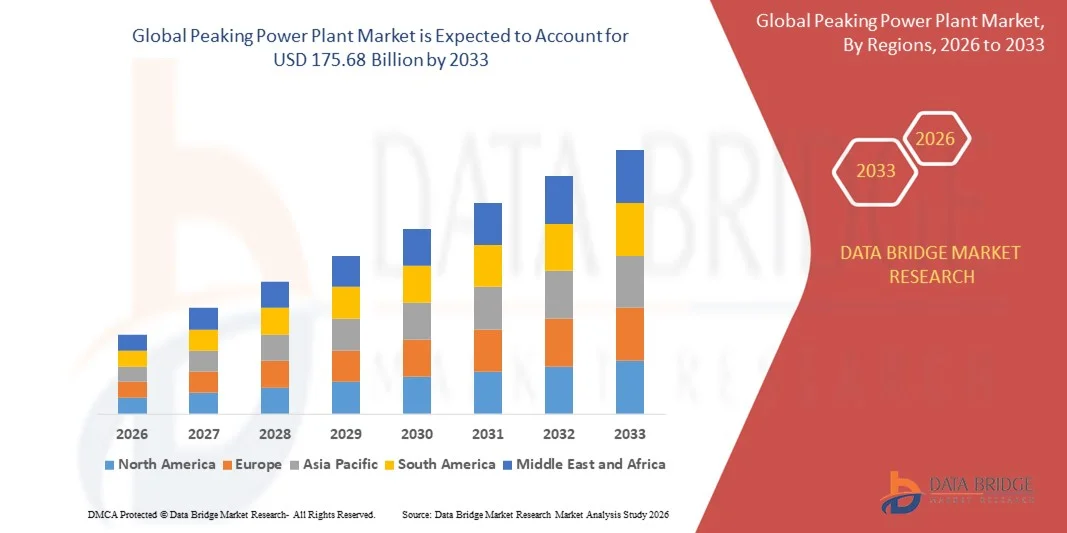
- The global peaking power plant market size was valued at USD 132.39 billion in 2025 and is expected to reach USD 175.68 billion by 2033, at a CAGR of 3.60% during the forecast period
- The peaking power plant market is primarily driven by the increasing demand for flexible and fast-response power generation solutions to manage peak electricity loads and balance grid stability across regions with high renewable energy penetration
- Furthermore, rising investments in energy infrastructure, government initiatives to modernize grids, and growing focus on decarbonization are encouraging the deployment of natural gas, hydropower, and hydrogen-ready peaking plants. These factors are accelerating market adoption, thereby significantly boosting industry growth
Peaking Power Plant Market Analysis
- Peaking power plants are power generation facilities designed to operate during periods of high electricity demand, providing rapid ramp-up capabilities and supporting grid reliability. They include natural gas, hydropower, biogas, and petroleum-based plants that can be dispatched quickly to complement baseload and renewable energy sources
- The market’s growth is further fueled by increasing industrial and commercial electricity consumption, frequent peak load challenges, and the integration of intermittent renewable energy sources, which create a strong need for flexible and reliable peaking solutions
- Asia-Pacific dominated the peaking power plant market with a share of 37.69% in 2025, due to rapid urbanization, rising electricity demand, and large-scale investments in power generation infrastructure across emerging economies
- North America is expected to be the fastest growing region in the peaking power plant market during the forecast period due to rising peak electricity demand, extreme weather events, and large-scale renewable energy deployment
- Natural gas power plant segment dominated the market with a market share of 46.5% in 2025, due to its ability to ramp up and down quickly to meet peak electricity demand with relatively lower emissions compared to coal and oil-based plants. Utilities favor natural gas peaking plants due to their operational flexibility, high efficiency, and widespread fuel availability supported by expanding gas infrastructure. These plants also benefit from lower capital costs and shorter construction timelines, making them suitable for addressing sudden demand spikes and grid balancing requirements
Report Scope and Peaking Power Plant Market Segmentation
|
Attributes |
Peaking Power Plant Key Market Insights |
|
Segments Covered |
|
|
Countries Covered |
North America
Europe
Asia-Pacific
Middle East and Africa
South America
|
|
Key Market Players |
|
|
Market Opportunities |
|
|
Value Added Data Infosets |
In addition to the insights on market scenarios such as market value, growth rate, segmentation, geographical coverage, and major players, the market reports curated by the Data Bridge Market Research also include import export analysis, production capacity overview, production consumption analysis, price trend analysis, climate change scenario, supply chain analysis, value chain analysis, raw material/consumables overview, vendor selection criteria, PESTLE Analysis, Porter Analysis, and regulatory framework. |
Peaking Power Plant Market Trends
Rising Adoption of Hydrogen-Ready and Low-Carbon Peaking Plants
- A significant trend in the peaking power plant market is the increasing deployment of hydrogen-ready and low-carbon peaking solutions, driven by growing decarbonization targets, rising renewable energy penetration, and the need for flexible power generation to manage peak loads. This trend is positioning hydrogen and other low-carbon fuels as viable alternatives to conventional natural gas or petroleum-based peaking plants, enhancing sustainability and grid reliability
- For instance, in November 2023, GE Vernova and Duke Energy announced the development of the U.S.’s first peaker plant powered entirely by green hydrogen, demonstrating the viability of low-carbon peaking solutions. Such projects are setting benchmarks for emission reduction and operational flexibility in the market
- The adoption of hydrogen-ready plants is increasing globally as utilities and grid operators seek solutions to complement intermittent renewables while maintaining grid stability. These plants enable rapid ramp-up capabilities, support decarbonization goals, and reduce dependence on fossil fuels
- Investment in retrofitting existing gas-fired peaking plants to become hydrogen-ready is also growing. Companies such as Centrica Business Solutions, with its 20 MW hydrogen-ready plant in Worcestershire, are exemplifying how existing infrastructure can be upgraded to meet environmental and operational objectives
- In addition, low-carbon and hydrogen-ready peaking plants are gaining traction due to supportive government policies, renewable energy incentives, and public-private partnerships focused on sustainable energy projects. These factors are accelerating the adoption of cleaner peaking solutions across key regions
- The market is also witnessing increased research and development activities focused on synthetic natural gas and green hydrogen integration, as seen in TotalEnergies and Tree Energy Solutions’ U.S. project announced in June 2023. These initiatives reinforce the long-term potential for low-carbon fuels in peaking power generation
Peaking Power Plant Market Dynamics
Driver
Increasing Demand for Flexible and Fast-Response Power Generation
- The growing need for rapid-response power generation to manage peak electricity demand, balance renewable integration, and ensure grid reliability is a primary driver of the peaking power plant market. Utilities and independent power producers are increasingly investing in fast-ramping peaking solutions, including gas-fired, hydropower, and hydrogen-ready plants
- For instance, Peak Power secured a USD 200 billion development partnership with Madison Energy Investments in February 2023 to expand its portfolio of flexible peaking projects, highlighting the market’s focus on fast-response capacity
- Rising industrial and commercial electricity consumption, coupled with frequent peak load challenges, is creating a strong requirement for flexible generation assets that can be dispatched quickly and efficiently
- Integration of renewable energy sources such as solar and wind increases grid intermittency, necessitating peaking plants that can operate on-demand to stabilize supply. This is further reinforcing market demand for flexible peaking solutions
- The need to avoid grid overloads and maintain energy security during periods of high demand continues to strengthen this driver, positioning fast-response peaking solutions as critical assets for modern power systems
Restraint/Challenge
High Capital and Operational Costs of Peaking Power Plants
- The peaking power plant market faces challenges due to the substantial capital investment and high operational costs associated with fast-ramping, flexible power plants. These costs include infrastructure, fuel, maintenance, and technology upgrades required to meet regulatory and performance standards
- For instance, constructing hydrogen-ready or synthetic natural gas peaking plants, as pursued by GE Vernova and TotalEnergies respectively, involves significant upfront expenditure for specialized equipment, storage, and fuel handling systems
- Operating costs for peaking plants are generally higher than for baseload generation, as they run only during peak periods but require readiness and rapid dispatch capability at all times
- The dependence on specialized technology, high-grade materials, and skilled labor further increases financial burden and limits the economic feasibility for smaller market players
- These cost-related constraints continue to challenge market participants, requiring careful financial planning and strategic investment to balance efficiency, flexibility, and profitability in the peaking power plant sector
Peaking Power Plant Market Scope
The market is segmented on the basis of type and end-user.
- By Type
On the basis of type, the peaking power plant market is segmented into hydropower plant, natural gas power plant, biogas power plant, petroleum based power plant, and others. The natural gas power plant segment dominated the largest market revenue share of 46.5% in 2025, driven by its ability to ramp up and down quickly to meet peak electricity demand with relatively lower emissions compared to coal and oil-based plants. Utilities favor natural gas peaking plants due to their operational flexibility, high efficiency, and widespread fuel availability supported by expanding gas infrastructure. These plants also benefit from lower capital costs and shorter construction timelines, making them suitable for addressing sudden demand spikes and grid balancing requirements.
The hydropower plant segment is anticipated to witness the fastest growth from 2026 to 2033, supported by increasing investments in renewable energy and pumped storage hydropower projects. Hydropower peaking plants offer rapid response capabilities, long operational life, and minimal fuel cost, which enhances their attractiveness for grid stability. Growing focus on decarbonization and the integration of intermittent renewable sources further accelerates the adoption of hydropower as a clean and reliable peaking solution.
- By End-User
On the basis of end-user, the peaking power plant market is segmented into industrial, commercial, and residential. The industrial segment accounted for the largest market revenue share in 2025, driven by high and fluctuating electricity demand from manufacturing facilities, refineries, and large processing plants. Industries rely on peaking power plants to ensure uninterrupted operations during peak load periods, avoid production losses, and manage energy costs. The need for reliable backup power and demand response capabilities continues to reinforce adoption in this segment.
The commercial segment is expected to register the fastest growth rate during the forecast period, supported by rising electricity consumption from data centers, hospitals, airports, and large commercial complexes. These facilities require consistent power supply during peak hours to maintain critical operations and service quality. Increasing urbanization, expansion of commercial infrastructure, and growing emphasis on energy resilience are key factors driving the rapid growth of peaking power plants in the commercial sector.
Peaking Power Plant Market Regional Analysis
- Asia-Pacific dominated the peaking power plant market with the largest revenue share of 37.69% in 2025, driven by rapid urbanization, rising electricity demand, and large-scale investments in power generation infrastructure across emerging economies
- The region’s expanding industrial base, frequent peak load fluctuations, and increasing integration of renewable energy sources are accelerating the deployment of flexible peaking power plants
- Government-led grid expansion programs, growing electricity consumption from manufacturing and commercial sectors, and rising focus on grid stability are contributing to strong regional market growth
China Peaking Power Plant Market Insight
China held the largest share in the Asia-Pacific peaking power plant market in 2025, supported by its massive power generation capacity, rapid industrial growth, and increasing need to balance renewable energy integration. The country’s strong investments in natural gas and pumped hydropower peaking plants, along with grid modernization initiatives, are key growth drivers. Rising electricity demand during peak hours and ongoing energy transition efforts further strengthen market expansion.
India Peaking Power Plant Market Insight
India is witnessing the fastest growth in the Asia-Pacific region, fueled by rising power demand from industrialization, urban expansion, and increasing air conditioning usage. Government initiatives focused on grid reliability, renewable integration, and expansion of natural gas infrastructure are driving adoption of peaking power plants. In addition, frequent peak load challenges and investments in flexible generation capacity are supporting strong market growth.
Europe Peaking Power Plant Market Insight
The Europe peaking power plant market is growing steadily, driven by the increasing penetration of renewable energy, strict grid reliability standards, and the need for flexible backup power solutions. The region’s focus on reducing carbon emissions is encouraging the adoption of natural gas and hydropower-based peaking plants. Ongoing investments in energy storage integration and grid balancing solutions are further supporting market development.
Germany Peaking Power Plant Market Insight
Germany’s market is supported by its advanced power infrastructure, high renewable energy penetration, and strong emphasis on grid stability. The country’s energy transition policies are increasing reliance on flexible peaking plants to manage intermittency from wind and solar power. Investments in efficient gas-fired peaking plants and pumped storage facilities are key contributors to market growth.
U.K. Peaking Power Plant Market Insight
The U.K. peaking power plant market benefits from rising electricity demand, growing offshore wind capacity, and the need for rapid-response power generation. Grid operators increasingly rely on peaking plants to maintain supply-demand balance during high-demand periods. Supportive regulatory frameworks and investments in flexible generation assets continue to strengthen the market.
North America Peaking Power Plant Market Insight
North America is projected to grow at the fastest CAGR from 2026 to 2033, driven by rising peak electricity demand, extreme weather events, and large-scale renewable energy deployment. The need for reliable and fast-ramping power sources to support grid resilience is boosting adoption of peaking power plants. Strong investments in natural gas infrastructure and grid modernization are further accelerating market growth.
U.S. Peaking Power Plant Market Insight
The U.S. accounted for the largest share in the North America market in 2025, supported by its extensive power generation network, high electricity consumption, and advanced grid management systems. The country’s growing reliance on gas-fired peaking plants to support renewable integration and manage peak demand is a major growth factor. Favorable investments in flexible power generation and energy reliability initiatives reinforce the U.S.’s leading position in the region.
Peaking Power Plant Market Share
The peaking power plant industry is primarily led by well-established companies, including:
- Siemens AG (Germany)
- Toshiba Corporation (Japan)
- Wärtsilä Corporation (Finland)
- Clarke Energy (U.K.)
- Acciona S.A. (Spain)
- TPSC (India) Pvt. Ltd. (India)
- Voith GmbH & Co. KGaA (Germany)
- Andritz AG (Austria)
- ENGIE SA (France)
- ABB Ltd. (Switzerland)
- GE Vernova (U.S.)
- Mitsubishi Power Ltd. (Japan)
- MAN Energy Solutions SE (Germany)
- Caterpillar Inc. (U.S.)
- Cummins Inc. (U.S.)
- Hitachi Energy Ltd. (Switzerland)
Latest Developments in Global Peaking Power Plant Market
- In November 2023, GE Vernova and Duke Energy partnered to develop the nation’s first peaker plant powered entirely by green hydrogen, signaling a major shift toward zero-carbon peaking solutions. This development strengthens the long-term outlook for sustainable peaking power plants by validating hydrogen’s role in grid flexibility and emissions reduction
- In June 2023, TotalEnergies and Tree Energy Solutions announced plans to build a synthetic natural gas plant in the U.S. using green hydrogen and captured carbon dioxide. This initiative supports the peaking power plant market by enabling low-carbon, dispatchable fuel alternatives compatible with existing gas-fired peaker infrastructure
- In April 2023, Centrica Business Solutions began construction of a 20 MW gas-fired peaking plant in Worcestershire designed to be hydrogen-ready. This project highlights growing investment in flexible peaking assets while future-proofing plants for hydrogen adoption, reinforcing market growth amid energy transition goals
- In February 2023, Peak Power secured a large-scale development partnership with Madison Energy Investments, enhancing its capacity to deploy peaking and distributed energy projects. The partnership accelerates market expansion by improving access to capital and supporting rapid deployment of flexible power solutions
- In October 2022, Vistra announced plans to extend the operating life of the Comanche Peak Nuclear Power Plant to 2053 through a license renewal application. While not a peaker asset, this move impacts the broader power market by supporting baseload stability, indirectly increasing the need for complementary peaking plants to manage demand variability

- Interactive Data Analysis Dashboard
- Company Analysis Dashboard for high growth potential opportunities
- Research Analyst Access for customization & queries
- Competitor Analysis with Interactive dashboard
- Latest News, Updates & Trend analysis
- Harness the Power of Benchmark Analysis for Comprehensive Competitor Tracking
Global Peaking Power Plant Market, Supply Chain Analysis and Ecosystem Framework
To support market growth and help clients navigate the impact of geopolitical shifts, DBMR has integrated in-depth supply chain analysis into its Global Peaking Power Plant Market research reports. This addition empowers clients to respond effectively to global changes affecting their industries. The supply chain analysis section includes detailed insights such as Global Peaking Power Plant Market consumption and production by country, price trend analysis, the impact of tariffs and geopolitical developments, and import and export trends by country and HSN code. It also highlights major suppliers with data on production capacity and company profiles, as well as key importers and exporters. In addition to research, DBMR offers specialized supply chain consulting services backed by over a decade of experience, providing solutions like supplier discovery, supplier risk assessment, price trend analysis, impact evaluation of inflation and trade route changes, and comprehensive market trend analysis.
Data collection and base year analysis are done using data collection modules with large sample sizes. The stage includes obtaining market information or related data through various sources and strategies. It includes examining and planning all the data acquired from the past in advance. It likewise envelops the examination of information inconsistencies seen across different information sources. The market data is analysed and estimated using market statistical and coherent models. Also, market share analysis and key trend analysis are the major success factors in the market report. To know more, please request an analyst call or drop down your inquiry.
The key research methodology used by DBMR research team is data triangulation which involves data mining, analysis of the impact of data variables on the market and primary (industry expert) validation. Data models include Vendor Positioning Grid, Market Time Line Analysis, Market Overview and Guide, Company Positioning Grid, Patent Analysis, Pricing Analysis, Company Market Share Analysis, Standards of Measurement, Global versus Regional and Vendor Share Analysis. To know more about the research methodology, drop in an inquiry to speak to our industry experts.
Data Bridge Market Research is a leader in advanced formative research. We take pride in servicing our existing and new customers with data and analysis that match and suits their goal. The report can be customized to include price trend analysis of target brands understanding the market for additional countries (ask for the list of countries), clinical trial results data, literature review, refurbished market and product base analysis. Market analysis of target competitors can be analyzed from technology-based analysis to market portfolio strategies. We can add as many competitors that you require data about in the format and data style you are looking for. Our team of analysts can also provide you data in crude raw excel files pivot tables (Fact book) or can assist you in creating presentations from the data sets available in the report.













