


What is the Pelvic Cellulitis Treatment Market Size and Growth Rate?
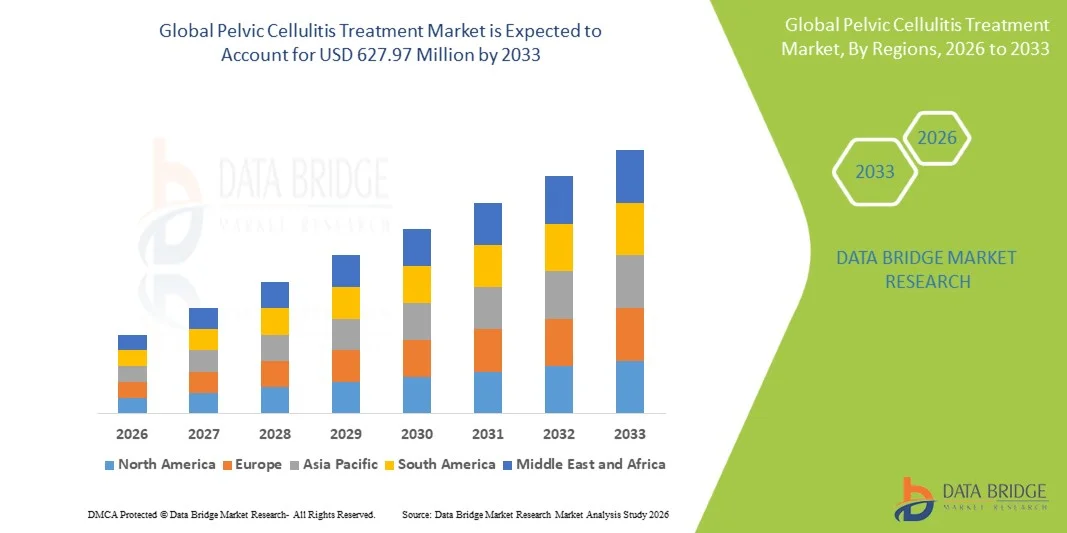
- The global pelvic cellulitis treatment market size was valued at USD 448.40 million in 2025and is expected to reach USD 627.97 million by 2033, at a CAGR of 4.30% during the forecast period
- The market growth is largely driven by the increasing prevalence of pelvic infections, rising awareness regarding early diagnosis, and advancements in antibiotic therapies and treatment protocols, leading to improved clinical outcomes across healthcare settings
- Furthermore, growing healthcare infrastructure, rising access to gynecological and reproductive health services, and increasing demand for effective infection management solutions are positioning pelvic cellulitis treatments as essential components of modern care. These converging factors are accelerating the adoption of advanced therapeutic approaches, thereby significantly boosting the market growth
What are the Major Takeaways of Pelvic Cellulitis Treatment Market?
- Pelvic cellulitis treatment, involving the use of targeted antibiotic therapies, supportive care, and in severe cases surgical intervention, plays a critical role in managing deep pelvic infections and preventing complications, making it an essential component of gynecological and infectious disease care across hospital and clinical settings
- The escalating demand for pelvic cellulitis treatment is primarily fueled by the rising incidence of pelvic infections, increasing awareness regarding women’s reproductive health, and improved access to diagnostic and healthcare services, along with advancements in antimicrobial therapies enhancing treatment effectiveness
- North America dominated the pelvic cellulitis treatment market with the largest revenue share of 40.07% in 2025, characterized by advanced healthcare infrastructure, strong clinical awareness, and widespread access to early diagnostic and treatment options, with the U.S. witnessing significant adoption of advanced antibiotic regimens and hospital-based care protocols
- Asia-Pacific is expected to be the fastest growing region in the pelvic cellulitis treatment market during the forecast period due to increasing healthcare expenditure, improving access to gynecological care, and rising awareness about early infection management across emerging economies
- Antibiotics segment dominated the pelvic cellulitis treatment market with a market share of 43.9% in 2025, driven by its role as the first-line and most effective treatment approach for managing bacterial pelvic infections and preventing disease progression
Report Scope and Pelvic Cellulitis Treatment Market Segmentation
|
Attributes |
Pelvic Cellulitis Treatment Key Market Insights |
|
Segments Covered |
|
|
Countries Covered |
North America
Europe
Asia-Pacific
Middle East and Africa
South America
|
|
Key Market Players |
|
|
Market Opportunities |
|
|
Value Added Data Infosets |
In addition to the insights on market scenarios such as market value, growth rate, segmentation, geographical coverage, and major players, the market reports curated by the Data Bridge Market Research also include in-depth expert analysis, patient epidemiology, pipeline analysis, pricing analysis, and regulatory framework |
What is the Key Trend in the Pelvic Cellulitis Treatment Market?
“Advancements in Targeted Antibiotic Therapies and Early Diagnosis Integration”
- A significant and accelerating trend in the global pelvic cellulitis treatment market is the advancement and integration of targeted antibiotic therapies with improved diagnostic technologies such as imaging and laboratory testing. This convergence is significantly enhancing treatment accuracy and patient outcomes
- For instance, the use of broad-spectrum and combination antibiotic regimens in hospital settings allows clinicians to effectively manage polymicrobial pelvic infections, while diagnostic imaging tools such as ultrasound and CT scans enable precise identification of infection sites. Similarly, rapid diagnostic kits are increasingly being utilized to guide timely treatment decisions
- Integration of advanced treatment protocols enables features such as personalized antibiotic selection based on patient condition and microbial sensitivity, improving recovery rates and reducing complications. For instance, some healthcare providers are adopting antimicrobial stewardship programs to optimize antibiotic use and minimize resistance risks. Furthermore, early diagnosis capabilities allow healthcare professionals to initiate prompt treatment, reducing the severity of infections
- The seamless integration of treatment approaches with diagnostic advancements facilitates comprehensive management of pelvic infections across healthcare systems. Through coordinated care pathways, clinicians can manage infection progression alongside patient monitoring and follow-up care, creating a more efficient treatment environment
- This trend towards more precise, efficient, and patient-centric treatment systems is fundamentally reshaping clinical approaches to infection management. Consequently, companies such as Pfizer are focusing on developing advanced anti-infective therapies and expanding access to effective treatment solutions
- The demand for pelvic cellulitis treatments that offer effective infection control and improved patient outcomes is growing rapidly across hospitals and clinics, as healthcare providers increasingly prioritize early intervention and optimized therapeutic strategies
- Growing integration of digital health technologies, including telemedicine and remote patient monitoring, is enabling continuous patient management and follow-up, thereby enhancing treatment adherence and clinical efficiency
Driver What are the Key Drivers of Pelvic Cellulitis Treatment Market?
“Rising Prevalence of Pelvic Infections and Improved Healthcare Access”
- The increasing prevalence of pelvic infections among women, coupled with improving access to healthcare services, is a significant driver for the heightened demand for pelvic cellulitis treatment
- For instance, in March 2025, Pfizer announced ongoing efforts to expand its anti-infective portfolio, focusing on treatments targeting complex bacterial infections. Such strategies by key companies are expected to drive the pelvic cellulitis treatment market growth in the forecast period
- As awareness regarding reproductive and gynecological health increases, patients are more likely to seek timely medical intervention, leading to higher diagnosis and treatment rates. Advanced healthcare infrastructure also enables better management of infection cases
- Furthermore, the growing availability of diagnostic tools and trained healthcare professionals is improving the identification and treatment of pelvic infections, ensuring more effective clinical outcomes
- The convenience of accessible healthcare services, improved antibiotic availability, and structured treatment protocols are key factors propelling the adoption of pelvic cellulitis treatment across hospitals and specialty clinics. The trend towards early diagnosis and preventive care further contributes to market growth
- Rising government and public health initiatives focused on women’s health awareness and infection prevention programs are further accelerating early diagnosis and timely treatment adoption
- Increasing investments by pharmaceutical companies in research and development of advanced anti-infective drugs are contributing to the availability of more effective and targeted treatment options
Restraint/Challenge
“Antibiotic Resistance and Treatment Complexity Challenges”
- Concerns surrounding the rising incidence of antibiotic resistance and complexity in treating severe pelvic infections pose a significant challenge to broader market growth. As pelvic cellulitis often involves polymicrobial infections, treatment can become increasingly complicated, raising concerns among healthcare providers regarding effectiveness
- For instance, reports of antibiotic-resistant bacterial strains have made clinicians more cautious in selecting treatment regimens, sometimes requiring combination therapies or prolonged treatment durations
- Addressing these challenges through the development of novel antibiotics, combination therapies, and antimicrobial stewardship programs is crucial for improving treatment outcomes. Companies such as GlaxoSmithKline emphasize research into new anti-infective solutions to combat resistance. In addition, the relatively high cost of advanced treatments and hospitalization in severe cases can be a barrier to access, particularly in low- and middle-income regions
- While treatment protocols are continuously improving, the complexity of managing advanced infections and ensuring patient compliance can still hinder optimal outcomes, especially where healthcare access is limited
- Overcoming these challenges through continued innovation in antibiotic development, enhanced clinical guidelines, and expanded healthcare access will be vital for sustained market growth
- Limited awareness and delayed diagnosis in rural or underserved regions can lead to advanced-stage infections, further complicating treatment and reducing effectiveness
- Potential side effects associated with prolonged antibiotic use and risk of recurrence in some patients may impact treatment adherence and overall patient outcomes
How is the Pelvic Cellulitis Treatment Market Segmented?
The market is segmented on the basis of diagnosis, treatment, dosage, route of administration, end-users, and distribution channel.
- By Diagnosis
On the basis of diagnosis, the pelvic cellulitis treatment market is segmented into ultrasound, laparoscopy, CT scan, endoscopic ultrasound, and others. The CT scan segment dominated the market with the largest revenue share in 2025, driven by its high accuracy in detecting deep pelvic infections and complications. CT scans are widely preferred in hospital settings due to their ability to provide detailed cross-sectional imaging, enabling clinicians to assess the severity and spread of infection effectively. Their role in guiding treatment decisions, especially in complex or advanced cases, further strengthens their dominance. In addition, increasing availability of advanced imaging infrastructure in developed regions contributes to higher adoption rates. The integration of CT imaging with diagnostic protocols ensures timely and precise intervention, improving patient outcomes. As a result, CT scan remains the cornerstone diagnostic modality for pelvic cellulitis.
The ultrasound segment is anticipated to witness the fastest growth rate from 2026 to 2033, fueled by its cost-effectiveness, non-invasive nature, and widespread availability. Ultrasound is often the first-line diagnostic tool, particularly in outpatient and emergency settings, due to its accessibility and real-time imaging capabilities. It is especially preferred in resource-limited settings where advanced imaging modalities may not be readily available. The growing use of portable ultrasound devices is further enhancing its adoption across clinics and smaller healthcare facilities. In addition, increasing emphasis on early diagnosis is boosting demand for rapid and safe imaging solutions such as ultrasound. These advantages position ultrasound as a rapidly expanding segment in the diagnostic landscape.
- By Treatment
On the basis of treatment, the market is segmented into antibiotics and others. The antibiotics segment dominated the market with the largest revenue share of 43.9% in 2025, driven by its role as the primary and most effective treatment approach for pelvic cellulitis. Antibiotics are widely prescribed as first-line therapy to control bacterial infections and prevent disease progression. The availability of a broad range of antibiotic classes allows clinicians to tailor treatment based on infection severity and microbial profile. Increasing prevalence of bacterial pelvic infections further reinforces the demand for antibiotic therapies. In addition, advancements in combination therapies and broad-spectrum antibiotics enhance treatment efficacy. Hospitals and clinics heavily rely on antibiotic regimens for both inpatient and outpatient care. This strong clinical reliance ensures the continued dominance of the antibiotics segment.
The others segment is expected to witness the fastest CAGR from 2026 to 2033, driven by the growing adoption of supportive therapies and surgical interventions in severe cases. These include drainage procedures, pain management therapies, and adjunctive treatments aimed at improving recovery outcomes. Increasing incidence of complicated infections requiring multidisciplinary care is boosting demand for such alternatives. Furthermore, advancements in minimally invasive surgical techniques are making these treatments safer and more effective. The rising focus on comprehensive patient management is also encouraging the use of combined treatment approaches. As healthcare systems evolve, the role of supportive and advanced interventions is expected to expand significantly.
- By Dosage
On the basis of dosage, the market is segmented into tablet, injection, and others. The injection segment dominated the market with the largest revenue share in 2025, driven by its rapid action and high efficacy in treating severe infections. Injectable antibiotics are commonly administered in hospital settings for patients with acute or advanced pelvic cellulitis. Their ability to deliver immediate therapeutic effects makes them critical in emergency and inpatient care. Physicians often prefer injections when oral administration is not feasible or effective. In addition, intravenous administration ensures precise dosing and better bioavailability. The increasing number of hospital admissions for severe infections further supports the dominance of this segment. As a result, injectable dosage forms remain essential in clinical treatment protocols.
The tablet segment is anticipated to witness the fastest growth rate from 2026 to 2033, fueled by increasing preference for outpatient treatment and ease of administration. Tablets offer convenience, cost-effectiveness, and improved patient compliance compared to injectable forms. They are widely used for mild to moderate infections and for continuation therapy after initial hospital treatment. Growing awareness regarding early diagnosis is also increasing the use of oral medications. Furthermore, advancements in oral antibiotic formulations are enhancing their effectiveness. The shift towards home-based care and reduced hospital stays is further accelerating the growth of this segment.
- By Route of Administration
On the basis of route of administration, the market is segmented into oral, intravenous, and others. The intravenous segment dominated the market with the largest revenue share in 2025, driven by its critical role in managing severe and complicated pelvic infections. Intravenous administration ensures rapid drug delivery and immediate therapeutic action, making it the preferred choice in hospital settings. It is particularly important for patients requiring intensive care and close monitoring. The ability to administer high-dose antibiotics efficiently enhances treatment outcomes. In addition, intravenous therapy is often used during the initial phase of treatment for better infection control. The increasing prevalence of severe infection cases supports continued demand for this route. Hence, intravenous administration remains the dominant segment.
The oral segment is expected to witness the fastest CAGR from 2026 to 2033, driven by the growing trend towards outpatient care and patient convenience. Oral administration allows patients to continue treatment outside hospital settings, reducing healthcare costs and hospital burden. It is widely used for mild infections and follow-up therapy after intravenous treatment. Improved availability of effective oral antibiotics is further supporting its adoption. In addition, rising awareness about early treatment is encouraging the use of oral medications. This shift towards patient-friendly treatment options is fueling rapid growth in the oral segment.
- By End-Users
On the basis of end-users, the market is segmented into hospitals, specialty clinics, homecare, and others. The hospitals segment dominated the market with the largest revenue share in 2025, driven by the high volume of patient admissions for severe and complicated pelvic infections. Hospitals offer advanced diagnostic facilities, skilled healthcare professionals, and access to intensive care, making them the primary treatment centers. They are equipped to handle emergency cases and provide comprehensive treatment, including intravenous therapy and surgical interventions. In addition, the presence of multidisciplinary teams enhances patient management and outcomes. Increasing healthcare infrastructure investments further support hospital-based treatment. This strong clinical reliance ensures the dominance of hospitals in the market.
The homecare segment is anticipated to witness the fastest growth rate from 2026 to 2033, fueled by the increasing preference for home-based treatment and recovery. Homecare services enable patients to receive continued treatment in a comfortable environment, improving compliance and satisfaction. The availability of oral medications and remote monitoring technologies supports this trend. In addition, rising healthcare costs are encouraging patients to opt for cost-effective homecare solutions. The growing adoption of telemedicine further enhances accessibility to medical guidance. These factors are driving rapid growth in the homecare segment.
- By Distribution Channel
On the basis of distribution channel, the market is segmented into hospital pharmacy, retail pharmacy, online pharmacy, and others. The hospital pharmacy segment dominated the market with the largest revenue share in 2025, driven by the high volume of prescriptions generated within hospital settings. Hospital pharmacies ensure immediate access to medications, particularly for inpatients requiring urgent treatment. They play a crucial role in managing drug supply for intravenous and injectable therapies. In addition, strict regulatory compliance and quality assurance further strengthen their position. The integration of pharmacy services within hospital infrastructure supports efficient treatment delivery. As a result, hospital pharmacies remain the primary distribution channel.
The online pharmacy segment is expected to witness the fastest CAGR from 2026 to 2033, driven by increasing digitalization and growing consumer preference for convenient purchasing options. Online platforms provide easy access to medications, especially for patients requiring long-term or follow-up treatment. The expansion of e-commerce and improved logistics networks are supporting rapid growth in this segment. In addition, competitive pricing and home delivery services enhance patient convenience. Rising adoption of digital healthcare solutions is further accelerating the shift towards online pharmacies. This trend is expected to significantly transform the distribution landscape.
Which Region Holds the Largest Share of the Pelvic Cellulitis Treatment Market?
- North America dominated the pelvic cellulitis treatment market with the largest revenue share of 40.07% in 2025, characterized by advanced healthcare infrastructure, strong clinical awareness, and widespread access to early diagnostic and treatment options
- Patients and healthcare providers in the region highly prioritize early diagnosis, effective antibiotic therapies, and access to advanced healthcare infrastructure for managing pelvic infections
- This widespread adoption is further supported by well-established healthcare systems, high healthcare expenditure, and the presence of leading pharmaceutical companies, establishing pelvic cellulitis treatment as a critical component of infection care across hospitals and clinical settings
U.S. Pelvic Cellulitis Treatment Market Insight
The U.S. pelvic cellulitis treatment market captured the largest revenue share of 81% in 2025 within North America, fueled by the rising prevalence of pelvic infections and the strong availability of advanced healthcare infrastructure. Patients are increasingly prioritizing early diagnosis and effective infection management through advanced antibiotic therapies and hospital-based care systems. The growing preference for timely medical intervention, combined with robust demand for minimally invasive diagnostic tools and improved treatment protocols, further propels the market. Moreover, the increasing integration of advanced diagnostic technologies, such as imaging systems and laboratory testing, is significantly contributing to the market's expansion.
Europe Pelvic Cellulitis Treatment Market Insight
The Europe pelvic cellulitis treatment market is projected to expand at a substantial CAGR throughout the forecast period, primarily driven by strong healthcare systems and the increasing focus on infection prevention and management. The increase in aging population, coupled with the demand for improved gynecological care, is fostering the adoption of effective treatment solutions. European patients are also drawn to the availability of advanced antibiotics and structured treatment pathways. The region is experiencing significant growth across hospital and specialty care settings, with pelvic cellulitis treatments being incorporated into both emergency care and routine infection management practices.
U.K. Pelvic Cellulitis Treatment Market Insight
The U.K. pelvic cellulitis treatment market is anticipated to grow at a noteworthy CAGR during the forecast period, driven by the increasing awareness of women’s health and the need for timely infection treatment. In addition, concerns regarding complications arising from untreated infections are encouraging both patients and healthcare providers to adopt early treatment approaches. The UK’s strong public healthcare system, alongside its well-established clinical guidelines and access to advanced therapies, is expected to continue to stimulate market growth.
Germany Pelvic Cellulitis Treatment Market Insight
The Germany pelvic cellulitis treatment market is expected to expand at a considerable CAGR during the forecast period, fueled by increasing awareness of infection management and the demand for technologically advanced healthcare solutions. Germany’s well-developed healthcare infrastructure, combined with its emphasis on clinical efficiency and innovation, promotes the adoption of advanced diagnostic and treatment methods. The integration of modern imaging and antibiotic therapies is also becoming increasingly prevalent, with a strong preference for effective and high-quality treatment aligning with patient expectations.
Asia-Pacific Pelvic Cellulitis Treatment Market Insight
The Asia-Pacific pelvic cellulitis treatment market is poised to grow at the fastest CAGR of 24% during the forecast period of 2026 to 2033, driven by increasing population, rising healthcare expenditure, and improving access to medical services in countries such as China, Japan, and India. The region's growing awareness of reproductive health, supported by government initiatives promoting healthcare access, is driving the adoption of treatment solutions. Furthermore, as healthcare infrastructure continues to develop across APAC, the availability and accessibility of pelvic cellulitis treatments are expanding to a wider patient base.
Japan Pelvic Cellulitis Treatment Market Insight
The Japan pelvic cellulitis treatment market is gaining momentum due to the country’s advanced healthcare system, aging population, and growing demand for efficient medical care. The Japanese market places a significant emphasis on early diagnosis and effective treatment, and the adoption of pelvic cellulitis therapies is driven by the increasing focus on infection prevention. The integration of advanced diagnostic tools and antibiotic therapies is fueling growth. Moreover, Japan's aging population is likely to spur demand for improved and accessible treatment solutions in both hospital and outpatient settings.
India Pelvic Cellulitis Treatment Market Insight
The India pelvic cellulitis treatment market accounted for the largest market revenue share in Asia Pacific in 2025, attributed to the country’s expanding healthcare infrastructure, rising awareness of women’s health, and increasing access to medical services. India stands as one of the fastest-growing markets for infection treatment, and pelvic cellulitis therapies are becoming increasingly important in hospitals, clinics, and rural healthcare centers. The push towards improved public health systems and the availability of cost-effective treatment options, alongside strong domestic pharmaceutical production, are key factors propelling the market in India.
Which are the Top Companies in Pelvic Cellulitis Treatment Market?
The Pelvic Cellulitis Treatment industry is primarily led by well-established companies, including:
- Merck & Co., Inc. (U.S.)
- GSK plc (U.K.)
- Novartis AG (Switzerland)
- F. Hoffmann-La Roche Ltd (Switzerland)
- Sanofi (France)
- AstraZeneca (U.K.)
- Bayer AG (Germany)
- AbbVie Inc. (U.S.)
- Pfizer Inc. (U.S.)
- Bristol-Myers Squibb Company (U.S.)
- Eli Lilly and Company (U.S.)
- Takeda Pharmaceutical Company Limited (Japan)
- Astellas Pharma Inc. (Japan)
- Teva Pharmaceutical Industries Ltd. (Israel)
- Abbott (U.S.)
- Sun Pharmaceutical Industries Ltd. (India)
- Aurobindo Pharma Limited (India)
- Lupin Limited (India)
- SHIONOGI & Co., Ltd. (Japan)
What are the Recent Developments in Global Pelvic Cellulitis Treatment Market?
- In December 2025, a randomized clinical trial investigating the use of vaginal metronidazole in combination with standard antibiotic therapy showed improved prevention of pelvic cellulitis and abscess formation following gynecological surgeries. The study demonstrated that adjunctive therapies can significantly reduce post-operative infection risks. This development supports the adoption of combination treatment approaches in clinical protocols
- In December 2025, Entasis Therapeutics announced the U.S. FDA approval of zoliflodacin (Nuzolvence), a first-in-class oral antibiotic for treating urogenital gonorrhea, a major contributor to pelvic inflammatory infections that can lead to pelvic cellulitis. The drug introduces a new mechanism of action and offers a single-dose oral treatment option, improving patient compliance and expanding therapeutic choices in infection management
- In September 2025, updated clinical guidelines for soft tissue infections, including cellulitis affecting pelvic regions, emphasized the need for rapid diagnosis, multidisciplinary care, and early initiation of broad-spectrum antibiotics. These guidelines reinforce standardized treatment pathways and highlight the importance of timely intervention in preventing severe complications. The update reflects ongoing advancements in infection management practices
- In July 2025, new clinical findings highlighted the positive impact of antimicrobial stewardship programs (ASPs) on pelvic infection management, demonstrating improved treatment outcomes and reduced antibiotic misuse in gynecological infections. These programs help optimize antibiotic selection and dosing, which is crucial for treating complex infections such as pelvic cellulitis. The study underscores the growing emphasis on responsible antibiotic use in clinical practice
- In February 2025, AbbVie and Pfizer received U.S. FDA approval for Emblaveo (aztreonam/avibactam), a novel antibiotic combination for treating complicated intra-abdominal infections caused by drug-resistant bacteria. These infections are closely related to pelvic infections and cellulitis cases, particularly in severe or post-surgical conditions. The approval addresses the growing challenge of antimicrobial resistance

- Interactive Data Analysis Dashboard
- Company Analysis Dashboard for high growth potential opportunities
- Research Analyst Access for customization & queries
- Competitor Analysis with Interactive dashboard
- Latest News, Updates & Trend analysis
- Harness the Power of Benchmark Analysis for Comprehensive Competitor Tracking
Data collection and base year analysis are done using data collection modules with large sample sizes. The stage includes obtaining market information or related data through various sources and strategies. It includes examining and planning all the data acquired from the past in advance. It likewise envelops the examination of information inconsistencies seen across different information sources. The market data is analysed and estimated using market statistical and coherent models. Also, market share analysis and key trend analysis are the major success factors in the market report. To know more, please request an analyst call or drop down your inquiry.
The key research methodology used by DBMR research team is data triangulation which involves data mining, analysis of the impact of data variables on the market and primary (industry expert) validation. Data models include Vendor Positioning Grid, Market Time Line Analysis, Market Overview and Guide, Company Positioning Grid, Patent Analysis, Pricing Analysis, Company Market Share Analysis, Standards of Measurement, Global versus Regional and Vendor Share Analysis. To know more about the research methodology, drop in an inquiry to speak to our industry experts.
Data Bridge Market Research is a leader in advanced formative research. We take pride in servicing our existing and new customers with data and analysis that match and suits their goal. The report can be customized to include price trend analysis of target brands understanding the market for additional countries (ask for the list of countries), clinical trial results data, literature review, refurbished market and product base analysis. Market analysis of target competitors can be analyzed from technology-based analysis to market portfolio strategies. We can add as many competitors that you require data about in the format and data style you are looking for. Our team of analysts can also provide you data in crude raw excel files pivot tables (Fact book) or can assist you in creating presentations from the data sets available in the report.












