


What is the Pelvic Organ Prolapse Repair Market Size and Overview?
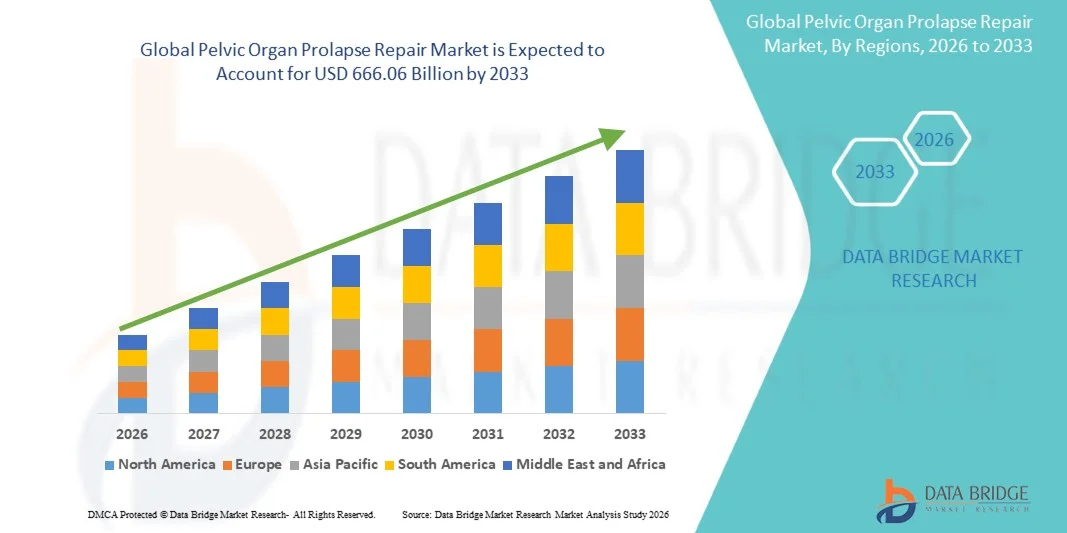
The Pelvic Organ Prolapse Repair Market was valued at USD 464.8 billion in 2025 and is projected to reach USD 666.06 billion by 2033, growing at a CAGR of 4.60% from 2026 to 2033. The Pelvic Organ Prolapse Repair Market is experiencing steady growth driven by the rising prevalence of pelvic floor disorders, increasing awareness regarding women's health, and growing demand for minimally invasive surgical procedures. Advancements in surgical techniques, improved repair materials, and the increasing availability of specialized gynecological care are further supporting market expansion.
The growing aging female population, coupled with increasing cases of childbirth-related pelvic floor damage, obesity, and other risk factors associated with pelvic organ prolapse, is driving the demand for effective repair treatments. In addition, advancements in reconstructive surgical procedures, increasing adoption of biologic and synthetic repair materials, and expanding access to women's healthcare services are encouraging hospitals and specialty clinics to adopt advanced pelvic organ prolapse repair solutions. Rising healthcare expenditure and ongoing product innovations are also contributing to sustained market growth.
Key Market Trends & Insights
- North America dominated the Pelvic Organ Prolapse Repair Market with the largest revenue share of 39.26% in 2025, supported by advanced healthcare infrastructure, high awareness regarding pelvic floor disorders, favorable reimbursement policies, and strong adoption of minimally invasive treatment procedures.
- The Surgical segment dominated the market with a 68.41% share in 2025 due to its effectiveness in providing long-term correction of pelvic organ prolapse.
- Asia-Pacific is expected to be the fastest-growing region at a CAGR of 7.6% from 2026 to 2033, fueled by a rapidly aging female population, improving healthcare access, rising awareness of pelvic floor disorders, and increasing healthcare expenditure across China, India, and Japan.
- The Vaginal Pessary segment is the fastest-growing product type, projected to register a CAGR of 7.9% from 2026 to 2033, reflecting increasing preference for non-surgical management options among elderly patients and women seeking conservative treatment approaches.
- The Bladder segment dominates the targeted organs category with a 36.74% revenue share in 2025, driven by the high prevalence of cystocele cases and increasing diagnosis and treatment of bladder-related pelvic organ prolapse.
- Surgical treatment accounted for 68.41% of the market in 2025, preferred due to its long-term effectiveness, growing availability of minimally invasive surgical techniques, and increasing adoption in moderate to severe prolapse cases.
- The Uterine Prolapse segment dominated the application category with a 31.88% revenue share in 2025, supported by rising prevalence among postmenopausal women and increasing demand for corrective pelvic reconstructive procedures.
- Hospitals dominated the end-user category with a 54.67% share in 2025, driven by the availability of specialized gynecological surgeons, advanced surgical infrastructure, and higher patient preference for hospital-based prolapse treatment procedures.
- The Ambulatory Surgery Centres segment is the fastest-growing end-user category, expected to register a CAGR of 7.4% from 2026 to 2033, supported by growing demand for cost-effective outpatient procedures, shorter recovery times, and increasing adoption of minimally invasive pelvic floor repair surgeries.
Market Size & Forecast
- Global Market Value (2025): USD 464.8 Billion
- Expected Market Value (2033): USD 666.06 Billion
- Forecast CAGR (2026–2033): 4.60%
- Leading Region in 2025: North America
- Fastest Growing Region: Asia-Pacific
Report Scope and Pelvic Organ Prolapse Repair Market Segmentation
|
Attributes |
Pelvic Organ Prolapse Repair Key Market Insights |
|
Segments Covered |
|
|
Countries Covered |
North America
Europe
Asia-Pacific
Middle East and Africa
South America
|
|
Key Market Players |
|
|
Market Opportunities |
Growing Demand for Minimally Invasive Pelvic Floor Repair Procedures Rising Adoption of Non-Surgical Treatment Options · Expansion in Emerging Healthcare Markets |
|
Value Added Data Infosets |
In addition to the insights on market scenarios such as market value, growth rate, segmentation, geographical coverage, and major players, the market reports curated by the Data Bridge Market Research also include in-depth expert analysis, geographically represented company-wise production and capacity, network layouts of distributors and partners, detailed and updated price trend analysis and deficit analysis of supply chain and demand. |
What is the Key Trend in the Pelvic Organ Prolapse Repair Market?
Trend: Increasing Preference for Minimally Invasive and Organ-Preserving Treatments
The pelvic organ prolapse repair market is witnessing a growing shift toward minimally invasive surgical procedures and organ-preserving treatment approaches. Healthcare providers are increasingly adopting laparoscopic and robotic-assisted pelvic floor repair techniques that offer reduced surgical trauma, shorter hospital stays, lower complication rates, and faster patient recovery. In addition, the use of vaginal pessaries as a non-surgical treatment option continues to gain traction, particularly among elderly patients and women seeking conservative management. According to clinical studies, pelvic organ prolapse affects nearly 50% of women over the age of 50 to varying degrees, creating sustained demand for both surgical and non-surgical treatment solutions. Continuous advancements in surgical meshes, biologic grafts, and reconstructive procedures are further supporting market growth.
Pelvic Organ Prolapse Repair Market Dynamics
Key Market Driver: Rising Prevalence of Pelvic Floor Disorders and Aging Female Population
The increasing prevalence of pelvic organ prolapse globally is a major driver for market growth. Factors such as aging, multiple childbirths, obesity, chronic constipation, and hysterectomy-related complications significantly increase the risk of pelvic floor disorders. According to data published by leading gynecological associations, nearly 11% to 20% of women will require surgery for pelvic organ prolapse or urinary incontinence during their lifetime. The growing geriatric female population is further accelerating demand, as postmenopausal women are more susceptible to weakened pelvic floor muscles. Increasing awareness regarding women's health, improving diagnosis rates, and expanding access to gynecological care are supporting the adoption of advanced prolapse repair procedures and products worldwide.
Key Restraint/Challenge: Safety Concerns and Product Recalls Associated with Vaginal Mesh
A significant challenge in the Pelvic Organ Prolapse Repair Market is the ongoing concern regarding complications associated with transvaginal mesh products. Complications such as mesh erosion, infection, pain, organ perforation, and recurrence of prolapse have resulted in increased regulatory scrutiny across several countries. For instance, in 2019, the U.S. FDA ordered manufacturers to stop selling and distributing transvaginal mesh products intended for pelvic organ prolapse repair due to concerns regarding safety and effectiveness. These regulatory actions have led to legal disputes, reduced physician confidence in certain mesh-based procedures, and increased preference for alternative treatment approaches. Such challenges continue to influence product adoption and market expansion.
Key Market Opportunity: Development of Advanced Biologic Grafts and Robotic-Assisted Surgical Procedures
The growing adoption of robotic-assisted and minimally invasive pelvic reconstructive surgeries presents a significant market opportunity. Advanced surgical technologies improve precision, reduce complications, and enhance patient outcomes, making them increasingly attractive to healthcare providers. In addition, manufacturers are investing in next-generation biologic grafts and tissue-based repair materials designed to improve long-term effectiveness while minimizing adverse events. The expanding availability of specialized women's health centers, increasing healthcare expenditure in emerging markets, and rising awareness regarding early treatment of pelvic floor disorders are creating substantial opportunities for industry participants. Furthermore, ongoing research into regenerative medicine and tissue engineering is expected to support the development of innovative pelvic organ prolapse repair solutions over the coming years.
How is the Pelvic Organ Prolapse Repair Market Segmented?
The Pelvic Organ Prolapse Repair market is segmented on the basis of product type, targeted organs, treatment type, applications, and end user.
- By Product Type
On the basis of product type, the Pelvic Organ Prolapse Repair Market is segmented into Vaginal Pessary and Vaginal Mesh. The Vaginal Mesh segment dominated the market with a 44.83% share in 2025 due to its widespread use in the surgical management of moderate to severe pelvic organ prolapse cases. Vaginal mesh products provide enhanced anatomical support and long-term durability compared to traditional repair techniques. The segment benefits from increasing demand for effective reconstructive procedures among aging women suffering from pelvic floor disorders. Growing awareness regarding advanced treatment options and rising surgical intervention rates have further supported adoption. Healthcare providers continue to utilize mesh-based repair procedures for complex prolapse cases requiring long-lasting outcomes. Improvements in mesh design and surgical techniques have also contributed to market expansion. The increasing prevalence of pelvic organ prolapse globally continues to support demand for advanced repair solutions. Rising healthcare expenditure and expanding access to gynecological care services further strengthen segment growth. These factors collectively contributed to the dominant position of the Vaginal Mesh segment in 2025.
The Vaginal Pessary segment is expected to witness the fastest CAGR of 7.9% from 2026 to 2033. Growth is driven by increasing preference for non-surgical treatment approaches among elderly patients and women unsuitable for surgery. Vaginal pessaries offer a cost-effective and minimally invasive alternative for managing prolapse symptoms. Rising awareness regarding conservative treatment options and growing physician recommendations are supporting adoption. Increasing healthcare access in emerging economies is also contributing to segment growth. Technological advancements in pessary design and improved patient comfort are encouraging wider utilization. The growing geriatric female population globally further supports demand. Increasing focus on outpatient management and reduced treatment costs are accelerating market expansion. These factors are expected to drive strong growth throughout the forecast period.
- By Targeted Organs
On the basis of targeted organs, the Pelvic Organ Prolapse Repair Market is segmented into Bladder, Vagina, Uterus, Small Bowel, and Rectum. The Bladder segment dominated the market with a 36.74% share in 2025 due to the high prevalence of cystocele, one of the most common forms of pelvic organ prolapse. Increasing incidence of bladder prolapse among aging women and those with a history of childbirth has significantly contributed to demand. Early diagnosis initiatives and growing awareness regarding pelvic floor disorders have improved treatment rates. Hospitals and specialty clinics continue to witness substantial patient volumes requiring bladder prolapse management. The availability of both surgical and non-surgical treatment options further supports segment growth. Rising healthcare expenditure and increasing access to women's healthcare services have accelerated adoption. Continuous advancements in reconstructive procedures are also improving treatment outcomes. These factors collectively reinforced the segment’s leading position in 2025.
The Uterus segment is projected to register the fastest CAGR of 7.5% from 2026 to 2033. Growth is attributed to increasing diagnosis of uterine prolapse among postmenopausal women globally. Rising awareness regarding treatment availability and growing demand for uterus-preserving surgical procedures are supporting market expansion. Advancements in minimally invasive gynecological surgeries have improved patient acceptance. Increasing access to specialized women's healthcare centers and improved screening programs are contributing to growth. Growing healthcare investments and expanding insurance coverage in emerging markets are also supporting adoption. The aging female population and rising prevalence of pelvic floor disorders are expected to continue driving demand. These factors position the uterus segment as the fastest-growing category during the forecast period.
- By Treatment Type
On the basis of treatment type, the Pelvic Organ Prolapse Repair Market is segmented into Surgical and Non-surgical. The Surgical segment dominated the market with a 68.41% share in 2025 due to its effectiveness in providing long-term correction of pelvic organ prolapse. Surgical interventions are widely preferred for moderate to severe prolapse cases where conservative treatments are insufficient. Increasing adoption of minimally invasive and robotic-assisted procedures has significantly improved patient outcomes. Growing availability of skilled surgeons and advanced healthcare infrastructure continues to support procedure volumes. Rising awareness regarding treatment benefits and increasing diagnosis rates have strengthened demand. Hospitals and specialty clinics remain key providers of surgical prolapse repair procedures. Continuous technological advancements in surgical devices and repair materials are also supporting market growth. These factors collectively contributed to the dominance of the surgical segment.
The Non-surgical segment is expected to witness the fastest CAGR of 7.7% from 2026 to 2033. Growth is driven by increasing preference for conservative treatment approaches among elderly patients and women seeking alternatives to surgery. Vaginal pessaries continue to gain popularity due to their effectiveness, affordability, and ease of use. Rising awareness regarding early-stage prolapse management is supporting adoption. Healthcare providers are increasingly recommending non-surgical therapies to improve quality of life and delay surgical intervention. Growing access to gynecological care and expanding outpatient treatment options are further driving demand. These factors are anticipated to support robust segment growth throughout the forecast period.
- By Applications
On the basis of applications, the Pelvic Organ Prolapse Repair Market is segmented into Cystocele, Rectocele, Enterocele, Uterine Prolapse, and Others. The Uterine Prolapse segment dominated the market with a 31.88% share in 2025 due to its high prevalence among postmenopausal women and women with multiple childbirth histories. Increasing awareness regarding pelvic floor disorders and growing treatment-seeking behavior have supported segment growth. Hospitals and gynecology centers continue to report significant patient volumes requiring uterine prolapse management. Advancements in surgical techniques and increasing availability of minimally invasive procedures have improved treatment outcomes. Rising healthcare expenditure and growing access to women's healthcare services are further supporting adoption. Continuous investments in gynecological healthcare infrastructure have strengthened market penetration. These factors collectively contributed to the segment's leading position.
The Enterocele segment is expected to register the fastest CAGR of 7.5% from 2026 to 2033. Growth is driven by improving diagnosis rates and increasing awareness regarding complex pelvic floor disorders. Advances in diagnostic imaging technologies have enabled earlier detection and treatment planning. Growing availability of specialized pelvic reconstructive procedures is supporting market expansion. Increasing healthcare expenditure and improved access to gynecological care are further driving adoption. Rising physician awareness and expanding treatment options are also contributing to growth. These factors are expected to accelerate expansion of the enterocele segment over the forecast period.
- By End User
On the basis of end user, the Pelvic Organ Prolapse Repair Market is segmented into Hospitals, Specialty Clinics, Nursing Homes, Ambulatory Surgery Centres, and Others. The Hospitals segment dominated the market with a 54.67% share in 2025 due to the availability of advanced surgical infrastructure, experienced gynecological surgeons, and comprehensive patient care services. Hospitals remain the primary treatment setting for complex pelvic organ prolapse procedures. Increasing patient preference for hospital-based surgeries and access to multidisciplinary healthcare teams continue to support segment growth. Growing volumes of prolapse repair procedures and rising investments in women's healthcare services are strengthening demand. Hospitals also benefit from advanced diagnostic capabilities and post-operative care facilities. Continuous expansion of healthcare infrastructure worldwide further reinforces market leadership. These factors collectively contributed to the dominant position of the hospital segment.
The Ambulatory Surgery Centres segment is projected to witness the fastest CAGR of 7.4% from 2026 to 2033. Growth is driven by increasing demand for cost-effective outpatient procedures and shorter recovery periods. Advances in minimally invasive surgical techniques have enabled more prolapse repair procedures to be performed in ambulatory settings. Patients increasingly prefer outpatient facilities due to convenience, reduced hospitalization costs, and faster discharge times. Expanding healthcare infrastructure and growing physician adoption of same-day surgical procedures are supporting segment growth. Increasing investments in ambulatory surgical facilities and favorable reimbursement trends are further accelerating demand. These factors are expected to drive strong growth throughout the forecast period.
Which Region Holds the Largest Share of the Pelvic Organ Prolapse Repair Market?
North America dominated the Pelvic Organ Prolapse Repair Market and accounted for the largest revenue share of 39.26% in 2025, supported by advanced healthcare infrastructure, high awareness regarding pelvic floor disorders, favorable reimbursement policies, and strong adoption of minimally invasive treatment procedures. The region benefits from the presence of leading medical device manufacturers, skilled gynecological surgeons, and widespread availability of advanced pelvic floor treatment options. Rising prevalence of pelvic organ prolapse among the aging female population, increasing healthcare spending, and growing preference for surgical and non-surgical treatment solutions continue to drive market growth. Ongoing technological advancements in vaginal mesh systems, pessaries, and reconstructive surgical procedures further strengthen North America's leadership position in the global market.
U.S. Pelvic Organ Prolapse Repair Market Insight
The U.S. Pelvic Organ Prolapse Repair market is witnessing strong growth due to the increasing prevalence of pelvic floor disorders, rising geriatric female population, and growing awareness regarding early diagnosis and treatment. Strong adoption of minimally invasive surgical procedures, availability of advanced healthcare facilities, and favorable reimbursement coverage are supporting market expansion. In addition, continuous investments in women's health, increasing utilization of vaginal pessaries, and the presence of major medical device manufacturers are accelerating the adoption of pelvic organ prolapse repair treatments across hospitals, specialty clinics, and ambulatory surgical centers.
Europe Pelvic Organ Prolapse Repair Market Insight
The Europe Pelvic Organ Prolapse Repair market remains a major contributor to global revenue, driven by well-established healthcare systems, growing awareness of women's pelvic health, and increasing demand for advanced treatment options. Rising adoption of minimally invasive surgical techniques, expanding access to specialized gynecological care, and supportive healthcare policies are contributing to market growth across the region. Furthermore, increasing research activities and growing focus on improving quality of life among aging women continue to support the adoption of pelvic organ prolapse repair procedures throughout Europe.
U.K. Pelvic Organ Prolapse Repair Market Insight
The U.K. Pelvic Organ Prolapse Repair market is experiencing steady growth, supported by increasing awareness regarding pelvic floor disorders and growing demand for effective treatment solutions. Rising adoption of non-surgical management approaches such as vaginal pessaries, coupled with advancements in reconstructive pelvic surgery, is contributing to market expansion. In addition, strong healthcare infrastructure, ongoing clinical research, and government initiatives focused on women's health are supporting the growth of pelvic organ prolapse repair procedures across the country.
Germany Pelvic Organ Prolapse Repair Market Insight
The Germany Pelvic Organ Prolapse Repair market is expanding steadily due to the country's advanced healthcare infrastructure, high healthcare expenditure, and growing aging female population. Hospitals and specialty clinics are increasingly adopting innovative surgical techniques and minimally invasive treatment procedures to improve patient outcomes. Furthermore, the presence of skilled healthcare professionals, increasing awareness of pelvic floor disorders, and continuous advancements in urogynecological treatment technologies are further driving market growth in Germany.
Asia-Pacific Pelvic Organ Prolapse Repair Market Insight
The Asia-Pacific Pelvic Organ Prolapse Repair market is expected to witness the fastest growth at a CAGR of 7.6% from 2026 to 2033, driven by a rapidly aging female population, improving healthcare access, rising awareness of pelvic floor disorders, and increasing healthcare expenditure across China, India, and Japan. Expanding healthcare infrastructure, growing availability of specialized gynecological services, and rising adoption of minimally invasive treatment procedures are supporting regional market expansion. Additionally, increasing government initiatives focused on women's health and improving diagnosis rates are accelerating demand for pelvic organ prolapse repair products and procedures across the region.
Japan Pelvic Organ Prolapse Repair Market Insight
The Japan Pelvic Organ Prolapse Repair market is witnessing consistent growth due to the country's large elderly female population and strong focus on women's healthcare. Increasing diagnosis of pelvic floor disorders, growing adoption of minimally invasive surgical procedures, and rising utilization of advanced pessary devices are contributing to market growth. Moreover, continuous improvements in healthcare services and increasing awareness regarding pelvic organ prolapse treatment options are further supporting market expansion in Japan.
China Pelvic Organ Prolapse Repair Market Insight
The China Pelvic Organ Prolapse Repair market is growing rapidly, driven by increasing healthcare investments, improving access to women's healthcare services, and rising awareness regarding pelvic floor disorders. Growing urbanization, expanding hospital infrastructure, and increasing availability of advanced surgical treatment options are significantly boosting market demand. In addition, the country's large aging female population, rising healthcare expenditure, and ongoing improvements in gynecological care are positioning China as one of the fastest-growing markets for pelvic organ prolapse repair globally.
Which are the Top Companies in Pelvic Organ Prolapse Repair Market?
The Pelvic Organ Prolapse Repair industry is primarily led by well-established companies, including:
- Medtronic plc (Ireland)
- Boston Scientific Corporation (U.S.)
- CooperSurgical, Inc. (U.S.)
- Coloplast A/S (Denmark)
- Becton, Dickinson and Company (U.S.)
- Johnson & Johnson Services, Inc. (U.S.)
- Cook Medical LLC (U.S.)
- Integra LifeSciences Holdings Corporation (U.S.)
- Promedon Group (Argentina)
- A.M.I. GmbH (Austria)
- Caldera Medical, Inc. (U.S.)
- Richard Wolf GmbH (Germany)
- Ethicon, Inc. (U.S.)
- Neomedic International S.L. (Spain)
- FEG Textiltechnik mbH (Germany)
- Betatech Medical (Turkey)
- Panpac Medical Corporation (Taiwan)
- Dipromed Srl (Italy)
- Uromed Kurt Drews KG (Germany)
- Femcare-Nikomed Ltd. (U.K.)
- LifePartners Europe (Netherlands)
- Hospiline Equipments Pvt. Ltd. (India)
- SURU International Pvt. Ltd. (India)
- Mermaid Medical Group (Denmark)
- MedGyn Products, Inc. (U.S.)
- Personal Medical Corp. (U.S.)
- Wallach Surgical Devices (U.S.)
- Thomas Medical (U.S.)
What are Latest Developments in Pelvic Organ Prolapse Repair Market?
- In September 2023, researchers published a randomized controlled study evaluating a novel self-inserted disposable vaginal prolapse device against traditional ring pessaries. The study demonstrated favorable efficacy and safety outcomes, supporting the growing trend toward patient-managed and minimally invasive pelvic organ prolapse treatment alternatives
- In March 2023, findings published in JAMA Surgery highlighted the increasing importance of both surgical repair and pessary-based management for pelvic organ prolapse. The publication emphasized the rising clinical burden of prolapse associated with population aging and reinforced demand for diverse treatment approaches tailored to patient preferences and disease severity
- In March 2024, Cosm Medical announced that its Gynethotics™ Pessaries received U.S. FDA clearance, becoming the first personalized pessary platform cleared by the FDA. The solution offers millions of patient-specific configurations designed to improve fit, comfort, and treatment outcomes for women suffering from pelvic organ prolapse, representing a major advancement in personalized pelvic healthcare
- In September 2024, ConTIPI Medical partnered with EVERSANA to support the U.S. commercial launch of the ProVate device, a disposable vaginal pessary developed for pelvic organ prolapse management. The product had already obtained FDA 510(k) clearance and CE Mark certification, expanding non-surgical treatment options for women with pelvic organ prolapse
- In January 2025, researchers published clinical outcomes comparing robotic-assisted sacral hysterocolpopexy with vaginal prolapse repair procedures in the International Urogynecology Journal. The study highlighted the growing adoption of robotic and minimally invasive surgical approaches aimed at improving long-term anatomical outcomes and patient recovery in pelvic organ prolapse repair
- In May 2025, Mediplus Ltd. announced the expansion of its POPY Pelvic Organ Prolapse Pessary portfolio through the introduction of five additional sizes. The expanded range was designed to improve patient fitting accuracy and enhance non-surgical treatment effectiveness for a broader population of women affected by pelvic organ prolapse
- In June 2025, Escala Medical secured US$4.5 million in funding to accelerate the commercialization of its pelvic organ prolapse repair technology. The investment is being utilized to expand U.S. operations, support international market entry, and increase adoption of its FDA-approved prolapse repair solution, reflecting growing investor confidence in innovative women's health technologies

- Interactive Data Analysis Dashboard
- Company Analysis Dashboard for high growth potential opportunities
- Research Analyst Access for customization & queries
- Competitor Analysis with Interactive dashboard
- Latest News, Updates & Trend analysis
- Harness the Power of Benchmark Analysis for Comprehensive Competitor Tracking
Data collection and base year analysis are done using data collection modules with large sample sizes. The stage includes obtaining market information or related data through various sources and strategies. It includes examining and planning all the data acquired from the past in advance. It likewise envelops the examination of information inconsistencies seen across different information sources. The market data is analysed and estimated using market statistical and coherent models. Also, market share analysis and key trend analysis are the major success factors in the market report. To know more, please request an analyst call or drop down your inquiry.
The key research methodology used by DBMR research team is data triangulation which involves data mining, analysis of the impact of data variables on the market and primary (industry expert) validation. Data models include Vendor Positioning Grid, Market Time Line Analysis, Market Overview and Guide, Company Positioning Grid, Patent Analysis, Pricing Analysis, Company Market Share Analysis, Standards of Measurement, Global versus Regional and Vendor Share Analysis. To know more about the research methodology, drop in an inquiry to speak to our industry experts.
Data Bridge Market Research is a leader in advanced formative research. We take pride in servicing our existing and new customers with data and analysis that match and suits their goal. The report can be customized to include price trend analysis of target brands understanding the market for additional countries (ask for the list of countries), clinical trial results data, literature review, refurbished market and product base analysis. Market analysis of target competitors can be analyzed from technology-based analysis to market portfolio strategies. We can add as many competitors that you require data about in the format and data style you are looking for. Our team of analysts can also provide you data in crude raw excel files pivot tables (Fact book) or can assist you in creating presentations from the data sets available in the report.












