


Peptide Therapeutics Contract Manufacturing Market Overview
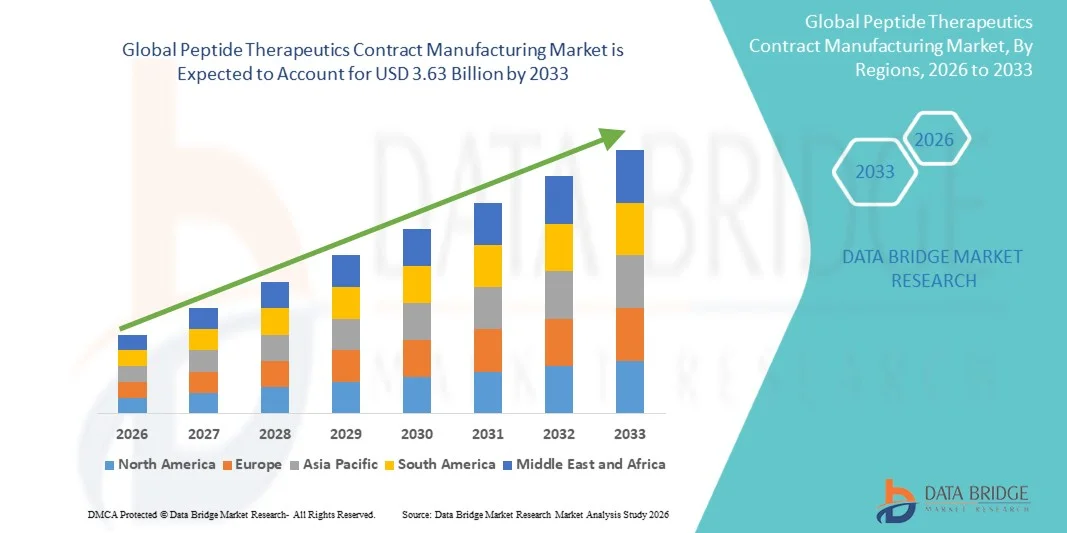
The Peptide Therapeutics Contract Manufacturing Market was valued at USD 2.32 billion in 2025 and is projected to reach USD 3.63 billion by 2033, growing at a CAGR of 6.2% from 2026 to 2033. The market is experiencing consistent growth driven by rising demand for outsourced peptide drug manufacturing services, increasing adoption of peptide-based therapeutics across oncology, metabolic disorders, and rare diseases, and growing investments in advanced biopharmaceutical development.
The increasing pipeline of peptide therapeutics, combined with rising complexity in peptide synthesis and purification processes, is encouraging pharmaceutical and biotechnology companies to collaborate with specialized contract manufacturing organizations (CMOs). Advanced solid-phase peptide synthesis (SPPS), improved purification technologies, and scalable GMP manufacturing capabilities are enabling faster development and commercialization of peptide-based medicines while reducing the need for in-house manufacturing infrastructure.
Key Market Trends & Insights
- North America dominated the Peptide Therapeutics Contract Manufacturing Market with the largest revenue share of 37.6% in 2025, supported by the strong presence of leading pharmaceutical and biotechnology companies, advanced peptide manufacturing infrastructure, and increasing outsourcing of peptide drug development and production activities. The region benefits from established GMP-compliant CDMO capabilities, significant investment in peptide synthesis technologies, and growing demand for peptide-based therapies across oncology, metabolic disorders, diabetes, and cardiovascular diseases. Increasing adoption of advanced purification technologies, rising clinical development activities, and strong regulatory support for innovative therapeutics continue to strengthen North America’s leading position in the global market.
- The active pharmaceutical ingredient (API) manufacturing segment dominated the market with a 46.8% share in 2025, owing to the increasing outsourcing of peptide synthesis activities by pharmaceutical and biotechnology companies.
- Asia-Pacific is expected to be the fastest-growing region at a CAGR of 10.1% from 2026 to 2033, fueled by increasing pharmaceutical manufacturing capabilities, rising biotechnology investments, expanding clinical research activities, and growing adoption of outsourced peptide production services across China, India, Japan, and South Korea. The region is witnessing increasing demand for cost-effective manufacturing solutions, improved GMP infrastructure, and growing investments by global pharmaceutical companies in peptide therapeutic development. In addition, the expansion of local CDMOs and increasing healthcare expenditure are supporting regional market growth.
- The therapeutic peptide development segment dominates the application category with a 46.8% revenue share in 2025, supported by rising demand for peptide-based drugs targeting metabolic disorders, cancer, cardiovascular diseases, and rare conditions. Pharmaceutical companies are increasingly partnering with peptide CDMOs to access advanced synthesis platforms, analytical testing capabilities, and commercial-scale production expertise. The growing pipeline of peptide therapeutics, including GLP-1 receptor agonists and targeted peptide medicines, is further driving outsourcing demand globally.
- The solid-phase peptide synthesis (SPPS) technology segment is projected to be the fastest-growing technology category, registering a CAGR of 10.5% from 2026 to 2033, driven by increasing demand for high-quality peptide production and advancements in automated synthesis platforms. SPPS technology enables efficient peptide chain assembly, improved scalability, and enhanced manufacturing consistency, making it widely adopted by peptide CDMOs. Increasing investment in automation, process optimization, and purification technologies is further supporting segment expansion.
Market Size & Forecast
- Global Market Value (2025): USD 2.32 Billion
- Expected Market Value (2033): USD 3.63 Billion
- Forecast CAGR (2026–2033): 6.2%
- Leading Region in 2025: North America
- Fastest Growing Region: Asia-Pacific
Report Scope and Peptide Therapeutics Contract Manufacturing Market Segmentation
|
Attributes |
Peptide Therapeutics Contract Manufacturing Key Market Insights |
|
Segments Covered |
· By Product Type: Active Pharmaceutical Ingredient (API) Manufacturing, Finished Dosage Form Manufacturing, and Peptide Drug Development & Scale-Up Services · By Therapeutic Application: Metabolic Disorders, Oncology, Cardiovascular Diseases, Neurological Disorders, Infectious Diseases, and Other Therapeutic Areas · By End User: Pharmaceutical Companies, Biotechnology Companies, Research Institutes & Academic Organizations, and Others |
|
Countries Covered |
North America · U.S. · Canada · Mexico Europe · Germany · France · U.K. · Netherlands · Switzerland · Belgium · Russia · Italy · Spain · Turkey · Rest of Europe Asia-Pacific · China · Japan · India · South Korea · Singapore · Malaysia · Australia · Thailand · Indonesia · Philippines · Rest of Asia-Pacific Middle East and Africa · Saudi Arabia · U.A.E. · South Africa · Egypt · Israel · Rest of Middle East and Africa South America · Brazil · Argentina · Rest of South America |
|
Key Market Players |
• Lonza Group AG (Switzerland) |
|
Market Opportunities |
· Growing Demand for Peptide-Based Drugs in Metabolic Disorders and Oncology · Expansion of Outsourcing and GMP Manufacturing Partnerships by Biopharmaceutical Companies · Advancements in Peptide Synthesis Technologies and Personalized Medicine Applications |
|
Value Added Data Infosets |
In addition to the insights on market scenarios such as market value, growth rate, segmentation, geographical coverage, and major players, the market reports curated by the Data Bridge Market Research also include in-depth expert analysis, geographically represented company-wise production and capacity, network layouts of distributors and partners, detailed and updated price trend analysis and deficit analysis of supply chain and demand. |
Peptide Therapeutics Contract Manufacturing Market Trends
Trend: Rising Outsourcing of Peptide Drug Manufacturing and Expansion of Advanced Production Capabilities
The Peptide Therapeutics Contract Manufacturing Market is witnessing significant growth due to increasing outsourcing activities by pharmaceutical and biotechnology companies seeking specialized manufacturing expertise, advanced production technologies, and scalable peptide synthesis capabilities. The rising complexity of peptide-based therapeutics, including improved formulations, long-acting peptide drugs, and peptide conjugates, is encouraging companies to partner with contract manufacturing organizations (CMOs) to reduce development timelines and manufacturing costs. The growing demand for peptide therapeutics in areas such as metabolic disorders, oncology, cardiovascular diseases, and rare diseases is accelerating investments in GMP-compliant peptide manufacturing facilities. Contract manufacturers are increasingly expanding capabilities in solid-phase peptide synthesis (SPPS), liquid-phase peptide synthesis (LPPS), purification technologies, analytical testing, and formulation development to support both clinical and commercial-scale production. For instance, leading peptide CDMOs are investing in high-throughput synthesis platforms and purification infrastructure to meet the increasing demand for complex peptide molecules and GLP-1-based therapies. The rapid growth of peptide-based weight management and diabetes treatments, including GLP-1 receptor agonists, has further increased demand for reliable outsourced manufacturing capacity. In addition, advancements in automation, process optimization, and continuous manufacturing approaches are improving production efficiency and strengthening the adoption of peptide contract manufacturing services globally.
Peptide Therapeutics Contract Manufacturing Market Dynamics
Key Market Driver: Increasing Demand for Peptide-Based Therapeutics and Outsourcing of Manufacturing Activities
The rising adoption of peptide therapeutics across multiple therapeutic areas is a major driver for the Peptide Therapeutics Contract Manufacturing Market. Peptides are increasingly preferred due to their high target specificity, biological activity, and potential for treating complex diseases, creating strong demand for specialized manufacturing services. The growing prevalence of chronic conditions such as diabetes, obesity, cancer, and hormonal disorders is increasing the need for peptide-based medicines and encouraging pharmaceutical companies to expand their peptide pipelines. Biopharmaceutical companies are increasingly outsourcing peptide manufacturing to specialized CMOs to access advanced synthesis technologies, regulatory expertise, and large-scale production capabilities without significant capital investment in internal facilities. According to industry trends, the increasing development of GLP-1 peptide therapies has significantly contributed to demand for peptide manufacturing capacity, with companies expanding production infrastructure to address growing global requirements. In addition, advancements in peptide engineering, conjugation technologies, and improved purification processes are enabling the development of next-generation peptide therapeutics with enhanced stability and efficacy. The increasing number of peptide drug candidates entering clinical trials is further supporting demand for contract manufacturing partnerships.
Key Restraint/Challenge: High Manufacturing Complexity and Production Cost of Peptide Therapeutics
A significant challenge in the Peptide Therapeutics Contract Manufacturing Market is the high complexity and cost associated with peptide production. Manufacturing peptide-based drugs requires advanced synthesis equipment, specialized purification systems, strict quality control procedures, and highly skilled technical expertise, increasing overall production expenses compared with conventional small-molecule manufacturing. Complex peptides with longer amino acid chains, modified structures, or peptide conjugates require additional processing steps, which can impact manufacturing efficiency and scalability. In addition, maintaining regulatory compliance, ensuring batch-to-batch consistency, and meeting stringent GMP requirements create operational challenges for contract manufacturers. Smaller biotechnology companies may face difficulties in accessing high-capacity peptide manufacturing facilities due to limited budgets and high outsourcing costs. Furthermore, supply chain challenges related to specialized raw materials, amino acids, and analytical requirements can affect production timelines. The need for continuous investment in facility expansion, technology upgrades, and regulatory compliance remains a key barrier for market participants.
Key Market Opportunity: Expansion of Advanced Peptide Manufacturing Technologies and Rising Demand for Complex Peptide Molecules
The integration of advanced manufacturing technologies, automation, and innovative peptide production methods presents significant growth opportunities for the Peptide Therapeutics Contract Manufacturing Market. Contract manufacturers are increasingly adopting automated synthesis platforms, advanced purification technologies, and digital manufacturing solutions to improve productivity, reduce production timelines, and support complex peptide development programs. The growing demand for peptide-based therapies in diabetes, obesity, oncology, and rare disease treatment is creating opportunities for CMOs to expand commercial-scale manufacturing capabilities. For instance, increasing global adoption of GLP-1 receptor agonist therapies has encouraged pharmaceutical companies and manufacturing partners to invest in additional peptide production capacity and process optimization. In addition, emerging technologies such as continuous flow synthesis, improved chromatography techniques, and AI-driven process monitoring are enhancing manufacturing efficiency and quality control.
Peptide Therapeutics Contract Manufacturing Market Scope
The peptide therapeutics contract manufacturing market is segmented on the basis of product type, therapeutic application, and end user.
- By Product Type
On the basis of product type, the Peptide Therapeutics Contract Manufacturing Market is segmented into active pharmaceutical ingredient (API) manufacturing, finished dosage form manufacturing, and peptide drug development & scale-up services. The active pharmaceutical ingredient (API) manufacturing segment dominated the market with a 46.8% share in 2025, owing to the increasing outsourcing of peptide synthesis activities by pharmaceutical and biotechnology companies. Peptide APIs require highly specialized manufacturing capabilities, including solid-phase peptide synthesis (SPPS), purification, analytical characterization, and strict GMP compliance, encouraging companies to collaborate with experienced contract manufacturers. The growing pipeline of peptide-based therapies for metabolic disorders, oncology, and rare diseases is further increasing demand for outsourced API production. In addition, rising commercialization of peptide drugs such as GLP-1 receptor agonists and increasing investments in advanced peptide manufacturing infrastructure are supporting segment growth.
The peptide drug development & scale-up services segment is projected to register the fastest growth at a CAGR of 10.2% from 2026 to 2033, driven by increasing demand for integrated development solutions from emerging biotechnology companies. These services support early-stage peptide discovery, formulation optimization, process development, analytical testing, and transition from laboratory-scale production to commercial manufacturing. Growing adoption of personalized medicine, increasing clinical trials involving peptide therapeutics, and the need to reduce development timelines are encouraging companies to outsource development and scale-up activities. Furthermore, advancements in automated peptide synthesis platforms and process optimization technologies are accelerating segment expansion.
- By Therapeutic Application
On the basis of therapeutic application, the Peptide Therapeutics Contract Manufacturing Market is segmented into metabolic disorders, oncology, cardiovascular diseases, neurological disorders, infectious diseases, and other therapeutic areas. the metabolic disorders segment dominated the market with a 42.5% share in 2025, supported by the increasing demand for peptide-based treatments for diabetes, obesity, and related metabolic conditions. The rapid growth of GLP-1-based peptide therapies, increasing prevalence of metabolic disorders globally, and rising pharmaceutical investment in next-generation peptide drugs are major factors supporting segment dominance. Contract manufacturers are experiencing increased demand for large-scale production of peptide APIs and finished formulations due to expanding clinical and commercial requirements. In addition, the success of peptide-based metabolic therapies has encouraged companies to expand manufacturing partnerships to ensure reliable supply chains.
The oncology segment is expected to witness the fastest growth at a CAGR of 11.1% from 2026 to 2033, driven by increasing research and development activities focused on peptide-based cancer therapies, peptide-drug conjugates (PDCs), and targeted drug delivery approaches. Peptides are gaining attention in oncology due to their ability to selectively target tumor cells while improving therapeutic efficiency. Growing investment in cancer research, rising clinical trials for peptide therapeutics, and increasing adoption of precision oncology approaches are creating strong opportunities for contract manufacturers. Furthermore, advancements in peptide modification technologies and improved manufacturing capabilities are supporting the development of complex oncology peptide products.
- By End User
On the basis of end user, the Peptide Therapeutics Contract Manufacturing Market is segmented into pharmaceutical companies, biotechnology companies, research institutes & academic organizations, and others. The pharmaceutical companies segment dominated the market with a 48.7% share in 2025, due to increasing reliance on contract manufacturing organizations (CMOs) for peptide production, process optimization, and commercial-scale manufacturing. Large pharmaceutical companies are outsourcing peptide manufacturing activities to reduce capital investment, improve production flexibility, and access specialized expertise in peptide synthesis and purification technologies. The growing commercialization of peptide-based medicines and increasing demand for scalable GMP manufacturing capacity are further strengthening segment growth. In addition, partnerships between pharmaceutical companies and specialized CDMOs are expanding globally to support increasing therapeutic demand.
The biotechnology companies segment is expected to witness the fastest CAGR of 10.6% from 2026 to 2033, driven by the rapid growth of emerging biotech firms developing innovative peptide therapeutics. Many biotechnology companies lack extensive in-house manufacturing infrastructure and therefore rely on contract manufacturers for development, clinical trial material production, and scale-up services. Increasing venture funding in biotechnology, rising clinical pipelines for peptide-based drugs, and growing adoption of outsourcing strategies are accelerating segment expansion. Furthermore, increasing focus on rare diseases, personalized therapies, and advanced peptide platforms is expected to create significant opportunities for contract manufacturing providers.
Peptide Therapeutics Contract Manufacturing Market Regional Analysis
North America dominated the Peptide Therapeutics Contract Manufacturing Market and accounted for the largest revenue share of 37.6% in 2025, supported by the strong presence of leading pharmaceutical and biotechnology companies, advanced peptide manufacturing infrastructure, and increasing outsourcing of peptide drug development and commercial production activities. The region benefits from a well-established network of GMP-compliant contract development and manufacturing organizations (CDMOs), advanced solid-phase peptide synthesis (SPPS) capabilities, and significant investments in purification and analytical technologies. Increasing demand for peptide-based therapies targeting metabolic disorders, diabetes, obesity, oncology, and rare diseases is accelerating manufacturing partnerships between pharmaceutical companies and specialized CDMOs. In addition, the growing adoption of advanced process automation, regulatory expertise, and scalable peptide production platforms continues to strengthen North America’s leading position in the global market.
U.S. Peptide Therapeutics Contract Manufacturing Market Insight
The U.S. peptide therapeutics contract manufacturing market is witnessing strong growth due to increasing investments in peptide drug development, rising outsourcing activities by biotechnology companies, and expansion of advanced manufacturing capabilities. The country has a strong ecosystem of pharmaceutical innovators, research institutions, and specialized CDMOs supporting clinical-stage and commercial-scale peptide production. Growing demand for GLP-1-based peptide therapies for diabetes and obesity management is significantly increasing the need for reliable peptide manufacturing capacity. Furthermore, increasing adoption of advanced synthesis technologies, automated manufacturing systems, and high-performance purification platforms is improving production efficiency and enabling faster development of complex peptide molecules. Strong regulatory standards, high healthcare expenditure, and continuous innovation in peptide engineering are further supporting market growth in the U.S.
Europe Peptide Therapeutics Contract Manufacturing Market Insight
The Europe peptide therapeutics contract manufacturing market remains a significant contributor to global revenue, driven by strong pharmaceutical manufacturing capabilities, advanced research infrastructure, and increasing demand for outsourced peptide production services. Countries across Europe are witnessing growing adoption of specialized CDMO partnerships as pharmaceutical companies seek access to advanced peptide synthesis, formulation development, and analytical testing capabilities. The region benefits from stringent GMP regulations, strong biotechnology research activities, and increasing investments in innovative therapeutic development. Rising demand for peptide-based medicines in oncology, metabolic diseases, and cardiovascular applications is encouraging manufacturers to expand production capacity. In addition, continuous advancements in peptide purification technologies and process optimization are supporting market expansion across Europe.
U.K. Peptide Therapeutics Contract Manufacturing Market Insight
The U.K. peptide therapeutics contract manufacturing market is experiencing steady growth, supported by increasing biotechnology investments, expansion of pharmaceutical research activities, and rising demand for outsourced peptide manufacturing solutions. The country’s strong academic research ecosystem and growing presence of life science companies are supporting innovation in peptide-based drug development. Increasing collaborations between pharmaceutical companies and contract manufacturers are improving access to advanced peptide synthesis and analytical capabilities. Moreover, growing demand for complex peptide molecules, including therapeutic peptides for metabolic and chronic diseases, is encouraging investment in scalable manufacturing infrastructure. The integration of advanced manufacturing technologies and emphasis on high-quality GMP production are further strengthening the U.K. market.
Germany Peptide Therapeutics Contract Manufacturing Market Insight
The Germany peptide therapeutics contract manufacturing market is expanding steadily due to the country’s strong pharmaceutical manufacturing base, advanced biotechnology sector, and increasing adoption of specialized contract manufacturing services. German CDMOs are increasingly investing in peptide synthesis, purification technologies, and process development capabilities to support pharmaceutical and biotechnology companies. Growing demand for peptide therapeutics in diabetes, oncology, and rare disease applications is driving expansion of manufacturing capacity. In addition, Germany’s strong regulatory framework, focus on precision medicine, and advanced research infrastructure are supporting innovation in peptide drug development. Continuous investments in automation, analytical technologies, and high-quality manufacturing processes are further contributing to market growth.
Asia-Pacific Peptide Therapeutics Contract Manufacturing Market Insight
The Asia-Pacific peptide therapeutics contract manufacturing market is expected to witness the fastest growth at a CAGR of 10.1% from 2026 to 2033, driven by increasing pharmaceutical manufacturing capabilities, rising biotechnology investments, expanding clinical research activities, and growing adoption of outsourced peptide production services across China, India, Japan, and South Korea. The region is experiencing rising demand for cost-effective manufacturing solutions, improved GMP-compliant production facilities, and advanced peptide synthesis capabilities. Increasing investments by global pharmaceutical companies in emerging Asian markets are strengthening regional manufacturing capacity. In addition, expansion of local CDMOs, growing healthcare expenditure, and increasing development of peptide-based therapies are accelerating market growth across the region.
Japan Peptide Therapeutics Contract Manufacturing Market Insight
The Japan peptide therapeutics contract manufacturing market is witnessing consistent growth due to increasing investments in pharmaceutical innovation, advanced biotechnology research, and development of next-generation peptide therapeutics. Japanese pharmaceutical companies and contract manufacturers are increasingly focusing on advanced peptide synthesis, formulation technologies, and high-quality manufacturing processes. The country’s aging population and rising prevalence of chronic diseases are increasing demand for innovative peptide-based treatments. Furthermore, strong regulatory standards, advanced healthcare infrastructure, and increasing collaborations between pharmaceutical companies and CDMOs are supporting market expansion. Growing adoption of precision medicine approaches and advanced drug development platforms is further contributing to market growth.
China Peptide Therapeutics Contract Manufacturing Market Insight
The China peptide therapeutics contract manufacturing market is growing rapidly due to expanding pharmaceutical manufacturing capabilities, increasing biotechnology investments, and rising demand for outsourced peptide production services. The country is witnessing significant development of GMP-compliant manufacturing facilities and increasing participation of domestic CDMOs in global peptide supply chains. Growing demand for peptide therapeutics, particularly in metabolic disorders, diabetes, and oncology, is driving investment in advanced synthesis and purification technologies. In addition, increasing collaborations between multinational pharmaceutical companies and Chinese contract manufacturers are accelerating technology transfer and production expansion. Rising healthcare expenditure, improving regulatory frameworks, and growing focus on innovative drug development are positioning China as one of the fastest-growing markets for peptide therapeutic manufacturing globally.
Peptide Therapeutics Contract Manufacturing Market Share
The Peptide Therapeutics Contract Manufacturing industry is primarily led by well-established companies, including:
- Lonza Group AG (Switzerland)
- Bachem Holding AG (Switzerland)
- PolyPeptide Group AG (Switzerland)
- CordenPharma (Germany)
- Thermo Fisher Scientific Inc. (U.S.)
- Catalent Inc. (U.S.)
- WuXi AppTec (China)
- Samsung Biologics (South Korea)
- AGC Biologics (U.S.)
- Syngene International Limited (India)
- Curia Global (U.S.)
- Eurofins Scientific (Luxembourg)
- Piramal Pharma Solutions (India)
- Evonik Industries AG (Germany)
- Biosynth (Switzerland)
- AmbioPharm Inc. (U.S.)
- CPC Scientific Inc. (U.S.)
- Sennos Biotech (China)
- GenScript Biotech Corporation (China)
- JPT Peptide Technologies GmbH (Germany)
- Biosynth Carbosynth (United Kingdom)
- PolyPeptide Laboratories (Sweden)
- Nitto Denko Corporation (Japan)
- Ajinomoto Bio-Pharma Services (Japan)
- STA Pharmaceutical (China)
- Enzene Biosciences (India)
Latest Developments in Peptide Therapeutics Contract Manufacturing Market
- In January 2023, CordenPharma, a leading global contract development and manufacturing organization (CDMO), announced a multi-year agreement for the manufacturing of a large-volume commercial peptide at its Colorado facility. The agreement, valued at approximately USD 1 billion depending on production volumes, was aimed at supporting the launch of an innovative peptide therapeutic. CordenPharma also announced plans to expand peptide manufacturing capacity across its Colorado and Frankfurt sites, strengthening its capabilities in large-scale peptide synthesis, purification, and integrated drug product manufacturing. This development highlights the increasing outsourcing demand for commercial peptide production and the growing need for specialized peptide CDMO infrastructure
- In September 2023, CordenPharma inaugurated expanded peptide manufacturing capabilities at its Colorado facility following significant investments in solid-phase peptide synthesis (SPPS) infrastructure. The upgraded facility became one of the largest SPPS manufacturing sites globally, with increased production efficiency and capacity to support growing demand for peptide therapeutics. The expansion included modernization of manufacturing operations and enhanced capabilities for commercial-scale peptide production, supporting pharmaceutical innovators developing metabolic, oncology, and other peptide-based therapies
- In July 2023, AmbioPharm announced expansion of its peptide CDMO manufacturing capabilities across its facilities in China and the United States to support increasing global demand for clinical and commercial peptide production. The company expanded its Shanghai campus with additional manufacturing space, purification capabilities, and peptide synthesis infrastructure, while also upgrading its U.S. manufacturing operations in South Carolina. The expansion strengthened AmbioPharm’s ability to provide end-to-end peptide manufacturing services from early development through commercial-scale production
- In December 2025, Lupin Manufacturing Solutions (LMS) and PolyPeptide Group announced a strategic alliance to strengthen the global peptide supply chain and expand manufacturing capabilities for peptide-based active pharmaceutical ingredients (APIs). The collaboration focused on improving supply reliability, increasing access to specialized peptide manufacturing expertise, and supporting growing demand for peptide therapeutics, including metabolic disease treatments. This partnership reflects the increasing importance of strategic CDMO collaborations to meet the rising global demand for peptide medicines

- Interactive Data Analysis Dashboard
- Company Analysis Dashboard for high growth potential opportunities
- Research Analyst Access for customization & queries
- Competitor Analysis with Interactive dashboard
- Latest News, Updates & Trend analysis
- Harness the Power of Benchmark Analysis for Comprehensive Competitor Tracking
Data collection and base year analysis are done using data collection modules with large sample sizes. The stage includes obtaining market information or related data through various sources and strategies. It includes examining and planning all the data acquired from the past in advance. It likewise envelops the examination of information inconsistencies seen across different information sources. The market data is analysed and estimated using market statistical and coherent models. Also, market share analysis and key trend analysis are the major success factors in the market report. To know more, please request an analyst call or drop down your inquiry.
The key research methodology used by DBMR research team is data triangulation which involves data mining, analysis of the impact of data variables on the market and primary (industry expert) validation. Data models include Vendor Positioning Grid, Market Time Line Analysis, Market Overview and Guide, Company Positioning Grid, Patent Analysis, Pricing Analysis, Company Market Share Analysis, Standards of Measurement, Global versus Regional and Vendor Share Analysis. To know more about the research methodology, drop in an inquiry to speak to our industry experts.
Data Bridge Market Research is a leader in advanced formative research. We take pride in servicing our existing and new customers with data and analysis that match and suits their goal. The report can be customized to include price trend analysis of target brands understanding the market for additional countries (ask for the list of countries), clinical trial results data, literature review, refurbished market and product base analysis. Market analysis of target competitors can be analyzed from technology-based analysis to market portfolio strategies. We can add as many competitors that you require data about in the format and data style you are looking for. Our team of analysts can also provide you data in crude raw excel files pivot tables (Fact book) or can assist you in creating presentations from the data sets available in the report.













