


Peracetic Acid Market Analysis
The peracetic acid market is witnessing strong growth across various industries. Its potent oxidizing properties and eco-friendly nature drive widespread adoption. Sectors such as healthcare, food processing, and water treatment rely on peracetic acid. Increasing focus on sanitation, disinfection, and hygiene is accelerating market expansion. Regulatory backing for residue-free and sustainable disinfectants is enhancing demand. Innovations in formulation and application methods are improving efficiency and effectiveness. Companies are investing in advanced research to develop high-purity solutions. Rapid industrialization is fueling demand for effective antimicrobial and sterilizing agents. Growing applications in pharmaceuticals, agriculture, and wastewater treatment are supporting market growth. Strategic collaborations and technological advancements are strengthening market positioning for key players. The future outlook remains promising, driven by sustainability trends and evolving technologies. Peracetic acid will continue advancing with increasing demand for safe and eco-conscious solutions.
What is the Peracetic Acid Market Size and Overview?
As per Data Bridge Market Research Analysis the peracetic acid market size was valued at USD 939.30 million in 2024 and is projected to reach USD 1694.01 million by 2032, with a CAGR of 7.65% during the forecast period of 2025 to 2032. In addition to the insights on market scenarios such as market value, growth rate, segmentation, geographical coverage, and major players, the market reports curated by the Data Bridge Market Research also include import export analysis, production capacity overview, production consumption analysis, price trend analysis, climate change scenario, supply chain analysis, value chain analysis, raw material/consumables overview, vendor selection criteria, PESTLE Analysis, Porter Analysis, and regulatory framework.
Market Size & Forecast
- Global Market Value (2025):USD 939.30 million
- Expected Market Value (2033): USD 1694.01 million
- Forecast CAGR (2026–2033): 7.65%
Peracetic Acid Market Trends
“The Rising Expansion of Food Processing and Beverage Industries”
The rise in food processing and beverage industries is shaping the peracetic acid market. Increasing demand for processed foods drives the need for effective disinfection solutions. Peracetic acid ensures microbial safety in food production and packaging processes. Its strong oxidizing properties help prevent contamination in meat, dairy, and beverage processing. For instance, breweries use peracetic acid for equipment sterilization to maintain product quality. The expansion of ready-to-eat food segments boosts the demand for efficient sanitizers. Stricter food safety regulations encourage the adoption of peracetic acid in industrial applications. Manufacturers develop advanced formulations to enhance effectiveness while ensuring compliance with safety standards. The growing emphasis on hygiene fuels innovation in peracetic acid-based disinfection methods.
Report Scope and Peracetic Acid Market Segmentation
|
Attributes |
Peracetic Acid Key Market Insights |
|
Segments Covered |
|
|
Countries Covered |
U.S., Canada and Mexico in North America, Germany, France, U.K., Netherlands, Switzerland, Belgium, Russia, Italy, Spain, Turkey, Rest of Europe in Europe, China, Japan, India, South Korea, Singapore, Malaysia, Australia, Thailand, Indonesia, Philippines, Rest of Asia-Pacific (APAC) in the Asia-Pacific (APAC), Saudi Arabia, U.A.E, South Africa, Egypt, Israel, Rest of Middle East and Africa (MEA) as a part of Middle East and Africa (MEA), Brazil, Argentina and Rest of South America as part of South America |
|
Key Market Players |
MITSUBISHI GAS CHEMICAL COMPANY, INC. (Japan), Grasim Industries Limited (India), Aditya Birla Chemicals (Thailand) Pvt. Ltd (Thailand), Ecolab (U.S,), SEITZ GmbH (Germany), Hydrite Chemical (U.S.), Diversey, Inc (U.S.), Airedale Group (U.K.), ACURO ORGANICS LIMITED (India), Solvay (Belgium), Kemira (Finland), Evonik Industries AG. (Germany), FMC Corporation (U.S.) |
|
Market Opportunities |
|
|
Value Added Data Infosets |
In addition to the insights on market scenarios such as market value, growth rate, segmentation, geographical coverage, and major players, the market reports curated by the Data Bridge Market Research also include import export analysis, production capacity overview, production consumption analysis, price trend analysis, climate change scenario, supply chain analysis, value chain analysis, raw material/consumables overview, vendor selection criteria, PESTLE Analysis, Porter Analysis, and regulatory framework. |
Peracetic Acid Market Definition
Peracetic acid also known as peroxyacetic acid, is a powerful organic compound. It serves as a highly effective antioxidizing agent and broad-spectrum antimicrobial. The compound is widely used as a bactericide and fungicide across multiple industries. It is primarily produced through the autoxidation of acetaldehyde, ensuring high purity and effectiveness. Peracetic acid is valued for its non-chlorinated by-products, making it environmentally friendly. Additionally, its non-corrosive and non-foaming properties enhance its industrial applications. The compound is extensively utilized in food processing, healthcare, and water treatment sectors. It plays a crucial role in disinfection, sterilization, and contamination control processes. Growing emphasis on hygiene and sustainable sanitization solutions increases its market demand. Manufacturers focus on developing advanced formulations to enhance stability and efficiency. The market continues to evolve with innovations in peracetic acid-based disinfection technologies.
Peracetic Acid Market Dynamics
Drivers
- Rising Use of Peracetic Acid as a Cleaning and Sterilizing Agent
The increasing use of peracetic acid as a cleaning agent drives market growth. Its strong oxidizing properties ensure effective sterilization across multiple industrial applications. Peracetic acid is widely used in healthcare for disinfecting medical instruments and hospital surfaces. The food and beverage industry relies on peracetic acid for equipment sanitation and microbial control. Water treatment facilities use peracetic acid to eliminate harmful pathogens in wastewater. The demand for non-chlorinated, eco-friendly disinfectants boosts peracetic acid adoption in various sectors. Key manufacturers focus on enhancing peracetic acid formulations for improved stability and efficiency. For instance, companies are developing advanced peracetic acid -based disinfectants for safer industrial applications. Regulatory agencies promote peracetic acid due to its biodegradable and environmentally friendly nature. Rising hygiene awareness and stringent safety standards further propel market expansion.
- Increasing Popularity of Peracetic Acid for Cost-Effective Bacterial Inactivation
The growing preference for peracetic acid is driven by its cost-effective disinfection properties. Its ability to inactivate bacteria efficiently makes it a preferred choice across industries. Peracetic acid offers a more affordable alternative to traditional disinfection technologies such as chlorine-based treatments. The healthcare sector relies on peracetic acid for sterilizing medical equipment while minimizing operational costs. Food processing industries use peracetic acid to maintain hygiene standards without expensive infrastructure changes. Municipal water treatment plants adopt peracetic acid for bacterial inactivation in drinking water systems. For instance, wastewater treatment facilities prefer peracetic acid due to its lower long-term costs. Its rapid decomposition into harmless by-products reduces the need for costly residue management. Regulatory agencies support peracetic acid usage as a safer and economically viable disinfectant. Rising demand for affordable and efficient antimicrobial solutions continues to drive peracetic acid market expansion.
Opportunities
- Rising Adoption in Water and Wastewater Treatment
The increasing use of peracetic acid in water treatment presents a significant market opportunity. Its strong oxidizing properties make it highly effective for microbial control in water systems. Municipal water treatment plants adopt peracetic acid for disinfecting drinking water supplies. Industrial facilities use peracetic acid for wastewater treatment to meet regulatory discharge standards. The compound decomposes into harmless by-products, reducing environmental impact and chemical residue concerns. For instance, wastewater treatment plants prefer peracetic acid over chlorine to avoid toxic by-products. Growing concerns over waterborne diseases drive the need for efficient and safe disinfectants. Stringent government regulations promote the use of environmentally friendly disinfection methods in water treatment. Market players focus on developing advanced peracetic acid formulations for enhanced efficiency. The rising demand for sustainable and effective water treatment solutions continues to drive peracetic acid market expansion.
- Growing Use in Healthcare and Pharmaceutical Sectors
The increasing use of peracetic acid in healthcare and pharmaceuticals presents a significant market opportunity. Its strong antimicrobial properties make it essential for sterilizing medical instruments and surfaces. Hospitals and clinics rely on peracetic acid for infection control and surgical equipment sterilization. Pharmaceutical companies use peracetic acid to maintain sterile environments in drug manufacturing facilities. Regulatory authorities emphasize the use of peracetic acid due to its broad-spectrum disinfection. For instance, pharmaceutical cleanrooms utilize peracetic acid to prevent microbial contamination in production areas. The demand for effective sterilization solutions is rising with increasing healthcare-associated infection concerns. Stringent hygiene regulations drive the adoption of peracetic acid in healthcare and pharmaceutical sectors. Market players focus on developing advanced formulations for safer and more efficient disinfection. The growing need for high-level sterilization solutions continues to drive peracetic acid market expansion.
Restraints/Challenges
- Highly reactive product
The high reactivity of peracetic acid poses a significant restraint on its market growth. Its strong oxidizing nature requires careful handling and specialized storage conditions to prevent hazards. Peracetic acid can decompose rapidly, leading to potential safety risks in industrial applications. Strict regulatory guidelines mandate controlled usage and transportation due to its volatile characteristics. For instance, improper storage of peracetic acid can lead to pressure buildup and container rupture. Industries must invest in specialized containment systems, increasing operational costs and handling complexities. Workers require extensive training to manage peracetic acid safely in manufacturing and disinfection processes. Accidental exposure to concentrated peracetic acid can cause irritation, burns, and respiratory issues. Companies must comply with stringent safety standards, limiting widespread adoption in certain sectors. The need for enhanced stability and safer formulations remains a challenge for market expansion.
- Low Awareness of Peracetic Acid’s Benefits
The low awareness of peracetic acid’s benefits acts as a restraint on market growth. Many industries remain unfamiliar with its advantages over traditional disinfectants and sterilization agents. Limited knowledge about its environmental benefits reduces its adoption in sustainability-focused sectors. For instance, some food processing units continue using chlorine-based disinfectants despite peracetic acid’s effectiveness. In developing regions, lack of awareness limits its usage in water and wastewater treatment facilities. Healthcare facilities often prefer conventional sterilization methods due to insufficient education on peracetic acid’s advantages. Inadequate promotional efforts by key market players slow its acceptance across multiple industries. Regulatory support exists, but limited public and industrial awareness hinders broader market penetration. The market requires strong outreach strategies to overcome this barrier and ensure growth.
This market report provides details of new recent developments, trade regulations, import-export analysis, production analysis, value chain optimization, market share, impact of domestic and localized market players, analyses opportunities in terms of emerging revenue pockets, changes in market regulations, strategic market growth analysis, market size, category market growths, application niches and dominance, product approvals, product launches, geographic expansions, technological innovations in the market. To gain more info on the market contact Data Bridge Market Research for an Analyst Brief, our team will help you take an informed market decision to achieve market growth.
Impact and Current Market Scenario of Raw Material Shortage and Shipping Delays
Data Bridge Market Research offers a high-level analysis of the market and delivers information by keeping in account the impact and current market environment of raw material shortage and shipping delays. This translates into assessing strategic possibilities, creating effective action plans, and assisting businesses in making important decisions.
Apart from the standard report, we also offer in-depth analysis of the procurement level from forecasted shipping delays, distributor mapping by region, commodity analysis, production analysis, price mapping trends, sourcing, category performance analysis, supply chain risk management solutions, advanced benchmarking, and other services for procurement and strategic support.
Expected Impact of Economic Slowdown on the Pricing and Availability of Products
When economic activity slows, industries begin to suffer. The forecasted effects of the economic downturn on the pricing and accessibility of the products are taken into account in the market insight reports and intelligence services provided by DBMR. With this, our clients can typically keep one step ahead of their competitors, project their sales and revenue, and estimate their profit and loss expenditures.
Peracetic Acid Market Scope
The market is segmented on the basis of product, application, and end-user industry. The growth amongst these segments will help you analyze meagre growth segments in the industries and provide the users with a valuable market overview and market insights to help them make strategic decisions for identifying core market applications.
Product
- Solution Grade
- Distilled Grade
Application
- Disinfectant
- Sterilant
- Sanitizer
- Others
End-User Industry
- Healthcare
- Food & Beverage
- Water Treatment
- Pulp & Paper
- Others
Peracetic Acid Market Regional Analysis
The market is analysed and market size insights and trends are provided by country, product, application, and end-user industry as referenced above.
The countries covered in the market report are U.S., Canada, Mexico in North America, Germany, Sweden, Poland, Denmark, Italy, U.K., France, Spain, Netherland, Belgium, Switzerland, Turkey, Russia, Rest of Europe in Europe, Japan, China, India, South Korea, New Zealand, Vietnam, Australia, Singapore, Malaysia, Thailand, Indonesia, Philippines, Rest of Asia-Pacific (APAC) in Asia-Pacific (APAC), Brazil, Argentina, Rest of South America as a part of South America, U.A.E, Saudi Arabia, Oman, Qatar, Kuwait, South Africa, Rest of Middle East and Africa (MEA) as a part of Middle East and Africa (MEA).
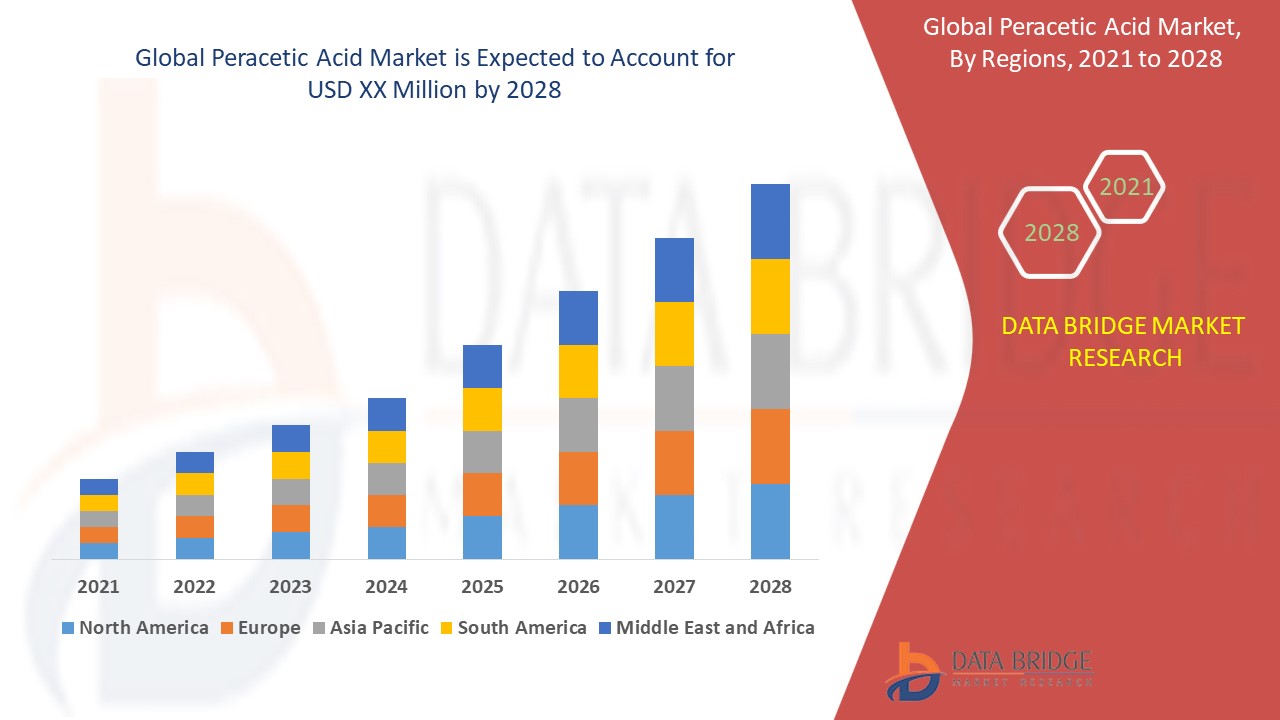
Asia-Pacific is expected to dominate the peracetic acid market during the forecast period of 2025-2032. This growth is driven by rapid industrialization, urbanization, and a growing awareness of sanitation and hygiene. The region's expanding food and beverage industry, coupled with increased investments in water treatment infrastructure, further propels the demand for PAA.
Europe is projected to witness significant growth in the peracetic acid market during the forecast period of 2025-2032. This growth is attributed to attributed to the strong presence of end-user industries. The region's stringent environmental regulations and emphasis on sustainable practices have led to higher adoption of PAA across sectors such as healthcare, food processing, and water treatment.
The country section of the report also provides individual market impacting factors and changes in regulation in the market domestically that impacts the current and future trends of the market. Data points such as down-stream and upstream value chain analysis, technical trends and porter's five forces analysis, case studies are some of the pointers used to forecast the market scenario for individual countries. Also, the presence and availability of global brands and their challenges faced due to large or scarce competition from local and domestic brands, impact of domestic tariffs and trade routes are considered while providing forecast analysis of the country data.
Which are the Top Companies in XPeracetic Acid Market ?
The market competitive landscape provides details by competitor. Details included are company overview, company financials, revenue generated, market potential, investment in research and development, new market initiatives, global presence, production sites and facilities, production capacities, company strengths and weaknesses, product launch, product width and breadth, application dominance. The above data points provided are only related to the companies' focus related to market.
Peracetic Acid Market Leaders Operating in the Market Are:
- MITSUBISHI GAS CHEMICAL COMPANY, INC. (Japan)
- Grasim Industries Limited (India)
- Aditya Birla Chemicals (Thailand) Pvt. Ltd (Thailand)
- Ecolab (U.S.)
- SEITZ GmbH (Germany)
- Hydrite Chemical (U.S.)
- Diversey, Inc (U.S.)
- Airedale Group (U.K.)
- ACURO ORGANICS LIMITED (India)
- Solvay (Belgium)
- Kemira (Finland)
- Evonik Industries AG. (Germany)
- FMC Corporation (U.S.)
Latest Developments in Peracetic Acid Market
- In May 2023, Evonik Industries AG secured registration from the U.S. Environmental Protection Agency (EPA) and introduced VIGOROX, an EPA-registered peracetic acid product, for water quality management in aquaculture. By addressing the growing demand for effective and sustainable water treatment solutions, this development is expected to enhance market penetration and drive the adoption of peracetic acid in aquaculture applications
- In December 2021, Arxada AG, a global leader in specialty chemicals, announced the successful acquisition of Enviro Tech Chemical Services, Inc. (‘Enviro Tech’). The acquisition is expected to drive innovation in environmentally friendly biocides and sanitization technologies. By integrating Enviro Tech’s production capabilities, Arxada aims to improve supply chain efficiencies and meet growing global demand

- Interactive Data Analysis Dashboard
- Company Analysis Dashboard for high growth potential opportunities
- Research Analyst Access for customization & queries
- Competitor Analysis with Interactive dashboard
- Latest News, Updates & Trend analysis
- Harness the Power of Benchmark Analysis for Comprehensive Competitor Tracking
Global Peracetic Acid Market, Supply Chain Analysis and Ecosystem Framework
To support market growth and help clients navigate the impact of geopolitical shifts, DBMR has integrated in-depth supply chain analysis into its Global Peracetic Acid Market research reports. This addition empowers clients to respond effectively to global changes affecting their industries. The supply chain analysis section includes detailed insights such as Global Peracetic Acid Market consumption and production by country, price trend analysis, the impact of tariffs and geopolitical developments, and import and export trends by country and HSN code. It also highlights major suppliers with data on production capacity and company profiles, as well as key importers and exporters. In addition to research, DBMR offers specialized supply chain consulting services backed by over a decade of experience, providing solutions like supplier discovery, supplier risk assessment, price trend analysis, impact evaluation of inflation and trade route changes, and comprehensive market trend analysis.
Data collection and base year analysis are done using data collection modules with large sample sizes. The stage includes obtaining market information or related data through various sources and strategies. It includes examining and planning all the data acquired from the past in advance. It likewise envelops the examination of information inconsistencies seen across different information sources. The market data is analysed and estimated using market statistical and coherent models. Also, market share analysis and key trend analysis are the major success factors in the market report. To know more, please request an analyst call or drop down your inquiry.
The key research methodology used by DBMR research team is data triangulation which involves data mining, analysis of the impact of data variables on the market and primary (industry expert) validation. Data models include Vendor Positioning Grid, Market Time Line Analysis, Market Overview and Guide, Company Positioning Grid, Patent Analysis, Pricing Analysis, Company Market Share Analysis, Standards of Measurement, Global versus Regional and Vendor Share Analysis. To know more about the research methodology, drop in an inquiry to speak to our industry experts.
Data Bridge Market Research is a leader in advanced formative research. We take pride in servicing our existing and new customers with data and analysis that match and suits their goal. The report can be customized to include price trend analysis of target brands understanding the market for additional countries (ask for the list of countries), clinical trial results data, literature review, refurbished market and product base analysis. Market analysis of target competitors can be analyzed from technology-based analysis to market portfolio strategies. We can add as many competitors that you require data about in the format and data style you are looking for. Our team of analysts can also provide you data in crude raw excel files pivot tables (Fact book) or can assist you in creating presentations from the data sets available in the report.













