


Peripartum Cardiomyopathy Market Overview
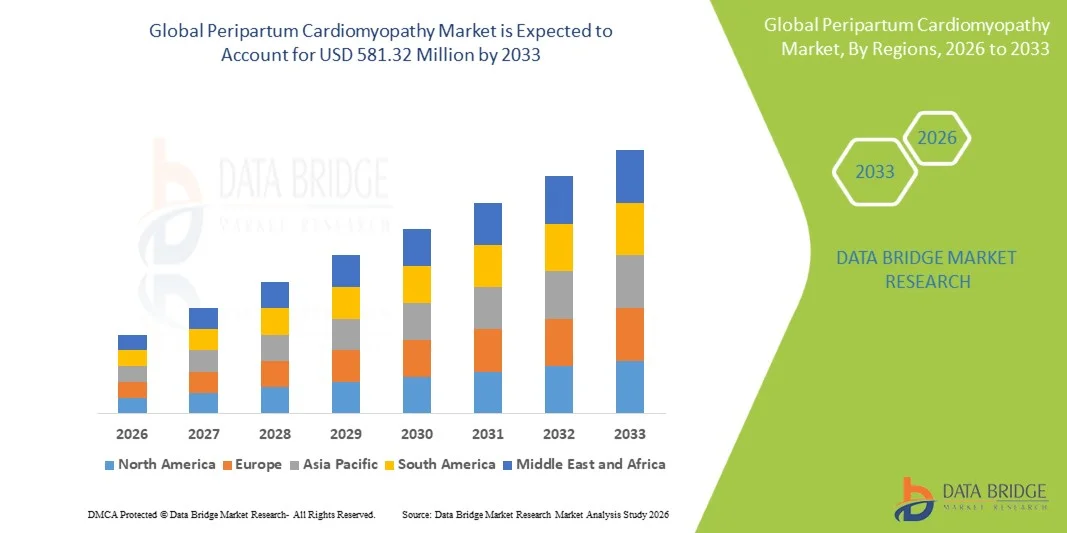
The global peripartum cardiomyopathy (PPCM) market was valued at USD 371.40 million in 2025 and is projected to reach USD 581.32 million by 2033, growing at a CAGR of 5.76% from 2026 to 2033. Market growth is driven by increasing recognition of PPCM as a distinct cardiac condition, rising maternal age, expanding diagnostic imaging capabilities, and growing awareness among obstetricians, cardiologists, and emergency medicine practitioners.
Peripartum cardiomyopathy is a potentially life-threatening form of heart failure characterized by left ventricular systolic dysfunction occurring toward the end of pregnancy or in the months following delivery, without other identifiable causes. The clinical course varies from complete recovery to rapid progression requiring mechanical circulatory support, heart transplantation, or resulting in death.
Improved utilization of diagnostic modalities such as electrocardiography and cardiac MRI, combined with standardized treatment protocols including guideline-directed medical therapy, bromocriptine, and device-based interventions, is expanding treated patient volumes globally. Ongoing clinical research into disease-specific therapies, genetic predisposition, and recovery predictors is creating new opportunities for pharmaceutical and diagnostic stakeholders. Additionally, multidisciplinary care models integrating cardiology, obstetrics, and intensive care are improving maternal and neonatal outcomes, further driving market expansion over the forecast period.
Key Market Trends & Insights
- North America dominated the Peripartum Cardiomyopathy Market with the largest revenue share of 39.12% in 2025, supported by advanced cardiac imaging infrastructure, high awareness among maternal-fetal medicine specialists, and integrated cardio-obstetric care pathways.
- Asia-Pacific is expected to be the fastest-growing region at a CAGR of 7.85% from 2026 to 2033, driven by expanding access to echocardiography and cardiac MRI, growing awareness of pregnancy-related heart failure, and increased utilization of specialized maternal cardiac services.
- The Electrocardiography segment led the diagnosis category with a 62.4% market share in 2025, reflecting its widespread availability, low cost, and first-line diagnostic role in identifying cardiac abnormalities in symptomatic peripartum women.
- The Cardiac MRI segment is anticipated to be the fastest-growing diagnosis category, driven by its superior ability to characterize myocardial tissue, assess fibrosis, and predict recovery outcomes.
- The Hospitals segment dominated the end-user category with a 54.8% market share in 2025, supported by multidisciplinary cardio-obstetric teams, access to advanced imaging and interventional cardiology, and management of severe, hemodynamically unstable cases.
- The Hospital Pharmacy segment accounted for the largest share of the distribution channel with a market share of 49.2% in 2025, reflecting concentration of prescription heart failure therapies dispensed alongside inpatient and outpatient cardio-obstetric care within hospital systems.
Market Size & Forecast
- Global Market Value (2025): USD 371.40 Million
- Expected Market Value (2033): USD 581.32 Million
- Forecast CAGR (2026–2033): 5.76%
- Leading Region in 2025: North America
- Fastest Growing Region: Asia-Pacific
Report Scope and Peripartum Cardiomyopathy Market Segmentation
|
Attributes |
Peripartum Cardiomyopathy Key Market Insights |
|
Segments Covered |
|
|
Countries Covered |
North America · U.S. · Canada · Mexico Europe · Germany · France · U.K. · Netherlands · Switzerland · Belgium · Russia · Italy · Spain · Turkey · Rest of Europe Asia-Pacific · China · Japan · India · South Korea · Singapore · Malaysia · Australia · Thailand · Indonesia · Philippines · Rest of Asia-Pacific Middle East and Africa · Saudi Arabia · U.A.E. · South Africa · Egypt · Israel · Rest of Middle East and Africa South America · Brazil · Argentina · Rest of South America |
|
Key Market Players |
· Novartis AG (Switzerland) · AstraZeneca plc (U.K.) · Pfizer Inc. (U.S.) · Merck & Co., Inc. (U.S.) · Bristol-Myers Squibb Company (U.S.) · Boehringer Ingelheim International GmbH (Germany) · Abbott Laboratories (U.S.) · Siemens Healthineers AG (Germany) · GE HealthCare (U.S.) · Philips Healthcare (Netherlands) · Medtronic plc (Ireland) · Boston Scientific Corporation (U.S.) · Bayer AG (Germany) · Sanofi S.A. (France) · Teva Pharmaceutical Industries Ltd. (Israel) |
|
Market Opportunities |
· Development of disease-specific therapies targeting prolactin-mediated pathways and oxidative stress mechanisms · Integration of genetic screening and risk stratification tools into routine cardio-obstetric care |
|
Value Added Data Infosets |
In addition to the insights on market scenarios such as market value, growth rate, segmentation, geographical coverage, and major players, the market reports curated by the Data Bridge Market Research also include depth expert analysis, patient epidemiology, pipeline analysis, pricing analysis, and regulatory framework. |
Peripartum Cardiomyopathy Market Trends
Trend: Integration of Multimodality Imaging and Precision Medicine Approaches
Clinical pathways increasingly prioritize comprehensive cardiac evaluation using electrocardiography for initial screening, echocardiography for functional assessment, and cardiac MRI for tissue characterization and prognostication. The 2019 European Society of Cardiology Working Group position statement emphasizes left ventricular ejection fraction below 45% as a diagnostic criterion, while advanced imaging enables identification of myocardial edema, fibrosis, and inflammation that predict recovery trajectories.
Genetic testing is emerging as a complementary diagnostic tool, with studies demonstrating shared genetic predisposition between peripartum and dilated cardiomyopathies. Approximately 15-20% of PPCM patients carry truncating variants in genes such as TTN (titin), supporting integration of genetic counseling into comprehensive care. Risk stratification scores incorporating baseline ejection fraction, left ventricular dimensions, and biomarkers are being validated to guide treatment intensity and predict recovery.
For instance,
The IPAC (Investigations of Pregnancy-Associated Cardiomyopathy) study and ESC global registries have strengthened recognition of genetic contributors and validated imaging-based prognostic markers, supporting personalized treatment approaches.
In addition, disease-specific therapies including bromocriptine (targeting prolactin-mediated pathways) have shown promise in accelerating recovery, with systematic reviews and meta-analyses demonstrating improved left ventricular function in treated patients compared to standard care alone.
Peripartum Cardiomyopathy Market Dynamics
Key Market Driver: Rising Maternal Age and Associated Risk Factors
Increasing maternal age globally, combined with higher prevalence of gestational hypertensive disorders, obesity, and multi-gestation pregnancies, is elevating PPCM case identification. A 20-year population study in Scotland demonstrated an incidence of 1 in 4,950 deliveries, with obesity, gestational hypertensive disorders, and multi-gestation identified as significant associated factors.
Wider availability of echocardiography in obstetric and emergency settings enables accurate, earlier diagnosis and timely initiation of guideline-directed medical therapy, improving maternal survival and functional recovery rates.
For instance,
The Scottish population study demonstrated that over a median follow-up of 8.3 years, 76% of women with PPCM achieved left ventricular recovery, underscoring the importance of early diagnosis and comprehensive treatment. In conclusion, early diagnosis and improved clinical management are expected to enhance outcomes and support market growth.
Key Restraint/Challenge: Underdiagnosis and Variable Geographic Incidence
PPCM symptoms frequently overlap with normal pregnancy-related physiological changes, leading to delayed diagnosis in many cases. Variability in incidence across geographic regions and ethnic groups—ranging from 1 in 1,000 in some African populations to 1 in 4,000-5,000 in European and North American cohorts—reflects both true epidemiological differences and disparities in diagnostic awareness and healthcare access.
For instance,
Studies emphasize that dyspnea, fatigue, and peripheral edema are commonly attributed to normal pregnancy, contributing to missed or delayed PPCM diagnoses, particularly in primary care and non-specialist settings. In conclusion, limited awareness and diagnostic challenges may hinder timely treatment initiation and adversely affect patient outcomes.
Key Market Opportunity: Expansion of Disease-Specific Therapies and Digital Health Solutions
Development of targeted therapies addressing prolactin-mediated pathways (bromocriptine), antiangiogenic factors, and oxidative stress mechanisms represents significant market opportunity. Clinical trials evaluating novel pharmacological interventions and combination regimens are expanding treatment options beyond standard heart failure therapy.
Digital health platforms enabling remote monitoring of heart failure symptoms, medication adherence, and early detection of clinical deterioration are improving post-discharge outcomes and reducing rehospitalization rates.
For instance,
Systematic reviews and meta-analyses document favorable effects of bromocriptine on left ventricular functional recovery, supporting regulatory and clinical adoption as adjunctive therapy in PPCM management. Advancing targeted therapies and digital monitoring solutions are expected to improve outcomes and expand treatment adoption.
Peripartum Cardiomyopathy Market Scope
The Peripartum Cardiomyopathy market is segmented on the basis of diagnosis, end-user, and distribution channel.
- By Diagnosis
On the basis of diagnosis, the Peripartum Cardiomyopathy Market is segmented into Electrocardiography and Cardiac MRI. The Electrocardiography segment dominated the market with a 62.4% market share in 2025, supported by its widespread availability across primary care, obstetric, and emergency settings. Electrocardiography serves as the first-line diagnostic tool for identifying cardiac abnormalities in symptomatic peripartum women, with more than 90% of PPCM patients demonstrating at least one electrocardiographic irregularity including extended QT interval, T-wave inversion, ST segment depression, bundle-branch block, or frequent ectopy. Low cost, non-invasive nature, rapid acquisition, and universal accessibility have established electrocardiography as an essential component of initial cardiac evaluation.
The Cardiac MRI segment is expected to witness the fastest growth from 2026 to 2033, driven by its superior tissue characterization capabilities, ability to assess myocardial edema, fibrosis, and inflammation, and prognostic value in predicting recovery outcomes. Increasing availability of cardiac MRI in tertiary care centers and specialized cardio-obstetric programs, combined with growing recognition of its role in differentiating PPCM from other cardiomyopathies and guiding treatment intensity, is accelerating adoption.
- By End-User
On the basis of end-user, the Peripartum Cardiomyopathy Market is segmented into hospitals, research institutes, and specialty clinics. The Hospitals segment dominated the market with a market share of 54.8% in 2025, driven by their ability to provide comprehensive patient management through multidisciplinary cardio-obstetric teams, advanced diagnostic imaging, specialist consultations, intensive care capabilities, and access to interventional cardiology and cardiac surgery. Hospitals serve as primary centers for diagnosing and managing acute PPCM presentations, hemodynamically unstable patients, and cases requiring mechanical circulatory support or transplantation evaluation.
The Specialty Clinics segment is expected to witness the fastest growth from 2026 to 2033, supported by expansion of dedicated cardio-obstetric clinics, maternal cardiac programs, and heart failure specialty centers. Increasing demand for longitudinal follow-up, outpatient heart failure optimization, and preconception counseling for subsequent pregnancies is strengthening the role of specialty clinics in comprehensive PPCM care.
- By Distribution Channel
On the basis of distribution channel, the Peripartum Cardiomyopathy Market is segmented into Hospital Pharmacy, Retail Pharmacy, Online Pharmacies, and Others. The Hospital Pharmacy segment dominated the market with a market share of 49.2% in 2025, primarily due to concentration of prescription heart failure therapies within hospital-based treatment pathways. Hospitals serve as key centers for diagnosis, acute stabilization, and initiation of guideline-directed medical therapy including beta-blockers, ACE inhibitors, diuretics, and bromocriptine, resulting in higher dispensing volumes. Integration with cardio-obstetric teams ensures appropriate medication selection considering breastfeeding compatibility and fetal safety.
The Online Pharmacies segment is expected to record the fastest growth during 2026–2033, driven by increasing digital healthcare adoption, expanding e-pharmacy platforms, greater convenience in prescription refills for chronic heart failure management, competitive pricing, home delivery services, and growing patient preference for remote medication access during the postpartum recovery period.
Peripartum Cardiomyopathy Market Regional Analysis
North America dominated the Peripartum Cardiomyopathy market with a revenue share of 39.12% in 2025, supported by advanced cardiac imaging infrastructure, high awareness among maternal-fetal medicine specialists and cardiologists, established cardio-obstetric programs, and comprehensive insurance coverage for diagnostic and therapeutic interventions. Favorable reimbursement for echocardiography, cardiac MRI, and heart failure medications supports adherence to standardized care pathways.
U.S. Peripartum Cardiomyopathy Market Insight
The U.S. peripartum cardiomyopathy market benefits from widespread availability of advanced cardiac imaging, established cardio-obstetric programs at major academic medical centers, and robust clinical trial infrastructure supporting development of disease-specific therapies. The IPAC study and multiple institutional registries have advanced understanding of PPCM epidemiology, genetics, and outcomes, informing clinical practice guidelines and therapeutic development.
Europe Peripartum Cardiomyopathy Market Insight
The Europe peripartum cardiomyopathy market remains a major contributor, with strong hospital-based imaging access, comprehensive maternal cardiac care programs, and implementation of ESC position statements on PPCM diagnosis and management. Cross-disciplinary guidelines integrating cardiology, obstetrics, and intensive care are improving diagnostic accuracy and treatment outcomes.
U.K. Peripartum Cardiomyopathy Market Insight
The U.K. peripartum cardiomyopathy market's 20-year population study in Scotland has provided foundational epidemiological data, demonstrating an incidence of 1 in 4,950 deliveries and informing national guidelines for screening and management. NHS cardio-obstetric pathways are improving recognition and timely treatment of affected women.
Germany Peripartum Cardiomyopathy Market Insight
The Germany peripartum cardiomyopathy market's robust cardiology infrastructure and research leadership, including contributions to understanding bromocriptine's therapeutic role, facilitate comprehensive diagnostic evaluation and evidence-based treatment. German academic centers have been instrumental in developing disease-specific therapeutic protocols.
Asia-Pacific Peripartum Cardiomyopathy Market Insight
The Asia-Pacific peripartum cardiomyopathy market is poised for rapid growth with a CAGR of 7.85% during the forecast period, driven by expanding cardiac imaging capacity, rising awareness of pregnancy-related heart failure, and broader adoption of guideline-directed medical therapy. Private cardiac centers and maternal hospitals in countries such as India, China, and Southeast Asian nations are increasing access to echocardiography and specialized cardio-obstetric services.
Japan Peripartum Cardiomyopathy Market Insight
The Japan peripartum cardiomyopathy market's advanced healthcare infrastructure and strong emphasis on maternal health support early identification and comprehensive management of PPCM, with high rates of adherence to guideline-directed therapy and structured postpartum follow-up.
China Peripartum Cardiomyopathy Market Insight
The China peripartum cardiomyopathy market is experiencing rapid growth in tertiary hospital cardiac imaging capabilities, enabling wider diagnosis of PPCM and improving referral pathways between obstetric, cardiology, and intensive care services across urban and increasingly rural areas.
Peripartum Cardiomyopathy Market Share
The peripartum cardiomyopathy industry is primarily led by well-established pharmaceutical, medical device, and diagnostic imaging companies, including:
- Novartis AG (Switzerland)
- AstraZeneca plc (U.K.)
- Pfizer Inc. (U.S.)
- Merck & Co., Inc. (U.S.)
- Bristol-Myers Squibb Company (U.S.)
- Boehringer Ingelheim International GmbH (Germany)
- Abbott Laboratories (U.S.)
- Siemens Healthineers AG (Germany)
- GE HealthCare (U.S.)
- Philips Healthcare (Netherlands)
- Medtronic plc (Ireland)
- Boston Scientific Corporation (U.S.)
- Bayer AG (Germany)
- Sanofi S.A. (France)
- Teva Pharmaceutical Industries Ltd. (Israel)
Latest Developments in Peripartum Cardiomyopathy Market
- In November 2025, researchers published a comprehensive meta-analysis in ESC Heart Failure evaluating bromocriptine for peripartum cardiomyopathy (PPCM). The analysis of 12 studies involving 1,765 patients demonstrated significant improvements in left ventricular ejection fraction and cardiac remodeling among patients receiving bromocriptine alongside standard care, further strengthening evidence for its role as a disease-modifying therapy in PPCM management.
- In May 2025, a systematic review and meta-analysis published in the International Journal of Cardiology reported that bromocriptine was associated with greater improvement in left ventricular function compared with standard heart failure therapy alone in PPCM patients. The findings supported increasing clinical interest in targeted prolactin-inhibition strategies for improving maternal cardiac recovery

- Interactive Data Analysis Dashboard
- Company Analysis Dashboard for high growth potential opportunities
- Research Analyst Access for customization & queries
- Competitor Analysis with Interactive dashboard
- Latest News, Updates & Trend analysis
- Harness the Power of Benchmark Analysis for Comprehensive Competitor Tracking
Data collection and base year analysis are done using data collection modules with large sample sizes. The stage includes obtaining market information or related data through various sources and strategies. It includes examining and planning all the data acquired from the past in advance. It likewise envelops the examination of information inconsistencies seen across different information sources. The market data is analysed and estimated using market statistical and coherent models. Also, market share analysis and key trend analysis are the major success factors in the market report. To know more, please request an analyst call or drop down your inquiry.
The key research methodology used by DBMR research team is data triangulation which involves data mining, analysis of the impact of data variables on the market and primary (industry expert) validation. Data models include Vendor Positioning Grid, Market Time Line Analysis, Market Overview and Guide, Company Positioning Grid, Patent Analysis, Pricing Analysis, Company Market Share Analysis, Standards of Measurement, Global versus Regional and Vendor Share Analysis. To know more about the research methodology, drop in an inquiry to speak to our industry experts.
Data Bridge Market Research is a leader in advanced formative research. We take pride in servicing our existing and new customers with data and analysis that match and suits their goal. The report can be customized to include price trend analysis of target brands understanding the market for additional countries (ask for the list of countries), clinical trial results data, literature review, refurbished market and product base analysis. Market analysis of target competitors can be analyzed from technology-based analysis to market portfolio strategies. We can add as many competitors that you require data about in the format and data style you are looking for. Our team of analysts can also provide you data in crude raw excel files pivot tables (Fact book) or can assist you in creating presentations from the data sets available in the report.












