




Global Peripheral Neuritis Treatment Market
Market Size in USD Billion
CAGR :
% 
 USD
4.80 Billion
USD
6.32 Billion
2025
2033
USD
4.80 Billion
USD
6.32 Billion
2025
2033
 Forecast Period Forecast Period |
2026 –2033 |
 Market Size (Base Year) Market Size (Base Year) |
USD 4.80 Billion |
 Market Size (Forecast Year) Market Size (Forecast Year) |
USD 6.32 Billion |
 CAGR CAGR |
% |
| Major Markets Players |
|
Peripheral Neuritis Treatment Market Size
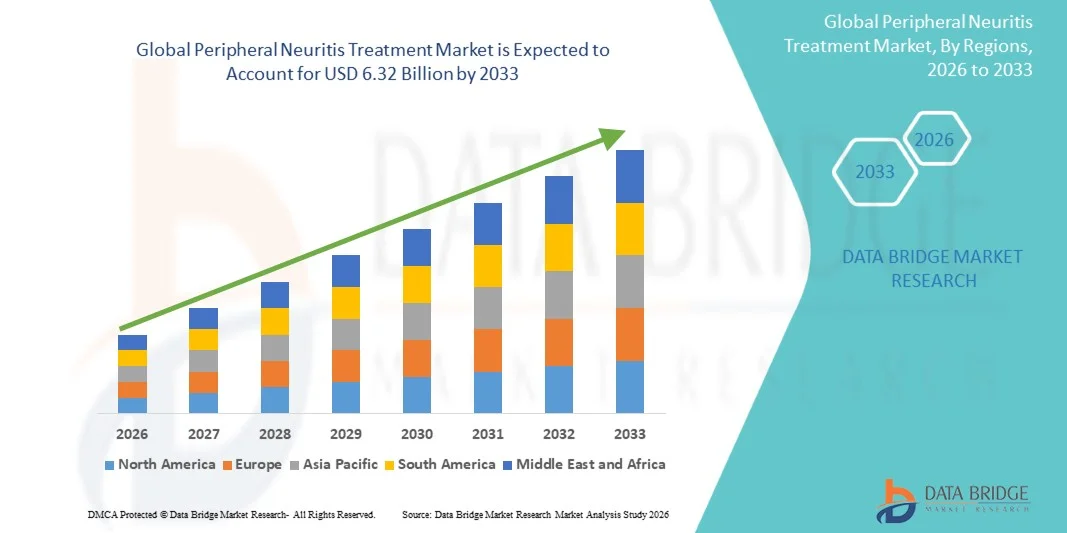
- The global peripheral neuritis treatment market size was valued at USD 4.80 billion in 2025 and is expected to reach USD 6.32 billion by 2033, at a CAGR of 3.50% during the forecast period
- The market growth is largely driven by the rising prevalence of peripheral neuropathies, growing awareness of nerve-related disorders, and advancements in pharmacological and non-pharmacological treatment options, including novel analgesics and neuroprotective therapies
- Furthermore, increasing patient demand for effective, safe, and targeted therapies for nerve inflammation and damage is positioning advanced peripheral neuritis treatments as the preferred choice among clinicians and patients. These combined factors are propelling the adoption of innovative treatment solutions, thereby significantly fueling the market's expansion
Peripheral Neuritis Treatment Market Analysis
- Peripheral neuritis treatments, including pharmacological therapies such as anticonvulsants, antidepressants, analgesics, and local anesthetics, are increasingly critical for managing nerve inflammation and neuropathic pain in both acute and chronic cases, owing to their efficacy in improving patient quality of life and functional outcomes
- The rising demand for peripheral neuritis treatments is primarily driven by the increasing prevalence of diabetic neuropathy, chemotherapy-induced neuropathies, and idiopathic peripheral neuropathies, coupled with growing awareness among patients and healthcare providers about early diagnosis and intervention
- North America dominated the peripheral neuritis treatment market with the largest revenue share of 38.7% in 2025, supported by advanced healthcare infrastructure, high adoption of innovative drug classes, robust R&D activities, and substantial government and private funding, with the U.S. witnessing significant growth in prescriptions of anticonvulsants and selective serotonin/norepinephrine reuptake inhibitors for symptom management
- Asia-Pacific is expected to be the fastest growing region in the peripheral neuritis treatment market during the forecast period due to rising incidence of diabetic peripheral neuropathy, increasing healthcare expenditure, and improving access to specialized treatments in emerging economies
- Anticonvulsants segment dominated the peripheral neuritis treatment market with a market share of 45.6% in 2025, driven by their effectiveness in controlling neuropathic pain and widespread physician preference across multiple peripheral neuritis applications
Report Scope and Peripheral Neuritis Treatment Market Segmentation
|
Attributes |
Peripheral Neuritis Treatment Key Market Insights |
|
Segments Covered |
|
|
Countries Covered |
North America
Europe
Asia-Pacific
Middle East and Africa
South America
|
|
Key Market Players |
|
|
Market Opportunities |
|
|
Value Added Data Infosets |
In addition to the insights on market scenarios such as market value, growth rate, segmentation, geographical coverage, and major players, the market reports curated by the Data Bridge Market Research also include in-depth expert analysis, patient epidemiology, pipeline analysis, pricing analysis, and regulatory framework |
Peripheral Neuritis Treatment Market Trends
“Advancements in Targeted Pharmacological Therapies”
- A notable and accelerating trend in the global peripheral neuritis treatment market is the development and adoption of targeted pharmacological therapies, including anticonvulsants, selective serotonin/norepinephrine reuptake inhibitors (SNRIs), and local anesthetics, aimed at addressing both neuropathic pain and underlying nerve inflammation
- For instance, the novel SNRI formulations are designed to provide longer-lasting pain relief with fewer side effects, while newer anticonvulsants such as pregabalin analogs are being optimized for improved nerve pain control in diabetic and chemotherapy-induced neuropathies
- Integration of these advanced therapies with patient-specific treatment plans allows for more precise and effective management of peripheral neuritis symptoms, improving overall patient adherence and quality of life
- Pharmacological innovation is increasingly complemented by combination regimens, which enable simultaneous targeting of pain pathways and nerve regeneration, thereby enhancing clinical outcomes for patients suffering from chronic peripheral neuropathies
- This trend towards more personalized, targeted, and multimodal therapeutic approaches is reshaping treatment protocols, with pharmaceutical companies such as Pfizer and Grünenthal developing novel formulations for specific peripheral neuropathy indications
- The adoption of these targeted therapies is expanding rapidly across both developed and emerging markets, as clinicians and patients prioritize efficacy, tolerability, and symptom-specific management strategies in peripheral neuritis care
- For instance, digital health platforms are being increasingly integrated with treatment plans to monitor patient response, enabling physicians to adjust therapies in real-time for improved outcomes
Peripheral Neuritis Treatment Market Dynamics
Driver
“Rising Prevalence of Peripheral Neuropathy and Growing Awareness”
- The increasing prevalence of conditions causing peripheral neuritis, such as diabetes, chemotherapy exposure, and autoimmune disorders, coupled with rising awareness among patients and healthcare providers, is a key driver for market growth
- For instance, in March 2025, Pfizer reported increasing prescriptions of duloxetine for diabetic peripheral neuropathy in North America, reflecting heightened clinical adoption and awareness of evidence-based treatment options
- As more patients seek timely diagnosis and management of neuropathic pain, demand for effective pharmacological therapies, including anticonvulsants, analgesics, and local anesthetics, continues to grow significantly
- Furthermore, increasing investment in healthcare infrastructure, patient education programs, and early intervention strategies are making peripheral neuritis treatments more accessible, driving market expansion
- Availability of multiple drug classes with proven efficacy in managing diverse peripheral neuritis applications encourages clinicians to adopt personalized treatment plans, strengthening overall market demand
- For instance, growing collaborations between pharmaceutical companies and hospitals to promote early screening programs for diabetic and chemotherapy-induced neuropathy are boosting treatment adoption rates
- Increasing research on novel biomarkers and diagnostic tools allows for more accurate identification of peripheral neuritis, facilitating timely and targeted treatment interventions
Restraint/Challenge
“Side Effects and Regulatory Approval Barriers”
- Concerns regarding adverse effects associated with long-term use of peripheral neuritis drugs, including dizziness, gastrointestinal issues, and dependency risks, pose challenges to widespread adoption of some pharmacological therapies
- For instance, reports of opioid-related dependency in chronic neuropathic pain management have led to more cautious prescribing practices and stricter monitoring by clinicians
- Navigating complex regulatory pathways for approval of new drugs or combination therapies adds further hurdles, particularly in regions with stringent safety and clinical efficacy requirements
- Furthermore, high treatment costs associated with novel or branded therapies may limit access in price-sensitive markets, particularly in emerging economies or among uninsured populations
- Addressing these challenges through safer drug formulations, enhanced patient monitoring, regulatory compliance, and patient education on side-effect management will be critical for sustained market growth
- For instance, delayed approvals of innovative therapies in key markets can slow adoption despite demonstrated clinical benefits, affecting overall market expansion
- Patent expirations and generic competition in some drug classes may pressure pricing and profitability, limiting incentives for further innovation in peripheral neuritis treatment
Peripheral Neuritis Treatment Market Scope
The market is segmented on the basis of drug class, application, and distribution channel
- By Drug Class
On the basis of drug class, the peripheral neuritis treatment market is segmented into Anti-Depressants, Tricyclic, Selective Serotonin/Norepinephrine Reuptake Inhibitors (SNRIs), Serotonin Reuptake Inhibitors (SSRIs), Anticonvulsants, Local Anesthesia, Analgesics, NSAID, Opioid, Steroids, and Others. The Anticonvulsants segment dominated the market with the largest revenue share of 45.6% in 2025, driven by their proven efficacy in controlling neuropathic pain associated with diabetic, chemotherapy-induced, and idiopathic peripheral neuropathies. Physicians prefer anticonvulsants due to their well-established clinical safety profile, broad therapeutic range, and suitability for long-term management of nerve pain. Their extensive adoption is also fueled by increasing prescriptions for drugs such as pregabalin and gabapentin, supported by reimbursement policies in developed markets. In addition, anticonvulsants are often used in combination with other drug classes, enhancing symptom control and patient adherence. Patients also appreciate the oral administration convenience and predictable pain relief, further driving the segment’s growth.
The SNRIs segment is expected to witness the fastest growth rate from 2026 to 2033, fueled by rising adoption for targeted pain modulation in diabetic and chemotherapy-induced neuropathy. These drugs, such as duloxetine and venlafaxine, offer dual benefits of alleviating neuropathic pain and managing comorbid depression or anxiety commonly associated with chronic pain. Growing clinical evidence supporting their efficacy and safety, along with increasing awareness among healthcare providers and patients, contributes to rapid uptake. Pharmaceutical companies are also developing newer formulations with improved tolerability, which is enhancing patient adherence and expanding market penetration in both developed and emerging economies.
- By Application
On the basis of application, the peripheral neuritis treatment market is segmented into Diabetic Peripheral Neuropathy (DPN), Chemotherapy-Induced Peripheral Neuropathy (CIPN), Idiopathic Peripheral Neuropathy, and Others. The Diabetic Peripheral Neuropathy (DPN) segment dominated the market with the largest share in 2025, driven by the rising global prevalence of diabetes and its associated neuropathic complications. Patients with DPN often experience chronic pain, numbness, and reduced quality of life, making effective pharmacological interventions critical. Increasing screening programs, early diagnosis, and routine management protocols are driving demand for drug classes such as anticonvulsants, SNRIs, and topical anesthetics. Furthermore, reimbursement support and inclusion of DPN treatments in national healthcare guidelines in developed countries are boosting adoption. Physicians increasingly rely on evidence-based therapies for symptom relief, and patient preference for oral or easy-to-administer drugs reinforces the segment’s dominance.
The Chemotherapy-Induced Peripheral Neuropathy (CIPN) segment is expected to witness the fastest CAGR from 2026 to 2033, driven by the rising number of cancer survivors and growing awareness of neuropathic side effects of chemotherapy. Increasing use of novel chemotherapeutic regimens has amplified the incidence of CIPN, creating demand for effective pain management options, including SNRIs, anticonvulsants, and local anesthetics. Healthcare providers are focusing on early intervention and combination therapies to reduce long-term nerve damage, further propelling growth. In addition, patient-centric approaches, including monitoring of neuropathic symptoms through oncology clinics and digital health platforms, are facilitating faster adoption in both hospital and outpatient settings.
- By Distribution Channel
On the basis of distribution channel, the peripheral neuritis treatment market is segmented into hospital pharmacies, retail pharmacies, drug stores, and online pharmacies. The Hospital Pharmacies segment dominated the market with the largest revenue share in 2025, due to the frequent initiation of treatment in clinical settings where diagnosis, monitoring, and prescription of specialized pharmacological therapies occur. Hospitals provide access to a broad range of drug classes, including anticonvulsants, SNRIs, and opioids, under professional supervision, ensuring optimal dosing and management of adverse effects. The strong presence of trained healthcare professionals, established patient monitoring programs, and insurance reimbursement coverage further drive hospital pharmacy utilization. Moreover, hospital pharmacies facilitate access to combination therapies and specialized formulations, supporting chronic management of peripheral neuropathies.
The Online Pharmacies segment is expected to witness the fastest growth rate from 2026 to 2033, fueled by increasing internet penetration, convenience of home delivery, and rising patient preference for digital healthcare solutions. Online platforms enable easy access to prescription medications, particularly for patients in remote areas or those with mobility limitations due to neuropathic pain. Growing trust in e-pharmacy services, coupled with regulatory approvals for online sale of controlled medications in key markets, supports rapid adoption. In addition, patient education and digital prescription services integrated with telemedicine are accelerating the shift toward online pharmacy channels.
Peripheral Neuritis Treatment Market Regional Analysis
- North America dominated the peripheral neuritis treatment market with the largest revenue share of 38.7% in 2025, supported by advanced healthcare infrastructure, high adoption of innovative drug classes, robust R&D activities, and substantial government and private funding
- Patients and healthcare providers in the region highly value the availability of multiple pharmacological therapies, including anticonvulsants, SNRIs, and local anesthetics, which offer effective symptom management and improved quality of life for peripheral neuritis sufferers
- This widespread adoption is further supported by strong R&D activities, insurance coverage, government initiatives for neuropathy awareness, and the presence of major pharmaceutical companies, establishing North America as the leading market for peripheral neuritis treatments in both clinical and outpatient settings
U.S. Peripheral Neuritis Treatment Market Insight
The U.S. peripheral neuritis treatment market captured the largest revenue share of 82% in 2025 within North America, driven by the high prevalence of diabetic and chemotherapy-induced peripheral neuropathies. Patients are increasingly prioritizing effective management of neuropathic pain and nerve inflammation through advanced pharmacological therapies such as anticonvulsants, SNRIs, and local anesthetics. The growing adoption of early diagnosis, personalized treatment plans, and digital health monitoring platforms further propels market growth. Moreover, strong healthcare infrastructure, reimbursement support, and the presence of leading pharmaceutical companies are significantly contributing to the market’s expansion.
Europe Peripheral Neuritis Treatment Market Insight
The Europe peripheral neuritis treatment market is projected to expand at a substantial CAGR throughout the forecast period, primarily driven by increasing awareness of nerve-related disorders and rising healthcare expenditure. The adoption of guideline-based therapies for diabetic, idiopathic, and chemotherapy-induced peripheral neuropathies is fostering market growth. European patients are increasingly seeking effective, well-tolerated drug options such as anticonvulsants and SNRIs. In addition, supportive government initiatives, early screening programs, and the integration of specialized therapies in hospitals and outpatient clinics are stimulating demand. The market is witnessing growth across both residential and institutional healthcare settings.
U.K. Peripheral Neuritis Treatment Market Insight
The U.K. peripheral neuritis treatment market is anticipated to grow at a noteworthy CAGR during the forecast period, driven by heightened awareness of neuropathic pain management and the need for early intervention. Rising cases of diabetic peripheral neuropathy and chemotherapy-induced neuropathy are encouraging patients and clinicians to adopt effective pharmacological therapies. The U.K.’s strong healthcare infrastructure, combined with the accessibility of prescription medications through hospital and retail pharmacies, continues to stimulate market growth. Increasing patient preference for well-tolerated drug classes, along with national programs promoting neuropathy awareness, supports adoption.
Germany Peripheral Neuritis Treatment Market Insight
The Germany peripheral neuritis treatment market is expected to expand at a considerable CAGR during the forecast period, fueled by increasing prevalence of peripheral neuropathies and demand for advanced treatment options. Germany’s well-developed healthcare infrastructure and focus on innovative therapies promote adoption of both first-line and combination pharmacological treatments. The integration of evidence-based protocols, digital patient monitoring, and early diagnosis programs is becoming increasingly common. Patients in Germany are particularly focused on effective, safe, and sustainable treatment options, aligning with local clinical practices and consumer expectations.
Asia-Pacific Peripheral Neuritis Treatment Market Insight
The Asia-Pacific peripheral neuritis treatment market is poised to grow at the fastest CAGR of 23% during the forecast period of 2026 to 2033, driven by rising incidence of diabetic and chemotherapy-induced peripheral neuropathies, increasing healthcare awareness, and improving medical infrastructure in countries such as China, Japan, and India. The region’s growing focus on early diagnosis, coupled with increasing availability of effective pharmacological therapies, is driving adoption. Furthermore, emerging healthcare investments and digital health platforms are enhancing treatment accessibility. Rapid urbanization, rising disposable incomes, and government initiatives for nerve disorder management are further propelling market growth.
Japan Peripheral Neuritis Treatment Market Insight
The Japan peripheral neuritis treatment market is gaining momentum due to the country’s aging population, high prevalence of diabetic neuropathy, and demand for effective pain management. The Japanese market emphasizes quality of care, with increasing adoption of targeted therapies such as anticonvulsants, SNRIs, and local anesthetics. Integration of digital monitoring and telehealth solutions for chronic neuropathy patients is fueling growth. In addition, the focus on early diagnosis, patient education, and combination therapy approaches is supporting adoption in both residential and hospital settings.
India Peripheral Neuritis Treatment Market Insight
The India peripheral neuritis treatment market accounted for the largest revenue share in Asia-Pacific in 2025, attributed to rising diabetes prevalence, chemotherapy-related neuropathies, and expanding healthcare infrastructure. India is witnessing increasing awareness of nerve-related disorders, driving patient demand for effective pharmacological therapies. The availability of affordable medications, growing retail and hospital pharmacy networks, and government health initiatives are key factors propelling the market. Rising urbanization, expanding middle-class population, and increasing access to digital health solutions are further boosting treatment adoption across the country.
Peripheral Neuritis Treatment Market Share
The Peripheral Neuritis Treatment industry is primarily led by well-established companies, including:
- Pfizer Inc. (U.S.)
- GSK plc (U.K.)
- Johnson & Johnson Services, Inc. (U.S.)
- AstraZeneca (U.K.)
- Novartis AG (Switzerland)
- Eli Lilly and Company, (U.S.)
- Takeda Pharmaceuticals & Co. Ltd. (Japan)
- Viatris Inc. (U.S.)
- Teva Pharmaceutical Industries Ltd. (Israel)
- Astellas Pharma Inc., (Japan)
- Sun Pharmaceutical Industries Ltd. (India)
- Apotex Inc., (Canada)
- Dr. Reddy’s Laboratories Ltd. (India)
- Cipla Inc., (India)
- Amneal Pharmaceuticals LLC (U.S.)
- Lupin Ltd. (India)
- Daiichi Sankyo Co. Ltd. (Japan)
- Glenmark Pharmaceuticals Ltd., (India)
- Cadila Pharmaceuticals Ltd. (India)
- Mallinckrodt Pharmaceuticals plc (U.K.)
What are the Recent Developments in Global Peripheral Neuritis Treatment Market?
- In October 2025, Lexicon Pharmaceuticals presented additional clinical data on pilavapadin at the 19th Annual Pain Therapeutics Summit, reinforcing its potential as a novel non‑opioid oral therapy for diabetic peripheral neuropathic pain based on extended analyses from the Phase 2b PROGRESS study
- In March 2025, clinical development momentum continued for pilavapadin when Phase 2b PROGRESS data confirmed the 10 mg dose’s efficacy and tolerability, leading to selection of this dose for upcoming Phase 3 trials targeting diabetic peripheral neuropathic pain patients
- In March 2025, Dogwood Therapeutics initiated dosing of the first patient in its Phase 2b HALT‑CINP trial evaluating Halneuron® for the treatment of chemotherapy‑induced peripheral neuropathy (CIPN), marking progress toward the first mechanism‑based therapy for chemo‑related neuropathic pain
- In March 2025, Lexicon Pharmaceuticals announced topline results from its Phase 2b PROGRESS study evaluating pilavapadin (LX9211) in adults with moderate‑to‑severe diabetic peripheral neuropathic pain (DPNP), demonstrating meaningful reductions in pain versus placebo and positioning the investigational AAK1 inhibitor to advance toward Phase 3 development
- In December 2023, the US Food and Drug Administration (FDA) approved Wainua (eplontersen), developed by Ionis Pharmaceuticals and AstraZeneca, as the first approved self‑administered treatment for adult patients with hereditary transthyretin‑mediated amyloid polyneuropathy (ATTRv‑PN), offering sustained reductions in neuropathy impairment and improved quality of life
SKU-
Get online access to the report on the World's First Market Intelligence Cloud

- Interactive Data Analysis Dashboard
- Company Analysis Dashboard for high growth potential opportunities
- Research Analyst Access for customization & queries
- Competitor Analysis with Interactive dashboard
- Latest News, Updates & Trend analysis
- Harness the Power of Benchmark Analysis for Comprehensive Competitor Tracking
Research Methodology
Data collection and base year analysis are done using data collection modules with large sample sizes. The stage includes obtaining market information or related data through various sources and strategies. It includes examining and planning all the data acquired from the past in advance. It likewise envelops the examination of information inconsistencies seen across different information sources. The market data is analysed and estimated using market statistical and coherent models. Also, market share analysis and key trend analysis are the major success factors in the market report. To know more, please request an analyst call or drop down your inquiry.
The key research methodology used by DBMR research team is data triangulation which involves data mining, analysis of the impact of data variables on the market and primary (industry expert) validation. Data models include Vendor Positioning Grid, Market Time Line Analysis, Market Overview and Guide, Company Positioning Grid, Patent Analysis, Pricing Analysis, Company Market Share Analysis, Standards of Measurement, Global versus Regional and Vendor Share Analysis. To know more about the research methodology, drop in an inquiry to speak to our industry experts.
Customization Available
Data Bridge Market Research is a leader in advanced formative research. We take pride in servicing our existing and new customers with data and analysis that match and suits their goal. The report can be customized to include price trend analysis of target brands understanding the market for additional countries (ask for the list of countries), clinical trial results data, literature review, refurbished market and product base analysis. Market analysis of target competitors can be analyzed from technology-based analysis to market portfolio strategies. We can add as many competitors that you require data about in the format and data style you are looking for. Our team of analysts can also provide you data in crude raw excel files pivot tables (Fact book) or can assist you in creating presentations from the data sets available in the report.












