


Pernicious Anemia Testing Market Size
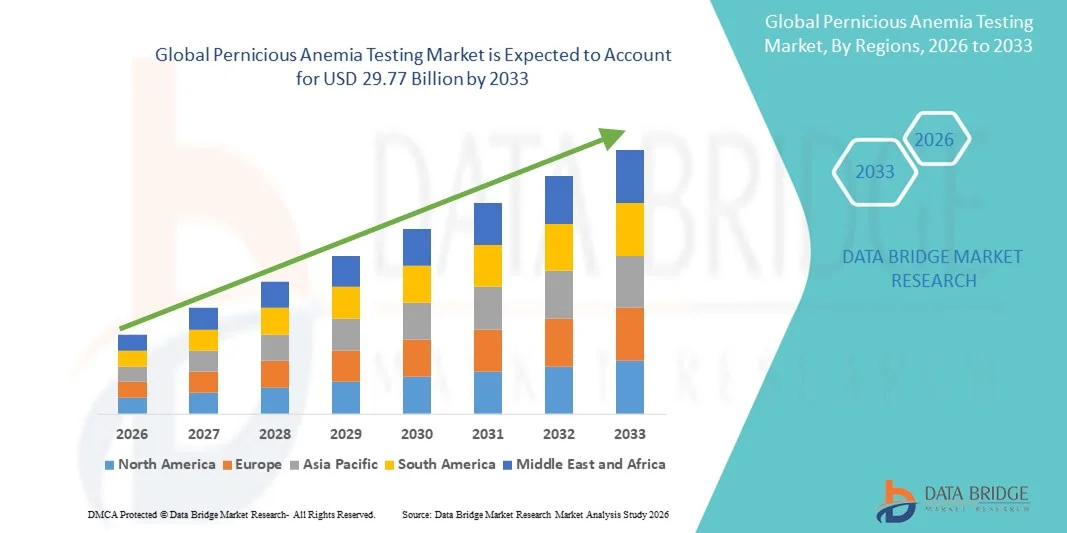
- The global pernicious anemia testing market size was valued at USD 20.00 billion in 2025 and is expected to reach USD 29.77 billion by 2033, at a CAGR of 5.10% during the forecast period
- The market growth is largely fueled by the growing adoption of advanced diagnostic technologies and increasing awareness about hematological disorders, leading to improved early detection and monitoring of Pernicious Anemia
- Furthermore, rising demand for accurate, rapid, and minimally invasive testing solutions is driving healthcare providers and diagnostic laboratories to adopt Pernicious Anemia Testing solutions, thereby significantly boosting the industry's growth
Pernicious Anemia Testing Market Analysis
- Pernicious Anemia Testing solutions are increasingly vital components of modern diagnostic workflows in both hospitals and clinical laboratories due to their enhanced accuracy, rapid results, and ability to integrate with electronic health record systems
- The escalating demand for Pernicious Anemia Testing is primarily fueled by growing awareness of vitamin B12 deficiency, increasing prevalence of anemia-related disorders, and the rising need for early diagnosis to prevent severe complications
- North America dominated the pernicious anemia testing market with the largest revenue share of 42.5% in 2025, driven by advanced healthcare infrastructure, high adoption of diagnostic testing, and the presence of key market players, with the U.S. witnessing substantial growth due to rising geriatric population and increased awareness of hematological health
- Asia-Pacific is expected to be the fastest growing region in the pernicious anemia testing market during the forecast period, with a CAGR of 7.8%, due to increasing healthcare expenditure, expanding diagnostic facilities, and growing awareness about early disease detection
- Vitamin B-12 Injections dominated with a market share of 54.3% in 2025, due to immediate therapeutic effects and suitability for severe deficiency
Report Scope and Pernicious Anemia Testing Market Segmentation
|
Attributes |
Pernicious Anemia Testing Key Market Insights |
|
Segments Covered |
|
|
Countries Covered |
North America
Europe
Asia-Pacific
Middle East and Africa
South America
|
|
Key Market Players |
• Quest Diagnostics (U.S.) |
|
Market Opportunities |
|
|
Value Added Data Infosets |
In addition to the insights on market scenarios such as market value, growth rate, segmentation, geographical coverage, and major players, the market reports curated by the Data Bridge Market Research also include in-depth expert analysis, patient epidemiology, pipeline analysis, pricing analysis, and regulatory framework. |
Pernicious Anemia Testing Market Trends
Rising Focus on Early Diagnosis and Advanced Diagnostic Techniques
- A significant trend in the global pernicious anemia testing market is the increasing emphasis on early detection and accurate diagnosis through advanced laboratory techniques
- For instance, in January 2024, Abbott Laboratories launched its fully automated vitamin B12 and intrinsic factor antibody assay system in Europe, enabling rapid and reliable detection of pernicious anemia
- Diagnostic laboratories and hospitals are increasingly adopting automated hematology analyzers, vitamin B12 assays, intrinsic factor antibody tests, and methylmalonic acid measurements to ensure precise and timely detection
- The trend is also driven by growing awareness among healthcare providers about the prevalence of pernicious anemia, particularly in aging populations and individuals with autoimmune disorders
- Integration of multiplex testing platforms allows simultaneous evaluation of related biomarkers, improving diagnostic efficiency and reducing turnaround times
- Rising prevalence of anemia-related complications and increasing demand for preventive healthcare screening further propel this trend. The adoption of point-of-care (POC) testing solutions in clinics and remote healthcare settings is also expanding, offering rapid results and convenient testing options
- In addition, advancements in assay sensitivity and specificity are enhancing clinical decision-making and patient management
- Research initiatives focused on understanding autoimmune gastritis and intrinsic factor deficiencies are supporting the development of more robust testing protocols. The increasing use of standardized laboratory guidelines and evidence-based diagnostic algorithms enhances consistency across healthcare providers
- Pharmaceutical companies and diagnostic solution providers are investing in innovative testing kits to address unmet clinical needs. Overall, the market is witnessing a clear shift toward more comprehensive, sensitive, and user-friendly testing methodologies to improve patient outcomes
Pernicious Anemia Testing Market Dynamics
Driver
Growing Prevalence of Pernicious Anemia and Increasing Healthcare Awareness
- The primary driver for the Pernicious Anemia Testing market is the rising prevalence of the condition globally, particularly among older adults, individuals with autoimmune disorders, and populations with vitamin B12 deficiencies
- For instance, in March 2025, Roche Diagnostics expanded its vitamin B12 and intrinsic factor antibody testing kits across Asia-Pacific hospitals, improving accessibility and early diagnosis in high-risk populations
- Increasing awareness among healthcare providers and patients about the importance of early diagnosis is fueling testing demand
- The growing adoption of preventive healthcare practices, routine blood screening, and nutritional monitoring contributes to higher testing rates
- Rising investment in diagnostic laboratories and healthcare infrastructure, especially in emerging economies, supports market expansion
- Collaborations between diagnostic companies and hospitals facilitate widespread implementation of testing protocols
- Increased patient education initiatives about anemia-related complications, such as neuropathy and cognitive impairment, are encouraging timely testing
- Government healthcare programs and insurance coverage for diagnostic tests further promote adoption
- The growing trend of personalized medicine and patient-specific treatment planning also supports increased testing frequency
- Companies like Siemens Healthineers have introduced automated B12 testing solutions integrated with lab information systems, streamlining workflow and enhancing testing efficiency. Overall, the combination of rising prevalence and heightened awareness ensures sustained demand growth for Pernicious Anemia Testing solutions
Restraint/Challenge
High Testing Costs and Limited Access in Emerging Regions
- One of the major restraints limiting market growth is the relatively high cost of advanced pernicious anemia diagnostic tests, including intrinsic factor antibody and methylmalonic acid assays
- For instance, methylmalonic acid testing offered by Quest Diagnostics in the U.S. can cost up to USD 150 per test, limiting routine use in small clinics and rural healthcare centers
- Limited availability of specialized laboratories in rural or underdeveloped areas restricts timely diagnosis and delays treatment initiation
- Variability in testing standards and lack of uniform diagnostic protocols across countries can lead to inconsistent results
- In some regions, delayed adoption of automated hematology analyzers hinders rapid testing capabilities
- The requirement for multiple complementary tests to confirm diagnosis can further increase patient expenses
- Insufficient training for healthcare personnel in advanced diagnostic methods may lead to underutilization of available testing technologies
- Efforts to reduce costs through generic testing kits and portable point-of-care solutions are ongoing but not yet widespread
- Companies such as Abbott and Roche are working on cost-effective, high-throughput assay kits for emerging markets to overcome adoption barriers. Overcoming these barriers through improved infrastructure, affordable testing options, and training programs is essential for sustained market growth
- Overall, high testing costs and access limitations remain significant challenges to global market expansion
Pernicious Anemia Testing Market Scope
The market is segmented on the basis of type, route of administration, test type, and end user.
- By Type
On the basis of type, the Pernicious Anemia Testing market is segmented into Complete Blood Count Test, Vitamin B-12 Deficiency Test, Biopsy, and Intrinsic Factor Deficiency Test. The Complete Blood Count (CBC) Test segment dominated the largest market revenue share of 45.6% in 2025, driven by its wide usage in preliminary anemia diagnosis and overall hematologic assessment. CBC tests provide critical information on red blood cells, hemoglobin levels, and hematocrit, which are key indicators for pernicious anemia detection. Hospitals and diagnostic centers, including LabCorp and Quest Diagnostics, extensively use CBC as a standard screening tool. CBC is cost-effective, automated, and delivers quick results with high accuracy, making it ideal for both inpatient and outpatient settings. Preventive health programs often incorporate CBC testing to identify early anemia cases. CBC is suitable for all age groups, including pregnant women, the elderly, and patients with chronic conditions, further driving adoption. Government and private healthcare initiatives promote CBC testing as part of routine blood examinations. Technological advancements in hematology analyzers enhance test efficiency and throughput. Integration with electronic health records improves monitoring and patient management. CBC’s reliability and broad acceptance make it the backbone of anemia diagnostics. The segment is expected to remain dominant throughout the forecast period.
The Vitamin B-12 Deficiency Test segment is expected to witness the fastest CAGR of 19.8% from 2026 to 2033, fueled by rising awareness of B-12 deficiency due to vegetarian diets, aging populations, and gastrointestinal disorders. Automated immunoassays, such as Roche Diagnostics’ B-12 testing kits, provide rapid and accurate results, boosting adoption in clinical labs and diagnostic centers. Hospitals increasingly recommend routine B-12 screening for patients with fatigue, neurological symptoms, or chronic illnesses. Homecare testing kits are gaining popularity for preventive monitoring. Public health campaigns emphasize early detection to prevent neurological complications. Telemedicine services integrate B-12 testing for remote patient monitoring. Nutritional supplement companies encourage testing before starting supplementation. Increasing geriatric care programs target early detection of deficiency. Outpatient clinics and primary care physicians recommend B-12 testing alongside other routine blood tests. The availability of cost-effective testing solutions drives adoption in emerging markets. Collaborations between diagnostic providers and healthcare institutions expand access. Awareness of subclinical B-12 deficiency contributes to the strong growth outlook.
- By Route of Administration
On the basis of route of administration, the Pernicious Anemia Testing market is segmented into Parenteral, Oral, Nasal, and Topical. The Parenteral route dominated the largest market revenue share of 51.2% in 2025, as injections provide immediate and reliable correction of B-12 deficiency, particularly for patients with malabsorption conditions or severe anemia. Hospitals and clinics favor parenteral administration due to precise dosing and rapid therapeutic effects. Products like Pfizer and Medline B-12 injectable solutions are widely used in inpatient and outpatient care. Clinical guidelines recommend parenteral therapy for moderate-to-severe deficiency. Government health programs often deliver B-12 injections in community initiatives. Pre-filled syringes enhance patient safety and administration efficiency. Hospital protocols support regular monitoring and follow-up. Parenteral therapy is preferred for patients with neurological symptoms or absorption disorders. Insurance coverage facilitates adoption in developed countries. Professional healthcare staff ensures correct administration. The parenteral segment continues to dominate due to its clinical reliability and effectiveness.
The Oral route is expected to witness the fastest CAGR of 17.6% from 2026 to 2033, driven by patient preference for non-invasive, convenient therapy for mild-to-moderate deficiency. Oral B-12 tablets and capsules enable self-administration at home, reducing hospital visits. Companies like NatureMade and Solgar offer high-dose oral B-12 supplements. Telehealth and homecare programs promote oral therapy. Vegetarian and vegan populations are increasingly targeted for preventive supplementation. E-commerce distribution models increase accessibility. Oral therapy is cost-effective and supports long-term adherence. Outpatient clinics recommend oral administration for maintenance therapy. Preventive healthcare programs encourage oral B-12 for at-risk populations. Digital health platforms track patient adherence. Oral therapy adoption grows in regions with limited clinical infrastructure. Convenience and patient autonomy drive rapid uptake.
- By Test Type
On the basis of test type, the Pernicious Anemia Testing market is segmented into Vitamin B-12 Injections and Vitamin B-12 Pills. Vitamin B-12 Injections dominated with a market share of 54.3% in 2025, due to immediate therapeutic effects and suitability for severe deficiency. Hospitals, clinics, and specialized care centers rely on injectable therapy for precise dosing and rapid symptom resolution. Providers such as Baxter and Medline supply widely used injectable B-12 solutions. Clinical guidelines endorse injections for patients with neurological symptoms or absorption disorders. Inpatient and outpatient programs favor injections for controlled monitoring. Pre-filled syringes enhance safety and dosing accuracy. Government health programs distribute injectable B-12 in high-risk populations. Hospital workflows support regular administration and follow-up. Insurance coverage for injections boosts accessibility. Integrated anemia management programs reinforce adoption. Medical staff training ensures correct administration. Clinical evidence supports efficacy and reliability.
Vitamin B-12 Pills are expected to witness the fastest CAGR of 18.5% from 2026 to 2033, driven by increasing adoption of at-home therapy and preventive supplementation. Pills are convenient, affordable, and enable patient self-management. Companies like NOW Foods and Solgar provide oral B-12 formulations for long-term maintenance. Telemedicine platforms and homecare services promote pill-based therapy. Elderly and mobility-limited patients benefit from non-invasive administration. Subscription and OTC models increase accessibility. Pills complement routine blood testing and follow-up. Preventive care programs recommend pills to avoid deficiency-related neurological symptoms. Digital tools assist in monitoring dosage adherence. Awareness campaigns for nutritional supplementation boost market penetration. Pills gain traction in regions with limited access to clinical care. Convenience, cost-effectiveness, and accessibility drive rapid growth.
- By End User
On the basis of end user, the Pernicious Anemia Testing market is segmented into Hospitals, Diagnostic Centers and Clinics, and Homecare. The Hospitals segment dominated the market with a revenue share of 48.7% in 2025, due to large patient inflow, clinical expertise, and advanced laboratory infrastructure. Hospitals provide rapid diagnosis, parenteral therapy, and monitoring for severe deficiency. Facilities like Mayo Clinic and Cleveland Clinic offer integrated testing and treatment programs. Hospitals handle large-scale preventive and screening programs. Insurance coverage and clinical protocols favor hospital-based testing. Multi-disciplinary anemia management programs reinforce hospital dominance. Patient education and counseling programs improve adherence. Advanced laboratories ensure accurate and timely results. Hospitals combine testing with therapeutic administration, enhancing efficacy. Government and private initiatives utilize hospitals for public health programs. The segment benefits from high reliability and comprehensive care delivery.
The Homecare segment is expected to witness the fastest CAGR of 20.1% from 2026 to 2033, fueled by rising demand for at-home testing and therapy. Homecare kits for B-12 testing and pill administration provide privacy, convenience, and reduce hospital visits. Companies such as Everlywell and LetsGetChecked provide home-testing kits with lab reporting. Telehealth supervision allows remote monitoring and guidance. Aging populations and mobility-restricted patients increasingly adopt homecare solutions. Subscription delivery models improve adherence and accessibility. Integration with digital health platforms facilitates dosage tracking and reporting. Preventive healthcare programs support at-home use. Cost-effectiveness compared to clinical visits drives adoption. Homecare is gaining traction in urban and rural regions alike. Partnerships with laboratories ensure accurate results. Patient convenience and autonomy underpin growth in this segment.
Pernicious Anemia Testing Market Regional Analysis
- North America dominated the pernicious anemia testing market with the largest revenue share of 42.5% in 2025
- Driven by advanced healthcare infrastructure, high adoption of diagnostic testing, and the presence of key market players
- The region benefits from robust laboratory networks, well-established clinical diagnostics services, and strong investment in healthcare technologies
U.S. Pernicious Anemia Testing Market Insight
The U.S. pernicious anemia testing market captured the largest revenue share within North America in 2025, fueled by a rising geriatric population, increased awareness of hematological health, and growing prevalence of anemia-related disorders. The adoption of advanced diagnostic tools, automated testing platforms, and expanded screening programs is further propelling the market’s growth. Additionally, favorable reimbursement policies and ongoing public health initiatives supporting early detection are significantly contributing to market expansion.
Europe Pernicious Anemia Testing Market Insight
The Europe pernicious anemia testing market is projected to expand at a substantial CAGR during the forecast period, supported by increasing healthcare investments, rising prevalence of anemia, and growing awareness of early diagnosis. Countries such as Germany, France, and the U.K. are witnessing adoption of advanced diagnostic kits and laboratory automation, particularly in hospital and clinical laboratory settings.
U.K. Pernicious Anemia Testing Market Insight
The U.K. pernicious anemia testing market is expected to grow at a noteworthy CAGR, driven by increasing geriatric population, rising incidence of vitamin B12 deficiency, and the adoption of advanced hematology analyzers. The expansion of private and public diagnostic networks further supports growth in this region.
Germany Pernicious Anemia Testing Market Insight
The Germany pernicious anemia testing market is set to expand considerably, driven by well-established healthcare infrastructure, growing emphasis on preventive diagnostics, and the adoption of digitalized laboratory testing solutions. Government initiatives promoting routine anemia screening in older adults and high-risk groups are further boosting the market.
Asia-Pacific Pernicious Anemia Testing Market Insight
The Asia-Pacific pernicious anemia testing market is poised to grow at the fastest CAGR of 7.8% during the forecast period, supported by increasing healthcare expenditure, expansion of diagnostic facilities, and rising awareness about early disease detection. Rapid urbanization, increasing middle-class population, and government initiatives for healthcare access are driving adoption in countries such as China, India, and Japan.
Japan Pernicious Anemia Testing Market Insight
Japan’s pernicious anemia testing market is gaining momentum due to its advanced healthcare system, high life expectancy, and increasing demand for early detection of hematological disorders. The aging population, coupled with widespread diagnostic adoption in hospitals and clinics, is fueling market growth.
China Pernicious Anemia Testing Market Insight
China pernicious anemia testing market accounted for the largest market revenue share in Asia-Pacific in 2025, attributed to rapid expansion of diagnostic laboratories, increasing healthcare awareness, and government initiatives promoting early detection of anemia. The growing prevalence of chronic diseases, rising geriatric population, and availability of affordable diagnostic solutions are key drivers of market growth.
Pernicious Anemia Testing Market Share
The Pernicious Anemia Testing industry is primarily led by well-established companies, including:
• Quest Diagnostics (U.S.)
• LabCorp (U.S.)
• BioReference Laboratories (U.S.)
• Siemens Healthineers (Germany)
• Abbott Laboratories (U.S.)
• Roche Diagnostics (Switzerland)
• F. Hoffmann-La Roche Ltd. (Switzerland)
• DiaSorin S.p.A. (Italy)
• Thermo Fisher Scientific (U.S.)
• BioMérieux (France)
• Beckman Coulter (U.S.)
• Arkray, Inc. (Japan)
• Ortho Clinical Diagnostics (U.S.)
• Alere Inc. (U.S.)
• Becton Dickinson (U.S.)
• HemoCue AB (Sweden)
• Analytik Jena AG (Germany)
• Bio-Rad Laboratories (U.S.)
• EKF Diagnostics (U.K.)
• Nova Biomedical (U.S.)
Latest Developments in Global Pernicious Anemia Testing Market
- In February 2024, Lupin Pharmaceuticals launched a cyanocobalamin nasal spray (500 mcg/spray) as a non‑invasive alternative for vitamin B12 supplementation, offering a convenient option for patients with pernicious anemia who face challenges with traditional oral or injection‑based B12 delivery. This product aims to enhance B12 absorption and improve patient compliance and treatment outcomes
- In June 2025, Lightstone Group, a U.S.–based investment firm, acquired Pfizer’s Durham clinical supply facility for USD 41.1 million, expanding its portfolio with a state‑of‑the‑art cGMP clinical supply facility that supports manufacturing capabilities, including vitamin B12 products relevant to anemia diagnosis and treatment

- Interactive Data Analysis Dashboard
- Company Analysis Dashboard for high growth potential opportunities
- Research Analyst Access for customization & queries
- Competitor Analysis with Interactive dashboard
- Latest News, Updates & Trend analysis
- Harness the Power of Benchmark Analysis for Comprehensive Competitor Tracking
Data collection and base year analysis are done using data collection modules with large sample sizes. The stage includes obtaining market information or related data through various sources and strategies. It includes examining and planning all the data acquired from the past in advance. It likewise envelops the examination of information inconsistencies seen across different information sources. The market data is analysed and estimated using market statistical and coherent models. Also, market share analysis and key trend analysis are the major success factors in the market report. To know more, please request an analyst call or drop down your inquiry.
The key research methodology used by DBMR research team is data triangulation which involves data mining, analysis of the impact of data variables on the market and primary (industry expert) validation. Data models include Vendor Positioning Grid, Market Time Line Analysis, Market Overview and Guide, Company Positioning Grid, Patent Analysis, Pricing Analysis, Company Market Share Analysis, Standards of Measurement, Global versus Regional and Vendor Share Analysis. To know more about the research methodology, drop in an inquiry to speak to our industry experts.
Data Bridge Market Research is a leader in advanced formative research. We take pride in servicing our existing and new customers with data and analysis that match and suits their goal. The report can be customized to include price trend analysis of target brands understanding the market for additional countries (ask for the list of countries), clinical trial results data, literature review, refurbished market and product base analysis. Market analysis of target competitors can be analyzed from technology-based analysis to market portfolio strategies. We can add as many competitors that you require data about in the format and data style you are looking for. Our team of analysts can also provide you data in crude raw excel files pivot tables (Fact book) or can assist you in creating presentations from the data sets available in the report.













