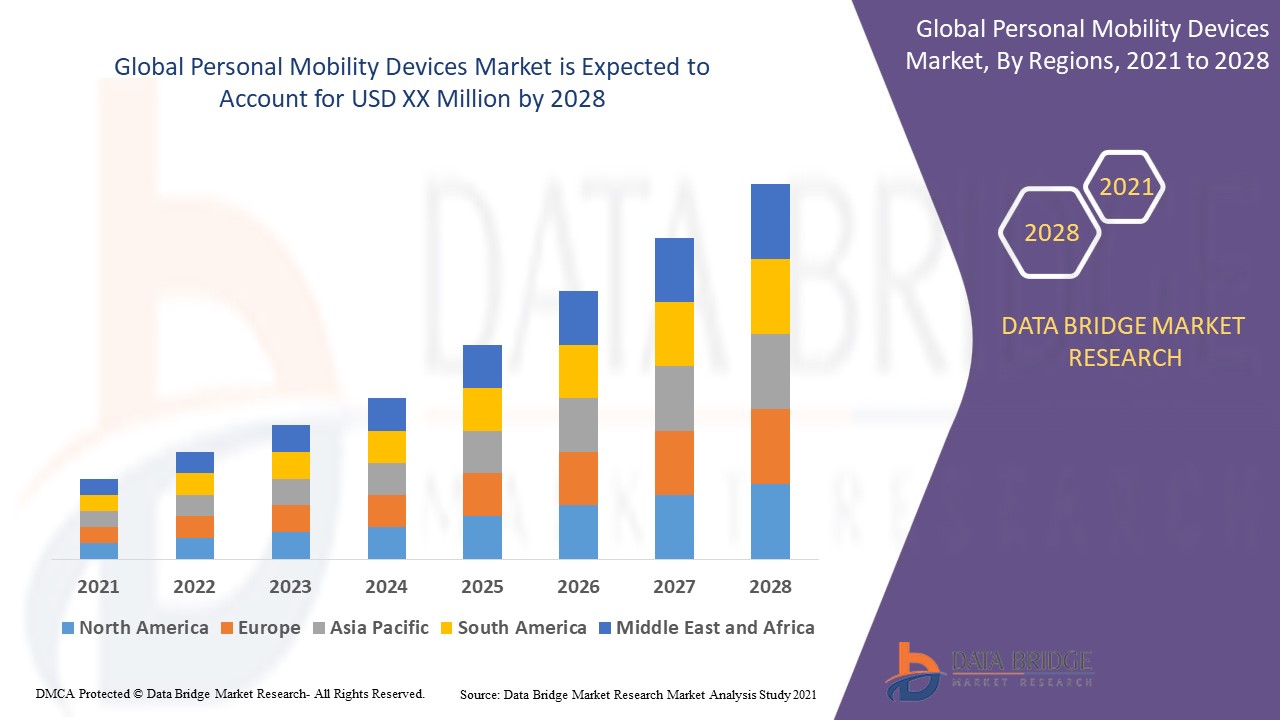
Personal Mobility Devices Market Analysis
The personal mobility devices market is expanding as demand for convenience increases. Advancements in technology are enhancing product efficiency, safety, and user experience. Consumers seek compact, smart, and eco-friendly solutions for daily transportation needs. Companies are investing in innovation to improve design, durability, and functionality. Urbanization is driving interest in portable and adaptable mobility options for city travel. Rising awareness of sustainability is encouraging the adoption of energy-efficient mobility devices. Businesses are focusing on connectivity features to integrate smart functionalities into products. Strategic collaborations are fostering technological advancements and expanding market reach. Enhanced battery performance is enabling longer usage and better overall efficiency. As mobility preferences evolve, companies are adapting to meet changing consumer expectations.
Personal Mobility Devices Market Size
The global personal mobility devices market size was valued at USD 13.85 billion in 2024 and is projected to reach USD 23.60 billion by 2032, with a CAGR of 6.89% during the forecast period of 2025 to 2032. In addition to the insights on market scenarios such as market value, growth rate, segmentation, geographical coverage, and major players, the market reports curated by the Data Bridge Market Research also include in-depth expert analysis, pricing analysis, brand share analysis, consumer survey, demography analysis, supply chain analysis, value chain analysis, raw material/consumables overview, vendor selection criteria, PESTLE Analysis, Porter Analysis, and regulatory framework.
Personal Mobility Devices Market Trends
“Increasing Strong Presence of Supportive Government Initiatives”
Governments worldwide implement policies to enhance accessibility and mobility solutions. Financial subsidies support individuals in acquiring advanced personal mobility devices. Public healthcare programs integrate mobility aids to improve patient care and rehabilitation. Infrastructure developments, such as accessible pathways, enhance usability for mobility device users. Regulatory standards ensure product safety, encouraging innovation in assistive technology.
For instance, the U.S. Medicare program covers mobility scooters for eligible beneficiaries. European countries offer tax incentives for purchasing mobility aids, boosting market adoption. Government-backed research funding accelerates technological advancements in personal mobility solutions. These initiatives strengthen industry growth, fostering accessibility and user independence.
Report Scope and Personal Mobility Devices Market Segmentation
|
Attributes |
Personal Mobility Devices Key Market Insights |
|
Segments Covered |
|
|
Countries Covered |
U.S., Canada and Mexico in North America, Germany, France, U.K., Netherlands, Switzerland, Belgium, Russia, Italy, Spain, Turkey, Rest of Europe in Europe, China, Japan, India, South Korea, Singapore, Malaysia, Australia, Thailand, Indonesia, Philippines, Rest of Asia-Pacific (APAC) in the Asia-Pacific (APAC), Saudi Arabia, U.A.E, South Africa, Egypt, Israel, Rest of Middle East and Africa (MEA) as a part of Middle East and Africa (MEA), Brazil, Argentina and Rest of South America as part of South America |
|
Key Market Players |
Invacare Holdings Corporation (U.S.), Permobil (Sweden), GF Health Products, Inc. (U.S.), Stryker (U.S.), Pride Mobility Products Corp (U.S.), Compass Health Brands (U.S.), Sunrise Medical (Germany), Briggs Healthcare (U.S.), Ottobock (Germany), Eurovema Mobility AB (Sweden), Carex (U.S.), NOVA Medical Products (California), Performance Health (U.S.), Triride srl (Italy) |
|
Market Opportunities |
|
|
Value Added Data Infosets |
In addition to the insights on market scenarios such as market value, growth rate, segmentation, geographical coverage, and major players, the market reports curated by the Data Bridge Market Research also include in-depth expert analysis, pricing analysis, brand share analysis, consumer survey, demography analysis, supply chain analysis, value chain analysis, raw material/consumables overview, vendor selection criteria, PESTLE Analysis, Porter Analysis, and regulatory framework. |
Personal Mobility Devices Market Definition
Personal mobility devices are the kind of devices that allow the individual's transportation. The mobility device consists of walkers, wheel chairs and rollators amongst the other mobility devices. Personal mobility devices facilitate the freedom to patients as well as the old age people from depending on others for the transportation. These are assistive solutions designed to enhance individual movement and independence. They serve users with temporary or permanent mobility challenges across various environments. The market includes both manual and powered devices for different levels of assistance. Innovations focus on ergonomics, durability, and ease of use for diverse consumers. Personal mobility devices support accessibility in homes, workplaces, and public spaces. The market encompasses a wide range of solutions for varying mobility requirements.
Personal Mobility Devices Market Dynamics
Drivers
- Rise in Geriatric Population
The rising geriatric population increases demand for reliable personal mobility solutions. Aging individuals often experience reduced muscle strength, balance issues, and mobility impairments. Personal mobility devices provide essential support for independent movement and daily activities. Healthcare facilities and rehabilitation centers increasingly adopt mobility aids for elderly care. For instance, Japan’s aging society drives higher usage of electric wheelchairs and mobility scooters. Advanced mobility solutions enhance seniors’ quality of life, ensuring safety and convenience. Manufacturers develop lightweight, ergonomic designs tailored to elderly users' specific needs. The growing senior demographic fuels continuous innovation in mobility assistance technologies. Expanding healthcare accessibility further accelerates market growth for elderly-focused mobility solutions.
- Increase in the Incidence of Rheumatoid Arthritis and Osteoporosis
The increasing incidence of rheumatoid arthritis and osteoporosis drives demand for personal mobility devices. These conditions cause joint pain, stiffness, and reduced mobility, impacting daily activities. Mobility aids assist patients in maintaining independence and preventing further physical strain. For instance, arthritis patients benefit from rollators with ergonomic grips for joint support. Osteoporosis patients use wheelchairs and walkers to reduce fall risks and fractures. Healthcare providers recommend mobility solutions to enhance comfort and movement for affected individuals. Rising diagnosis rates increase the need for advanced mobility assistance technologies. Manufacturers focus on lightweight, shock-absorbing designs to improve patient usability. Expanding treatment awareness further supports mobility device adoption among affected populations.
Opportunities
- Availability of Technologically Advanced Mobility Aids
Technologically advanced, compact, and portable mobility aids create significant market opportunities. These solutions offer enhanced convenience, usability, and storage efficiency for users. Folding wheelchairs and lightweight mobility scooters improve transportation and accessibility. For instance, electric foldable scooters allow easy storage in cars and public transport. Smart mobility aids integrate sensors and automated controls for improved user experience. Portable designs cater to travelers and individuals with active lifestyles. Manufacturers develop compact solutions without compromising durability and performance. Advanced battery technology extends operational time for electric mobility devices. Growing consumer preference for portable solutions boosts innovation in the mobility market.
- Rise in the Product Development
The rise in product development presents significant opportunities in the personal mobility devices market. Manufacturers focus on innovation to enhance functionality, comfort, and user experience. Advanced materials improve durability, making devices lightweight yet strong for daily use. For instance, carbon fiber wheelchairs offer superior strength with reduced weight for easy maneuverability. Smart mobility devices integrate AI and IoT for automated navigation and safety features. Customizable solutions address diverse consumer needs, ensuring better adaptability and comfort. Enhanced battery technology extends the efficiency of electric-powered mobility aids. Research-driven advancements lead to more ergonomic and user-friendly mobility solutions. Continuous product innovation strengthens market growth and consumer adoption worldwide.
Restraints/Challenges
- High Purchasing and Maintenance Costs
High purchasing and maintenance costs act as a restraint in the personal mobility devices market. Advanced mobility aids, such as electric wheelchairs, require significant upfront investment. Maintenance expenses for battery replacements and motor repairs add to long-term ownership costs. For instance, high-end electric scooters need costly servicing and specialized replacement parts. Affordability concerns limit access for low-income individuals needing mobility assistance. Insurance coverage gaps further increase the financial burden on consumers. Manufacturers face difficulties in balancing affordability with advanced technological features. Cost-intensive research and premium materials contribute to higher pricing of innovative mobility solutions. These financial constraints restrain widespread adoption across different consumer segments.
- Unavailability of Mobility Devices Service Centres
The unavailability of service centres presents a challenge in the personal mobility devices market. Limited access to repair facilities affects the timely maintenance of mobility aids. Consumers in remote areas struggle to find authorized service providers for device repairs. For instance, rural users face delays in fixing electric wheelchairs due to service shortages. Lack of skilled technicians increases downtime, reducing device reliability and user convenience. Manufacturers must expand service networks to ensure efficient after-sales support. Difficulty in sourcing replacement parts further complicates repair and maintenance processes. Inadequate service availability impacts customer satisfaction and long-term product usability. Strengthening service infrastructure is essential for improving market accessibility and growth.
This market report provides details of new recent developments, trade regulations, import-export analysis, production analysis, value chain optimization, market share, impact of domestic and localized market players, analyses opportunities in terms of emerging revenue pockets, changes in market regulations, strategic market growth analysis, market size, category market growths, application niches and dominance, product approvals, product launches, geographic expansions, technological innovations in the market. To gain more info on the market contact Data Bridge Market Research for an Analyst Brief, our team will help you take an informed market decision to achieve market growth.
Impact and Current Market Scenario of Raw Material Shortage and Shipping Delays
Data Bridge Market Research offers a high-level analysis of the market and delivers information by keeping in account the impact and current market environment of raw material shortage and shipping delays. This translates into assessing strategic possibilities, creating effective action plans, and assisting businesses in making important decisions.
Apart from the standard report, we also offer in-depth analysis of the procurement level from forecasted shipping delays, distributor mapping by region, commodity analysis, production analysis, price mapping trends, sourcing, category performance analysis, supply chain risk management solutions, advanced benchmarking, and other services for procurement and strategic support.
Expected Impact of Economic Slowdown on the Pricing and Availability of Products
When economic activity slows, industries begin to suffer. The forecasted effects of the economic downturn on the pricing and accessibility of the products are taken into account in the market insight reports and intelligence services provided by DBMR. With this, our clients can typically keep one step ahead of their competitors, project their sales and revenue, and estimate their profit and loss expenditures.
Personal Mobility Devices Market Scope
The market is segmented on the basis of product type, end user, and distribution channel. The growth amongst these segments will help you analyze meagre growth segments in the industries and provide the users with a valuable market overview and market insights to help them make strategic decisions for identifying core market applications.
Product Type
- Walking Aids
- Handbikes
- Mobility Scooters
- Medical Beds
- Stair-lifts
- Power Add on Products
- Wheelchairs
- Others
End User
- Hospitals and Clinics
- Long Term Care Centers
- Households
- Home Care Settings
- Ambulatory Surgical Centers
- Urgent Care Center
- Others
Distribution Channel
- Wholesalers/Distributors
- Online Retailers
- Multi-brand Stores
- Specialty Stores
Personal Mobility Devices Market Regional Analysis
The market is analysed and market size insights and trends are provided by country, product type, end user, and distribution channel as referenced above.
The countries covered in the market report are U.S., Canada, Mexico in North America, Germany, Sweden, Poland, Denmark, Italy, U.K., France, Spain, Netherland, Belgium, Switzerland, Turkey, Russia, Rest of Europe in Europe, Japan, China, India, South Korea, New Zealand, Vietnam, Australia, Singapore, Malaysia, Thailand, Indonesia, Philippines, Rest of Asia-Pacific (APAC) in Asia-Pacific (APAC), Brazil, Argentina, Rest of South America as a part of South America, U.A.E, Saudi Arabia, Oman, Qatar, Kuwait, South Africa, Rest of Middle East and Africa (MEA) as a part of Middle East and Africa (MEA).
North America dominates the personal mobility devices market during the forecast year of 2025-2932 because of the encouraging government and reimbursement schemes, well developed healthcare infrastructure and rise in geriatric population.
Asia-Pacific is expected to expand at a significant growth rate over the forecast period of 2025-2032 because of the strong presence of untapped opportunities in the emerging markets of China and India and continuously improving healthcare infrastructure.
The country section of the report also provides individual market impacting factors and changes in regulation in the market domestically that impacts the current and future trends of the market. Data points such as down-stream and upstream value chain analysis, technical trends and porter's five forces analysis, case studies are some of the pointers used to forecast the market scenario for individual countries. Also, the presence and availability of global brands and their challenges faced due to large or scarce competition from local and domestic brands, impact of domestic tariffs and trade routes are considered while providing forecast analysis of the country data.
Personal Mobility Devices Market Share
The market competitive landscape provides details by competitor. Details included are company overview, company financials, revenue generated, market potential, investment in research and development, new market initiatives, global presence, production sites and facilities, production capacities, company strengths and weaknesses, product launch, product width and breadth, application dominance. The above data points provided are only related to the companies' focus related to market.
Personal Mobility Devices Market Leaders Operating in the Market Are:
- Invacare Holdings Corporation (U.S.)
- Permobil (Sweden)
- GF Health Products, Inc. (U.S.)
- Stryker (U.S.)
- Pride Mobility Products Corp (U.S.)
- Compass Health Brands (U.S.)
- Sunrise Medical (Germany)
- Briggs Healthcare (U.S.)
- Ottobock (Germany)
- Eurovema Mobility AB (Sweden)
- arex (U.S.)
- NOVA Medical Products (California)
- Performance Health (U.S.)
- Triride srl (Italy)
Latest Developments in Personal Mobility Devices Market
- In August 2021, Falcon Mobility introduced the Ultra-Lite 2 electric wheelchair, engineered for enhanced portability and maneuverability. This lightweight design aims to provide a practical mobility solution for elderly and disabled individuals. The Ultra-Lite 2 focuses on ease of transportation, allowing caregivers to handle and transport mobility aids with minimal effort. With its compact frame and user-friendly features, the wheelchair enhances convenience in daily mobility
- In July 2021, the International Air Transport Association (IATA) established the Global Mobility Aids Action Group to enhance the transportation of mobility aids, including wheelchairs. This initiative aims to address challenges faced by individuals relying on mobility devices during air travel. The group focuses on improving handling procedures, minimizing damage risks, and ensuring seamless transit of mobility aids across airlines. By collaborating with stakeholders, including airlines, airport authorities, and advocacy groups, IATA seeks to develop standardized guidelines and best practices

- Interactive Data Analysis Dashboard
- Company Analysis Dashboard for high growth potential opportunities
- Research Analyst Access for customization & queries
- Competitor Analysis with Interactive dashboard
- Latest News, Updates & Trend analysis
- Harness the Power of Benchmark Analysis for Comprehensive Competitor Tracking
Data collection and base year analysis are done using data collection modules with large sample sizes. The stage includes obtaining market information or related data through various sources and strategies. It includes examining and planning all the data acquired from the past in advance. It likewise envelops the examination of information inconsistencies seen across different information sources. The market data is analysed and estimated using market statistical and coherent models. Also, market share analysis and key trend analysis are the major success factors in the market report. To know more, please request an analyst call or drop down your inquiry.
The key research methodology used by DBMR research team is data triangulation which involves data mining, analysis of the impact of data variables on the market and primary (industry expert) validation. Data models include Vendor Positioning Grid, Market Time Line Analysis, Market Overview and Guide, Company Positioning Grid, Patent Analysis, Pricing Analysis, Company Market Share Analysis, Standards of Measurement, Global versus Regional and Vendor Share Analysis. To know more about the research methodology, drop in an inquiry to speak to our industry experts.
Data Bridge Market Research is a leader in advanced formative research. We take pride in servicing our existing and new customers with data and analysis that match and suits their goal. The report can be customized to include price trend analysis of target brands understanding the market for additional countries (ask for the list of countries), clinical trial results data, literature review, refurbished market and product base analysis. Market analysis of target competitors can be analyzed from technology-based analysis to market portfolio strategies. We can add as many competitors that you require data about in the format and data style you are looking for. Our team of analysts can also provide you data in crude raw excel files pivot tables (Fact book) or can assist you in creating presentations from the data sets available in the report.