


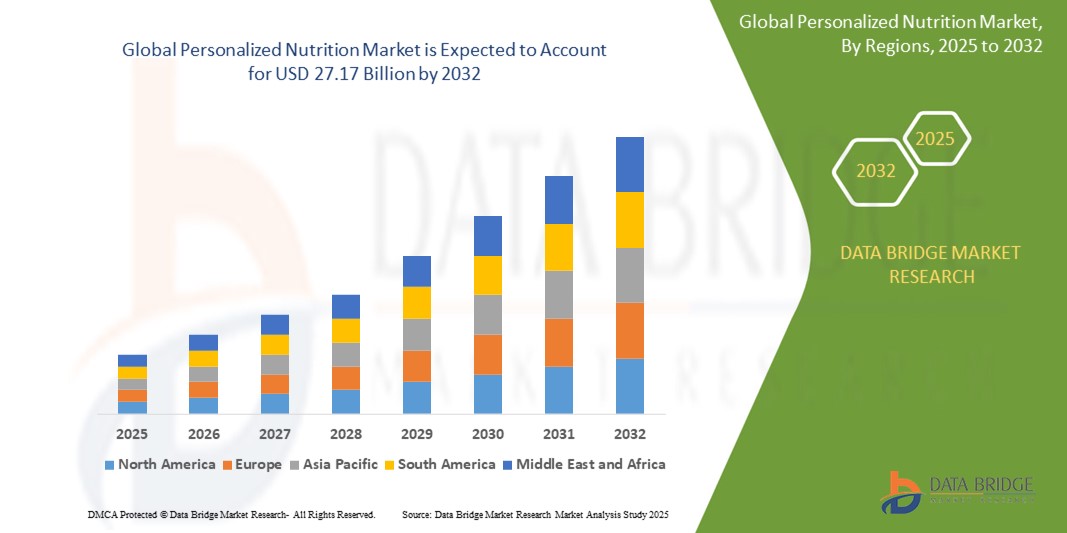
Personalized Nutrition Market Size
- The global personalized nutrition market was valued at USD 12.22 billion in 2024 and is expected to reach USD 27.17 billion by 2032
- During the forecast period of 2025 to 2032 the market is likely to grow at a CAGR of 10.50%, primarily driven by the anticipated launch of personalized nutrition products and services
- This growth is driven by factors such as the increasing focus on health and wellness, rising demand for customized dietary solutions, advancements in food technology, and a growing awareness of the benefits of tailored nutrition
Personalized Nutrition Market Analysis
- Personalized nutrition services and products are crucial tools designed to tailor dietary plans to individuals’ unique genetic makeup, lifestyle, and health goals. They are essential for optimizing nutrition and improving overall health, managing chronic diseases, and enhancing wellness
- The demand for personalized nutrition is significantly driven by growing awareness about health and wellness, increasing prevalence of lifestyle-related diseases such as obesity, diabetes, and cardiovascular conditions, and advancements in nutrition science and technology. The market's growth is also fueled by the rising consumer interest in personalized health solutions, with a particular focus on dietary supplements and meal plans tailored to individual needs
- The North America region stands out as one of the dominant regions for personalized nutrition, driven by its advanced healthcare infrastructure, tech-savvy population, and high adoption of personalized health and wellness solutions
- For instance, the demand for personalized nutrition products and services in the U.S. has seen significant growth, with a focus on customized dietary supplements, genetic-based nutrition advice, and digital health tracking tools. The region is a key driver of innovations in personalized nutrition, with advancements in genomics and data analytics further boosting market expansion
- Globally, personalized nutrition ranks as one of the most transformative sectors in the broader health and wellness industry, offering tailored solutions that meet the diverse needs of consumers and help in preventing or managing chronic conditions more effectively
Report Scope and Personalized Nutrition Market Segmentation
|
Attributes |
Personalized Nutrition Key Market Insights |
|
Segments Covered |
|
|
Countries Covered |
North America
Europe
Asia-Pacific
Middle East and Africa
South America
|
|
Key Market Players |
|
|
Market Opportunities |
|
|
Value Added Data Infosets |
In addition to the insights on market scenarios such as market value, growth rate, segmentation, geographical coverage, and major players, the market reports curated by the Data Bridge Market Research also include in-depth expert analysis, pricing analysis, brand share analysis, consumer survey, demography analysis, supply chain analysis, value chain analysis, raw material/consumables overview, vendor selection criteria, PESTLE Analysis, Porter Analysis, and regulatory framework. |
Personalized Nutrition Market Trends
“Increasing Integration of AI and Data Analytics in Personalized Nutrition”
- One prominent trend in the global personalized nutrition market is the growing integration of AI and data analytics to provide tailored nutrition plans
- These advanced technologies enable the creation of highly individualized diet recommendations based on genetic data, lifestyle factors, and health goals, ensuring more precise and effective nutritional solutions
- For instance, AI-driven platforms analyze data from wearable devices, genetic tests, and health apps to offer personalized dietary plans, helping individuals manage weight, improve fitness, and prevent chronic diseases
- Data analytics also allows for continuous monitoring and real-time adjustments to nutrition plans, offering a dynamic and responsive approach to personal health and wellness
- This trend is transforming how consumers approach their nutrition, making personalized diets more accessible, effective, and data-driven, thereby increasing demand for AI-powered personalized nutrition services in the market
Personalized Nutrition Market Dynamics
Driver
“Rising Prevalence of Lifestyle-related Health Issues”
- The growing prevalence of lifestyle-related health issues, such as obesity, diabetes, cardiovascular diseases, and metabolic disorders, is significantly driving the demand for personalized nutrition solutions
- As individuals increasingly seek ways to prevent or manage these conditions, there is a higher demand for nutrition plans that are tailored to specific health needs, genetics, and lifestyle factors
- Obesity, in particular, has become a global health crisis, with rising rates contributing to the need for customized dietary plans aimed at weight management, blood sugar control, and overall health improvement
- The ongoing advancements in nutrition science and technology, such as genetic testing and microbiome analysis, further underscore the importance of personalized nutrition in managing chronic diseases and optimizing health
- As more individuals prioritize preventive healthcare and wellness, the demand for personalized nutrition solutions continues to grow, offering significant market opportunities
For instance,
- In 2023, a report by the World Health Organization highlighted that over 1.9 billion adults were overweight, with more than 650 million classified as obese. This alarming trend drives the increasing need for customized dietary interventions to manage weight and prevent obesity-related health issues, fueling the demand for personalized nutrition products
- In 2022, a study published by the American Heart Association emphasized the growing incidence of cardiovascular diseases linked to poor nutrition and lifestyle choices, further increasing the demand for personalized nutrition solutions that can target specific dietary requirements to prevent and manage heart health
- As a result of the rising prevalence of lifestyle-related health issues, there is a substantial increase in the demand for personalized nutrition services and products tailored to meet individual health goals and needs
Opportunity
“Advancing Personalized Nutrition with Artificial Intelligence Integration”
- AI-powered personalized nutrition platforms can enhance diet recommendations, automate meal planning, and improve health outcomes by analyzing individual data in real time, such as genetic information, activity levels, and dietary preferences
- AI algorithms can process large volumes of data, providing instant insights into an individual's nutritional needs, helping create highly tailored meal plans and supplement regimens to achieve specific health goals
- Additionally, AI-powered solutions can monitor progress and adapt nutrition plans based on ongoing data, ensuring that recommendations evolve with changing health status or lifestyle, leading to more effective and sustainable health improvements
For instance,
- In February 2025, according to a report published by the Journal of Personalized Nutrition, AI-based platforms are increasingly used to track real-time changes in an individual’s metabolism and nutritional intake. These AI systems can predict potential deficiencies or excesses, helping users adjust their diet instantly for better health outcomes
- In October 2024, an article published by the American Journal of Clinical Nutrition highlighted how AI-driven personalized nutrition is being used to optimize weight loss programs. By analyzing individual responses to food intake, AI systems help create more effective, individualized plans that adapt over time, improving the success rate of such programs
- The integration of AI in personalized nutrition offers significant opportunities for improving health outcomes, increasing customer engagement, and enhancing the overall effectiveness of nutrition interventions, thus driving further market expansion
Restraint/Challenge
“High Cost of Personalized Nutrition Solutions Hindering Market Growth”
- The high cost of personalized nutrition services and products presents a significant challenge, particularly impacting affordability and accessibility for a broad range of consumers, especially in developing regions or among low-income groups
- Personalized nutrition solutions, which often involve genetic testing, DNA analysis, and tailored supplements, can range from hundreds to thousands of dollars, making them inaccessible for many potential users
- This financial barrier can deter individuals from adopting personalized nutrition plans or from seeking long-term, tailored solutions, leading to a reliance on generic, mass-market nutritional products that are less effective for specific health needs
For instance,
- In March 2025, according to an article published by the National Institute of Health, one of the main challenges in the personalized nutrition market is the high upfront cost of genetic testing and tailored diet plans. These costs can limit widespread adoption, particularly among populations with lower disposable incomes, ultimately slowing market growth
- Consequently, such limitations can result in a slower rate of adoption and a market that is restricted to wealthier consumers, hindering the broader accessibility and expansion of personalized nutrition solutions
Personalized Nutrition Market Scope
The market is segmented on the basis of product type, age group, providers, dosage forms, end-user, and application
|
Segmentation |
Sub-Segmentation |
|
By Product Type |
|
|
By Age Group |
|
|
By Providers |
|
|
By Dosage Forms |
|
|
By End-User |
|
|
By Application |
|
Personalized Nutrition Market Regional Analysis
“North America is the Dominant Region in the Personalized Nutrition Market”
- North America dominates the personalized nutrition market, driven by advanced healthcare infrastructure, a high level of consumer awareness about health and wellness, and the strong presence of key market players
- The U.S. holds a significant share due to increasing demand for personalized health solutions, rising prevalence of lifestyle-related diseases such as obesity, diabetes, and heart conditions, and the rapid adoption of digital health platforms for personalized nutrition
- The availability of well-established insurance policies for wellness-related services and continuous investments in research & development by leading nutrition companies further strengthens the market
- In addition, the increasing trend of preventative healthcare and growing adoption of AI-driven personalized nutrition platforms is fueling market expansion across the region
“Asia-Pacific is Projected to Register the Highest Growth Rate”
- The Asia-Pacific region is expected to witness the highest growth rate in the personalized nutrition market, driven by rapid advancements in healthcare infrastructure, increasing awareness about healthy lifestyles, and rising disposable incomes
- Countries such as China, India, and Japan are emerging as key markets due to the growing middle-class population, which is increasingly seeking tailored dietary solutions to manage chronic health conditions like obesity, diabetes, and hypertension
- Japan, with its focus on cutting-edge health technologies and an aging population, is a crucial market for personalized nutrition, especially in areas like functional foods and supplements designed for senior citizens
- China and India, with their large and diverse populations, are witnessing increased government initiatives and private sector investments in nutrition and wellness programs. The growing presence of global personalized nutrition companies and improving accessibility to digital health tools further contribute to market growth in these regions
Personalized Nutrition Market Share
The market competitive landscape provides details by competitor. Details included are company overview, company financials, revenue generated, market potential, investment in research and development, new market initiatives, global presence, production sites and facilities, production capacities, company strengths and weaknesses, product launch, product width and breadth, application dominance. The above data points provided are only related to the companies' focus related to market.
The Major Market Leaders Operating in the Market Are:
- Nestlé Health Science (Switzerland)
- Herbalife Nutrition Ltd. (U.S.)
- Amway Corporation (U.S.)
- The Nature's Bounty Co. (U.S.)
- GNC Holdings, LLC (U.S.)
- Persona Nutrition (U.S.)
- Care/of (U.S.)
- Baze Inc. (U.S.)
- DNAfit (U.K.)
- Nutrigenomix (Canada)
- Essensia Health (U.S.)
- Habit Food Personalized (U.S.)
- Lumen (U.S.)
- DNAlysis Biotechnology (South Africa)
- ZOE (U.K.)
- Vitabot (U.S.)
- Nutrigenomix (Canada)
- MealPal (U.S.)
- Nutritional Genomics Inc. (Canada)
- DayTwo (Israel)
Latest Developments in Global Personalized Nutrition Market
- In April 2024, AHARA, a leading player in the personalized nutrition sector, unveiled two new features aimed at strengthening its consumer nutrition program. The newly introduced offerings include customized daily meal plans aligned with individual dietary requirements and a structured rewards program designed to promote sustained healthy eating behaviors. This strategic enhancement not only elevates AHARA's value proposition but also reflects a broader trend within the global personalized nutrition market, where innovation and consumer-centric digital solutions are key drivers of growth
- In April 2024, a Food Technology student from Harper Adams University, driven by the escalating prevalence of diet-related health conditions, initiated a collaborative research effort aimed at advancing the field of personalized nutrition. Working alongside a multidisciplinary team of healthcare professionals—including pharmacists, nurses, and physicians from both the NHS and private healthcare sectors, the student is exploring how individualized dietary interventions can be more effectively integrated into clinical practice to prevent and manage chronic illnesses. This research underscores the growing recognition of personalized nutrition as a critical component in modern healthcare strategies. The initiative aligns with the global surge in demand for personalized nutrition solutions, a market projected to experience significant growth over the next decade
- In April 2024, C.K. McWhorter & the McWhorter Family Trust, recognized for their leadership in luxury and innovation, unveiled a pioneering initiative set to redefine the future of luxury wellness chateaus and resort experiences. This visionary project seeks to integrate state-of-the-art quantum computing with next-generation wellness technologies, merging heritage hospitality with futuristic innovation. The result is a transformative guest experience tailored to meet the evolving expectations of the high-end wellness market. A key component of the initiative includes the incorporation of personalized nutrition solutions, aligning with the expanding global market demand for individualized health and wellness offerings
- In February 2024, Momentous, a leading company in the field of human performance with a strong focus on science-backed nutrition and supplementation, announced a strategic partnership through a significant minority stake acquisition by Humble Growth, an investment firm dedicated to scaling transformative businesses. This partnership marks a pivotal step in accelerating Momentous’ expansion and innovation within the performance wellness space. Co-founders Jeff Byers and Erica Good will continue to lead the company as CEO and President, respectively, maintaining a clear vision centered on optimizing consumer health and lifestyle through advanced nutritional solutions. This collaboration is particularly significant in the context of the rapidly growing global personalized nutrition market, which is increasingly driven by demand for tailored health interventions and performance optimization
- In January 2024, Mayo Clinic announced a strategic partnership with Hologram Sciences to develop a cutting-edge Precision Nutrition Platform, integrating Mayo Clinic’s renowned clinical expertise with Hologram’s advanced technological infrastructure. The collaboration is designed to bring personalized nutrition into clinical settings by leveraging predictive analytics to identify health risks associated with individual dietary patterns. Through data-driven recommendations and real-time insights, the platform empowers healthcare providers to deliver proactive, preventive interventions directly to patients—ultimately aiming to improve long-term health outcomes. This initiative underscores the growing significance of personalized nutrition within the global healthcare landscape, as the personalized nutrition market continues to expand in response to increasing demand for individualized, science-based health solutions

- Interactive Data Analysis Dashboard
- Company Analysis Dashboard for high growth potential opportunities
- Research Analyst Access for customization & queries
- Competitor Analysis with Interactive dashboard
- Latest News, Updates & Trend analysis
- Harness the Power of Benchmark Analysis for Comprehensive Competitor Tracking
Global Personalized Nutrition Market, Supply Chain Analysis and Ecosystem Framework
To support market growth and help clients navigate the impact of geopolitical shifts, DBMR has integrated in-depth supply chain analysis into its Global Personalized Nutrition Market research reports. This addition empowers clients to respond effectively to global changes affecting their industries. The supply chain analysis section includes detailed insights such as Global Personalized Nutrition Market consumption and production by country, price trend analysis, the impact of tariffs and geopolitical developments, and import and export trends by country and HSN code. It also highlights major suppliers with data on production capacity and company profiles, as well as key importers and exporters. In addition to research, DBMR offers specialized supply chain consulting services backed by over a decade of experience, providing solutions like supplier discovery, supplier risk assessment, price trend analysis, impact evaluation of inflation and trade route changes, and comprehensive market trend analysis.
Data collection and base year analysis are done using data collection modules with large sample sizes. The stage includes obtaining market information or related data through various sources and strategies. It includes examining and planning all the data acquired from the past in advance. It likewise envelops the examination of information inconsistencies seen across different information sources. The market data is analysed and estimated using market statistical and coherent models. Also, market share analysis and key trend analysis are the major success factors in the market report. To know more, please request an analyst call or drop down your inquiry.
The key research methodology used by DBMR research team is data triangulation which involves data mining, analysis of the impact of data variables on the market and primary (industry expert) validation. Data models include Vendor Positioning Grid, Market Time Line Analysis, Market Overview and Guide, Company Positioning Grid, Patent Analysis, Pricing Analysis, Company Market Share Analysis, Standards of Measurement, Global versus Regional and Vendor Share Analysis. To know more about the research methodology, drop in an inquiry to speak to our industry experts.
Data Bridge Market Research is a leader in advanced formative research. We take pride in servicing our existing and new customers with data and analysis that match and suits their goal. The report can be customized to include price trend analysis of target brands understanding the market for additional countries (ask for the list of countries), clinical trial results data, literature review, refurbished market and product base analysis. Market analysis of target competitors can be analyzed from technology-based analysis to market portfolio strategies. We can add as many competitors that you require data about in the format and data style you are looking for. Our team of analysts can also provide you data in crude raw excel files pivot tables (Fact book) or can assist you in creating presentations from the data sets available in the report.













