


Petit Mal Treatment Market Overview
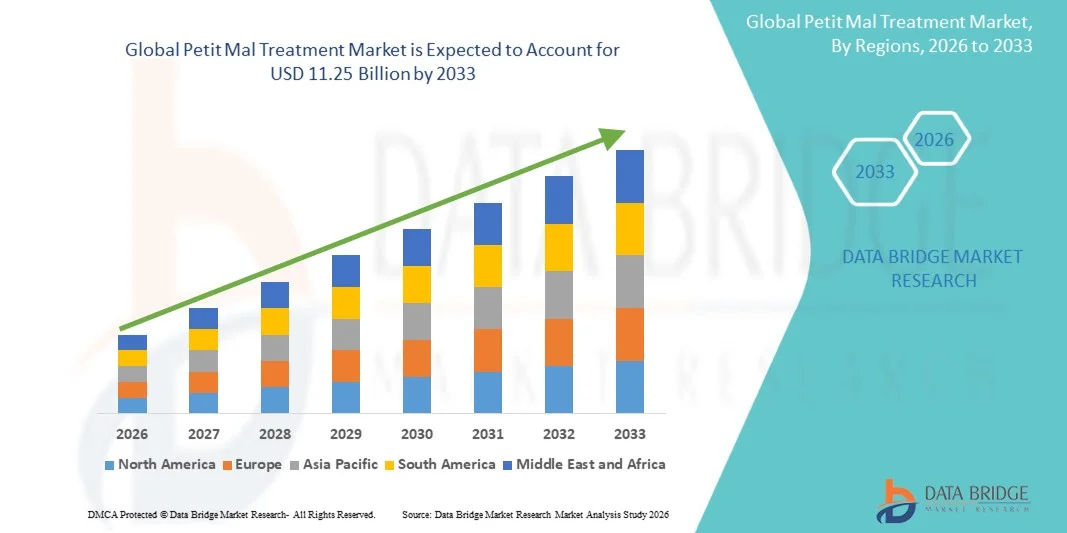
The Petit Mal Treatment Market was valued at USD 7.50 billion in 2025 and is projected to reach USD 11.25 billion by 2033, growing at a CAGR of 5.2% from 2026 to 2033. The market is witnessing steady growth driven by rising prevalence of absence seizures, improved diagnosis of pediatric epilepsy disorders, and increasing adoption of advanced antiepileptic drug therapies.
The growing burden of neurological disorders worldwide, along with expanding access to healthcare and early screening programs, is accelerating demand for effective treatment options. Increased clinical focus on seizure control in children and adolescents, coupled with continuous advancements in antiepileptic drug formulations such as improved tolerability and targeted mechanisms of action, is further supporting market expansion. Emerging healthcare infrastructure in developing regions and growing awareness among caregivers and clinicians are also contributing to broader treatment uptake and improved patient management outcomes.
Key Market Trends & Insights
- North America dominated the Petit Mal Treatment Market with the largest revenue share of 36.42% in 2025, supported by high epilepsy diagnosis rates, strong neurological care infrastructure, and widespread access to advanced antiepileptic drugs.
- The Electroencephalography (EEG) segment led the market with a 52.30% share in 2025, driven by its high accuracy in detecting abnormal brain wave patterns associated with absence seizures and its wide clinical availability.
- Asia-Pacific is expected to be the fastest-growing region at a CAGR of 6.1% from 2026 to 2033, fueled by rising pediatric population, improving healthcare access, and increasing awareness of neurological disorders in emerging economies such as India and China.
- Brain Scan are the fastest-growing diagnosis, projected to register a CAGR of 6.2%, reflecting the surge in advancements in neuroimaging technologies such as MRI and CT scans for ruling out structural brain abnormalities.
- The Medication segment dominated the treatment category with a 71.85% revenue share in 2025, led by the strong clinical reliance on antiepileptic drugs such as Ethosuximide, Valproate, and Lamotrigine as first-line treatment options.
- Oral accounted for 89.10% of the market, preferred by the widespread use of oral antiepileptic drugs as standard long-term therapy for absence seizures.
- The Injectable segment is the fastest-growing route of administration, with a CAGR of 5.9%, driven by the its use in emergency seizure management and hospital-based acute care settings.
Market Size & Forecast
- Global Market Value (2025): USD 7.50 Billion
- Expected Market Value (2033): USD 11.25 Billion
- Forecast CAGR (2026–2033): 5.2%
- Leading Region in 2025: North America
- Fastest Growing Region: Asia Pacific
Report Scope and Petit Mal Treatment Market Segmentation
|
Attributes |
Petit Mal Treatment Key Market Insights |
|
Segments Covered |
|
|
Countries Covered |
North America · U.S. · Canada · Mexico Europe · Germany · France · U.K. · Netherlands · Switzerland · Belgium · Russia · Italy · Spain · Turkey · Rest of Europe Asia-Pacific · China · Japan · India · South Korea · Singapore · Malaysia · Australia · Thailand · Indonesia · Philippines · Rest of Asia-Pacific Middle East and Africa · Saudi Arabia · U.A.E. · South Africa · Egypt · Israel · Rest of Middle East and Africa South America · Brazil · Argentina · Rest of South America |
|
Key Market Players |
· Eisai Co., Ltd. (Japan) · UCB S.A. (Belgium) · AbbVie Inc. (U.S.) · Novartis AG (Switzerland) · Pfizer Inc. (U.S.) · Sanofi (France) · Johnson & Johnson Services, Inc. (U.S.) · Bausch Health. (Canada) · GSK plc (U.K.) · H. Lundbeck A/S (Denmark) · Sun Pharmaceutical Industries Ltd. (India) · Cipla Limited (India) · Dr. Reddy’s Laboratories Ltd. (India) · Lupin Limited (India) · Zydus Lifesciences Limited (India) · Teva Pharmaceutical Industries Ltd. (Israel) · Aurobindo Pharma Limited (India) · Sumitomo Pharma Co., Ltd. (Japan) · Catalent, Inc. (U.S.) · SK Biopharmaceuticals Co., Ltd. (South Korea) |
|
Market Opportunities |
· Expansion of precision neurology and biomarker-driven diagnosis · Rising adoption of next-generation antiepileptic drugs · Increasing penetration of tele-neurology and digital epilepsy monitoring tools |
|
Value Added Data Infosets |
In addition to the insights on market scenarios such as market value, growth rate, segmentation, geographical coverage, and major players, the market reports curated by the Data Bridge Market Research also include in-depth expert analysis, patient epidemiology, pipeline analysis, pricing analysis, and regulatory framework. |
Petit Mal Treatment Market Trends
Trend: Advancements in Next-Generation Antiepileptic Drug Development
Pharmaceutical companies are increasingly focusing on developing next-generation antiepileptic drugs with improved efficacy, fewer cognitive side effects, and better safety profiles for long-term use in pediatric patients. The shift toward precision neurology is enabling more targeted therapies for absence seizures, supported by enhanced clinical trial designs and biomarker research. Digital health integration is also improving patient monitoring and adherence, allowing clinicians to optimize dosage and treatment outcomes in real time, while supporting better seizure control and reduced relapse rates. for instance, recent clinical adoption of improved lamotrigine formulations and extended-release valproate therapies reflects this ongoing innovation trend.
Petit Mal Treatment Market Dynamics
Key Market Driver: Rising Prevalence and Early Diagnosis of Pediatric Epilepsy
The increasing global prevalence of epilepsy, particularly among children, is significantly driving demand for effective Petit Mal treatments as awareness and early diagnostic capabilities continue to improve. Expanding healthcare access, routine neurological screening programs, and better diagnostic tools such as EEG advancements are enabling earlier detection of absence seizures. This is further increasing the number of patients receiving timely pharmacological intervention, thereby boosting antiepileptic drug consumption across both developed and emerging healthcare systems. for instance, national epilepsy awareness initiatives and school-based screening programs in several countries are contributing to earlier diagnosis and treatment initiation.
Key Restraint/Challenge: Long-Term Drug Dependence and Side Effect Management
A major challenge in the Petit Mal treatment market is the requirement for prolonged or lifelong antiepileptic drug therapy, which can lead to compliance issues and concerns regarding cognitive and behavioral side effects in pediatric patients. Managing dosage adjustments over time and minimizing adverse effects such as fatigue, dizziness, and attention impairment remains a clinical concern for physicians and caregivers. In addition, the need for continuous monitoring and follow-up increases treatment burden and healthcare utilization costs, limiting optimal adherence in some patient populations. for instance, reported cases of treatment discontinuation due to intolerance of ethosuximide or valproate highlight ongoing adherence challenges in real-world settings.
Key Market Opportunity: Expansion of Personalized Neurological Treatment Approaches
The growing focus on personalized medicine and advanced neurological profiling presents a significant opportunity for improving Petit Mal treatment outcomes through patient-specific therapy selection and optimized drug response prediction. Integration of genetic screening, seizure pattern analysis, and digital monitoring tools is enabling clinicians to tailor antiepileptic therapy more precisely, improving efficacy while reducing adverse effects. This approach is expected to enhance long-term disease management and improve quality of life for patients with absence seizures. for instance, emerging use of EEG-based AI diagnostic tools and pharmacogenomic-guided dosing strategies is supporting more individualized epilepsy treatment pathways across specialized neurology centers.
Petit Mal Treatment Market Scope
The Petit Mal treatment market is segmented on the basis of diagnosis, treatment, route of administration, end-users, and distribution channel.
- By Diagnosis
On the basis of diagnosis, the Petit Mal Treatment Market is segmented into Electroencephalography (EEG), brain scan, and others. The Electroencephalography (EEG) segment dominated the market with a 52.30% share in 2025, owing to its high accuracy in detecting abnormal brain wave patterns associated with absence seizures and its wide clinical availability. EEG remains the gold standard diagnostic tool for Petit Mal epilepsy due to its ability to capture real-time electrical activity of the brain. It is widely used in hospitals and neurology clinics for both initial diagnosis and long-term monitoring of pediatric patients. Increasing adoption of portable and ambulatory EEG systems is further strengthening its use in outpatient settings. Growing awareness among physicians regarding early epilepsy detection is also supporting demand. However, limited access in rural and underdeveloped regions slightly restricts its global penetration.
The Brain Scan segment is expected to witness the fastest growth at a CAGR of 6.2% from 2026 to 2033, driven by advancements in neuroimaging technologies such as MRI and CT scans for ruling out structural brain abnormalities. These imaging tools are increasingly used as complementary diagnostics alongside EEG to ensure accurate differential diagnosis. Rising investments in advanced radiology infrastructure and improved imaging resolution are enhancing clinical utility. Brain scans are particularly important in complex or drug-resistant cases of epilepsy. Increasing integration of AI-based imaging analysis is further improving diagnostic precision. Growing healthcare infrastructure in emerging economies is also contributing to higher adoption rates.
- By Treatment
On the basis of treatment, the Petit Mal Treatment Market is segmented into medication, dietary therapy, additional therapy, and others. The Medication segment dominated the market with a 71.85% share in 2025, primarily due to the strong clinical reliance on antiepileptic drugs such as Ethosuximide, Valproate, and Lamotrigine as first-line treatment options. Drug therapy remains the most effective and widely accessible approach for controlling absence seizures in pediatric patients. Continuous advancements in drug formulations with improved safety and reduced side effects are further strengthening adoption. Physicians prefer medication due to its non-invasive nature and long-term efficacy in seizure suppression. Increasing global access to essential epilepsy drugs through public healthcare systems is also supporting dominance. However, long-term dependency and side effect management remain ongoing clinical challenges.
The Dietary Therapy segment is expected to witness the fastest growth at a CAGR of 6.5% from 2026 to 2033, driven by increasing adoption of ketogenic and modified Atkins diets in drug-resistant epilepsy cases. These therapies are gaining attention as complementary or alternative treatment options, especially in pediatric patients. Clinical studies supporting metabolic control of seizures are boosting acceptance among neurologists. Growing awareness among caregivers regarding non-pharmacological interventions is further accelerating demand. Specialized epilepsy centers are increasingly integrating dietary therapy into treatment protocols. Rising preference for holistic and personalized care approaches is also supporting segment growth.
- By Route Of Administration
On the basis of route of administration, the Petit Mal Treatment Market is segmented into oral, injectable, and others. The Oral segment dominated the market with a 89.10% share in 2025, owing to the widespread use of oral antiepileptic drugs as standard long-term therapy for absence seizures. Oral medications offer convenience, better patient compliance, and suitability for chronic pediatric treatment. Most first-line AEDs, including Ethosuximide and Valproate, are administered orally, reinforcing this segment’s dominance. Easy availability across hospital and retail pharmacies further supports its high adoption. Continuous development of extended-release oral formulations is improving dosing adherence. However, adherence challenges in long-term therapy remain a concern in some patient groups.
The Injectable segment is expected to witness the fastest growth at a CAGR of 5.9% from 2026 to 2033, driven by its use in emergency seizure management and hospital-based acute care settings. Injectable formulations are critical for rapid seizure control in severe or prolonged episodes. Increasing hospital admissions related to epilepsy emergencies is supporting demand. Advancements in fast-acting formulations are improving clinical outcomes. Growing development of hospital neurology infrastructure is also contributing to segment expansion. However, its use remains limited compared to oral therapy due to non-chronic application.
- By End-Users
On the basis of end-users, the Petit Mal Treatment Market is segmented into hospitals, homecare, speciality centres, and others. The Hospitals segment dominated the market with a 48.75% share in 2025, owing to the availability of advanced diagnostic facilities, neurologists, and emergency care infrastructure. Hospitals serve as the primary point for diagnosis, treatment initiation, and long-term monitoring of epilepsy patients. High patient inflow and access to comprehensive treatment options further strengthen dominance. Integration of EEG and neuroimaging systems within hospitals enhances diagnostic accuracy. Government healthcare funding and insurance coverage also support hospital-based treatment adoption. However, increasing outpatient care trends are gradually redistributing some patient management outside hospitals.
The Speciality Centres segment is expected to witness the fastest growth at a CAGR of 6.7% from 2026 to 2033, driven by rising demand for focused neurological care and personalized epilepsy management. These centers offer specialized expertise in pediatric epilepsy and drug-resistant cases. Increasing establishment of dedicated neurology clinics is improving access to advanced treatment protocols. Multidisciplinary care approaches are enhancing patient outcomes. Growing awareness of epilepsy sub-specialization is further supporting adoption. Expansion of urban healthcare infrastructure is also accelerating growth.
- By Distribution Channel
On the basis of distribution channel, the Petit Mal Treatment Market is segmented into hospital pharmacy, online pharmacy, and retail pharmacy. The Hospital Pharmacy segment dominated the market with a 46.20% share in 2025, due to high dependency on physician-prescribed antiepileptic drugs and hospital-based treatment initiation. Hospital pharmacies ensure controlled dispensing and accurate dosage management for pediatric epilepsy patients. Strong integration with inpatient and outpatient hospital systems supports dominance. Availability of specialized neurological drugs further strengthens this channel. Government procurement systems and insurance-linked purchases also contribute significantly. However, rising digital healthcare adoption is gradually diversifying distribution patterns.
The Online Pharmacy segment is expected to witness the fastest growth at a CAGR of 7.1% from 2026 to 2033, driven by increasing digitalization of healthcare services and rising demand for home delivery of chronic medications. Online platforms improve accessibility for long-term epilepsy patients requiring continuous medication refills. Growing smartphone penetration and telemedicine integration are accelerating adoption. Competitive pricing and convenience are further supporting growth. Expansion of regulated e-pharmacy frameworks is improving trust and reliability. However, regulatory restrictions in certain regions still limit full-scale adoption.
Petit Mal Treatment Market Regional Analysis
North America dominated the Petit Mal Treatment Market with the largest revenue share of 36.42% in 2025, supported by high epilepsy diagnosis rates, strong neurological care infrastructure, and widespread access to advanced antiepileptic drugs. The region also benefits from extensive health insurance coverage, well-established pediatric care systems, and early adoption of next-generation antiepileptic therapies such as lamotrigine and extended-release formulations. Increasing awareness of absence seizures, along with strong clinical research activity and regulatory support for neurological drug development, continues to strengthen North America’s leadership position in the global market.
U.S. Petit Mal Treatment Market Insight
The U.S. Petit Mal treatment market is witnessing strong and sustained growth due to a high prevalence of epilepsy cases, particularly among pediatric populations, along with advanced neurological healthcare infrastructure. The country benefits from widespread availability of board-certified neurologists, well-established epilepsy treatment centers, and early adoption of innovative antiepileptic drug therapies. Strong insurance penetration and reimbursement frameworks further improve patient access to long-term treatment, supporting consistent drug utilization. Increasing use of precision medicine approaches, including EEG-based monitoring and advanced neurodiagnostics, is improving early detection of absence seizures. In addition, strong clinical research activity and FDA-backed drug approvals are accelerating the availability of next-generation therapies. Growing awareness among parents and schools regarding childhood seizure disorders is also contributing to higher diagnosis rates and early intervention.
Europe Petit Mal Treatment Market Insight
The Europe Petit Mal treatment market continues to hold a significant share globally, supported by universal healthcare systems and standardized neurological treatment guidelines across major countries. The region has a strong network of public hospitals and epilepsy specialty centers that ensure broad access to diagnostic and treatment services. Widespread adoption of EEG diagnostics and structured epilepsy care pathways is improving early and accurate identification of absence seizures. Strong government funding for neurological research and rare disease management is further supporting therapeutic advancements. Europe also benefits from high adoption of established antiepileptic drugs such as ethosuximide and valproate across pediatric care. Increasing focus on patient safety, long-term drug monitoring, and reducing cognitive side effects is shaping treatment strategies. Continuous improvements in healthcare infrastructure and cross-border research collaborations are further strengthening market maturity.
U.K. Petit Mal Treatment Market Insight
The U.K. Petit Mal treatment market is expanding steadily, supported by the National Health Service (NHS) framework that ensures structured and accessible epilepsy care. The country has strong early diagnosis programs and increasing integration of EEG testing within primary and secondary healthcare systems. Specialist epilepsy centers play a key role in managing complex and drug-resistant cases, improving patient outcomes. Growing use of digital health platforms and tele-neurology services is enhancing follow-up care and medication adherence. The U.K. is also witnessing increased awareness campaigns in schools and communities, leading to earlier identification of childhood absence seizures. Adoption of modern antiepileptic drugs with improved safety profiles is further improving treatment outcomes. Continuous clinical research and neurology-focused innovation hubs are strengthening long-term market development.
Germany Petit Mal Treatment Market Insight
The Germany Petit Mal treatment market is growing steadily due to its highly advanced healthcare infrastructure and strong emphasis on neurological precision medicine. Hospitals and specialized neurology clinics are equipped with high-end EEG systems and neuroimaging tools that support accurate diagnosis of absence seizures. Germany’s strong pharmaceutical manufacturing base ensures consistent availability of both branded and generic antiepileptic drugs. The country places significant focus on pediatric neurology, enabling early detection and long-term management of epilepsy conditions. Strong reimbursement policies and insurance coverage systems further support patient access to continuous treatment. Increasing investment in clinical trials and neuroscience research is driving innovation in drug development. In addition, digital health integration is improving patient monitoring and long-term disease management efficiency.
Asia-Pacific Petit Mal Treatment Market Insight
The Asia-Pacific Petit Mal treatment market is expected to witness the fastest growth due to rising epilepsy prevalence, expanding healthcare infrastructure, and improving diagnostic awareness. Countries such as China, India, and Japan are investing heavily in neurology care facilities and hospital modernization. Increasing availability of affordable antiepileptic drugs is improving treatment accessibility in both urban and semi-urban populations. Growing pediatric population and rising awareness of childhood neurological disorders are significantly increasing diagnosis rates. Government health initiatives and insurance expansion are further improving access to epilepsy care services. The region is also seeing growing adoption of EEG diagnostics and telemedicine-based neurology consultations. Rapid urbanization and healthcare digitization are collectively accelerating market penetration across developing economies.
Japan Petit Mal Treatment Market Insight
The Japan Petit Mal treatment market is characterized by advanced clinical practices, high healthcare accessibility, and strong focus on early neurological diagnosis. The country has a highly developed system of neurology specialists and epilepsy centers that ensure precise diagnosis using EEG and advanced imaging technologies. Japan’s aging healthcare system and strong research ecosystem support continuous innovation in antiepileptic therapies. Increasing integration of digital monitoring systems is improving long-term patient management and medication adherence. Pharmaceutical companies in Japan are actively involved in developing safer and more effective epilepsy drugs with fewer cognitive side effects. Strong government healthcare coverage ensures affordability and continuity of care. In addition, emphasis on precision medicine and individualized treatment is enhancing therapeutic outcomes.
China Petit Mal Treatment Market Insight
The China Petit Mal treatment market is expanding rapidly due to increasing healthcare investment, growing awareness of pediatric epilepsy, and improving access to neurological services. The country is witnessing rapid expansion of hospital infrastructure, particularly in tier-2 and tier-3 cities, which is improving diagnostic reach. Increasing adoption of EEG and neuroimaging technologies is enabling earlier and more accurate detection of absence seizures. Government initiatives focused on chronic disease management and neurological health are further supporting treatment adoption. Availability of cost-effective generic antiepileptic drugs is improving affordability for a large patient population. Rising pediatric population and growing education around seizure disorders are driving higher diagnosis rates. In addition, digital health platforms and telemedicine services are expanding access to specialist care in remote regions.
Petit Mal Treatment Market Share
The Petit Mal treatment industry is primarily led by well-established companies, including:
- Eisai Co., Ltd. (Japan)
- UCB S.A. (Belgium)
- AbbVie Inc. (U.S.)
- Novartis AG (Switzerland)
- Pfizer Inc. (U.S.)
- Sanofi (France)
- Johnson & Johnson Services, Inc. (U.S.)
- Bausch Health. (Canada)
- GSK plc (U.K.)
- Lundbeck A/S (Denmark)
- Sun Pharmaceutical Industries Ltd. (India)
- Cipla Limited (India)
- Reddy’s Laboratories Ltd. (India)
- Lupin Limited (India)
- Zydus Lifesciences Limited (India)
- Teva Pharmaceutical Industries Ltd. (Israel)
- Aurobindo Pharma Limited (India)
- Sumitomo Pharma Co., Ltd. (Japan)
- Catalent, Inc. (U.S.)
- SK Biopharmaceuticals Co., Ltd. (South Korea)
Latest Developments in Petit Mal Treatment Market
- In May 2024, the World Health Organization (WHO) reinforced global initiatives to close the epilepsy treatment gap, particularly in low- and middle-income countries where diagnosis and access to antiepileptic drugs remain limited. The initiative focused on strengthening primary neurological care, improving access to essential medicines, and expanding diagnostic capacity for early detection of epilepsy, including childhood absence seizures. This development highlighted global disparities in epilepsy management and emphasized the need for scalable, cost-effective treatment solutions
- In March 2023, healthcare systems and neurology centers increasingly adopted tele-EEG and digital epilepsy monitoring technologies to improve diagnosis and long-term management of seizure disorders, including absence epilepsy. The integration of cloud-based EEG interpretation, wearable seizure tracking devices, and remote neurology consultations enabled more continuous patient monitoring and improved access to specialist care in underserved regions. This development enhanced early detection rates and supported better treatment adjustment for pediatric epilepsy patients
- In September 2022, the International League Against Epilepsy (ILAE) updated and refined its seizure classification framework to improve diagnostic accuracy for epilepsy subtypes, including generalized epilepsies such as Petit Mal seizures. The revised classification enhanced differentiation between typical and atypical absence seizures and improved alignment between clinical presentation and EEG findings. This advancement enabled more precise treatment selection and better standardization in global epilepsy research and clinical practice
- In June 2021, the U.S. Food and Drug Administration (FDA) supported expanded clinical adoption of cenobamate (Xcopri) as an adjunctive therapy for adults with partial-onset seizures. While primarily indicated for focal epilepsy, its dual mechanism of action involving sodium channel modulation and GABA enhancement contributed to broader interest in next-generation antiepileptic therapies. This development strengthened innovation trends across the epilepsy treatment landscape, indirectly influencing research into more effective and targeted therapies for generalized seizure disorders, including absence epilepsy
- In April 2021, the European Medicines Agency (EMA) reinforced strict restrictions on the use of valproate in women and girls of childbearing potential due to the high risk of birth defects and neurodevelopmental disorders during pregnancy. The updated regulatory guidance required strengthened pregnancy prevention programs and specialist supervision before prescribing the drug. Since valproate is widely used in generalized epilepsy and Petit Mal (absence seizures), this development significantly influenced treatment prescribing patterns across Europe and other regions, encouraging a shift toward safer alternatives such as lamotrigine in pediatric and adolescent patients

- Interactive Data Analysis Dashboard
- Company Analysis Dashboard for high growth potential opportunities
- Research Analyst Access for customization & queries
- Competitor Analysis with Interactive dashboard
- Latest News, Updates & Trend analysis
- Harness the Power of Benchmark Analysis for Comprehensive Competitor Tracking
Data collection and base year analysis are done using data collection modules with large sample sizes. The stage includes obtaining market information or related data through various sources and strategies. It includes examining and planning all the data acquired from the past in advance. It likewise envelops the examination of information inconsistencies seen across different information sources. The market data is analysed and estimated using market statistical and coherent models. Also, market share analysis and key trend analysis are the major success factors in the market report. To know more, please request an analyst call or drop down your inquiry.
The key research methodology used by DBMR research team is data triangulation which involves data mining, analysis of the impact of data variables on the market and primary (industry expert) validation. Data models include Vendor Positioning Grid, Market Time Line Analysis, Market Overview and Guide, Company Positioning Grid, Patent Analysis, Pricing Analysis, Company Market Share Analysis, Standards of Measurement, Global versus Regional and Vendor Share Analysis. To know more about the research methodology, drop in an inquiry to speak to our industry experts.
Data Bridge Market Research is a leader in advanced formative research. We take pride in servicing our existing and new customers with data and analysis that match and suits their goal. The report can be customized to include price trend analysis of target brands understanding the market for additional countries (ask for the list of countries), clinical trial results data, literature review, refurbished market and product base analysis. Market analysis of target competitors can be analyzed from technology-based analysis to market portfolio strategies. We can add as many competitors that you require data about in the format and data style you are looking for. Our team of analysts can also provide you data in crude raw excel files pivot tables (Fact book) or can assist you in creating presentations from the data sets available in the report.












