


Pharmaceutical Bottles Market Size
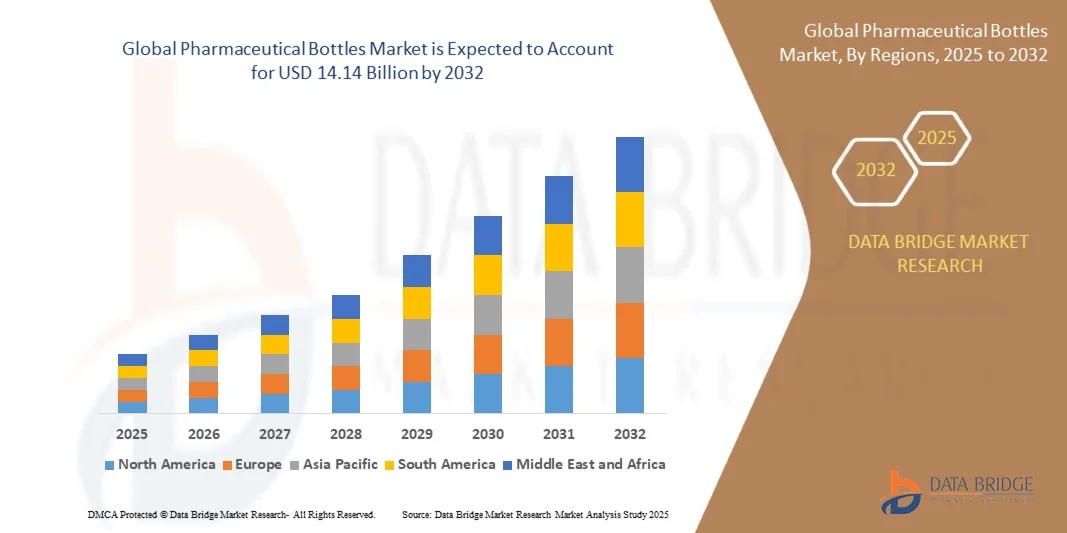
- The global pharmaceutical bottles market size was valued at USD 9.43 billion in 2024 and is expected to reach USD 14.14 billion by 2032, at a CAGR of 5.2% during the forecast period
- The market growth is largely fuelled by increasing demand for safe, durable, and tamper-evident packaging solutions in the pharmaceutical industry
- Rising pharmaceutical production, expanding generic drug markets, and stringent regulations regarding drug packaging and safety are further boosting demand
Pharmaceutical Bottles Market Analysis
- Advancements in material technologies, such as glass, plastics, and biodegradable polymers, are enhancing bottle durability, chemical resistance, and shelf life for pharmaceutical products
- Manufacturers are focusing on lightweight, cost-effective, and child-resistant designs to comply with regulatory standards while improving convenience for end-users
- North America dominated the pharmaceutical bottles market with the largest revenue share of 40.2% in 2024, driven by increasing pharmaceutical production, rising healthcare expenditure, and stringent regulatory standards for drug safety and packaging
- Asia-Pacific region is expected to witness the highest growth rate in the global pharmaceutical bottles market, driven by urbanization, growing pharmaceutical manufacturing, and increasing awareness of patient safety and sustainable packaging practices
- The plastics segment held the largest market revenue share in 2024, driven by its lightweight, cost-effectiveness, and compatibility with automated filling and labeling systems. Plastic bottles, including PET and HDPE, are widely preferred for over-the-counter and prescription medicines due to their durability and recyclability.
Report Scope and Pharmaceutical Bottles Market Segmentation
|
Attributes |
Pharmaceutical Bottles Key Market Insights |
|
Segments Covered |
|
|
Countries Covered |
North America
Europe
Asia-Pacific
Middle East and Africa
South America
|
|
Key Market Players |
|
|
Market Opportunities |
|
|
Value Added Data Infosets |
In addition to the insights on market scenarios such as market value, growth rate, segmentation, geographical coverage, and major players, the market reports curated by the Data Bridge Market Research also include import export analysis, production capacity overview, production consumption analysis, price trend analysis, climate change scenario, supply chain analysis, value chain analysis, raw material/consumables overview, vendor selection criteria, PESTLE Analysis, Porter Analysis, and regulatory framework. |
Pharmaceutical Bottles Market Trends
“Increasing Demand for Safe and Sustainable Drug Packaging”
- The growing emphasis on patient safety and product integrity is transforming the pharmaceutical bottles market by driving the adoption of high-quality, tamper-evident, and child-resistant packaging. These bottles help maintain drug efficacy and reduce contamination risks, while supporting safe storage and transportation of medicines
- The rising demand for eco-friendly and recyclable packaging is accelerating the use of sustainable materials, such as PET, HDPE, and glass, which are preferred for their safety and environmental benefits. This trend is further supported by global regulations promoting green packaging and reducing single-use plastics in healthcare
- Ease of handling, lightweight design, and compatibility with automated filling and labeling systems make modern pharmaceutical bottles attractive for manufacturers aiming to optimize production efficiency. These features also reduce shipping costs, improve supply chain management, and enhance operational scalability
- For instance, in 2023, several pharmaceutical companies in Europe and North America reported switching to PET and HDPE bottles for over-the-counter and prescription drugs to comply with sustainability initiatives and improve supply chain efficiency. This adoption also helped reduce carbon footprint and improve recyclability of pharmaceutical packaging
- While demand is increasing, market growth depends on continued innovation in sustainable materials, child-resistant designs, and regulatory compliance to ensure safety and functionality. The market is expected to see further development in smart packaging technologies and biodegradable alternatives in coming years
Pharmaceutical Bottles Market Dynamics
Driver
“Rising Pharmaceutical Production and Healthcare Expenditure Worldwide”
- Expanding pharmaceutical production and increasing healthcare spending are boosting demand for high-quality bottles across prescription and over-the-counter medicines. Growth in chronic diseases, aging populations, and vaccination programs is further driving the need for secure and reliable packaging
- Manufacturers are investing in advanced packaging solutions that improve shelf-life, maintain drug stability, and enhance patient safety, driving the adoption of specialized pharmaceutical bottles. These innovations also support cold-chain storage and transport for temperature-sensitive drugs
- Government regulations mandating proper labeling, tamper-evidence, and child-resistant designs are further accelerating market growth globally. Regulatory alignment across regions ensures patient safety and compliance, pushing manufacturers to adopt standardized packaging solutions
- For instance, in 2022, pharmaceutical firms in North America increased their procurement of HDPE and PET bottles for liquid medicines and nutraceuticals to comply with stringent regulatory requirements and support large-scale distribution. This resulted in improved production efficiency and minimized losses due to damaged or non-compliant packaging
- While demand is growing, manufacturers must continuously innovate to meet evolving safety standards, packaging efficiency, and environmental sustainability goals. Integration of smart labeling, serialization, and tracking technologies is expected to enhance market growth further
Restraint/Challenge
“Stringent Regulatory Standards and Rising Material Costs”
- The pharmaceutical bottles market faces challenges from strict regulations on safety, labeling, and tamper-evidence, which increase production complexity and costs for manufacturers. Non-compliance can result in recalls, legal penalties, and reputational damage, further straining resources
- Fluctuating raw material prices for plastics and glass can impact profit margins and lead to supply chain constraints, especially for small-scale manufacturers. Variations in oil prices and import duties also affect the cost of polymer-based packaging materials
- Limited availability of specialized bottles, such as amber glass for light-sensitive drugs, can restrict production flexibility and delay product launches. This limitation can also lead to increased competition for premium materials and create inventory management challenges
- For instance, in 2023, several U.S. and European pharmaceutical companies reported delays in sourcing PET bottles due to high demand and raw material price volatility, affecting production schedules. These delays disrupted supply chains, particularly for high-demand therapeutic drugs and seasonal vaccination campaigns
- Addressing regulatory compliance, cost fluctuations, and material availability is crucial for stakeholders to ensure consistent supply and sustainable market growth. Companies are increasingly exploring alternative materials, local sourcing, and strategic stockpiling to mitigate these risks
Pharmaceutical Bottles Market Scope
The market is segmented on the basis of raw material, product type, drug delivery, and end user.
• By Raw Material
On the basis of raw material, the pharmaceutical bottles market is segmented into plastics, paper and paperboard, glass, and metal. The plastics segment held the largest market revenue share in 2024, driven by its lightweight, cost-effectiveness, and compatibility with automated filling and labeling systems. Plastic bottles, including PET and HDPE, are widely preferred for over-the-counter and prescription medicines due to their durability and recyclability.
The glass segment is expected to witness the fastest growth rate from 2025 to 2032, owing to its inert nature, suitability for sensitive formulations, and ability to maintain drug stability for injectable and light-sensitive medications. Glass bottles are particularly favored in hospital and specialty pharmaceutical applications for ensuring product integrity over long storage periods.
• By Product
On the basis of product, the pharmaceutical bottles market is segmented into primary and secondary bottles. The primary bottles segment held the largest market share in 2024, owing to their direct contact with drugs, ensuring safety, tamper-evidence, and compliance with stringent pharmaceutical regulations.
The secondary bottles segment is expected to witness the fastest growth rate from 2025 to 2032, driven by increasing demand for multi-packaging solutions, gift sets, and bundled products that focus on branding and consumer convenience. Secondary packaging also supports sustainability trends through the use of recyclable and biodegradable materials.
• By Drug Delivery
On the basis of drug delivery, the pharmaceutical bottles market is segmented into oral drugs, injectable, topical, ocular/ophthalmic, nasal, pulmonary, transdermal, IV drugs, and others. The oral drugs segment accounted for the largest revenue share in 2024, fueled by high consumption of tablets, capsules, and liquid formulations across global markets.
Injectable is expected to witness the fastest growth rate from 2025 to 2032, driven by rising hospitalizations, vaccination programs, and the demand for sterile packaging that ensures drug stability and patient safety.
• By End User
On the basis of end user, the pharmaceutical bottles market is segmented into pulp and paper, packaging, food, paints and coatings, personal care, and others. The pharmaceutical packaging segment held the largest revenue share in 2024, driven by regulatory mandates, safety requirements, and high consumption of prescription and over-the-counter medicines globally.
The food segment is expected to witness the fastest growth rate from 2025 to 2032, fueled by increasing use of nutraceuticals, dietary supplements, and cosmetic products packaged in high-quality bottles for safety, convenience, and branding purposes.
Pharmaceutical Bottles Market Regional Analysis
- North America dominated the pharmaceutical bottles market with the largest revenue share of 40.2% in 2024, driven by increasing pharmaceutical production, rising healthcare expenditure, and stringent regulatory standards for drug safety and packaging
- Consumers and manufacturers in the region highly value high-quality, tamper-evident, and child-resistant bottles, along with sustainable and recyclable packaging solutions that comply with FDA and other local regulations
- This widespread adoption is further supported by advanced manufacturing infrastructure, well-established distribution networks, and growing awareness of drug safety, establishing pharmaceutical bottles as a critical component for efficient supply chains and patient safety
U.S. Pharmaceutical Bottles Market Insight
The U.S. pharmaceutical bottles market captured the largest revenue share in North America in 2024, fueled by robust pharmaceutical manufacturing, high healthcare spending, and strict compliance requirements. The adoption of PET, HDPE, and glass bottles for prescription and over-the-counter medicines is rising, driven by their durability, safety, and compatibility with automated filling and labeling systems. In addition, initiatives promoting eco-friendly packaging and recycling are contributing to market growth.
Europe Pharmaceutical Bottles Market Insight
The Europe pharmaceutical bottles market is expected to witness the fastest growth rate from 2025 to 2032, driven by strict regulations on tamper-evidence, child-resistant designs, and sustainability mandates. Growing demand for recyclable plastics and glass bottles, combined with automated production systems for filling and labeling, is fostering adoption. Increased pharmaceutical exports and investments in healthcare infrastructure are also supporting market expansion.
Germany Pharmaceutical Bottles Market Insight
The Germany pharmaceutical bottles market is expected to witness the fastest growth rate from 2025 to 2032, driven by strict regulatory standards for drug safety, tamper-evident packaging, and sustainability. Strong pharmaceutical manufacturing capabilities and advanced production technologies are promoting the adoption of PET, HDPE, and glass bottles. In addition, increasing exports of pharmaceuticals and growing demand for high-quality packaging solutions in hospitals and retail pharmacies are fueling market expansion.
U.K. Pharmaceutical Bottles Market Insight
The U.K. pharmaceutical bottles market is expected to witness the fastest growth rate from 2025 to 2032, supported by rising pharmaceutical production, growing healthcare expenditure, and stringent regulations on child-resistant and tamper-evident packaging. Adoption of sustainable and recyclable bottles is increasing, driven by government initiatives and consumer awareness. The market is also benefiting from advanced filling and labeling technologies, improving production efficiency and compliance with regulatory standards.
Asia-Pacific Pharmaceutical Bottles Market Insight
The Asia-Pacific pharmaceutical bottles market is expected to witness the fastest growth rate from 2025 to 2032, driven by rapid pharmaceutical production, rising healthcare expenditure, and increasing awareness of drug safety. Countries such as China, India, and Japan are emerging as manufacturing hubs, and adoption of high-quality bottles for prescription and over-the-counter drugs is increasing. Government initiatives promoting healthcare infrastructure and sustainability are further accelerating growth.
China Pharmaceutical Bottles Market Insight
The China pharmaceutical bottles market accounted for the largest market revenue share in Asia-Pacific in 2024, attributed to rapid urbanization, expanding pharmaceutical manufacturing, and increasing demand for safe and sustainable packaging. The push towards compliance with national and international regulatory standards is driving adoption of high-quality PET, HDPE, and glass bottles. Strong domestic production capabilities and expanding distribution networks are also supporting market growth.
Japan Pharmaceutical Bottles Market Insight
The Japan pharmaceutical bottles market is expected to witness the fastest growth rate from 2025 to 2032 due to the country’s aging population, high healthcare standards, and demand for safe, durable, and eco-friendly packaging. The adoption of tamper-evident, child-resistant, and recyclable bottles is rising across hospitals, pharmacies, and pharmaceutical manufacturers. Integration with automated filling and labeling systems is enhancing production efficiency and ensuring compliance with stringent local regulations.
Pharmaceutical Bottles Market Share
The Pharmaceutical Bottles industry is primarily led by well-established companies, including:
- 3M (U.S.)
- BD (U.S.)
- CCL Industries (Canada)
- McKesson Corporation (U.S.)
- WestRock Company (U.S.)
- AptarGroup Inc. (U.S.)
- Gerresheimer AG (Germany)
- Klöckner Pentaplast (Germany)
- SCHOTT AG (Germany)
- West Pharmaceutical Services Inc. (U.S.)
- Amcor plc (U.K.)
- Berry Global Inc. (U.S.)
- FlexiTuff Ventures International Ltd. (U.K.)
- International Paper (U.S.)
- Stevanato Group (Italy)
- Origin Pharma Packaging (U.K.)
- Mondi (U.K.)
- Lonza (Switzerland)
- Robert Bosch GmbH (Germany)
- DuPont (U.S.)
- Boston Scientific Corporation (U.S.)

- Interactive Data Analysis Dashboard
- Company Analysis Dashboard for high growth potential opportunities
- Research Analyst Access for customization & queries
- Competitor Analysis with Interactive dashboard
- Latest News, Updates & Trend analysis
- Harness the Power of Benchmark Analysis for Comprehensive Competitor Tracking
Global Pharmaceutical Bottles Market, Supply Chain Analysis and Ecosystem Framework
To support market growth and help clients navigate the impact of geopolitical shifts, DBMR has integrated in-depth supply chain analysis into its Global Pharmaceutical Bottles Market research reports. This addition empowers clients to respond effectively to global changes affecting their industries. The supply chain analysis section includes detailed insights such as Global Pharmaceutical Bottles Market consumption and production by country, price trend analysis, the impact of tariffs and geopolitical developments, and import and export trends by country and HSN code. It also highlights major suppliers with data on production capacity and company profiles, as well as key importers and exporters. In addition to research, DBMR offers specialized supply chain consulting services backed by over a decade of experience, providing solutions like supplier discovery, supplier risk assessment, price trend analysis, impact evaluation of inflation and trade route changes, and comprehensive market trend analysis.
Data collection and base year analysis are done using data collection modules with large sample sizes. The stage includes obtaining market information or related data through various sources and strategies. It includes examining and planning all the data acquired from the past in advance. It likewise envelops the examination of information inconsistencies seen across different information sources. The market data is analysed and estimated using market statistical and coherent models. Also, market share analysis and key trend analysis are the major success factors in the market report. To know more, please request an analyst call or drop down your inquiry.
The key research methodology used by DBMR research team is data triangulation which involves data mining, analysis of the impact of data variables on the market and primary (industry expert) validation. Data models include Vendor Positioning Grid, Market Time Line Analysis, Market Overview and Guide, Company Positioning Grid, Patent Analysis, Pricing Analysis, Company Market Share Analysis, Standards of Measurement, Global versus Regional and Vendor Share Analysis. To know more about the research methodology, drop in an inquiry to speak to our industry experts.
Data Bridge Market Research is a leader in advanced formative research. We take pride in servicing our existing and new customers with data and analysis that match and suits their goal. The report can be customized to include price trend analysis of target brands understanding the market for additional countries (ask for the list of countries), clinical trial results data, literature review, refurbished market and product base analysis. Market analysis of target competitors can be analyzed from technology-based analysis to market portfolio strategies. We can add as many competitors that you require data about in the format and data style you are looking for. Our team of analysts can also provide you data in crude raw excel files pivot tables (Fact book) or can assist you in creating presentations from the data sets available in the report.













