


Plant Based Energy Drink Market Size
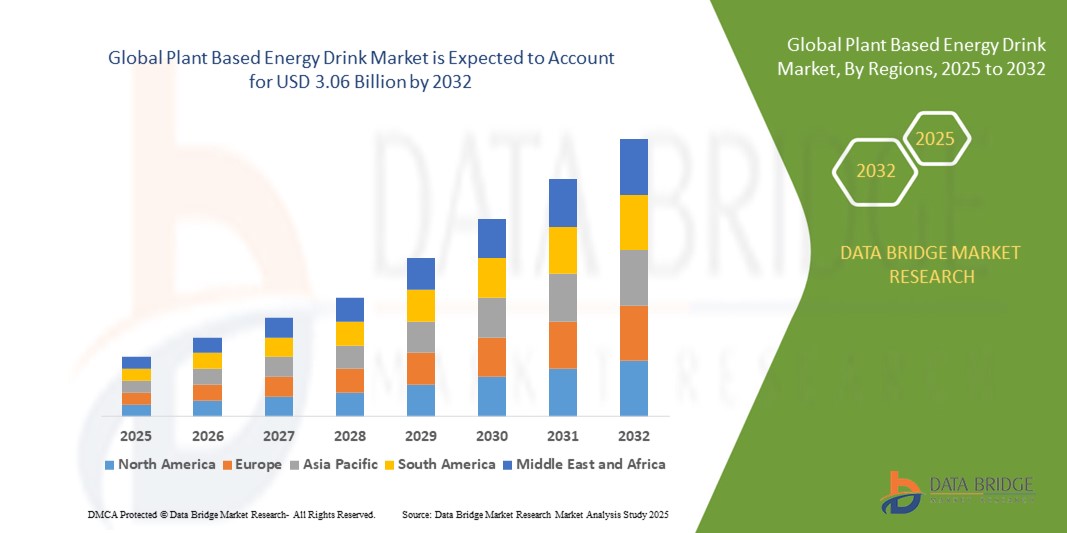
- The global plant based energy drink market size was valued at USD 1.72 billion in 2024 and is expected to reach USD 3.06 billion by 2032, at a CAGR of 7.40% during the forecast period
- The market growth is largely fueled by increasing consumer demand for natural and clean-label beverages, rising awareness of health and wellness, and the shift toward plant-based lifestyles as consumers seek sustainable and functional energy alternatives
- In addition, growing fitness culture, coupled with the demand for sugar-free, low-calorie, and nutrient-rich energy drinks, is accelerating market expansion
Plant Based Energy Drink Market Analysis
- Growing consumer preference for natural, clean-label beverages over synthetic energy drinks is driving demand
- Increasing awareness of health, wellness, and sustainable lifestyles is boosting adoption of plant-based energy drink
- North America dominated the plant-based energy drink market with the largest revenue share of 38.5% in 2024, driven by rising health consciousness, strong demand for clean-label beverages, and growing adoption of plant-based diets
- Asia-Pacific region is expected to witness the highest growth rate in the global plant based energy drink market, driven by technological advancements in beverage manufacturing, expanding e-commerce penetration, and increasing disposable incomes across emerging economies
- The Non-Alcoholic segment accounted for the largest market share in 2024 owing to its widespread acceptance among health-conscious consumers and fitness enthusiasts. Non-alcoholic plant-based energy drinks are often consumed for everyday energy needs and performance enhancement without the side effects associated with alcohol-based formulations
Report Scope and Plant Based Energy Drink Market Segmentation
|
Attributes |
Plant Based Energy Drink Key Market Insights |
|
Segments Covered |
|
|
Countries Covered |
North America
Europe
Asia-Pacific
Middle East and Africa
South America
|
|
Key Market Players |
|
|
Market Opportunities |
|
|
Value Added Data Infosets |
In addition to the insights on market scenarios such as market value, growth rate, segmentation, geographical coverage, and major players, the market reports curated by the Data Bridge Market Research also include in-depth expert analysis, pricing analysis, brand share analysis, consumer survey, demography analysis, supply chain analysis, value chain analysis, raw material/consumables overview, vendor selection criteria, PESTLE Analysis, Porter Analysis, and regulatory framework. |
Plant Based Energy Drink Market Trends
Innovation in Functional Plant-Based Energy Beverages
- The rising demand for functional beverages is reshaping the plant-based energy drink market, with consumers seeking natural energy sources enriched with vitamins, adaptogens, and superfoods. These formulations go beyond basic energy boosting to support overall wellness and mental clarity, aligning with the clean-label trend
- The shift toward plant-based lifestyles, particularly among millennials and Gen Z, is driving product innovation using natural caffeine sources such as green tea, yerba mate, and guarana. Brands are launching low-sugar, organic, and antioxidant-rich drinks to meet evolving health preferences
- The growing popularity of sustainable and ethically sourced ingredients further accelerates market expansion. Companies focusing on eco-friendly packaging and transparent supply chains are gaining favor among environmentally conscious consumers
- For instance, in 2023, several U.S.-based startups launched energy drinks fortified with ashwagandha and ginseng extracts, appealing to consumers seeking natural stress relief along with energy enhancement. These products gained rapid traction through health-focused retail chains and online wellness platforms
- While innovation in plant-based energy beverages is driving growth, long-term success requires continuous R&D, competitive pricing, and robust distribution strategies to cater to diverse global consumer bases
Plant Based Energy Drink Market Dynamics
Driver
Rising Health Consciousness and Demand for Clean Energy Solutions
- Increasing awareness about the adverse effects of artificial additives, synthetic caffeine, and excessive sugar in traditional energy drinks is pushing consumers toward natural, plant-based alternatives. These products provide sustained energy without harmful side effects, supporting overall wellness and long-term health goals
- Fitness enthusiasts, athletes, and health-conscious individuals are increasingly adopting plant-based energy drinks into their daily routines, particularly those that emphasize organic, low-calorie, and vegan-friendly formulations. The trend aligns with the growing popularity of functional beverages offering added nutritional benefits
- Marketing campaigns highlighting plant-powered energy, combined with endorsements from influencers, nutritionists, and professional athletes, are strengthening consumer engagement. This increased visibility is boosting demand across urban and semi-urban regions and creating strong brand loyalty among younger demographics
- For instance, in 2022, a leading European beverage brand reported a 40% sales increase after introducing a zero-sugar, green tea-based energy drink line targeted at gym-goers, college students, and working professionals, demonstrating the impact of product positioning on sales growth
- Despite rising adoption, manufacturers must focus on flavor innovation, wider distribution networks, and cost-effective production to make these beverages accessible to mass markets while retaining the clean-label and health-focused appeal demanded by consumers
Restraint/Challenge
High Product Costs and Limited Awareness in Emerging Economies
- Premium pricing of plant-based energy drinks, driven by the high cost of sourcing organic raw materials, advanced formulations, and sustainable packaging, limits adoption in price-sensitive markets. Many consumers in developing regions view these products as luxury items rather than daily essentials
- Limited awareness about the health benefits and nutritional advantages of plant-based energy drinks, combined with the dominance of cheaper, conventional energy beverages, continues to slow market penetration in semi-urban and rural areas where consumers prioritize affordability over wellness attributes
- Inadequate retail infrastructure, lack of specialized cold-chain storage facilities, and supply chain inefficiencies in remote regions restrict product availability. This results in limited consumer access and hampers efforts to scale up distribution networks for mass-market adoption
- For instance, in 2023, beverage retailers in Southeast Asia reported that nearly 65% of rural customers were unaware of plant-based energy drink options, attributing this gap to insufficient marketing campaigns, low product visibility, and high retail prices compared to conventional beverages
- To overcome these challenges, companies must invest in awareness-building initiatives, localized marketing efforts, and affordable product lines tailored to emerging economies, enabling wider adoption and long-term market growth potential
Plant Based Energy Drink Market Scope
The market is segmented on the basis of product type, type, application, ingredients, and distribution channel.
- By Product Type
On the basis of product type, the global plant-based energy drink market is segmented into Non-Alcoholic and Alcoholic. The Non-Alcoholic segment accounted for the largest market share in 2024 owing to its widespread acceptance among health-conscious consumers and fitness enthusiasts. Non-alcoholic plant-based energy drinks are often consumed for everyday energy needs and performance enhancement without the side effects associated with alcohol-based formulations.
The Alcoholic segment is expected to witness fastest growth rate from 2025 to 2032 as manufacturers experiment with plant-based functional ingredients to develop innovative energy-infused alcoholic beverages for niche markets.
- By Type
On the basis of type, the market is categorized into Inorganic and Organic. The Organic segment dominated the market in 2024 due to increasing consumer preference for clean-label, chemical-free, and sustainably sourced ingredients. The rising trend of organic certification and transparency in labeling is fueling this segment’s growth globally.
The Inorganic segment is expected to witness fastest growth rate from 2025 to 2032 period as it caters to price-sensitive consumers who prioritize affordability while still seeking energy-boosting beverages.
- By Application
On the basis of application, the market is divided into Before Exercise, Recovery, and During Exercise. The Before Exercise segment held the largest market revenue share in 2024, driven by the growing adoption of plant-based pre-workout energy solutions among gym-goers and athletes. These drinks provide sustained energy for endurance training and performance enhancement.
The Recovery segment is expected to witness fastest growth rate from 2025 to 2032 as consumers increasingly look for plant-powered drinks enriched with electrolytes, vitamins, and antioxidants to aid post-workout muscle recovery and hydration.
- By Ingredients
On the basis of ingredients, the market is segmented into Taurine, Caffeine, Guarana, Vitamin B, L-Carnitine, Antioxidants, and Others. The Caffeine segment led the market in 2024 due to its widespread use as a natural energy booster sourced from green tea, coffee beans, and guarana. Its proven efficacy in improving alertness and endurance makes it the most preferred ingredient in plant-based energy drinks.
The Antioxidants segment is expected to witness fastest growth rate from 2025 to 2032 as consumers increasingly favor beverages fortified with natural extracts such as acai, goji berries, and green tea for their combined energy and immunity-boosting properties.
- By Distribution Channel
On the basis of distribution channel, the market is segmented into Supermarket/Hypermarket, E-commerce, Grocery Stores, and Convenience Stores. The Supermarket/Hypermarket segment accounted for the highest revenue share in 2024 owing to the availability of a wide product range and attractive in-store promotions targeting health-conscious consumers.
The E-commerce segment is expected to witness fastest growth rate from 2025 to 2032 driven by the rising popularity of online retail platforms, subscription-based models, and doorstep delivery options offering convenience and product variety to tech-savvy consumers.
Plant Based Energy Drink Market Regional Analysis
- North America dominated the plant-based energy drink market with the largest revenue share of 38.5% in 2024, driven by rising health consciousness, strong demand for clean-label beverages, and growing adoption of plant-based diets
- Consumers in the region highly value natural ingredients, functional health benefits, and low-sugar formulations, leading to increased product launches by established beverage companies and startups
- This widespread adoption is further supported by high disposable incomes, advanced retail infrastructure, and strong e-commerce penetration, making plant-based energy drinks widely accessible across urban and suburban markets
U.S. Plant-Based Energy Drink Market Insight
The U.S. plant-based energy drink market captured the largest revenue share in 2024 within North America, fueled by the growing popularity of fitness culture, vegan lifestyles, and functional beverages. Consumers are increasingly seeking organic, non-GMO, and antioxidant-rich energy drinks as alternatives to traditional energy beverages. The influence of celebrity endorsements, social media marketing, and expanding health-focused retail channels is significantly contributing to market growth.
Europe Plant-Based Energy Drink Market Insight
The Europe plant-based energy drink market is expected to witness fastest growth rate from 2025 to 2032, driven by stringent regulations on artificial additives and growing consumer preference for sustainably sourced ingredients. Urbanization, rising health awareness, and the popularity of clean-label beverages are boosting adoption across countries such as Germany, the U.K., and France. The increasing demand from fitness enthusiasts, office professionals, and students is further accelerating growth in the region.
U.K. Plant-Based Energy Drink Market Insight
The U.K. market is expected to witness fastest growth rate from 2025 to 2032, supported by rising concerns over sugar consumption, obesity rates, and energy drink safety regulations. The demand for low-calorie, plant-based, and functional energy beverages is growing rapidly among health-conscious millennials and young professionals, creating opportunities for product innovation and retail expansion.
Germany Plant-Based Energy Drink Market Insight
The Germany plant-based energy drink market is expected to witness fastest growth rate from 2025 to 2032, driven by strong consumer preference for organic and eco-friendly beverages. Germany’s sustainability-focused policies and well-developed distribution channels are encouraging brands to launch recyclable packaging and ethically sourced ingredients, attracting environmentally conscious consumers.
Asia-Pacific Plant-Based Energy Drink Market Insight
The Asia-Pacific market is expected to witness fastest growth rate from 2025 to 2032, driven by rising disposable incomes, rapid urbanization, and increasing awareness of health and fitness trends in countries such as China, Japan, and India. Government initiatives promoting nutritional wellness and the expansion of modern retail infrastructure are further fueling market growth.
Japan Plant-Based Energy Drink Market Insight
The Japan market is expected to witness fastest growth rate from 2025 to 2032 due to the country’s technologically advanced consumer base, growing health consciousness, and demand for convenient functional beverages. The popularity of matcha-based energy drinks and beverages enriched with adaptogens and herbal extracts is driving innovation and consumer interest.
China Plant-Based Energy Drink Market Insight
The China plant-based energy drink market accounted for the largest revenue share in the Asia-Pacific region in 2024, supported by the rapid adoption of plant-based diets, strong domestic manufacturing capabilities, and increasing popularity of online retail platforms. The country’s expanding middle-class population, urban lifestyle changes, and fitness culture boom are fueling product demand across both tier-1 and tier-2 cities.
Plant Based Energy Drink Market Share
The Plant Based Energy Drink industry is primarily led by well-established companies, including:
- Nestlé (Switzerland)
- PepsiCo (U.S.)
- Tenzing Natural Energy Ltd (U.K.)
- Guru Energy (Canada)
- Yerbaé (U.S.)
- RIOT Energy (U.S.)
- Proper Wild, Inc. (U.S.)
- Garden of Life (U.S.)
- BA Sports Nutrition, LLC. (U.S.)
- ToroMatcha (Canada)
- Guayakí (U.S.)
Latest Developments in Global Plant Based Energy Drink Market
- In July 2024, Tenzing has launched what it claims as the “world’s strongest natural energy drink,” Super Natural Energy Fiery Mango. With 200mg of caffeine from green coffee and green tea, plus functional ingredients such as cordyceps mushrooms and magnesium, this drink offers more caffeine per serving than Red Bull. Available on Tenzing’s website, Amazon, and in Holland & Barrett, it’s designed for those needing a powerful energy boost
- In July 2023, Hungarian company Hell Energy Drink has developed what it claims to be the world’s first energy drink entirely designed by artificial intelligence (AI). The AI selected the ingredients, formulation, and even the packaging design. The chosen flavor, “Tutti-frutti & Berry-blast,” was one of three options generated by the AI. The recipe is stored securely in the company's Hungarian factory and a Swiss vault. This innovation showcases AI's potential to revolutionize product development in the food and beverage industry

- Interactive Data Analysis Dashboard
- Company Analysis Dashboard for high growth potential opportunities
- Research Analyst Access for customization & queries
- Competitor Analysis with Interactive dashboard
- Latest News, Updates & Trend analysis
- Harness the Power of Benchmark Analysis for Comprehensive Competitor Tracking
Global Plant Based Energy Drink Market, Supply Chain Analysis and Ecosystem Framework
To support market growth and help clients navigate the impact of geopolitical shifts, DBMR has integrated in-depth supply chain analysis into its Global Plant Based Energy Drink Market research reports. This addition empowers clients to respond effectively to global changes affecting their industries. The supply chain analysis section includes detailed insights such as Global Plant Based Energy Drink Market consumption and production by country, price trend analysis, the impact of tariffs and geopolitical developments, and import and export trends by country and HSN code. It also highlights major suppliers with data on production capacity and company profiles, as well as key importers and exporters. In addition to research, DBMR offers specialized supply chain consulting services backed by over a decade of experience, providing solutions like supplier discovery, supplier risk assessment, price trend analysis, impact evaluation of inflation and trade route changes, and comprehensive market trend analysis.
Data collection and base year analysis are done using data collection modules with large sample sizes. The stage includes obtaining market information or related data through various sources and strategies. It includes examining and planning all the data acquired from the past in advance. It likewise envelops the examination of information inconsistencies seen across different information sources. The market data is analysed and estimated using market statistical and coherent models. Also, market share analysis and key trend analysis are the major success factors in the market report. To know more, please request an analyst call or drop down your inquiry.
The key research methodology used by DBMR research team is data triangulation which involves data mining, analysis of the impact of data variables on the market and primary (industry expert) validation. Data models include Vendor Positioning Grid, Market Time Line Analysis, Market Overview and Guide, Company Positioning Grid, Patent Analysis, Pricing Analysis, Company Market Share Analysis, Standards of Measurement, Global versus Regional and Vendor Share Analysis. To know more about the research methodology, drop in an inquiry to speak to our industry experts.
Data Bridge Market Research is a leader in advanced formative research. We take pride in servicing our existing and new customers with data and analysis that match and suits their goal. The report can be customized to include price trend analysis of target brands understanding the market for additional countries (ask for the list of countries), clinical trial results data, literature review, refurbished market and product base analysis. Market analysis of target competitors can be analyzed from technology-based analysis to market portfolio strategies. We can add as many competitors that you require data about in the format and data style you are looking for. Our team of analysts can also provide you data in crude raw excel files pivot tables (Fact book) or can assist you in creating presentations from the data sets available in the report.













