


Plant Derivative Drugs Market Analysis
The plant-derivative drugs market is witnessing transformative advancements in methods and technologies. High-throughput screening and computational biology are enabling precise identification of bioactive compounds in plants. Advanced extraction techniques, such as supercritical fluid extraction and ultrasound-assisted extraction, ensure higher purity and efficiency. CRISPR gene editing is being applied to modify plant genomes, enhancing yields of medicinal compounds such as alkaloids and flavonoids.
These advancements are being utilized to develop treatments for chronic illnesses, including cancer and cardiovascular diseases. The rise of nanotechnology is facilitating targeted drug delivery systems, enhancing the efficacy of plant-based drugs while minimizing side effects.
The market is growing significantly due to the increased preference for natural and plant-based medications, propelled by consumer awareness and regulatory support. Regions such as Asia-Pacific are driving this growth, given their rich biodiversity and traditional medicine practices. Collaborations between pharmaceutical companies and research institutes further accelerate innovation, ensuring the market’s expansion in response to rising demand for sustainable and effective drug alternatives.
Plant Derivative Drugs Market Size
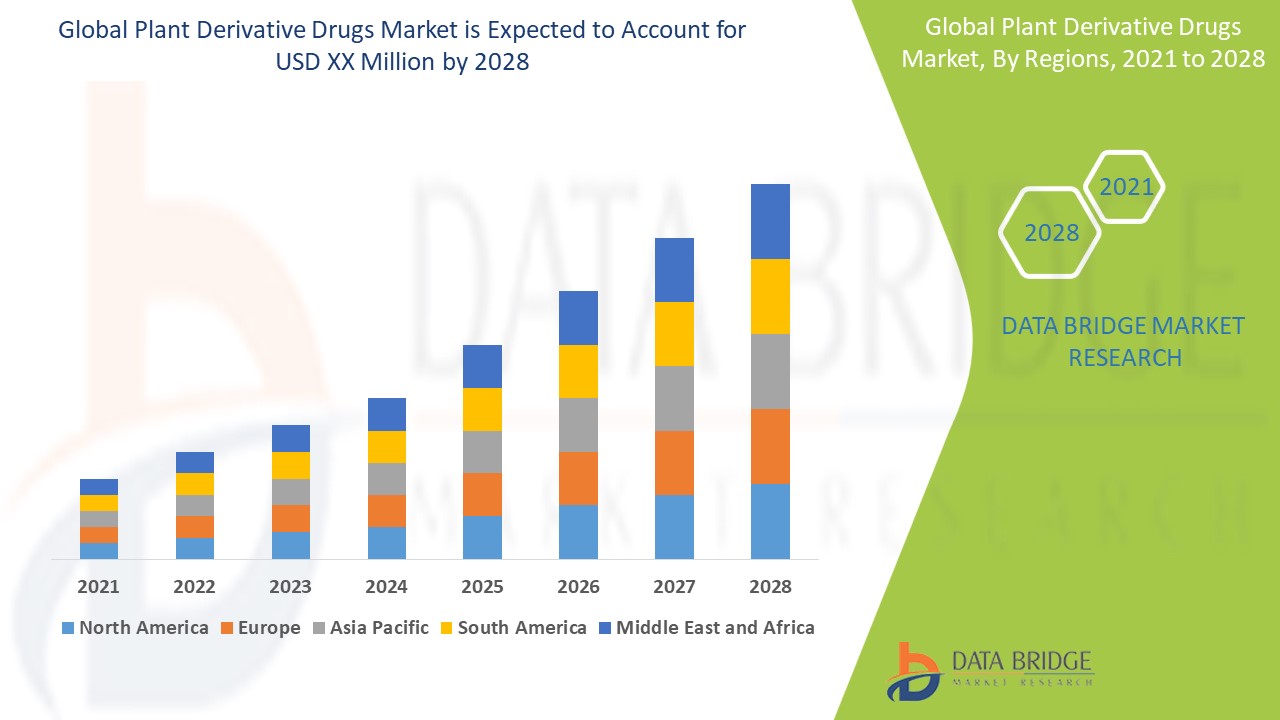
The global plant derivative drugs market size was valued at USD 3.50 billion in 2024 and is projected to reach USD 7.17 billion by 2032, with a CAGR of 9.3% during the forecast period of 2025 to 2032. In addition to the insights on market scenarios such as market value, growth rate, segmentation, geographical coverage, and major players, the market reports curated by the Data Bridge Market Research also include depth expert analysis, patient epidemiology, pipeline analysis, pricing analysis, and regulatory framework.
Plant Derivative Drugs Market Trends
“Rising Demand for Natural and Organic Pharmaceuticals”
A significant trend driving growth in the plant derivative drugs market is the rising consumer preference for natural and organic pharmaceuticals. With increasing awareness about synthetic drug side effects, patients and healthcare providers are leaning toward plant-based alternatives that offer therapeutic benefits with reduced adverse reactions. For instance, artemisinin, derived from Artemisia annua, has become a cornerstone in malaria treatment. Similarly, cannabidiol (CBD) from cannabis is gaining traction for managing chronic pain and neurological disorders. The trend is further fueled by expanding research on plant-derived bioactive compounds and their efficacy. This shift is boosting demand for plant-based drug formulations in various therapeutic segments.
Report Scope and Plant Derivative Drugs Market Segmentation
|
Attributes |
Plant Derivative Drugs Key Market Insights |
|
Segments Covered |
|
|
Countries Covered |
U.S., Canada and Mexico in North America, Germany, France, U.K., Netherlands, Switzerland, Belgium, Russia, Italy, Spain, Turkey, Rest of Europe in Europe, China, Japan, India, South Korea, Singapore, Malaysia, Australia, Thailand, Indonesia, Philippines, Rest of Asia-Pacific (APAC) in the Asia-Pacific (APAC), Saudi Arabia, U.A.E, South Africa, Egypt, Israel, Rest of Middle East and Africa (MEA) as a part of Middle East and Africa (MEA), Brazil, Argentina and Rest of South America as part of South America |
|
Key Market Players |
Artecef BV (Netherlands), Bayer (Germany), Boehringer Ingelheim (Germany), Bristol-Myers Squibb (U.S.), Cardax Pharmaceuticals (U.S.), Chi-Med (China), Chong Kun Dang Pharmaceutical Corp. (South Korea), Fytokem Products Inc. (Canada), Galapagos NV (Belgium), Glenmark Pharmaceuticals Limited (India), Heterogeneity LLC (U.S.), HSRX Biopharmaceutical (U.S.), Indena (Italy), Izun Pharmaceuticals Corp. (U.S.), Medigene AG (Germany), Merck & Co., Inc. (U.S.), Merlion Pharmaceuticals (Singapore), Microbio Co. Ltd. (South Korea), Mycosynthetix Inc. (U.S.), Napo Pharmaceuticals Inc. (U.S.), Novartis International AG (Switzerland), Pfizer (U.S.), Pharmaceutical Plant Co. (Russia), Phynova (U.K.), Sanofi (France), Santalis Pharmaceuticals (U.S.), Schwabe Pharmaceuticals (Germany), Sequoia Sciences Inc. (U.S.), and Sun Pharmaceutical Industries Ltd. (India) |
|
Market Opportunities |
|
|
Value Added Data Infosets |
In addition to the insights on market scenarios such as market value, growth rate, segmentation, geographical coverage, and major players, the market reports curated by the Data Bridge Market Research also include depth expert analysis, patient epidemiology, pipeline analysis, pricing analysis, and regulatory framework. |
Plant Derivative Drugs Market Definition
Plant-derived drugs are pharmaceutical compounds obtained from natural substances in plants. These drugs utilize bioactive components such as alkaloids, glycosides, flavonoids, and terpenoids, which possess therapeutic properties. Historically, plants have been a primary source of medicine, with samples such as morphine from Papaver somniferum (opium poppy) for pain relief, and quinine from Cinchona bark to treat malaria. Modern pharmaceutical advancements refine and synthesize plant-based compounds for improved efficacy and safety. Common applications include anticancer drugs such as paclitaxel from the Pacific yew tree and antimalarial artemisinin from Artemisia annua. Plant-derived drugs remain pivotal in drug discovery and natural product-based therapies.
Plant Derivative Drugs Market Dynamics
Drivers
- Increasing Preference for Natural Remedies
Consumers are gravitating toward plant-based treatments, driven by the perception of their safety and minimal side effects compared to synthetic drugs. For instance, turmeric-based curcumin supplements are widely sought for their anti-inflammatory properties, offering a natural alternative to nonsteroidal anti-inflammatory drugs (NSAIDs). The rising awareness of herbal remedies through platforms such as social media and wellness blogs further boosts this trend. In addition, regulatory endorsements of plant-derived products as effective therapeutic options, such as artemisinin for malaria treatment, reinforce consumer confidence. This growing preference aligns with the broader demand for sustainable and organic healthcare solutions, significantly driving the expansion of the plant derivative drugs market.
- Increasing Aging Population
The increasing aging population is a significant driver for the plant derivative drugs market. As people age, they are more susceptible to chronic conditions such as arthritis, diabetes, and cardiovascular diseases. This demographic shift creates a rising demand for safe, effective, and long-term treatment options. Plant-based drugs, known for their fewer side effects and natural composition, are gaining popularity as a preferred alternative to synthetic drugs. For instance, the use of curcumin (derived from turmeric) for its anti-inflammatory properties has been widely recognized in treating arthritis. The demand for natural, sustainable treatments to address age-related ailments is driving growth in the plant derivative drugs market.
Opportunities
- Expanding Research and Development in Phytomedicine
The increasing investment in research and development to isolate bioactive compounds from plants creates significant opportunities in the plant derivative drugs market. Advancements in phytochemistry and pharmacology are enabling the identification of new plant-based molecules with therapeutic potential, leading to the development of novel drugs for various diseases. For instance, the discovery of curcumin (from turmeric) and its potential in treating inflammation and cancer has driven research in the phytomedicine sector. With pharmaceutical companies focusing on improving extraction methods and enhancing bioavailability, the market for plant-derived drugs is expected to grow, offering opportunities for both established and emerging companies to innovate and cater to the rising demand for natural remedies.
- Rising Chronic Disease Prevalence
The increasing prevalence of chronic diseases such as diabetes, cardiovascular diseases, and arthritis is fueling demand for plant-derived drugs, which are recognized for their therapeutic potential. For instance, Curcumin, derived from turmeric, is gaining attention for its anti-inflammatory properties, beneficial in treating arthritis and heart disease. Similarly, Berberine, found in plants such as Goldenseal, has shown promise in controlling blood sugar levels, making it a popular alternative for managing diabetes. As these conditions continue to rise globally, there is a growing need for natural, plant-based treatments that offer safer, long-term solutions, driving significant opportunities in the plant derivative drugs market.
Restraints/Challenges
- Competition from Synthetic Alternatives
Synthetic drugs present a significant challenge to the plant derivative drugs market due to their more predictable outcomes and lower production costs. Different from plant-based drugs, which often require complex extraction processes and face variability in active ingredient concentrations, synthetic drugs can be mass-produced with greater consistency and control over quality. This results in reduced manufacturing costs, making synthetic alternatives more affordable and appealing to healthcare providers. Furthermore, synthetic drugs have established safety profiles and are often favored for their reliable efficacy. As a result, the demand for plant-derived medications is hindered, limiting their market growth and adoption.
- Intellectual Property Concerns
Intellectual property concerns pose a significant challenge in the plant derivative drugs market. Many naturally occurring plant compounds cannot be patented, as they are considered part of nature's public domain. This lack of patentability discourages investment in research and development, as companies are unable to secure exclusive rights to these compounds. Without patent protection, the commercial potential of plant-based drugs is limited, as competitors can easily replicate the products. This creates a challenging environment for companies seeking to recover research costs and generate profits. In addition, the inability to secure patents for innovative plant-based formulations may result in limited financial incentives for further exploration and development in the market.
This market report provides details of new recent developments, trade regulations, import-export analysis, production analysis, value chain optimization, market share, impact of domestic and localized market players, analyses opportunities in terms of emerging revenue pockets, changes in market regulations, strategic market growth analysis, market size, category market growths, application niches and dominance, product approvals, product launches, geographic expansions, technological innovations in the market. To gain more info on the market contact Data Bridge Market Research for an Analyst Brief, our team will help you take an informed market decision to achieve market growth.
Plant Derivative Drugs Market Scope
The market is segmented on the basis of category, form, product type, and end user. The growth amongst these segments will help you analyze meagre growth segments in the industries and provide the users with a valuable market overview and market insights to help them make strategic decisions for identifying core market applications.
Types
- Terpenes
- Steroids
- Glycoside
- Phenols
- Others
Therapeutics Application
- Oncology Dermatology
- Central Nervous System Disorders
- Infectious Diseases
- Cardiovascular Diseases
- Respiratory Diseases
- Others
Mode of Purchase
- Over the Counter
- Prescription
Dosage Types
- Solid Oral
- Tablets
- Pills
- Capsule
- Others
- Liquid
- Syrups
- Ointments
- Others
- Parenteral
- Intravenous
- Intramuscular
- Subcutaneous
- Others
- Others
End User
- Hospitals
- Specialty Clinics
- Others
Distribution Channel
- Hospital Pharmacies
- Retail Pharmacies
- Online Pharmacies
- Others
Plant Derivative Drugs Market Regional Analysis
The market is analysed and market size insights and trends are provided by country, category, form, product type, and end user as referenced above.
The countries covered in the market report are U.S., Canada, Mexico in North America, Germany, Sweden, Poland, Denmark, Italy, U.K., France, Spain, Netherland, Belgium, Switzerland, Turkey, Russia, Rest of Europe in Europe, Japan, China, India, South Korea, New Zealand, Vietnam, Australia, Singapore, Malaysia, Thailand, Indonesia, Philippines, Rest of Asia-Pacific (APAC) in Asia-Pacific (APAC), Brazil, Argentina, Rest of South America as a part of South America, U.A.E, Saudi Arabia, Oman, Qatar, Kuwait, South Africa, Rest of Middle East and Africa (MEA) as a part of Middle East and Africa (MEA)
North America is expected to dominate the plant derivative drugs market due to the increasing awareness of botanical and plant-derived treatments. Rising prevalence of chronic diseases, coupled with the growing adoption of natural remedies, is further propelling market growth. The region's strong healthcare infrastructure and regulatory support also contribute to this dominance.
Asia-Pacific is expected to show significant growth in the plant derivative drugs market due to increasing healthcare expenditure and rising disposable income. With a growing focus on alternative medicines, governments in the region are also supporting the development of plant-based drugs, which will further drive market growth during the forecast period.
The country section of the report also provides individual market impacting factors and changes in regulation in the market domestically that impacts the current and future trends of the market. Data points such as down-stream and upstream value chain analysis, technical trends and porter's five forces analysis, case studies are some of the pointers used to forecast the market scenario for individual countries. Also, the presence and availability of global brands and their challenges faced due to large or scarce competition from local and domestic brands, impact of domestic tariffs and trade routes are considered while providing forecast analysis of the country data.
Plant Derivative Drugs Market Share
The market competitive landscape provides details by competitor. Details included are company overview, company financials, revenue generated, market potential, investment in research and development, new market initiatives, global presence, production sites and facilities, production capacities, company strengths and weaknesses, product launch, product width and breadth, application dominance. The above data points provided are only related to the companies' focus related to market.
Plant Derivative Drugs Market Leaders Operating in the Market Are:
- Artecef BV (Netherlands)
- Bayer (Germany)
- Boehringer Ingelheim (Germany)
- Bristol-Myers Squibb (U.S.)
- Cardax Pharmaceuticals (U.S.)
- Chi-Med (China)
- Chong Kun Dang Pharmaceutical Corp. (South Korea)
- Fytokem Products Inc. (Canada)
- Galapagos NV (Belgium)
- Glenmark Pharmaceuticals Limited (India)
- Heterogeneity LLC (U.S.)
- HSRX Biopharmaceutical (U.S.)
- Indena (Italy)
- Izun Pharmaceuticals Corp. (U.S.)
- Medigene AG (Germany)
- Merck & Co., Inc. (U.S.)
- Merlion Pharmaceuticals (Singapore)
- Microbio Co. Ltd. (South Korea)
- Mycosynthetix Inc. (U.S.)
- Napo Pharmaceuticals Inc. (U.S.)
- Novartis International AG (Switzerland)
- Pfizer (U.S.)
- Pharmaceutical Plant Co. (Russia)
- Phynova (U.K.)
- Sanofi (France)
- Santalis Pharmaceuticals (U.S.)
- Schwabe Pharmaceuticals (Germany)
- Sequoia Sciences Inc. (U.S.)
- Sun Pharmaceutical Industries Ltd. (India)

- Interactive Data Analysis Dashboard
- Company Analysis Dashboard for high growth potential opportunities
- Research Analyst Access for customization & queries
- Competitor Analysis with Interactive dashboard
- Latest News, Updates & Trend analysis
- Harness the Power of Benchmark Analysis for Comprehensive Competitor Tracking
Data collection and base year analysis are done using data collection modules with large sample sizes. The stage includes obtaining market information or related data through various sources and strategies. It includes examining and planning all the data acquired from the past in advance. It likewise envelops the examination of information inconsistencies seen across different information sources. The market data is analysed and estimated using market statistical and coherent models. Also, market share analysis and key trend analysis are the major success factors in the market report. To know more, please request an analyst call or drop down your inquiry.
The key research methodology used by DBMR research team is data triangulation which involves data mining, analysis of the impact of data variables on the market and primary (industry expert) validation. Data models include Vendor Positioning Grid, Market Time Line Analysis, Market Overview and Guide, Company Positioning Grid, Patent Analysis, Pricing Analysis, Company Market Share Analysis, Standards of Measurement, Global versus Regional and Vendor Share Analysis. To know more about the research methodology, drop in an inquiry to speak to our industry experts.
Data Bridge Market Research is a leader in advanced formative research. We take pride in servicing our existing and new customers with data and analysis that match and suits their goal. The report can be customized to include price trend analysis of target brands understanding the market for additional countries (ask for the list of countries), clinical trial results data, literature review, refurbished market and product base analysis. Market analysis of target competitors can be analyzed from technology-based analysis to market portfolio strategies. We can add as many competitors that you require data about in the format and data style you are looking for. Our team of analysts can also provide you data in crude raw excel files pivot tables (Fact book) or can assist you in creating presentations from the data sets available in the report.












