


What is the Pleurisy Market Size and Overview?
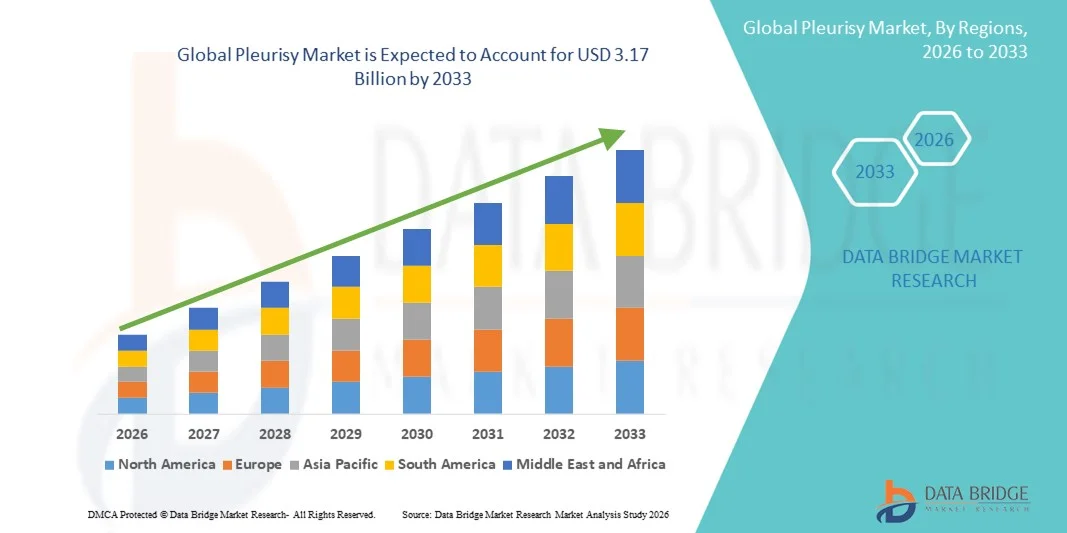
- As per Data Bridge Market Research Analysis the global pleurisy market size was valued at USD 2.01 billion in 2025 and is expected to reach USD 3.17 billion by 2033, at a CAGR of 5.87% during the forecast period
- The market growth is largely fueled by the increasing prevalence of respiratory disorders rising awareness of pleural diseases, and advancements in diagnostic imaging and thoracentesis techniques, leading to enhanced early detection and management of pleurisy worldwide
- Furthermore, growing availability of effective treatment options including anti‑inflammatory drugs, antibiotics, and pleural drainage procedures along with expanding respiratory health infrastructure and patient focus on improved outcomes is establishing comprehensive pleurisy care as a priority across clinical settings. These converging factors are accelerating the adoption of pleurisy disease management solutions, thereby significantly boosting the industry’s growth.
Market Size & Forecast
- Global Market Value (2025): USD 2.01 Billion
- Expected Market Value (2033): USD 3.17 Billion
- Forecast CAGR (2026–2033): 5.87%
Pleurisy Market Analysis
- Pleurisy, a condition involving inflammation of the pleural membranes surrounding the lungs, is an increasingly important focus within respiratory care due to its association with infectious and chronic lung diseases, requiring timely diagnosis and effective treatment across hospital and outpatient settings
- The escalating demand for pleurisy diagnosis and treatment solutions is primarily fueled by the rising incidence of respiratory infections and chronic pulmonary conditions, growing awareness of pleural disorders, and continuous advancements in diagnostic and therapeutic technologies that support improved clinical outcomes
- North America dominated the pleurisy market with the largest revenue share of 38.4% in 2025, supported by well-established healthcare infrastructure, high adoption of advanced diagnosis devices, and strong uptake of treatment options in hospitals and clinics, particularly in the U.S.
- Asia-Pacific is expected to be the fastest growing region in the pleurisy market during the forecast period due to increasing respiratory disease prevalence, expanding healthcare access, rising investments in diagnostic laboratories and therapeutic care, and improving patient awareness in countries such as China and India.
- Nonsteroidal Anti-Inflammatory Drugs dominated the pleurisy market with a market share of 34.9% in 2025, driven by their effectiveness in reducing pleural inflammation and pain, widespread clinical use as first-line therapy, and strong availability across hospital and retail pharmacy channels
Report Scope and Pleurisy Market Segmentation
|
Attributes |
Pleurisy Key Market Insights |
|
Segments Covered |
|
|
Countries Covered |
North America
Europe
Asia-Pacific
Middle East and Africa
South America
|
|
Key Market Players |
|
|
Market Opportunities |
|
|
Value Added Data Infosets |
In addition to the insights on market scenarios such as market value, growth rate, segmentation, geographical coverage, and major players, the market reports curated by the Data Bridge Market Research also include in-depth expert analysis, patient epidemiology, pipeline analysis, pricing analysis, and regulatory framework |
What is the Key Trend in the Pleurisy Market?
Advancements in Anti-Inflammatory Therapies and Diagnostic Precision
- A significant and accelerating trend in the global pleurisy market is the increasing focus on improving diagnostic accuracy and optimizing anti-inflammatory treatment pathways, driven by the need for faster symptom relief and reduced complications associated with pleural inflammation
- For instance, the growing clinical use of advanced imaging modalities such as high-resolution chest X-ray and ultrasound has enhanced early identification of pleural effusion and inflammation, enabling clinicians to initiate targeted treatment at earlier disease stages
- Ongoing advancements in pharmacological management, particularly in nonsteroidal anti-inflammatory drugs (NSAIDs), are improving pain control and inflammation reduction while minimizing adverse effects. For instance, newer NSAID formulations with improved gastrointestinal safety profiles are increasingly preferred in pleurisy management
- The integration of precise diagnostic tools with standardized treatment protocols allows healthcare providers to streamline patient management across hospitals and diagnostic laboratories, ensuring timely intervention and improved clinical outcomes
- This trend toward more accurate diagnosis and optimized anti-inflammatory therapy is reshaping clinical expectations in pleurisy care. Consequently, healthcare providers are increasingly prioritizing evidence-based NSAID regimens supported by imaging-guided diagnostic confirmation
- The demand for effective, rapid-acting anti-inflammatory treatments combined with accurate diagnostic approaches is rising across both developed and emerging healthcare markets, as clinicians seek to reduce hospitalization duration and improve patient recovery timelines
Pleurisy Market Dynamics
Driver
Rising Burden of Respiratory Infections and Improved Diagnostic Access
- The increasing global burden of respiratory infections and chronic pulmonary conditions, combined with improved access to diagnostic services, is a key driver accelerating demand for pleurisy diagnosis and treatment solutions
- For instance, the continued prevalence of pneumonia and tuberculosis in both developed and developing regions has led to higher rates of pleural complications, prompting greater utilization of imaging devices and laboratory tests for pleurisy diagnosis
- As healthcare providers place stronger emphasis on early detection to prevent disease progression, diagnostic procedures such as imaging studies and blood tests are increasingly incorporated into routine respiratory assessments
- Furthermore, expanding healthcare infrastructure and investments in hospital and diagnostic laboratory capabilities are supporting wider adoption of pleurisy-related diagnostic and treatment services
- The availability of effective treatment options, particularly NSAIDs and antibiotics, enables clinicians to manage pleurisy symptoms efficiently, reducing the need for invasive interventions in many cases
- Rising awareness among physicians regarding pleurisy as a secondary complication of systemic diseases is driving earlier diagnostic referrals and treatment initiation
- Increasing healthcare spending in emerging economies is improving patient access to diagnostic imaging and essential anti-inflammatory therapies, further supporting market growth
- The growing focus on improving respiratory health outcomes and reducing hospitalization costs is significantly propelling the adoption of standardized pleurisy management protocols across hospitals and clinics
Restraint/Challenge
Risk of Adverse Drug Effects and Diagnostic Limitations
- Concerns related to the potential adverse effects of long-term or high-dose anti-inflammatory drug use, particularly gastrointestinal and cardiovascular risks associated with NSAIDs, present a notable challenge to pleurisy treatment adoption
- For instance, clinicians often exercise caution when prescribing NSAIDs to elderly patients or those with pre-existing conditions, which can limit treatment flexibility and delay symptom control
- In addition, variability in diagnostic capabilities across healthcare facilities can hinder timely and accurate pleurisy diagnosis, especially in low-resource settings where access to advanced imaging devices is limited
- Addressing these challenges requires careful patient monitoring, appropriate drug selection, and improved access to diagnostic technologies to ensure safe and effective disease management
- The cost associated with advanced diagnostic procedures and repeated imaging may also act as a barrier in price-sensitive regions, restricting widespread utilization of optimal diagnostic approaches
- Overcoming these restraints through safer therapeutic alternatives, expanded diagnostic infrastructure, and clinical education will be essential for sustained growth of the global pleurisy market
- Limited availability of trained radiologists and pulmonologists in certain regions further constrains accurate diagnosis and timely treatment initiation
- Delays in identifying the underlying cause of pleurisy, such as infection versus autoimmune origin, can complicate treatment decisions and negatively impact patient outcomes
Pleurisy Market Scope
The market is segmented on the basis of diagnosis devices, treatment, and end user.
- By Diagnosis Devices
On the basis of diagnosis devices, the global pleurisy market is segmented into thoracentesis, video-assisted thoracic surgery (VATS), imaging devices, and blood test. The imaging devices segment dominated the pleurisy market in 2025, driven by their critical role in the initial detection and assessment of pleural inflammation and effusion. Imaging techniques such as chest X-ray, ultrasound, and CT scans are routinely used as first-line diagnostic tools due to their non-invasive nature and rapid results. Physicians rely heavily on imaging devices to differentiate pleurisy from other pulmonary conditions and to monitor disease progression. The widespread availability of imaging infrastructure in hospitals and diagnostic laboratories further supports segment dominance. In addition, advancements in imaging resolution and portability have enhanced diagnostic accuracy. The ability of imaging devices to guide subsequent interventions, such as thoracentesis, reinforces their central role in pleurisy diagnosis.
The thoracentesis segment is expected to witness the fastest growth rate during the forecast period, owing to its increasing use as both a diagnostic and therapeutic procedure. Thoracentesis allows direct sampling of pleural fluid, enabling precise identification of infectious, malignant, or inflammatory causes of pleurisy. Rising emphasis on minimally invasive diagnostic techniques is accelerating adoption across hospitals and specialty clinics. Improvements in image-guided thoracentesis have enhanced procedural safety and accuracy. Growing incidence of pleural effusion associated with pneumonia and tuberculosis further supports segment growth. In addition, expanding clinician expertise and procedural standardization are contributing to faster adoption rates globally.
- By Treatment
On the basis of treatment, the global pleurisy market is segmented into antibiotics, antifungals, blood thinners, nonsteroidal anti-inflammatory drugs, and others. The nonsteroidal anti-inflammatory drugs (NSAIDs) segment dominated the pleurisy market in 2025 with a market share of 34.9%, driven by their effectiveness in relieving pleuritic chest pain and reducing inflammation. NSAIDs are widely recommended as first-line therapy for symptom management in pleurisy patients, regardless of underlying cause. Their rapid onset of action and broad availability make them a preferred choice across hospitals and outpatient settings. Clinicians favor NSAIDs due to their ability to control pain without the need for invasive procedures in mild to moderate cases. Established clinical guidelines further reinforce their routine use. The availability of multiple formulations and dosing options supports widespread adoption across diverse patient populations.
The antibiotics segment is anticipated to register the fastest growth during the forecast period, fueled by the high prevalence of infection-related pleurisy. Bacterial pneumonia and tuberculosis remain leading causes of pleural inflammation, particularly in developing regions. Early initiation of antibiotic therapy is critical in preventing complications such as empyema, driving increased prescription rates. Improved diagnostic capabilities are enabling faster identification of infectious etiology, accelerating antibiotic use. Expanding access to healthcare services in emerging economies further supports growth. In addition, rising antimicrobial stewardship efforts are promoting targeted and timely antibiotic administration in pleurisy management.
- By End User
On the basis of end user, the global pleurisy market is segmented into hospitals, clinics, diagnostic laboratories, and others. The hospitals segment dominated the pleurisy market in 2025, owing to their comprehensive diagnostic and treatment capabilities. Hospitals manage the majority of moderate to severe pleurisy cases that require imaging, thoracentesis, and pharmacological intervention. The availability of multidisciplinary teams, including pulmonologists and radiologists, supports accurate diagnosis and effective treatment. Hospitals also serve as primary centers for managing pleurisy associated with complex respiratory infections. Advanced infrastructure and access to emergency care further strengthen segment dominance. Higher patient inflow and longer treatment durations contribute significantly to hospital-based revenue generation.
The diagnostic laboratories segment is expected to grow at the fastest pace during the forecast period, driven by rising demand for confirmatory testing and etiological diagnosis. Blood tests and pleural fluid analysis performed in diagnostic laboratories are essential for identifying infectious and inflammatory markers. Increasing emphasis on early and accurate diagnosis is shifting more testing volume toward specialized laboratories. Expansion of standalone diagnostic chains in urban and semi-urban regions supports rapid growth. Technological advancements in laboratory automation and testing accuracy are further enhancing service demand. In addition, growing physician reliance on lab-based diagnostics is accelerating this segment’s expansion.
Pleurisy Market Regional Analysis
- North America dominated the pleurisy market with the largest revenue share of 38.4% in 2025, supported by well-established healthcare infrastructure, high adoption of advanced diagnosis devices, and strong uptake of treatment options in hospitals and clinics, particularly in the U.S.
- Healthcare providers in the region place strong emphasis on early diagnosis and effective management of pleural conditions, supported by extensive use of imaging devices, laboratory testing, and standardized treatment protocols
- This widespread adoption is further supported by high healthcare expenditure, strong physician awareness, and the availability of advanced hospital and diagnostic laboratory networks, establishing North America as a leading region for pleurisy diagnosis and treatment across both inpatient and outpatient settings
U.S. Pleurisy Market Insight
The U.S. pleurisy market captured the largest revenue share within North America in 2025, driven by a high incidence of respiratory infections, strong physician awareness, and widespread access to advanced diagnostic and treatment facilities. Healthcare providers increasingly prioritize early identification and effective management of pleural inflammation to reduce complications and hospital stays. The strong presence of well-equipped hospitals and diagnostic laboratories supports rapid diagnosis through imaging and blood tests. Moreover, the availability of standardized treatment protocols and first-line anti-inflammatory therapies continues to contribute significantly to market expansion in the U.S.
Europe Pleurisy Market Insight
The Europe pleurisy market is projected to expand at a steady CAGR during the forecast period, primarily driven by an aging population and a rising burden of chronic respiratory diseases. Increasing healthcare spending and strong public health systems across the region support early diagnosis and timely treatment of pleural conditions. European healthcare providers emphasize evidence-based treatment approaches and standardized diagnostic pathways. Growth is observed across hospitals and diagnostic laboratories, with pleurisy management integrated into broader respiratory care services.
U.K. Pleurisy Market Insight
The U.K. pleurisy market is anticipated to grow at a notable CAGR during the forecast period, supported by strong primary care referral systems and increasing awareness of respiratory complications. Rising cases of pneumonia and other lung infections are contributing to demand for imaging-based diagnosis and pharmacological treatment. The National Health Service (NHS) plays a key role in facilitating access to diagnostic services and essential medications. Continued focus on early intervention and outpatient management is expected to support sustained market growth.
Germany Pleurisy Market Insight
The Germany pleurisy market is expected to expand at a considerable CAGR during the forecast period, fueled by advanced healthcare infrastructure and high adoption of diagnostic imaging technologies. Germany’s emphasis on clinical precision and early disease detection supports widespread use of imaging devices and laboratory testing in pleurisy diagnosis. Hospitals play a central role in managing moderate to severe cases, particularly those linked to infectious or inflammatory conditions. Strong reimbursement systems and physician adherence to treatment guidelines further encourage market development.
Asia-Pacific Pleurisy Market Insight
The Asia-Pacific pleurisy market is poised to grow at the fastest CAGR during the forecast period, driven by a high prevalence of respiratory infections, expanding healthcare infrastructure, and improving access to diagnostic services. Rapid urbanization and increasing air pollution levels contribute to rising respiratory disease burden in the region. Governments are investing in hospital expansion and diagnostic laboratory networks, supporting earlier detection of pleural conditions. Growing awareness among healthcare professionals is further accelerating adoption of standardized pleurisy management practices.
Japan Pleurisy Market Insight
The Japan pleurisy market is gaining momentum due to the country’s aging population and strong focus on respiratory health management. Older adults are more susceptible to infections and inflammatory lung conditions, increasing demand for pleurisy diagnosis and treatment. Japan’s advanced medical imaging capabilities support early and accurate detection of pleural abnormalities. Hospitals and specialty clinics are increasingly utilizing non-invasive diagnostic tools and anti-inflammatory therapies. The emphasis on high-quality care and patient safety continues to drive steady market growth.
India Pleurisy Market Insight
The India pleurisy market accounted for a significant share within Asia-Pacific in 2025, attributed to a high burden of respiratory infections such as pneumonia and tuberculosis. Rapid expansion of healthcare infrastructure and improved access to diagnostic imaging and laboratory testing are supporting market growth. Increasing awareness among clinicians regarding pleurisy as a complication of lung infections is leading to earlier diagnosis and treatment. Government initiatives to strengthen hospital capacity and diagnostic services, along with growing availability of affordable medications, are key factors propelling the pleurisy market in India.
Pleurisy Market Share
The Pleurisy industry is primarily led by well-established companies, including:
- Merck & Co., Inc., (U.S.)
- Pfizer Inc. (U.S.)
- Sanofi (France)
- AstraZeneca (U.K.)
- GSK plc (U.K.)
- Novartis AG (U.K.)
- Boehringer Ingelheim International GmbH (Germany)
- Teva Pharmaceutical Industries Ltd (Israel)
- Cipla Ltd (India)
- Sun Pharmaceutical Industries Ltd (India)
- Lupin Limited (India)
- BD (U.S.)
- B. Braun SE (Germany)
- Cook (U.S.)
- Smiths Medical (U.S.)
- Teleflex Incorporated (U.S.)
- Cardinal Health (U.S.)
- Rocket Medical plc (U.K.)
- Olympus Corporation (Japan)
- Medtronic (Ireland)
What are the Recent Developments in Global Pleurisy Market?
- In October 2025, researchers reported successful use of autologous blood pleurodesis in two maintenance hemodialysis patients with idiopathic refractory pleural effusion, demonstrating a safe and effective alternative when conventional pleurodesis fails and expanding options for managing complex pleural fluid cases
- In April 2025, a press release noted a significant increase in pleural effusion and related pleural disease cases globally, attributing this rise to the growing incidence of respiratory infections, heightened awareness, and increased clinical trials, indirectly reflecting the broader clinical focus on pleural inflammation
- In February 2025, a large multi-center randomized controlled study protocol was published outlining the use of medical thoracoscopy combined with intrapleural urokinase injection for treating pleural infections, reflecting growing clinical interest in combination procedural therapies to improve outcomes in complicated effusions and empyema
- In February 2025, a study demonstrated that a large language model can diagnose tuberculous pleural effusion using clinical feature landscapes, highlighting the emerging role of AI-based diagnostic support in distinguishing complex pleural diseases and improving diagnostic accuracy
- In June 2024, Pleural Dynamics initiated treatment of the first patient in a clinical trial evaluating its ACES system, a fully implantable device designed to manage recurrent symptomatic pleural effusions, potentially improving symptom relief and quality of life in patients with pleuritic fluid accumulation

- Interactive Data Analysis Dashboard
- Company Analysis Dashboard for high growth potential opportunities
- Research Analyst Access for customization & queries
- Competitor Analysis with Interactive dashboard
- Latest News, Updates & Trend analysis
- Harness the Power of Benchmark Analysis for Comprehensive Competitor Tracking
Data collection and base year analysis are done using data collection modules with large sample sizes. The stage includes obtaining market information or related data through various sources and strategies. It includes examining and planning all the data acquired from the past in advance. It likewise envelops the examination of information inconsistencies seen across different information sources. The market data is analysed and estimated using market statistical and coherent models. Also, market share analysis and key trend analysis are the major success factors in the market report. To know more, please request an analyst call or drop down your inquiry.
The key research methodology used by DBMR research team is data triangulation which involves data mining, analysis of the impact of data variables on the market and primary (industry expert) validation. Data models include Vendor Positioning Grid, Market Time Line Analysis, Market Overview and Guide, Company Positioning Grid, Patent Analysis, Pricing Analysis, Company Market Share Analysis, Standards of Measurement, Global versus Regional and Vendor Share Analysis. To know more about the research methodology, drop in an inquiry to speak to our industry experts.
Data Bridge Market Research is a leader in advanced formative research. We take pride in servicing our existing and new customers with data and analysis that match and suits their goal. The report can be customized to include price trend analysis of target brands understanding the market for additional countries (ask for the list of countries), clinical trial results data, literature review, refurbished market and product base analysis. Market analysis of target competitors can be analyzed from technology-based analysis to market portfolio strategies. We can add as many competitors that you require data about in the format and data style you are looking for. Our team of analysts can also provide you data in crude raw excel files pivot tables (Fact book) or can assist you in creating presentations from the data sets available in the report.













