


Pleurodynia Treatment Market Size
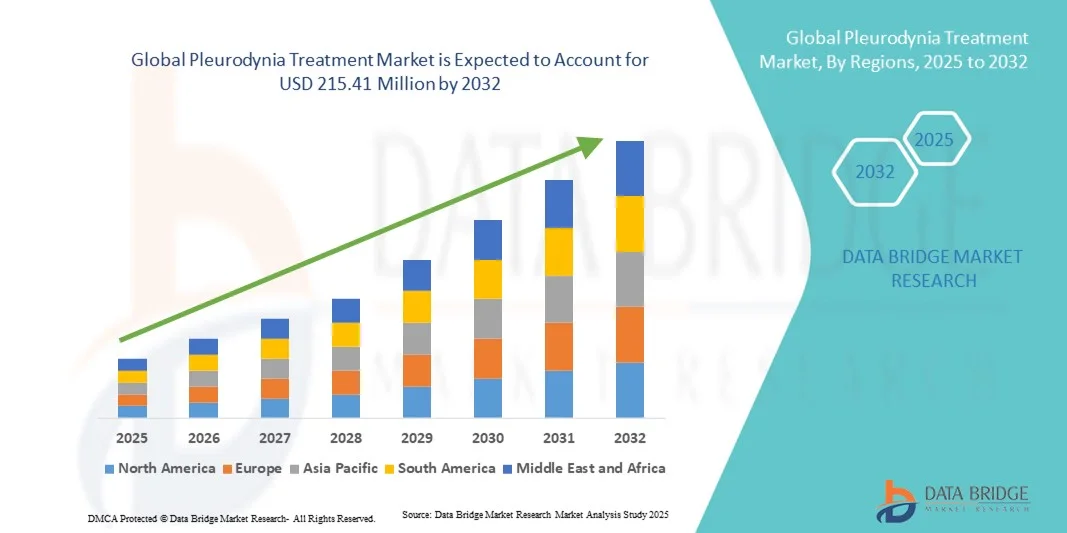
- The global pleurodynia treatment market size was valued at USD 143.60 million in 2024 and is expected to reach USD 215.41 million by 2032, at a CAGR of 5.20% during the forecast period
- The market growth is largely fueled by the increasing prevalence of viral infections growing awareness and improved diagnosis of pleurodynia, and expanding research/therapy development in this niche treatment area
- Furthermore, rising demand for effective symptomatic relief and supportive treatments in both hospital and outpatient settings as pleurodynia often presents with chest/abdominal pain, fever, and muscle aches is establishing treatment options as the modern management standard of choice. These converging factors are accelerating the uptake of pleurodynia solutions, thereby significantly boosting the industry’s growth
Pleurodynia Treatment Market Analysis
- Pleurodynia, commonly triggered by Coxsackievirus B or other enteroviruses, is an acute viral infection marked by sharp chest or abdominal pain, fever, and muscle aches, where treatment primarily focuses on symptom relief through analgesics, anti-inflammatory agents, and antiviral medications in severe cases
- The growing demand for pleurodynia treatment is primarily fueled by the increasing prevalence of enteroviral infections, enhanced diagnostic capabilities in hospitals and clinics, and rising awareness of viral chest pain disorders among healthcare professionals and patients
- North America dominated the pleurodynia treatment market with the largest revenue share of 38.7% in 2024, supported by advanced healthcare infrastructure, strong antiviral drug availability, and higher diagnosis rates due to well-established viral testing systems
- Asia-Pacific is expected to be the fastest-growing region in the pleurodynia treatment market during the forecast period, driven by rising incidences of viral infections, expanding healthcare access, and growing public health initiatives targeting enteroviral disease management
- The Coxsackievirus B segment dominated the pleurodynia treatment market with a market share of 44.2% in 2024, as it remains the most frequent cause of pleurodynia cases globally, associated with severe muscle inflammation and complications such as myocarditis and pericarditis
Report Scope and Pleurodynia Treatment Market Segmentation
|
Attributes |
Pleurodynia Treatment Key Market Insights |
|
Segments Covered |
|
|
Countries Covered |
North America
Europe
Asia-Pacific
Middle East and Africa
South America
|
|
Key Market Players |
|
|
Market Opportunities |
|
|
Value Added Data Infosets |
In addition to the insights on market scenarios such as market value, growth rate, segmentation, geographical coverage, and major players, the market reports curated by the Data Bridge Market Research also include in-depth expert analysis, patient epidemiology, pipeline analysis, pricing analysis, and regulatory framework |
Pleurodynia Treatment Market Trends
Advancement in Molecular Diagnostics and Telemedicine Integration
- A significant and accelerating trend in the global pleurodynia treatment market is the growing adoption of advanced molecular diagnostic technologies, including PCR and next-generation sequencing, which enable faster and more accurate detection of enteroviruses such as Coxsackievirus A and B
- For instance, hospitals and research laboratories are increasingly utilizing rapid molecular assays to differentiate pleurodynia from cardiac or respiratory conditions, improving diagnostic precision and treatment response times
- Integration of telemedicine and remote health monitoring platforms is further supporting early diagnosis and ongoing symptom management for patients presenting with chest pain, fever, or muscular aches
- Digital health tools allow clinicians to track patient recovery and modify treatment plans remotely, enhancing continuity of care and accessibility in outpatient settings
- This trend toward digital and diagnostic convergence is redefining pleurodynia management, promoting a more patient-centric, connected care model across global healthcare systems
- The demand for technologically advanced diagnostic solutions and remote care capabilities is rapidly growing as clinicians and patients seek faster, more reliable treatment pathways for viral muscle inflammation
Pleurodynia Treatment Market Dynamics
Driver
Rising Viral Infections and Growing Clinical Awareness
- The increasing prevalence of viral infections, particularly enteroviruses such as Coxsackievirus B, is driving significant demand for pleurodynia treatment across hospitals and diagnostic centers worldwide
- For instance, improved surveillance programs in North America and Europe have reported rising pleurodynia cases presenting with chest and muscular pain, resulting in a larger patient pool requiring care
- Growing awareness among clinicians about pleurodynia’s complications such as pericarditis, myocarditis, or meningitis is boosting early diagnosis and treatment adoption
- Furthermore, increasing government initiatives toward strengthening infectious disease management and antiviral preparedness are supporting market expansion in both developed and emerging regions
- The improving availability of antiviral therapies and symptomatic management options continues to enhance treatment accessibility and market penetration globally
- Collectively, these factors are contributing to sustained growth in the global pleurodynia treatment market throughout the forecast period
- Rising investment by pharmaceutical companies in antiviral drug research aimed at rare viral infections is expected to create new therapeutic opportunities
- Expanding hospital infrastructure and better availability of viral testing facilities in Asia-Pacific and Latin America are improving case identification and boosting overall market demand
Restraint/Challenge
Lack of Specific Antiviral Therapy and Diagnostic Limitations
- One of the key challenges restraining the pleurodynia treatment market is the absence of disease-specific antiviral drugs, with current care remaining largely symptomatic and supportive in nature
- For instance, due to overlapping symptoms with cardiac and respiratory conditions, pleurodynia often faces misdiagnosis or delayed clinical intervention, especially in low-resource healthcare settings
- Limited investment in rare viral infection research and high costs associated with antiviral drug development continue to constrain innovation and new product introductions
- In addition, regulatory complexities and the small target patient population make clinical trials for pleurodynia treatments less financially viable for major pharmaceutical firms
- The lack of standardized diagnostic criteria across regions further complicates accurate disease identification and reporting
- Overcoming these challenges through increased R&D funding, improved diagnostic accuracy, and global collaboration on rare viral disease management will be essential for market advancement
- Shortages of skilled healthcare professionals trained to recognize viral myalgia syndromes reduce timely diagnosis and intervention, particularly in developing nations
- Limited awareness campaigns and low patient education about pleurodynia symptoms result in underreported cases, hindering effective market growth and data-driven policy initiatives
Pleurodynia Treatment Market Scope
The market is segmented on the basis of complications, causes, and symptoms.
- By Complications
On the basis of complications, the pleurodynia treatment market is segmented into rapid heart rate (tachycardia), inflammation around the heart (pericarditis) or in the heart muscle (myocarditis), inflammation around the brain (meningitis), inflammation of the liver (hepatitis), and inflammation of the testicles (orchitis). The Pericarditis/Myocarditis segment dominated the market with the largest revenue share in 2024. This dominance is attributed to the frequent association of pleurodynia with viral inflammation of cardiac tissues, particularly caused by Coxsackievirus B. Such cardiac-related complications often lead to hospitalizations, requiring multidisciplinary management and advanced antiviral or anti-inflammatory therapies. Increasing awareness among clinicians regarding cardiac involvement in pleurodynia cases and advancements in diagnostic imaging (such as echocardiography and MRI) have further driven the segment’s prominence. Moreover, the high clinical severity and need for specialized monitoring make cardiac complications a key focus area for treatment providers and pharmaceutical development efforts.
The Meningitis segment is anticipated to register the fastest growth from 2025 to 2032. Rising incidence of viral meningitis linked to enteroviral infections, including pleurodynia-related strains, has intensified clinical attention toward neurological complications. Improved neuroimaging and CSF diagnostic technologies are enabling earlier detection and treatment initiation, reducing morbidity. The segment’s growth is further supported by healthcare system investments in infection prevention and better viral surveillance. Increasing public health awareness about neurological manifestations of viral infections is expected to maintain strong demand for meningitis-related treatment interventions in the forecast period.
- By Causes
On the basis of causes, the pleurodynia treatment market is segmented into coxsackievirus a, coxsackievirus b, and echovirus. The Coxsackievirus B segment dominated the market with the largest market share of 44.2% in 2024, as it represents the most common causative agent of pleurodynia. Known for its strong association with severe muscular and chest pain symptoms, Coxsackievirus B infections often lead to hospital admissions and require robust symptom management. Its ability to cause systemic complications such as myocarditis, pericarditis, and hepatitis underscores the high medical demand for effective therapeutic management. Moreover, research efforts targeting Coxsackievirus B antivirals are increasing globally, enhancing the clinical focus on this virus type. The dominance of this segment is further reinforced by its well-documented epidemiological prevalence and high diagnostic detectability through molecular testing.
The Echovirus segment is expected to witness the fastest growth from 2025 to 2032, driven by the increasing detection of echovirus-related pleurodynia cases in Asia-Pacific and Latin America. Advances in molecular diagnostic assays and public health surveillance have improved case identification and reporting of echovirus infections. In addition, the rising incidence of mild-to-moderate pleurodynia cases attributed to echoviruses has broadened treatment research targeting enteroviral subtypes beyond Coxsackievirus. Increasing laboratory capacity and the development of cost-effective diagnostic kits are further propelling this segment’s growth during the forecast period.
- By Symptoms
On the basis of symptoms, the pleurodynia treatment market is segmented into chest pain, fever, cough, headache, sore throat, and muscular aches and pains. The Chest Pain segment dominated the market with the largest revenue share in 2024, as it remains the most defining and severe symptom of pleurodynia. The sharp, stabbing pain localized in the chest or upper abdomen often leads patients to seek emergency medical attention, making it a primary driver for diagnosis and symptomatic treatment. Chest pain management relies heavily on analgesics, anti-inflammatory drugs, and in severe cases, hospitalization for monitoring cardiac involvement. Its dominance is further attributed to increased awareness among clinicians differentiating viral chest pain from cardiac or respiratory causes through modern diagnostic imaging and biomarker testing.
The Muscular Aches and Pains segment is projected to record the fastest growth from 2025 to 2032. This symptom’s prevalence across mild and moderate cases of pleurodynia has heightened the use of nonsteroidal anti-inflammatory drugs (NSAIDs) and supportive therapy in outpatient settings. The rising popularity of over-the-counter pain management solutions and telemedicine consultations for symptomatic relief is further driving growth in this segment. In addition, awareness campaigns highlighting pleurodynia’s musculoskeletal manifestations are promoting earlier diagnosis and increasing treatment accessibility, especially in regions with high enterovirus circulation.
Pleurodynia Treatment Market Regional Analysis
- North America dominated the pleurodynia treatment market with the largest revenue share of 38.7% in 2024, supported by advanced healthcare infrastructure, strong antiviral drug availability, and higher diagnosis rates due to well-established viral testing systems
- The presence of major pharmaceutical companies investing in antiviral research and the availability of advanced healthcare services contribute significantly to the market’s expansion. Increasing government initiatives to improve infectious disease surveillance and strong collaboration between healthcare providers and research institutes further accelerate market growth
- The U.S. leads the region due to high patient awareness, well-defined diagnostic protocols, and a growing focus on supportive therapies for managing pain and inflammation associated with pleurodynia
U.S. Pleurodynia Treatment Market Insight
The U.S. pleurodynia treatment market captured the largest revenue share of 78% in 2024 within North America, driven by advanced diagnostic capabilities, high awareness regarding viral infections, and the presence of a strong healthcare infrastructure. The growing prevalence of enteroviral infections, particularly coxsackievirus B, is fueling the demand for efficient diagnostic testing and supportive care solutions. Increasing R&D investment in antiviral therapeutics and symptomatic management further enhances the market outlook. In addition, ongoing collaborations between research institutes and healthcare providers to develop rapid detection technologies are accelerating market growth.
Europe Pleurodynia Treatment Market Insight
The Europe pleurodynia treatment market is projected to grow at a steady CAGR throughout the forecast period, supported by well-established healthcare systems, growing awareness about viral diseases, and government-backed immunization programs. Countries such as Germany, France, and Italy are at the forefront of implementing advanced laboratory testing for viral diagnostics. Increasing emphasis on preventive healthcare and public health surveillance has strengthened early detection and management efforts. Moreover, growing collaboration among European research bodies for enterovirus studies is fostering the development of improved antiviral and symptomatic therapies.
U.K. Pleurodynia Treatment Market Insight
The U.K. pleurodynia treatment market is anticipated to expand at a notable CAGR during the forecast period, fueled by robust healthcare expenditure and the growing demand for advanced infectious disease management. The country’s strong clinical research ecosystem and adoption of modern diagnostic technologies are improving detection rates of coxsackievirus-related infections. Increased government initiatives aimed at strengthening primary care and monitoring of viral outbreaks further support market growth. In addition, the availability of well-regulated pharmaceutical channels and public health awareness campaigns are aiding treatment accessibility.
Germany Pleurodynia Treatment Market Insight
The Germany pleurodynia treatment market is expected to grow significantly during the forecast period due to advancements in molecular diagnostics, healthcare innovation, and a high focus on preventive medicine. The country’s established network of virology research institutions and laboratories promotes early identification and management of pleurodynia cases. Increasing emphasis on personalized treatment, coupled with a rise in R&D for antiviral drug development, supports market expansion. Furthermore, a strong healthcare reimbursement framework enhances patient access to diagnostic and therapeutic services.
Asia-Pacific Pleurodynia Treatment Market Insight
The Asia-Pacific pleurodynia treatment market is poised to grow at the fastest CAGR from 2025 to 2032, driven by the rising incidence of viral infections and improving healthcare accessibility in countries such as India, China, and Japan. The region’s growing investment in healthcare infrastructure, coupled with increasing government initiatives for infectious disease surveillance, is promoting early diagnosis and treatment. Expanding pharmaceutical manufacturing capabilities and rising awareness about viral infection management contribute to market growth. In addition, growing collaborations with global research organizations are facilitating clinical advancements in antiviral therapies.
Japan Pleurodynia Treatment Market Insight
The Japan pleurodynia treatment market is witnessing steady growth due to its advanced healthcare infrastructure, strong emphasis on public health safety, and efficient disease surveillance systems. The country’s investment in virology research and clinical diagnostics is driving innovation in early detection methods. Japan’s aging population, coupled with heightened sensitivity to viral outbreaks, is increasing demand for effective symptomatic and supportive care. In addition, government funding for antiviral research and preventive medicine strengthens the overall market outlook.
India Pleurodynia Treatment Market Insight
The India pleurodynia treatment market accounted for the largest market share within Asia-Pacific in 2024, driven by rising awareness of viral diseases, expanding healthcare infrastructure, and rapid improvements in diagnostic capabilities. The growing prevalence of enterovirus infections and the government’s emphasis on infectious disease control are fueling market growth. India’s expanding pharmaceutical manufacturing base, coupled with cost-effective diagnostic and treatment options, further enhances accessibility. In addition, the nation’s ongoing digital health initiatives and collaborations with global research organizations are accelerating advancements in pleurodynia management.
Pleurodynia Treatment Market Share
The Pleurodynia Treatment industry is primarily led by well-established companies, including:
- Pfizer, Inc. (U.S.)
- Merck & Co., Inc. (U.S.)
- GSK plc (U.K.)
- Johnson & Johnson Services, Inc. (U.S.)
- Novartis AG (Switzerland)
- Sanofi (France)
- AbbVie (U.S.)
- Gilead Sciences (U.S.)
- Regeneron Pharmaceuticals (U.S.)
- Moderna, Inc. (U.S.)
- Collaborations Pharmaceuticals, Inc. (U.S.)
- BIOMÉRIEUX (France)
- Abbott (U.S.)
- Thermo Fisher Scientific, Inc. (U.S.)
- BD (U.S.)
- QIAGEN (Netherlands)
- Hologic, Inc. (U.S.)
- Takeda Pharmaceutical Company Limited (Japan)
- Bayer AG (Germany)
What are the Recent Developments in Global Pleurodynia Treatment Market?
- In April 2025, researchers at Norwegian University of Science and Technology (NTNU) and collaborators reported a drug-cocktail development involving oral compounds that effectively blocks enterovirus replication in human cell and organoid models. While not yet a commercial product launch, it reflects a significant collaboration toward treatment of enterovirus-mediated diseases
- In June 2024, the National Institutes of Health (NIH) sponsored a clinical trial to evaluate the safety of an investigational monoclonal antibody targeting Enterovirus D68 (EV-D68) marking the first human trial of a therapeutic antibody for a non-polio enterovirus
- In February 2024, a peer-reviewed publication described the development of a novel quinoxaline-derivative antiviral series showing potent inhibition of Coxsackievirus B5 in pre-clinical models, signalling a potential new therapeutic lead for enterovirus complications including pleurodynia
- In January 2024, a collaboration between European virology centres published a new ELISA assay for broad-spectrum anti-enterovirus IgG detection (covering serotypes implicated in pleurodynia), enabling improved surveillance and thereby supporting future therapeutic development efforts
- In June 2023, Collaborations Pharmaceuticals, Inc. (CPI) announced the publication of a new inhibitor compound active against Enterovirus D68 and Coxsackievirus B5 (CVB5) after in vivo and in vitro studies. The collaboration spanned CPI, the Research Center of Biotechnology RAS, Purdue University, NC State, Utah State, University of Colorado Anschutz, and the Saint Petersburg Pasteur Institute

- Interactive Data Analysis Dashboard
- Company Analysis Dashboard for high growth potential opportunities
- Research Analyst Access for customization & queries
- Competitor Analysis with Interactive dashboard
- Latest News, Updates & Trend analysis
- Harness the Power of Benchmark Analysis for Comprehensive Competitor Tracking
Data collection and base year analysis are done using data collection modules with large sample sizes. The stage includes obtaining market information or related data through various sources and strategies. It includes examining and planning all the data acquired from the past in advance. It likewise envelops the examination of information inconsistencies seen across different information sources. The market data is analysed and estimated using market statistical and coherent models. Also, market share analysis and key trend analysis are the major success factors in the market report. To know more, please request an analyst call or drop down your inquiry.
The key research methodology used by DBMR research team is data triangulation which involves data mining, analysis of the impact of data variables on the market and primary (industry expert) validation. Data models include Vendor Positioning Grid, Market Time Line Analysis, Market Overview and Guide, Company Positioning Grid, Patent Analysis, Pricing Analysis, Company Market Share Analysis, Standards of Measurement, Global versus Regional and Vendor Share Analysis. To know more about the research methodology, drop in an inquiry to speak to our industry experts.
Data Bridge Market Research is a leader in advanced formative research. We take pride in servicing our existing and new customers with data and analysis that match and suits their goal. The report can be customized to include price trend analysis of target brands understanding the market for additional countries (ask for the list of countries), clinical trial results data, literature review, refurbished market and product base analysis. Market analysis of target competitors can be analyzed from technology-based analysis to market portfolio strategies. We can add as many competitors that you require data about in the format and data style you are looking for. Our team of analysts can also provide you data in crude raw excel files pivot tables (Fact book) or can assist you in creating presentations from the data sets available in the report.












