


Polycaprolactone-Based Facial Volume Enhancers Market Size
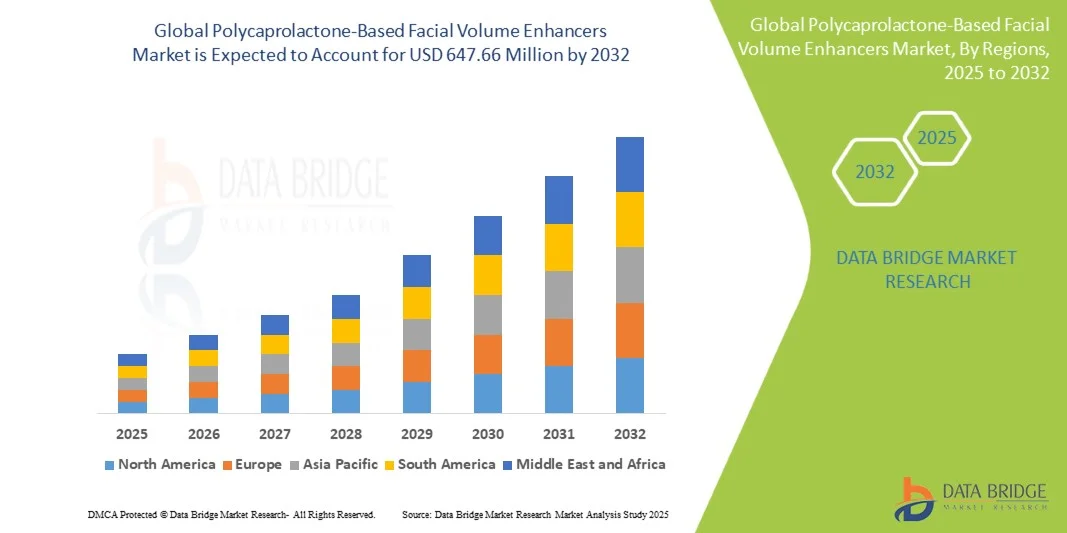
- The global polycaprolactone-based facial volume enhancers market size was valued at USD 220 million in 2024 and is expected to reach USD 647.66 million by 2032, at a CAGR of 14.45% during the forecast period
- The market growth is largely fueled by the rising adoption of minimally invasive aesthetic treatments and technological advancements in dermal filler formulations, leading to safer, more effective, and longer-lasting solutions for facial volume enhancement in both clinical and non-clinical settings
- Furthermore, increasing consumer demand for natural-looking, biocompatible, and user-friendly products is establishing polycaprolactone-based facial volume enhancers as a preferred choice among both patients and practitioners. These converging factors are accelerating the uptake of polycaprolactone-based facial volume enhancer solutions, thereby significantly boosting the industry’s growth
Polycaprolactone-Based Facial Volume Enhancers Market Analysis
- Polycaprolactone (PCL)-based dermal fillers, such as Ellansé, are injectable aesthetic treatments that stimulate collagen production, offering long-lasting facial volume restoration. These fillers are gaining popularity due to their minimally invasive nature and predictable outcomes
- The escalating demand for PCL-based facial volume enhancers is primarily fueled by the rising preference for non-surgical aesthetic procedures, advancements in filler technology, and increasing disposable incomes
- North America dominated the global polycaprolactone-based facial volume enhancers market with the largest revenue share of 45% in 2024. This dominance is attributed to early adoption of aesthetic technologies, high disposable incomes, and a strong presence of key industry players. The U.S. experienced substantial growth in PCL-based facial volume enhancer installations, particularly in new smart homes and multi-dwelling units, driven by innovations from both established tech companies and startups focusing on AI and voice-activated features
- Asia-Pacific is expected to be the fastest-growing region in the global polycaprolactone-based facial volume enhancers market during the forecast period due to increasing urbanization and rising disposable incomes
- The Polycaprolactone-Based Dermal Fillers segment dominated the global polycaprolactone-based facial volume enhancers market with the largest market revenue share of 45.6% in 2024. This dominance is driven by their minimally invasive nature, predictable outcomes, and high patient preference for non-surgical aesthetic treatments
Report Scope and Polycaprolactone-Based Facial Volume Enhancers Market Segmentation
|
Attributes |
Polycaprolactone-Based Facial Volume Enhancers Key Market Insights |
|
Segments Covered |
|
|
Countries Covered |
North America
Europe
Asia-Pacific
Middle East and Africa
South America
|
|
Key Market Players |
|
|
Market Opportunities |
|
|
Value Added Data Infosets |
In addition to the insights on market scenarios such as market value, growth rate, segmentation, geographical coverage, and major players, the market reports curated by the Data Bridge Market Research also include in-depth expert analysis, pricing analysis, brand share analysis, consumer survey, demography analysis, supply chain analysis, value chain analysis, raw material/consumables overview, vendor selection criteria, PESTLE Analysis, Porter Analysis, and regulatory framework. |
Polycaprolactone-Based Facial Volume Enhancers Market Trends
Rising Demand for Minimally Invasive Aesthetic Procedures
- A significant and accelerating trend in the global Polycaprolactone-Based Facial Volume Enhancers market is the growing preference for minimally invasive cosmetic procedures, driven by shorter recovery times, reduced risk of complications, and immediate visible results
- For instance, in 2023, Sinclair Pharma expanded its range of polycaprolactone-based dermal fillers to include products targeting deep facial wrinkles and volume loss, catering to increasing patient demand for natural-looking, long-lasting results
- Advances in formulation and injection techniques are enabling practitioners to achieve precise facial contouring and volumization with enhanced safety and efficacy
- The rising popularity of non-surgical aesthetic procedures among both younger and older demographics is expanding the market, as consumers seek alternatives to traditional surgical interventions for anti-aging and facial rejuvenation
- In addition, increasing awareness of aesthetic options through social media, beauty influencers, and dermatology-focused campaigns is driving adoption across diverse regions
- Clinics and aesthetic centers are increasingly offering polycaprolactone-based fillers as part of comprehensive facial rejuvenation packages, encouraging repeat treatments and patient loyalty
- This trend towards minimally invasive, high-efficacy aesthetic solutions is reshaping consumer expectations in the cosmetic industry, positioning polycaprolactone-based facial volume enhancers as a preferred choice for long-lasting results
Polycaprolactone-Based Facial Volume Enhancers Market Dynamics
Driver
Growing Demand Driven by Aesthetic Awareness and Minimally Invasive Procedure
- The increasing awareness of facial aging concerns and the rising preference for minimally invasive cosmetic procedures is a significant driver for the heightened demand for polycaprolactone-based facial volume enhancers
- For instance, in April 2024, Sinclair Pharma announced the launch of an advanced polycaprolactone-based filler targeting deep facial wrinkles and volume loss, designed to provide long-lasting and natural-looking results. Such initiatives by key companies are expected to drive the market growth during the forecast period
- As consumers become more informed about aesthetic solutions, the demand for products that offer safe, effective, and long-lasting facial volumization continues to grow
- Furthermore, the rising popularity of non-surgical cosmetic procedures, fueled by shorter recovery times and lower risk compared to traditional surgery, is supporting market expansion
- The convenience of office-based treatments, combined with predictable and immediate results, is encouraging repeat use and increased adoption across different age groups and demographics
- Growing digital awareness, social media influence, and educational campaigns by dermatologists and aesthetic centers are further stimulating market demand
- Continuous product innovations, such as tailored filler concentrations for specific facial areas and improved biocompatibility, are enhancing the overall patient experience and fueling the market
Restraint/Challenge
Concerns Regarding Safety and price sensitive consumer
- The relatively high cost of polycaprolactone-based facial volume enhancers compared to other dermal fillers can limit adoption among price-sensitive consumers, particularly in developing regions
- Effective administration requires trained professionals to ensure safety and optimal aesthetic outcomes, posing a challenge for smaller clinics or regions with limited access to skilled practitioners
- Inappropriate usage or lack of experience can result in complications such as nodules, overfilling, or uneven results, highlighting the importance of proper training and certification programs
- The long-lasting nature of polycaprolactone fillers, while beneficial for durability, may make corrections or adjustments more difficult in case of unsatisfactory outcomes
- Regulatory approvals and compliance requirements in different countries can delay product launches and market expansion
- Awareness and education gaps among potential patients regarding product benefits, treatment areas, and safety considerations can hinder adoption
- Presence of alternative dermal fillers such as hyaluronic acid, which may have lower costs and easier reversibility, can limit market penetration
- Potential for adverse reactions, including swelling, redness, or allergic responses, may discourage some consumers from opting for the procedure
- Marketing and promotional restrictions in certain regions can also affect awareness and adoption rates, particularly in emerging markets
Polycaprolactone-Based Facial Volume Enhancers Market Scope
The market is segmented on the basis of type, application, end user, and distribution channel.
• By Type
On the basis of type, the polycaprolactone-based facial volume enhancers market is segmented into polycaprolactone-based dermal fillers, injectable implants, and other. The Polycaprolactone-based dermal fillers segment dominated the largest market revenue share of 45.6% in 2024. This dominance is driven by their minimally invasive nature, predictable outcomes, and high patient preference for non-surgical aesthetic treatments. Dermal fillers are widely used for wrinkle reduction, facial contouring, and lip enhancement, offering long-lasting results and high safety profiles. The availability of various formulations catering to specific facial areas enhances treatment precision and patient satisfaction. Dermatology clinics and aesthetic centers increasingly rely on these fillers to meet growing demand, while repeat treatments contribute to sustained revenue. Consumer awareness of facial rejuvenation procedures and preference for minimally invasive options further reinforce the segment’s dominance.
The Injectable Implants segment is anticipated to witness the fastest growth rate of 22.4% from 2025 to 2032, fueled by rising demand for deeper tissue volumization and structural facial support. Injectable implants are gaining popularity in aesthetic centers for enhancing cheeks, jawlines, and midface volume. Technological advancements have improved biocompatibility and longevity, making these implants appealing for patients seeking long-lasting results. The trend of combining implants with non-surgical procedures drives adoption, while increasing aesthetic awareness among younger demographics supports growth. Clinics are expanding services to include these treatments, and the willingness of consumers to invest in premium aesthetic solutions further accelerates market expansion.
• By Application
On the basis of application, the polycaprolactone-based facial volume enhancers market is segmented into wrinkle reduction, facial contouring, lip enhancement, scar treatment, and others. The Wrinkle Reduction segment accounted for the largest market revenue share of 39.8% in 2024, driven by aging populations, increased aesthetic awareness, and repeat procedures. Consumers prefer minimally invasive solutions for forehead lines, crow’s feet, and nasolabial folds, which can be effectively treated with polycaprolactone-based fillers. High patient satisfaction, ease of administration, and proven safety profiles contribute to strong clinic adoption. Dermatology clinics and medical spas extensively offer these treatments, while growing media and social influence drive awareness.
The Facial Contouring segment is expected to witness the fastest CAGR of 23.1% from 2025 to 2032, fueled by consumer demand for facial symmetry and volumizing effects. Younger populations, social media trends, and influencer-driven awareness are key growth drivers. Clinics are increasingly providing contouring services alongside other aesthetic treatments. Technological innovations in filler composition and delivery techniques improve treatment outcomes, supporting faster adoption. Rising disposable incomes, growing interest in personalized aesthetics, and minimally invasive procedure preference are further driving rapid growth.
• By End User
On the basis of end user, the polycaprolactone-based facial volume enhancers market is segmented into hospitals, dermatology clinics, medical spas & aesthetic centers, and homecare. The dermatology clinics segment dominated with a market revenue share of 41.5% in 2024, driven by their professional expertise, established patient trust, and comprehensive service offerings. Clinics provide tailored treatments based on individual patient needs, ensuring high satisfaction and encouraging repeat visits. Patients prefer these clinical settings due to the availability of expert consultation, enhanced safety protocols, and predictable treatment outcomes. The presence of skilled dermatologists and advanced equipment further reinforces clinic dominance. Repeat treatments and long-term follow-up contribute significantly to sustained revenue. In addition, the credibility and reputation of dermatology clinics attract both new and returning patients, supporting consistent market growth. Overall, clinical expertise combined with patient confidence makes this segment the leading end-user channel in the market.
The Medical Spas & Aesthetic Centers segment is projected to register the fastest CAGR of 21.8% from 2025 to 2032, fueled by increasing consumer preference for comfortable, convenient, and aesthetically focused treatment environments. Spas and aesthetic centers offer a more relaxed, accessible alternative to hospital or clinical settings, appealing particularly to younger demographics. Growing investments in spa-based cosmetic services, coupled with the rising trend of self-care and wellness, are driving rapid adoption. These centers often combine multiple aesthetic procedures in one location, enhancing convenience for clients. The ease of booking appointments, personalized treatment packages, and consumer perception of premium services support accelerated growth. Social media influence and marketing strategies also help boost demand, making this segment the fastest-growing end-user channel in the market.
• By Distribution Channel
On the basis of distribution channel, the polycaprolactone-based facial volume enhancers market is segmented into hospital pharmacy, retail pharmacy, online sales, and aesthetic clinics. The aesthetic clinics segment held the largest market share of 38.7% in 2024, benefiting from direct consumer access, professional supervision, and personalized treatments. Clinic-administered procedures inspire higher patient confidence and satisfaction, which drives repeat visits and long-term revenue. The presence of trained staff ensures proper handling of polycaprolactone-based products, improving treatment outcomes. Clinics also serve as a reliable channel for new product launches and patient education, reinforcing their dominant position. Established relationships with suppliers and consistent patient footfall further contribute to segment leadership. This end-to-end controlled environment makes aesthetic clinics the preferred distribution channel for both patients and manufacturers.
The online sales segment is expected to witness the fastest growth at a CAGR of 24.3% from 2025 to 2032, driven by the increasing comfort of consumers with e-commerce and the convenience of home deliveries. Growing awareness of at-home aesthetic products, combined with targeted digital marketing, is fueling adoption. Online channels offer easy access to product information, reviews, and tutorials, enhancing consumer confidence. Rising smartphone penetration, social media influence, and availability of subscription models further accelerate growth. The COVID-19 pandemic has also contributed to the shift toward online purchasing. Flexibility, convenience, and repeat purchase potential make online sales the fastest-growing distribution channel in the global market..
Polycaprolactone-Based Facial Volume Enhancers Market Regional Analysis
- North America dominated the polycaprolactone-based facial volume enhancers market with the largest revenue share of 45% in 2024, driven by rising awareness of aesthetic procedures and an increasing preference for minimally invasive facial treatments. Consumers in the region are highly conscious of appearance and value clinically validated solutions for facial volume restoration and anti-aging
- High disposable incomes, advanced healthcare infrastructure, and the widespread presence of dermatology clinics and aesthetic centers support market leadership. The availability of advanced Polycaprolactone-based dermal fillers and injectable implants with proven efficacy further reinforces adoption
- In adition, strong patient trust in clinical procedures, coupled with access to skilled professionals, contributes to the region’s dominance. Research and development initiatives, along with growing investments by key players, are expanding product offerings. The increasing prevalence of age-related facial volume loss and the desire for non-surgical rejuvenation are driving sustained growth
U.S. Polycaprolactone-Based Facial Volume Enhancers Market Insight
The U.S. polycaprolactone-based facial volume enhancers market captured the largest revenue share in 2024 within North America, fueled by rapid adoption of innovative aesthetic procedures and a growing trend toward non-invasive facial enhancements. Consumers are increasingly seeking advanced dermal fillers and injectable implants to achieve natural-looking results with minimal downtime. The market growth is supported by robust healthcare infrastructure, high patient awareness, and accessibility to specialized clinics and aesthetic centers. Continuous product innovations, such as long-lasting Polycaprolactone-based solutions and combination therapies, are accelerating adoption. In addition, the rising popularity of personalized aesthetic treatments, supported by professional guidance and consultation, is expanding the customer base. Strategic marketing by key players and educational campaigns for both clinicians and patients further strengthen market penetration. The U.S. remains a critical hub for research, clinical trials, and new product launches.
Europe Polycaprolactone-Based Facial Volume Enhancers Market Insight
The Europe polycaprolactone-based facial volume enhancers market is projected to expand at a substantial CAGR during the forecast period, driven by growing consumer awareness of minimally invasive facial rejuvenation procedures and stringent safety regulations. Increasing urbanization and disposable income levels are supporting the adoption of Polycaprolactone-based facial volume enhancers. European consumers prefer clinically validated products and professional administration in aesthetic centers and dermatology clinics. The region is witnessing growth across both new treatment seekers and repeat patients for maintenance procedures. Moreover, healthcare policies emphasizing patient safety, along with a high density of medical spas and aesthetic clinics, reinforce market growth. The preference for non-surgical interventions and improved accessibility in major European cities further contribute to demand.
U.K. Polycaprolactone-Based Facial Volume Enhancers Market Insight
The U.K. polycaprolactone-based facial volume enhancers market is anticipated to grow at a noteworthy CAGR during the forecast period, propelled by rising demand for non-invasive facial enhancement treatments and increasing awareness of age-related facial volume loss. The country’s well-established aesthetic industry, advanced dermatology clinics, and growing medical spa segment support market expansion. Consumers increasingly prioritize safe, effective, and quick treatments that offer natural results. In addition, a strong e-commerce and retail network for aesthetic products complements clinic-based services, allowing consumers to access complementary skincare and maintenance solutions. The U.K. market benefits from robust regulatory frameworks ensuring product safety and efficacy, which fosters consumer confidence.
Germany Polycaprolactone-Based Facial Volume Enhancers Market Insight
The Germany polycaprolactone-based facial volume enhancers market is expected to expand at a considerable CAGR, driven by high awareness of aesthetic procedures, technological advancements, and increasing consumer spending on anti-aging solutions. The adoption of Polycaprolactone-based dermal fillers and injectable implants is supported by a strong network of dermatology clinics, medical spas, and aesthetic centers. Consumers are increasingly seeking natural, long-lasting results without undergoing surgery. Germany’s focus on medical innovation, combined with its well-developed healthcare infrastructure, encourages the uptake of advanced facial volume enhancers. The trend toward personalized treatment plans and professional guidance contributes to market growth. Moreover, awareness campaigns and product demonstrations by key players are enhancing market visibility.
Asia-Pacific Polycaprolactone-Based Facial Volume Enhancers Market Insight
The Asia-Pacific polycaprolactone-based facial volume enhancers market is poised to grow at the fastest CAGR of 24% from 2025 to 2032, driven by rising disposable incomes, rapid urbanization, and increasing awareness of cosmetic and anti-aging treatments in countries such as China, Japan, and India. The region’s growing aesthetic-conscious population, coupled with the expansion of dermatology clinics, medical spas, and aesthetic centers, supports adoption. In addition, government initiatives promoting healthcare infrastructure and private sector investments in beauty and wellness are driving demand. The increasing availability of high-quality Polycaprolactone-based products and minimally invasive procedures enhances consumer accessibility. Urban consumers increasingly seek advanced treatments for wrinkle reduction, facial contouring, and lip enhancement, accelerating market growth.
Japan Polycaprolactone-Based Facial Volume Enhancers Market Insight
The Japanese polycaprolactone-based facial volume enhancers market is gaining momentum due to a high level of aesthetic awareness, technological advancement in healthcare, and the cultural preference for non-invasive cosmetic procedures. The country’s aging population is contributing to increased demand for treatments that restore facial volume and reduce signs of aging. Integration of advanced treatment techniques in dermatology clinics and medical spas is facilitating patient access to Polycaprolactone-based facial enhancers. Moreover, the demand for natural-looking results with minimal downtime is shaping the market. Ongoing product innovations and increasing patient education on procedure safety are further driving growth.
China Polycaprolactone-Based Facial Volume Enhancers Market Insight
The China accounted for the largest market revenue share in the Asia-Pacific region in 2024, supported by an expanding middle class, rapid urbanization, and increasing aesthetic consciousness among consumers. Rising investments in medical aesthetics, growth of dermatology clinics and medical spas, and expanding availability of Polycaprolactone-based facial products are propelling the market. Urban populations are increasingly opting for non-surgical treatments for wrinkle reduction, facial contouring, and lip enhancement. Furthermore, the presence of domestic manufacturers, competitive pricing, and growing e-commerce penetration are enhancing accessibility and driving market expansion.
Polycaprolactone-Based Facial Volume Enhancers Market Share
The Polycaprolactone-Based Facial Volume Enhancers industry is primarily led by well-established companies, including:
- Sinclair (U.K.)
- Prollenium Medical Technologies (Canada)
- BioScience (Germany)
- Hugel Inc. (South Korea)
- LG Life Sciences (South Korea)
- MediTox (South Korea)
- Huons Co., Ltd. (South Korea)
- REGEN Biotech, Inc. (South Korea)
- Croma-Pharma GmbH (Austria)
- Teoxane SA (Switzerland)
- Laboratoires Vivacy (France)
- Luminera (Israel)
Latest Developments in Global Polycaprolactone-Based Facial Volume Enhancers Market
- In August 2025, AQTIS Medical, a leading player in the PCL filler market, reported global sales estimated at USD 350 million in 2023. The company continues to innovate in PCL-based dermal fillers, contributing significantly to the market's growth and adoption in various regions
- In May 2025, a systematic review conducted between May 2022 and October 2023 evaluated the efficacy of polycaprolactone (PCL) stimulators in facial rejuvenation. The review analyzed 25 articles, assessing improvements in skin texture, volume restoration, and overall aesthetic outcomes, highlighting PCL's role as an effective collagen stimulator in non-surgical facial enhancements
- In March 2025, a clinical study compared the safety and effectiveness of PCL injections with poly-L-lactic acid (PLLA) in reducing nasolabial fold (NLF) wrinkle severity. The study demonstrated that PCL injections were superior in effectiveness and achieved higher patient satisfaction, reinforcing PCL's position as a preferred choice for facial volume restoration.
- In January 2025, a clinical trial assessed the efficacy of a novel hybrid injectable combining hyaluronic acid with calcium hydroxyapatite microspheres for facial volume restoration. The study found that the hybrid injectable provided immediate volume restoration and improved skin architecture over time, offering a new option for patients seeking comprehensive facial rejuvenation

- Interactive Data Analysis Dashboard
- Company Analysis Dashboard for high growth potential opportunities
- Research Analyst Access for customization & queries
- Competitor Analysis with Interactive dashboard
- Latest News, Updates & Trend analysis
- Harness the Power of Benchmark Analysis for Comprehensive Competitor Tracking
Data collection and base year analysis are done using data collection modules with large sample sizes. The stage includes obtaining market information or related data through various sources and strategies. It includes examining and planning all the data acquired from the past in advance. It likewise envelops the examination of information inconsistencies seen across different information sources. The market data is analysed and estimated using market statistical and coherent models. Also, market share analysis and key trend analysis are the major success factors in the market report. To know more, please request an analyst call or drop down your inquiry.
The key research methodology used by DBMR research team is data triangulation which involves data mining, analysis of the impact of data variables on the market and primary (industry expert) validation. Data models include Vendor Positioning Grid, Market Time Line Analysis, Market Overview and Guide, Company Positioning Grid, Patent Analysis, Pricing Analysis, Company Market Share Analysis, Standards of Measurement, Global versus Regional and Vendor Share Analysis. To know more about the research methodology, drop in an inquiry to speak to our industry experts.
Data Bridge Market Research is a leader in advanced formative research. We take pride in servicing our existing and new customers with data and analysis that match and suits their goal. The report can be customized to include price trend analysis of target brands understanding the market for additional countries (ask for the list of countries), clinical trial results data, literature review, refurbished market and product base analysis. Market analysis of target competitors can be analyzed from technology-based analysis to market portfolio strategies. We can add as many competitors that you require data about in the format and data style you are looking for. Our team of analysts can also provide you data in crude raw excel files pivot tables (Fact book) or can assist you in creating presentations from the data sets available in the report.













