


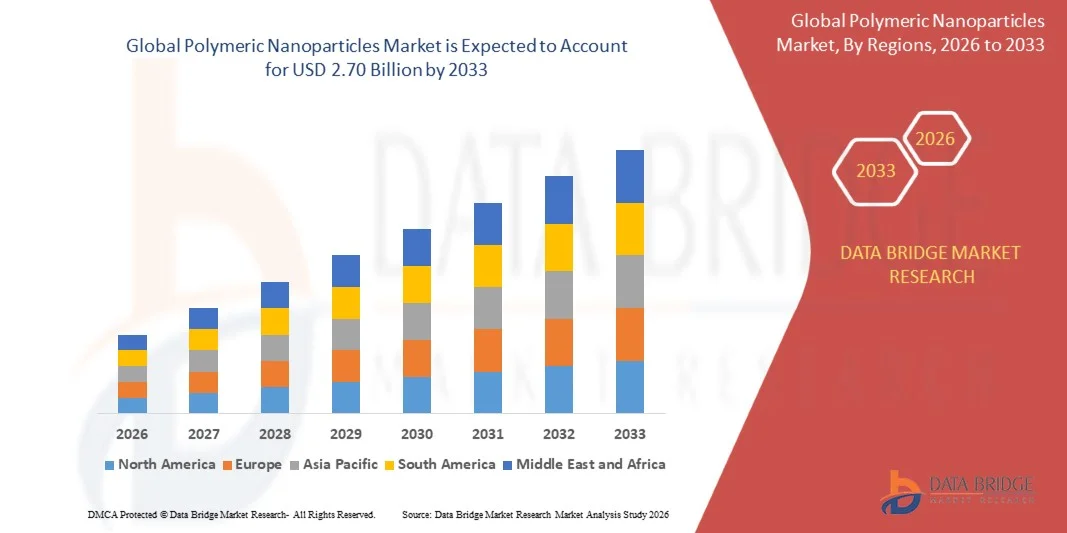
What is the Global Polymeric Nanoparticles Market Size and Growth Rate?
- The global polymeric nanoparticles market size was valued at USD 1.01 billion in 2025 and is expected to reach USD 2.70 billion by 2033, at a CAGR of 13.0% during the forecast period
- The growing automotive industry and increasing preference for nanoparticles in electronics manufacturing, increasing applications of nanoparticles in automotive components such as body panels, tires, engine parts, door inner, and head lamp covers, increasing levels of disposable income of the people, rising usages of nanoparticles in wide range of electronics such as laptops, desktops, mobile phones, and personal data assistants, prevalence of favourable government regulations and innovations in the field of nanotechnology, government regulations to develop light weight vehicles and reduce carbon emissions are some of the major as well as vital factors which will such asly to augment the growth of the polymeric nanoparticles market
What are the Major Takeaways of Polymeric Nanoparticles Market?
- Surging levels of investment in research and development activities, growing adoption of bio-based product along with rising number of population and changing lifestyle of the people which will further contribute by generating massive opportunities that will lead to the growth of the polymeric nanoparticles market in the above mentioned projected timeframe
- Complex manufacturing process of nanoparticles and government regulations regarding plastic polymers which will such asly to act as market restraints factor for the growth of the polymeric nanoparticles in the above mentioned projected timeframe. Unfavourable conditions arising in non-healthcare industries along with increasing need of high capital investment which will become the biggest and foremost challenge for the growth of the market
- North America dominated the polymeric nanoparticles market with a 39.8% revenue share in 2025, supported by strong industrial adoption in pharmaceuticals, electronics, and biomedical applications across the U.S. and Canada
- Asia-Pacific is projected to register the fastest CAGR of 10.69% from 2026 to 2033, fueled by rising pharmaceutical, electronics, and cosmetic industries in China, India, Japan, and South Korea
- The DAB segment dominated the market with a revenue share of 61.7% in 2025, driven by its widespread use in drug delivery systems, nutraceutical encapsulations, and cosmetic formulations
Report Scope and Polymeric Nanoparticles Market Segmentation
|
Attributes |
Polymeric Nanoparticles Key Market Insights |
|
Segments Covered |
|
|
Countries Covered |
North America
Europe
Asia-Pacific
Middle East and Africa
South America
|
|
Key Market Players |
|
|
Market Opportunities |
|
|
Value Added Data Infosets |
In addition to the insights on market scenarios such as market value, growth rate, segmentation, geographical coverage, and major players, the market reports curated by the Data Bridge Market Research also include in-depth expert analysis, pricing analysis, brand share analysis, consumer survey, demography analysis, supply chain analysis, value chain analysis, raw material/consumables overview, vendor selection criteria, PESTLE Analysis, Porter Analysis, and regulatory framework. |
What is the Key Trend in the Polymeric Nanoparticles Market?
“Rising Demand for Multifunctional and Nutrient-Enriched Polymeric Nanoparticles”
- The polymeric nanoparticles market is witnessing strong growth driven by multifunctional formulations that enhance drug delivery, bioavailability, and targeted release in pharmaceuticals, nutraceuticals, and cosmetic applications. Advanced polymer-based carriers allow encapsulation of proteins, peptides, and active ingredients for improved stability, solubility, and therapeutic efficiency
- Manufacturers are developing multi-purpose nanoparticle systems that support controlled release, sustained delivery, and enhanced absorption, catering to applications such as anticancer drugs, vaccines, nutritional supplements, and cosmetic actives
- Increasing consumer and patient preference for safe, biocompatible, and efficient delivery systems is driving demand across healthcare, wellness, and personal care sectors
- For instance, companies such as Evonik, BASF, Polysciences, and Nanophase Technologies are expanding their polymeric nanoparticle portfolios with multifunctional carriers for pharmaceuticals and nutraceuticals
- Rising awareness of personalized medicine, targeted therapy, and bioactive ingredient efficacy is accelerating adoption globally
- As innovation in drug delivery and functional nutrition continues, polymeric nanoparticles are expected to remain central to advancements in global healthcare and wellness solutions
What are the Key Drivers of Polymeric Nanoparticles Market?
- Rising demand for biocompatible, safe, and multifunctional delivery systems is driving strong adoption of polymeric nanoparticles across pharmaceuticals, nutraceuticals, and cosmetics
- For instance, in 2025, Evonik, BASF, and Polysciences expanded nanoparticle platforms for encapsulating bioactives, nutraceutical compounds, and cosmetic ingredients to improve stability and bioavailability
- Growing global awareness of targeted therapy, sustained release, and improved drug absorption is boosting demand across North America, Europe, and Asia-Pacific
- Technological advancements in polymer synthesis, particle engineering, and surface functionalization have improved encapsulation efficiency, solubility, and controlled-release performance
- Increasing use of nanoparticles in personalized medicine, functional nutrition, and cosmetic actives supports market expansion, driven by rising preference for high-quality, biocompatible solutions
- With ongoing R&D, strategic partnerships, and global distribution, the polymeric nanoparticles market is expected to maintain strong growth over the forecast period
Which Factor is Challenging the Growth of the Polymeric Nanoparticles Market?
- High manufacturing, functionalization, and regulatory compliance costs for polymeric nanoparticles limit adoption in price-sensitive regions
- For instance, during 2024–2025, fluctuations in raw polymer supply, processing complexity, and scale-up challenges affected production volumes for multiple manufacturers
- Strict regulatory standards for safety, biocompatibility, and clinical testing increase operational complexity and time-to-market
- Limited awareness in emerging markets regarding polymeric nanoparticle advantages restricts widespread adoption
- Strong competition from conventional delivery systems, lipid-based nanoparticles, and low-cost polymer alternatives creates pricing and differentiation pressures
- To overcome these challenges, companies are focusing on cost optimization, regulatory alignment, scalable manufacturing, and awareness campaigns to expand global adoption of high-quality polymeric nanoparticles
How is the Polymeric Nanoparticles Market Segmented?
The market is segmented on the basis of product and application.
• By Product
On the basis of product, the polymeric nanoparticles market is segmented into DAB and PAMAM. The DAB segment dominated the market with a revenue share of 61.7% in 2025, driven by its widespread use in drug delivery systems, nutraceutical encapsulations, and cosmetic formulations. DAB-based nanoparticles are preferred due to their high stability, biocompatibility, ease of functionalization, and ability to encapsulate bioactive compounds, peptides, and vitamins. Their versatility across pharmaceuticals, nutraceuticals, and personal care applications ensures consistent performance, scalability, and adoption among manufacturers.
The PAMAM segment is projected to grow at the fastest CAGR from 2026 to 2033, fueled by increasing demand in targeted drug delivery, gene therapy, and diagnostic applications. Advances in PAMAM dendrimer design, surface modification, and functionalization are enabling precise encapsulation, controlled release, and enhanced cellular uptake, supporting adoption in high-value pharmaceutical and biomedical applications globally.
• By Application
On the basis of application, the polymeric nanoparticles market is segmented into Pharmaceutical, Automotive, Electronics, Construction, and Others. The pharmaceutical segment dominated the market with a revenue share of 63.2% in 2025, supported by rising use of polymeric nanoparticles in controlled drug delivery, sustained-release formulations, vaccines, and nutraceutical supplements. Growing demand for biocompatible, targeted, and multifunctional carriers drives adoption across hospitals, research labs, and homecare products.
The electronics segment is projected to grow at the fastest CAGR from 2026 to 2033, driven by increasing incorporation of polymeric nanoparticles in sensors, coatings, conductive inks, and advanced materials. Technological advancements in nanoparticle engineering, functionalization, and stability allow their use in electronics, energy storage, and semiconductor applications. Rising R&D investments, miniaturization trends, and demand for high-performance materials globally support rapid growth in this segment.
Which Region Holds the Largest Share of the Polymeric Nanoparticles Market?
- North America dominated the polymeric nanoparticles market with a 39.8% revenue share in 2025, supported by strong industrial adoption in pharmaceuticals, electronics, and biomedical applications across the U.S. and Canada. Rising demand for advanced drug delivery systems, nanocarrier-based therapeutics, and targeted diagnostics drives widespread adoption across healthcare, research, and biotech sectors
- Leading manufacturers are investing in product innovations, including functionalized dendrimers and polymeric carriers, to improve encapsulation efficiency, stability, and biocompatibility. Regulatory support for nanomedicine standards, biomedical safety certifications, and environmental compliance further strengthens market leadership
- High R&D expenditure, advanced infrastructure, and collaboration between academia and industry fuel strong regional growth, making North America the global hub for polymeric nanoparticle development
U.S. Polymeric Nanoparticles Market Insight
The U.S. is the largest contributor in North America, driven by high adoption of polymeric nanoparticles in controlled drug delivery, vaccines, and diagnostic tools. Manufacturers focus on multifunctional, targeted nanoparticles to improve therapeutic efficacy and patient compliance. Strong investment in nanotechnology research, biotechnology incubators, and healthcare infrastructure ensures sustained expansion. Growth is also supported by robust distribution channels in pharma, research labs, and specialty chemical suppliers.
Canada Polymeric Nanoparticles Market Insight
Canada contributes significantly to the region, supported by increasing R&D in polymeric carriers for pharmaceuticals, gene therapy, and biomedical applications. Universities, research institutes, and biotech startups are collaborating with manufacturers to develop next-generation nanoparticles. Regulatory frameworks for safe nanomaterials and high-quality standards further drive adoption across clinical, pharmaceutical, and industrial applications.
Asia-Pacific Polymeric Nanoparticles Market Insight
Asia-Pacific is projected to register the fastest CAGR of 10.69% from 2026 to 2033, fueled by rising pharmaceutical, electronics, and cosmetic industries in China, India, Japan, and South Korea. Increasing R&D investment, government support for nanotechnology, and expanding healthcare infrastructure are boosting adoption. Digital distribution, e-commerce for specialty chemicals, and emerging nanomedicine startups enhance accessibility.
China Polymeric Nanoparticles Market Insight
China is the largest contributor in Asia-Pacific due to strong manufacturing capabilities, high R&D investments, and government incentives in pharmaceuticals and electronics. Demand is rising for polymeric nanoparticles in drug delivery, biomedical research, and functional materials. Increasing collaborations with global nanotech companies and focus on export markets strengthen China’s position as the regional leader.
Japan Polymeric Nanoparticles Market Insight
Japan shows steady growth, driven by consumer preference for advanced biomedical solutions, electronics, and specialty polymer applications. Strong nanotechnology R&D, government funding, and regulatory support for safe nanomaterials enhance adoption in healthcare, electronics, and high-performance materials sectors.
India Polymeric Nanoparticles Market Insight
India is emerging as a key growth market, fueled by rising healthcare investments, pharmaceutical manufacturing, and research in polymeric carriers for drug delivery. Growing adoption of functional nanomaterials in cosmetics and electronics further supports rapid market expansion. E-commerce platforms and international partnerships are facilitating accessibility and technology transfer.
South Korea Polymeric Nanoparticles Market Insight
South Korea contributes significantly due to growing pharmaceutical and electronics industries, wellness-focused products, and high nanotechnology adoption. Innovations in polymeric nanoparticle design, functionalization, and biomedical applications are driving adoption. Strong government support and digital distribution channels enhance market penetration, ensuring steady growth.
Which are the Top Companies in Polymeric Nanoparticles Market?
The polymeric nanoparticles industry is primarily led by well-established companies, including:
- BASF SE (Germany)
- Arkema (France)
- 3M (U.S.)
- Cabot Corporation (U.S.)
- Nanophase Technologies Corporation (U.S.)
- Zyvex Instruments (U.S.)
- Nanoshel LLC (U.S.)
- Hybrid Plastics Inc. (U.S.)
- Inframat Corporation (U.S.)
- Aphios Corporation (U.S.)
- CD Bioparticles (U.S.)
- Phosphorex, Inc. (U.S.)
- Nanorh (U.S.)
- Precision NanoSystems (Canada)
- Merck KGaA (Germany)
- Statnano (Iran)
- DSM (Netherlands)
- nanoComposix (U.S.)
- Ardena Holding NV (Belgium)
- Alfa Aesar (U.K.)
What are the Recent Developments in Global Polymeric Nanoparticles Market?
- In April 2024, NYCOA launched NXTamid L, a long-chain polyamide free of plasticizers, positioned as a sustainable alternative to PA11 and PA12, highlighting the company’s commitment to environmentally friendly materials and advancing green innovations in polymer solutions
- In July 2022, Arkema completed the acquisition of Polimeros Especiales, a leading emulsion resin manufacturer in Mexico, strengthening its portfolio in solvent-free waterborne acrylic resins and enhancing its market presence in the region, reinforcing Arkema’s strategic growth in sustainable specialty chemicals

- Interactive Data Analysis Dashboard
- Company Analysis Dashboard for high growth potential opportunities
- Research Analyst Access for customization & queries
- Competitor Analysis with Interactive dashboard
- Latest News, Updates & Trend analysis
- Harness the Power of Benchmark Analysis for Comprehensive Competitor Tracking
Global Polymeric Nanoparticles Market, Supply Chain Analysis and Ecosystem Framework
To support market growth and help clients navigate the impact of geopolitical shifts, DBMR has integrated in-depth supply chain analysis into its Global Polymeric Nanoparticles Market research reports. This addition empowers clients to respond effectively to global changes affecting their industries. The supply chain analysis section includes detailed insights such as Global Polymeric Nanoparticles Market consumption and production by country, price trend analysis, the impact of tariffs and geopolitical developments, and import and export trends by country and HSN code. It also highlights major suppliers with data on production capacity and company profiles, as well as key importers and exporters. In addition to research, DBMR offers specialized supply chain consulting services backed by over a decade of experience, providing solutions like supplier discovery, supplier risk assessment, price trend analysis, impact evaluation of inflation and trade route changes, and comprehensive market trend analysis.
Data collection and base year analysis are done using data collection modules with large sample sizes. The stage includes obtaining market information or related data through various sources and strategies. It includes examining and planning all the data acquired from the past in advance. It likewise envelops the examination of information inconsistencies seen across different information sources. The market data is analysed and estimated using market statistical and coherent models. Also, market share analysis and key trend analysis are the major success factors in the market report. To know more, please request an analyst call or drop down your inquiry.
The key research methodology used by DBMR research team is data triangulation which involves data mining, analysis of the impact of data variables on the market and primary (industry expert) validation. Data models include Vendor Positioning Grid, Market Time Line Analysis, Market Overview and Guide, Company Positioning Grid, Patent Analysis, Pricing Analysis, Company Market Share Analysis, Standards of Measurement, Global versus Regional and Vendor Share Analysis. To know more about the research methodology, drop in an inquiry to speak to our industry experts.
Data Bridge Market Research is a leader in advanced formative research. We take pride in servicing our existing and new customers with data and analysis that match and suits their goal. The report can be customized to include price trend analysis of target brands understanding the market for additional countries (ask for the list of countries), clinical trial results data, literature review, refurbished market and product base analysis. Market analysis of target competitors can be analyzed from technology-based analysis to market portfolio strategies. We can add as many competitors that you require data about in the format and data style you are looking for. Our team of analysts can also provide you data in crude raw excel files pivot tables (Fact book) or can assist you in creating presentations from the data sets available in the report.













