


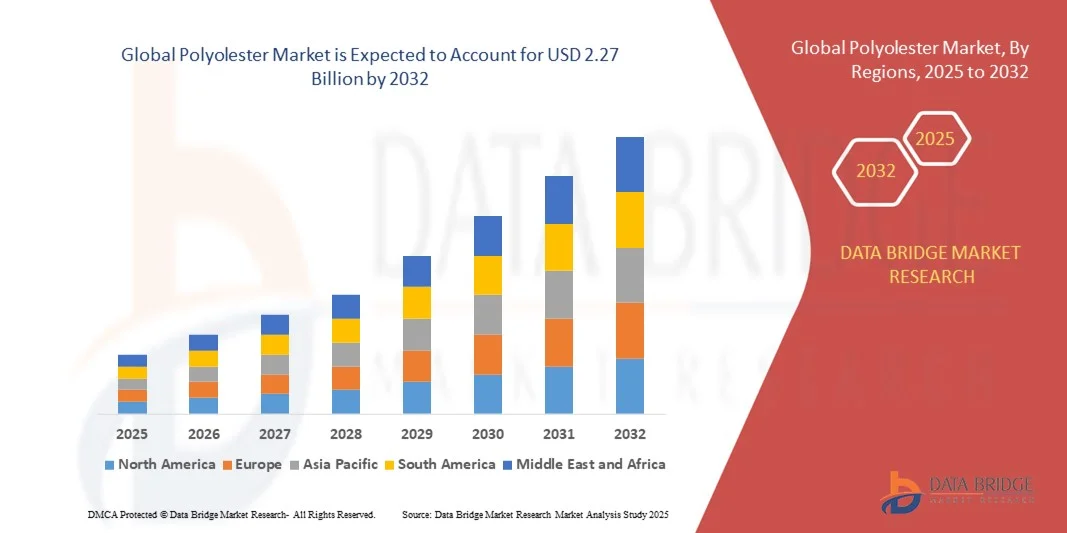
Polyolester Market Size
- The global polyolester market size was valued at USD 1.53 billion in 2024 and is expected to reach USD 2.27 billion by 2032, at a CAGR of 5.08% during the forecast period
- The market growth is largely fuelled by the increasing demand for high-performance synthetic lubricants in refrigeration, automotive, and industrial applications, driven by the need for energy efficiency and longer equipment life
- Rising adoption of environmentally friendly and biodegradable polyolester-based lubricants, along with stringent government regulations on refrigerants and industrial fluids, is further supporting market expansion
Polyolester Market Analysis
- Polyolesters are widely used in synthetic refrigeration oils, automotive lubricants, and industrial applications due to their excellent thermal stability, chemical resistance, and compatibility with HFC refrigerants
- The growing trend toward sustainable and energy-efficient HVAC and refrigeration systems is driving demand for polyolester lubricants, particularly in North America and Europe
- North America dominated the polyolester market with the largest revenue share in 2024, driven by the growing adoption of high-performance synthetic lubricants in industrial, automotive, and refrigeration applications, as well as the increasing focus on energy efficiency and environmental compliance
- Asia-Pacific region is expected to witness the highest growth rate in the global polyolester market, driven by rapid urbanization, rising manufacturing and automotive activities, and increased focus on energy-efficient and environmentally acceptable lubricants
- The automotive crankcase material segment held the largest market revenue share in 2024, driven by increasing adoption of high-performance lubricants in vehicles and industrial machinery. Polyolester-based automotive oils offer superior thermal stability, reduced friction, and extended engine life, making them a preferred choice among OEMs and fleet operators
Report Scope and Polyolester Market Segmentation
|
Attributes |
Polyolester Key Market Insights |
|
Segments Covered |
|
|
Countries Covered |
North America
Europe
Asia-Pacific
Middle East and Africa
South America
|
|
Key Market Players |
|
|
Market Opportunities |
|
|
Value Added Data Infosets |
In addition to the insights on market scenarios such as market value, growth rate, segmentation, geographical coverage, and major players, the market reports curated by the Data Bridge Market Research also include import export analysis, production capacity overview, production consumption analysis, price trend analysis, climate change scenario, supply chain analysis, value chain analysis, raw material/consumables overview, vendor selection criteria, PESTLE Analysis, Porter Analysis, and regulatory framework. |
Polyolester Market Trends
Increasing Adoption of Polyolester Lubricants in Industrial and Automotive Applications
- The growing shift toward polyolester (POE) lubricants is transforming the refrigeration, automotive, and industrial lubricants industry by providing high-performance, environmentally friendly alternatives. Their thermal stability and excellent lubricity support improved machinery efficiency and reduced maintenance costs, while minimizing energy consumption and extending equipment lifespan. In addition, POEs contribute to lower emissions and compliance with global environmental standards
- The high demand for synthetic lubricants in energy-efficient systems is accelerating the adoption of polyolester oils across HVAC, refrigeration, and metalworking applications. These products are particularly effective in high-temperature and high-pressure environments, enhancing system reliability and reducing downtime. Growing awareness about long-term cost savings is encouraging wider adoption among industrial operators
- The ease of integration and compatibility of polyolester oils with HFC, HFO, and other synthetic refrigerants make them attractive for both commercial and industrial operations. Manufacturers benefit from extended equipment life, energy savings, and compliance with environmental regulations, while reducing maintenance frequency and operational disruptions. The versatility of POEs also allows easier formulation adjustments for specialized machinery
- For instance, in 2023, several commercial refrigeration companies in the U.S. reported improved compressor life and reduced operational costs after switching to polyolester-based lubricants in their systems. These companies also observed enhanced performance consistency under varying operating conditions and reduced environmental impact through lower lubricant consumption. Such success stories are influencing adoption across similar industrial segments
- While polyolester lubricants are gaining traction across multiple industrial sectors, their market growth depends on continued innovation, cost competitiveness, and awareness initiatives. Suppliers must focus on optimized formulations, sustainability, and technical support to fully capitalize on growing demand, while collaborating with equipment manufacturers for better product compatibility and performance benchmarking
Polyolester Market Dynamics
Driver
Rising Demand for High-Performance Lubricants and Energy-Efficient Systems
- Increasing adoption of synthetic refrigerants and high-performance machinery is pushing both industrial and automotive sectors to prefer polyolester lubricants. POEs offer superior thermal and oxidative stability compared with conventional mineral oils, reducing risk of equipment failure and improving system efficiency. The growing emphasis on green technologies further strengthens their appeal in energy-conscious markets
- Manufacturers are leveraging polyolester oils to improve equipment reliability, reduce downtime, and meet environmental regulations. The trend is further supported by stricter energy efficiency standards and green building initiatives worldwide, creating new business opportunities. Implementation of predictive maintenance programs is also driving demand for high-quality synthetic lubricants
- Government policies and environmental regulations promoting the use of biodegradable and low-GWP lubricants are encouraging market adoption. Incentives for sustainable industrial practices further strengthen demand for POE-based products, as companies aim to reduce their carbon footprint. Increasing industrial audits and regulatory compliance requirements are motivating businesses to switch to environmentally compliant lubricants
- For instance, in 2022, several U.S. HVAC manufacturers upgraded their systems to polyolester-compatible lubricants to comply with updated refrigerant and efficiency standards, boosting market uptake. These upgrades not only improved system performance but also contributed to long-term cost efficiency and regulatory adherence. The positive results are promoting wider industry adoption
- While industrial demand and regulatory support are driving growth, challenges related to cost, supply chain, and awareness need to be addressed to ensure sustained adoption. Stakeholders are focusing on education programs, pilot projects, and partnerships with OEMs to accelerate acceptance and optimize lubricant usage
Restraint/Challenge
High Cost Of Polyolester Lubricants And Limited Awareness In Emerging Markets
- The premium price of polyolester lubricants compared with conventional mineral oils limits accessibility for small and medium-sized enterprises, especially in emerging markets. This cost barrier slows adoption despite technical benefits, reducing competitiveness for small operators. Businesses often require significant upfront investment for system compatibility and staff training
- Many regions lack trained personnel and technical knowledge to optimize POE lubricant use, resulting in suboptimal system performance and reduced perceived benefits. This knowledge gap hinders market penetration and can lead to early abandonment of POE adoption. Continuous technical support and on-site training are essential to maximize lubricant efficiency and longevity
- Supply chain limitations and inconsistent availability of high-quality POE oils restrict adoption in remote or underdeveloped regions. Seasonal demand fluctuations and reliance on imports can impact continuity of supply, increasing operational risk. Companies face challenges in logistics, storage, and inventory management, which may delay system maintenance or upgrades
- For instance, in 2023, several industrial facilities in Southeast Asia reported delays in system upgrades due to limited access to certified polyolester oils and technical expertise. Such delays affected production schedules, increased operational costs, and highlighted the importance of localized supply chains. The experiences underscore the need for better distribution networks and regional support
- While product formulations continue to advance, addressing cost challenges, enhancing technical support, and raising market awareness remain critical for unlocking the full growth potential of the global polyolester market. Manufacturers and distributors must collaborate to offer affordable, high-performance options, and provide training programs to educate users on best practices, maximizing ROI and operational efficiency
Polyolester Market Scope
The market is segmented on the basis of application and end-user.
- By Application
On the basis of application, the polyolester market is segmented into automotive crankcase material, gear oils, fire resistant hydraulic fluids, carrier fluids, food contact material, environmentally acceptable hydraulic fluid & lubricants, heat transfer fluids, quenchants, breathing air compressor material, air compressor material, vacuum pump, instrument oil, seal swellants, textile lubricants, dielectric fluids, and drilling fluids. The automotive crankcase material segment held the largest market revenue share in 2024, driven by increasing adoption of high-performance lubricants in vehicles and industrial machinery. Polyolester-based automotive oils offer superior thermal stability, reduced friction, and extended engine life, making them a preferred choice among OEMs and fleet operators.
The gear oils segment is expected to witness the fastest growth rate from 2025 to 2032, driven by rising demand for synthetic lubricants in high-speed and heavy-load applications. Polyolester gear oils provide enhanced wear protection, oxidation resistance, and compatibility with modern transmission systems. These lubricants are increasingly adopted in industrial and automotive applications where reliability and extended maintenance intervals are critical.
- By End-User
On the basis of end-user, the polyolester market is segmented into food & beverages, chemical, machinery, electrical & electronics, automotive, marine, aerospace, textile, mining, utilities, construction, and miscellaneous manufacturing. The automotive sector held the largest revenue share in 2024, fueled by stringent emission standards and the need for energy-efficient, high-performance lubricants. Automotive manufacturers are increasingly integrating POE lubricants into engines, transmissions, and HVAC systems to enhance performance and comply with global environmental regulations.
The machinery end-user segment is expected to register the fastest growth rate from 2025 to 2032, driven by increased industrialization and the need for reliable lubrication in high-speed, high-temperature equipment. Polyolester lubricants ensure better equipment efficiency, lower downtime, and longer operational life, making them highly attractive for industrial machinery operators across multiple sectors.
Polyolester Market Regional Analysis
- North America dominated the polyolester market with the largest revenue share in 2024, driven by the growing adoption of high-performance synthetic lubricants in industrial, automotive, and refrigeration applications, as well as the increasing focus on energy efficiency and environmental compliance
- End-users in the region highly value the superior thermal stability, lubricity, and compatibility of polyolester oils with HFC, HFO, and other synthetic refrigerants, enabling longer equipment life and reduced operational costs
- This widespread adoption is further supported by well-established industrial infrastructure, high investment in machinery maintenance, and strict environmental regulations, establishing polyolester lubricants as a preferred choice for multiple applications
U.S. Polyolester Market Insight
The U.S. polyolester market captured the largest revenue share in 2024 within North America, fueled by rising demand for energy-efficient systems and advanced synthetic lubricants. Industrial and automotive manufacturers are increasingly prioritizing the use of polyolester oils to enhance equipment reliability and comply with environmental standards. The growing trend of retrofitting existing machinery with POE-compatible lubricants, along with strong technical support and distribution networks, further drives market expansion.
Europe Polyolester Market Insight
The Europe polyolester market is expected to witness the fastest growth rate from 2025 to 2032, primarily driven by stringent energy efficiency standards, environmental regulations, and rising adoption of synthetic refrigerants. Increasing industrial automation and modernization of machinery are encouraging the use of polyolester oils across HVAC, automotive, and metalworking applications. The region is experiencing significant growth across food & beverages, chemical, and manufacturing industries, with polyolester lubricants being integrated into both new and existing systems.
U.K. Polyolester Market Insight
The U.K. polyolester market is expected to witness strong growth from 2025 to 2032, driven by growing awareness of environmentally acceptable lubricants and a push toward sustainable industrial practice. Manufacturers are increasingly seeking high-performance, low-GWP lubricant solutions to meet regulatory requirements and reduce maintenance costs. In addition, the country’s focus on green building standards and energy-efficient machinery is encouraging adoption in industrial and commercial sectors.
Germany Polyolester Market Insight
The Germany polyolester market is expected to witness substantial growth from 2025 to 2032, fueled by technological advancements, industrial modernization, and increased focus on sustainability. Germany’s well-developed industrial infrastructure and regulatory support for eco-friendly lubricants promote polyolester adoption in automotive, machinery, and refrigeration applications. Integration of POE oils into environmentally acceptable hydraulic and heat transfer systems is becoming increasingly prevalent, aligning with local consumer and industrial expectations.
Asia-Pacific Polyolester Market Insight
The Asia-Pacific polyolester market is expected to witness the fastest growth rate from 2025 to 2032, driven by rapid industrialization, urbanization, and rising disposable incomes in countries such as China, India, and Japan. Growing demand for synthetic lubricants in automotive, industrial, and refrigeration sectors, coupled with government initiatives promoting energy efficiency and environmental compliance, is accelerating market adoption. Furthermore, APAC’s emergence as a manufacturing hub for synthetic oils enhances affordability and accessibility for a wider industrial base
Japan Polyolester Market Insight
The Japan polyolester market is expected to witness strong growth from 2025 to 2032, driven by high technological adoption, urbanization, and demand for energy-efficient machinery. Japanese industries are prioritizing polyolester lubricants for their superior thermal stability, lubricity, and environmental compliance. The integration of POE oils with HVAC, automotive, and industrial systems, along with a focus on maintenance efficiency and sustainability, is fueling demand across both industrial and commercial sectors.
China Polyolester Market Insight
The China polyolester market accounted for the largest revenue share in Asia-Pacific in 2024, attributed to rapid industrialization, expanding manufacturing base, and high adoption of energy-efficient systems. Polyolester lubricants are increasingly preferred across automotive, machinery, and refrigeration applications due to their compatibility with synthetic refrigerants and ability to extend equipment life. Government support for sustainable industrial practices, coupled with a growing number of domestic POE manufacturers, is driving affordability and accessibility, boosting overall market growth.
Polyolester Market Share
The Polyolester industry is primarily led by well-established companies, including:
- ZSCHIMMER & SCHWARZ (Germany)
- Purinova Sp. z o.o. (Poland)
- Ultrachem, Inc (U.S.)
- Calumet Specialty Products Partners, L.P. (U.S.)
- Vantage Specialty Chemicals (U.S.)
- Huntsman International LLC (U.S.)
- LANXESS (Germany)
- Exxon Mobil Corporation (U.S.)
- Perstorp (Sweden)
- Comstar International Inc (U.S.)
- Teknor Apex (U.S.)
- Croda International Plc (U.K.)
- DiversiTech Corporation (U.S.)
- Domus Chemicals (Italy)
- Elé Corporation (U.S.)

- Interactive Data Analysis Dashboard
- Company Analysis Dashboard for high growth potential opportunities
- Research Analyst Access for customization & queries
- Competitor Analysis with Interactive dashboard
- Latest News, Updates & Trend analysis
- Harness the Power of Benchmark Analysis for Comprehensive Competitor Tracking
Global Polyolester Market, Supply Chain Analysis and Ecosystem Framework
To support market growth and help clients navigate the impact of geopolitical shifts, DBMR has integrated in-depth supply chain analysis into its Global Polyolester Market research reports. This addition empowers clients to respond effectively to global changes affecting their industries. The supply chain analysis section includes detailed insights such as Global Polyolester Market consumption and production by country, price trend analysis, the impact of tariffs and geopolitical developments, and import and export trends by country and HSN code. It also highlights major suppliers with data on production capacity and company profiles, as well as key importers and exporters. In addition to research, DBMR offers specialized supply chain consulting services backed by over a decade of experience, providing solutions like supplier discovery, supplier risk assessment, price trend analysis, impact evaluation of inflation and trade route changes, and comprehensive market trend analysis.
Data collection and base year analysis are done using data collection modules with large sample sizes. The stage includes obtaining market information or related data through various sources and strategies. It includes examining and planning all the data acquired from the past in advance. It likewise envelops the examination of information inconsistencies seen across different information sources. The market data is analysed and estimated using market statistical and coherent models. Also, market share analysis and key trend analysis are the major success factors in the market report. To know more, please request an analyst call or drop down your inquiry.
The key research methodology used by DBMR research team is data triangulation which involves data mining, analysis of the impact of data variables on the market and primary (industry expert) validation. Data models include Vendor Positioning Grid, Market Time Line Analysis, Market Overview and Guide, Company Positioning Grid, Patent Analysis, Pricing Analysis, Company Market Share Analysis, Standards of Measurement, Global versus Regional and Vendor Share Analysis. To know more about the research methodology, drop in an inquiry to speak to our industry experts.
Data Bridge Market Research is a leader in advanced formative research. We take pride in servicing our existing and new customers with data and analysis that match and suits their goal. The report can be customized to include price trend analysis of target brands understanding the market for additional countries (ask for the list of countries), clinical trial results data, literature review, refurbished market and product base analysis. Market analysis of target competitors can be analyzed from technology-based analysis to market portfolio strategies. We can add as many competitors that you require data about in the format and data style you are looking for. Our team of analysts can also provide you data in crude raw excel files pivot tables (Fact book) or can assist you in creating presentations from the data sets available in the report.













