


Potato Protein Market Size
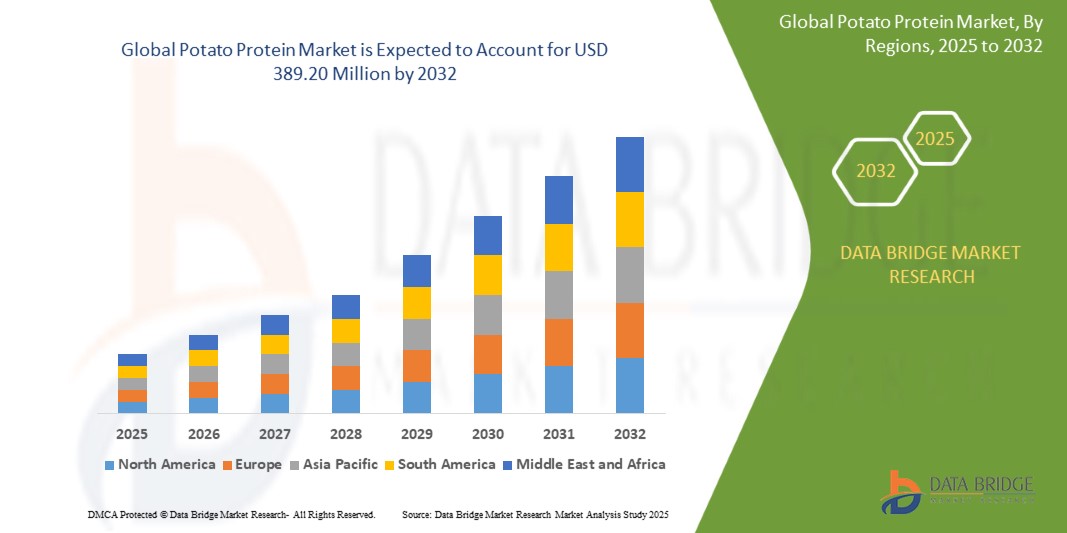
- The Global Potato Protein Market size was valued at USD 185.20 Million in 2024 and is expected to reach USD 389.20 Million by 2032, at a CAGR of 4.30% during the forecast period
- • The growth of the Potato Protein Market
Potato Protein Market Analysis
- Potato protein is increasingly being recognized as a valuable plant-based ingredient across multiple industries, including food, feed, and pharmaceuticals, due to its excellent amino acid profile and high digestibility. Its growing use in vegan and vegetarian food products is driving market expansion, especially as demand rises for allergen-free and gluten-free protein alternatives
- The market is rapidly expanding as food manufacturers seek functional, sustainable protein sources for use in products such as meat alternatives, protein-enriched snacks, and sports nutrition. Potato protein offers desirable properties like emulsification, foaming, and water-binding, making it a preferred choice for plant-based formulations
- North America is expected to dominate the Potato Protein Market with a substantial market share in 2025, fueled by strong consumer demand for clean-label, non-GMO, and sustainable ingredients, as well as the region’s advanced food processing capabilities and active investment in plant-based innovation
- Asia-Pacific is projected to register the highest growth rate in the Potato Protein Market, driven by increasing disposable incomes, rising awareness of plant-based diets, and the expanding consumption of processed and functional foods. Countries like China, India, and Japan are witnessing a surge in demand for alternative proteins, supported by changing dietary patterns and urbanization.
Report Scope and Potato Protein Market Segmentation
|
Attributes |
Potato Protein Key Market Insights |
|
Segments Covered |
|
|
Countries Covered |
North America
Europe
Asia-Pacific
Middle East and Africa
South America
|
|
Key Market Players |
|
|
Market Opportunities |
|
|
Value Added Data Infosets |
In addition to the insights on market scenarios such as market value, growth rate, segmentation, geographical coverage, and major players, the market reports curated by the Data Bridge Market Research also include import export analysis, production capacity overview, production consumption analysis, price trend analysis, climate change scenario, supply chain analysis, value chain analysis, raw material/consumables overview, vendor selection criteria, PESTLE Analysis, Porter Analysis, and regulatory framework. |
Potato Protein Market Trends
Growing Demand for Clean-Label and Plant-Based Protein Products
- A significant trend in the Potato Protein Market is the increasing demand for clean-label, plant-based protein products, driven by health-conscious consumers seeking transparency in food labels and natural ingredients
- Potato protein, as a naturally derived ingredient, fits perfectly into the clean-label trend. It is being incorporated into a variety of food applications, including meat substitutes, protein bars, dairy alternatives, and functional snacks, offering a high-quality, allergen-free, and environmentally friendly protein source
- For example, manufacturers are using potato protein in plant-based burgers, protein shakes, and dairy-free yogurts to meet the demand for plant-based and clean-label products
- This trend reflects a broader shift towards healthier, more sustainable eating habits, and companies are increasingly innovating to offer potato protein-based alternatives in line with these preferences
Potato Protein Market Dynamics
Driver
Rising Popularity of Plant-Based Diets and Protein Alternatives
- The growing consumer preference for plant-based diets is a key driver of the Potato Protein Market, as more individuals adopt vegetarian, vegan, or flexitarian lifestyles and seek plant-derived protein sources
- Potato protein is gaining traction as a highly digestible, allergen-free, and sustainable protein alternative that meets the nutritional needs of those avoiding animal-based products. It provides an excellent amino acid profile, making it ideal for use in plant-based meat products, protein bars, dairy alternatives, and nutritional supplements
- As demand for protein-enriched, plant-based foods increases, manufacturers are turning to potato protein to diversify their offerings and cater to this growing segment
For instance:
- Potato protein is being used in plant-based burgers, dairy-free milk, and plant-based protein shakes, making it a versatile ingredient in the growing market for plant-based foods
- The rise of flexitarian diets, in which consumers reduce animal product consumption without completely eliminating them, further fuels the demand for plant-based protein alternatives, accelerating market growth for potato protein.
Opportunity
Growing Demand for Clean-Label, Plant-Based Protein Sources
- The rising consumer preference for clean-label products, free from artificial additives and preservatives, presents a significant opportunity for the Potato Protein Market
- Consumers are becoming more health-conscious and are seeking natural, minimally processed food products with simple ingredient lists. Potato protein, being a high-quality, plant-based protein with no artificial additives, fits perfectly into this demand.
- As plant-based diets continue to gain popularity, potato protein is increasingly used in vegan and vegetarian food products as a clean-label alternative to animal-based proteins and synthetic protein isolates
For instance:
- Companies are incorporating potato protein in plant-based burgers, protein bars, and dairy alternatives, ensuring that these products have a clean ingredient profile while maintaining nutritional value and functionality
- The growing emphasis on clean-label products is driving manufacturers to explore plant-based protein solutions like potato protein, making this an exciting growth opportunity for the market
Restraint/Challenge
High Cost of Extraction and Processing of Potato Protein
- One of the key restraints in the Potato Protein Market is the high cost associated with the extraction and processing of potato protein from potatoes
- The process of isolating and refining protein from potatoes involves advanced technology, energy-intensive methods, and specialized equipment, which can result in elevated production costs. The complexity of the extraction process, along with the need for stringent quality control to ensure a pure protein product, further adds to the expense
- These higher production costs can make potato protein more expensive than other plant-based protein alternatives, potentially limiting its widespread use, especially in price-sensitive markets and for smaller food manufacturers
For instance:
- Smaller food producers may struggle to match the pricing of larger companies that can leverage economies of scale and reduce production costs, making it difficult for them to adopt potato protein in their product lines
- This cost challenge can restrict the market growth, particularly in developing economies, where price sensitivity is a critical factor in consumer purchasing decisions, and more affordable protein alternatives dominate the market
Potato Protein Market Scope
The market is segmented on the basis, type, application.
|
Segmentation |
Sub-Segmentation |
|
By Type |
|
|
By Application |
|
In 2025, the isolates is projected to dominate the market with a largest share in type segment
In 2025, isolates are projected to dominate the Global Potato Protein Market with the largest share in the type segment, accounting for 62.3%. This dominance is attributed to the increasing demand for highly concentrated protein sources in food and beverage applications, as potato protein isolates offer superior protein content and functionality.
The Food is expected to account for the largest share during the forecast period in application segment
In 2025, the food segment is expected to account for the largest share in the Global Potato Protein Market, with a projected market share of 51.2%. This dominance is driven by the growing consumer preference for clean-label, minimally processed food products and the increasing demand for healthier, natural ingredients in food manufacturing.
Potato Protein Market Regional Analysis
Asia-Pacific is Projected to Register the Highest Growth in the Potato Protein Market
- The Asia-Pacific region is expected to register the highest growth rate in the Global Potato Protein Market, driven by rapid urbanization, rising health consciousness, and increasing consumer demand for plant-based, natural food ingredients across countries such as China, India, and Japan
- With large populations and rising disposable incomes, countries like China and India are becoming key markets for potato protein. Consumers in these countries are increasingly opting for healthier, clean-label food options and seeking alternatives to synthetic ingredients in food products
- Japan is a leader in the region's Potato Protein Market, with a strong demand for functional foods, clean-label products, and health-focused food items. The country's significant emphasis on wellness and food innovation is driving market growth
- China and India are witnessing a surge in the adoption of plant-based diets and growing health-consciousness trends. This is leading to a rise in demand for plant-based protein ingredients, like potato protein, which is being used as a natural and healthy alternative for food processing
- Government initiatives promoting healthier eating habits, investments in food processing technologies, and a rising awareness of the benefits of plant-based, functional ingredients are further propelling the expansion of the Potato Protein Market in the region
- As infrastructure continues to improve and the food processing industry evolves, Asia-Pacific is expected to see a significant rise in demand for potato protein as an essential component in producing clean-label, natural, and functional food products. This trend aligns with the increasing focus on sustainable and health-focused ingredients in the region's food manufacturing sector
North America is Projected to Dominate the Potato Protein Market
- North America is expected to hold the largest share of the Global Potato Protein Market, driven by a strong consumer preference for natural, clean-label, and sustainable food options across the region
- The U.S. is a major contributor to the market, accounting for a significant portion of North America’s market share. Consumers in the U.S. are increasingly demanding plant-based and antioxidant-rich ingredients, which has led to higher adoption of natural food starches, particularly in the food and beverage industry
- The rising awareness around the health benefits, such as the antioxidant properties of certain starches, is boosting the demand for products that support wellness, immune function, and anti-aging benefits. This aligns with the growing trend of consumers prioritizing functional and health-enhancing ingredients in their diets
- North America’s market is further propelled by the increasing adoption of clean-label products, with consumers favoring those that are free from artificial preservatives, colors, and flavors. This trend encourages the demand for plant-based and natural starch solutions, positioning potato protein as an ideal ingredient in the clean-label movement
- Additionally, North America’s well-established food processing infrastructure and favorable regulatory environment are key factors supporting market growth. The presence of leading food manufacturers, investing in R&D to innovate and develop functional food products with added health benefits, is also driving the market’s expansion
- As the demand for sustainable and healthier food options continues to rise, investments from both local and international companies in the region are expected to accelerate market expansion. The growing preference for plant-based diets and healthier eating habits further strengthens North America's leadership position in the Potato Protein Market.
Potato Protein Market Share
The market competitive landscape provides details by competitor. Details included are company overview, company financials, revenue generated, market potential, investment in research and development, new market initiatives, global presence, production sites and facilities, production capacities, company strengths and weaknesses, product launch, product width and breadth, application dominance. The above data points provided are only related to the companies' focus related to market.
The Major Market Leaders Operating in the Market Are:
- Avebe (Netherlands)
- Tereos Group (France)
- Roquette Frères (France)
- Emsland Group (Germany)
- KMC Ingredients (Denmark)
- Agrana Beteiligungs-AG (Austria)
- Südstärke GmbH (Germany)
- PEPTO Systems (Norway)
- AKV Langholt AmbA (Denmark)
- Meelunie B.V. (Netherlands)
- Royal Ingredients Group (Netherlands)
- Scandinavian Grain Products AB (Sweden)
- Lyckeby Starch AB (Sweden)
- Ingredion Incorporated (U.S.)
- AGRANA Stärke GmbH (Austria)
Latest Developments in Global Potato Protein Market
- In March 2025, Avebe (Netherlands) announced the expansion of its potato protein production capacity at its Gasselternijveen facility to meet the rising global demand for plant-based proteins. The investment is aimed at enhancing production efficiency and supporting sustainable agriculture practices. This move aligns with Avebe’s strategic goal to promote clean-label, allergen-free protein solutions for the food and nutrition industry
- In February 2025, Emsland Group (Germany) launched a new functional potato protein ingredient specifically tailored for plant-based meat alternatives. The new product enhances texture, juiciness, and protein content, making it ideal for vegan and vegetarian food formulations. The launch reflects growing consumer interest in alternative proteins with improved sensory and nutritional profiles
- In January 2025, Roquette Frères (France) unveiled a research collaboration with a European food tech startup to develop next-generation potato protein isolates for clinical nutrition and sports recovery products. The partnership focuses on creating highly bioavailable protein formulations suitable for functional foods and specialized health applications
- In December 2024, KMC Ingredients (Denmark) introduced a clean-label potato protein concentrate targeted at the bakery and dairy-alternative sectors. The new ingredient offers improved foaming and emulsifying properties, catering to the rising demand for egg-free and allergen-free product formulations
- In November 2024, Agrana Beteiligungs-AG (Austria) invested in a new R&D center dedicated to potato protein innovation, aiming to accelerate product development for applications in infant nutrition, pet food, and clinical diets. The initiative highlights the company's commitment to advancing the nutritional and functional potential of potato-derived proteins

- Interactive Data Analysis Dashboard
- Company Analysis Dashboard for high growth potential opportunities
- Research Analyst Access for customization & queries
- Competitor Analysis with Interactive dashboard
- Latest News, Updates & Trend analysis
- Harness the Power of Benchmark Analysis for Comprehensive Competitor Tracking
Global Potato Protein Market, Supply Chain Analysis and Ecosystem Framework
To support market growth and help clients navigate the impact of geopolitical shifts, DBMR has integrated in-depth supply chain analysis into its Global Potato Protein Market research reports. This addition empowers clients to respond effectively to global changes affecting their industries. The supply chain analysis section includes detailed insights such as Global Potato Protein Market consumption and production by country, price trend analysis, the impact of tariffs and geopolitical developments, and import and export trends by country and HSN code. It also highlights major suppliers with data on production capacity and company profiles, as well as key importers and exporters. In addition to research, DBMR offers specialized supply chain consulting services backed by over a decade of experience, providing solutions like supplier discovery, supplier risk assessment, price trend analysis, impact evaluation of inflation and trade route changes, and comprehensive market trend analysis.
Data collection and base year analysis are done using data collection modules with large sample sizes. The stage includes obtaining market information or related data through various sources and strategies. It includes examining and planning all the data acquired from the past in advance. It likewise envelops the examination of information inconsistencies seen across different information sources. The market data is analysed and estimated using market statistical and coherent models. Also, market share analysis and key trend analysis are the major success factors in the market report. To know more, please request an analyst call or drop down your inquiry.
The key research methodology used by DBMR research team is data triangulation which involves data mining, analysis of the impact of data variables on the market and primary (industry expert) validation. Data models include Vendor Positioning Grid, Market Time Line Analysis, Market Overview and Guide, Company Positioning Grid, Patent Analysis, Pricing Analysis, Company Market Share Analysis, Standards of Measurement, Global versus Regional and Vendor Share Analysis. To know more about the research methodology, drop in an inquiry to speak to our industry experts.
Data Bridge Market Research is a leader in advanced formative research. We take pride in servicing our existing and new customers with data and analysis that match and suits their goal. The report can be customized to include price trend analysis of target brands understanding the market for additional countries (ask for the list of countries), clinical trial results data, literature review, refurbished market and product base analysis. Market analysis of target competitors can be analyzed from technology-based analysis to market portfolio strategies. We can add as many competitors that you require data about in the format and data style you are looking for. Our team of analysts can also provide you data in crude raw excel files pivot tables (Fact book) or can assist you in creating presentations from the data sets available in the report.













