


What is Global Premium Lager Market Size and Overview?
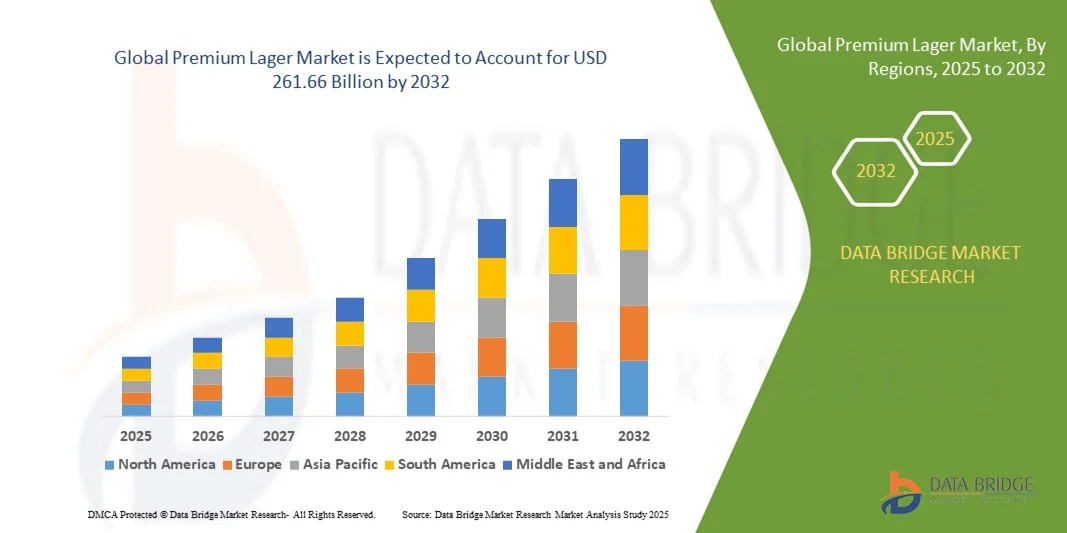
- As per Data Bridge Market Research Analysis the global premium lager market size was valued at USD 184.50 billion in 2024 and is expected to reach USD 261.66 billion by 2032, growing at a CAGR of 4.50% during the forecast period.
- The market growth is primarily driven by increasing consumer preference for high-quality, flavorful lagers and expanding distribution networks across emerging markets.
- Additionally, rising disposable incomes and growing demand for premium alcoholic beverages among millennials and urban populations are fueling the market expansion, supporting sustained growth in both retail and on-premise consumption channels.
Market Size & Forecast
- Global Market Value (2025): USD 184.50 billion
- Expected Market Value (2033): USD 261.66 billion
- Forecast CAGR (2026–2033): 4.50%
Global Premium Lager Market Analysis
- Premium lagers, known for their refined brewing process and superior taste profile, are increasingly favored by consumers seeking high-quality beer options in both retail and on-premise consumption settings due to their balanced flavor, premium ingredients, and brand prestige.
- The growing demand for premium lagers is primarily driven by rising disposable incomes, shifting consumer preferences towards craft and premium beverages, and expanding distribution channels globally.
- Europe dominated the premium lager market with the largest revenue share of 43.1% in 2024, supported by a mature beer market, strong consumer preference for craft and imported beers, and presence of leading brewery companies, with the U.S. showing significant growth through innovative product launches and premiumization trends.
- Asia-Pacific is expected to be the fastest-growing region in the premium lager market during the forecast period due to rapid urbanization, increasing beer consumption, and rising middle-class populations with higher purchasing power.
- The conventional premium lagers segment dominated the market with the largest market revenue share of 54.8% in 2024, driven by strong brand recognition, widespread availability, and consistent quality
Report Scope and Global Premium Lager Market Segmentation
|
Attributes |
Premium Lager Key Market Insights |
|
Segments Covered |
|
|
Countries Covered |
North America
Europe
Asia-Pacific
Middle East and Africa
South America
|
|
Key Market Players |
|
|
Market Opportunities |
|
|
Value Added Data Infosets |
In addition to the insights on market scenarios such as market value, growth rate, segmentation, geographical coverage, and major players, the market reports curated by the Data Bridge Market Research also include in-depth expert analysis, pricing analysis, brand share analysis, consumer survey, demography analysis, supply chain analysis, value chain analysis, raw material/consumables overview, vendor selection criteria, PESTLE Analysis, Porter Analysis, and regulatory framework. |
What is the Key Trend in the Global Premium Lager Market?
Elevated Consumer Experience Through Premiumization and Craft Innovation
- A significant and accelerating trend in the global Premium Lager Market is the growing influence of premiumization and craft beer innovation, which is reshaping consumer expectations and driving demand for high-quality, flavor-rich lager offerings. This trend reflects a broader shift away from mass-produced beer toward more refined, artisanal products that emphasize quality, authenticity, and unique taste profiles.
- For instance, major brewers like Heineken and Carlsberg have launched specialty and limited-edition lagers that reflect craft brewing techniques, while also investing in smaller craft brands to tap into evolving consumer tastes. Similarly, Bira 91, an emerging player in India, has built its brand around premium and experimental lager offerings tailored to young, urban consumers.
- Innovations in brewing processes, such as cold-hopping and extended fermentation, are enhancing the depth and smoothness of premium lagers, aligning with consumer demand for distinctive and memorable drinking experiences. Packaging innovations, such as sleek bottles and sustainable materials, also contribute to the premium appeal.
- The fusion of tradition and innovation allows premium lager brands to differentiate themselves in a competitive market, appealing to consumers who value quality, storytelling, and craftsmanship. As a result, even legacy brands are repositioning themselves to include premium product lines that match these evolving preferences.
- Breweries are also leveraging data analytics and customer feedback to develop new flavor profiles and refine existing ones, ensuring their premium offerings resonate with target demographics. The incorporation of consumer-driven product development has become a key strategy in maintaining relevance and expanding market share.
- This trend toward more sophisticated and diverse lager products is not only elevating the consumer experience but also expanding the premium beer segment globally. As consumers continue to seek authenticity and quality in their beverage choices, the premium lager market is poised for sustained growth, driven by both innovation and a strong narrative of craftsmanship.
Global Premium Lager Market Dynamics
Driver
Growing Demand Driven by Shifting Consumer Preferences and Lifestyle Upgrades
-
The global premium lager market is experiencing accelerated growth due to evolving consumer preferences toward high-quality alcoholic beverages and a rising inclination for sophisticated lifestyle choices. This shift is particularly evident among urban millennials and Gen Z consumers, who are willing to spend more on premium offerings that deliver better taste, quality, and branding.
- For instance, leading brands such as Diageo and Heineken have expanded their premium lager portfolios by launching limited editions and craft-style variants that cater to this growing consumer segment. These offerings often feature unique brewing methods, natural ingredients, and localized flavors, making them attractive to discerning drinkers seeking authenticity and innovation.
- The aspirational value associated with premium beverages is also driving on-premise sales in upscale bars, restaurants, and hospitality venues, especially in metropolitan areas and tourist destinations. Premium lagers are increasingly being positioned as lifestyle products, supported by sleek packaging, celebrity endorsements, and targeted marketing campaigns.
- Moreover, the rise of online alcohol delivery platforms and e-commerce has made premium lager brands more accessible to a wider audience, particularly in emerging markets where traditional retail infrastructure is still developing.
- The growing popularity of beer festivals, craft beer experiences, and social media-driven brand engagement has further reinforced the cultural relevance of premium lagers, transforming them from everyday beverages to lifestyle choices.
- This confluence of factors is fostering strong demand across both mature and developing markets, reinforcing premium lager’s position as a preferred choice among consumers seeking elevated beer experiences.
Restraint/Challenge
High Price Sensitivity and Regulatory Hurdles in Emerging Markets
- Despite the growing appeal of premium lagers, the market faces challenges in terms of price sensitivity and complex regulatory environments, particularly in developing regions. Higher production costs associated with quality ingredients and advanced brewing methods often translate into retail prices that are inaccessible to a significant portion of the population.
- For instance, in price-sensitive markets such as India, Southeast Asia, and parts of Africa, local consumers may opt for more affordable mainstream beer options or even traditional alcoholic beverages, limiting the penetration of premium lager brands.
- Furthermore, heavy taxation on alcoholic beverages, import restrictions, and stringent advertising regulations in various countries can hinder market expansion and increase operational costs for premium beer producers.
- Many governments enforce volume restrictions, health warnings, and bans on alcohol marketing, which can impact brand visibility and consumer reach. For example, in countries like Thailand and Indonesia, alcohol branding faces tight constraints that challenge the ability of global brewers to promote their premium offerings effectively.
- In addition, distribution and cold-chain logistics in underdeveloped markets can present obstacles to maintaining product quality and availability, further impeding growth.
- Overcoming these challenges requires strategic pricing models, localized production, and partnerships with regional distributors. Advocacy for regulatory reform, coupled with consumer education around quality and responsible consumption, will be essential for unlocking the full potential of premium lager in these high-growth regions.
Global Premium Lager Market Scope
Premium lager market is segmented on the basis of product type, distribution channel and end user.
- By Product Type
On the basis of product type, the global premium lager market is segmented into conventional premium lagers and craft premium lagers. The conventional premium lagers segment dominated the market with the largest market revenue share of 54.8% in 2024, driven by strong brand recognition, widespread availability, and consistent quality. These lagers are mass-produced by global brewing giants like Anheuser-Busch InBev and Heineken, offering a familiar taste and premium branding that appeals to a broad demographic. Their established distribution networks and affordability, relative to craft offerings, further enhance their dominance in both emerging and developed markets.
The craft premium lagers segment is expected to witness the fastest growth rate of 23.1% from 2025 to 2032, fueled by increasing consumer demand for unique flavor profiles, locally brewed options, and artisanal experiences. Younger consumers, in particular, are gravitating toward craft lagers due to their authenticity, innovation in taste, and alignment with sustainable and small-batch production values.
- By Distribution Channel
On the basis of distribution channel, the global premium lager market is segmented into on-trade and off-trade. The Off-Trade segment dominated the market with the largest revenue share of 58.7% in 2024, driven by the strong presence of premium lagers in supermarkets, liquor stores, and e-commerce platforms. The convenience of at-home consumption, the rise of online alcohol delivery services, and broader retail availability have made off-trade channels a preferred choice, especially during and post-pandemic consumer behavior shifts. Promotions and multipack deals in retail settings also contribute to volume sales in this segment.
The On-Trade segment is expected to witness the fastest CAGR of 21.4% from 2025 to 2032, driven by the resurgence of nightlife, increasing dining-out culture, and the rising presence of premium lagers in bars, pubs, and restaurants. On-trade consumption is boosted by premium positioning, higher per-unit pricing, and an emphasis on curated drinking experiences in hospitality venues.
- By End User
On the basis of end user, the global premium lager market is segmented into bars, food service, and others. The Bars segment held the largest market revenue share of 46.9% in 2024, driven by the growing preference for premium and craft lager options in social drinking environments. Bars often serve as discovery points for new and specialty lagers, where consumers are more willing to experiment with different tastes. Breweries also engage in partnerships with bars for product placement, promotional events, and limited-edition launches, which support strong volume and brand visibility.
The food service segment is expected to witness the fastest growth rate of 22.6% from 2025 to 2032, fueled by increasing demand for premium beverage pairings in restaurants, hotels, and catering services. As consumers seek elevated dining experiences, food service venues are expanding their premium beer offerings to include curated lager menus, seasonal selections, and craft collaborations, enhancing overall customer satisfaction and spend per visit.
Global Premium Lager Market Regional Analysis
- Europe dominated the premium lager market with the largest revenue share of 43.1% in 2024, driven by rising consumer preference for high-quality alcoholic beverages and the growing influence of craft beer culture.
- The region’s mature beer market, coupled with strong brand loyalty and demand for premium experiences, continues to propel growth in this segment.
U.K. Premium Lager Market Insight
The U.K. premium lager market is anticipated to grow at a noteworthy CAGR during the forecast period, driven by an increasing preference for high-end beer options and an evolving pub culture that favors premium offerings. Rising consumer demand for better taste, authenticity, and ethical production practices is leading to the proliferation of craft-style lagers and imported premium brands. The on-trade segment is especially strong in the U.K., where premium lager consumption is deeply tied to social and dining experiences. Meanwhile, retail distribution is being bolstered by the rise in alcohol e-commerce and premium multipack availability in supermarkets and convenience stores. Sustainability and provenance are becoming important factors influencing purchasing decisions among British consumers.
Germany Premium Lager Market Insight
The Germany premium lager market is expected to expand at a considerable CAGR during the forecast period, supported by the country’s deep-rooted beer culture and growing appetite for premium and craft-quality offerings. German consumers continue to favor lagers brewed under the Reinheitsgebot (Beer Purity Law), which aligns with the premium market’s emphasis on quality and tradition. At the same time, there is a rising interest in artisanal and regionally brewed lagers that offer unique taste profiles and branding. Premium lagers are increasingly featured in beer halls, specialty stores, and festivals. Additionally, younger consumers are becoming more open to experimenting with international premium brands and low-alcohol variants that align with health-conscious trends.
U.S. Premium Lager Market Insight
The U.S. premium lager market captured the largest revenue share of 74% in North America in 2024, fueled by increasing demand for high-quality, flavorful beer offerings and the continued influence of craft beer culture. American consumers are increasingly shifting from mass-market beers to premium options that deliver superior taste, unique brewing methods, and brand authenticity. The market is also benefiting from premiumization trends, rising disposable incomes, and the popularity of lifestyle-oriented alcoholic beverages. On-trade sales in upscale bars and restaurants remain robust, while off-trade growth is driven by online alcohol retail and premium beer multipacks. Product innovations and limited-edition releases from major brewers such as Molson Coors and Constellation Brands are further boosting consumer interest.
Asia-Pacific Premium Lager Market Insight
The Asia-Pacific premium lager market is poised to grow at the fastest CAGR of 23.6% from 2025 to 2032, driven by rising disposable incomes, urbanization, and a growing middle class in countries such as China, India, and Vietnam. Premium lagers are becoming increasingly popular among younger, aspirational consumers who associate premium alcoholic beverages with social status and modern lifestyles. This trend is supported by the growing presence of international breweries and the expansion of local brands into the premium segment. Governments promoting tourism and high-end hospitality infrastructure also contribute to the rising demand. E-commerce and modern retail channels are rapidly expanding access to premium lagers across the region.
Japan Premium Lager Market Insight
The Japan premium lager market is gaining momentum due to a shift in consumer behavior toward quality over quantity and a growing preference for refined, well-crafted beers. As the domestic beer market matures, Japanese consumers are showing increasing interest in premium and craft lagers that offer unique taste profiles and are often associated with artisanal production methods. Major brewers like Asahi and Kirin are investing in premium product lines and acquiring smaller craft brands to meet this demand. Japan's cultural appreciation for craftsmanship and subtlety aligns well with the values promoted by premium lager brands, particularly in urban centers and high-end dining establishments.
China Premium Lager Market Insight
The China premium lager market accounted for the largest revenue share in Asia Pacific in 2024, driven by rapid urbanization, growing purchasing power, and rising demand for international and high-end beer brands. The country’s expanding middle class is fueling consumption of premium alcoholic beverages, including lagers that are perceived as symbols of sophistication and global lifestyle. Leading domestic brands like Tsingtao and Snow Beer are launching premium variants to compete with imported products from Europe and North America. Meanwhile, e-commerce platforms and high-end retail outlets are enhancing product visibility. Premium lager is also gaining traction in younger demographics, where quality, social appeal, and brand identity are key decision factors.
Which are the Top Companies in Global Premium Lager Market?
The premium lager industry is primarily led by well-established companies, including:
- Anheuser-Busch InBev (Belgium)
- Heineken N.V. (Netherlands)
- China Resources Snow Breweries (China)
- Carlsberg Breweries A/S (Denmark)
- Molson Coors Brewing Company (U.S.)
- Tsingtao Brewery Group (China)
- Asahi Group Holdings, Ltd. (Japan)
- Kirin Holdings Company, Limited (Japan)
- Diageo plc (U.K.)
- SABMiller plc (U.K.)
- Grupo Modelo (Mexico)
- Constellation Brands, Inc. (U.S.)
- Bira 91 (India)
- Beijing Yanjing Brewery (China)
- San Miguel Corporation (Philippines)
- Thai Beverage Public Co., Ltd. (Thailand)
- United Breweries Limited (India)
- Ambev S.A. (Brazil)
- Royal Unibrew A/S (Denmark)
What are the Recent Developments in Global Premium Lager Market?
- In April 2023, Anheuser-Busch InBev, a global leader in brewing, launched a premiumization strategy across key African and Southeast Asian markets to drive growth in its premium lager segment. This
- In March 2023, Heineken N.V. unveiled its new sustainability-driven packaging innovation for Heineken® and Amstel premium lagers in select European markets. This move is part of the company’s “Brew a Better World” program and includes recyclable and lightweight packaging aimed at reducing environmental impact while maintaining premium product presentation. The development highlights Heineken's dual focus on environmental responsibility and maintaining a high-end consumer experience.
- In March 2023, Carlsberg Group launched a regional craft-inspired premium lager, Tuborg Gold Reserve, in Central and Eastern Europe. Targeted at young, urban consumers seeking a blend of tradition and modernity, the product combines premium ingredients with an elevated brewing process. This launch illustrates Carlsberg’s strategy to diversify its premium lager portfolio while capturing new market segments in fast-evolving European economies.
- In February 2023, Asahi Group Holdings announced a significant investment in its European production facilities to expand capacity for its super-premium brand Peroni Nastro Azzurro. The expansion supports rising demand across Western Europe and North America, where consumer preference continues to shift toward high-end, imported lagers. This strategic move highlights Asahi's commitment to scaling its premium offerings while maintaining quality and brand prestige.
- In January 2023, Molson Coors Beverage Company debuted Blue Moon Premium Lager in the United States, extending its Blue Moon family beyond craft-style wheat beers. This innovation represents the company's response to growing consumer interest in accessible yet elevated lager experiences. The launch underscores Molson Coors’ broader initiative to revitalize its portfolio by introducing premium variations that align with modern taste preferences and lifestyle branding.
- initiative involves the expansion of flagship brands like Stella Artois and Corona, tailored to local tastes and preferences. By leveraging its global brand equity and localized marketing efforts, AB InBev is reinforcing its presence in emerging markets and tapping into the growing demand for high-quality, aspirational beer products.

- Interactive Data Analysis Dashboard
- Company Analysis Dashboard for high growth potential opportunities
- Research Analyst Access for customization & queries
- Competitor Analysis with Interactive dashboard
- Latest News, Updates & Trend analysis
- Harness the Power of Benchmark Analysis for Comprehensive Competitor Tracking
Global Premium Lager Market, Supply Chain Analysis and Ecosystem Framework
To support market growth and help clients navigate the impact of geopolitical shifts, DBMR has integrated in-depth supply chain analysis into its Global Premium Lager Market research reports. This addition empowers clients to respond effectively to global changes affecting their industries. The supply chain analysis section includes detailed insights such as Global Premium Lager Market consumption and production by country, price trend analysis, the impact of tariffs and geopolitical developments, and import and export trends by country and HSN code. It also highlights major suppliers with data on production capacity and company profiles, as well as key importers and exporters. In addition to research, DBMR offers specialized supply chain consulting services backed by over a decade of experience, providing solutions like supplier discovery, supplier risk assessment, price trend analysis, impact evaluation of inflation and trade route changes, and comprehensive market trend analysis.
Data collection and base year analysis are done using data collection modules with large sample sizes. The stage includes obtaining market information or related data through various sources and strategies. It includes examining and planning all the data acquired from the past in advance. It likewise envelops the examination of information inconsistencies seen across different information sources. The market data is analysed and estimated using market statistical and coherent models. Also, market share analysis and key trend analysis are the major success factors in the market report. To know more, please request an analyst call or drop down your inquiry.
The key research methodology used by DBMR research team is data triangulation which involves data mining, analysis of the impact of data variables on the market and primary (industry expert) validation. Data models include Vendor Positioning Grid, Market Time Line Analysis, Market Overview and Guide, Company Positioning Grid, Patent Analysis, Pricing Analysis, Company Market Share Analysis, Standards of Measurement, Global versus Regional and Vendor Share Analysis. To know more about the research methodology, drop in an inquiry to speak to our industry experts.
Data Bridge Market Research is a leader in advanced formative research. We take pride in servicing our existing and new customers with data and analysis that match and suits their goal. The report can be customized to include price trend analysis of target brands understanding the market for additional countries (ask for the list of countries), clinical trial results data, literature review, refurbished market and product base analysis. Market analysis of target competitors can be analyzed from technology-based analysis to market portfolio strategies. We can add as many competitors that you require data about in the format and data style you are looking for. Our team of analysts can also provide you data in crude raw excel files pivot tables (Fact book) or can assist you in creating presentations from the data sets available in the report.













