


What is the Premium Wine Market Size and Growth Rate?
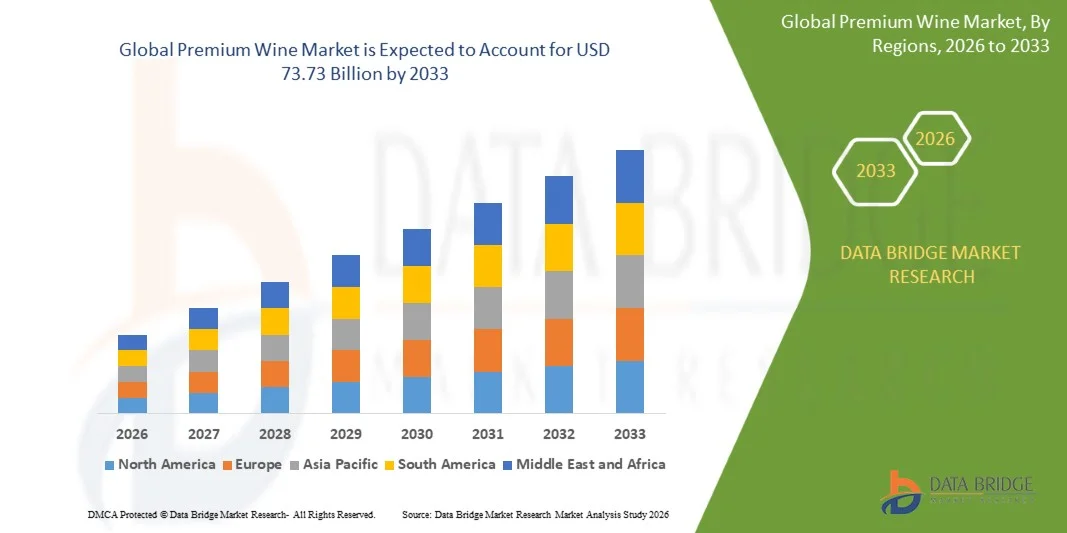
- As per Data Bridge Market Research analysis, the premium wine market was valued at USD 48.56 billion in 2025 and is projected to reach USD 73.73 billion by 2033, growing at a CAGR of 5.36% from 2026 to 2033.
- The market is experiencing consistent growth driven by rising disposable incomes, increasing consumer preference for high-quality and luxury alcoholic beverages, growing wine culture, and expanding demand for premium and differentiated wine varieties across both mature and emerging markets.
- The growing trend toward premiumization, wine tourism, fine-dining experiences, and online wine retail is encouraging wineries to introduce distinctive products with superior quality, unique flavours, specialized ageing processes, and attractive packaging. In addition, consumers are showing greater interest in wines with strong provenance, craftsmanship, and exclusivity, while digital sales channels are making premium wine products more accessible and supporting market growth.
Market Size & Forecast
- Global Market Value (2025): USD 48.56 Billion
- Expected Market Value (2033): USD 73.73 Billion
- Forecast CAGR (2026–2033): 5.36%
- Leading Region in 2025: North America
- Fastest Growing Region: Asia Pacific
What are the Major Takeaways of the Premium Wine Market?
- North America dominated the premium wine market with the largest revenue share of 35.4% in 2025, supported by strong consumer demand for premium and high-quality wines, established wine culture, high purchasing power, and growing premiumization across the alcoholic beverage sector.
- Asia-Pacific is expected to be the fastest-growing region at a CAGR of 10.2% from 2026 to 2033, fueled by rising disposable incomes, expanding premiumization trends, growing wine consumption, increasing e-commerce penetration, and changing consumer preferences toward high-quality and luxury wine products.
- The red wine segment led the market with a 58.9% share in 2025, driven by its strong consumer preference, established premium positioning, and wide availability across premium wine portfolios
- Rose wine are the fastest-growing wine colour type, projected to register a CAGR of 4.1%, reflecting the surge in consumer interest in lighter and refreshing wine varieties.
- The still wine segment dominated the product type category with a 49.4% revenue share in 2025, led by its broad consumer acceptance and extensive representation across premium wine portfolios.
- Flavoured accounted for 61.4% of the market share in 2025, preferred by growing consumer interest in distinctive taste experiences and innovative wine products.
- The maple segment is the fastest-growing ageing barrel type category, with a CAGR of 10.3%, driven by increasing experimentation with alternative barrel materials in premium winemaking
Report Scope and Premium Wine Market Segmentation
|
Attributes |
Premium Wine Key Market Insights |
|
Segments Covered |
|
|
Countries Covered |
North America
Europe
Asia-Pacific
Middle East and Africa
South America
|
|
Key Market Players |
|
|
Market Opportunities |
|
|
Value Added Data Infosets |
In addition to the insights on market scenarios such as market value, growth rate, segmentation, geographical coverage, and major players, the market reports curated by the Data Bridge Market Research also include in-depth expert analysis, pricing analysis, brand share analysis, consumer survey, demography analysis, supply chain analysis, value chain analysis, raw material/consumables overview, vendor selection criteria, PESTLE Analysis, Porter Analysis, and regulatory framework. |
What is the Key Trend in the Premium Wine Market?
- Premium wine consumption is increasingly shifting toward selective premiumization, with consumers drinking more selectively while prioritizing higher-quality, distinctive, and experience-driven wines that offer stronger perceived value and authenticity.
- For instance, in October 2024, Champagne Telmont advanced sustainable premium wine production by introducing an 800-gram lightweight Champagne bottle, reducing the bottle weight while maintaining the strength required for sparkling wine. The initiative addresses packaging-related carbon emissions while preserving the premium positioning of Champagne
- Premium wine producers are increasingly emphasizing sustainability and environmentally responsible packaging, including lighter bottles, recycled materials, and lower-impact production practices, as consumers place greater importance on environmental attributes when purchasing premium products.
- No- and low-alcohol wine is also emerging as an important premiumization trend as consumers increasingly seek moderation without sacrificing taste, quality, and sophisticated drinking experiences.
- For instance, in February 2025, California wine industry professionals including Napa winemaker Aaron Pott and the founders of SingleThread entered the premium non-alcoholic wine segment, focusing on high-quality grapes and sophisticated winemaking techniques to improve the taste and quality of dealcoholized wines. This demonstrates the industry's shift toward premium, moderation-oriented wine products.
- As consumers increasingly prioritize quality over quantity, sustainability, moderation, and meaningful consumption occasions, premium wineries are expected to expand differentiated portfolios featuring sparkling, organic, sustainable, and no- or low-alcohol offerings, reinforcing premiumization as a major growth strategy.
What are the Key Drivers of the Premium Wine Market?
- The rising disposable incomes and growing consumer willingness to trade up toward higher-quality alcoholic beverages are increasing demand for premium wines, particularly as consumers associate superior quality, provenance, craftsmanship, and exclusivity with greater value.
- For instance, In July 2025, The Australian reported that Pernod Ricard was expanding its DR3 x St Hugo premium wine brand, priced at around AUD 80 per bottle, to attract younger consumers to the fine-wine category. The initial launch had sold out quickly, demonstrating demand for premium wines combining brand heritage, storytelling, and experiential appeal.
- Growing interest in fine dining, wine tourism, celebrations, and experiential consumption is encouraging consumers to explore distinctive wine varieties, premium sparkling wines, limited releases, and products with stronger provenance and storytelling.
- Increasing consumer interest in healthier and more mindful drinking is also creating demand for premium no- and low-alcohol wines, while improved product quality and greater availability are helping these products compete more effectively with conventional alcoholic beverages.
- For instance, In July 2025, Financial Times reported that fine-wine buyers were returning to the market as lower prices created attractive opportunities, with collectors increasingly purchasing mature, ready-to-drink premium wines. The report noted that the Liv-ex 100 index had fallen nearly 21% over two years, prompting renewed buying activity among wine collectors and demonstrating continued demand for high-value wines when perceived value improves.
- With consumers increasingly seeking products that combine quality, authenticity, experience, and personal values, premium wineries are expected to benefit from continued trading-up behavior, product innovation, and the expansion of premium offerings across emerging consumption occasions.
Which Factors are Challenging the Growth of the Premium Wine Market?
- Premium wine faces growing pressure from inflation, reduced discretionary spending, and changing alcohol consumption habits, which can make higher-priced wines less accessible to price-sensitive consumers and encourage substitution toward lower-priced beverages.
- For instance, In January 2025, Reuters reported that global Champagne shipments fell 9.2% in 2024 to 271.4 million bottles, as inflation, economic uncertainty, and geopolitical tensions weakened consumer demand. Shipments declined 7.2% in France and 10.8% in export markets, highlighting how weaker discretionary spending can restrain demand for premium alcoholic beverages.
- Climate change and extreme weather conditions are creating additional challenges for premium wine producers by affecting grape yields, harvest quality, production consistency, and the availability of premium-quality grapes required for distinctive and aged wines.
- Changing consumer attitudes toward alcohol, including moderation and declining consumption frequency, are further restricting wine volumes and creating challenges for premium brands that depend on consumers regularly trading up to higher-priced products.
- For instance, In November 2025, Reuters reported that global wine production remained 7% below the five-year average despite a 3% increase from 2024, with extreme weather including droughts, heat, frosts, and floods affecting vineyards. France recorded its smallest harvest since 1957, while Spain's production fell to a 30-year low, demonstrating how climate volatility can constrain grape supply and increase production risks for premium wine producers.
- The combination of economic pressure, climate-related production risks, moderation, and changing consumer preferences continues to challenge premium wine sales, requiring producers to strengthen value propositions, improve production resilience, and develop differentiated products that justify higher prices.
How is the Premium Wine Market Segmented?
The premium wine market is segmented on the basis of wine colour, product type, flavour, aging years, ageing barrel type, distribution channel, and packaging type
- By Wine Colour
On the basis of wine colour, the premium wine market is segmented into red wine, white wine, rose wine, and others. The red wine segment dominated the market with 58.9% share in 2025, owing to its strong consumer preference, established premium positioning, and wide availability across premium wine portfolios. Red wine is widely associated with fine dining, wine appreciation, and premium consumption occasions. The segment includes established varieties such as Cabernet Sauvignon, Merlot, Pinot Noir, and other internationally recognized red wine varieties. Premium consumers also value red wines for their ageing potential, complex flavour profiles, and regional authenticity. The availability of red wine across specialty retailers, restaurants, wine clubs, and online platforms further strengthens its market presence.
The rose wine segment is projected to register the fastest growth at 4.1% CAGR during the forecast period, driven by increasing consumer interest in lighter and refreshing wine varieties. Rose wine is increasingly being positioned as a premium lifestyle beverage rather than only a seasonal product. Its versatility makes it suitable for casual gatherings, restaurants, outdoor dining, and social occasions. Premium wineries are expanding their rose portfolios through distinctive grape varieties and specialized production methods. Growing interest among younger adult consumers is also encouraging experimentation with rose wines. Wine tourism and premium hospitality experiences are creating additional opportunities for the category.
- By Product Type
On the basis of product type, the premium wine market is segmented into still wine, fortified wine, sparkling wine, and dessert wine. The still wine segment dominated the market with 49.4% share in 2025, owing to its broad consumer acceptance and extensive representation across premium wine portfolios. Still wines are widely consumed during meals, social occasions, fine-dining experiences, and wine-tasting events. Producers offer extensive varieties based on grape type, geographical origin, vintage, and ageing characteristics. The segment also benefits from strong distribution through specialty stores, restaurants, supermarkets, and online retailers. Consumers are increasingly interested in the quality, provenance, and craftsmanship associated with premium still wines.
The sparkling wine segment is projected to register the fastest growth at 9.5% CAGR during the forecast period, supported by growing demand for premium and experiential drinking occasions. Sparkling wine is increasingly consumed beyond traditional celebrations, including during social gatherings, dining, brunch, and aperitivo occasions. Premium varieties such as Champagne, Prosecco, and Cava are gaining visibility among consumers seeking distinctive drinking experiences. Younger adult consumers are showing increasing interest in sparkling wine because of its versatility and premium lifestyle association. Wineries are also introducing innovative sparkling products with distinctive origins, production methods, and packaging. Expanding premium hospitality and fine-dining experiences is providing additional opportunities for the category.
- By Flavour
On the basis of flavour, the premium wine market is segmented into original and flavoured. The flavoured segment dominated the market with 61.4% share in 2025, supported by growing consumer interest in distinctive taste experiences and innovative wine products. Flavoured wines provide consumers with alternatives to conventional wine profiles and allow producers to differentiate their offerings. Fruit, botanical, floral, spice, and other flavour profiles can broaden the appeal of premium wine products. The segment is particularly relevant to consumers who are experimenting with new beverage experiences. Premium producers are using specialized ingredients, sophisticated formulations, and attractive packaging to strengthen product positioning. Digital marketing and online retail are also helping innovative flavoured products reach a wider audience.
The original segment is projected to register the fastest growth at 8.8% CAGR during the forecast period, driven by increasing consumer interest in authenticity, traditional winemaking, and distinctive grape characteristics. Premium wine consumers often value terroir, grape variety, geographical origin, vintage, and production techniques. Original wines allow producers to emphasize craftsmanship, heritage, and regional identity. The segment is particularly important within fine wine, collectible wine, and sommelier-led consumption. Premium restaurants and specialty retailers commonly highlight original wine profiles in curated selections. Growing interest in provenance and authentic wine experiences is further supporting the segment.
- By Aging Years
On the basis of aging years, the premium wine market is segmented into 1-17 years, 18-24 years, 25-44 years, 45-64 years, and 65+ years. The 1-17 years segment dominated the market with 33.9% share in 2025, owing to its wider availability and comparatively greater accessibility among premium wine consumers. Wines within this ageing range provide developed characteristics while remaining more accessible than extremely aged wines. Wineries can offer a broader selection of vintages within this category. Consumers seeking quality and sophistication without the scarcity associated with very old wines are supporting demand. Restaurants, specialty retailers, and online wine platforms commonly provide products within this ageing range. Wine tourism and tasting experiences are also increasing consumer awareness of ageing characteristics
The 18-24 years segment is projected to register the fastest growth at 11.5% CAGR during the forecast period, supported by increasing appreciation for mature premium wines. Consumers are becoming more interested in wines that have developed complex flavour and aroma characteristics through extended maturation. Premium wineries are increasingly highlighting vintage, ageing history, and cellar conditions as important aspects of product value. Collectors and wine enthusiasts are also showing greater interest in mature bottles that provide distinctive tasting experiences. Growth in wine education and tasting events is improving consumer understanding of ageing characteristics. Online specialty retailers are making mature wines more accessible to consumers seeking distinctive products.
- By Ageing Barrel Type
On the basis of ageing barrel type, the premium wine market is segmented into oak, maple, cedar, hickory, and others. The oak segment dominated the market with 36.7% share in 2025, owing to its extensive use in premium wine maturation and its ability to contribute distinctive flavour and structural characteristics. Oak barrels are widely used by premium wineries for red wines and other products requiring controlled maturation. Different oak varieties, toast levels, and barrel sizes allow producers to create differentiated sensory profiles. Oak ageing is strongly associated with traditional winemaking craftsmanship and premium quality. Consumers frequently associate oak-aged wines with complexity, sophistication, and fine-wine characteristics. The established expertise and supply infrastructure surrounding oak barrels further support their use
The maple segment is projected to register the fastest growth at 10.3% CAGR during the forecast period, driven by increasing experimentation with alternative barrel materials in premium winemaking. Producers are exploring different wood characteristics to create distinctive aromas and flavour profiles. Alternative ageing approaches can help wineries differentiate products within an increasingly competitive premium market. Consumer interest in craftsmanship and unique production techniques is encouraging experimentation with non-traditional ageing materials. Premium wineries can use specialized barrel ageing as a product differentiation strategy. Increasing interest in small-batch and innovative wines is creating additional opportunities for alternative barrel types
- By Distribution Channel
On the basis of distribution channel, the premium wine market is segmented into store based retailers and online retailers. The store based retailers segment dominated the market with an 62.6% share in 2025, owing to its established retail infrastructure and broad availability of premium wine products. Physical stores allow consumers to examine bottles, labels, vintages, origins, and packaging before making a purchase. Specialty wine retailers also provide expert recommendations and curated selections, which are particularly valuable for premium wine consumers. In-store tasting activities can further encourage consumers to explore higher-value products. Established relationships among wineries, distributors, and retailers support consistent product availability. Physical retailers also remain important for consumers who prefer personalized purchasing experiences.
The online retailers segment is projected to register the fastest growth at 10.8% CAGR during the forecast period, driven by increasing e-commerce adoption and greater consumer comfort with purchasing wine digitally. Online platforms provide access to a broad selection of premium wines from different regions and producers. Consumers can conveniently compare products, vintages, reviews, and recommendations before purchasing. Digital channels also provide opportunities for wineries to establish direct relationships with consumers. Subscription services, personalized recommendations, and digital wine education are further improving the online purchasing experience. Online retailers can also provide access to niche and limited-production wines that may have limited physical distribution.
- By Packaging Type
On the basis of packaging type, the premium wine market is segmented into bottles, boxes, cans, Tetra Pak, and PET plastic bottles. The bottles segment dominated the market with 70.0% share in 2025, owing to the strong association of glass bottles with premium quality, traditional presentation, and product authenticity. Bottled wine remains the preferred format for premium, vintage, and collectible wines. Glass packaging provides effective protection for wine when appropriately sealed and stored. Premium producers also use bottle shape, glass quality, labels, and closures to communicate brand identity and exclusivity. Bottles remain particularly important for restaurants, specialty retailers, gifting, and wine-cellar consumption. Consumer familiarity with traditional wine packaging further strengthens demand.
The cans segment is projected to register the fastest growth at 14.7% CAGR during the forecast period, driven by increasing demand for convenient, portable, and single-serve wine formats. Cans are lightweight and easier to transport than conventional glass bottles, making them suitable for outdoor events and casual social occasions. Their portability appeals to consumers seeking convenient premium beverage formats. Improvements in can technology are helping producers maintain product quality and shelf stability. Premium wineries are increasingly experimenting with attractive can designs and higher-quality wines to strengthen the premium positioning of canned products. Cans can also provide opportunities for recyclable and lower-weight packaging solutions.
Which Region Holds the Largest Share of the Premium Wine Market?
- North America dominated the premium wine market with the largest revenue share of 35.4% in 2025, supported by strong consumer demand for premium and high-quality wines, established wine culture, high purchasing power, and growing premiumization across the alcoholic beverage sector.
- The region also benefits from an established wine culture, increasing demand for high-quality and luxury wines, and the strong presence of premium wine producers and retailers. Growing consumer interest in fine wines, wine tourism, online purchasing, and premiumization is further supporting regional demand. The U.S. remains the leading country within North America, supported by its established wine market and strong consumer purchasing power. These factors continue to strengthen North America's leadership position in the global premium wine market.
U.S. Premium Wine Market Insight
The U.S. premium wine market is witnessing strong growth due to rising consumer preference for high-quality wines, premiumization, and increasing spending on luxury alcoholic beverages. The country's mature wine culture, along with the presence of established wineries, specialty retailers, and extensive distribution networks, is driving demand across premium and super-premium wine categories. In addition, growing interest in wine tourism, fine dining, online wine purchasing, and distinctive wine varieties is accelerating premium wine consumption across the country.
Asia-Pacific Premium Wine Market Insight
The Asia-Pacific premium wine market is expected to witness rapid growth, driven by rising disposable incomes, expanding middle-class populations, and increasing wine consumption across countries such as China, Japan, India, and Australia. Growing awareness of premium and imported wines, increasing urbanization, and expanding fine-dining and hospitality sectors are supporting regional market expansion. In addition, the growing popularity of e-commerce, wine tourism, and premium lifestyle products is accelerating demand for premium wines across both established and emerging markets.
Japan Premium Wine Market Insight
The Japan premium wine market is witnessing consistent growth due to rising consumer interest in high-quality wines, premium dining experiences, and sophisticated beverage products. Restaurants, hotels, specialty retailers, and wine enthusiasts are increasingly adopting premium wines from both domestic and international producers. Moreover, growing interest in wine pairing, wine education, imported wines, and online purchasing is further contributing to market growth, while Japan's established hospitality industry continues to support premium wine consumption.
China Premium Wine Market Insight
The China premium wine market is growing rapidly, driven by rising disposable incomes, expanding urban populations, and increasing consumer preference for premium and imported beverages. Growing adoption of premium wines across fine dining, hospitality, gifting, and social occasions is significantly boosting market demand. In addition, rising wine tourism, expanding e-commerce platforms, increasing consumer awareness of international wine varieties, and growing interest in premium lifestyle products are positioning China as one of the important growth markets for premium wine globally.
U.K. Premium Wine Market Insight
The U.K. premium wine market is experiencing steady growth, supported by rising consumer demand for premium, luxury, and distinctive wine products. Increasing spending on fine dining, wine experiences, specialty wine retail, and premium gifting is contributing to market growth. Furthermore, the expansion of online wine retailers, growing interest in sparkling and fine wines, and increasing consumer focus on provenance, quality, and sustainable production are strengthening the U.K.'s position as a key premium wine market.
Germany Premium Wine Market Insight
The Germany premium wine market is expanding steadily due to the country's established wine culture, strong domestic wine production, and increasing consumer interest in higher-quality wine products. Wineries, specialty retailers, restaurants, and hospitality businesses are increasingly offering premium wines to meet demand for distinctive varieties and sophisticated drinking experiences. Continuous growth in wine tourism, fine dining, online wine sales, and interest in sustainable and organically produced wines is further driving premium wine consumption in Germany.
Which are the Top Companies in Premium Wine Market?
The premium wine industry is primarily led by well-established companies, including:
- E. & J. Gallo Winery (U.S.)
- Constellation Brands, Inc. (U.S.)
- The Wine Group LLC (U.S.)
- Bronco Wine Co. (U.S.)
- Foley Family Wines, Inc. (U.S.)
- Wente Vineyards (U.S.)
- Treasury Wine Estates Ltd (Australia)
- Penfolds Wines (Australia)
- Pernod Ricard (France)
- Sogrape (Portugal)
- VSPT Wine Group (Chile)
- Viña Concha y Toro S.A. (Chile)
- Catena Zapata (Argentina)
- Jackson Family Wines (U.S.)
- Trinchero Family Estates (U.S.)
- Marchesi Antinori S.p.A. (Italy)
- Moët Hennessy (France)
- Louis Roederer (France)
- Champagne Bollinger (France)
- Piper-Heidsieck (France)
What are Latest Developments in Premium Wine Market?
- In February 2025, Penfolds launched Grange La Chapelle 2021, a world-first collaboration combining its iconic Australian Grange with La Chapelle from France’s Rhône Valley. The wine blended Shiraz from South Australia with Syrah from the Rhône, creating a new luxury wine expression that brought together two renowned winemaking traditions. The limited release was introduced through a global launch event in Paris and was made available through a highly selective distribution network. This development highlights increasing innovation and cross-border collaboration within the premium and luxury wine segment.
- In January 2025, Grover Zampa Vineyards launched Grover Essence de Cabernet Sauvignon, a single-vineyard wine produced from hand-picked grapes and matured in oak. The launch expanded the winery's premium portfolio and emphasized craftsmanship, vineyard origin, and specialized maturation. The product reflects the growing focus among premium wine producers on distinctive, limited-production wines with stronger provenance and differentiated production methods.
- In July 2024, Pernod Ricard expanded the DR3 x St Hugo premium wine brand nationally in Australia through Dan Murphy's stores and selected alcohol retailers. The wine was developed through a collaboration between Formula 1 driver Dan Ricciardo and St Hugo winemaker Peter Munro, with the initiative designed to introduce fine wine to younger consumers through contemporary storytelling and brand engagement. The expansion demonstrates how premium wineries are using collaborations and lifestyle-oriented branding to broaden the appeal of fine wine.
- In June 2023, Riboli Family Wines announced the launch of new packaging for its San Simeon wine portfolio, introducing a redesigned presentation featuring clean lines and an embossed gold-foil trident emblem. The packaging development was intended to give the portfolio a more distinctive and premium visual identity. The initiative demonstrates how established wine producers are using packaging innovation to strengthen brand differentiation and appeal within the premium wine category.
- In August 2023, Sula Vineyards reported strong demand for its premium wine portfolio, which contributed to an increase in the company's first-quarter profit. The performance reflected growing consumer interest in higher-value wine products in India, while Sula continued strengthening its premium wine offerings. The development demonstrates the increasing importance of premiumization and higher-value wine consumption in emerging wine markets.

- Interactive Data Analysis Dashboard
- Company Analysis Dashboard for high growth potential opportunities
- Research Analyst Access for customization & queries
- Competitor Analysis with Interactive dashboard
- Latest News, Updates & Trend analysis
- Harness the Power of Benchmark Analysis for Comprehensive Competitor Tracking
Global Premium Wine Market, Supply Chain Analysis and Ecosystem Framework
To support market growth and help clients navigate the impact of geopolitical shifts, DBMR has integrated in-depth supply chain analysis into its Global Premium Wine Market research reports. This addition empowers clients to respond effectively to global changes affecting their industries. The supply chain analysis section includes detailed insights such as Global Premium Wine Market consumption and production by country, price trend analysis, the impact of tariffs and geopolitical developments, and import and export trends by country and HSN code. It also highlights major suppliers with data on production capacity and company profiles, as well as key importers and exporters. In addition to research, DBMR offers specialized supply chain consulting services backed by over a decade of experience, providing solutions like supplier discovery, supplier risk assessment, price trend analysis, impact evaluation of inflation and trade route changes, and comprehensive market trend analysis.
Data collection and base year analysis are done using data collection modules with large sample sizes. The stage includes obtaining market information or related data through various sources and strategies. It includes examining and planning all the data acquired from the past in advance. It likewise envelops the examination of information inconsistencies seen across different information sources. The market data is analysed and estimated using market statistical and coherent models. Also, market share analysis and key trend analysis are the major success factors in the market report. To know more, please request an analyst call or drop down your inquiry.
The key research methodology used by DBMR research team is data triangulation which involves data mining, analysis of the impact of data variables on the market and primary (industry expert) validation. Data models include Vendor Positioning Grid, Market Time Line Analysis, Market Overview and Guide, Company Positioning Grid, Patent Analysis, Pricing Analysis, Company Market Share Analysis, Standards of Measurement, Global versus Regional and Vendor Share Analysis. To know more about the research methodology, drop in an inquiry to speak to our industry experts.
Data Bridge Market Research is a leader in advanced formative research. We take pride in servicing our existing and new customers with data and analysis that match and suits their goal. The report can be customized to include price trend analysis of target brands understanding the market for additional countries (ask for the list of countries), clinical trial results data, literature review, refurbished market and product base analysis. Market analysis of target competitors can be analyzed from technology-based analysis to market portfolio strategies. We can add as many competitors that you require data about in the format and data style you are looking for. Our team of analysts can also provide you data in crude raw excel files pivot tables (Fact book) or can assist you in creating presentations from the data sets available in the report.













