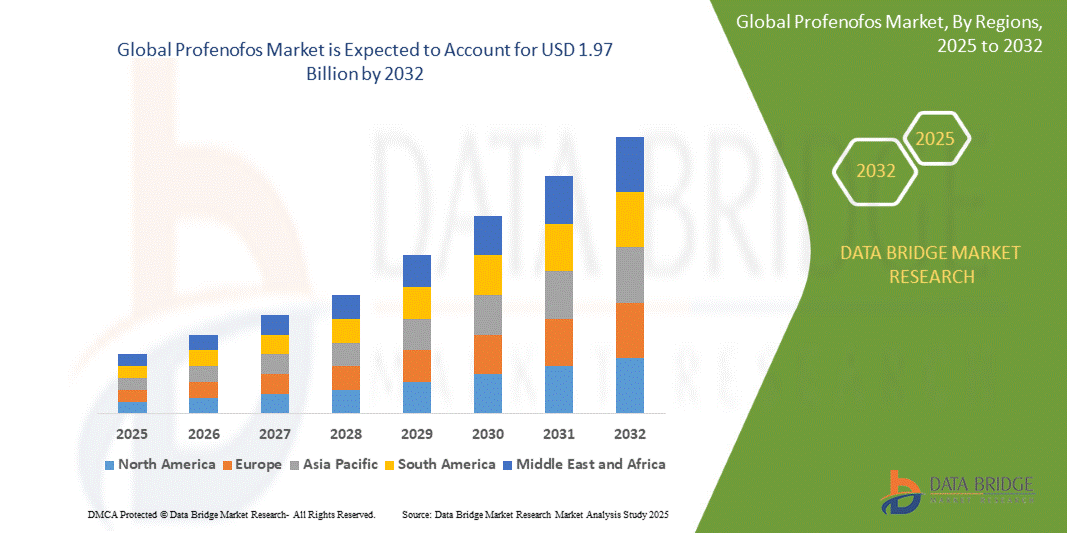
Profenofos Market Size
- The global profenofos market size was valued at USD 1.34 billion in 2024 and is expected to reach USD 1.97 billion by 2032, at a CAGR of 4.4% during the forecast period
- The market growth is primarily driven by increasing demand for effective pest control solutions, rising agricultural productivity needs, and growing adoption of profenofos in crop protection for high-yield crops like cotton and maize
- Growing awareness among farmers about the benefits of profenofos in controlling pests and mites, coupled with its versatility across multiple crop types, is further propelling market demand
Profenofos Market Analysis
- The profenofos market is experiencing steady growth due to the rising need for efficient insecticides and acaricides to enhance crop yield and quality
- Increasing adoption in both small-scale and large-scale farming operations, particularly in developing regions, is encouraging manufacturers to innovate with advanced formulations like emulsifiable concentrates and granules
- North America dominated the profenofos market with the largest revenue share of 36.4% in 2024, driven by a well-established agricultural sector, advanced farming practices, and high demand for crop protection solutions
- Asia-Pacific is expected to be the fastest-growing region during the forecast period, propelled by rapid agricultural expansion, increasing crop production, and rising awareness of pest management solutions in countries such as China, India, and Southeast Asian nations
- The Emulsifiable Concentrate (EC) segment dominated with a market revenue share of 49.5% in 2024, driven by its widespread use and effectiveness in pest control. EC formulations are favored for their ease of application, compatibility with spraying equipment, and rapid action against pests like bollworms and aphids, particularly in cotton and vegetable crops
Report Scope and Profenofos Market Segmentation
|
Attributes |
Profenofos Key Market Insights |
|
Segments Covered |
|
|
Countries Covered |
North America
Europe
Asia-Pacific
Middle East and Africa
South America
|
|
Key Market Players |
|
|
Market Opportunities |
|
|
Value Added Data Infosets |
In addition to the insights on market scenarios such as market value, growth rate, segmentation, geographical coverage, and major players, the market reports curated by the Data Bridge Market Research also include import export analysis, production capacity overview, production consumption analysis, price trend analysis, climate change scenario, supply chain analysis, value chain analysis, raw material/consumables overview, vendor selection criteria, PESTLE Analysis, Porter Analysis, and regulatory framework. |
Profenofos Market Trends
Increasing Adoption of Advanced Formulations in Crop Protection
- The global profenofos market is experiencing a notable trend towards the integration of advanced formulations such as Emulsifiable Concentrate (EC) and Granules (GR), alongside others, to enhance efficacy in pest management
- These formulations enable precise application and better absorption, providing deeper control over pests in various crop types including cotton, maize, potato, soybean, pulses, and others
- Profenofos-based solutions allow for more targeted insect and mite control, addressing potential infestations before they lead to significant crop losses or reduced yields
- For instance, several companies are developing profenofos products in bottled packaging and bag packaging that optimize application as insecticide and acaricide, improving pest resistance management in high-value crops
- This trend is enhancing the value proposition of profenofos systems, making them more appealing to both small-scale farmers and large agribusiness operators
- Advanced formulations can target a wide range of pests, including aphids, bollworms, mites, and whiteflies, across diverse agricultural settings
Profenofos Market Dynamics
Driver
Rising Demand for Effective Pest Management in Key Crop
- The increasing need for reliable crop protection solutions, such as targeted insecticides for real-time pest control and yield enhancement, is a major driver for the global profenofos market
- Profenofos enhances agricultural productivity by providing features like broad-spectrum pest control, quick knockdown effects, and compatibility with integrated pest management in crops like cotton and soybean
- Government initiatives, particularly in regions such as Asia-Pacific with supportive agricultural policies, are also contributing to the widespread adoption of profenofos up to the forecast period of 2032
- The expansion of modern farming practices and the development of efficient packaging options like bottled and bag formats are further enabling the growth of profenofos applications, offering better handling and distribution for sophisticated crop protection services
- Agrochemical manufacturers are increasingly offering profenofos in various formulations as standard products to meet farmer expectations and boost crop value, with Asia-Pacific emerging as the fastest-growing region
Restraint/Challenge
Stringent Regulations and Environmental Concerns
- The high costs associated with research, development, and compliance for profenofos formulations can be a significant barrier to adoption for many farmers and companies, especially in developing markets
- Integrating profenofos into sustainable farming practices can be complex and require additional investments
- In addition, environmental and health concerns pose a major challenge, as profenofos involves handling toxic chemicals that raise issues about soil contamination, residue management, and adherence to pesticide regulations
- The varied regulatory environment across different countries regarding pesticide usage, residue limits, and bans further complicates operations for global manufacturers and suppliers
- These factors can deter potential users and hinder market growth, particularly in regions where environmental awareness is high or where cost sensitivity is a key consideration, even as North America remains the dominating region
Profenofos Market Scope
The market is segmented on the basis of formulation type, crop type, packaging, and application.
- By Formulation Type
On the basis of formulation type, the global profenofos market is segmented into Emulsifiable Concentrate (EC), Granules (GR), and others. The Emulsifiable Concentrate (EC) segment dominated with a market revenue share of 49.5% in 2024, driven by its widespread use and effectiveness in pest control. EC formulations are favored for their ease of application, compatibility with spraying equipment, and rapid action against pests like bollworms and aphids, particularly in cotton and vegetable crops. Their high adoption in integrated pest management (IPM) programs and cost-effectiveness for large-scale farming solidify their market lead.
The Granules (GR) segment is projected to register the fastest growth rate from 2025 to 2032, driven by increasing demand for controlled-release formulations. Granular profenofos offers precise application, reduced environmental runoff, and suitability for soil-based pest control, appealing to growers in regions with stringent environmental regulations. Advances in granule technology and rising adoption in maize and soybean cultivation further boost this segment’s growth.
- By Crop Type
On the basis of crop type, the global profenofos market is segmented into cotton, maize, potato, soybean, pulses, and others. The cotton segment held the largest revenue share in 2024, accounting for 43% of the market, due to profenofos’s efficacy against resistant cotton bollworm complexes. Its critical role in resistance-rotation programs and high pest pressure in cotton belts, particularly in Asia-Pacific and North America, drives its dominance. The need for reliable, broad-spectrum insecticides in cotton cultivation continues to fuel demand.
The maize segment is expected to grow at the fastest CAGR from 2025 to 2032, propelled by expanding maize cultivation in Africa and Asia-Pacific. Rising pest pressures due to climate-induced pest migration and the need for cost-effective pest control solutions in maize farming are key drivers. Profenofos’s compatibility with IPM and its ability to target pests like whiteflies and aphids make it increasingly vital for maize growers.
- By Packaging
On the basis of packaging, the global profenofos market is segmented into bottled packaging and bag packaging. In 2024, bottled packaging dominated with a 63.2% market share, attributed to its ease of handling, accurate dosage, and better shelf stability. Bottled packaging, particularly in 1-liter and 5-liter formats, is preferred by small to medium-sized farms in Asia-Pacific for manual spraying applications. Its tamper-evident design and regulatory compliance further enhance its adoption globally.
Bag packaging is anticipated to grow at the fastest rate from 2025 to 2032, driven by its cost-effectiveness and suitability for large-scale farming. Bag packaging is favored for granular formulations, especially in North America and Africa, where bulk storage and application are common. The shift toward sustainable packaging and increasing demand for granules in soil-based applications support this segment’s growth.
- By Application
On the basis of application, the global profenofos market is segmented into insecticide and acaricide applications. The insecticide segment accounted for the largest revenue share in 2024, driven by profenofos’s broad-spectrum efficacy against pests like bollworms, whiteflies, and aphids across crops such as cotton, maize, and vegetables. Its role in resistance management and IPM programs, particularly in high-pest-pressure regions like Asia-Pacific, underpins its dominance.
The acaricide segment is projected to grow at the fastest CAGR from 2025 to 2032, fueled by rising mite infestations in crops like soybean and pulses. Profenofos’s dual contact and systemic action make it effective against resistant mite populations, increasing its adoption in rotation programs. Growing awareness of mite-related crop damage and the need for versatile pest control solutions drive this segment’s rapid expansion.
Profenofos Market Regional Analysis
- North America dominated the profenofos market with the largest revenue share of36.4% in 2024, driven by a well-established agricultural sector, advanced farming practices, and high demand for crop protection solutions
- Farmers and agricultural producers prioritize profenofos for its broad-spectrum insect and mite control, particularly in regions with intensive farming and diverse pest pressure
- Growth is supported by advancements in formulation technologies, such as high-purity emulsifiable concentrates and granules, alongside increasing adoption in both large-scale and small-scale farming operations
U.S. Profenofos Market Insight
The U.S. profenofos market captured the largest revenue share of 75.9% in 2024 within North America, fueled by strong demand for pest management in cotton and vegetable crops, as well as growing awareness of resistance management benefits. The trend toward integrated pest management (IPM) and regulatory support for structured insecticide rotation programs further boost market expansion. The use of profenofos in both conventional and precision agriculture complements its widespread adoption.
Europe Profenofos Market Insight
The Europe profenofos market is expected to witness steady growth, supported by regulatory emphasis on pest resistance management and sustainable agriculture. Farmers seek formulations that balance efficacy with environmental compliance, particularly in Eastern Europe and Mediterranean countries. Growth is prominent in both large-scale crop production and smaller retrofit applications, with countries like Germany and Spain showing significant uptake due to rising pest pressures and environmental concerns.
U.K. Profenofos Market Insight
The U.K. market for profenofos is expected to grow steadily, driven by demand for effective pest control in high-value crops and increasing awareness of integrated pest management benefits. Evolving regulations on pesticide residues influence farmer choices, balancing efficacy with compliance. The adoption of profenofos in greenhouse and specialty crop segments supports market expansion in urban and rural agricultural settings.
Germany Profenofos Market Insight
Germany is expected to witness steady growth in the profenofos market, attributed to its advanced agricultural sector and high farmer focus on crop yield optimization and pest resistance management. German farmers prefer high-purity formulations that ensure effective pest control while meeting stringent environmental regulations. The integration of profenofos in large-scale and precision farming supports sustained market growth.
Asia-Pacific Profenofos Market Insight
The Asia-Pacific region is expected to witness the fastest growth rate, driven by expanding agricultural production and rising demand for cost-effective pest control solutions in countries such as China, India, and Pakistan. Increasing awareness of profenofos’s efficacy in managing resistant pests, coupled with government initiatives promoting crop productivity, boosts demand. The region’s dominance in cotton and rice cultivation further accelerates market growth.
Japan Profenofos Market Insight
Japan’s profenofos market is expected to grow steadily due to strong farmer preference for high-quality, broad-spectrum insecticides that enhance crop protection and yield. The presence of major agricultural cooperatives and the integration of profenofos in commercial farming accelerate market penetration. Rising interest in sustainable pest management practices also contributes to growth.
China Profenofos Market Insight
China holds the largest share of the Asia-Pacific profenofos market, propelled by rapid agricultural expansion, rising crop production, and increasing demand for pest control solutions. The country’s growing farming sector and focus on food security support the adoption of advanced formulations. Strong domestic manufacturing capabilities and competitive pricing enhance market accessibility.
Profenofos Market Share
The profenofos industry is primarily led by well-established companies, including:
- Syngenta (Switzerland)
- Bayer CropScience (Germany)
- BASF SE (Germany)
- Corteva Agriscience (U.S.)
- UPL Limited (India)
- ADAMA Agricultural Solutions Ltd. (Israel)
- Nufarm Limited (Australia)
- FMC Corporation (U.S.)
- Sumitomo Chemical Co., Ltd. (Japan)
- PI Industries (India)
- Rallis India Limited (India)
What are the Recent Developments in Global Profenofos Market?
- In April 2024, Syngenta AG, UPL, Mitsui & Co., Ltd, Gharda Chemicals Ltd, and Coromandel International Ltd were identified as the leading players in the global Profenofos market, collectively holding 54.3% of the market share. This dominance reflects a highly concentrated market, where a few key manufacturers control the bulk of production and sales. Their strong presence is driven by advanced manufacturing capabilities, regulatory compliance, and widespread distribution networks, especially in regions like Asia and Africa, where Profenofos is in high demand for pest control in cotton and vegetable crops
- In January 2024, Hailir Pesticides and Chemicals Group commissioned its Phase II pilot plant at its Qingdao subsidiary, expanding production and formulation capacity for key active ingredients. Initiated in 2022, the facility enhances output of organophosphate technicals like profenofos, a cornerstone of Hailir’s insecticide portfolio. It supports large-scale manufacturing, quality control, and commercialization of combination products, including profenofos + pyrethroid blends widely used in cotton and vegetable protection. This development strengthens Hailir’s position in the crop protection market by boosting efficiency and product innovation
- In December 2023, the European Food Safety Authority (EFSA) finalized a targeted review that led to the reduction of maximum residue limits (MRLs) for Profenofos in citrus fruit to 0.01 mg/kg. This stringent regulation effectively restricts the use of Profenofos for growers exporting to the European Union, posing a significant challenge for producers in regions where the insecticide is widely used. The decision reflects EFSA’s commitment to consumer safety and highlights the increasing regulatory pressure on pesticide residues in food products
- In September 2023, Hailir Pesticides and Chemicals Group registered several new profenofos-based combination formulations in China, including Profenofos 15% + Methomyl 10% EC and Cypermethrin 40% + Profenofos 400 g/L EC. These additions expanded its insecticide portfolio for cotton, vegetables, and oilseed crops, reinforcing its market presence both domestically and in key export regions such as Asia and Africa. The formulations are designed to combat resistant pests, aligning with rising demand for dual-mode insecticides in integrated pest management programs
- In February 2023, Heranba Industries Ltd. began expanding its technical and formulation manufacturing capacity at its Saykha and Sarigam facilities in Gujarat, India. The initiative includes new production lines for organophosphate technicals and intermediates, notably profenofos, a key active ingredient in its insecticide portfolio. This expansion aims to boost supply availability and enhance competitiveness to meet rising demand across cotton, vegetable, and other crop segments. By strengthening its production infrastructure, Heranba is positioning itself to support both domestic and export markets with high-quality crop protection solutions

- Interactive Data Analysis Dashboard
- Company Analysis Dashboard for high growth potential opportunities
- Research Analyst Access for customization & queries
- Competitor Analysis with Interactive dashboard
- Latest News, Updates & Trend analysis
- Harness the Power of Benchmark Analysis for Comprehensive Competitor Tracking
Data collection and base year analysis are done using data collection modules with large sample sizes. The stage includes obtaining market information or related data through various sources and strategies. It includes examining and planning all the data acquired from the past in advance. It likewise envelops the examination of information inconsistencies seen across different information sources. The market data is analysed and estimated using market statistical and coherent models. Also, market share analysis and key trend analysis are the major success factors in the market report. To know more, please request an analyst call or drop down your inquiry.
The key research methodology used by DBMR research team is data triangulation which involves data mining, analysis of the impact of data variables on the market and primary (industry expert) validation. Data models include Vendor Positioning Grid, Market Time Line Analysis, Market Overview and Guide, Company Positioning Grid, Patent Analysis, Pricing Analysis, Company Market Share Analysis, Standards of Measurement, Global versus Regional and Vendor Share Analysis. To know more about the research methodology, drop in an inquiry to speak to our industry experts.
Data Bridge Market Research is a leader in advanced formative research. We take pride in servicing our existing and new customers with data and analysis that match and suits their goal. The report can be customized to include price trend analysis of target brands understanding the market for additional countries (ask for the list of countries), clinical trial results data, literature review, refurbished market and product base analysis. Market analysis of target competitors can be analyzed from technology-based analysis to market portfolio strategies. We can add as many competitors that you require data about in the format and data style you are looking for. Our team of analysts can also provide you data in crude raw excel files pivot tables (Fact book) or can assist you in creating presentations from the data sets available in the report.