


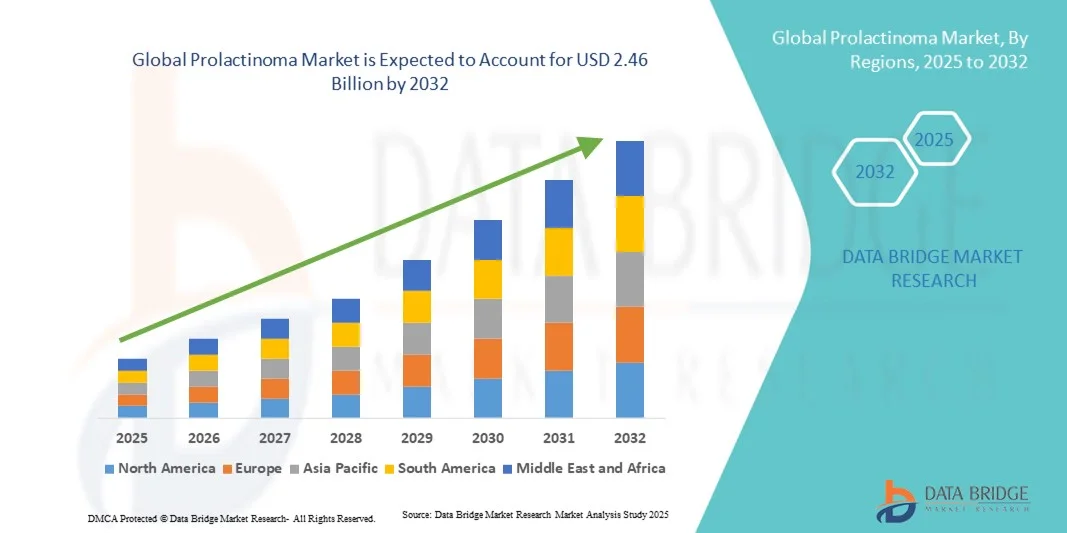
Prolactinoma Market Size
- The global prolactinoma market size was valued at USD 1.7 billion in 2024 and is expected to reach USD 2.46 billion by 2032, at a CAGR of 4.78% during the forecast period
- The market growth is largely fueled by the rising prevalence of pituitary tumors, increased awareness regarding hormonal disorders, and advancements in diagnostic imaging technologies that enable early detection and effective management of prolactinoma
- Furthermore, growing adoption of dopamine agonist therapies, coupled with ongoing clinical research into novel treatment approaches such as targeted drug delivery and minimally invasive surgical procedures, is accelerating the uptake of prolactinoma treatment solutions, thereby significantly boosting the industry's growth
Prolactinoma Market Analysis
- Prolactinoma, a type of pituitary gland tumor that leads to excessive production of the hormone prolactin, is becoming an increasingly important focus in the global endocrine disorder treatment landscape due to its growing prevalence and improved diagnostic capabilities
- The rising awareness of hormonal imbalances, coupled with technological advancements in MRI and hormone assay testing, is significantly boosting the early detection and management of prolactinoma cases
- North America dominated the prolactinoma market with the largest revenue share of 38.6% in 2024, driven by high healthcare expenditure, strong presence of key pharmaceutical players, and the widespread availability of advanced treatment options such as dopamine agonists and minimally invasive pituitary surgeries. The U.S. continues to lead regional growth, supported by favorable reimbursement policies and a well-established endocrinology care network
- Asia-Pacific is expected to be the fastest-growing region in the prolactinoma market during the forecast period, projected to expand at a CAGR of 9.7%, owing to increasing awareness about hormonal disorders, expanding healthcare infrastructure, and the rising adoption of advanced imaging techniques in countries like China, Japan, and India
- The blood test segment dominated the market with the largest revenue share of 48.2% in 2024, attributed to its vital role in identifying elevated prolactin levels at an early stage
Report Scope and Prolactinoma Market Segmentation
|
Attributes |
Prolactinoma Key Market Insights |
|
Segments Covered |
|
|
Countries Covered |
North America
Europe
Asia-Pacific
Middle East and Africa
South America
|
|
Key Market Players |
|
|
Market Opportunities |
|
|
Value Added Data Infosets |
In addition to the insights on market scenarios such as market value, growth rate, segmentation, geographical coverage, and major players, the market reports curated by the Data Bridge Market Research also include in-depth expert analysis, patient epidemiology, pipeline analysis, pricing analysis, and regulatory framework. |
Prolactinoma Market Trends
Rising Adoption of Advanced Dopamine Agonists and Imaging Technologies
- A significant and accelerating trend in the global prolactinoma market is the rising use of advanced dopamine agonists such as cabergoline and bromocriptine, alongside improvements in diagnostic imaging technologies. These developments are enhancing early detection and effective long-term disease management
- For instance, in September 2023, Sun Pharmaceutical Industries expanded its endocrinology portfolio by introducing advanced research on long-acting dopamine agonist formulations for prolactin-secreting pituitary tumors. Similarly, Pfizer and Ipsen are investing in novel receptor modulators designed to reduce drug resistance and improve patient tolerance
- AI-integrated MRI and 3D imaging tools are further supporting physicians in detecting microadenomas and monitoring tumor regression with higher precision. In April 2024, GE HealthCare launched AI-assisted MRI enhancements that optimize pituitary lesion visualization and follow-up accuracy
- The integration of these technologies supports early diagnosis, treatment personalization, and improved patient adherence, collectively driving transformation in prolactinoma management
- The growing awareness about hormonal health, combined with technological innovation in imaging and pharmacology, is strengthening diagnostic rates and enabling better therapeutic outcomes globally
Prolactinoma Market Dynamics
Driver
Growing Prevalence of Pituitary Disorders and Hormonal Awareness
- The global prolactinoma market is primarily driven by the increasing incidence of pituitary gland disorders, particularly micro- and macroadenomas that secrete excess prolactin. The greater recognition of hormonal imbalances affecting fertility, menstrual cycles, and libido has prompted a surge in early diagnostic screenings
- For instance, in March 2024, the Endocrine Society highlighted a steady rise in prolactinoma diagnoses across developed and emerging regions due to growing awareness campaigns and improved access to MRI-based pituitary imaging
- The expanding network of specialized endocrinology clinics, coupled with the availability of advanced dopamine agonists like cabergoline, has made effective management of the condition more feasible than ever before. Hospitals and research institutes are also investing in precision medicine approaches that enable dose personalization based on patient tolerance and response
- Furthermore, an increasing focus on women’s reproductive health and fertility has played a crucial role in boosting early prolactinoma detection, especially in women of childbearing age. This has expanded the patient pool for treatment and contributed significantly to market growth
- In addition, rising healthcare expenditure, technological progress in imaging modalities, and supportive reimbursement structures in countries such as the U.S., Japan, and Germany are reinforcing the market’s positive trajectory
Restraint/Challenge
Therapeutic Resistance, Side Effects, and Limited Accessibility in Emerging Markets
- Despite strong progress, the prolactinoma market faces challenges related to treatment resistance, drug intolerance, and limited accessibility to advanced therapies in lower-income countries. Approximately 10–20% of patients show partial or no response to dopamine agonists such as cabergoline or bromocriptine, making management more complex and costly
- Prolonged therapy can also lead to adverse effects such as cardiac valvulopathy, nausea, or orthostatic hypotension, which often discourage patient compliance. According to a 2022 study published in the Journal of Clinical Endocrinology & Metabolism, recurrence rates following treatment discontinuation are rising, highlighting the necessity for lifelong monitoring and follow-up
- In many developing regions, limited endocrinology infrastructure, delayed diagnosis, and insufficient awareness hinder timely intervention. The high cost of advanced imaging tools such as MRI and PET-CT further restricts access to precise diagnosis and ongoing monitoring, especially in rural healthcare systems
- In addition, regulatory delays in drug approval and inconsistent reimbursement policies create barriers to the availability of newer formulations and combination therapies. Pharmaceutical firms are focusing on overcoming these challenges through innovations in drug delivery, international collaborations, and tele-endocrinology platforms that extend specialized care to underserved populations
However, until broader affordability and global treatment equity are achieved, these limitations will continue to restrain the full growth potential of the prolactinoma therapeutics market
Prolactinoma Market Scope
The market is segmented on the basis of symptoms, diagnosis, and treatment.
- By Symptoms
On the basis of symptoms, the Prolactinoma market is segmented into low bone density, reduction of hormone production, headaches, visual disturbances, infertility, and loss of interest in sexual activity. The infertility segment dominated the market with the largest revenue share of 36.8% in 2024, primarily driven by the increasing prevalence of hyperprolactinemia-related reproductive disorders and hormonal imbalances. The growing number of women experiencing ovulation issues and menstrual irregularities due to prolactin-secreting pituitary tumors has intensified demand for diagnostic and therapeutic interventions. Furthermore, greater awareness regarding fertility management, coupled with the rising number of fertility clinics and gynecological consultations, has strengthened segment expansion. The growing emphasis on hormonal profiling as part of infertility workups is further supporting market growth. Pharmaceutical advances in prolactin-lowering agents and improved endocrinological care infrastructure also contribute significantly to this dominance.
The visual disturbances segment is anticipated to witness the fastest growth rate of 8.7% CAGR from 2025 to 2032, driven by the rising incidence of macroadenomas compressing optic pathways and causing partial or complete visual loss. Increasing awareness of early detection of pituitary tumors through neuro-ophthalmological assessments and the rising adoption of MRI scans are supporting early intervention. Moreover, the use of AI-integrated imaging techniques is enhancing diagnosis accuracy for vision-related complications. As hospitals and specialty clinics expand advanced imaging capabilities and awareness campaigns grow for early tumor management, this segment is set to expand strongly during the forecast period.
- By Diagnosis
On the basis of diagnosis, the Prolactinoma market is segmented into blood test, brain imaging, and vision test. The blood test segment dominated the market with the largest revenue share of 48.2% in 2024, attributed to its vital role in identifying elevated prolactin levels at an early stage. The availability of advanced immunoassay platforms, automation in laboratory diagnostics, and cost-efficient hormonal panels has made prolactin testing routine in hospitals and clinics. Increasing inclusion of prolactin assessment in fertility and endocrine panels, coupled with strong physician recommendation for hormonal screening, continues to support segment growth. Additionally, government-backed preventive health initiatives and private-sector investments in diagnostic infrastructure have improved test accessibility across both developed and emerging economies. The segment’s wide adoption for screening, monitoring, and treatment follow-up ensures its continued market dominance.
The brain imaging segment is projected to record the fastest CAGR of 9.4% from 2025 to 2032, supported by rapid technological advancements in MRI and CT modalities that allow high-resolution visualization of pituitary adenomas. The growing reliance on 3D and AI-based imaging for precise tumor detection and treatment planning is fueling growth. Moreover, partnerships between imaging technology companies and hospitals are improving access to advanced diagnostic systems. The rising prevalence of macroadenomas requiring imaging evaluation for surgical planning, and increased awareness about neuroendocrine disorders, further enhance the demand for this diagnostic approach across global healthcare systems.
- By Treatment
On the basis of treatment, the Prolactinoma market is segmented into medications, surgery, and radiation.
The medications segment accounted for the largest market revenue share of 71.5% in 2024, driven by the widespread use of dopamine agonists such as cabergoline and bromocriptine, which are highly effective in reducing prolactin levels and tumor size. The preference for non-invasive management, coupled with favorable clinical success rates, ensures that medications remain the first-line therapy globally. Rising awareness among endocrinologists about updated clinical protocols and the increasing availability of generics have further bolstered demand. Moreover, continuous research into extended-release formulations and patient-friendly dosing schedules is expanding patient compliance. Strategic collaborations between pharmaceutical companies and hospitals to enhance accessibility also contribute significantly to the dominance of this segment.
The surgery segment is expected to witness the fastest growth rate of 8.9% CAGR from 2025 to 2032, driven by advancements in minimally invasive transsphenoidal procedures and image-guided surgical systems. This approach is increasingly preferred for patients resistant to medical therapy or with large tumors exerting pressure on surrounding structures. Innovations in neuronavigation and endoscopic visualization are reducing complication rates and hospital stays, improving procedural outcomes. Additionally, the growing number of specialized neurosurgical centers and rising demand for curative treatment options in advanced cases are propelling the growth of this segment. Expanding healthcare infrastructure in emerging economies and increasing insurance coverage for pituitary surgeries are further strengthening segment growth globally.
Prolactinoma Market Regional Analysis
- North America dominated the prolactinoma market with the largest revenue share of 38.6% in 2024, driven by high healthcare expenditure, the strong presence of key pharmaceutical players, and the widespread availability of advanced treatment options such as dopamine agonists and minimally invasive pituitary surgeries
- The region benefits from robust endocrinology care networks, early diagnosis rates, and the adoption of advanced imaging techniques like MRI and CT scans
- The market continues to lead market growth within North America, supported by favorable reimbursement policies, ongoing research into precision medicine, and strong collaboration between academic institutions and biotechnology companies focused on pituitary tumor management
U.S. Prolactinoma Market Insight
The U.S. prolactinoma market captured the largest revenue share in 2024 within North America, attributed to the growing prevalence of pituitary disorders, increased awareness of hormonal health, and advancements in diagnostic imaging. The presence of major pharmaceutical firms developing prolactin-lowering drugs, along with supportive healthcare reimbursement frameworks, continues to strengthen the country’s position. Additionally, an expanding network of endocrinology specialists and academic research centers engaged in pituitary tumor studies further enhances market growth in the U.S.
Europe Prolactinoma Market Insight
The Europe prolactinoma market is projected to witness steady growth during the forecast period, driven by the rising incidence of hormonal disorders, robust healthcare infrastructure, and ongoing research in neuroendocrine diseases. Government initiatives aimed at improving access to advanced treatment options, along with a growing elderly population prone to pituitary adenomas, are fueling market expansion. The region also benefits from strong collaborations between research institutes and hospitals working on innovative treatment approaches.
U.K. Prolactinoma Market Insight
The U.K. prolactinoma market is expected to expand at a notable CAGR over the forecast period, driven by a growing emphasis on early diagnosis and treatment of pituitary tumors. The presence of advanced healthcare facilities, combined with active clinical trials in endocrine oncology, contributes to market growth. Furthermore, increasing awareness programs led by healthcare organizations and supportive NHS initiatives promoting access to hormonal therapy are strengthening the U.K.’s market position.
Germany Prolactinoma Market Insight
The Germany prolactinoma market is anticipated to register significant growth owing to strong healthcare infrastructure, a focus on medical research, and the adoption of novel treatment approaches for pituitary tumors. Germany’s emphasis on minimally invasive neurosurgical techniques and personalized endocrinology solutions is enhancing patient outcomes. The growing number of academic collaborations and investments in pituitary tumor research further support market advancement.
Asia-Pacific Prolactinoma Market Insight
The Asia-Pacific prolactinoma market is projected to be the fastest-growing region, expanding at a CAGR of 9.7% during the forecast period. Growth is fueled by rising awareness of hormonal disorders, expanding healthcare infrastructure, and the adoption of advanced diagnostic imaging technologies in countries such as China, Japan, and India. Increasing government investments in healthcare modernization, along with improving access to endocrinology specialists and treatment centers, are further stimulating regional market development.
Japan Prolactinoma Market Insight
The Japan prolactinoma market is gaining traction due to the country’s focus on early disease detection, technological innovation in imaging diagnostics, and a strong culture of preventive healthcare. High patient awareness and continuous medical research into pituitary disorders are driving growth. Additionally, government-backed initiatives supporting rare disease management and access to specialized care centers are further propelling the market in Japan.
China Prolactinoma Market Insight
The China prolactinoma market accounted for the largest market share within Asia-Pacific in 2024, supported by a large patient pool, growing healthcare expenditure, and rapid technological adoption in medical imaging and endocrinology. The government’s efforts to strengthen national healthcare systems, coupled with increasing investment by domestic pharmaceutical companies in hormone-related drug development, are contributing to robust market expansion.
Prolactinoma Market Share
The Prolactinoma industry is primarily led by well-established companies, including:
- Pfizer Inc. (U.S.)
- Novartis AG (Switzerland)
- Lilly (U.S.)
- AbbVie Inc. (U.S.)
- Johnson & Johnson and its affiliates (U.S.)
- F. Hoffmann-La Roche Ltd. (Switzerland)
- Ipsen Biopharmaceuticals, Inc. (France)
- Endo International plc (Ireland)
- Sun Pharmaceutical Industries Ltd. (India)
- Takeda Pharmaceutical Company Limited (Japan)
- Teva Pharmaceutical Industries Ltd. (Israel)
- Dr. Reddy’s Laboratories Ltd. (India)
- Zydus Lifesciences Limited (India)
- Biocon Limited (India)
Latest Developments in Global Prolactinoma Market
- In August 2022, Pfizer announced continued research on cabergoline-based dopamine agonists and novel long-acting formulations designed to enhance compliance and reduce cardiovascular side effects in prolactinoma patients. This marks a step forward in developing safer, next-generation therapeutic options
- In May 2023, the Pituitary Society published an updated consensus statement on the Diagnosis and Management of Prolactin-Secreting Pituitary Adenomas, providing globally accepted guidelines for early diagnosis, imaging protocols, and optimized use of dopamine agonists in prolactinoma management. This development strengthened clinical standardization and improved patient outcomes worldwide
- In March 2024, researchers at the Mayo Clinic introduced advancements in endoscopic transsphenoidal surgical techniques for prolactinoma removal, resulting in reduced recovery times and improved visual and hormonal outcomes. This innovation has strengthened the adoption of minimally invasive approaches in pituitary tumor management worldwide
- In January 2025, a clinical study published in The Journal of Clinical Endocrinology & Metabolism revealed that patients undergoing total resection surgery for prolactinoma achieved remission rates exceeding 90%, highlighting surgery as a potential first-line option for selected cases. This finding is influencing treatment decisions among endocrinologists and neurosurgeons globally

- Interactive Data Analysis Dashboard
- Company Analysis Dashboard for high growth potential opportunities
- Research Analyst Access for customization & queries
- Competitor Analysis with Interactive dashboard
- Latest News, Updates & Trend analysis
- Harness the Power of Benchmark Analysis for Comprehensive Competitor Tracking
Data collection and base year analysis are done using data collection modules with large sample sizes. The stage includes obtaining market information or related data through various sources and strategies. It includes examining and planning all the data acquired from the past in advance. It likewise envelops the examination of information inconsistencies seen across different information sources. The market data is analysed and estimated using market statistical and coherent models. Also, market share analysis and key trend analysis are the major success factors in the market report. To know more, please request an analyst call or drop down your inquiry.
The key research methodology used by DBMR research team is data triangulation which involves data mining, analysis of the impact of data variables on the market and primary (industry expert) validation. Data models include Vendor Positioning Grid, Market Time Line Analysis, Market Overview and Guide, Company Positioning Grid, Patent Analysis, Pricing Analysis, Company Market Share Analysis, Standards of Measurement, Global versus Regional and Vendor Share Analysis. To know more about the research methodology, drop in an inquiry to speak to our industry experts.
Data Bridge Market Research is a leader in advanced formative research. We take pride in servicing our existing and new customers with data and analysis that match and suits their goal. The report can be customized to include price trend analysis of target brands understanding the market for additional countries (ask for the list of countries), clinical trial results data, literature review, refurbished market and product base analysis. Market analysis of target competitors can be analyzed from technology-based analysis to market portfolio strategies. We can add as many competitors that you require data about in the format and data style you are looking for. Our team of analysts can also provide you data in crude raw excel files pivot tables (Fact book) or can assist you in creating presentations from the data sets available in the report.












