


Prostate Cancer Antigen 3 (PCA3) Test Market Overview
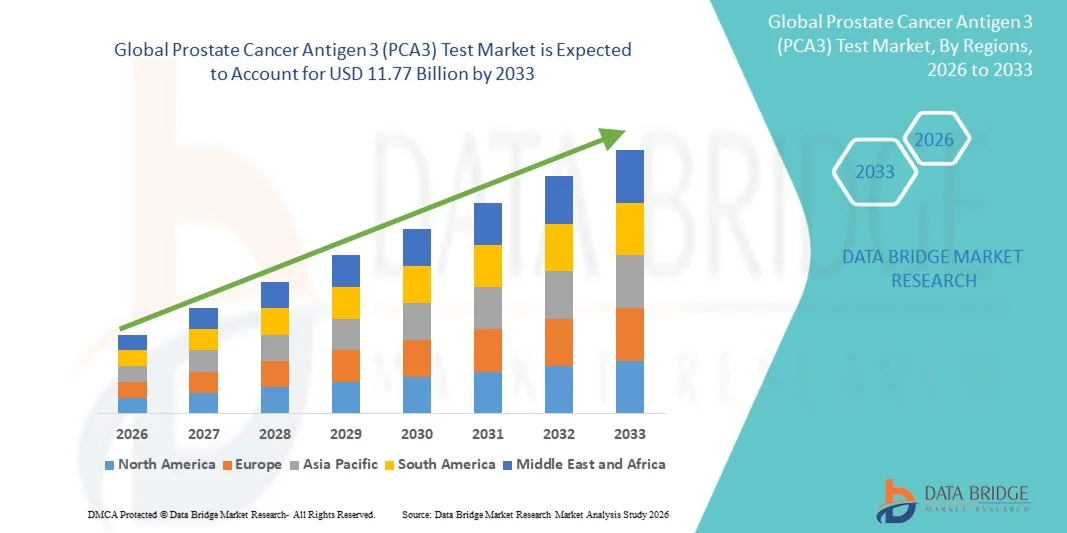
The Prostate Cancer Antigen 3 (PCA3) Test Market was valued at USD 4.93 billion in 2025 and is projected to reach USD 11.77 billion by 2033, growing at a CAGR of 11.50% from 2026 to 2033. The market is experiencing steady growth driven by the increasing prevalence of prostate cancer, growing awareness regarding early cancer detection, and rising adoption of non-invasive molecular diagnostic technologies. Continuous advancements in genetic and biomarker-based testing, coupled with increasing emphasis on precision medicine and personalized oncology, are expanding the application of PCA3 testing across hospitals, diagnostic laboratories, and urology clinics.
The rising incidence of prostate cancer globally, along with the limitations associated with conventional prostate-specific antigen (PSA) testing, is encouraging healthcare providers to adopt more specific diagnostic tools such as PCA3 tests. PCA3 testing offers improved specificity for prostate cancer detection and helps reduce unnecessary prostate biopsies, making it an increasingly valuable tool in clinical decision-making. In addition, growing investments in molecular diagnostics, increasing adoption of urine-based cancer screening methods, and expanding integration of biomarker testing into prostate cancer management pathways are further supporting market growth. The increasing focus on early diagnosis, improved patient outcomes, and cost-effective cancer screening strategies continues to drive demand for PCA3 testing solutions across both developed and emerging healthcare markets.
Key Market Trends & Insights
- North America dominated the Prostate Cancer Antigen 3 (PCA3) Test Market with the largest revenue share of 39.14% in 2025, supported by high prostate cancer screening rates, advanced molecular diagnostic infrastructure, favorable reimbursement policies, and the strong presence of leading diagnostic companies. Increasing adoption of biomarker-based testing and growing awareness regarding early prostate cancer detection continue to drive regional market growth.
- The molecular segment dominated the market with a share of 76.84% in 2025 due to its superior specificity, sensitivity, and clinical relevance in prostate cancer detection.
- Asia-Pacific is expected to be the fastest-growing region at a CAGR of 8.3% from 2026 to 2033, fueled by rising healthcare expenditure, improving cancer screening infrastructure, increasing awareness regarding prostate cancer diagnosis, and expanding access to molecular diagnostic technologies across China, India, Japan, and South Korea.
- The Instruments segment is the fastest-growing type of test category, projected to register a CAGR of 8.0% from 2026 to 2033, reflecting increasing investments in automated molecular diagnostic platforms, laboratory modernization initiatives, and growing adoption of advanced cancer detection technologies.
- The Molecular Test segment dominates the test type category with a 71.46% revenue share in 2025, led by its superior diagnostic specificity, higher clinical accuracy, and widespread use in differentiating prostate cancer patients from individuals with benign prostate conditions.
- RT-PCR technology accounted for 58.37% of the market in 2025, preferred for its high sensitivity, rapid turnaround time, reproducibility, and ability to accurately quantify PCA3 gene expression levels in urine samples, making it the gold-standard technology for PCA3-based prostate cancer testing.
- The Public Health Labs segment is expected to be the fastest-growing end-use category, with a CAGR of 8.4% from 2026 to 2033, driven by expanding government-funded cancer screening programs, increasing investments in molecular diagnostic capabilities, and growing efforts to improve access to early prostate cancer detection services across both developed and emerging healthcare markets.
Market Size & Forecast
- Global Market Value (2025): USD 4.93 Billion
- Expected Market Value (2033): USD 11.77 Billion
- Forecast CAGR (2026–2033): 11.50%
- Leading Region in 2025: North America
- Fastest Growing Region: Asia-Pacific
Report Scope and Prostate Cancer Antigen 3 (PCA3) Test Market Segmentation
|
Attributes |
Prostate Cancer Antigen 3 (PCA3) Test Key Market Insights |
|
Segments Covered |
|
|
Countries Covered |
North America · U.S. · Canada · Mexico Europe · Germany · France · U.K. · Netherlands · Switzerland · Belgium · Russia · Italy · Spain · Turkey · Rest of Europe Asia-Pacific · China · Japan · India · South Korea · Singapore · Malaysia · Australia · Thailand · Indonesia · Philippines · Rest of Asia-Pacific Middle East and Africa · Saudi Arabia · U.A.E. · South Africa · Egypt · Israel · Rest of Middle East and Africa South America · Brazil · Argentina · Rest of South America |
|
Key Market Players |
• Hologic, Inc. (U.S.) |
|
Market Opportunities |
· Expansion of Non-Invasive Prostate Cancer Screening Programs · Integration of PCA3 Testing with Precision Medicine and Multi-Biomarker Diagnostics · Growth Potential in Emerging Markets through Improved Diagnostic Infrastructure |
|
Value Added Data Infosets |
In addition to the insights on market scenarios such as market value, growth rate, segmentation, geographical coverage, and major players, the market reports curated by the Data Bridge Market Research also include in-depth expert analysis, geographically represented company-wise production and capacity, network layouts of distributors and partners, detailed and updated price trend analysis and deficit analysis of supply chain and demand. |
Prostate Cancer Antigen 3 (PCA3) Test Market Trends
Trend: Growing Adoption of Non-Invasive Molecular Diagnostics for Prostate Cancer Detection
Healthcare providers are increasingly adopting non-invasive molecular diagnostic tests to improve prostate cancer detection accuracy and reduce unnecessary biopsies. The Prostate Cancer Antigen 3 (PCA3) test, a urine-based molecular assay, has gained attention due to its higher specificity for prostate cancer compared to conventional prostate-specific antigen (PSA) testing. Urologists are increasingly utilizing PCA3 testing as a complementary tool for men with elevated PSA levels and prior negative biopsy results. The growing integration of molecular biomarkers with genomic and precision medicine approaches is further strengthening adoption. In addition, advancements in RT-PCR technologies and the increasing availability of multiplex molecular diagnostic platforms are improving testing efficiency and clinical utility, supporting broader utilization of PCA3 testing across hospitals, specialty clinics, and diagnostic laboratories.
Prostate Cancer Antigen 3 (PCA3) Test Market Dynamics
Key Market Driver: Rising Global Burden of Prostate Cancer and Demand for Early Detection
The increasing incidence of prostate cancer worldwide is a major factor driving growth of the PCA3 test market. According to global cancer statistics, prostate cancer remains one of the most commonly diagnosed cancers among men, accounting for more than 1.4 million new cases annually worldwide. Traditional PSA screening often results in false-positive findings and unnecessary biopsies, creating demand for more specific molecular diagnostic tools. PCA3 testing helps improve risk assessment and clinical decision-making by providing additional molecular evidence of prostate malignancy. Healthcare institutions are increasingly incorporating PCA3 testing into prostate cancer diagnostic pathways to improve patient outcomes and reduce avoidable invasive procedures. Furthermore, growing awareness regarding early cancer detection, expanding prostate cancer screening programs, and increasing investments in precision oncology are accelerating market growth globally.
Key Restraint/Challenge: Limited Clinical Adoption and Reimbursement Challenges in Several Markets
A significant challenge in the global PCA3 test market is the limited reimbursement coverage and variable clinical adoption across healthcare systems. Although PCA3 testing offers improved specificity compared to PSA testing, its utilization remains restricted in several countries due to reimbursement uncertainties and evolving clinical guideline recommendations. The cost associated with molecular diagnostic testing, specialized laboratory infrastructure, RT-PCR instrumentation, and trained personnel further limits accessibility, particularly in developing healthcare markets. In addition, the emergence of competing prostate cancer biomarkers and genomic tests, including SelectMDx, ExoDx Prostate, and ConfirmMDx, has intensified market competition. Variability in physician awareness and differences in healthcare reimbursement policies continue to affect the widespread adoption of PCA3 testing across global markets.
Key Market Opportunity: Expansion of Precision Oncology and Multi-Biomarker Prostate Cancer Testing
The increasing adoption of precision medicine presents a significant opportunity for the PCA3 test market. Healthcare providers are increasingly combining PCA3 testing with advanced biomarkers such as TMPRSS2:ERG fusion markers, PSA derivatives, genomic classifiers, and next-generation sequencing-based assays to improve diagnostic accuracy and patient stratification. Companies involved in molecular diagnostics are investing heavily in the development of integrated multi-biomarker platforms that support personalized prostate cancer management. In addition, growing adoption of liquid biopsy technologies, AI-assisted diagnostic interpretation tools, and molecular oncology programs is creating new avenues for market expansion. The expansion of advanced cancer screening infrastructure across Asia-Pacific, Latin America, and the Middle East, coupled with rising healthcare expenditure and increasing awareness of men's health, is expected to generate substantial growth opportunities for PCA3 test manufacturers during the forecast period.
Prostate Cancer Antigen 3 (PCA3) Test Market Scope
The Prostate Cancer Antigen 3 (PCA3) Test market is segmented on the basis of type of test, test type, technology, and end use.
- By Type of Test
On the basis of type of test, the Prostate Cancer Antigen 3 (PCA3) Test Market is segmented into instruments, kits and reagents, and consumables. The kits and reagents segment dominated the market with a share of 48.36% in 2025 due to their essential role in PCA3 assay processing, sample preparation, RNA extraction, amplification, and result interpretation. These products are required for every test performed, resulting in recurring demand across hospitals, diagnostic laboratories, and cancer screening centers. The increasing prevalence of prostate cancer, growing adoption of molecular diagnostic testing, and rising emphasis on early disease detection are significantly contributing to segment growth. In addition, advancements in assay sensitivity, improved reagent stability, and growing availability of standardized PCA3 testing kits are supporting widespread adoption. The expansion of diagnostic laboratory networks and increasing investments in molecular diagnostics infrastructure are further strengthening demand. Growing utilization of PCA3 testing as an adjunct to PSA screening and repeat biopsy decision-making continues to reinforce the dominance of the kits and reagents segment globally.
The consumables segment is expected to witness the fastest CAGR of 8.2% from 2026 to 2033, driven by the increasing number of PCA3 tests performed globally and the continuous requirement for sample collection tubes, cartridges, pipette tips, reaction vessels, and other laboratory disposables. The expansion of prostate cancer screening initiatives and growing diagnostic testing volumes are generating substantial recurring demand for consumables. Furthermore, increasing laboratory automation and high-throughput testing platforms require specialized consumables designed for molecular diagnostic workflows. Growing investments in precision oncology and personalized medicine are also contributing to higher testing frequency. The rising adoption of advanced RT-PCR systems and molecular diagnostic technologies across emerging economies is accelerating consumable utilization. In addition, increasing healthcare expenditure and expanding diagnostic laboratory infrastructure are expected to support strong segment growth throughout the forecast period.
- By Test Type
On the basis of test type, the Prostate Cancer Antigen 3 (PCA3) Test Market is segmented into molecular and serology. The molecular segment dominated the market with a share of 76.84% in 2025 due to its superior specificity, sensitivity, and clinical relevance in prostate cancer detection. PCA3 is fundamentally a molecular biomarker, making molecular diagnostic techniques the preferred approach for accurate analysis and risk assessment. Healthcare providers increasingly rely on molecular testing to reduce unnecessary biopsies and improve clinical decision-making among patients with elevated PSA levels. The growing adoption of personalized medicine and precision oncology is further supporting demand for molecular diagnostics. In addition, advancements in nucleic acid amplification technologies and increasing availability of automated molecular platforms are improving testing efficiency. Strong clinical evidence supporting the utility of PCA3 testing in prostate cancer management continues to drive adoption across healthcare institutions worldwide.
The serology segment is projected to register the fastest CAGR of 7.8% from 2026 to 2033, driven by ongoing research focused on combining molecular and protein-based biomarkers to improve prostate cancer diagnosis. Increasing development of multi-marker diagnostic approaches and growing investments in biomarker discovery are supporting segment expansion. Healthcare providers are exploring complementary serological markers to enhance diagnostic accuracy and patient stratification. Furthermore, advances in immunoassay technologies and increasing accessibility of laboratory testing services are contributing to growth. The rising emphasis on non-invasive diagnostic approaches and integrated cancer screening programs is also creating opportunities for serology-based solutions. Expanding clinical validation studies and growing awareness regarding early cancer detection are expected to further accelerate adoption during the forecast period.
- By Technology
On the basis of technology, the Prostate Cancer Antigen 3 (PCA3) Test Market is segmented into RT-PCR, ELISA Test, and Micro-neutralization Assays. The RT-PCR segment dominated the market with a share of 68.59% in 2025 due to its established role as the gold-standard technology for PCA3 gene expression analysis. RT-PCR offers high analytical sensitivity, excellent specificity, rapid turnaround time, and reliable quantification of PCA3 RNA levels. The widespread adoption of molecular diagnostics across hospitals and reference laboratories is driving demand for RT-PCR-based PCA3 testing. In addition, continuous advancements in automated PCR systems, reagent chemistry, and workflow optimization are enhancing testing accuracy and laboratory efficiency. Growing investments in molecular oncology diagnostics and increasing adoption of precision medicine approaches further support segment growth. The availability of validated commercial testing platforms and strong physician confidence continue to reinforce RT-PCR’s leading position within the market.
The ELISA Test segment is expected to witness the fastest CAGR of 7.6% from 2026 to 2033, driven by increasing interest in complementary biomarker testing and protein-based cancer diagnostics. ELISA technology offers cost-effective, scalable, and relatively simple testing procedures suitable for a wide range of laboratory settings. Growing efforts to develop integrated diagnostic panels that combine molecular and protein biomarkers are creating new growth opportunities. In addition, technological improvements in immunoassay sensitivity and specificity are expanding clinical applications. The increasing demand for affordable cancer diagnostic solutions in developing economies is also contributing to segment growth. Rising investments in translational cancer research and biomarker validation programs are expected to further support adoption over the forecast period.
- By End Use
On the basis of end use, the Prostate Cancer Antigen 3 (PCA3) Test Market is segmented into hospitals, clinics, public health labs, private or commercial labs, physician labs, research institutes, and others. The hospitals segment dominated the market with a share of 38.74% in 2025 due to the high volume of prostate cancer diagnosis, patient referrals, and specialized urology services conducted within hospital settings. Hospitals possess advanced molecular diagnostic infrastructure, skilled laboratory personnel, and integrated oncology care pathways necessary for PCA3 testing. The increasing incidence of prostate cancer and rising demand for early detection strategies are contributing significantly to testing volumes. In addition, growing adoption of precision medicine programs and multidisciplinary cancer management approaches are supporting hospital-based testing. Hospitals also benefit from favorable reimbursement frameworks, access to advanced RT-PCR platforms, and strong collaborations with diagnostic companies. These factors collectively reinforce the dominant position of the hospitals segment in the global market.
The private or commercial labs segment is projected to register the fastest CAGR of 8.4% from 2026 to 2033, driven by increasing outsourcing of molecular diagnostic testing and growing demand for specialized cancer diagnostics. Commercial laboratories are expanding their testing portfolios by incorporating advanced genomic and molecular assays, including PCA3 testing. Rising investments in laboratory automation, high-throughput testing systems, and digital pathology solutions are enhancing operational efficiency and scalability. In addition, growing physician preference for specialized laboratory services and faster turnaround times is supporting segment growth. The expansion of private healthcare infrastructure, increasing awareness regarding prostate cancer screening, and rising adoption of precision oncology services are further accelerating demand. Strong growth in emerging markets and increasing accessibility of advanced diagnostic testing are expected to create substantial opportunities for commercial laboratory providers throughout the forecast period.
Prostate Cancer Antigen 3 (PCA3) Test Market Regional Analysis
North America dominated the Prostate Cancer Antigen 3 (PCA3) Test Market and accounted for the largest revenue share of 39.14% in 2025, supported by high prostate cancer screening rates, advanced molecular diagnostic infrastructure, favorable reimbursement frameworks, and the strong presence of leading diagnostic and biotechnology companies. The region benefits from widespread adoption of biomarker-based diagnostic approaches, increasing utilization of PCA3 testing as an adjunct to PSA screening, and strong clinical awareness regarding early prostate cancer detection. Growing investments in precision oncology, personalized medicine programs, and advanced laboratory technologies continue to strengthen North America's leadership position in the global market.
U.S. Prostate Cancer Antigen 3 (PCA3) Test Market Insight
The U.S. Prostate Cancer Antigen 3 (PCA3) Test market is witnessing strong growth due to the increasing prevalence of prostate cancer, rising awareness regarding early diagnosis, and widespread adoption of advanced molecular diagnostic technologies. The country's highly developed healthcare infrastructure, strong reimbursement support, and extensive network of specialized cancer centers are driving demand for PCA3 testing. In addition, growing emphasis on reducing unnecessary prostate biopsies, increasing use of non-invasive diagnostic tools, and ongoing advancements in precision medicine are accelerating market expansion across hospitals, diagnostic laboratories, and urology clinics.
Europe Prostate Cancer Antigen 3 (PCA3) Test Market Insight
The Europe Prostate Cancer Antigen 3 (PCA3) Test market remains a major contributor to global revenue, driven by increasing prostate cancer incidence, strong healthcare systems, and growing adoption of molecular diagnostic testing. The region benefits from supportive government initiatives focused on cancer screening and early diagnosis programs. Rising investments in personalized medicine, expanding availability of advanced diagnostic technologies, and increasing integration of biomarker-based tests into clinical practice are supporting market growth throughout Europe.
U.K. Prostate Cancer Antigen 3 (PCA3) Test Market Insight
The U.K. Prostate Cancer Antigen 3 (PCA3) Test market is experiencing steady growth, supported by increasing awareness of prostate cancer screening, rising adoption of precision diagnostic approaches, and ongoing improvements in oncology care pathways. Growing utilization of molecular testing to support biopsy decision-making and risk stratification is contributing to market expansion. Furthermore, increasing healthcare investments, expanding access to specialized diagnostic services, and continuous research activities in cancer diagnostics are strengthening the market outlook in the country.
Germany Prostate Cancer Antigen 3 (PCA3) Test Market Insight
The Germany Prostate Cancer Antigen 3 (PCA3) Test market is expanding steadily due to the country's advanced healthcare infrastructure, strong focus on cancer prevention, and increasing adoption of innovative molecular diagnostic technologies. Healthcare providers and diagnostic laboratories are increasingly utilizing PCA3 testing to improve prostate cancer detection accuracy and reduce unnecessary invasive procedures. Continuous investments in oncology research, laboratory modernization, and precision medicine initiatives are further driving market growth across Germany.
Asia-Pacific Prostate Cancer Antigen 3 (PCA3) Test Market Insight
The Asia-Pacific Prostate Cancer Antigen 3 (PCA3) Test market is expected to witness the fastest growth and is projected to register a CAGR of 8.3% from 2026 to 2033, driven by rising healthcare expenditure, improving cancer screening infrastructure, and increasing awareness regarding prostate cancer diagnosis across major economies such as China, India, Japan, and South Korea. Growing access to molecular diagnostic technologies, expanding healthcare coverage, and increasing government efforts to promote early cancer detection are supporting regional market expansion. In addition, rising adoption of precision medicine and growing investments in advanced diagnostic laboratories are accelerating market growth across the region.
Japan Prostate Cancer Antigen 3 (PCA3) Test Market Insight
The Japan Prostate Cancer Antigen 3 (PCA3) Test market is witnessing consistent growth due to rising demand for early cancer detection, increasing adoption of molecular diagnostics, and strong healthcare spending. Healthcare providers are increasingly incorporating advanced biomarker-based testing into prostate cancer screening and monitoring programs. Moreover, the country's focus on precision healthcare, technological innovation, and aging population demographics is further contributing to market growth.
China Prostate Cancer Antigen 3 (PCA3) Test Market Insight
The China Prostate Cancer Antigen 3 (PCA3) Test market is growing rapidly, driven by increasing prostate cancer awareness, expanding healthcare infrastructure, and rising investments in advanced diagnostic technologies. Growing adoption of molecular testing platforms across hospitals and diagnostic laboratories is significantly boosting market demand. In addition, government initiatives aimed at improving cancer screening rates, increasing healthcare accessibility, and strengthening precision medicine capabilities are positioning China as one of the fastest-growing markets for PCA3 testing globally.
Prostate Cancer Antigen 3 (PCA3) Test Market Share
The Prostate Cancer Antigen 3 (PCA3) Test industry is primarily led by well-established companies, including:
- Hologic, Inc. (U.S.)
- F. Hoffmann-La Roche Ltd. (Switzerland)
- QIAGEN N.V. (Netherlands)
- Danaher Corporation (U.S.)
- Abbott Laboratories (U.S.)
- Siemens Healthineers AG (Germany)
- bioMérieux SA (France)
- Becton, Dickinson and Company (U.S.)
- Thermo Fisher Scientific Inc. (U.S.)
- Agilent Technologies, Inc. (U.S.)
- Myriad Genetics, Inc. (U.S.)
- MDxHealth SA (Belgium)
- Exact Sciences Corporation (U.S.)
- Bio-Rad Laboratories, Inc. (U.S.)
- PerkinElmer, Inc. (U.S.)
- Illumina, Inc. (U.S.)
- Genomic Health, Inc. (U.S.)
- Nucleix Ltd. (Israel)
- Arquer Diagnostics Ltd. (U.K.)
- Sysmex Corporation (Japan)
- Fujirebio Holdings, Inc. (Japan)
- Merck KGaA (Germany)
- Promega Corporation (U.S.)
- DiaSorin S.p.A. (Italy)
- Seegene Inc. (South Korea)
- Bioneer Corporation (South Korea)
- Genetron Holdings Limited (China)
- BGI Genomics Co., Ltd. (China)
- Labcorp Holdings Inc. (U.S.)
- Quest Diagnostics Incorporated (U.S.)
Latest Developments in Prostate Cancer Antigen 3 (PCA3) Test Market
- In February 2023, researchers from the University of East Anglia, in collaboration with Oxford BioDynamics and other institutions, announced the development of the Prostate Screening EpiSwitch (PSE) blood test, which demonstrated approximately 94% accuracy for prostate cancer detection. The advancement highlighted the increasing shift toward molecular and biomarker-based diagnostics, reinforcing industry momentum toward more accurate, non-invasive prostate cancer testing alongside established biomarkers such as PCA3
- In May 2023, findings published in the journal Research and Reports in Urology demonstrated the diagnostic value of combining PCA3 and TMPRSS2:ERG urinary biomarkers for prostate cancer detection. The study reported improved diagnostic performance compared with conventional screening approaches, supporting growing clinical interest in multi-biomarker urine-based assays and strengthening the role of PCA3 in precision prostate cancer diagnostics
- In June 2023, researchers published results in Clinical Biochemistry evaluating the combined use of PCA3, TMPRSS2:ERG, HOXC6, and DLX1 urinary markers to improve prostate cancer diagnosis. The study confirmed that PCA3 maintained strong specificity for prostate cancer detection and highlighted opportunities for combining PCA3 with additional molecular biomarkers to enhance diagnostic accuracy and reduce unnecessary biopsies
- In September 2023, Minomic International announced the development and evaluation of its MiCheck Prostate Test for clinically significant prostate cancer. The test utilizes multiple biomarker signatures to improve risk assessment and biopsy decision-making. The development reflects the broader industry trend toward advanced molecular diagnostic platforms and supports continued growth in biomarker-driven prostate cancer testing markets, including PCA3-based diagnostics
- In April 2025, results from the TRANSFORM prostate cancer screening study indicated that advanced genetic and biomarker-based screening approaches identified a significant number of clinically important prostate cancers that may have been missed by conventional testing alone. The findings further strengthened the clinical rationale for integrating molecular biomarkers into prostate cancer screening pathways and supported continued investment in next-generation diagnostic technologies related to PCA3 testing.

- Interactive Data Analysis Dashboard
- Company Analysis Dashboard for high growth potential opportunities
- Research Analyst Access for customization & queries
- Competitor Analysis with Interactive dashboard
- Latest News, Updates & Trend analysis
- Harness the Power of Benchmark Analysis for Comprehensive Competitor Tracking
Data collection and base year analysis are done using data collection modules with large sample sizes. The stage includes obtaining market information or related data through various sources and strategies. It includes examining and planning all the data acquired from the past in advance. It likewise envelops the examination of information inconsistencies seen across different information sources. The market data is analysed and estimated using market statistical and coherent models. Also, market share analysis and key trend analysis are the major success factors in the market report. To know more, please request an analyst call or drop down your inquiry.
The key research methodology used by DBMR research team is data triangulation which involves data mining, analysis of the impact of data variables on the market and primary (industry expert) validation. Data models include Vendor Positioning Grid, Market Time Line Analysis, Market Overview and Guide, Company Positioning Grid, Patent Analysis, Pricing Analysis, Company Market Share Analysis, Standards of Measurement, Global versus Regional and Vendor Share Analysis. To know more about the research methodology, drop in an inquiry to speak to our industry experts.
Data Bridge Market Research is a leader in advanced formative research. We take pride in servicing our existing and new customers with data and analysis that match and suits their goal. The report can be customized to include price trend analysis of target brands understanding the market for additional countries (ask for the list of countries), clinical trial results data, literature review, refurbished market and product base analysis. Market analysis of target competitors can be analyzed from technology-based analysis to market portfolio strategies. We can add as many competitors that you require data about in the format and data style you are looking for. Our team of analysts can also provide you data in crude raw excel files pivot tables (Fact book) or can assist you in creating presentations from the data sets available in the report.













